文档搜索引擎模块划分(第一篇)见系列文章:
 https://blog.csdn.net/m0_63299495/article/details/145805937?spm=1011.2415.3001.5331
索引模块程序见下文:
搜索模块程序见下文:
本文实现项目的多词检索结果的权重合并优化。
目录
[1. 实现检索结果计数](#1. 实现检索结果计数)
[2. 权重合并问题](#2. 权重合并问题)
修改点3:封装一个mergeResult方法进行具体的权重合并
1. 实现检索结果计数
现在前端实现检索结果的计数。在构造所有检索结果前,即在buildResult函数中增加对检索结果条目数的计数:
javascript
            // 展示查询结果的个数
            let countDiv = document.createElement('div');
            countDiv.innerHTML="共有"+data.length+"条检索结果";
            result.appendChild(countDiv);
            countDiv.className="count";
定义其className为count后,增加选择器进行样式设计:
javascript
        .result .count{
            margin-top: 10px;
            font-family: "黑体";
            font-size: 15px;
        }
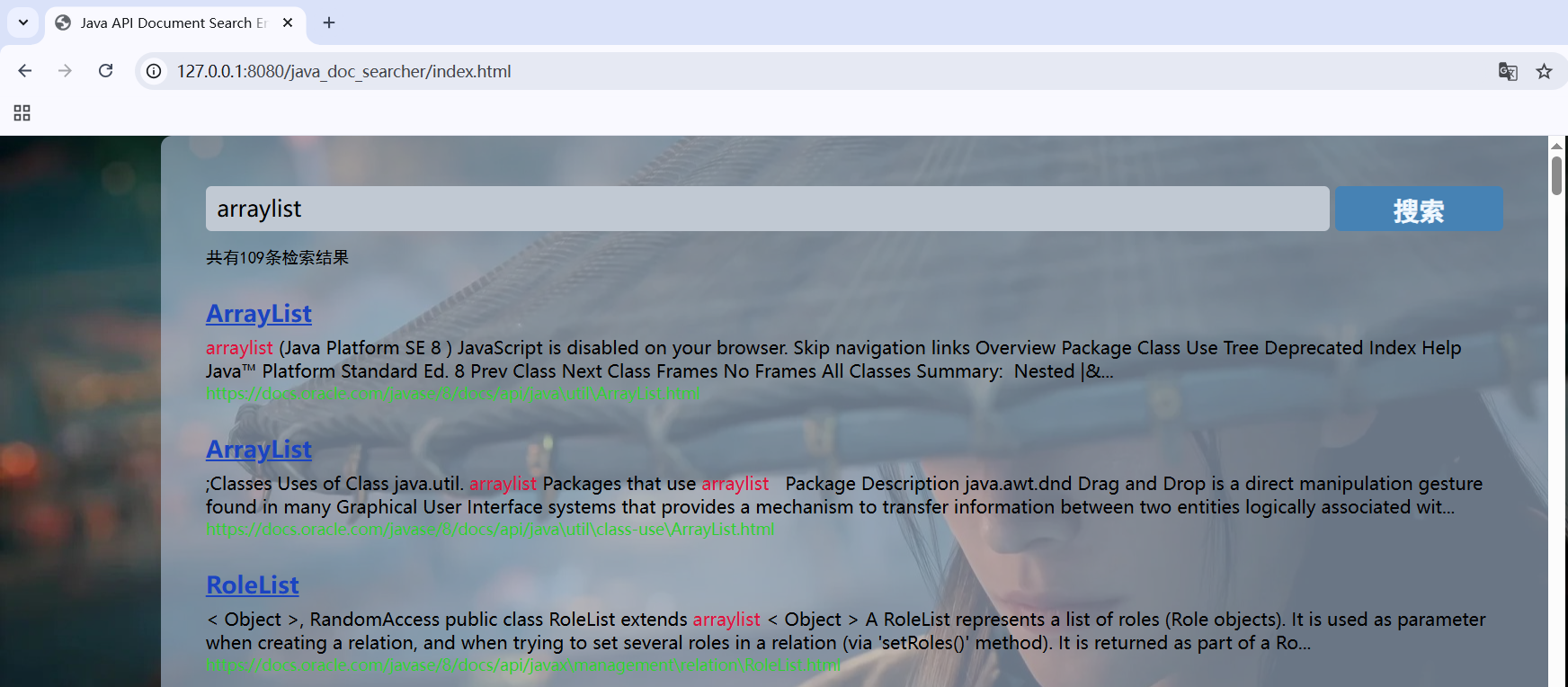
即可实现检索结果的计数,刷新浏览器进行测试,可在搜索结果顶端查看到检索结果数目:
2. 权重合并问题
测试搜索array list会发现:那些既包括array也包括list的文档会重复出现,如Collections,(可自行测试,两个结果具有一定距离,是由于一个结果是作为搜索array时计算array所占权重排序后的结果,另一个结果是作为搜索list时计算list所占权重排序后的结果)
这种现象存在有两个不合理之处:
(1)既包括array也包括list的文档不应该出现两次,应将多个结果合并;
(2)既包括array也包括list的文档应该是与两个搜索词均相关的结果,即相关性更高,应提高这些文档的权重,使其排序位置相对靠前。
接下来对DocSearcher类进行修改以解决多词查找导致的文档重复问题。
解决思路总体是:
把多个分词结果触发的文档按照docId进行去重,并采用权重相加的方式进行文档权重合并。
修改点1:使用二维数据结构存储分词检索结果
在之前的程序中,我们直接采用一个元素为Weight的List来存储结果,即List<Weight>。
故而对于多个词触发同一文档的问题无法进行去重。
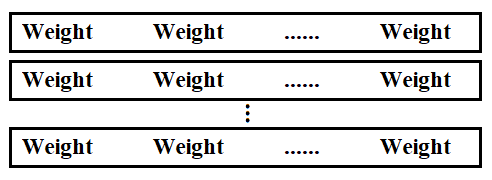
现将存储检索结果的数据结构修改为List<List<Weight>>,每一行是一个分词结果触发的检索结果一维List:
java
List<List<Weight>> termResult = new ArrayList<>();修改点2:使用一个内部类Pos描述元素在二维数组中的位置
java
    // 定义一个内部类Pos来描述一个元素在二维数组中的位置
    static class Pos{
        public int row;
        public int column;

        public Pos(int row, int column) {
            this.row = row;
            this.column = column;
        }
    }
修改点3:封装一个mergeResult方法进行具体的权重合并
mergeResult方法的实现思路如下:
(1)首先,对每一行进行排序。此处按照docId进行升序排序;
(2)借助一个优先队列对若干行进行合并;
java
    // 定义一个内部类Pos来描述一个元素在二维数组中的位置
    static class Pos{
        public int row;
        public int column;

        public Pos(int row, int column) {
            this.row = row;
            this.column = column;
        }
    }
    private List<Weight> mergeResult(List<List<Weight>> source) {
        // 1. 对每一行的Weight元素按照docId进行升序排序
        for(List<Weight> curRow: source){
            curRow.sort(new Comparator<Weight>() {
                @Override
                public int compare(Weight o1, Weight o2) {
                    return o1.getDocId()-o2.getDocId();
                }
            });
        }
        // 2. 借助一个优先队列进行合并
        List<Weight> target = new ArrayList<>();
        // (1) 创建优先级队列,并指定比较规则为按照Weight的docId取小者优先
        PriorityQueue<Pos> queue = new PriorityQueue<>(new Comparator<Pos>() {
            @Override
            public int compare(Pos o1, Pos o2) {
                // 先根据Pos值找到对应的Weight对象
                Weight w1 = source.get(o1.row).get(o1.column);
                Weight w2 = source.get(o2.row).get(o2.column);
                // 再根据Weight的docId排序
                return w1.getDocId()- w2.getDocId();
            }
        });
        // (2) 初始化队列:把每一行第一个元素放到队列中
        for(int row=0; row<source.size(); row++){
            queue.offer(new Pos(row, 0));
        }
        // (3) 循环取队首元素
        while(!queue.isEmpty()){
            Pos minPos = queue.poll();
            Weight curWeight = source.get(minPos.row).get(minPos.column);  // 当前取出的元素
            // 若target非空
            if(target.size()>0){
                Weight lastWeight = target.get(target.size()-1);  // 上一次取出的元素
                // 若文档的docId相同(即是相同文档),对旧Weight相加权重,无需再插入新Weight
                if(lastWeight.getDocId() == curWeight.getDocId()){
                    lastWeight.setWeight(lastWeight.getWeight() + curWeight.getWeight());
                }else{
                    // 若文档的dicId不同(即是不同文档),直接插入新Weight
                    target.add(curWeight);
                }
            }else{
                // 若target为空,则直接插入当前元素
                target.add(curWeight);
            }
            // (4) 处理完当前元素后,把对应这个元素的光标向后移动去取这一行的下一个元素
            Pos newPos = new Pos(minPos.row, minPos.column+1);
            if(newPos.column >= source.get(newPos.row).size()){
                // 若移动光标后超出列数,则说明本行处理完毕
                continue;
            }
            queue.offer(newPos);
        }
        return target;
    }
注:source表示未处理前的二维Weight表,target表示合并处理后的一维Weight List;
修改点4:调用mergeResult进行权重合并
java
 // 2. 针对分词结果查倒排索引
     /*
     * 新版:进行权重合并
     * */
        List<List<Weight>> termResult = new ArrayList<>();
        for(Term term: terms){
            String word = term.getName();
            List<Weight> invertedList = index.getInverted(word);
            // 词在文档中不存在,则跳过本次循环
            if(invertedList == null)
                continue;
            termResult.add(invertedList);
        }
 // 3. 对多个分词结果触发出的相同文档进行权重合并
        List<Weight> allTermResult = mergeResult(termResult);
 // 4. 针对触发结果按照权重降序排序
        allTermResult.sort(new Comparator<Weight>() {
            @Override
            public int compare(Weight o1, Weight o2) {
                return o2.getWeight()-o1.getWeight();  // 降序
                // 若为升序,则返回o1.getWeight()-o2.getWeight()
            }
        });