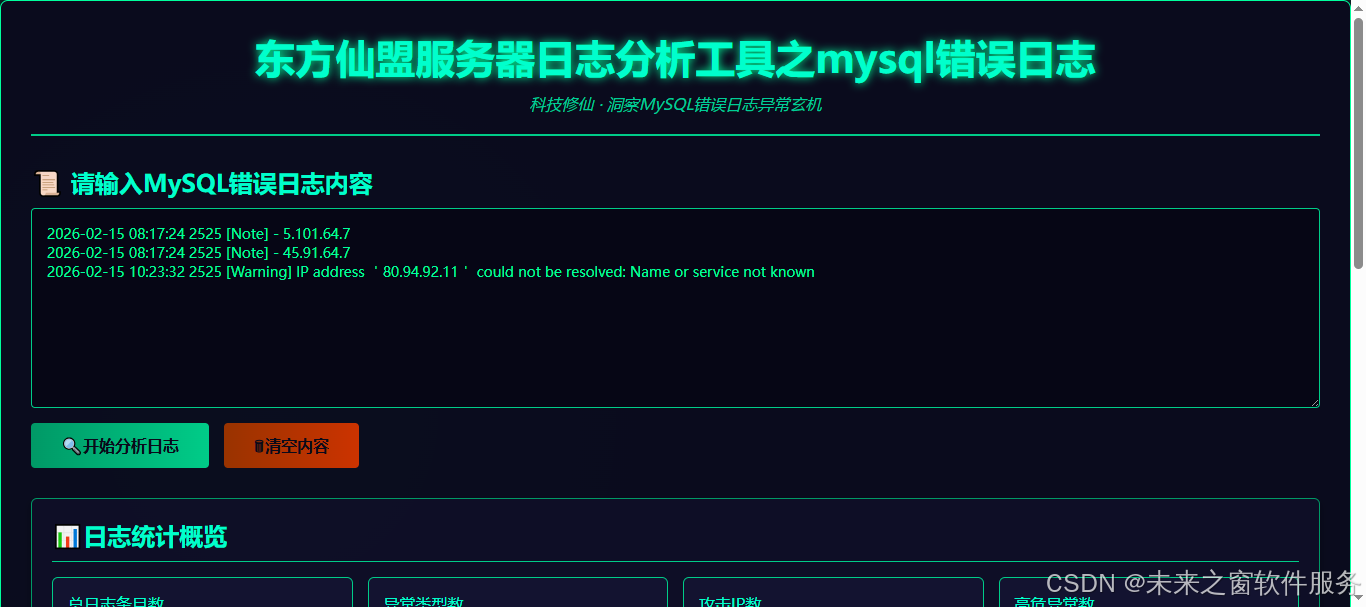
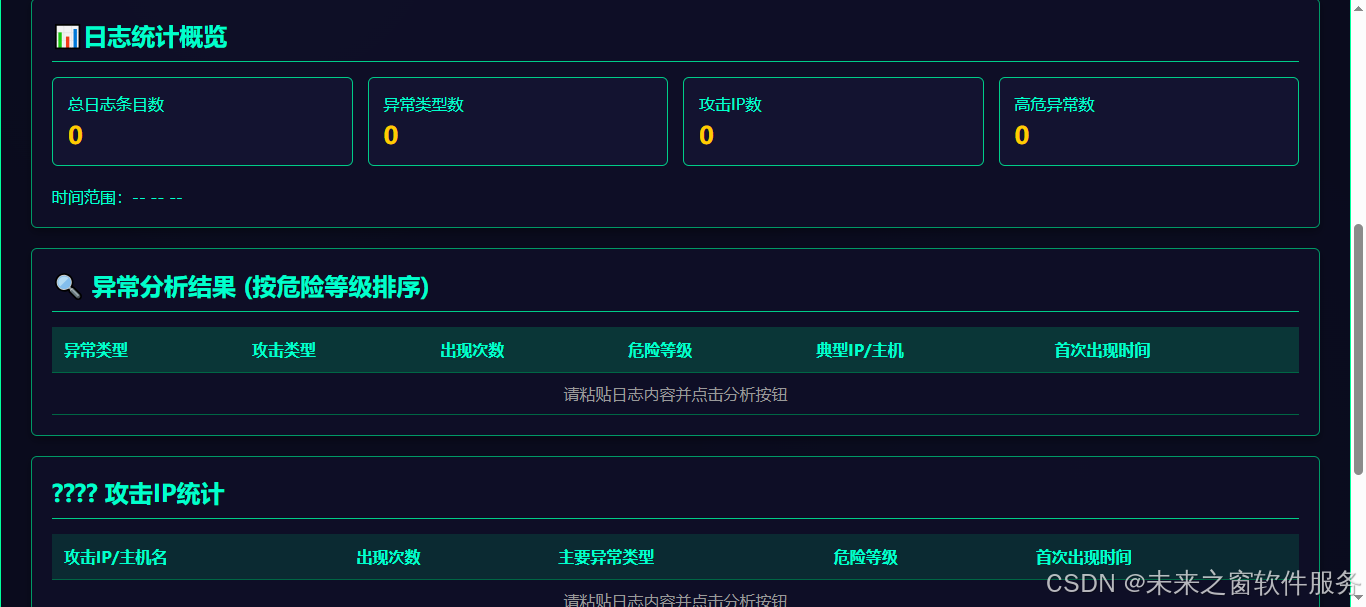
日志分析
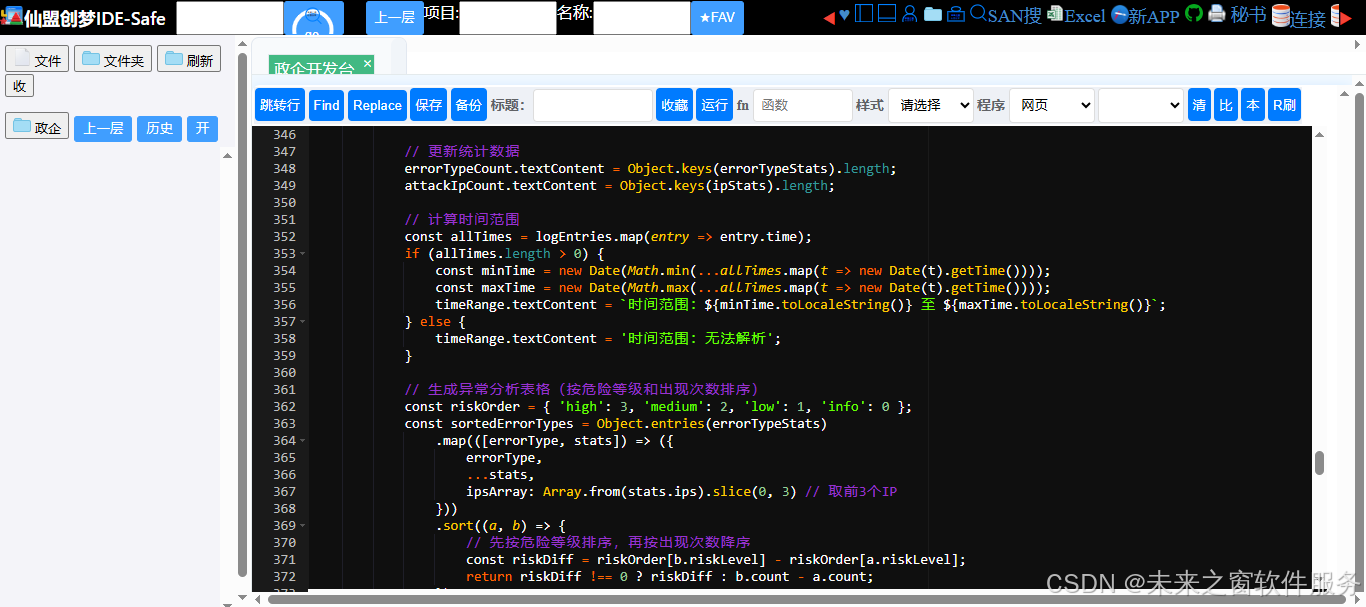
核心代码
科技修仙・洞察 MySQL 错误日志异常玄机 ------ 日志分析的安全价值与实践必要性
在数字化修仙的时代,MySQL 作为数据存储的核心法器,其运行状态直接关乎整个业务仙盟的稳定与安全。而 MySQL 错误日志,正是洞察数据库运行异常、捕捉安全威胁的 "照妖镜"------ 忽视它,就如同修仙者闭目修炼,极易被隐藏的安全妖邪趁虚而入;善用它,则能提前感知风险、快速定位问题,筑牢数据安全的仙法屏障。
一、为何 MySQL 错误日志分析是安全防护的 "必修课"?
MySQL 错误日志记录了数据库运行全过程中的告警、异常、错误等核心信息,从配置异常到访问攻击,从文件缺失到恶意扫描,所有 "异常玄机" 都会在此留下痕迹。对其进行常态化分析,是数据库安全防护中不可省略的关键环节,核心必要性体现在三点:
1. 提前感知隐蔽的安全威胁
很多数据库攻击并非 "明火执仗",而是以 "试探性扫描""伪装访问" 的形式潜伏 ------ 比如陌生 IP 的 DNS 解析失败警告、IP 反向解析异常、主机名不匹配等日志条目,看似是普通警告,实则是黑客探测数据库漏洞的前兆。若能通过日志分析及时捕捉这类低危异常,就能在攻击升级前封堵入口,避免从 "试探" 演变为 "入侵"。
2. 快速定位安全事故根源
当数据库出现访问异常、数据读取失败甚至服务中断时,错误日志是最直接的 "破案线索":
- 若日志中频繁出现 "二进制日志文件缺失",可快速定位是系统文件被篡改或删除,属于高危系统文件异常;
- 若发现 "RSA 密钥文件缺失",能立刻判断是认证配置被破坏,需紧急修复密钥配置;
- 若大量陌生 IP 触发 "DNS 解析失败",则可确定是批量扫描攻击,需及时封禁恶意 IP。没有日志分析,排查这类问题往往需要逐行核对配置、遍历网络记录,耗时耗力且易遗漏关键线索。
3. 构建常态化安全监控体系
数据库安全并非 "一次性加固" 就能一劳永逸,而是需要持续监控。通过对错误日志的定期分析,可建立安全基线:统计异常类型分布、攻击 IP 数量、高危事件频次,形成数据库安全的 "健康档案"。比如某 IP 短期内多次触发低危异常,可预判其恶意倾向;若高危异常(如密钥缺失、日志文件损坏)从无到有,需立刻启动应急响应,避免安全防线崩溃。
二、MySQL 错误日志分析的核心价值:从 "被动救火" 到 "主动防御"
1. 缩短安全事故处置时间
传统的数据库问题排查,往往是 "出问题再找原因",耗时数小时甚至数天;而基于错误日志的精准分析,可直接通过 "异常类型 + 攻击 IP + 时间维度" 的三维定位,将问题排查时间从 "小时级" 压缩到 "分钟级"。比如通过日志分析工具,能一键统计攻击 IP 的出现次数、主要异常类型,快速锁定恶意来源,无需人工逐行筛选日志。
2. 分类管控不同等级风险
MySQL 错误日志中的异常并非 "一视同仁",通过分析可按危险等级(高危 / 中危 / 低危 / 信息)分类处置:
- 高危异常(如二进制日志缺失、密钥文件丢失):需立即处理,避免数据库服务瘫痪或认证体系失效;
- 中危异常(如未知系统错误):需限期排查,防止演变为高危问题;
- 低危异常(如扫描类警告):需汇总分析,批量封禁恶意 IP 或优化访问策略;
- 信息级日志:作为基线参考,辅助判断数据库正常运行状态。这种分级管控,让安全资源聚焦在最关键的风险点,避免 "一刀切" 式的防护导致资源浪费。
3. 追溯安全事件全链路
错误日志记录了异常事件的时间、来源 IP、具体内容,是安全事件溯源的核心依据。当发生数据泄露、未授权访问等事故时,可通过日志回溯:
- 首次异常出现的时间,判断攻击发起节点;
- 攻击 IP 的访问轨迹,定位恶意来源;
- 异常类型的演变,分析黑客的攻击路径(如从扫描到尝试破解,再到篡改文件)。完整的溯源能力,不仅能快速止损,还能为后续加固策略提供精准依据。
完整代码
<!DOCTYPE html>
<html lang="zh-CN">
<head>
<meta charset="UTF-8">
<meta name="viewport" content="width=device-width, initial-scale=1.0">
<title>东方仙盟服务器日志分析工具之mysql错误日志</title>
</head>
<body>
<div class="container">
<div class="header">
<h1>东方仙盟服务器日志分析工具之mysql错误日志</h1>
<p class="subtitle">科技修仙 · 洞察MySQL错误日志异常玄机</p>
</div>
<div class="log-input">
<h2 style="margin-bottom: 10px;"><span>fairyalli_strico_paper</span> 请输入MySQL错误日志内容</h2>
<textarea id="logInput" placeholder="请粘贴MySQL错误日志内容..." style="height:200px;"></textarea>
<button id="analyzeBtn"><span>fairyalli_strico_search</span>开始分析日志</button>
<button id="clearBtn" class="clear-btn"><span>fairyalli_strico_垃圾桶</span>清空内容</button>
</div>
<div class="results">
<!-- 基础统计卡片 -->
<div class="stat-card">
<h2><span>fairyalli_strico_stat</span>日志统计概览</h2>
<div class="stats-grid">
<div class="stat-item">
<p class="stat-label">总日志条目数</p>
<p id="totalLogs" class="stat-value">0</p>
</div>
<div class="stat-item">
<p class="stat-label">异常类型数</p>
<p id="errorTypeCount" class="stat-value">0</p>
</div>
<div class="stat-item">
<p class="stat-label">攻击IP数</p>
<p id="attackIpCount" class="stat-value">0</p>
</div>
<div class="stat-item">
<p class="stat-label">高危异常数</p>
<p id="highRiskCount" class="stat-value">0</p>
</div>
</div>
<p class="time-range" id="timeRange">时间范围:-- -- --</p>
</div>
<!-- 异常分析卡片 -->
<div class="stat-card">
<h2><span>fairyalli_strico_search</span> 异常分析结果 (按危险等级排序)</h2>
<table id="errorAnalysisTable">
<thead>
<tr>
<th>异常类型</th>
<th>攻击类型</th>
<th>出现次数</th>
<th>危险等级</th>
<th>典型IP/主机</th>
<th>首次出现时间</th>
</tr>
</thead>
<tbody id="errorAnalysisBody">
<tr>
<td colspan="6" style="text-align: center; color: #999;">请粘贴日志内容并点击分析按钮</td>
</tr>
</tbody>
</table>
</div>
<!-- IP攻击统计 -->
<div class="stat-card">
<h2><span>fairyalli_strico_ok</span>攻击IP统计</h2>
<table id="ipStatsTable">
<thead>
<tr>
<th>攻击IP/主机名</th>
<th>出现次数</th>
<th>主要异常类型</th>
<th>危险等级</th>
<th>首次出现时间</th>
</tr>
</thead>
<tbody id="ipStatsBody">
<tr>
<td colspan="5" style="text-align: center; color: #999;">请粘贴日志内容并点击分析按钮</td>
</tr>
</tbody>
</table>
</div>
<!-- 详细日志列表 -->
<div class="stat-card">
<h2><span>fairyalli_strico_notepenh</span>所有日志详细列表</h2>
<table id="detailTable">
<thead>
<tr>
<th>时间</th>
<th>异常类型</th>
<th>攻击IP/主机</th>
<th>危险等级</th>
<th>日志内容</th>
</tr>
</thead>
<tbody id="detailBody">
<tr>
<td colspan="5" style="text-align: center; color: #999;">请粘贴日志内容并点击分析按钮</td>
</tr>
</tbody>
</table>
</div>
</div>
</div>
<script>
// 获取DOM元素
const logInput = document.getElementById('logInput');
const analyzeBtn = document.getElementById('analyzeBtn');
const clearBtn = document.getElementById('clearBtn');
const totalLogs = document.getElementById('totalLogs');
const errorTypeCount = document.getElementById('errorTypeCount');
const attackIpCount = document.getElementById('attackIpCount');
const highRiskCount = document.getElementById('highRiskCount');
const timeRange = document.getElementById('timeRange');
const errorAnalysisBody = document.getElementById('errorAnalysisBody');
const ipStatsBody = document.getElementById('ipStatsBody');
const detailBody = document.getElementById('detailBody');
// 解析MySQL错误日志的函数
function parseMysqlErrorLog(logContent) {
const logEntries = [];
const lines = logContent.split('\n').map(line => line.trim()).filter(line => line);
// 定义正则表达式
const logLineRegex = /^(\d{4}-\d{2}-\d{2}\s+\d{2}:\d{2}:\d{2})\s+(\d+)\s+\[(ERROR|WARNING|NOTE)\]\s+(.*)$/;
const ipRegex = /IP address\s+'([\d\.]+)'|Host name\s+'([^\']+)'|Hostname\s+'([^\']+)'/;
const binlogErrorRegex = /Failed to open log \(file\s+'[^']+', errno 2\)|Could not open log file|File\s+'[^']+' not found/;
const resolveErrorRegex = /could not be resolved: Name or service not known/;
const ipResolveWarningRegex = /has been resolved to the host name\s+'[^']+', which resembles IPv4-address itself/;
const hostnameMismatchRegex = /does not resolve to/;
for (const line of lines) {
const match = line.match(logLineRegex);
if (match) {
const [, logTime, pid, logLevel, message] = match;
let ip = '';
let hostname = '';
let errorType = '';
let attackType = '';
let riskLevel = 'info';
// 提取IP或主机名
const ipMatch = message.match(ipRegex);
if (ipMatch) {
ip = ipMatch[1] || '';
hostname = ipMatch[2] || ipMatch[3] || '';
}
// 分类异常类型
if (logLevel === 'ERROR') {
if (binlogErrorRegex.test(message)) {
errorType = '二进制日志文件缺失';
attackType = '系统文件异常';
riskLevel = 'high'; // 高危
} else if (message.includes('RSA private key file not found') || message.includes('RSA public key file not found')) {
errorType = 'RSA密钥文件缺失';
attackType = '认证配置异常';
riskLevel = 'medium'; // 中危
} else {
errorType = '未知错误';
attackType = '系统错误';
riskLevel = 'medium'; // 中危
}
} else if (logLevel === 'WARNING') {
if (resolveErrorRegex.test(message)) {
errorType = 'DNS解析失败';
attackType = '可疑IP访问/扫描';
riskLevel = 'low'; // 低危
} else if (ipResolveWarningRegex.test(message)) {
errorType = 'IP反向解析异常';
attackType = '扫描器探测';
riskLevel = 'low'; // 低危
} else if (hostnameMismatchRegex.test(message)) {
errorType = '主机名解析不匹配';
attackType = '域名欺诈/扫描';
riskLevel = 'low'; // 低危
} else {
errorType = '未知警告';
attackType = '可疑访问';
riskLevel = 'low'; // 低危
}
} else { // NOTE
errorType = '系统信息';
attackType = '系统日志';
riskLevel = 'info'; // 信息级
}
logEntries.push({
time: logTime,
pid: pid,
level: logLevel,
message: message,
ip: ip,
hostname: hostname,
errorType: errorType,
attackType: attackType,
riskLevel: riskLevel,
riskLevelText: {
'high': '高危',
'medium': '中危',
'low': '低危',
'info': '信息'
}[riskLevel]
});
}
}
return logEntries;
}
// 分析日志的主函数
function analyzeLogs() {
// 清空之前的结果
errorAnalysisBody.innerHTML = '';
ipStatsBody.innerHTML = '';
detailBody.innerHTML = '';
// 获取日志内容
const logContent = logInput.value;
if (!logContent.trim()) {
// 清空统计数据
totalLogs.textContent = '0';
errorTypeCount.textContent = '0';
attackIpCount.textContent = '0';
highRiskCount.textContent = '0';
timeRange.textContent = '时间范围:暂无数据';
errorAnalysisBody.innerHTML = `
<tr>
<td colspan="6" style="text-align: center; color: #999;">暂无日志数据</td>
</tr>
`;
ipStatsBody.innerHTML = `
<tr>
<td colspan="5" style="text-align: center; color: #999;">暂无日志数据</td>
</tr>
`;
detailBody.innerHTML = `
<tr>
<td colspan="5" style="text-align: center; color: #999;">暂无日志数据</td>
</tr>
`;
return;
}
// 解析日志
const logEntries = parseMysqlErrorLog(logContent);
const totalCount = logEntries.length;
// 更新基础统计
totalLogs.textContent = totalCount;
if (totalCount === 0) {
errorTypeCount.textContent = '0';
attackIpCount.textContent = '0';
highRiskCount.textContent = '0';
timeRange.textContent = '时间范围:日志解析失败,请检查格式';
errorAnalysisBody.innerHTML = `
<tr>
<td colspan="6" style="text-align: center; color: #ff6600;">日志解析失败,请检查MySQL错误日志格式</td>
</tr>
`;
ipStatsBody.innerHTML = `
<tr>
<td colspan="5" style="text-align: center; color: #ff6600;">日志解析失败,请检查MySQL错误日志格式</td>
</tr>
`;
detailBody.innerHTML = `
<tr>
<td colspan="5" style="text-align: center; color: #ff6600;">日志解析失败,请检查MySQL错误日志格式</td>
</tr>
`;
return;
}
// 统计高危异常数
const highRiskEntries = logEntries.filter(entry => entry.riskLevel === 'high');
highRiskCount.textContent = highRiskEntries.length;
// 按异常类型分组统计
const errorTypeStats = {};
logEntries.forEach(entry => {
const key = entry.errorType;
if (!errorTypeStats[key]) {
errorTypeStats[key] = {
count: 0,
attackType: entry.attackType,
riskLevel: entry.riskLevel,
riskLevelText: entry.riskLevelText,
ips: new Set(),
firstOccurrence: entry.time,
entries: []
};
}
errorTypeStats[key].count++;
errorTypeStats[key].entries.push(entry);
if (entry.ip) {
errorTypeStats[key].ips.add(entry.ip);
}
// 记录首次出现时间
if (entry.time < errorTypeStats[key].firstOccurrence) {
errorTypeStats[key].firstOccurrence = entry.time;
}
});
// 按IP分组统计
const ipStats = {};
logEntries.forEach(entry => {
const ipOrHost = entry.ip || entry.hostname || '未知';
if (ipOrHost === '未知') return;
if (!ipStats[ipOrHost]) {
ipStats[ipOrHost] = {
count: 0,
errorTypes: new Set(),
riskLevel: entry.riskLevel,
riskLevelText: entry.riskLevelText,
firstOccurrence: entry.time
};
}
ipStats[ipOrHost].count++;
ipStats[ipOrHost].errorTypes.add(entry.errorType);
// 更新最高风险等级
const riskOrder = { 'high': 3, 'medium': 2, 'low': 1, 'info': 0 };
if (riskOrder[entry.riskLevel] > riskOrder[ipStats[ipOrHost].riskLevel]) {
ipStats[ipOrHost].riskLevel = entry.riskLevel;
ipStats[ipOrHost].riskLevelText = entry.riskLevelText;
}
// 记录首次出现时间
if (entry.time < ipStats[ipOrHost].firstOccurrence) {
ipStats[ipOrHost].firstOccurrence = entry.time;
}
});
// 更新统计数据
errorTypeCount.textContent = Object.keys(errorTypeStats).length;
attackIpCount.textContent = Object.keys(ipStats).length;
// 计算时间范围
const allTimes = logEntries.map(entry => entry.time);
if (allTimes.length > 0) {
const minTime = new Date(Math.min(...allTimes.map(t => new Date(t).getTime())));
const maxTime = new Date(Math.max(...allTimes.map(t => new Date(t).getTime())));
timeRange.textContent = `时间范围:${minTime.toLocaleString()} 至 ${maxTime.toLocaleString()}`;
} else {
timeRange.textContent = '时间范围:无法解析';
}
// 生成异常分析表格(按危险等级和出现次数排序)
const riskOrder = { 'high': 3, 'medium': 2, 'low': 1, 'info': 0 };
const sortedErrorTypes = Object.entries(errorTypeStats)
.map(([errorType, stats]) => ({
errorType,
...stats,
ipsArray: Array.from(stats.ips).slice(0, 3) // 取前3个IP
}))
.sort((a, b) => {
// 先按危险等级排序,再按出现次数降序
const riskDiff = riskOrder[b.riskLevel] - riskOrder[a.riskLevel];
return riskDiff !== 0 ? riskDiff : b.count - a.count;
});
let errorAnalysisHtml = '';
sortedErrorTypes.forEach(item => {
const levelClass = `level-${item.riskLevel}`;
errorAnalysisHtml += `
<tr>
<td class="type-cell">${item.errorType}</td>
<td class="type-cell">${item.attackType}</td>
<td class="count-cell">${item.count}</td>
<td class="level-cell ${levelClass}">${item.riskLevelText}</td>
<td class="ip-cell">${item.ipsArray.join(', ') || '无'}</td>
<td class="time-cell">${item.firstOccurrence}</td>
</tr>
`;
});
errorAnalysisBody.innerHTML = errorAnalysisHtml;
// 生成IP攻击统计表格
const sortedIpStats = Object.entries(ipStats)
.map(([ip, stats]) => ({
ip,
...stats,
errorTypesArray: Array.from(stats.errorTypes).join(', ')
}))
.sort((a, b) => {
// 先按危险等级排序,再按出现次数降序
const riskDiff = riskOrder[b.riskLevel] - riskOrder[a.riskLevel];
return riskDiff !== 0 ? riskDiff : b.count - a.count;
});
let ipStatsHtml = '';
sortedIpStats.forEach(item => {
const levelClass = `level-${item.riskLevel}`;
ipStatsHtml += `
<tr>
<td class="ip-cell">${item.ip}</td>
<td class="count-cell">${item.count}</td>
<td class="type-cell">${item.errorTypesArray}</td>
<td class="level-cell ${levelClass}">${item.riskLevelText}</td>
<td class="time-cell">${item.firstOccurrence}</td>
</tr>
`;
});
ipStatsBody.innerHTML = ipStatsHtml;
// 生成详细日志列表
let detailHtml = '';
logEntries.sort((a, b) => new Date(b.time) - new Date(a.time)).forEach(entry => {
const levelClass = `level-${entry.riskLevel}`;
detailHtml += `
<tr>
<td class="time-cell">${entry.time}</td>
<td class="type-cell">${entry.errorType}</td>
<td class="ip-cell">${entry.ip || entry.hostname || '无'}</td>
<td class="level-cell ${levelClass}">${entry.riskLevelText}</td>
<td class="log-message">${entry.message}</td>
</tr>
`;
});
detailBody.innerHTML = detailHtml;
}
// 清空内容
function clearContent() {
logInput.value = '';
totalLogs.textContent = '0';
errorTypeCount.textContent = '0';
attackIpCount.textContent = '0';
highRiskCount.textContent = '0';
timeRange.textContent = '时间范围:-- -- --';
errorAnalysisBody.innerHTML = `
<tr>
<td colspan="6" style="text-align: center; color: #999;">请粘贴日志内容并点击分析按钮</td>
</tr>
`;
ipStatsBody.innerHTML = `
<tr>
<td colspan="5" style="text-align: center; color: #999;">请粘贴日志内容并点击分析按钮</td>
</tr>
`;
detailBody.innerHTML = `
<tr>
<td colspan="5" style="text-align: center; color: #999;">请粘贴日志内容并点击分析按钮</td>
</tr>
`;
}
// 绑定事件
analyzeBtn.addEventListener('click', analyzeLogs);
clearBtn.addEventListener('click', clearContent);
// 支持按Ctrl+Enter快速分析
logInput.addEventListener('keypress', function(e) {
if (e.key === 'Enter' && e.ctrlKey) {
analyzeLogs();
}
});
</script>
<script>
const 东方仙盟图标替换 = new 东方仙盟_前端渲染_图标替换();
东方仙盟图标替换.替换整页();
</script>
</body>
</html>三、实战启示:让日志分析成为数据库安全的 "第一道防线"
对于企业级数据库运维而言,手动翻阅海量日志既低效又易遗漏,如同用凡眼寻找微尘中的妖邪。借助自动化的 MySQL 错误日志分析工具(如 "东方仙盟服务器日志分析工具"),可实现:
- 一键解析日志内容,自动统计总条目数、异常类型数、攻击 IP 数、高危异常数;
- 按危险等级排序展示异常分析结果,快速聚焦核心风险;
- 汇总攻击 IP 的访问行为,批量识别恶意来源;
- 展示全量日志详情,支持时间维度追溯。
这种智能化分析,让数据库运维从 "被动响应" 转向 "主动预判",真正将错误日志转化为安全防护的 "仙法利器"。
总结
MySQL 错误日志并非简单的 "运行记录",而是数据库安全的 "预警雷达" 与 "破案卷宗"。常态化的日志分析,既是及时发现安全威胁的必要手段,也是快速定位问题、追溯攻击轨迹的核心支撑。在数据安全日益重要的今天,忽视错误日志分析,就等于放弃了数据库安全的第一道防线;唯有善用日志分析工具,洞察每一条异常背后的 "玄机",才能让 MySQL 数据库在数字化修仙之路上,始终保持稳定、安全的运行状态,守护业务仙盟的核心数据资产。
阿雪技术观
在科技发展浪潮中,我们不妨积极投身技术共享。不满足于做受益者,更要主动担当贡献者。无论是分享代码、撰写技术博客,还是参与开源项目维护改进,每一个微小举动都可能蕴含推动技术进步的巨大能量。东方仙盟是汇聚力量的天地,我们携手在此探索硅基生命,为科技进步添砖加瓦。
Hey folks, in this wild tech - driven world, why not dive headfirst into the whole tech - sharing scene? Don't just be the one reaping all the benefits; step up and be a contributor too. Whether you're tossing out your code snippets, hammering out some tech blogs, or getting your hands dirty with maintaining and sprucing up open - source projects, every little thing you do might just end up being a massive force that pushes tech forward. And guess what? The Eastern FairyAlliance is this awesome place where we all come together. We're gonna team up