What is Linux and how to learn it
- [What is Linux](#What is Linux)
-
- [Unix history before linux](#Unix history before linux)
- [Linux Distribution](#Linux Distribution)
- [How to learn Linux](#How to learn Linux)
What is Linux
Linux is an operating system. As shown in the picture, Linux is the two layers of a kernel and a system call. Early Linux was developed against 386.
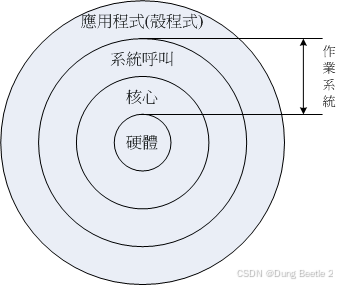
Linux is easily transferable due to its open-source nature.
Unix history before linux
The Compatible Time-Sharing System, or the CTSS, was one of the first time-sharing operating systems; it was developed at MIT's Computation Center.
Multics, a great CTSS begun in 1965, was a collaborative effort involving Bell Labs, General Electric, and M.I.T. The renowned developers named Ken Thompson and Dennis Ritchie also contributed to Multics for overall growth.
The history of UNIX starts back in 1969, when Ken Thompson, Dennis Ritchie and others started working on the "little-used PDP-7 in a corner" at Bell Labs and what was to become UNIX.
BSD (Berkeley Software Distribution) is a Unix-like operating system that originated from the University of California, Berkeley in the 1970s.
System V, the 7th version of Unix developed by AT&T, can work on X86 PCs. Its source codes can not be provided to students.
Andrew Tanenbaum released his Minix (for "mini-Unix) operating system, intended for students and hobbyists.
The Free Software Foundation (FSF) and the GNU (GNU's Not Unix) Project were both started by Richard M. Stallman (RMS), and he served until recently as the head of both.
This XFree86 project, provided us the X server and an extensive suite of utilities and applications to help implement a fully functional GUI environment.
Linux was released in 1991 by Linus Torvalds who made it open source. Linux is a kernel and the main component of a Linux operating system (OS) and GNU is a collection of free software, these two project collabs give us "Linux" or "GNU/Linux" operating system.
Linux Distribution
A Linux distribution (often abbreviated as distro) is an operating system made from a software collection that includes the Linux kernel and often a package management system.
LSB(Linux Standard Base), FHS(File system Hierarchy Standard)
| RPM | DPKG |
|---|---|
| RHEL SuSE Fedora CentOS | Ubuntu Debian |
How to learn Linux
computer basics
linux installation and commands
linux OS basics
vi
shell scripting
software management
network basics
website setup