前言
本文通过小编自身学习的进程从而总结出本文,也希望大家可以好好学习,帮助到自己
这个是萌新考场救场代码,与本文一起食用更佳
for循环计数器
cpp
for(定义计数变量;定义结束条件;每次循环所做的动作)示例
cpp
for(int i=1;i<=10;i++)
//首先定义"i"变量作为计数数组,赋初值为"1"
//然后每次循环判断条件是否成立,不成立则退出
//最后每循环执行条件,此示例为每循环"i"增加1
而计数器就是在for循环有了一定执行范围的基础上创建了一个数组,进行++计数
示例
cpp
#include <iostream>// 万年不变的框架
using namespace std;
int main()
{
	int n;
	cin>>n;//输入数值表示从1~n中有几个数字
	int cnt=0;//注意计数器赋初值建议为"0"
	//因为不赋值会野值(顾名思义会瞎生成一个值)
	for(int i=1;i<=n;i++)
	{
		cnt++;//cnt数组自增
		//cnt+=1;或cnt=cnt+1;效果同样。
	}
	cout<<cnt;//输出计数器
}
练习题目1:
题目描述
斐波那契数列是一个特殊的数列:
1, 1, 2, 3, 5, 8, 13, 21, 34, 55......
数列的第一项和第二项都是1,从第三项开始,每一项是其前面两项之和。
输入正整数 n ,编程输出该数列的第 n 项。
输入描述
一个整数 n 。
输出描述
一个整数,斐波那契数列的第 n 项。
cpp
#include <iostream>
using namespace std;
long long a[55];
int main()
{
    int n;
    cin>>n;//输入要求斐波那契数列的第几位
    a[1]=1,a[2]=1;//把前两位设为1
    for (int i=3;i<=n;i++)
    {
        a[i]=a[i-1]+a[i-2];
        //把前两个元素相加变为第三个元素
    }
    cout<<a[n];//输出要求的元素位置
    return 0;
}
建议进阶练习:练习题目2
函数与模块化编程
cpp
#include <iostream>
using namespace std;
long long a[55];//全局变量全局都可以使用
//而主函数里的n只能在主函数内使用
int fbnq(int n)
{
	a[1]=1,a[2]=1;
   for (int i=3;i<=n;i++)
   {
      a[i]=a[i-1]+a[i-2];//公式还是那样,但是变成函数内部了
   }
   return a[n];//函数需要返回值哦(void函数除外)
   //没有返回值函数再怎么写也没用哦
}
int main()
{
    int n;
    cin>>n;
    cout<<fbnq(n);//记得上面定义时括号里写东西了
    //这里就也要写东西
    return 0;
}
各种函数特点与用法
| 函数类型 | 特点 | 用法 |
|---|---|---|
| int | 返回值为int类型 | int 函数名(int 新创建变量的名称) |
| long long | 返回值为long long 类型 | long long 函数名(long long 新创建变量的名称) |
| bool | 返回值类型为bool,即不是true就是false | bool 函数名 (bool 新创建的变量名称 |
| void | 无返回值,函数内不要有reutrn,若有,请注意很有可能报错,强制停止此函数运行请写"return;" | void 函数名 (int 新创建的变量名) |
小提示:类型 函数名(int/long long/bool/其他类型 新创建的变量名)输入变量名的类型void是不合法的!若使用了会报错
练习题目1:
学而思网校提供:
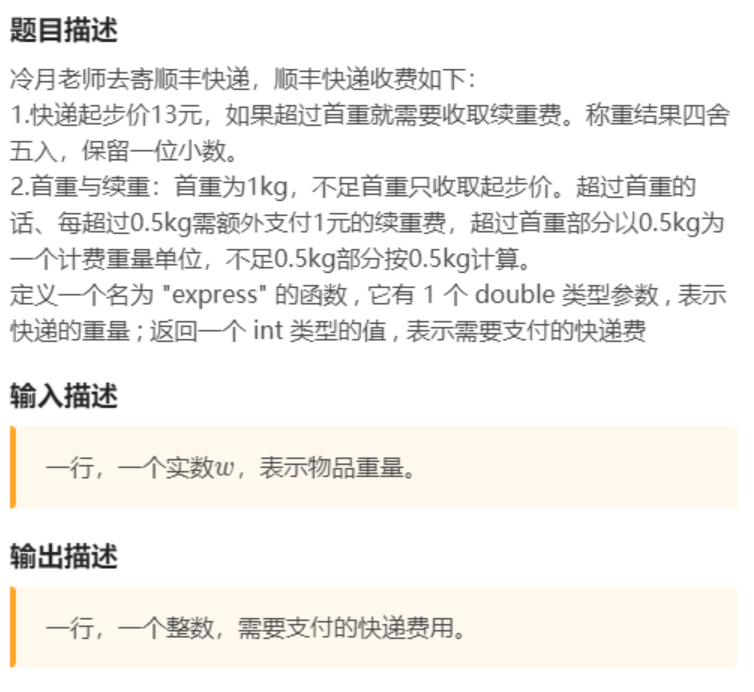
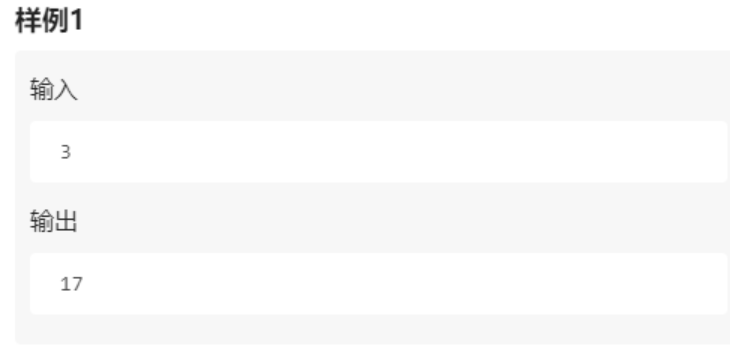
cpp
#include<cstdio>
#include<cmath>
using namespace std;

//定义函数
int express(double w)//定义输入数据
{
		//以下是本题核心代码
    int money;
    w=round(w*10)/10;
    if(w<=1)
    {
        money=13;
    }
    else
    {
        w=ceil((w-1)/0.5);
        money=13+w;
    }
    return money;//输出花费
}

int main() {
	double w;
	scanf("%lf", &w);
	printf("%d\n", express(w));//直接套用函数输出值输出
    return 0;
}
建议:可以再洛谷上寻找一些简单题目专门用函数来写,进行练习。
多重循环(for循环plus版)
模板:
cpp
for(int i=1;i<=n;i++)
{
	for(int j=1;j<=n;j++)
	{
		//此模板还可以不断叠层
		//这段模板内出现的所有变量名均可替换:i,j,n
	}
}
闲话不多说,直接上题目
练习题目1:
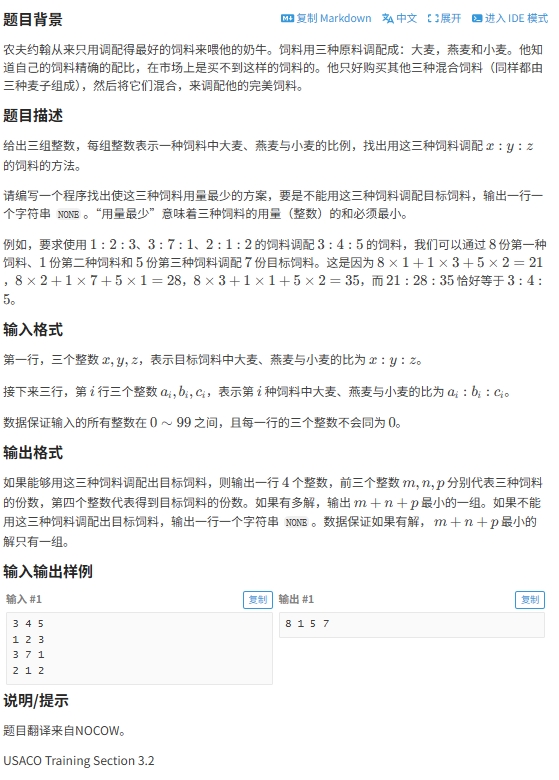
cpp
#include<cstdio>
#include<cstring>
#include<iostream>
#include<algorithm>
using namespace std;
typedef long long LL;

int main()
{
    int a,b,c;//输入数据
    cin>>a>>b>>c;
    int a1,b1,c1;
    cin>>a1>>b1>>c1;
    int a2,b2,c2;
    cin>>a2>>b2>>c2;
    int a3,b3,c3;
    cin>>a3>>b3>>c3;
    for(int i=0;i<100;i++)//使用三重for循环
    {
    	for(int j=0;j<100;j++)
//以后做其他题使用三重for循环须慎重(可能会超时)
    	{
    		for(int k=0;k<100;k++)
    		{
    			if(!i&&!j&&!k)
    			{
    				continue;
    			}
    			int x=a1*i+a2*j+a3*k;//进行题目内要求的计算
    			int y=b1*i+b2*j+b3*k;
    			int z=c1*i+c2*j+c3*k;
    			if(x*b==y*a&&y*c==b*z&&x%a==0)
    			{
    				cout<<i<<" "<<j<<" "<<k<<" "<<x/a<<endl;
    				return 0;//输出答案结束程序
    			}
    		}
    	}

    }
    cout<<"NONE";	//若前方未结束程序输出无正解
	return 0;
}
练习题目2:
感谢大自然的馈赠
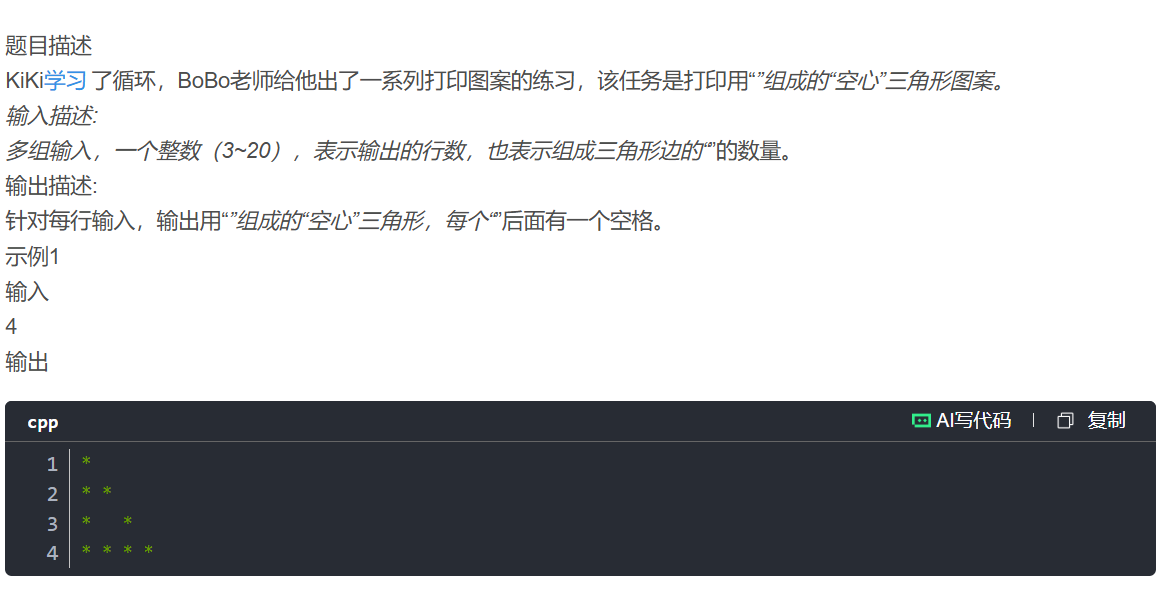
可以自己之后去练习
while循环
cpp
//while循环本质逻辑与for循环大差不差,所以小编就不在这里过多废话了
while(true)//每次循环判断此条件是否成立,成立即继续运行,不成立则反之
{
	cout<<"作者真帅";
}
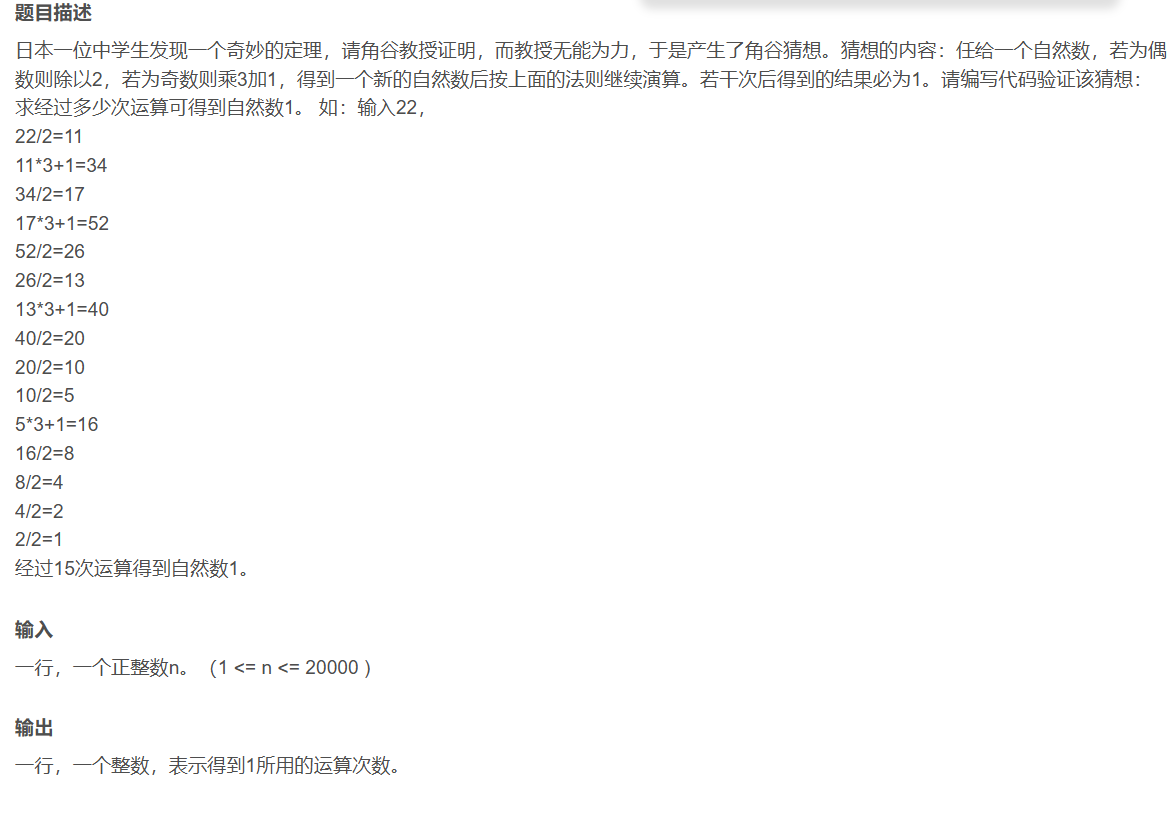
练习题目1:
练习题目2:
题目描述
数根可以通过把一个数的各个位上的数字加起来得到。如果得到的数是一位数,那么这个数就是数根。如果结果是两位数或者包括更多位的数字,那么再把这些数字加起来。如此进行下去,直到得到是一位数为止。
比如,对于 24 来说,把 2 和 4 相加得到 6,由于 6 是一位数,因此 6 是 24 的数根。再比如 39,把 3 和 9 加起来得到 12,由于 12 不是一位数,因此还得把 1 和 2 加起来,最后得到 3,这是一个一位数,因此 3 是 39 的数根。
输入描述
一个整数n,(1 <= n <= 10^9)
输出描述
一个数字,即n的数根
样例1
输入
39
输出
3
结构体
C++结构体的基本概念
在C++中,结构体得到了极大的增强,几乎和类一样强大 ,唯一区别是默认访问权限为public(类为private)。
cpp
#include <iostream>
#include <string>
using namespace std;

// C++结构体定义
struct Student {
    string name;  // C++中可以直接使用string
    int age;
    float score;
};

int main() {
    // 创建结构体变量
    Student stu1;  // C++中不需要写struct关键字

    stu1.name = "张三";
    stu1.age = 20;
    stu1.score = 85.5;

    cout << "姓名:" << stu1.name << endl;
    cout << "年龄:" << stu1.age << endl;
    cout << "成绩:" << stu1.score << endl;

    return 0;
}
结构体的定义方式
基本定义
cpp
#include <iostream>
#include <string>
using namespace std;

// 方式1:普通定义
struct Person {
    string name;
    int age;
    string phone;
};

// 方式2:定义时创建对象
struct Car {
    string brand;
    string model;
    int year;
} car1, car2;  // 全局对象

int main() {
    // 方式3:使用typedef(C++中不太需要)
    typedef struct {
        string city;
        string street;
        int number;
    } Address;

    Address addr = {"北京", "长安街", 1};

    Person p;  // 直接使用,不需要struct关键字
    Car myCar; // 局部对象

    return 0;
}
结构体的初始化
多种初始化方法
cpp
#include <iostream>
#include <string>
using namespace std;

struct Student {
    string name;
    int age;
    float score;
};

int main() {
    // 方法1:聚合初始化(C++11起)
    Student stu1 = {"张三", 20, 85.5};

    // 方法2:指定成员初始化(C++11起)
    Student stu2 = {.name = "李四", .age = 21, .score = 92.0};

    // 方法3:使用构造函数(结构体可以有构造函数)
    Student stu3("王五", 22, 88.5);  // 如果有构造函数的话

    // 方法4:默认初始化
    Student stu4{};  // name为空,age=0,score=0

    // 方法5:逐个赋值
    Student stu5;
    stu5.name = "赵六";
    stu5.age = 23;
    stu5.score = 90.5;

    // 输出验证
    cout << stu1.name << " " << stu1.age << " " << stu1.score << endl;
    cout << stu4.name << " " << stu4.age << " " << stu4.score << endl;  //  0 0

    return 0;
}
结构体成员访问
cpp
#include <iostream>
#include <string>
using namespace std;

struct Point {
    int x;
    int y;

    // 成员函数
    void display() {
        cout << "Point(" << x << ", " << y << ")" << endl;
    }

    // 计算到原点的距离
    double distance() {
        return sqrt(x*x + y*y);
    }
};

int main() {
    Point p1 = {3, 4};

    // 直接访问
    cout << "x = " << p1.x << ", y = " << p1.y << endl;

    // 调用成员函数
    p1.display();
    cout << "到原点的距离:" << p1.distance() << endl;

    // 指针访问
    Point *ptr = &p1;
    ptr->x = 5;
    ptr->y = 12;
    cout << "修改后:";
    ptr->display();

    return 0;
}
结构体数组
cpp
#include <iostream>
#include <string>
#include <iomanip>
using namespace std;

struct Student {
    string name;
    int age;
    float score;
};

int main() {
    // 定义并初始化结构体数组
    Student class1[3] = {
        {"张三", 20, 85.5},
        {"李四", 21, 92.0},
        {"王五", 22, 88.5}
    };

    cout << "班级学生信息:" << endl;
    cout << setw(10) << "姓名" << setw(6) << "年龄"
         << setw(8) << "成绩" << endl;
    cout << "------------------------" << endl;

    // 遍历数组
    for (int i = 0; i < 3; i++) {
        cout << setw(10) << class1[i].name
             << setw(6) << class1[i].age
             << setw(8) << fixed << setprecision(1)
             << class1[i].score << endl;
    }

    // 动态分配结构体数组
    Student* class2 = new Student[2];
    class2[0] = {"赵六", 19, 78.5};
    class2[1] = {"孙七", 20, 95.0};

    delete[] class2;  // 释放内存

    return 0;
}
结构体嵌套
cpp
#include <iostream>
#include <string>
using namespace std;

// 地址结构体
struct Address {
    string city;
    string street;
    int number;

    void show() {
        cout << city << " " << street << " " << number << "号";
    }
};

// 联系方式结构体
struct Contact {
    string phone;
    string email;
};

// 学生结构体嵌套其他结构体
struct Student {
    string name;
    int age;
    Address addr;     // 嵌套Address
    Contact contact;  // 嵌套Contact

    void showInfo() {
        cout << "姓名:" << name << endl;
        cout << "年龄:" << age << endl;
        cout << "地址:";
        addr.show();
        cout << "\n电话:" << contact.phone << endl;
        cout << "邮箱:" << contact.email << endl;
    }
};

int main() {
    Student stu = {
        "张三",
        20,
        {"北京", "长安街", 1},
        {"13800138000", "zhangsan@email.com"}
    };

    stu.showInfo();

    // 访问嵌套成员
    cout << "\n城市:" << stu.addr.city << endl;
    cout << "电话:" << stu.contact.phone << endl;

    return 0;
}
结构体与函数
cpp
#include <iostream>
#include <string>
using namespace std;

struct Rectangle {
    double width;
    double height;

    double area() {
        return width * height;
    }
};

// 值传递
void printRect1(Rectangle r) {
    cout << "宽:" << r.width << ",高:" << r.height
         << ",面积:" << r.area() << endl;
}

// 引用传递(避免复制)
void printRect2(const Rectangle &r) {
    cout << "宽:" << r.width << ",高:" << r.height
         << ",面积:" << r.area() << endl;
}

// 指针传递
void modifyRect(Rectangle *r, double w, double h) {
    r->width = w;
    r->height = h;
}

// 返回结构体
Rectangle createRect(double w, double h) {
    return {w, h};  // C++11的统一初始化
}

int main() {
    Rectangle r1 = {10, 5};

    printRect1(r1);     // 值传递
    printRect2(r1);     // 引用传递

    modifyRect(&r1, 20, 10);
    cout << "修改后:";
    printRect2(r1);

    Rectangle r2 = createRect(15, 8);
    cout << "新矩形:";
    printRect2(r2);

    return 0;
}
结构体与运算符重载
cpp
#include <iostream>
using namespace std;

struct Vector2 {
    float x, y;

    // 构造函数
    Vector2(float x = 0, float y = 0) : x(x), y(y) {}

    // 运算符重载
    Vector2 operator+(const Vector2& other) const {
        return Vector2(x + other.x, y + other.y);
    }

    Vector2 operator*(float scalar) const {
        return Vector2(x * scalar, y * scalar);
    }

    // 友元函数重载<<运算符
    friend ostream& operator<<(ostream& os, const Vector2& v) {
        os << "(" << v.x << ", " << v.y << ")";
        return os;
    }
};

int main() {
    Vector2 v1(3, 4);
    Vector2 v2(1, 2);

    Vector2 v3 = v1 + v2;
    Vector2 v4 = v1 * 2;

    cout << "v1 = " << v1 << endl;
    cout << "v2 = " << v2 << endl;
    cout << "v1 + v2 = " << v3 << endl;
    cout << "v1 * 2 = " << v4 << endl;

    return 0;
}
结构体与动态内存
cpp
#include <iostream>
#include <string>
using namespace std;

struct Node {
    int data;
    Node* next;  // 自引用结构体(链表节点)

    Node(int val) : data(val), next(nullptr) {}
};

struct DynamicArray {
    int* arr;
    int size;

    DynamicArray(int n) : size(n) {
        arr = new int[size];
        for (int i = 0; i < size; i++) {
            arr[i] = i * 10;
        }
    }

    ~DynamicArray() {
        delete[] arr;
        cout << "内存已释放" << endl;
    }

    void display() {
        for (int i = 0; i < size; i++) {
            cout << arr[i] << " ";
        }
        cout << endl;
    }
};

int main() {
    // 链表示例
    Node* head = new Node(1);
    head->next = new Node(2);
    head->next->next = new Node(3);

    // 遍历链表
    Node* current = head;
    while (current) {
        cout << current->data << " ";
        current = current->next;
    }
    cout << endl;

    // 释放链表内存
    while (head) {
        Node* temp = head;
        head = head->next;
        delete temp;
    }

    // 动态数组结构体
    DynamicArray da(5);
    da.display();
    // da的析构函数会自动释放内存

    return 0;
}
结构体 vs 类的对比
cpp
#include <iostream>
using namespace std;

// 结构体 - 默认public
struct MyStruct {
    int a;           // 默认public
    void func() {    // 默认public
        cout << "Struct function" << endl;
    }
};

// 类 - 默认private
class MyClass {
    int a;           // 默认private
public:
    void func() {
        cout << "Class function" << endl;
    }
};

// 实际使用中,结构体常用于:
// 1. 简单的数据容器
// 2. 与C语言兼容的代码
// 3. 不需要封装和继承的简单对象

struct Point {
    int x, y;
};

// 类用于:
// 1. 复杂的对象
// 2. 需要封装和继承
// 3. 有复杂的成员函数

class Shape {
private:
    Point center;
public:
    virtual void draw() = 0;
};

int main() {
    MyStruct s;
    s.a = 10;        // 可以直接访问
    s.func();

    MyClass c;
    // c.a = 10;      // 错误!私有成员
    c.func();         // 公有成员函数

    return 0;
}
实用示例:学生成绩管理系统
cpp
#include <iostream>
#include <string>
#include <vector>
#include <algorithm>
using namespace std;

// 学生结构体
struct Student {
    string id;
    string name;
    int age;
    double score;

    // 构造函数
    Student(string id, string name, int age, double score)
        : id(id), name(name), age(age), score(score) {}

    // 显示学生信息
    void display() const {
        cout << "学号:" << id
             << ",姓名:" << name
             << ",年龄:" << age
             << ",成绩:" << score << endl;
    }
};

// 班级结构体
struct Class {
    string className;
    vector<Student> students;

    void addStudent(const Student& stu) {
        students.push_back(stu);
    }

    void showAll() {
        cout << "\n=== " << className << " 学生列表 ===" << endl;
        for (const auto& stu : students) {
            stu.display();
        }
    }

    double getAverageScore() {
        if (students.empty()) return 0;
        double sum = 0;
        for (const auto& stu : students) {
            sum += stu.score;
        }
        return sum / students.size();
    }

    void sortByScore() {
        sort(students.begin(), students.end(),
             [](const Student& a, const Student& b) {
                 return a.score > b.score;
             });
    }
};

int main() {
    Class c1 = {"计算机1班"};

    // 添加学生
    c1.addStudent({"2024001", "张三", 20, 85.5});
    c1.addStudent({"2024002", "李四", 21, 92.0});
    c1.addStudent({"2024003", "王五", 20, 78.5});
    c1.addStudent({"2024004", "赵六", 22, 95.0});

    // 显示所有学生
    c1.showAll();

    // 计算平均分
    cout << "\n班级平均分:" << c1.getAverageScore() << endl;

    // 按成绩排序
    c1.sortByScore();
    cout << "\n=== 按成绩排序后 ===";
    c1.showAll();

    return 0;
}
ASCLL码
ASCLL码就像一个字符的身份证,每一个字符都有一个数字来代表,而怎么判断一个字符的"身份证"是多少呢,请看下面示例
cpp
#include <iostream>
using namespace std;

int main()
{
    char s='A';//必须要char类型的
    int a=s;//用int来转换字符,变为数字
    cout<<a;//最后输出转换好的数字
    return 0;
}
有一个小提示,字符A-Z是挨在一起的,所以我们知道了A的身份证是65,就可以推出B的字符是66,以此类推,注意,小写字符和大写字符不是挨在一起的,所以需要记好"a"的身份证是97。
以下是我在菜鸟教程里搜索到的ASCLL码表
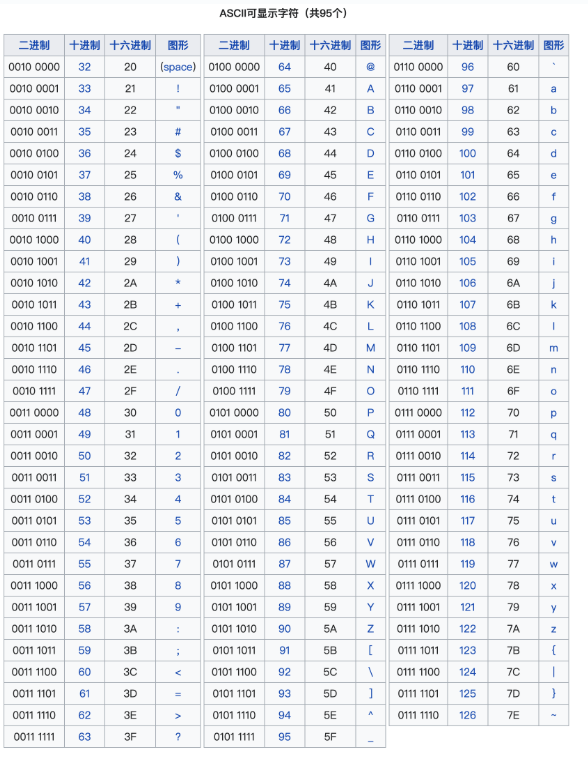
推荐大家可以使用菜鸟教程这个网站
string类型
不知道大家是否学过python的字符串,在python中,字符串是可以像数组那样进行下表操作的。而不幸的是,C++中正常的char类型字符串无法进行下表操作,而string类型可以。不过请注意,string类型没有负索引这个东西:
练习题目1:
题目描述
有 N 只史莱姆排成一排,每只的颜色用一个英文小写字母表示,所有史莱姆的颜色排列成一个字符串 S。
接下来同样颜色的史莱姆会融合成一只,直到所有相邻的史莱姆颜色都不同。问最后剩下几只史莱姆?
输入格式
第1行,1个正整数 N
第2行,字符串 S ,表示每只史莱姆的颜色
输出格式
输出最后剩下史莱姆的数量
输入样例#1
10
aabbbbaaca
输出样例#1
5
cpp
#include <iostream>
using namespace std;
int main()
{
    int n;
    cin >> n;
    string s;
    cin >> s;
    int count = 1;//计数器
    for (int i = 1; i < n; i++)
    {
        if (s[i] != s[i-1])//判断有几只不同的史莱姆(因为如果有不同的就不会计数)
        {
            count++;
        }
    }

    cout << count << endl;

    return 0;
}
string 字符串操作
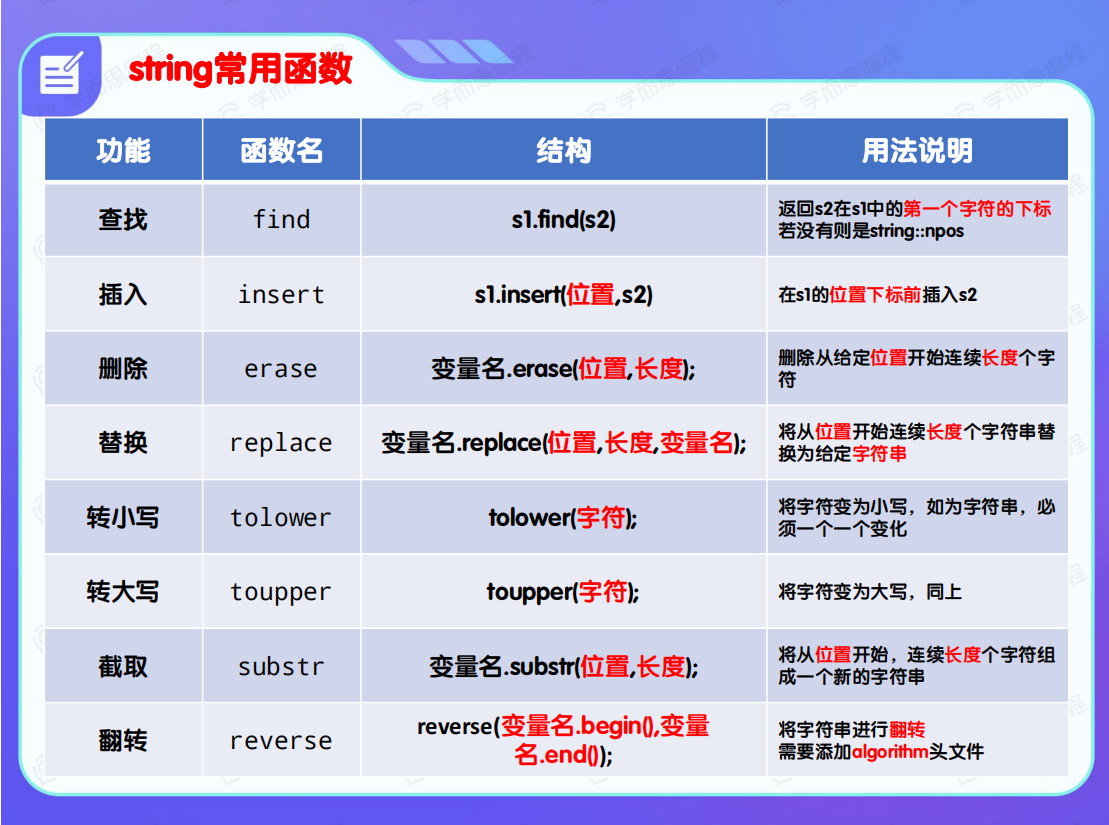
string字符串边界代码表格:
字符串拼接:
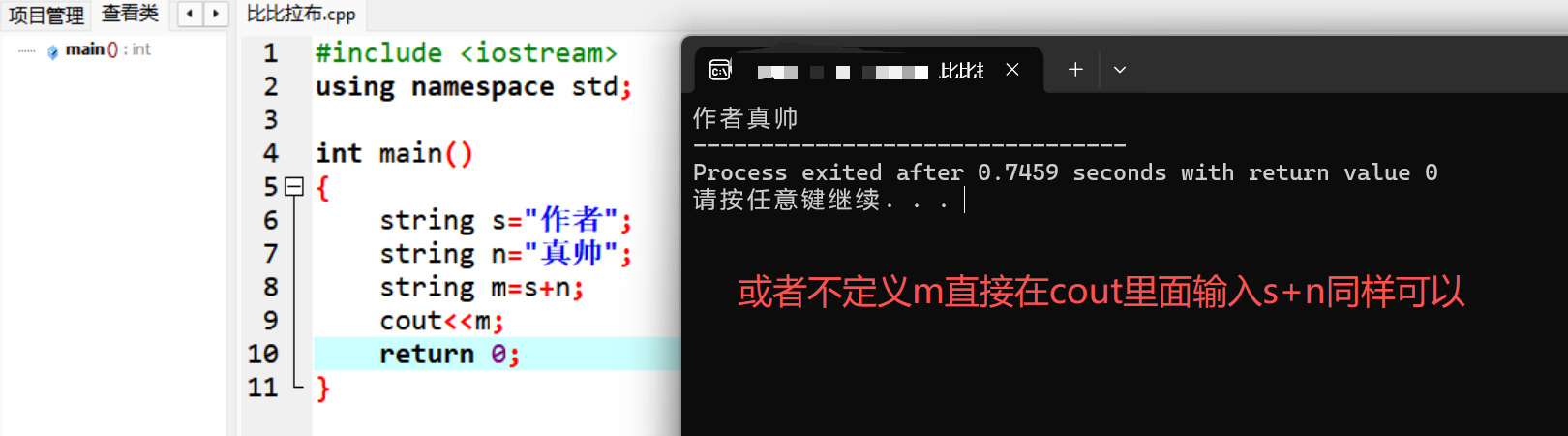
两个字符串是可以像加法一般拼在一起的,请看示例:
cpp
string s="作者";
string n="真帅";
string m=s+n;
cout<<m;
运行这段代码后终端会显示出"作者真帅这四个字"
练习题目1:
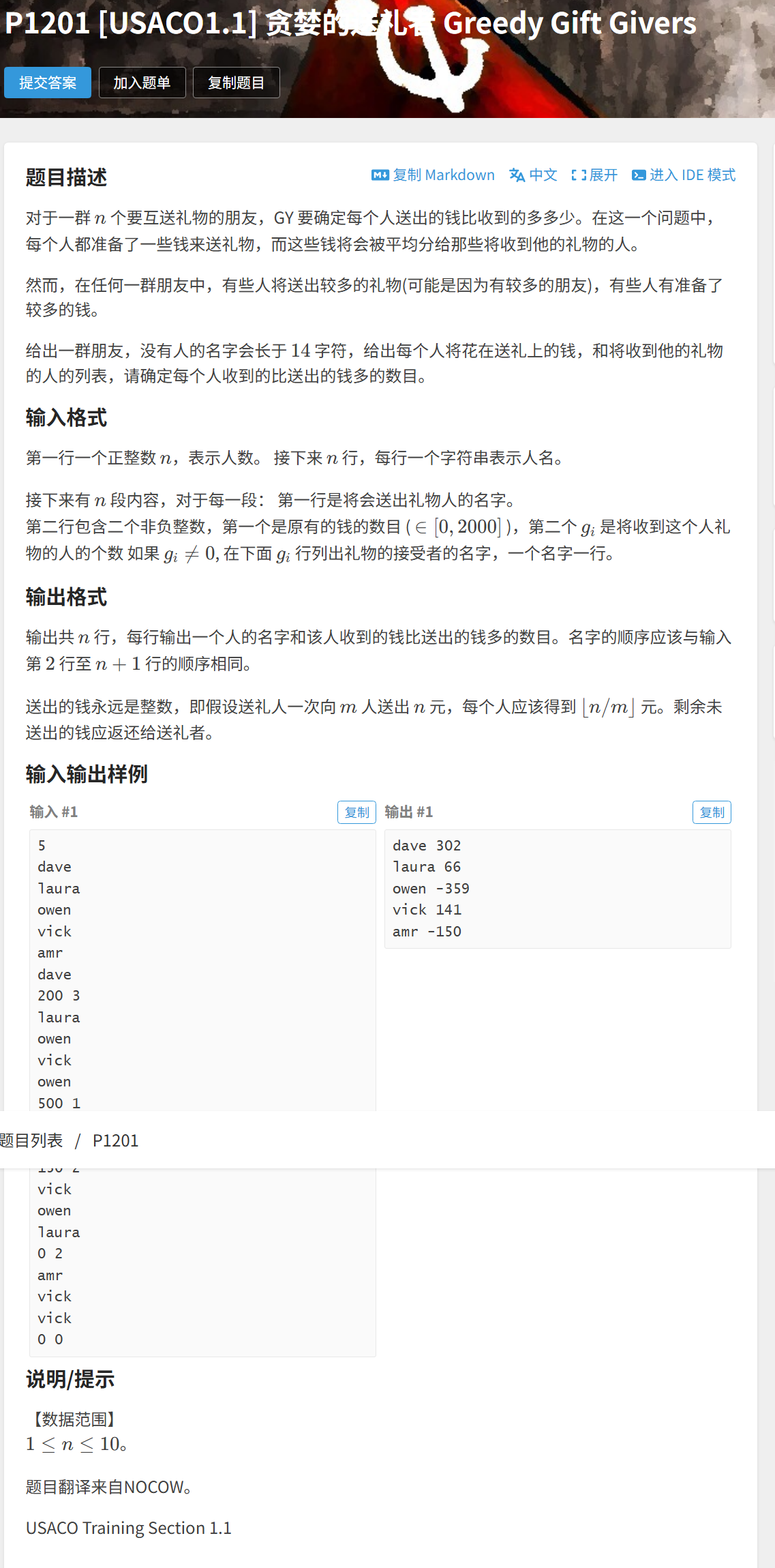
以下是AC代码,可以用来做对拍
cpp
#include<bits/stdc++.h>//万能头文件,十分好用,建议背下来
using namespace std;
map<string,int>money;
int n,l,have;
string name[105],x,buddy;
int main()
{
    cin>>n;
    for(int i=1;i<=n;i++)
        cin>>name[i];
    for(int i=1;i<=n;i++)
    {
        cin>>x>>have>>l;
        if(l==0)continue;
        money[x]-=have;
        int give=floor(have/l);
        money[x]+=(have-l*give);
        for(int i=1;i<=l;i++)
        {
            cin>>buddy;
            money[buddy]+=give;
        }
    }
    for(int i=1;i<=n;i++)
        cout<<name[i]<<" "<<money[name[i]]<<endl;
    return 0;
}
递归初步
1.1 递归的含义与历史
递归是计算机科学的一个不可分割的算法。就像西方不能失去耶路撒冷一样 递归指的是一个函数直接或间接读取自己的过程。但在我们使用递归的时候要注意不要写成死循环,并且我们也要明确我们写这个递归的目的,要逐步地把问题缩小化
1.2 举个栗子
递归死循环:
在小明小的时候听过这样的一个故事:从前有座山,山中有座庙,庙里有个老和尚,老和尚在讲故事,讲的是什么呀?从前有座山,山中有座庙,庙里有个老和尚在讲故事......
像这样的故事没有丝毫特点,就像你写死循环的时候重复给机器讲一个"故事",机器就会困得睡着了,因此就"睡着了"。
1.3 代码示例
cpp
int dg(int n)
{
	if(n==87)//结束条件
	{
		return 1;
	}
	return dg(n+1);//引用时n+1
}
练习题目1:
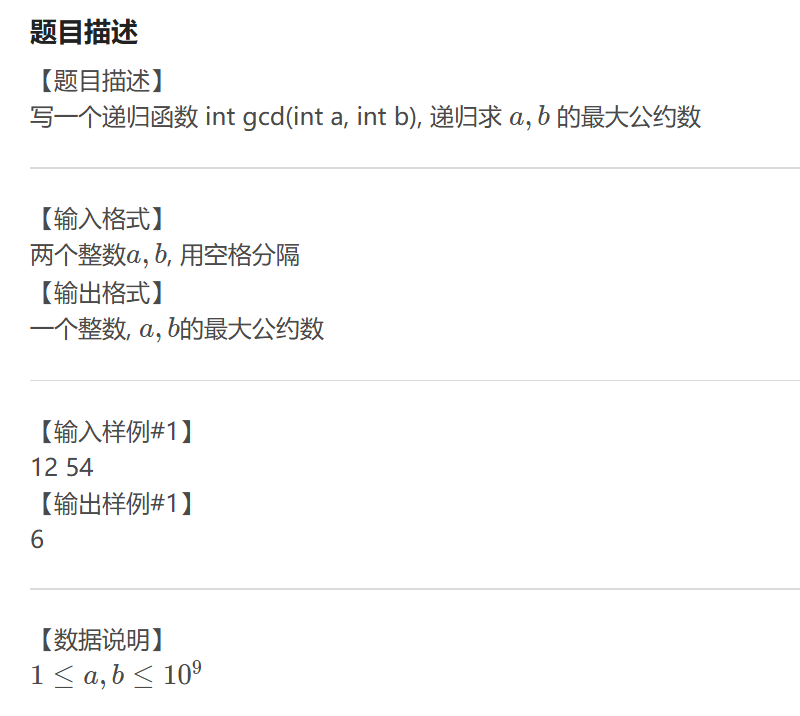
此题为欧几里得公式递归写法,AC代码如下:
cpp
#include<bits/stdc++.h>
using namespace std;
int gcd(int a,int b)
{
    if(a%b==0)
    {
        return b;
    }
    else
    {
        return gcd(b,a%b);//欧几里得算法公式
    }
}

int main() {
	int a, b;
	cin >> a >> b;
	cout << gcd(a, b);//其实万能头下__gcd(a,b)可以直接出答案
    return 0;
}
拔高题目1:
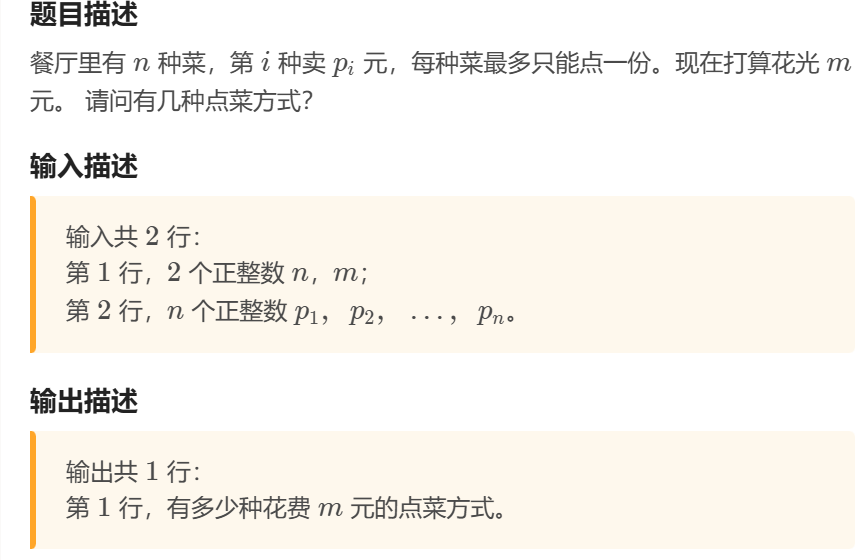
这道题难度较高,使用了我们还未学到的回溯算法,可以自己深研以下
AC代码:
cpp
#include <iostream>
using namespace std;
int n,m,p[15],ans;
bool vis[15];
void dfs(int step)
{
    if(step==n+1)
    {
        int sum=0;
        for(int i=1;i<=n;i++)
        {
            if(vis[i]==1)
            {
                sum+=p[i];
            }
        }
        if(sum==m)
        {
            ans++;
        }
        return ;
    }
    vis[step]=1;
    dfs(step+1);
    vis[step]=0;
    dfs(step+1);
}
int main()
{
    cin>>n>>m;
    for(int i=1;i<=n;i++)
    {
        cin>>p[i];
    }
    dfs(1);
    cout<<ans<<endl;
	return 0;
}
回溯法
1.1 前言
在上一个知识点递归初步里的拔高题目AC代码使用了回溯法,在这个知识点部分我们来学习回溯法。
1.1.1 什么是回溯法?
小明:老师,回溯法是啥捏,是时空大回溯吗。
老师:对也不完全对,回溯指的是在做题时一种试错过程中不可缺少的部分。比如说......
小明:老师!也就是说回溯就是一种不撞南墙不回头的做法 呗。
老师:对了,我们如果发现一种路线不可行,那么我们立即使用下一条路线,而回到原来选择的那个分支的方法,我们称为回溯法,或者说这也是种枚举的过程
1.1.2 回溯法有什么用呢
有人说,回溯法的底层逻辑就是递归,有回溯的地方就有递归。而回溯在做背包一类的题目中有显著优势,背包这个东西我们后文会提到。
2.回溯模板
这是一道全排列枚举题目:
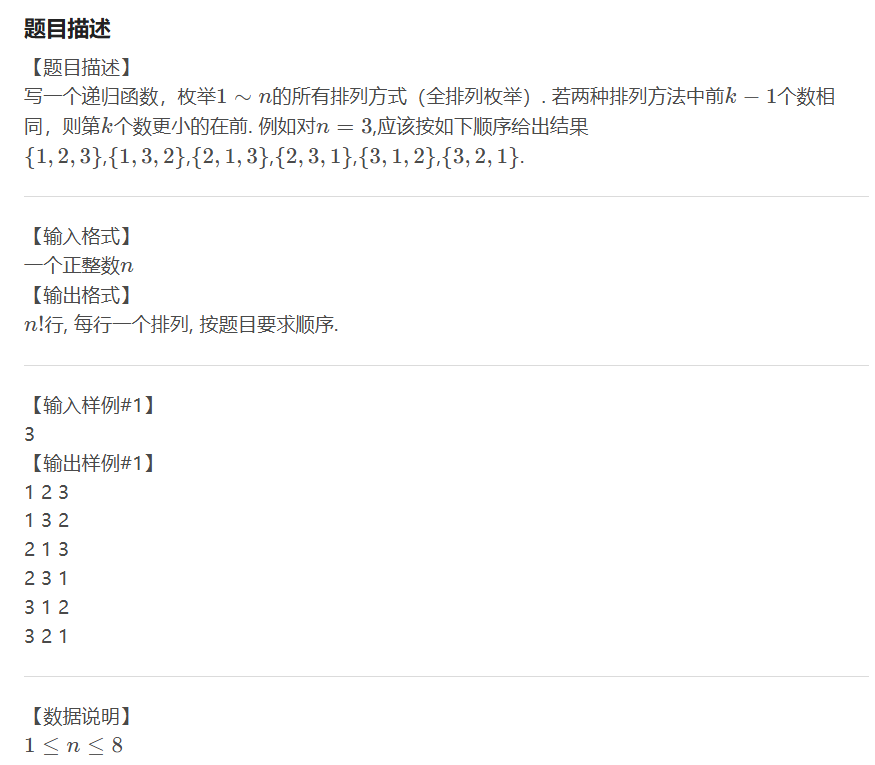
AC代码
cpp
#include<cstdio>
#include<cstring>
#include<iostream>
using namespace std;
bool vis[10];
int plan[10];
int n;
void dfs(int step)
{
    if(step==n+1)
    {
        for(int i=1;i<=n;i++)
        {
            cout<<plan[i]<<" ";
        }
        cout<<endl;
        return ;
    }
    for(int i=1;i<=n;i++)
    {
        if(vis[i]==1)
        {
            continue;
        }
        plan[step]=i;//回溯核心部分
        vis[i]=1;
        dfs(step+1);//调用自己,递归操作
        vis[i]=0;
    }
}
int main()
{
    cin>>n;
    dfs(1);
    return 0;
}