线性表
类似a0,a1,a2,......an−1(i=0,1,2,......,n−1)a_0,a_1,a_2,......a_{n-1}(i=0,1,2,......,n-1)a0,a1,a2,......an−1(i=0,1,2,......,n−1)的列表称为有限列表,其中:
ai−1a_{i-1}ai−1是aia_iai的直接前趋,但a0a_0a0没有,ai+1a_{i+1}ai+1是aia_iai的直接后继,但an−1a_{n-1}an−1没有,长度为nnn,长度为0时称为空表。
两种存储方式
顺序表
逻辑、物理位置均相邻的,称为顺序表。
示例:python的list、tuple,其他语言的数组
链表
类别
1.单链表

示例代码分析:
- python版:
python
###############################  定义单链表的结点    ###############################
class Node(object):                  # 定义节点类
    def __init__(self, elem):        # 定义构造函数,传入相应参数,初始化链表
        self.elem = elem             # 给数据域赋值,即将elem赋值给self.elem
        self.next = None             # 初始设置下一节点为空
###############################  定义单链表相关函数  ###############################
class SingleLinkList(object):        # 创建单链表
    def __init__(self, node=None):   # 使用一个默认参数,传入头结点接收;没有传入时,默认头结点为空
        self.__head = node           # 将传入的node值赋值给self.__head,即链表的头部
    def is_empty(self):              # 编写相关函数便于判断链表是否为空
        return self.__head == None   # 返回self.__head是否为None的布尔值,如果为True,则为空链表
    def length(self):                # 编写相关函数计算链表长度
        cur = self.__head            # 初始化cur游标,用来移动遍历节点,起始位置位于self.__head
        count = 0                    # 初始化用于记录变量的count的值
        while cur != None:           # 当cur获取的值不为None时,即后续还有结点,进入计数循环
            count += 1               # 记录不为空的结点数,总记录+1
            cur = cur.next           # 移动游标,指向下一个结点的位置
        return count                 # 循环完成,即cur为None,后续无结点时,返回count的值
    def travel(self):                # 定义函数遍历整个列表,输出元素内容
        cur = self.__head            # 初始化cur游标,用来移动遍历节点,起始位置位于self.__head
        while cur != None:           # 当cur获取的值不为None时,即后续还有结点,进入遍历循环
            print(cur.elem, end=' ') # 打印结点的数据域的内容,结尾设置为空格便于输出大量内容
            cur = cur.next           # 移动游标,指向下一个结点的位置
        print("\n")                  # 遍历完成,输出换行符,便于后续输出
    def add(self, item):             # 定义链表头部添加元的相关函数
        node = Node(item)            # 使用Node类初始化node结点,传入参数item
        node.next = self.__head      # 将该结点的尾部指针域指向原链表的头部,即将node.next赋值为self.__head
        self.__head = node           # 将新链表的头部指向该元素,即self.__head指向node结点
    def append(self, item):          # 定义向链表尾部添加元素
        node = Node(item)            # 由于特殊情况当链表为空时没有next,所以在前面要做个判断
        if self.is_empty():          # 使用之前判断空链表的的函数进行判断是否为空链表
            self.__head = node       # 如果是,则将该结点设置为首结点
        else:                        # 否则
            cur = self.__head        # 移动游标,遍历链表
            while cur.next != None:  # 遍历链表,直到结尾
                cur = cur.next       # 移动游标到下一个结点
            cur.next = node          # 将原链表尾部结点的指针域指向新的结点
    def insert(self, pos, item):     # 编写函数实现在指定位置添加元素
        if pos <= 0:                 # 如果pos位置在0,当做头插法
            self.add(item)           # 使用之前编写的头插法函数
        elif pos > self.length() - 1:# 如果pos位置比原链表长,那么都当做尾插法来做
            self.append(item)        # 使用之前编写的尾插法函数
        else:                        # 如果都不是
            per = self.__head        # 将插入点移动到链表头部
            count = 0                # 初始化计数变量,记录游标走过的数量
            while count < pos - 1:   # 如果计数结果小于插入点,则继续移动游标
                count += 1           # 计数器自增
                per = per.next       # 移动游标到下一个位置,即当循环退出后,pre指向pos-1位置
            node = Node(item)        # 初始化结点
            node.next = per.next     # 将目标插入点的后面一个元素的位置保存到新节点的指针域,即新节点的下一个结点是插入点的下一个元素
            per.next = node          # 插入结点的数据域,让前一个结点指向新节点
    def remove(self, item):          # 编写函数实现删除节点的功能
        cur = self.__head            # 将游标移动到开头
        pre = None                   # 定义删除点变量,初始化为None
        while cur != None:           # 遍历链表
            if cur.elem == item:     # 如果数据匹配,找到该结点
                if cur == self.__head:# 如果游标在头节点
                    self.__head = cur.next# 更改头节点的指向,指向原链表头节点的下一个结点
                else:                # 否则,继续遍历
                    pre.next = cur.next#修改前一个结点的指针域指向,跳过要删除的结点,达到删除的效果
                break                # 完成操作后,跳出循环
            else:                    # 如果没找到,继续遍历,直到找到
                pre = cur            # 移动待删除的结点的标记
                cur = cur.next       # 移动游标到下一个结点
    def search(self, item):          # 编写函数实现查找节点是否存的功能
        cur = self.__head            # 移动游标到链表的开头
        while not cur:               # 当游标没有在末尾时,继续遍历
            if cur.elem == item:     # 如果成功查找到结点
                return True          # 返回布尔值True,代表找到
            else:                    # 否则
                cur = cur.next       # 移动游标到下一个元素,继续查找
        return False                 # 如果遍历整个链表都没找到,返回布尔值False,代表未找到该元素
###############################  运行代码  ###############################
if __name__ == "__main__":           # 程序入口,开始执行代码
    ll = SingleLinkList()            # 实例化类,初始化链表ll
    print(ll.is_empty())             # 判断是否为空列表
    print(ll.length())               # 获取链表长度
    ll.append(3)                     # 向链表尾部添加结点,值为3
    ll.add(999)                      # 向链表头部添加结点,值为999
    ll.insert(-3, 110)               # 向链表添加一个结点,位置是-3,即倒数第三个前面,值为110
    ll.insert(99, 111)               # 向链表添加一个结点,位置是99,但没有99个结点,则添加到链表末尾,值为111
    print(ll.is_empty())             # 再次判断链表是否为空链表
    print(ll.length())               # 再次获取链表长度
    ll.travel()                      # 遍历并打印当前链表的所有结点的值
    ll.remove(111)                   # 移除值为111的结点
ll.travel() # 再次遍历,查看删除是否成功- c语言版:
c
#include <stdio.h>
#include <stdlib.h>
/*========定义链表结点结构========*/
typedef struct node {
    /*定义数据域,这里采用整型变量演示*/
    int item;
    /*定义指针域,链表一般指向下一个节点的位置*/
    struct node * next;
} Node;

/*========初始化链表函数========*/
Node * initLinkList(int totalNode)
{
    /*定义头指针,当前还没有结点,暂时为NULL*/
    Node * head = NULL;
    /*定义头节点,使用malloc开辟合适的空间*/
    Node * headNode = (Node *)malloc(sizeof(Node));
    /*为头节点的数据域填充数据*/
    headNode->item = 0;
    /*将头节点的指针域指向下一个结点,当前没有,暂时为NULL*/
    headNode->next = NULL;
    /*将头指针指向头结点*/
    head = headNode;
    /*定义一个临时变量作为游标,初始化指向头节点*/
    Node * cur = headNode;
    /*根据传入的结点数初始化链表的每个结点*/
    for (int i = 1; i < totalNode; i++) {
        /*根据结点所占的大小分配空间*/
        Node * eachNode = (Node *)malloc(sizeof(Node));
        /*为了简便,我们直接使用循环变量赋值,当然也可以用其他的*/
        eachNode->item = i;
        /*每个结点在当次循环中均是最后一个,所以next指向NULL*/
        eachNode->next = NULL;
        /*将当前结点的位置赋值给上一个结点的指针域*/
        cur->next = eachNode;
        /*修改游标,指向当前结点*/
        cur = cur->next;
    }
    /*返回头节点的位置的指针*/
    return head;
}
int insectItem(Node * head, int item, int position)
{
    /*定义一个插入结点,初始化指向空*/
    Node * insectNode = NULL;
    /*定义游标,初始化指向传入链表的头节点*/
    Node * cur = head;
    /*遍历链表,找到插入的位置所在的结点*/
    for (int i = 1; i < position; i++) {
        /*移动游标,指向下一个结点*/
        cur = cur -> next;
        /*判断游标在给定位置范围内是否到头*/
        if (NULL == cur) {
            /*输出报错信息,跳出函数*/
            printf_s("结点不存在!插入失败!\n");
            return -1;
        }
    }
    /*为插入的值建立结点,分配空间*/
    insectNode = (Node *)malloc(sizeof(Node));
    /*将传入的item的值赋值到新结点的数据域中*/
    insectNode->item = item;
    /*将插入的结点和后继结点连接上*/
    insectNode->next = cur->next;
    /*断开原链表前结点的连接,将前趋结点的下一个结点指向新节点*/
    cur->next = insectNode;
    return 1;
}
int deleteItem(Node * head, int item)
{
    /*定义删除位置变量,游标变量指向链表头结点*/
    Node * position,*cur = head;
    /*定义变量记录是否查找到对应结点*/
    int findOut = 0;
    /*遍历链表查找结点,直到结尾*/
    while (cur ->next) {
        /*判断游标的下一个结点的数据域是否是要查找的内容*/
        if (item == cur->next->item) {
            /*修改变量,标记为查找到对应结点,并跳出循环*/
            findOut = 1;
            break;
        }
        /*否则,指向下一个结点,继续遍历*/
        cur = cur ->next;
    }
    /*如果未找到目标结点*/
    if (0 == findOut) {
        /*输出报错信息并跳出函数*/
        printf_s("结点不存在!删除失败!\n");
        return -1;
    } else {
        /*找到对应结点,将删除位置指向该节点*/
        position = cur->next;
        /*将待删除结点的上一个结点的指针域指向待删除结点的下一个结点,断开待删除结点的两头连接*/
        cur->next = cur->next->next;
        /*用free函数清理待删除结点的空间,删除对应结点*/
        free(position);
        return 1;
    }
}
int findItem(Node * head, int item)
{
    /*定义游标,指向头节点的下一个结点*/
    Node * cur = head->next;
    /*遍历链表查找指定元素*/
    for (int i = 1; cur != NULL; i++) {
        /*如果游标所在结点的数据域和要查找的相同*/
        if (cur->item == item) {
            /*返回所在位置*/
            return i;
        }
        /*移动游标到下一个结点*/
        cur = cur->next;
    }
    return -1;
}
int editItem(Node * head, int item, int newItem)
{
    /*定义游标,指向头节点的下一个结点*/
    Node * cur = head->next;
    /*遍历链表查找指定元素*/
    while (cur) {
        /*如果游标所在结点的数据域和要查找的相同*/
        if (cur->item == item) {
            /*将数据域的数据替换为新数据*/
            cur ->item = newItem;
            /*返回所在位置*/
            return 1;
        }
        /*移动游标到下一个结点*/
        cur = cur->next;
    }
    return -1;
}
void travel(Node * head)
{
    /*定义游标,指向头节点的下一个结点*/
    Node * cur = head->next;
    /*遍历链表查找指定元素*/
    while (cur) {
        /*输出结点的数据域的数据*/
        printf_s("%d ",cur->item);
        /*移动游标到下一个结点*/
        cur = cur->next;
    }
    /*遍历输出完成,换行继续下一个函数*/
    printf_s("\n");
}
void freeLinkList(Node * head)
{
    /*定义变量,遍历链表进行清理*/
    Node * freeNode = NULL;
    /*定义游标,指向头节点的下一个结点*/
    Node * cur = head->next;
    /*当游标未到达链表尾部时*/
    while(cur ->next)
    {
        /*待清理的结点标记游标所在结点的下一个结点*/
        freeNode = cur->next;
        /*将游标的下一个结点指向原下一个结点的下一个结点*/
        cur->next = cur->next->next;
        /*调用free函数清理已标记的结点*/
        free(freeNode);
    }
    /*当所有后继结点都清理完成后,清理头节点*/
    free(head);
}
/*========程序入口========*/
int main()
{
    Node * headLinkListNode = initLinkList(5);
    printf_s("初始化链表为:\n");
    travel(headLinkListNode);
    printf("在第 3 的位置上添加元素 6:\n");
    insectItem(headLinkListNode, 6, 3);
    travel(headLinkListNode);
    printf("删除元素4:\n");
    deleteItem(headLinkListNode, 4);
    travel(headLinkListNode);
    printf("查找元素 2:\n");
    printf("元素 2 的位置为:%d\n", findItem(headLinkListNode, 2));
    printf("更改元素 1 的值为 6:\n");
    editItem(headLinkListNode, 1, 6);
    travel(headLinkListNode);
    freeLinkList(headLinkListNode);
    return 0;
}
2.循环链表
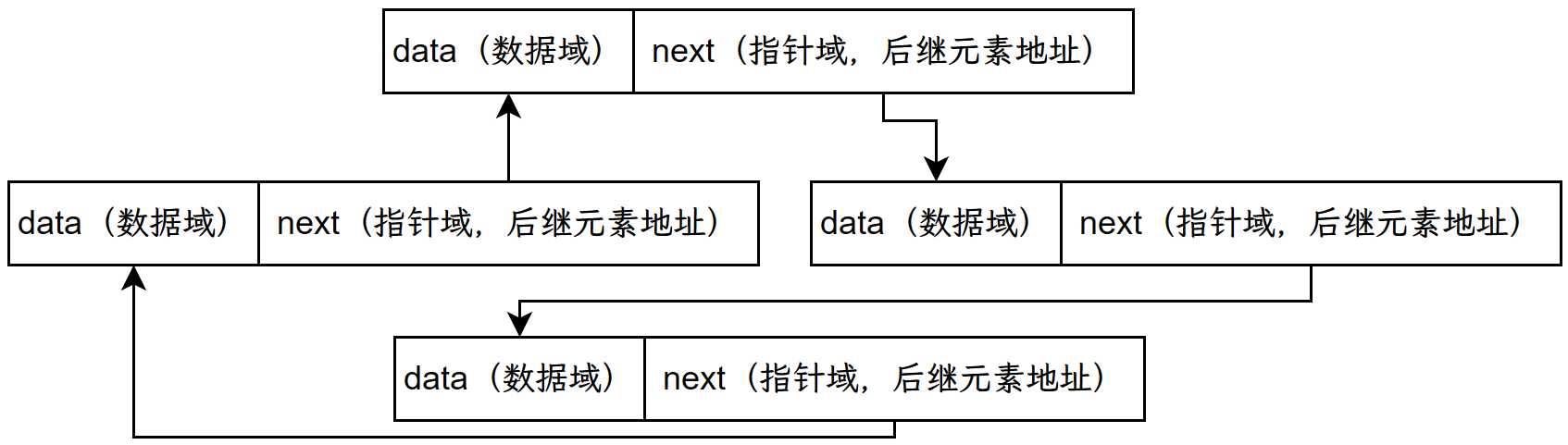
3.双向链表

相关操作
1. 前移策略
前移策略是一种基于局部性原理的自组织链表优化算法,其核心思想是"最近被访问的节点在将来很可能再次被访问",因此通过将刚访问过的节点直接移动到链表头部,使得频繁访问的热点数据始终位于链表前端,从而大幅减少后续查找这些数据的平均遍历长度,提升整体访问效率。
实现步骤
- 遍历链表查找目标节点;
- 若找到目标节点且该节点不是头节点,则将其从原位置摘除;
- 将该节点插入到链表头部,更新头指针指向该节点。
Python代码
python
class Node:
    def __init__(self, data):
        self.data = data
        self.next = None

class MoveToFrontList:
    def __init__(self):
        self.head = None

    def search_and_move(self, key):
        if not self.head:
            return False
        if self.head.data == key:
            return True

        current = self.head
        while current.next and current.next.data != key:
            current = current.next

        if not current.next:
            return False

        target = current.next
        current.next = target.next
        target.next = self.head
        self.head = target
        return True
C代码
c
#include <stdio.h>
#include <stdlib.h>

typedef struct Node {
    int data;
    struct Node* next;
} Node;

typedef struct {
    Node* head;
} MoveToFrontList;

void init_list(MoveToFrontList* list) {
    list->head = NULL;
}

int search_and_move(MoveToFrontList* list, int key) {
    if (!list->head) return 0;
    if (list->head->data == key) return 1;

    Node* current = list->head;
    while (current->next && current->next->data != key) {
        current = current->next;
    }

    if (!current->next) return 0;

    Node* target = current->next;
    current->next = target->next;
    target->next = list->head;
    list->head = target;
    return 1;
}
2. 交换策略
交换策略是另一种自组织链表优化方法,相比前移策略更加温和,它不将访问节点直接移到头部,而是仅与前驱节点交换位置,这样既能逐步将热点数据向链表前端移动,又能避免因单次偶然访问导致链表结构剧烈变动,适合访问频率分布相对均匀的场景。
实现步骤
- 遍历链表查找目标节点,同时记录其前驱节点;
- 若找到目标节点且该节点不是头节点,则交换目标节点与前驱节点;
- 若目标节点是头节点,则无需操作。
Python代码
python
class Node:
    def __init__(self, data):
        self.data = data
        self.next = None

class TransposeList:
    def __init__(self):
        self.head = None

    def search_and_transpose(self, key):
        if not self.head or self.head.data == key:
            return True

        prev = self.head
        current = self.head.next

        while current and current.data != key:
            prev = current
            current = current.next

        if not current:
            return False

        # 交换数据域
        prev.data, current.data = current.data, prev.data
        return True
C代码
c
#include <stdio.h>
#include <stdlib.h>

typedef struct Node {
    int data;
    struct Node* next;
} Node;

typedef struct {
    Node* head;
} TransposeList;

void init_list(TransposeList* list) {
    list->head = NULL;
}

int search_and_transpose(TransposeList* list, int key) {
    if (!list->head || list->head->data == key) return 1;

    Node* prev = list->head;
    Node* current = list->head->next;

    while (current && current->data != key) {
        prev = current;
        current = current->next;
    }

    if (!current) return 0;

    // 交换数据域
    int temp = prev->data;
    prev->data = current->data;
    current->data = temp;
    return 1;
}
3. 环路检测与环路断开
基于弗洛伊德判圈算法,利用快慢指针的速度差检测环路:若链表存在环,快指针(每次走两步)最终会在环内追上慢指针(每次走一步);若链表无环,快指针会先到达链表末尾(NULL),通过判断两指针是否相遇即可确定是否存在环路。
实现步骤
- 初始化快慢指针均指向链表头节点;
- 循环移动指针:慢指针每次前进一步,快指针每次前进两步;
- 若快指针或其下一节点为NULL,说明无环;
- 若快慢指针相遇,说明存在环路。
Python代码
python
class Node:
    def __init__(self, data):
        self.data = data
        self.next = None

def has_cycle(head):
    if not head or not head.next:
        return False

    slow = head
    fast = head

    while fast and fast.next:
        slow = slow.next
        fast = fast.next.next

        if slow == fast:
            return True

    return False
C代码
c
#include <stdio.h>
#include <stdlib.h>

typedef struct Node {
    int data;
    struct Node* next;
} Node;

int has_cycle(Node* head) {
    if (!head || !head->next) return 0;

    Node* slow = head;
    Node* fast = head;

    while (fast && fast->next) {
        slow = slow->next;
        fast = fast->next->next;

        if (slow == fast) {
            return 1;
        }
    }

    return 0;
}
4. 链表反转
通过迭代方式逐个反转节点的指针方向,将原链表中每个节点的next指针从指向后继节点改为指向前驱节点,最终使整个链表的遍历方向完全颠倒,核心是维护三个指针分别记录当前节点、前驱节点和临时保存的后继节点,避免链表断裂。
实现步骤
- 初始化前驱指针为NULL,当前指针为头节点;
- 循环处理每个节点:保存当前节点的下一节点,将当前节点的next指向前驱节点,前驱指针和当前指针依次后移;
- 当当前指针为NULL时,前驱指针即为新的头节点。
Python代码
python
class Node:
    def __init__(self, data):
        self.data = data
        self.next = None

def reverse_list(head):
    prev = None
    current = head

    while current:
        next_temp = current.next
        current.next = prev
        prev = current
        current = next_temp

    return prev
C代码
c
#include <stdio.h>
#include <stdlib.h>

typedef struct Node {
    int data;
    struct Node* next;
} Node;

Node* reverse_list(Node* head) {
    Node* prev = NULL;
    Node* current = head;

    while (current) {
        Node* next_temp = current->next;
        current->next = prev;
        prev = current;
        current = next_temp;
    }

    return prev;
}