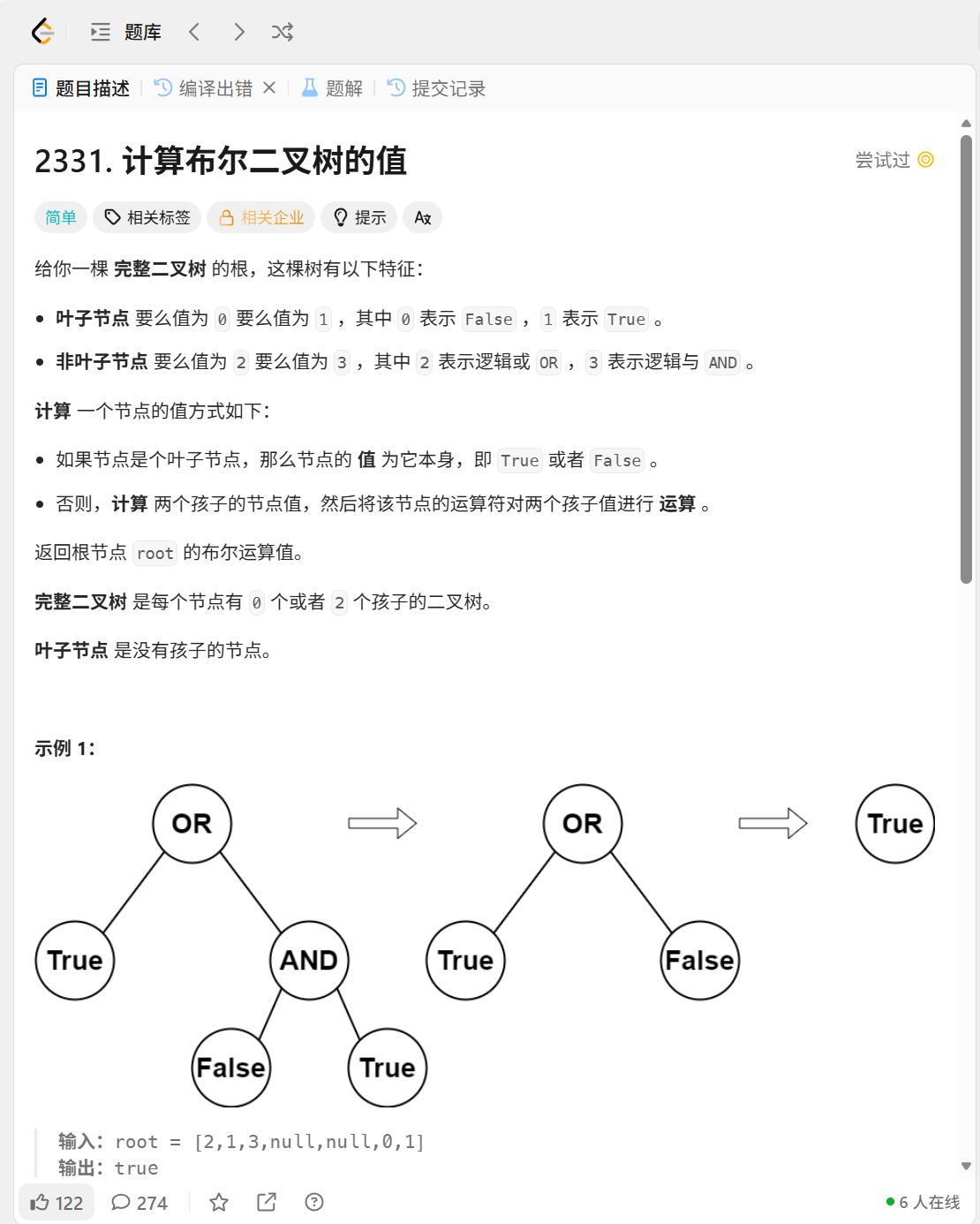

/**
* Definition for a binary tree node.
* struct TreeNode {
* int val;
* TreeNode *left;
* TreeNode *right;
* TreeNode() : val(0), left(nullptr), right(nullptr) {}
* TreeNode(int x) : val(x), left(nullptr), right(nullptr) {}
* TreeNode(int x, TreeNode *left, TreeNode *right) : val(x), left(left), right(right) {}
* };
*/
class Solution {
public:
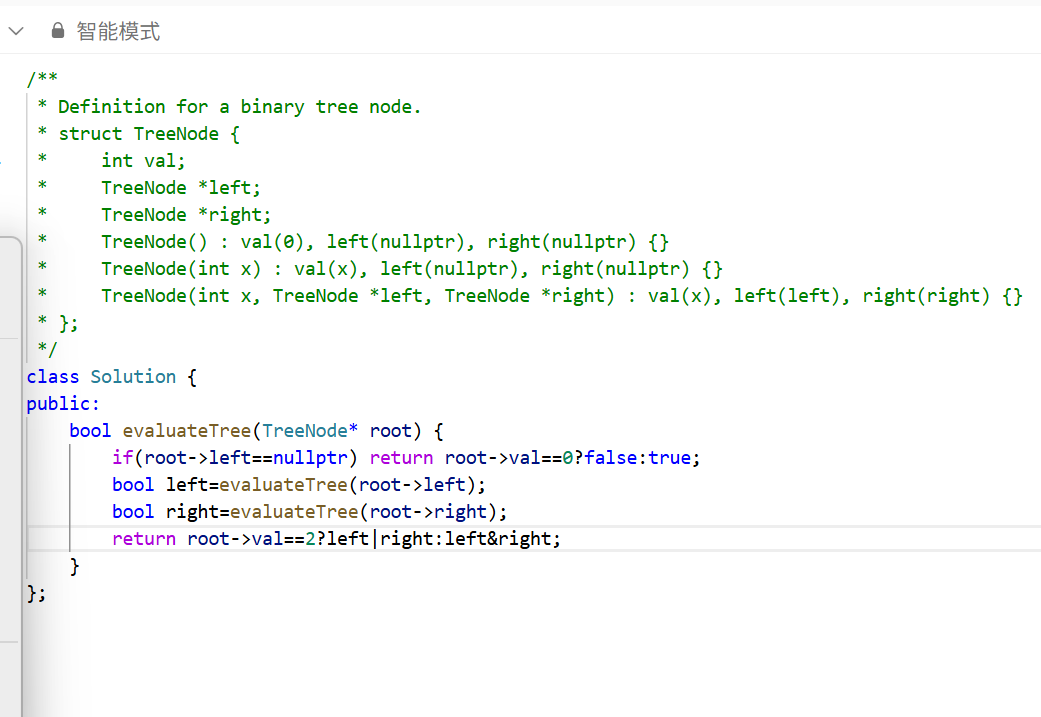
bool evaluateTree(TreeNode* root) {
if(root->left==nullptr) return root->val==0?false:true;
bool left=evaluateTree(root->left);
bool right=evaluateTree(root->right);
return root->val==2?left|right:left&right;
}
};
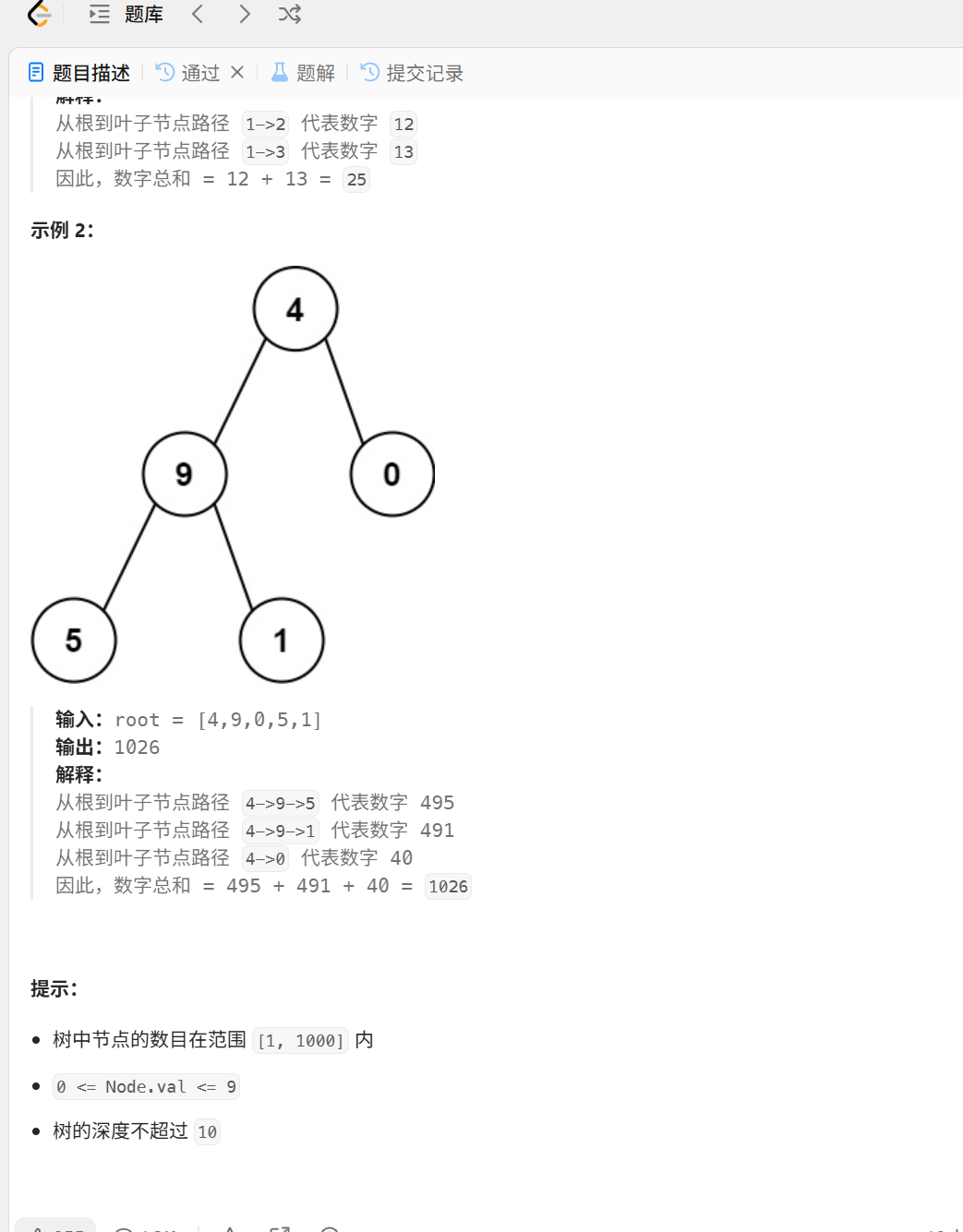

/**
* Definition for a binary tree node.
* struct TreeNode {
* int val;
* TreeNode *left;
* TreeNode *right;
* TreeNode() : val(0), left(nullptr), right(nullptr) {}
* TreeNode(int x) : val(x), left(nullptr), right(nullptr) {}
* TreeNode(int x, TreeNode *left, TreeNode *right) : val(x), left(left), right(right) {}
* };
*/
class Solution {
public:
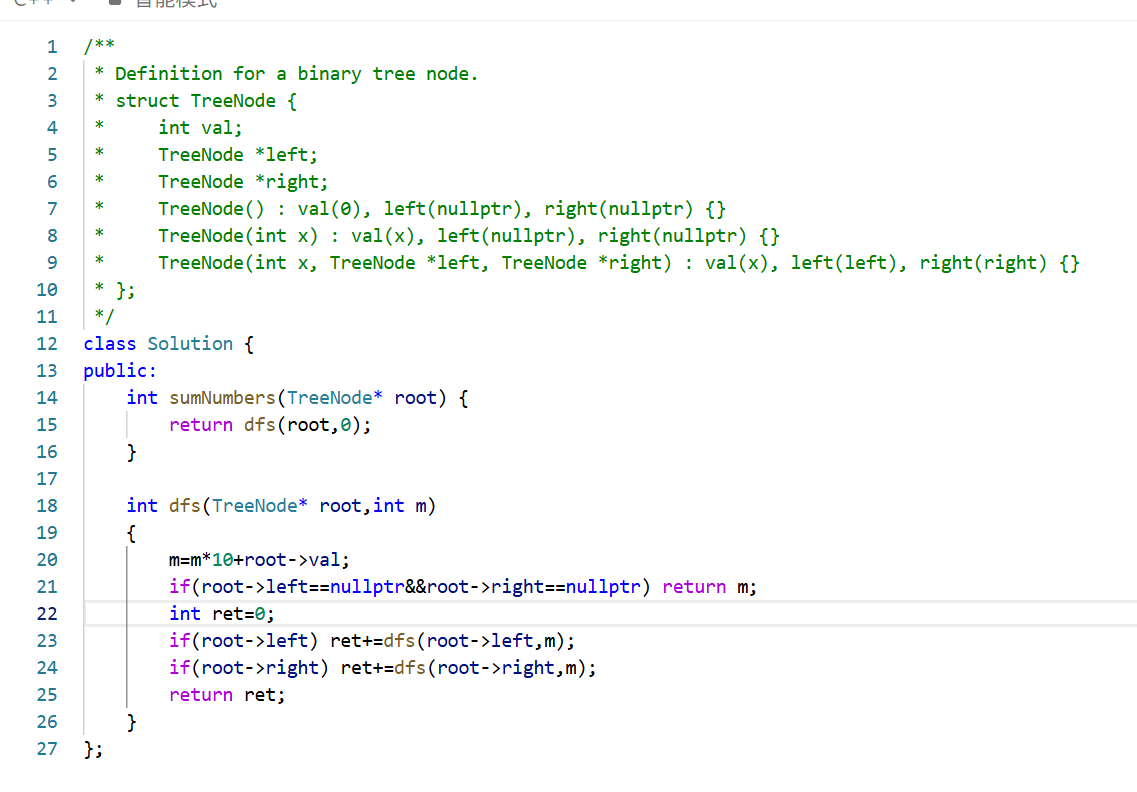
int sumNumbers(TreeNode* root) {
return dfs(root,0);
}
int dfs(TreeNode* root,int m)
{
m=m*10+root->val;
if(root->left==nullptr&&root->right==nullptr) return m;
int ret=0;
if(root->left) ret+=dfs(root->left,m);
if(root->right) ret+=dfs(root->right,m);
return ret;
}
};

/**
* Definition for a binary tree node.
* struct TreeNode {
* int val;
* TreeNode *left;
* TreeNode *right;
* TreeNode() : val(0), left(nullptr), right(nullptr) {}
* TreeNode(int x) : val(x), left(nullptr), right(nullptr) {}
* TreeNode(int x, TreeNode *left, TreeNode *right) : val(x), left(left), right(right) {}
* };
*/
class Solution {
public:
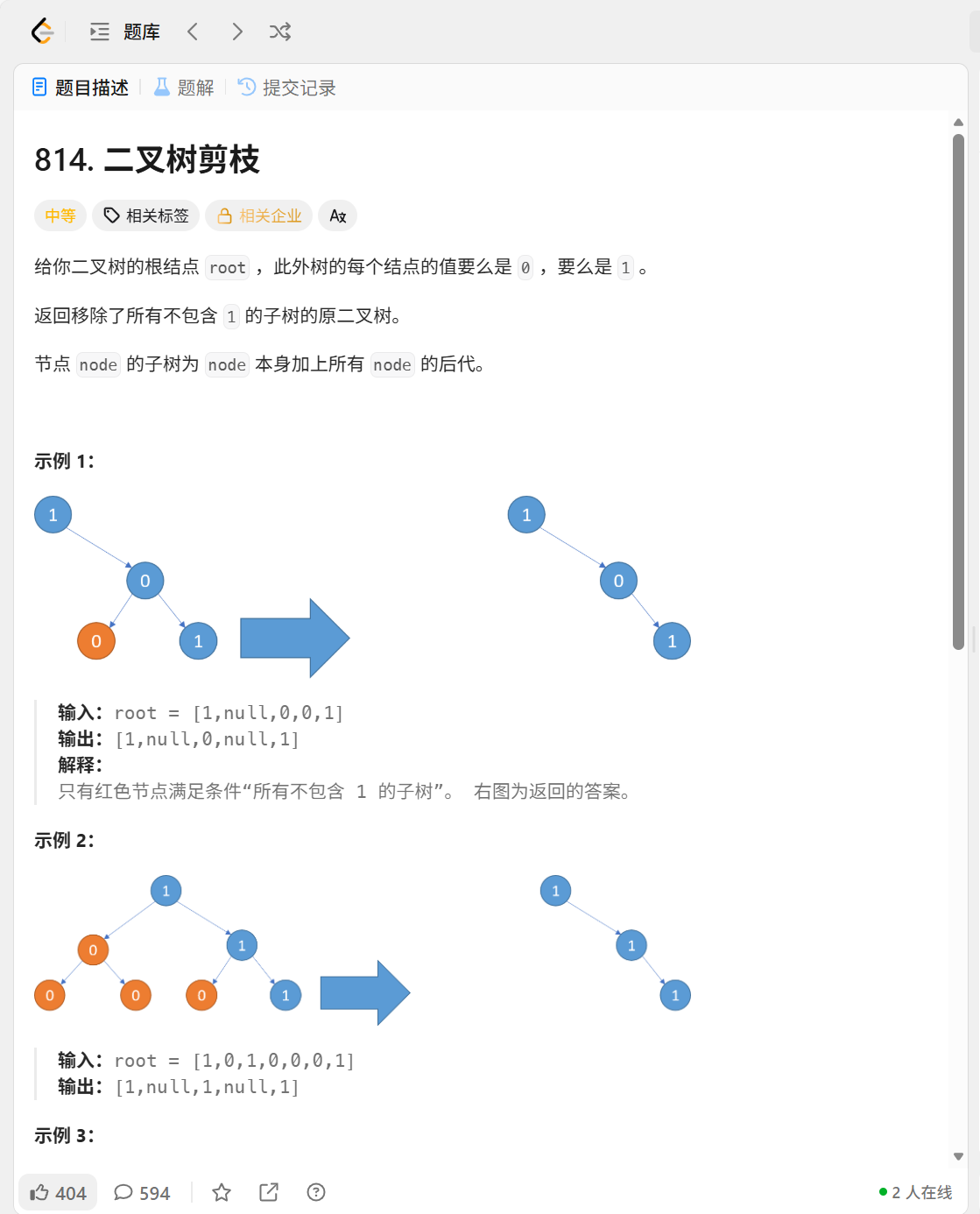
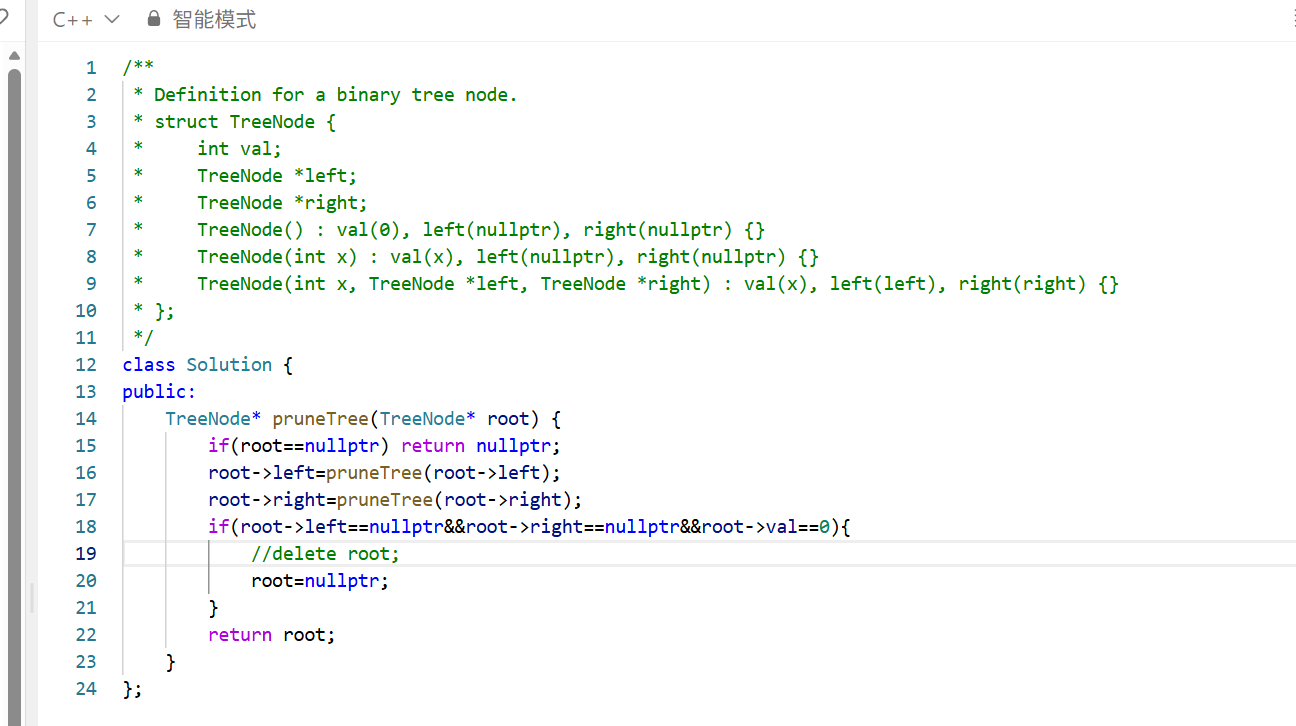
TreeNode* pruneTree(TreeNode* root) {
if(root==nullptr) return nullptr;
root->left=pruneTree(root->left);
root->right=pruneTree(root->right);
if(root->left==nullptr&&root->right==nullptr&&root->val==0){
//delete root;
root=nullptr;
}
return root;
}
};
我们来补充一下tuple和memset的用法:
tuple:
用于三个元素的容器,用get<>(名称)来进行索引
memset;
用于将数据清零

**
* Definition for a binary tree node.
* struct TreeNode {
* int val;
* TreeNode *left;
* TreeNode *right;
* TreeNode() : val(0), left(nullptr), right(nullptr) {}
* TreeNode(int x) : val(x), left(nullptr), right(nullptr) {}
* TreeNode(int x, TreeNode *left, TreeNode *right) : val(x), left(left), right(right) {}
* };
*/
class Solution {
public:
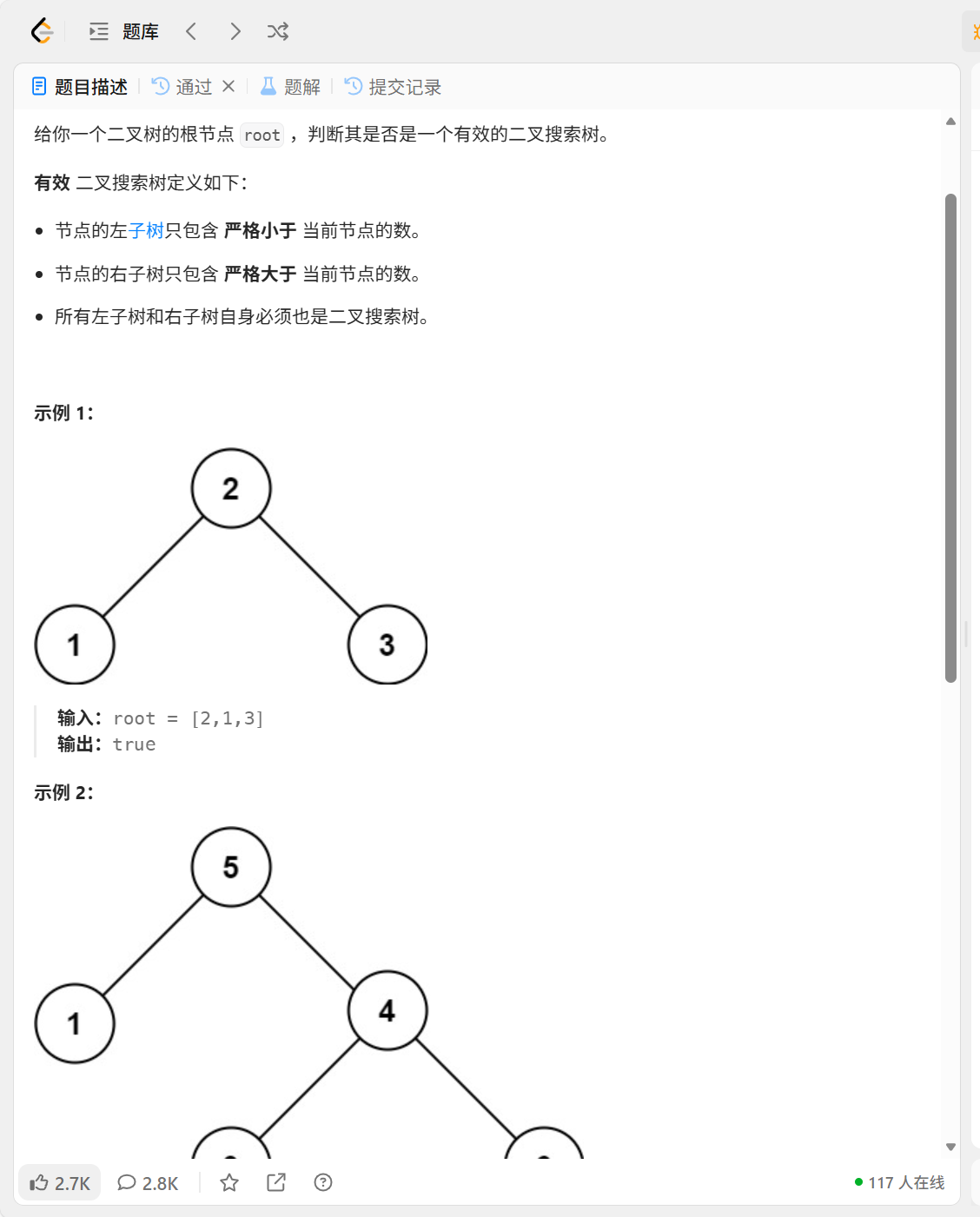
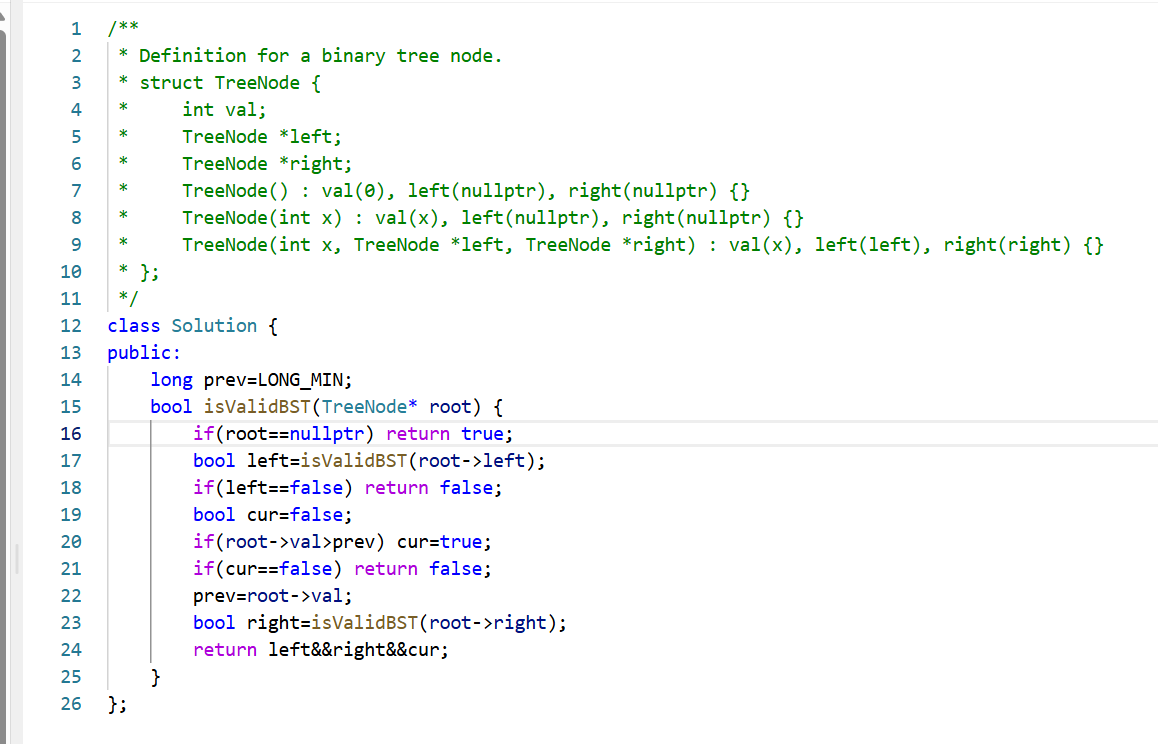
long prev=LONG_MIN;
bool isValidBST(TreeNode* root) {
if(root==nullptr) return true;
bool left=isValidBST(root->left);
if(left==false) return false;
bool cur=false;
if(root->val>prev) cur=true;
if(cur==false) return false;
prev=root->val;
bool right=isValidBST(root->right);
return left&&right&&cur;
}
};

/**
* Definition for a binary tree node.
* struct TreeNode {
* int val;
* TreeNode *left;
* TreeNode *right;
* TreeNode() : val(0), left(nullptr), right(nullptr) {}
* TreeNode(int x) : val(x), left(nullptr), right(nullptr) {}
* TreeNode(int x, TreeNode *left, TreeNode *right) : val(x), left(left), right(right) {}
* };
*/
class Solution {
public:
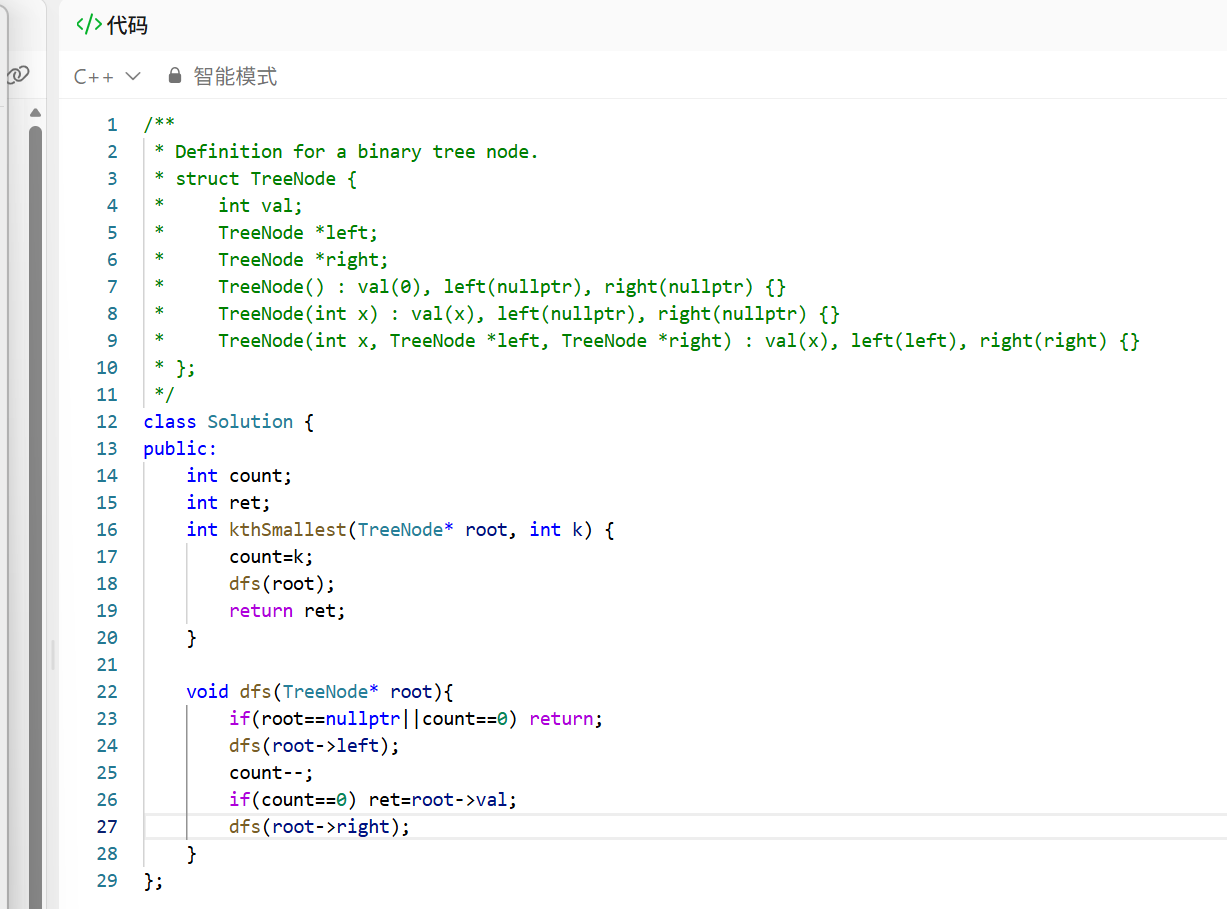
int count;
int ret;
int kthSmallest(TreeNode* root, int k) {
count=k;
dfs(root);
return ret;
}
void dfs(TreeNode* root){
if(root==nullptr||count==0) return;
dfs(root->left);
count--;
if(count==0) ret=root->val;
dfs(root->right);
}
};

/**
* Definition for a binary tree node.
* struct TreeNode {
* int val;
* TreeNode *left;
* TreeNode *right;
* TreeNode() : val(0), left(nullptr), right(nullptr) {}
* TreeNode(int x) : val(x), left(nullptr), right(nullptr) {}
* TreeNode(int x, TreeNode *left, TreeNode *right) : val(x), left(left), right(right) {}
* };
*/
class Solution {
public:
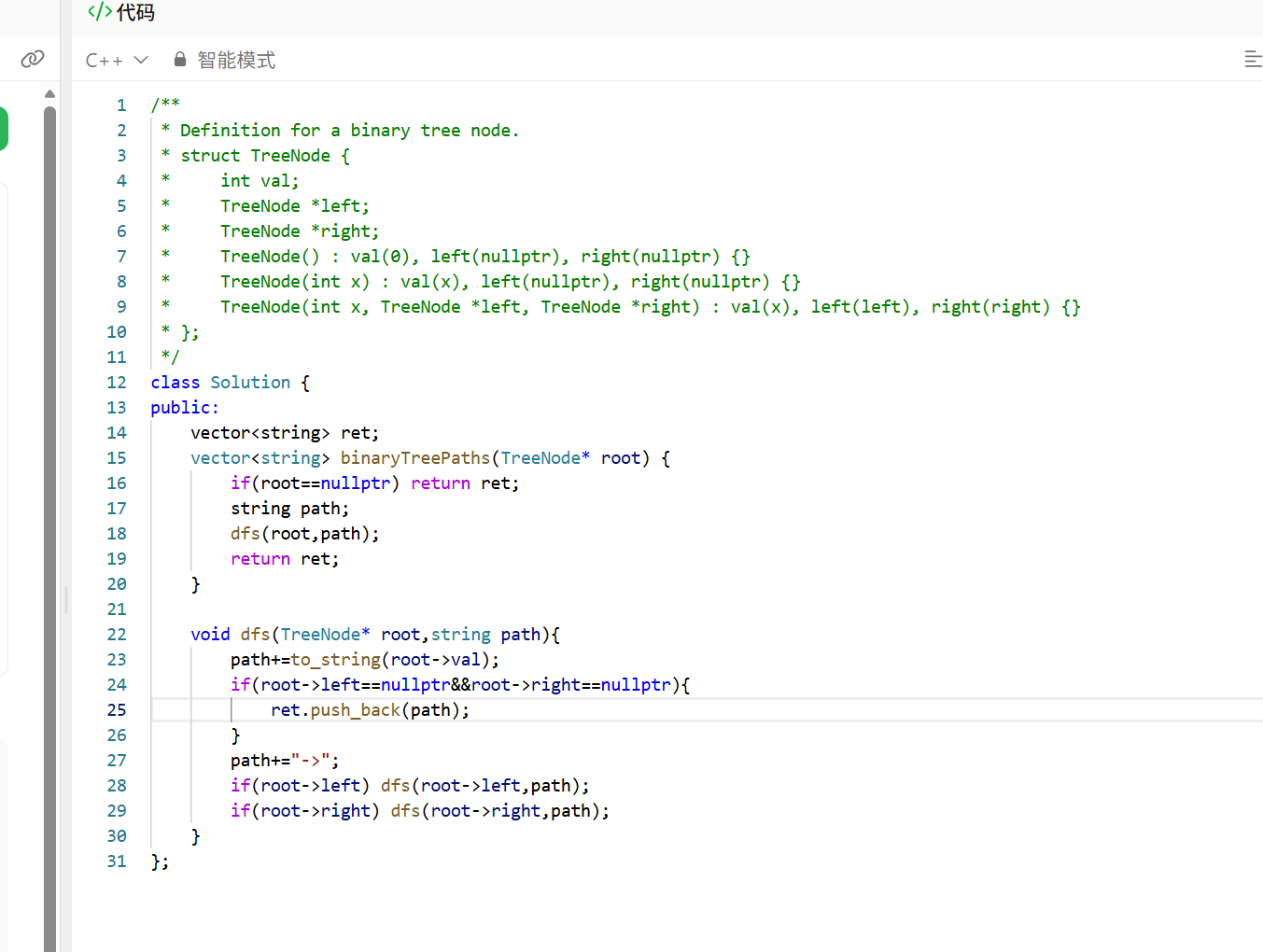
vector<string> ret;
vector<string> binaryTreePaths(TreeNode* root) {
if(root==nullptr) return ret;
string path;
dfs(root,path);
return ret;
}
void dfs(TreeNode* root,string path){
path+=to_string(root->val);
if(root->left==nullptr&&root->right==nullptr){
ret.push_back(path);
}
path+="->";
if(root->left) dfs(root->left,path);
if(root->right) dfs(root->right,path);
}
};
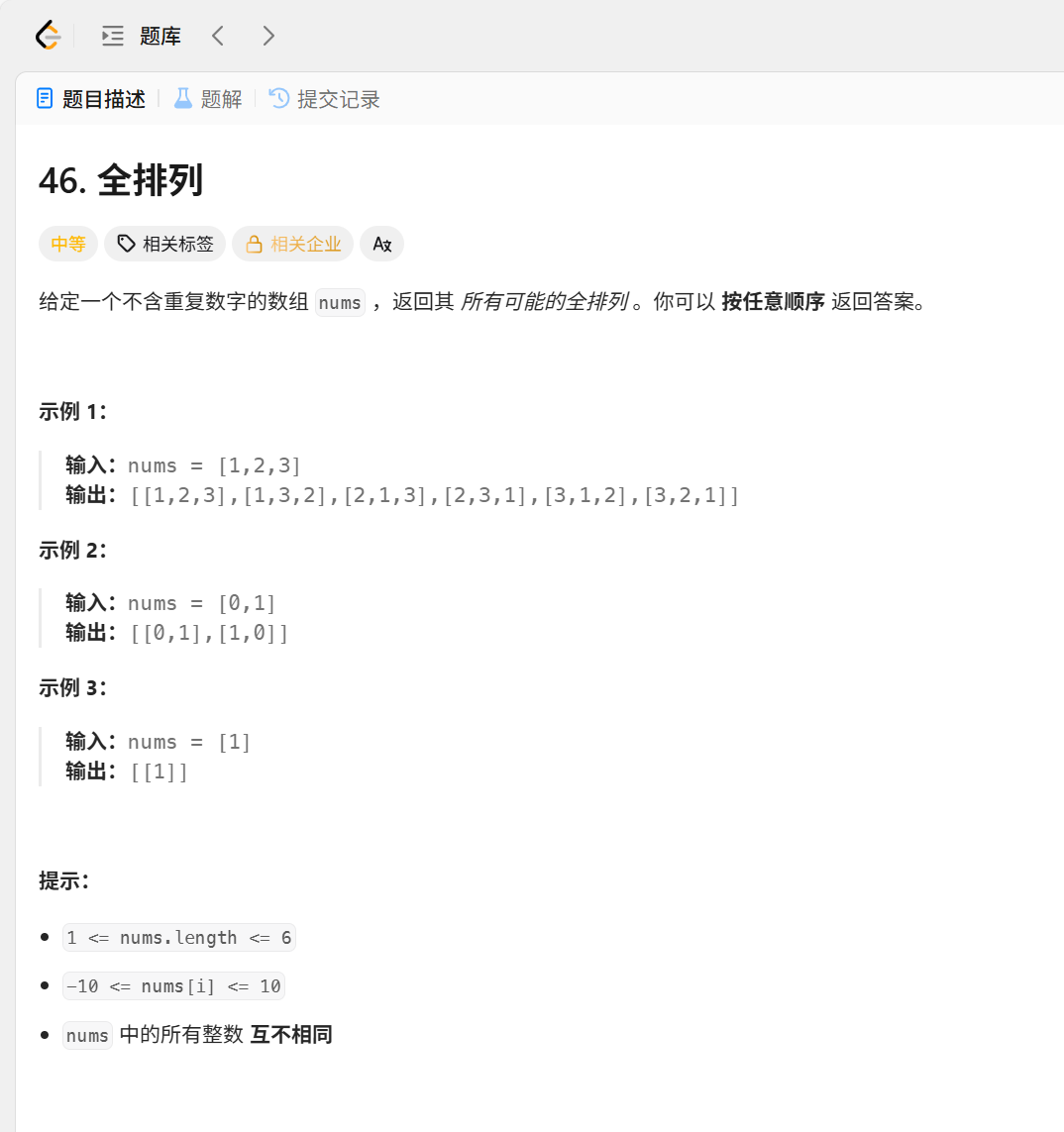
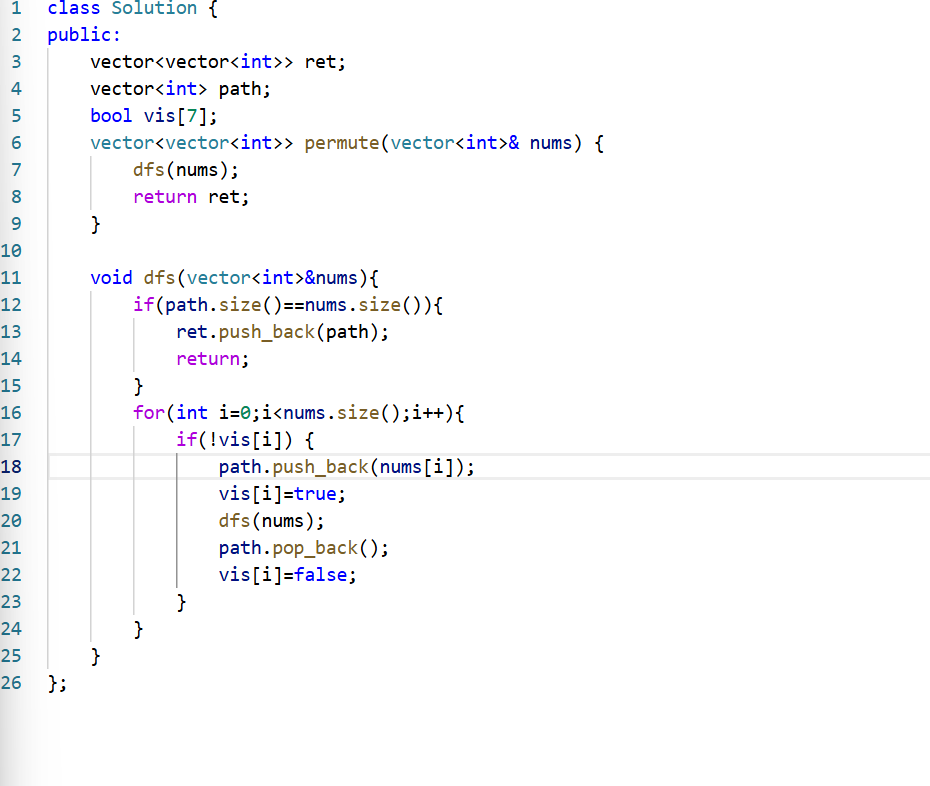

class Solution {
public:
vector<vector<int>> ret;
vector<int> path;
bool vis7;
vector<vector<int>> permute(vector<int>& nums) {
dfs(nums);
return ret;
}
void dfs(vector<int>&nums){
if(path.size()==nums.size()){
ret.push_back(path);
return;
}
for(int i=0;i<nums.size();i++){
if(!visi) {
path.push_back(numsi);
visi=true;
dfs(nums);
path.pop_back();
visi=false;
}
}
}
};
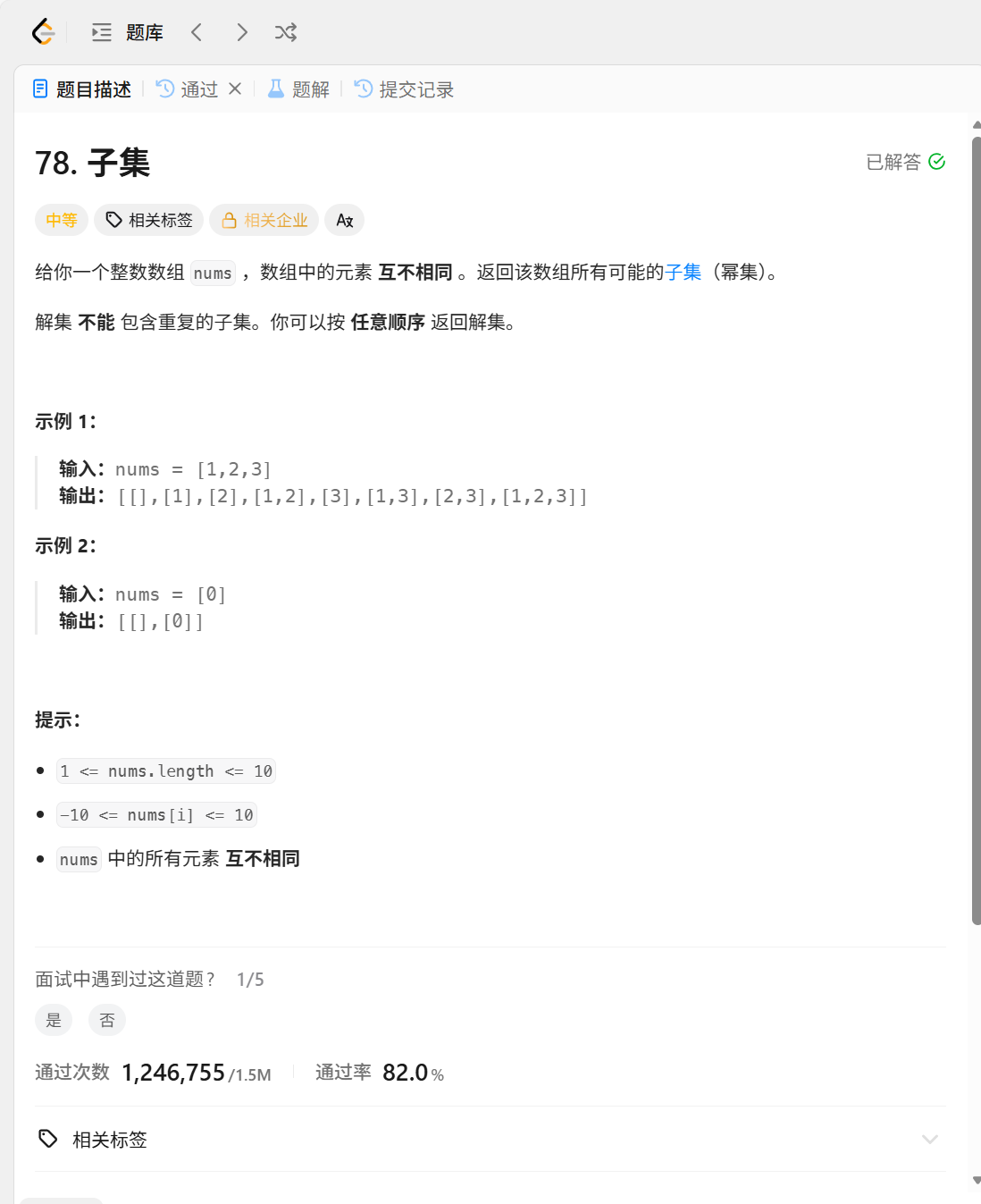
8.
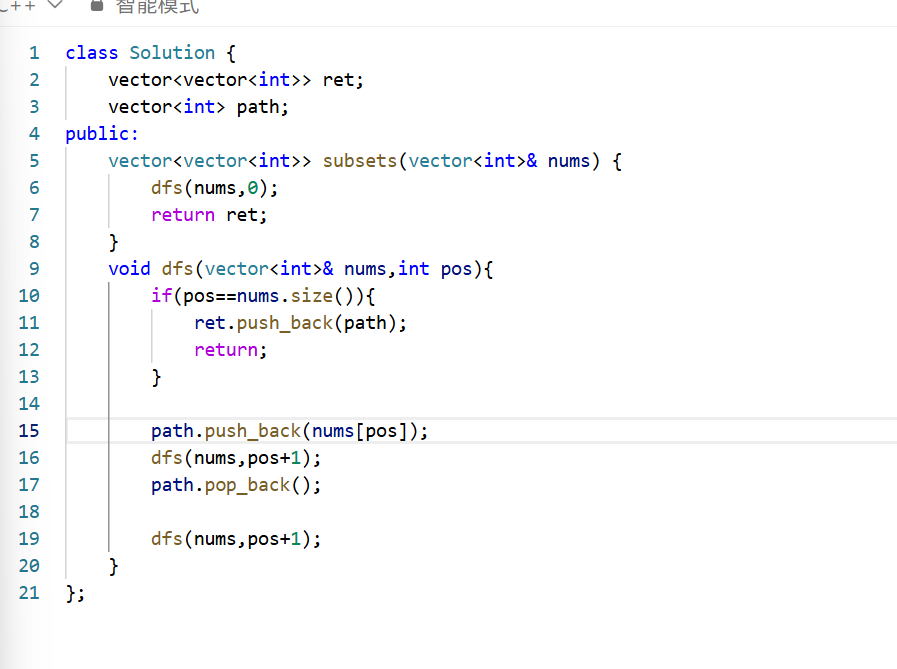

class Solution {
vector<vector<int>> ret;
vector<int> path;
public:
vector<vector<int>> subsets(vector<int>& nums) {
dfs(nums,0);
return ret;
}
void dfs(vector<int>& nums,int pos){
if(pos==nums.size()){
ret.push_back(path);
return;
}
path.push_back(numspos);
dfs(nums,pos+1);
path.pop_back();
dfs(nums,pos+1);
}
};