引言
在 C 语言中,类型转换的语法非常简单------只需在变量前加上目标类型即可。但这种转换缺乏安全性检查,容易导致未定义行为。C++ 引入了四种命名的强制类型转换运算符,它们提供了更细粒度的转换控制和更高的可读性。
四种类型转换分别是:
-
static_cast:静态转换,编译时确定
-
dynamic_cast:动态转换,运行时检查(依赖 RTTI)
-
const_cast:常量转换,添加或移除 const 属性
-
reinterpret_cast:重解释转换,最不安全的底层转换
今天,我将从使用场景、底层原理和安全性角度,全面讲解这四种类型转换。
第一部分:静态转换(static_cast)
一、基本概念
static_cast 是最常用的类型转换,用于编译时可以确定的类型转换。它在编译期进行类型检查,比 C 风格转换更安全。
cpp
static_cast<目标类型>(源表达式)二、支持的类型转换
1. 基本数据类型之间的转换
cpp
#include <iostream>
using namespace std;

int main() {
    // 整数与浮点数转换
    double pi = 3.14159;
    int pi_int = static_cast<int>(pi);  // 3,小数部分截断
    cout << "pi_int = " << pi_int << endl;

    // 整数与字符转换
    char ch = 'A';
    int ascii = static_cast<int>(ch);   // 65
    cout << "ASCII of 'A' = " << ascii << endl;

    // 大类型转小类型(可能溢出)
    long long big = 99999111001010LL;
    int small = static_cast<int>(big);   // 截断高位
    cout << "long long to int: " << small << endl;

    return 0;
}
2. void* 与任意类型指针的互转
cpp
int main() {
    int n = 100;

    // int* → void*
    void* vp = static_cast<void*>(&n);

    // void* → char*
    char* cp = static_cast<char*>(vp);

    // 通过 char* 逐字节访问
    for (int i = 0; i < sizeof(int); i++) {
        printf("%02X ", (unsigned char)cp[i]);
    }
    cout << endl;

    return 0;
}
3. 基类与派生类之间的转换
cpp
class F {
public:
    void show() { cout << "F show()" << endl; }
};

class S : public F {
public:
    void show() { cout << "S show()"" << endl; }
};

int main() {
    F f;
    S s;

    // 子类对象转换为父类对象(切片)
    F f2 = static_cast<F>(s);  // 调用拷贝构造,派生类部分被切掉
    f2.show();  // F show()

    // 父类指针转子类指针(危险,但编译允许)
    F* fp = &f;
    S* sp2 = static_cast<S*>(fp);
    sp2->show();  // S show()(但对象实际是F,访问派生类成员会出问题)

    // 子类指针转父类指针(安全)
    S* sp = &s;
    F* fp2 = static_cast<F*>(sp);
    fp2->show();  // F show()

    return 0;
}
重要规则:
-
非指针/引用时:子类对象可以转换为父类对象(切片),父类对象不能转换为子类对象
-
指针/引用时:子类指针可以转换为父类指针,父类指针转子类指针需要谨慎
4. 左值转右值引用(std::move 的本质)
cpp
#include <utility>  // for std::move

int main() {
    int n = 100;

    // static_cast 实现左值转右值引用
    int&& rref1 = static_cast<int&&>(n);

    // std::move 内部就是 static_cast
    int&& rref2 = std::move(n);

    cout << "rref1 = " << rref1 << endl;
    cout << "rref2 = " << rref2 << endl;

    return 0;
}
第二部分:动态转换(dynamic_cast)
一、基本概念
dynamic_cast 是 C++ 中唯一的运行时类型转换 ,它依赖于 RTTI(Runtime Type Information,运行时类型识别) 机制。转换失败时,指针版本返回 nullptr,引用版本抛出 std::bad_cast 异常。
cpp
dynamic_cast<目标类型>(源表达式)二、使用前提
关键条件:基类必须至少有一个虚函数(因为 RTTI 信息存储在虚函数表中)。
cpp
class A {
public:
    virtual void hi() { cout << "A hi()" << endl; }  // 必须有虚函数
};

class B : public A {
public:
    void hi() override { cout << "B hi()" << endl; }
};
三、向上转型(子类 → 父类)
向上转型总是安全的,dynamic_cast 和 static_cast 效果相同。
cpp
int main() {
    B b;

    // 子类对象转父类引用
    A& a_ref = dynamic_cast<A&>(b);
    a_ref.hi();  // B hi()(多态)

    // 子类指针转父类指针
    A* a_ptr = dynamic_cast<A*>(&b);
    a_ptr->hi();  // B hi()

    return 0;
}
四、向下转型(父类 → 子类)
向下转型是 dynamic_cast 的核心应用,它会在运行时检查类型是否匹配。
cpp
int main() {
    A a;
    B b;

    // 情况1:父类指针指向子类对象 → 转换成功
    A* a_ptr_to_b = &b;
    B* b_ptr = dynamic_cast<B*>(a_ptr_to_b);
    if (b_ptr != nullptr) {
        cout << "转换成功:";
        b_ptr->hi();  // B hi()
    }

    // 情况2:父类指针指向父类对象 → 转换失败
    A* a_ptr_to_a = &a;
    B* b_ptr2 = dynamic_cast<B*>(a_ptr_to_a);
    if (b_ptr2 == nullptr) {
        cout << "转换失败,返回 nullptr" << endl;
    }

    // 引用的版本:转换失败会抛出异常
    try {
        B& b_ref = dynamic_cast<B&>(a);
        b_ref.hi();
    } catch (const bad_cast& e) {
        cout << "引用转换失败:" << e.what() << endl;
    }

    return 0;
}
五、dynamic_cast 的原理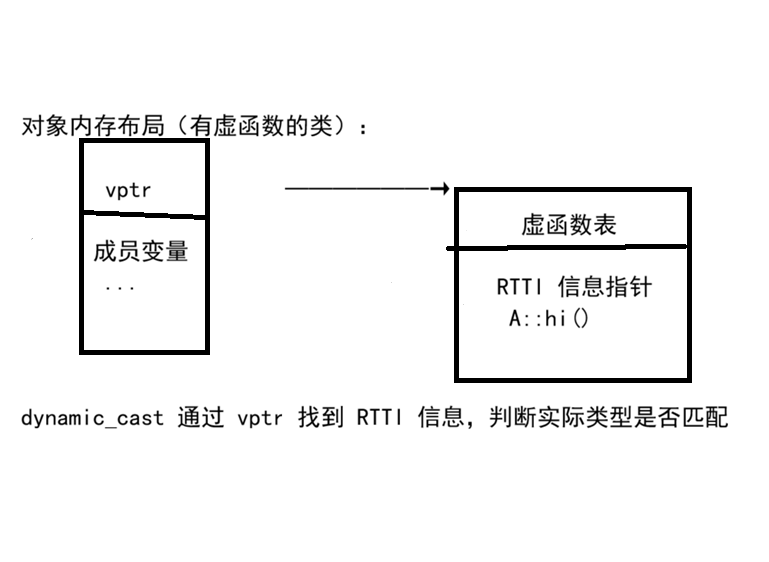
第三部分:常量转换(const_cast)
一、基本概念
const_cast 用于添加或移除变量的 const 或 volatile 属性。它是唯一能处理常量的转换运算符。
cpp
const_cast<目标类型>(源表达式)二、移除 const 属性
cpp
int main() {
    const int n = 10;

    // 移除 const,获得可修改的指针
    int* np = const_cast<int*>(&n);
    *np = 100;

    cout << "np = " << np << ", *np = " << *np << endl;
    cout << "&n = " << &n << ", n = " << n << endl;

    // 注意:虽然地址相同,但值可能不同(常量折叠优化)!
    // 编译器可能将 n 替换为字面量 10,导致输出不一致

    return 0;
}
三、添加 const 属性
cpp
int main() {
    int n = 10;
    int* np = &n;

    // 添加 const 属性
    const int* cnp = const_cast<const int*>(np);
    // *cnp = 20;  // 错误!不能通过 const 指针修改

    // 引用版本
    int& nr = n;
    const int& cnr = const_cast<const int&>(nr);

    return 0;
}
四、重要警告
cpp
int main() {
    // 危险:修改真正的 const 变量是未定义行为
    const int const_value = 100;
    int* p = const_cast<int*>(&const_value);
    *p = 200;  // 未定义行为!可能导致程序崩溃或值不变

    // 安全:修改的是一开始就不是 const 的变量
    int mutable_value = 100;
    const int& ref = mutable_value;
    int* q = const_cast<int*>(&ref);
    *q = 200;  // 安全,因为 mutable_value 本身不是 const
    cout << "mutable_value = " << mutable_value << endl;

    return 0;
}
第四部分:重解释转换(reinterpret_cast)
一、基本概念
reinterpret_cast 是最不安全的类型转换,它直接重新解释内存中的二进制位,不进行任何类型检查。主要用于底层编程、硬件访问、序列化等场景。
cpp
reinterpret_cast<目标类型>(源表达式)二、指针类型之间的重解释
cpp
#include <iostream>
using namespace std;

class A {
public:
    int x = 1;
    int y = 2;
};

class B {
public:
    int arr[2]{5, 9};
};

int main() {
    A a;
    B b;

    // 将 A 对象重解释为 B 对象
    B& bf = reinterpret_cast<B&>(a);
    cout << bf.arr[0] << "," << bf.arr[1] << endl;  // 1,2
    // 将 a.x 解释为 arr[0],a.y 解释为 arr[1]

    return 0;
}
三、任意类型指针互转
cpp
int main() {
    string s = "123";

    // 将 string 对象地址重解释为 int*
    int* n = reinterpret_cast<int*>(&s);
    // cout << *n << endl;  // 危险!将 string 的内存解释为 int

    // 将 string 对象地址重解释为 char*,逐字节查看
    char* p = reinterpret_cast<char*>(&s);
    for (int i = 0; i < sizeof(string); i++) {
        cout << hex << (int)(unsigned char)p[i] << " ";
    }
    cout << endl;

    return 0;
}
四、整数与指针互转
cpp
int main() {
    int addr = 0x12345678;

    // 整数转指针(危险!通常用于嵌入式或驱动开发)
    int* p = reinterpret_cast<int*>(addr);
    // *p = 100;  // 如果地址无效,程序崩溃

    // 指针转整数
    int val = reinterpret_cast<long long>(p);
    cout << "指针值作为整数: " << hex << val << endl;

    return 0;
}
第五部分:四种转换对比总结
一、功能对比表
| 转换类型 | 使用场景 | 安全性 | 运行时开销 | 是否依赖 RTTI |
|---|---|---|---|---|
static_cast |
基本类型转换、向上转型、void*转换 | 中等 | 无 | 否 |
dynamic_cast |
多态类型向下转型 | 高(运行时检查) | 有 | 是 |
const_cast |
添加/移除 const 属性 | 低(需谨慎) | 无 | 否 |
reinterpret_cast |
底层二进制重解释 | 极低 | 无 | 否 |
二、使用建议
cpp
// 1. 优先使用 static_cast 代替 C 风格转换
int a = 10;
double b = static_cast<double>(a);  // 推荐
double c = (double)a;               // 不推荐

// 2. 多态向下转型使用 dynamic_cast
Base* base = new Derived();
Derived* derived = dynamic_cast<Derived*>(base);
if (derived) {
    // 安全使用 derived
}

// 3. 只在必要时使用 const_cast,且确保原值不是 const
void readOnly(const int* p) {
    // 如果确定 p 指向的是非 const 变量
    int* writable = const_cast<int*>(p);
    *writable = 100;
}

// 4. 尽量避免使用 reinterpret_cast,除非底层编程
// 序列化/反序列化时可用
三、类型转换选择流程图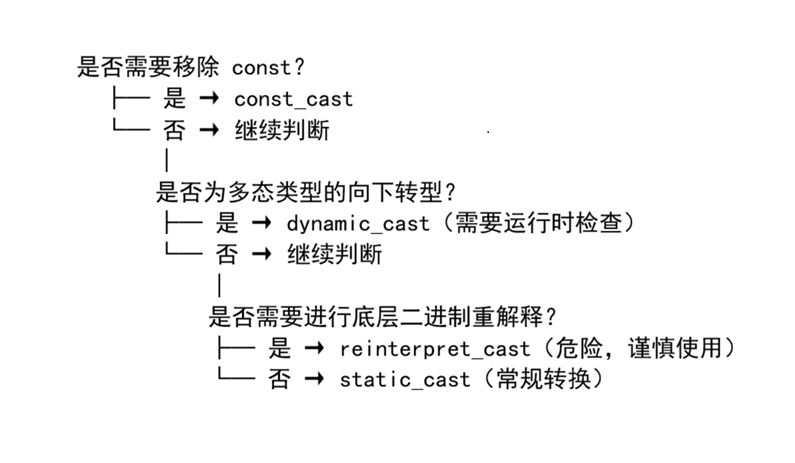
第六部分:完整示例
cpp
#include <iostream>
#include <typeinfo>
using namespace std;

// 基类(必须有虚函数才能使用 dynamic_cast)
class Animal {
public:
    virtual void speak() const { cout << "Animal speaks" << endl; }
    virtual ~Animal() {}
};

class Dog : public Animal {
public:
    void speak() const override { cout << "Woof!" << endl; }
    void wagTail() const { cout << "Tail wagging" << endl; }
};

class Cat : public Animal {
public:
    void speak() const override { cout << "Meow!" << endl; }
    void purr() const { cout << "Purring" << endl; }
};

// 演示四种转换
int main() {
    cout << "=== 1. static_cast 演示 ===" << endl;
    int i = 10;
    double d = static_cast<double>(i);  // 基本类型转换
    cout << "int to double: " << d << endl;

    void* vp = static_cast<void*>(&i);
    int* ip = static_cast<int*>(vp);
    cout << "void* to int*: " << *ip << endl;

    cout << "\n=== 2. dynamic_cast 演示 ===" << endl;
    Animal* animals[2] = {new Dog(), new Cat()};

    for (int i = 0; i < 2; i++) {
        animals[i]->speak();

        // 向下转型
        Dog* dog = dynamic_cast<Dog*>(animals[i]);
        if (dog) {
            dog->wagTail();
        }

        Cat* cat = dynamic_cast<Cat*>(animals[i]);
        if (cat) {
            cat->purr();
        }
    }

    cout << "\n=== 3. const_cast 演示 ===" << endl;
    int value = 100;
    const int& const_ref = value;

    // 移除 const(安全,因为原值不是 const)
    int& mutable_ref = const_cast<int&>(const_ref);
    mutable_ref = 200;
    cout << "Original value: " << value << endl;

    const int const_value = 300;
    int* p = const_cast<int*>(&const_value);
    // *p = 400;  // 危险!未定义行为

    cout << "\n=== 4. reinterpret_cast 演示 ===" << endl;
    long long addr = 0x12345678;
    int* ptr = reinterpret_cast<int*>(addr);
    cout << "Address as pointer: " << ptr << endl;

    float f = 3.14f;
    int* f_as_int = reinterpret_cast<int*>(&f);
    cout << "Float as int: " << hex << *f_as_int << dec << endl;

    // 清理内存
    delete animals[0];
    delete animals[1];

    return 0;
}
总结
一、四种转换核心要点
| 转换 | 关键词 | 适用场景 | 注意事项 |
|---|---|---|---|
| static_cast | 编译时静态转换 | 基本类型、向上转型、void*转换 | 向下转型不安全 |
| dynamic_cast | 运行时动态转换 | 多态类型的向下转型 | 必须有虚函数,有运行时开销 |
| const_cast | 常量转换 | 添加/移除 const | 不要修改真正的 const 变量 |
| reinterpret_cast | 重解释转换 | 底层二进制操作 | 极不安全,谨慎使用 |
二、原则
-
优先使用 C++ 风格转换:可读性更好,意图更明确
-
避免使用 reinterpret_cast:除非绝对必要
-
dynamic_cast 需要虚函数:这是 RTTI 工作的前提
-
const_cast 要小心:修改真正 const 变量是未定义行为
C++ 的四种类型转换提供了比 C 风格转换更精细的控制。理解它们的区别和适用场景,能够帮助你写出更安全、更可读的代码。
学习建议:
-
日常开发优先使用
static_cast -
多态向下转型使用
dynamic_cast -
只在必要时使用
const_cast -
reinterpret_cast仅在底层编程中使用