(一).基础概念
最短路问题,是"图论"中的问题,当然,如果不知道图论问题,也不影响。
在这里,主要介绍"边权为1的最短路问题"。那么,什么是最短路问题?通过一张图来看
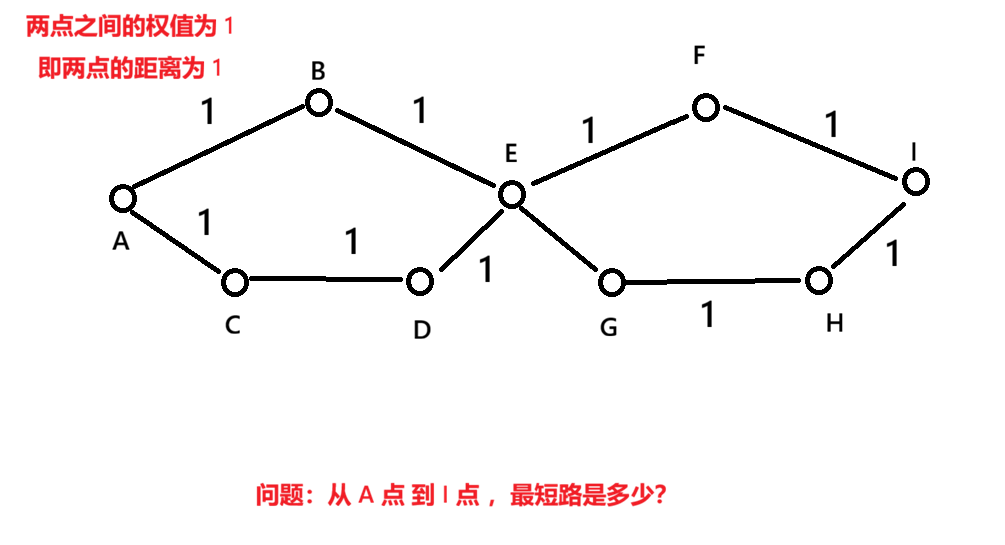
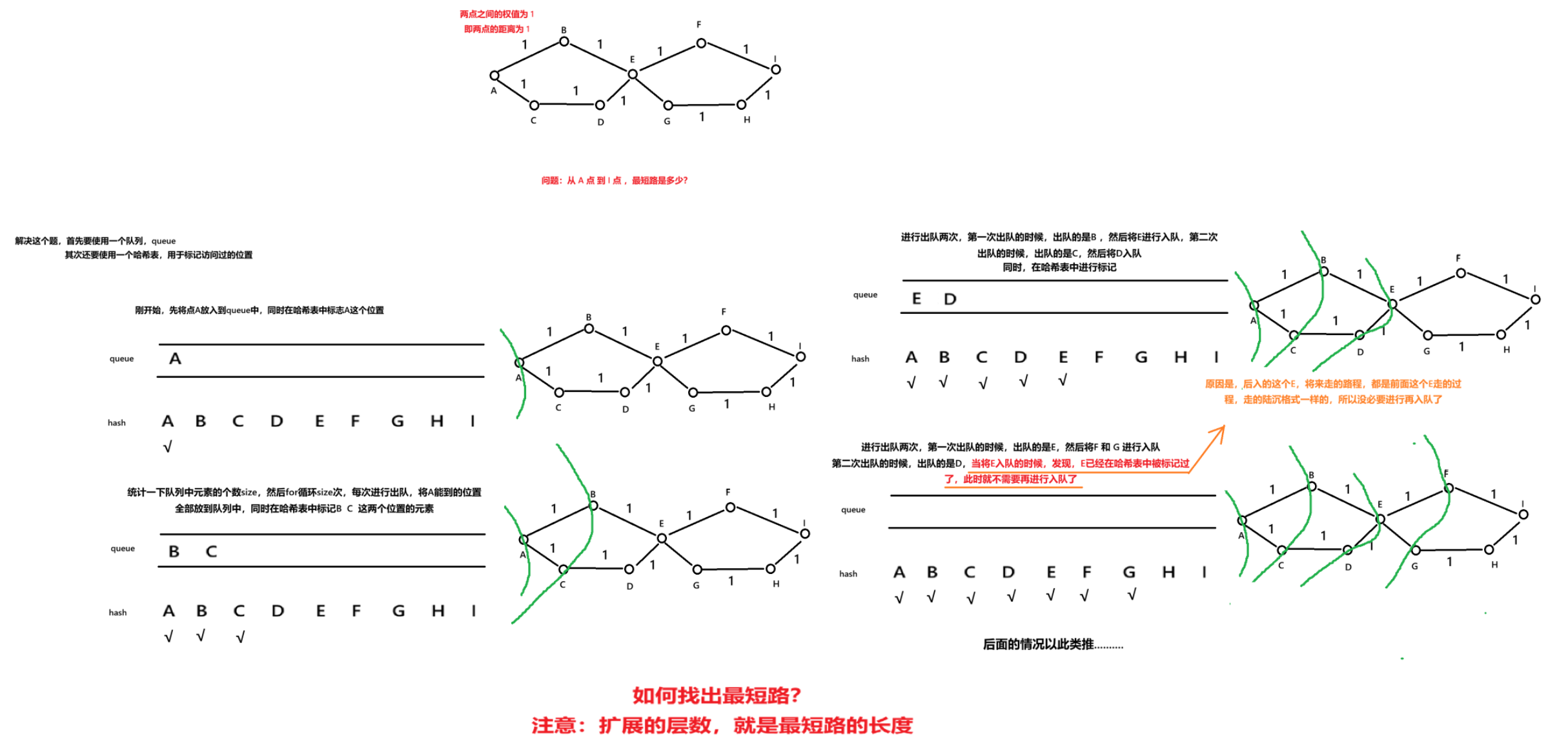
解决方法:从起点A开始,来一次BFS即可
(二).具体题目
1.迷宫中离入口最近的出口
1926. 迷宫中离入口最近的出口 - 力扣(LeetCode)
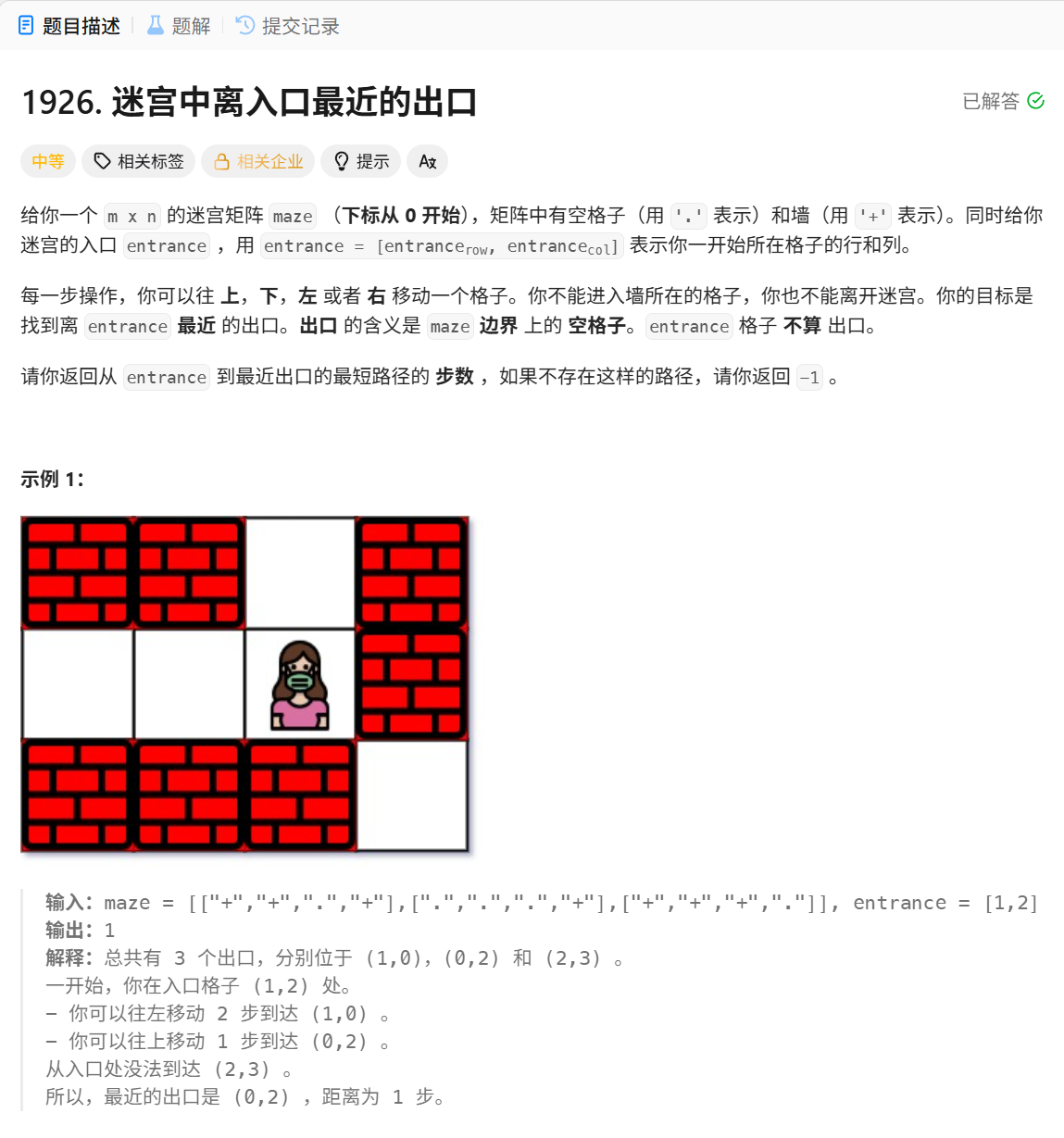
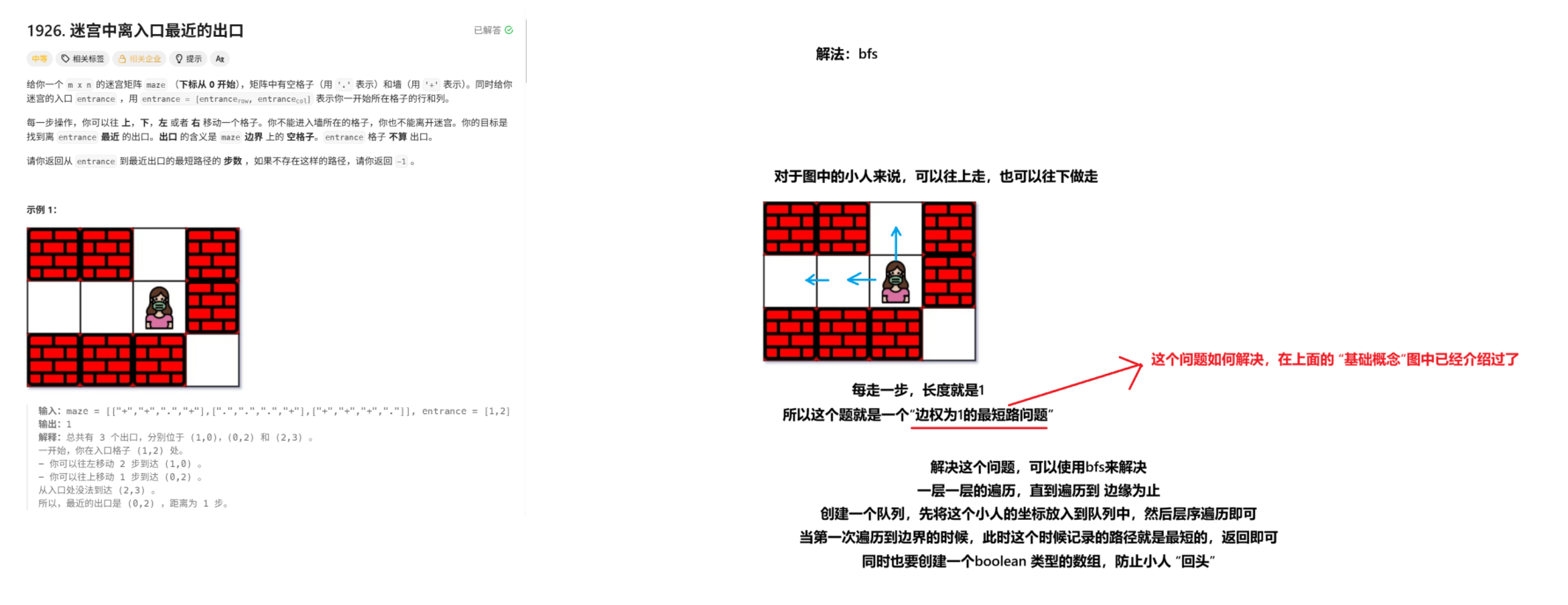
解法:bfs
java
class Solution {
    int[] dx={1,-1,0,0};
    int[] dy={0,0,1,-1};
    boolean[][] visit;
    public int nearestExit(char[][] maze, int[] entrance) {
        int lenR=maze.length;
        int lenC=maze[0].length;
        visit=new boolean[lenR][lenC];
        int count=0;
        Queue<int[]> queue=new ArrayDeque<>();
        queue.add(new int[]{entrance[0],entrance[1]});
                visit[entrance[0]][entrance[1]]=true;

        while (!queue.isEmpty()){
            count++;
            int size=queue.size();
            for (int i = 0; i < size; i++) {
                int[] poll = queue.poll();
                int x=poll[0];
                int y=poll[1];
                for (int j = 0; j < 4; j++) {
                    int newX=x+dx[j];
                    int newY=y+dy[j];
                    if (newX>=0 && newX<lenR && newY>=0 && newY<lenC && maze[newX][newY]=='.' && !visit[newX][newY]){
                        if (newX==0 || newY==0 || newX==lenR-1 ||newY==lenC-1){
                            return count;
                        }
                        queue.add(new int[]{newX,newY});
                        visit[newX][newY]=true;
                    }
                }
            }
        }
        return -1;
    }
}
2.最小基因变化
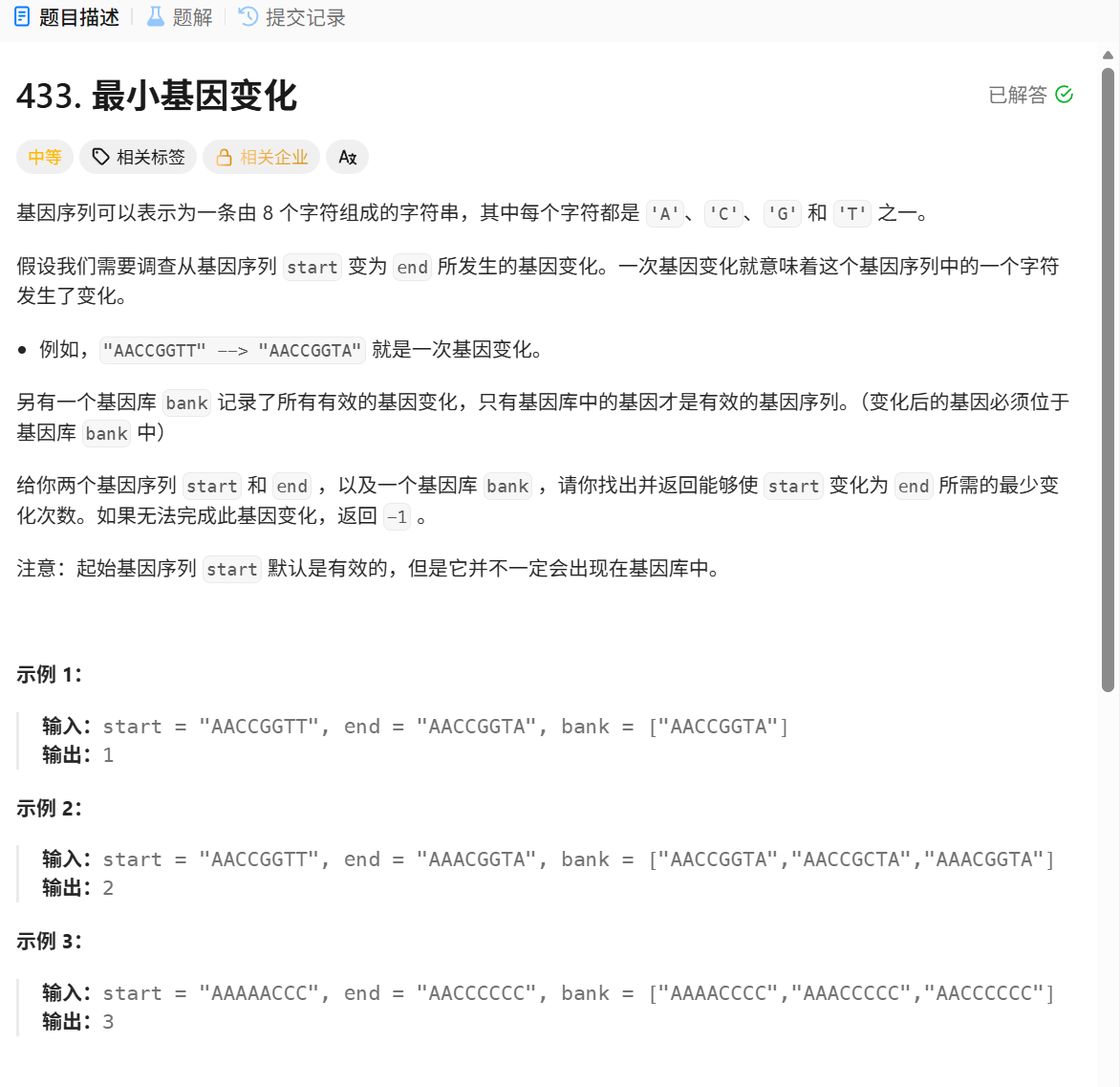
解法:BFS

java
class Solution {
    public int minMutation(String startGene, String endGene, String[] bank) {
        int count=0;
        HashSet<String> hashSetBack=new HashSet<>();   //用于统计基因库里面的字符串
        HashSet<String> hashSet=new HashSet<>();    //用于标记已经搜索过的位置
        for(String str:bank){
            hashSetBack.add(str);
        }
        Queue<String> queue=new ArrayDeque<>();
        queue.add(startGene);
        hashSet.add(startGene);
        char[] chars={'A','C','T','G'};
        while (!queue.isEmpty()){
            count++;
            int sz=queue.size();
            for (int i = 0; i < sz; i++) {
                String poll = queue.poll();
                for (int j = 0; j < poll.length(); j++) {
                    char[] charArray = poll.toCharArray();
                    for (int k = 0; k < 4; k++) {
                        charArray[j]=chars[k];
                        String ans=new String(charArray);
                        if (!hashSet.contains(ans) && hashSetBack.contains(ans)){
                            if (ans.equals(endGene)){
                                return count;
                            }
                            hashSet.add(ans);
                            queue.add(ans);
                        }
                    }
                }
            }
        }
        return -1;
    }

}
3.单词接龙
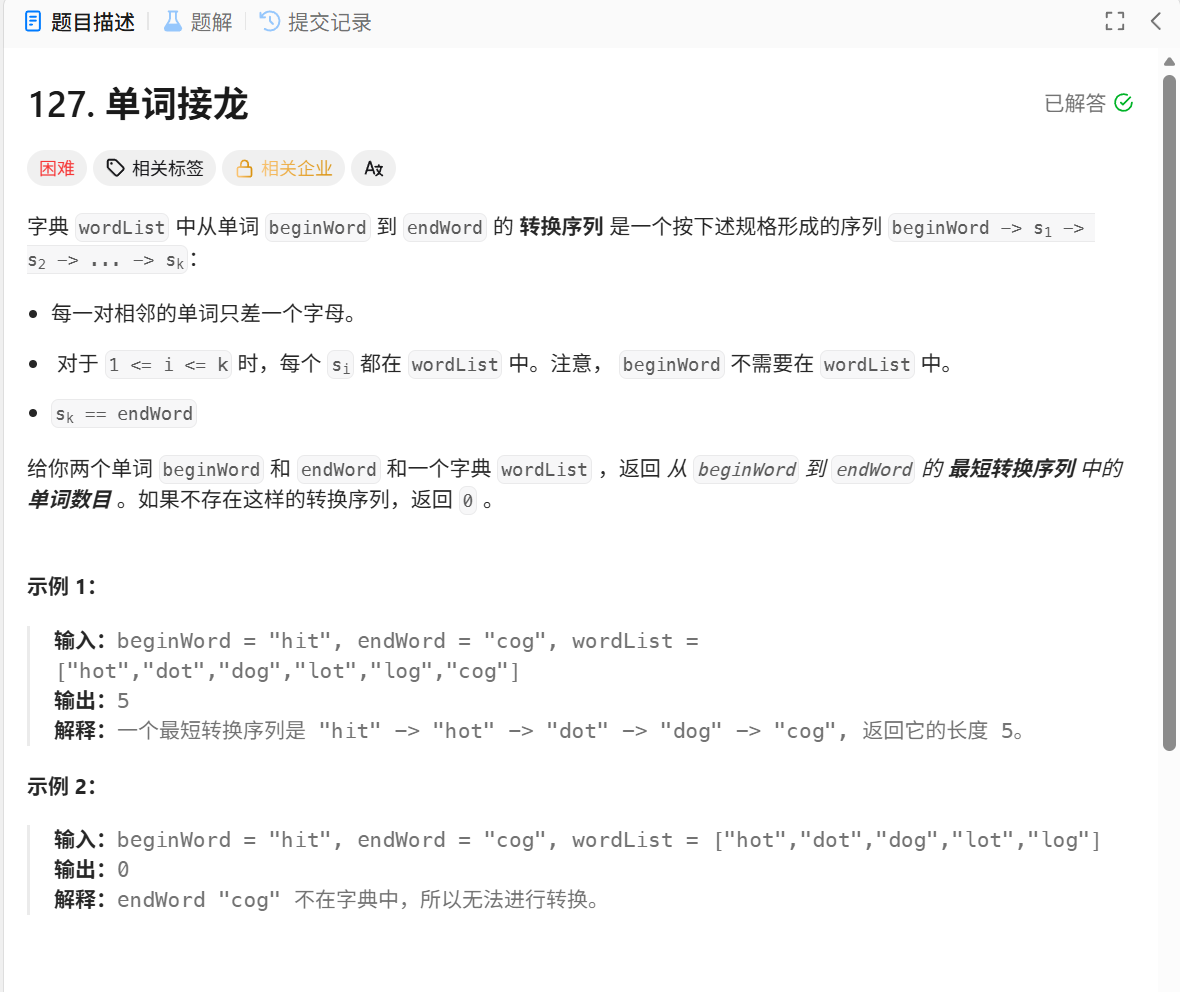
解法:bfs
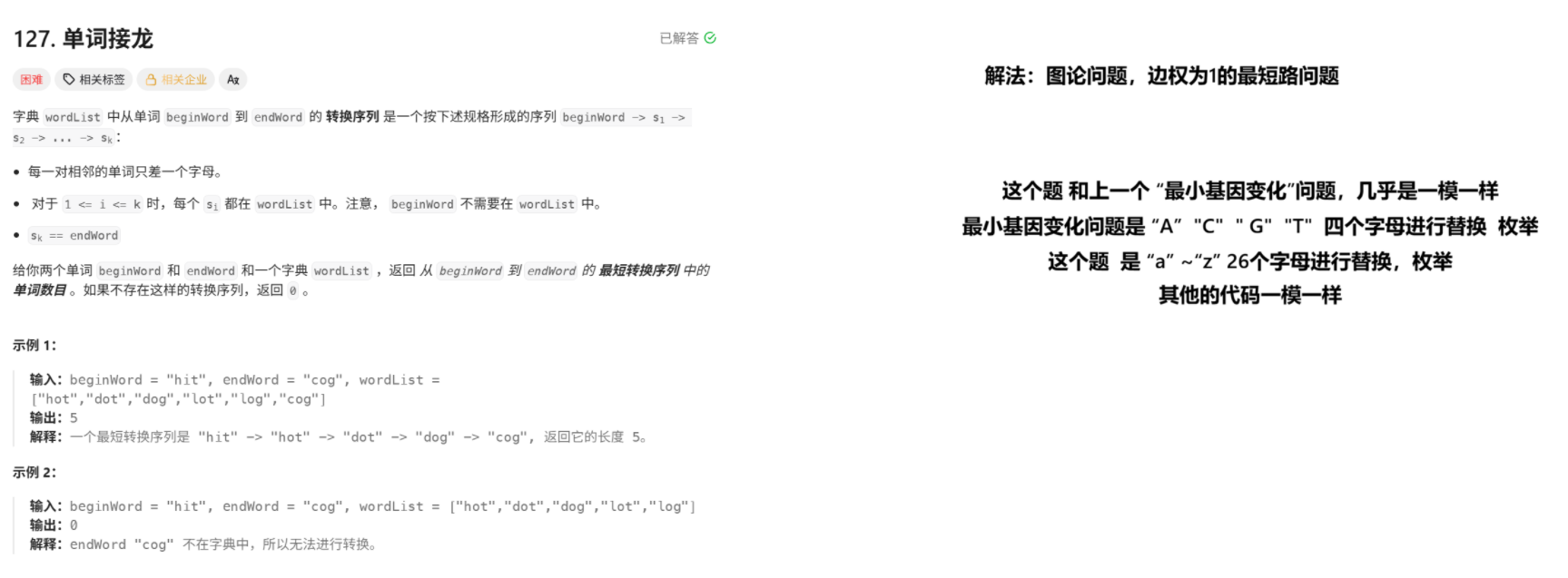
java
class Solution {
    public int ladderLength(String beginWord, String endWord, List<String> wordList) {
        HashSet<String> hashSetList=new HashSet<>();
        for (int i = 0; i < wordList.size(); i++) {
            hashSetList.add(wordList.get(i));
        }
        if (!wordList.contains(endWord)){
            return 0;
        }
        int count=0;
        HashSet<String> hashSet=new HashSet<>();   //记录已访问的单词,防止重复走环
        hashSet.add(beginWord);
        Queue<String> queue=new ArrayDeque<>();   //bfs队列
        queue.add(beginWord);
        while (!queue.isEmpty()){
            count++;
            int sz=queue.size();
            for (int i = 0; i < sz; i++) {
                String poll = queue.poll();
                int len=poll.length();

                //逐个位置替换字符
                for (int j = 0; j < len; j++) {
                    char[] charArray = poll.toCharArray();
                    //把第j位依次替换为  a~z
                    for (char k = 'a'; k <='z' ; k++) {
                        charArray[j]=k;
                        String ans=new String(charArray);
                        if (hashSetList.contains(ans) && !hashSet.contains(ans)){
                            //找到终点直接返回步数
                            if (ans.equals(endWord)){
                                return count+1;
                            }
                            queue.add(ans);
                            hashSet.add(ans);  // 标记已访问
                        }
                    }
                }
            }
        }
        return 0;
    }
}
4.为高尔夫比赛砍树
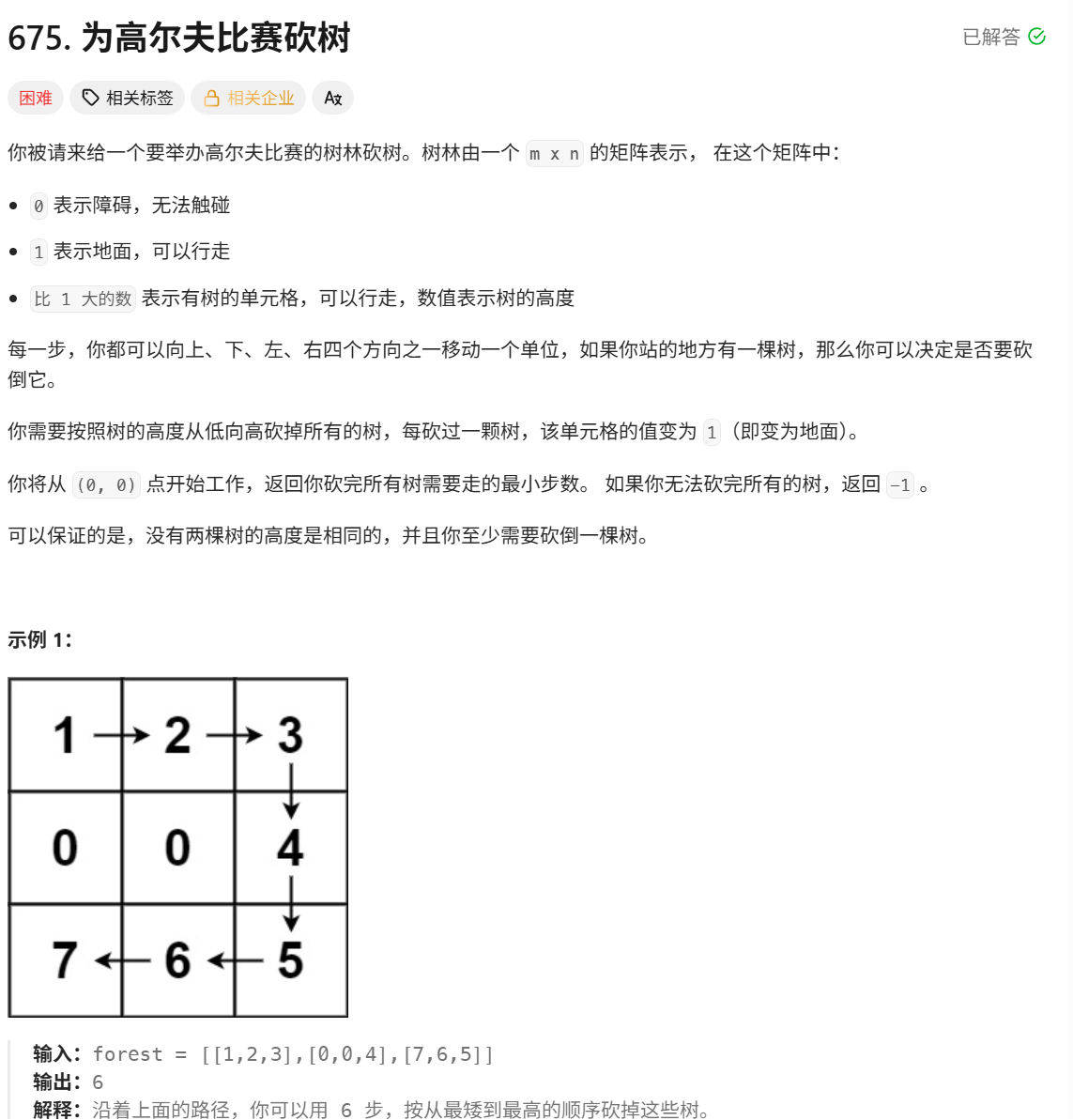
解法:bfs
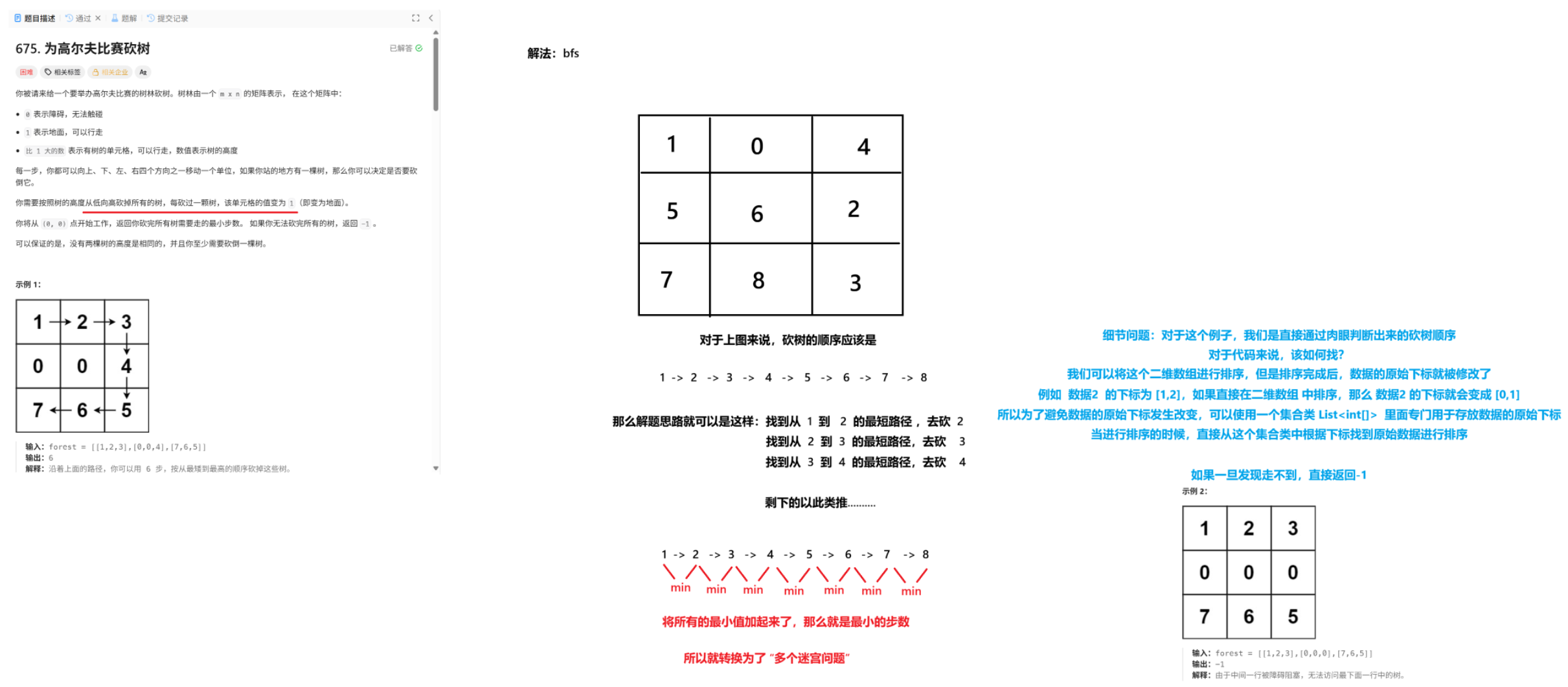
java
class Solution {
    int lenR;
    int lenC;
    public int cutOffTree(List<List<Integer>> forest) {
        lenR=forest.size();
        lenC=forest.get(0).size();
        List<int[]> lists=new ArrayList<>();
        for (int i = 0; i < lenR; i++) {
            for (int j = 0; j < lenC; j++) {
                if (forest.get(i).get(j)>1){
                    lists.add(new int[]{i,j});
                }
            }
        }
        Collections.sort(lists, new Comparator<int[]>() {
            @Override
            public int compare(int[] o1, int[] o2) {
                return forest.get(o1[0]).get(o1[1])-forest.get(o2[0]).get(o2[1]);
            }
        });
        int count=0;
        int startX=0;
        int startY=0;
        for(int[] list:lists){
            int posX=list[0];
            int poxY=list[1];
            int step=bfs(forest,startX,startY,posX,poxY);
            if (step==-1){
                return -1;
            }
            count+=step;
            startX=posX;  //更新坐标
            startY=poxY;
        }
        return count;
    }

    int[] dx={1,-1,0,0};
    int[] dy={0,0,1,-1};
    private int bfs(List<List<Integer>> forest, int startX, int startY, int endX, int endY) {
        if (startX==endX && startY==endY){
            return 0;
        }
        Queue<int[]> queue=new ArrayDeque<>();
        boolean[][] visit=new boolean[lenR][lenC];
        int step=0;
        queue.add(new int[]{startX,startY});
        while (!queue.isEmpty()){
            step++;
            int sz=queue.size();
            for (int i = 0; i < sz; i++) {
                int[] poll = queue.poll();
                int px=poll[0];
                int py=poll[1];
                for (int j = 0; j < 4; j++) {
                    int newX=px+dx[j];
                    int newY=py+dy[j];
                    if (newX>=0 && newX<lenR && newY>=0 && newY<lenC && forest.get(newX).get(newY)!=0 && !visit[newX][newY]){
                        if (newX==endX && newY==endY){
                            return step;
                        }
                        queue.add(new int[]{newX,newY});
                        visit[newX][newY]=true;
                    }
                }
            }
        }
        return -1;
    }
}