DeepSeek Harness 从 0 开始:20 goal模式
本系列从 0 开始,基于 Cordis 框架实现一个简略版 DeepSeek Harness。本篇讲
packages/goal/的持久化同会话目标。一句话 :goal 给"长任务"一个持久的目标,goal 模式(goal 域 + driver)再让它自动推进下去 。你把"当前要完成的那件事"交给 goal(
create_goal),它把目标存进会话日志(重启也丢不了);续跑 (自动发起下一轮)由独立的 goal-round-driver 承担,直到模型报告完成(complete)。怎么读 :只想先建立直觉 ------读「速览」+ 六个节点标题 + 「小结」即可,代码、对照表、运行输出都按需回看;想跟实现------每个节点固定四段:谁触发 → 做了什么 → 关键代码 → 输入输出与分叉。
速览(TL;DR)
- goal 是什么 :给"长任务"一个持久目标 (
create_goal写进会话日志,重启不丢)+ 自动续跑 (目标 active 且 armed 时一轮接一轮推进,直到模型报complete)。 - 六个关键节点 :① 设置目标 → ② 读状态(日志派生)→ ③ 修改状态(CAS + 授权)→ ④ 轮数预算(只计 goal source)→ ⑤ 判断完成(phase → disarm)→ ⑥ 发起下一轮(续跑)。
- 续跑是 goal 模式的核心价值,但它不属于 goal 域 :执行者是独立的
goal-round-driver包------goal 管"状态可信",driver 管"何时再动一次"。 - 最容易误解的两点 :① 当前状态不是"存"的、是"算"的(会话日志是唯一权威,严格重放派生);② 重启后目标还在,但续跑权不在 (
activation是进程内的,从不持久化)。 - 可复现:可运行代码 + 真实运行输出,事实与 dsh 源码逐条对照。
goal 模式到底提供了什么:两个能力
goal 模式对使用者只承诺两件事:
| 能力 | 是什么 | 体现在哪 |
|---|---|---|
| ① 把目标持久化住 | 目标是一份可信、可恢复、可审计的状态------写进会话日志,重启/分叉/压缩都不丢 | 节点 ①②③ |
| ② 让它自己一直跑下去(续跑) | 目标激活时自动一轮接一轮地推进,不需要你反复说"继续"------执行者是 driver,不是 goal | 节点 ④⑤⑥ |
没有能力 ②,goal 就只是个"记着你要干什么"的状态容器------你写 20 篇还是得说 20 次"继续"。
但要立刻澄清一个容易走偏的定位:续跑是 goal 模式的核心价值,执行它的人不是 goal 。dsh 把"何时开始下一轮"这个决定交给一个独立的包 goal-round-driver (源码里就是 packages/goal/goal-round-driver/)------goal domain 只保留目标、只提供改它的工具,从不自己决定何时再动一次 (dsh 原话:"the goal domain can retain an objective and the model-facing tools can mutate its lifecycle, but neither should decide when another model turn begins")。
所以本文的组织方式是:
- goal 的状态模型(节点 ①②③④⑤)是主干,读它就懂 goal 是什么;
- 续跑 (节点 ⑥)单独成节点,讲清"谁来发起、发起时做哪三步"------它是 goal 模式的核心价值,由 driver 承担 ;内部复杂度(静默检测、竞态栅栏、结算分类)指向 blog-22-goal-round-driver,不在主流程里展开。
一个例子:写一个博客系列
假设你对模型说:"帮我写一个博客系列,从 0 实现 DeepSeek Harness,每篇一个主题。先写第 1 篇。"
没有续跑时,agent 的工作是一步一停 的:写完第 1 篇,轮次结束,agent 停下来------你不说"继续",它就不动 。写 20 篇,你就要说 20 次"继续"(每篇中间可能还要纠正方向);agent 只是在每次你推它的时候干一点,无法长时间自我运行一个任务(业界把这个叫 human-in-the-loop:每个动作都要人驱动)。
有了 goal,事情变成这样------你只下达一次,后面都是自动的:
你下达(人类轮次,不计轮数):
👤 你:帮我写一个博客系列,从 0 实现 DeepSeek Harness,每篇一个主题。先写第 1 篇。
yaml模型调用 ① create_goal(objective="写博客系列:从 0 实现 DeepSeek Harness,每篇一个主题", max_goal_rounds=20) → { goal: { id: "goal-1", revision: 1, phase: "active", roundsStarted: 0, maxGoalRounds: 20 }, activation: "armed" } 模型调用 ② todo_write(todos=[ 博客 1 到 20 的标题列表 ]) → Updated todo list: 19 pending, 1 in progress, 0 completed🤖 模型:轮次结束------接下来交给续跑。
Round 1 · 自动续跑(不需要你说"继续"):
轮次结束、模型 idle------续跑被唤醒:目标 active + armed,于是自动发起下一轮,给模型发一条续跑消息:
vbnet<goal_round> Objective: "写博客系列:从 0 实现 DeepSeek Harness,每篇一个主题" Round: 1/20 Continue working toward the objective in this same session. Treat the current workspace, tool results, and durable session state as authoritative; inspect them instead of assuming earlier narration is still current. Make concrete progress and verify the result. ... If work remains, leave the goal active for the next round. </goal_round>🤖 模型:看到 Objective + Round 1/20 → get_goal 确认 → 写第 1 篇 → 轮次结束 → 又自动发起 Round 2/20......
Round 20 · 完成:
模型在某一轮:get_goal → 读当前目标 → 确认 20 篇全部完成 →
complete→ disarm → 续跑不再发起,目标停在 complete。
这就是主流程。中间你随时可以说"第 5 篇先写 session"(人类轮次,不影响轮数),或者进程重启了(目标还在,但需要你说"继续"才恢复)------这些插曲在下面节点里各自讲到。
全景时序图(标出六个能力节点)
把上面这个过程画成时序图------六个参与者:你、模型、续跑驱动、goal 工具、GoalService、会话日志。图里用 ①~⑥ 标出六个关键节点:
读图 :你下达 → ① 模型 create_goal、服务写快照(active armed)→ 循环里:② 读派生状态 → ⑥ 发起下一轮(拼 <goal_round> 并投递,④ 计入预算)→ ③ 模型 get_goal 读、update_goal 改(每次变更写新快照、revision +1)→ ⑤ 模型 complete → 写完成快照 → disarm → 结束。
先弄清四个词 (dsh goal-round-driver 的层级,Agent Note 原文:"The hierarchy is Goal → Goal Round → Turn → Step"):
| 术语 | 含义 | 在本例里 |
|---|---|---|
| Goal(目标) | 你要完成的那件事 | "写博客系列,每篇一个主题" |
| Goal Round(目标轮) | 续跑每次自动发起的外层迭代------时序图 loop 里转一圈 = 一个目标轮 | Round 1/20 里的"1" |
| Turn(轮次) | 模型会话轮次------一个目标轮变成一个轮次(1:1) | 模型写第 1 篇的那个轮次 |
| Step(步骤) | 轮次内的模型/工具步骤 | 轮次里调 get_goal、写正文 |
所以时序图里的 loop 不是"轮次"的循环,是"目标轮"的循环------续跑一轮轮发起(Goal Round),每一轮进入一个轮次(Turn),轮次里是若干步骤(Step)。
关键节点:goal 的能力逐个看
把 goal 拆开,一共六个能力节点。每个节点都按同一套模板讲:谁触发 → goal 做了什么 → 关键代码 → 输入输出与分叉。

一张图看懂六个节点 :①②③ 是"目标状态"本身(设置、读、改);④⑤ 是约束与收尾(预算、完成);⑥ 是把状态接回模型循环的续跑------它读 ②、写 ③、受 ④ 约束、终点是 ⑤。
实现结构对应 dsh 的 packages/goal/:
csharp
blog-20-goal/
├── package.json          # 项目配置:依赖、启动脚本
├── pnpm-lock.yaml        # 依赖锁定文件
└── src/
    ├── main.ts           # 演示入口:组装 + 按关键节点演示
    ├── types.ts          # 纯类型(goal/src/types.ts)
    ├── domain.ts         # 事件词汇与错误码(goal/src/domain.ts)
    ├── session.ts        # Session 事件日志(dsh-session)
    ├── fold.ts           # 严格重放(goal/src/fold.ts)
    ├── goal.ts           # GoalService(goal/src/index.ts)
    ├── driver.ts         # GoalRoundDriver 续跑(goal-round-driver/src/index.ts 简化)
    ├── agent.ts          # Agent + AgentFactory(dsh-agent)
    ├── tools.ts          # ToolRegistry(dsh-tools)
    └── tool-goal.ts      # 三个模型工具 + authority(tool-goal/src/index.ts)
诚实标注 :goal + tool-goal + driver.ts 是本博客的实现核心。本文多次标注"简化"------凡标简化的地方,差异都在这张表里,读者可据此判断 demo 与 dsh 的语义距离:
| 环节 | dsh goal-round-driver |
demo driver.ts |
省掉后的语义差距 |
|---|---|---|---|
| 触发 | 监听 agent/status(idle) 与 goal/changed 两个事件 |
❌ 手动调 schedule() |
demo 不自动感知 idle;判断逻辑本身一致,只是没人替它按下按钮 |
| 串行化 | 合并同一 agent 的并发 drive 请求(coalesce) | ❌ | 并发 idle 信号可能重复发起(demo 是顺序调用,触发不到) |
| 竞态栅栏 | 预留身份 + agent/pre-step 双重校验 live revision |
❌ | 目标在投递途中被 edit/clear 时,demo 不走"静默丢弃预留",而是由严格重放以"非顺序轮"拒绝(fail loud,不是 fail silent) |
| 准入计入轮数 | 一致 | ✅(fold.ts) |
无 |
| 预算耗尽 | block(code: 'round-limit') |
✅ | 无 |
| 轮次结算 | 取消 / 错误 / max-tokens → pause / block / disarm 分类 | ❌ | demo 里轮次异常不会自动映射 回目标状态,需人工调 update_goal |
| 卸载 / 持久性不确定 | 卸载前、持久性不确定、max-tokens 时 disarm | ⚠️ 有 disarm() 方法,无触发钩子 |
复现不了"卸载前收回续跑权"这个时机 |
| 续跑提示词 | renderGoalRoundPrompt(完整措辞) |
✅ 文案略短 | 字段一致(Objective + Round N/M),纪律句是精简版 |
另外整体略过:command-goal(CLI 命令);tool-goal 的 goalToolExecution 与 wrapup 收尾 notice 为简化实现。
节点 ① 设置目标:create_goal 把目标变成持久事实
谁触发 :你下达一个长任务,模型判断"这是要跨多轮自动推进的目标",于是在直接人类轮次 里调 create_goal。dsh 工具描述:"when the current direct human request is a long-running objective that should continue across autonomous goal rounds";模型从请求推断意图,琐碎的单轮工作不调用("Do not use this for trivial single-turn work")。
goal 做了什么 :GoalService.create 校验入参 → 造一个 GoalSnapshot(新 id、revision 1、phase active)→ commit 把完整快照 作为 goal/change 事件追加进会话日志 → 立刻折叠回来 → 设置 activation = 'armed' → 返回给模型的 GoalView。
ts
/** 创建并 arm 一个目标(dsh: create)------只有无目标或目标是 complete 时才允许 */
create(agent: Agent, request: CreateGoalRequest): GoalView {
  const spec = {
    objective: resolveObjective(request.objective),
    maxGoalRounds: resolveMaxGoalRounds(request.maxGoalRounds ?? this.defaultMaxGoalRounds),
  }
  const cache = this.prepareMutation(agent)
  const current = cache.state.goal
  if (current !== undefined && current.phase !== 'complete') {
    throw new GoalError(`goal "${current.id}" already exists with phase "${current.phase}"`, 'GOAL_ALREADY_EXISTS')
  }
  const now = Date.now()
  const goal: GoalSnapshot = {
    id: GoalId(`goal-${++this.goalCounter}`),
    revision: 1,
    objective: spec.objective,
    phase: 'active',
    maxGoalRounds: spec.maxGoalRounds,
  }
  return this.commitSnapshot(agent, cache, 'create', goal, 0, now, now, 'armed')
}
写日志那一步 长这样------注意 activation 不走日志(pendingActivation 只在这次 commit 期间生效,用来把"刚写的这条事件"和"要设的激活态"对上):
ts
/** 提交一次变更:写日志 → 增量折叠 → 通知监听器(dsh: commit) */
private commit(agent: Agent, cache: GoalCache, change: GoalChangeMeta, activation: GoalActivation): void {
  const ref = goalChangeRef(change)
  cache.pendingActivation = { seq: agent.session.seq, activation }
  try {
    agent.session.append({ type: 'goal/change', data: change })
    this.sync(agent.session, cache)
  } finally {
    cache.pendingActivation = undefined
  }
  ...
}
输入 → 输出:
yaml
create_goal(objective="写博客系列...", max_goal_rounds=3)
→ { goal: { id: "goal-1", revision: 1, phase: "active", roundsStarted: 0, maxGoalRounds: 3 }, activation: "armed" }
返回的这个 { goal, activation } 就是"目标"的全部 ,十个字段其实是四组------按 "这个值由什么驱动" 分(别按"在不在日志里"分:createdAt 也在日志里,但它不是派生量):
| 字段 | 组(由什么驱动) | 为什么有它 | 记录什么 | 有什么用 |
|---|---|---|---|---|
id (goal-N) |
快照持久事实 · 变更操作 | 工具、续跑、日志都要指认"这一个目标" | 目标身份 | 重启后 get_goal 凭它找回;update_goal 带它做 CAS |
| revision(每次 +1) | 快照持久事实 · 变更操作 | 防并发覆盖------多个轮次交错提交,谁过期谁被拒 | 第几次变更 | CAS 栅栏的基础(节点 ③);变更次数审计 |
| objective(一句话) | 快照持久事实 · 变更操作 | 目标本身------"要完成的是什么" | 你的请求 | 续跑每轮把它喂给模型 (<goal_round> 里的 Objective);重启后读回 |
| phase | 快照持久事实 · 变更操作 | 生命周期------目标现在处于哪个状态 | active/paused/blocked/complete | 决定续跑是否继续(active 才跑)、工具允许哪些操作(节点 ⑤) |
| maxGoalRounds | 快照持久事实 · 变更操作 | 防续跑失控 | 你设的预算(20) | Round N/M 里的 M;预算耗尽自动 block(节点 ④) |
| blockedReason(仅 blocked 时) | 快照持久事实 · 变更操作 | "卡住"要有原因,不只是一个状态 | code(机器路由)+ message(人看) | 恢复时知道为什么卡;审计"为什么停" |
| createdAt | 快照时间戳 · 变更时刻 | 顺序与审计 | create 那次变更的时刻 | 重放校验后续快照必须携带同一个 createdAt |
| updatedAt | 快照时间戳 · 变更时刻 | 顺序与审计 | 最近一次变更的时刻 | 严格重放校验时间戳不回退;写入时被"墙钟不回退"钳制(节点 ②) |
| roundsStarted | 目标轮消息推进(也随快照持久化) | 已烧了多少轮 | 只算 goal source 的目标轮(人类轮次不计) | 回答"写到哪了";预算判断依据(节点 ④);blocked 轮号门槛(节点 ③) |
| activation | 进程内 · 会话生命周期(不持久化) | 生命周期 ≠ 续跑权 | 进程内的 armed / disarmed | 重启后自动 disarmed,你说"继续"才 resume(节点 ⑤) |
分叉与失败路径:
- objective 为空/空白 →
GOAL_INVALID_OBJECTIVE拒绝 - maxGoalRounds 不是正整数 →
GOAL_INVALID_MAX_ROUNDS拒绝 - 已有目标且不是 complete →
GOAL_ALREADY_EXISTS------完成的目标让位给新目标 - 非直接人类轮次(子代理/注入消息) → 工具层拒绝:
this goal operation requires a direct human turn on a top-level agent
节点 ② 读状态:状态是"算"出来的,不是"存"的
谁触发 :任何要读目标的人 ------模型的 get_goal、续跑发起前的检查、UI 渲染。goal 没有"当前状态"这个变量给你读,读状态永远是一次派生(derive)。
goal 做了什么 :ctx.goals.get(agent) 先把日志里还没折叠的事件折进来 (sync),再返回一个算出来的 GoalView:
ts
/** 读当前目标(dsh: get)------返回新视图或 undefined */
get(agent: Agent): GoalView | undefined {
  this.assertLive(agent)
  const cache = this.cache(agent.session)
  this.sync(agent.session, cache)
  return this.view(cache)
}
cache() 首次会把全部事件折一遍,之后的 sync 只折 observedSeq 之后的新事件------增量的折叠,不是每次全量重算。
为什么这件事重要 :它让"读状态"有了唯一权威。模型工具、续跑、UI、重放读到的都是同一份日志算出的同一个值,不存在"续跑以为 active、工具读到 paused"的副本漂移。数据流只有一条:

goal/change 事件长什么样 ------非 clear 的变更,负载是完整快照(没有 diff):
css
{ kind: 'goal/change', version: 1, operation: 'create' | 'edit' | 'pause' | 'resume' | 'complete' | 'block',
  goal: { ...完整目标... }, roundsStarted, createdAt, updatedAt }
clear 则是墓碑(没有快照,只有一个 ref):
yaml
{ kind: 'goal/change', version: 1, operation: 'clear', cleared: { id, revision }, clearedAt }每次变更都是完整后置状态,没有 diff------这正是"重放 last-wins 无歧义"的原因。
为什么不单独存一份,而是放进会话日志? dsh 的决策记录说得很直白:会话日志已经 提供顺序、持久化、分叉前缀、可重建性------再加一份独立存储,只会引入"两份状态怎么保持一致"的原子性问题、以及"这份存储和会话是什么关系"的谱系问题(dsh Alternatives: "a second store introduces atomicity and lineage questions")。所以目标记录作为普通会话数据 放进日志------持久化、恢复、分叉天然继承,这正是"重启后 get_goal 还在"的原因。
重放是严格的------五类校验,任一不合格就 fail loud(宁可挂起,不给错状态)。这是折叠的核心:
ts
/** 应用一个会话事件到严格折叠(dsh: applyGoalEvent) */
export function applyGoalEvent(state: GoalFoldState, event: SessionEvent): void {
  if (event.type === 'goal/change') {
    const change = decodeGoalChange(event.data)
    if (change === undefined) throw new Error(`goal change at session event ${event.seq} has an invalid kind`)
    applyGoalChange(state, change)                 // 畸形形状 / 不连续 revision / 非法转换 / 时间戳回归
    return
  }
  if (event.type === 'user/message') {
    const source = goalSource(event.data.source)
    if (source === undefined) return               // 人类消息:不计轮数
    const current = state.goal
    if (current === undefined || current.phase !== 'active' || source.goalId !== current.id
      || source.revision !== current.revision || source.round !== state.roundsStarted + 1
      || source.round > current.maxGoalRounds) {   // ⑤ 非顺序轮数拒绝
      throw new Error(`goal round at session event ${event.seq} is not the next admitted round of the active goal`)
    }
    state.roundsStarted = source.round
  }
}(user/message 分支就是节点 ④ 的轮数计入,这里先记一笔。)
畸形、篡改、部分写入的记录被拒绝而不是被悄悄修复(dsh: "A malformed current-format record fails replay rather than being ignored or repaired")。运行输出------一条伪造的残缺事件被重放拒之门外:
bash
✅ 重放拒绝畸形 goal/change → goal snapshot change must have exactly createdAt,goal,kind,operation,roundsStarted,updatedAt,version fields输入 → 输出:
css
输入:agent(其会话日志)
输出:GoalView(含 from 日志算出的 roundsStarted / createdAt / updatedAt)+ 进程内 activation
或 undefined(没有目标 / 已被 clear)分叉与失败路径:
- 事件畸形 / 字段不全 → 重放抛错(fail loud),不给近似状态
- revision 不连续 / 时间戳回归 / 非法阶段转换 → 重放抛错
- 日志里有非顺序的目标轮消息 → 重放抛错
- 目标已被 clear → 返回
undefined(墓碑保留在lastRef)
节点 ③ 修改状态:get_goal 读、update_goal 改(CAS + 授权)
谁触发 :每个目标轮开头 (确认目标还在、看当前状态),以及每次 update_goal 之前必读(抄精确 id/revision------源码:"Call this before updating a goal")。
goal 做了什么:分两半------
- 读 :
get_goal()无参数、纯读取(不改任何状态),返回当前目标或null。它是 goal 的唯一读取通道------目标状态不在模型上下文里,模型每次都要重新读。 - 写 :
update_goal(goal_id, revision, action, ...)带精确 id/revision(CAS),五种 action:
| action | 做什么 | 权威 |
|---|---|---|
| edit | 改 objective 或预算 | 需要直接人类轮次 |
| pause | 暂停 | 需要直接人类轮次 |
| resume | 恢复 | 需要直接人类轮次 |
| complete | 完成 | 直接人类 或 当前目标的精确目标轮 |
| blocked | 阻塞(必带 blocked_reason) | 直接人类 或 当前目标的精确目标轮 |
每次成功的写,都是一次合法阶段迁移 + 一次新 goal/change 快照 (revision +1)。CAS 的实现就是 expectCurrent------当前 revision 与提交的 ref 不一致就抛错:
ts
/** 拒绝过期或缺失的 ref(dsh: expectCurrent) */
private expectCurrent(cache: GoalCache, ref: GoalRef): GoalSnapshot {
  const current = cache.state.goal
  if (current === undefined) throw new GoalError('no current goal', 'GOAL_NOT_FOUND')
  if (ref.id !== current.id || ref.revision !== current.revision) {
    throw new GoalError(
      `stale goal ref "${ref.id}" revision ${ref.revision}; current is "${current.id}" revision ${current.revision}`,
      'GOAL_STALE_REVISION',
    )
  }
  return current
}
为什么需要 CAS :模型可以并发/交错提交------两个轮次都读到 revision 1,一个改成 2,另一个若直接覆盖就丢更新。CAS(compare-and-set)让每个提交者带精确 revision ,过期即拒绝,第二个提交者必须重读。运行输出:
csharp
  edit(revision 1 → 2)→ {"goal":{...,"revision":2,"objective":"补目录索引并校对",...}}
  ❌ 再用过期的 revision 1 edit → stale goal ref "goal-4" revision 1; current is "goal-4" revision 2
  用精确 revision 2 edit → {"goal":{...,"revision":3,"objective":"补目录索引并校对完成",...}}
为什么授权必须在执行时校验 :提示词无法认证"谁授权了变更"(dsh: "a subagent, injected plugin message, stale model turn, or resumed session could all produce the same tool arguments")。子代理、注入的插件消息、过期的旧轮次、恢复的会话------工具参数一模一样,所以权威必须在执行时看"这个轮次里有没有人类输入 / 是不是当前目标的精确轮":
ts
/** create/edit/pause/resume 的权威:必须是直接人类轮次 */
function requireDirectHuman(ctx: Context, agent: Agent, window: SessionEvent[]): void {
  if (hasDirectHumanInput(ctx, agent, window)) return
  throw new Error('this goal operation requires a direct human turn on a top-level agent')
}

/** complete/blocked 的权威:直接人类 或 当前目标的精确目标轮 */
function completionAuthority(ctx: Context, agent: Agent, window: SessionEvent[]): GoalToolAuthority {
  if (hasDirectHumanInput(ctx, agent, window)) return { kind: 'direct-human' }
  const goal = ctx.goals.get(agent)
  if (goal !== undefined && isMatchingGoalRound(window, goal)) return { kind: 'goal-round', goal }
  throw new Error('complete and blocked require a direct human turn or the current goal round')
}
翻译成人话:
| 场景 | 权威落点 |
|---|---|
| 你改需求 → edit | 直接人类轮次(你说了话)------通过 |
| 子代理想改目标 → update_goal | 不是直接人类、不是 root 的目标轮------被拒 |
| 目标轮里模型报完成 → complete | 目标轮(goal source 精确匹配)------通过,但只能报终态,不能 edit |
配套规则:目标轮里报 blocked 有"轮号门槛" ------判据是 roundsStarted >= blockedAfterConsecutiveRounds(默认 3)。口径要说清 :roundsStarted 在这一轮准入时已经把当前轮计进去了 ,所以门槛的实际含义是「第 3 轮起才允许报 」,而不是「报之前还要再等 3 轮」。运行输出里第 2 轮被拒(current round is 2)、第 3 轮通过,正是这个边界。blocked 的 code 固定 model-reported。
输入 → 输出(真实运行):
css
get_goal → {"goal":{"id":"goal-1","revision":1,...,"roundsStarted":1,"maxGoalRounds":3},"activation":"armed"}

update_goal edit   → {"goal":{"id":"goal-3","revision":2,"objective":"写迁移文档并附回滚方案","phase":"active",...}}
pause              → {"goal":{...,"phase":"paused",...},"activation":"disarmed"}
resume             → {"goal":{...,"phase":"active",...},"activation":"armed"}
update_goal blocked→ {"goal":{"id":"goal-9",...,"phase":"blocked",
"blockedReason":{"code":"model-reported","message":"审批人在三个轮次中均未回复,无法继续"}},...}分叉与失败路径:
- 拿旧 revision 提交 →
GOAL_STALE_REVISION:stale goal ref ... current is rev N------必须重读 - 非法阶段迁移(如 paused → block) →
GOAL_INVALID_TRANSITION:cannot block goal ... from phase "paused"; expected active - 无授权(子代理 / 非目标轮) → 拒绝:
this goal operation requires a direct human turn... - blocked 轮号未达门槛(
roundsStarted < 3)/ 缺 blocked_reason → 拒绝:blocked requires at least 3 consecutive goal rounds... - edit 传了 blocked_reason / complete 传了 objective → 字段纪律拒绝:字段只属于特定 action
节点 ④ 轮数预算:只计 goal source 的目标轮
谁触发:每次续跑发起前(节点 ⑥ 检查预算),以及每条消息进入轮次时(计入轮数)。
这个节点解决什么问题 :自动续跑不能无限烧轮数,也不能把你的人类轮次算进预算 。dsh 明确否掉了"每个会话轮次都算进度"的做法------"one session can contain human clarification, inspection, and unrelated work"。你中途插话、检查、闲聊,都是普通人类轮次,一分钱预算都不占。
goal 做了什么 :靠消息自带的 source(来源标记) 区分------你说话的消息 source 是 { kind: 'user' };续跑发起的目标轮消息 source 是 { kind: 'goal', goalId, revision, round }。只有 goal source 的消息算一轮:

计入就发生在节点 ② 那段 applyGoalEvent 的 user/message 分支里:goalSource() 对 { kind: 'user' } 直接返回 undefined(不计入);只有 { kind: 'goal', goalId, revision, round } 且 round 恰好是 roundsStarted + 1 且不超 maxGoalRounds,才把 roundsStarted 设为 round------非顺序的轮数会被重放拒绝。
预算耗尽怎么办 :续跑发起前发现 roundsStarted >= maxGoalRounds,就自动 block(code: 'round-limit') ,从不自动重试;连 resume 都会被拒(要求先提高预算)。
运行输出------轮数递增,预算耗尽后连 resume 都被拒:
erlang
  create_goal → {"goal":{"id":"goal-5",...,"roundsStarted":0,"maxGoalRounds":2,...}}
(目标轮 1)...
  轮 1 后 get_goal → {...,"roundsStarted":1,"maxGoalRounds":2,...}
(目标轮 2)...
  轮 2 后 get_goal → {...,"roundsStarted":2,"maxGoalRounds":2,...}
  ❌ 预算耗尽后 resume → goal "goal-5" exhausted 2 goal rounds; increase maxGoalRounds before resuming
  edit 提高预算到 5 → {...,"revision":3,..., "phase":"paused","roundsStarted":2,"maxGoalRounds":5,...}
一个诚实的边界 :预算只计轮数(dsh: "Round-count budget only --- maxGoalRounds does not meter tokens, currency, wall time, or provider quotas")------它是续跑次数的闸门,不是费用闸门;token、费用、墙钟的限制由策略层映射成 blocked reason。
分叉与失败路径:
- 你的消息(source kind = user) → 直接跳过,不计轮数
source.round不是roundsStarted + 1(跳号/重号) → 重放拒绝:is not the next admitted round of the active goalsource.round超 maxGoalRounds → 重放拒绝- 预算已耗尽还想 resume →
GOAL_INVALID_TRANSITION:exhausted N goal rounds; increase maxGoalRounds before resuming - 预算耗尽后续跑发起 → 自动
block(code: 'round-limit'),不自动重试
节点 ⑤ 判断完成:complete → disarm → 续跑停
谁触发 :模型在某一轮里判断"目标真正达成了",调 update_goal(complete)。这里有两层"判断"------模型判断"业务上完成了",续跑判断"状态上还该不该跑"。
goal 做了什么 :complete 是一次合法阶段迁移(→ phase = 'complete')外加 disarm 。下一次续跑发起前读到 phase 不是 active,就停------自动续跑结束。
ts
/** 标记完成并 disarm(dsh: complete) */
complete(agent: Agent, ref: GoalRef): GoalView {
  return this.transition(agent, ref, 'complete', ['active', 'paused', 'blocked'], 'complete', 'disarmed')
}阶段机------每次操作都是一次合法的阶段迁移,非法转换直接被拒:
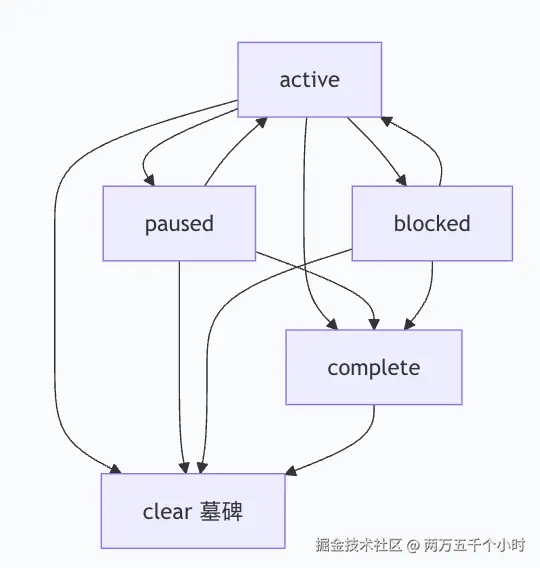
| 操作 | 允许的当前阶段 | 进入 | 附带 |
|---|---|---|---|
| create | 无目标 / complete | active revision 1 | arm |
| edit | 任意(非 clear) | 同阶段 revision+1 | 保留激活 |
| pause | active | paused | disarm |
| resume | active(未 armed)/ paused / blocked | active | arm;预算有余量 |
| complete | active / paused / blocked | complete | disarm |
| block | active | blocked + reason | disarm |
| clear | 任意 | 墓碑(revision+1,无快照) | disarm |
为什么 blocked 单独是一个阶段而不是一个标志 :provider 限制、预算、执行错误、等人类输入------dsh 把所有"卡住"的情况统一成一个 durable 阶段 ,带 { code, message }(code 机器可路由、message 人可读),避免为每种卡法发明一个新状态。
激活分离 ------注意表里的"arm / disarm":complete 会 disarm,意味着"目标完成了,别跑了"。激活(armed/disarmed)是进程内的,从不持久化------这解决一个现实问题:重启后目标可以还在(日志重放),但"你一打开会话就静默开工"是吓人的(dsh: "silently starting work when a user opens that session is surprising")。所以会话重启即 disarm:
ts
constructor(ctx: Context, config: { defaultMaxGoalRounds?: number } = {}) {
  ...
  ctx.on('agent/session-start', ({ agent }) => {
    this.cache(agent.session).activation = 'disarmed'   // 会话重启 → disarm
  })
}
dsh 原话:"Resume and fork expose the same durable phase while remaining operationally inert until an explicit resume mutation arms activation"------恢复/分叉后目标、阶段、修订、轮数都在,但绝不自动开工 ;你说"接着写"→ 模型 update_goal resume 才重新 arm。状态"还在"和"能自动续跑"从此是两个事实。
运行输出------pause 后续跑被拒、resume 后恢复:
css
  pause → {"goal":{...,"phase":"paused",...},"activation":"disarmed"}
  ✅ paused 后 goalRound 被拒 → no armed active goal for g5
  resume → {"goal":{...,"phase":"active",...},"activation":"armed"}
完成了就是真的完成吗? ------dsh 的态度很明确:由"记录完成的那方"说了算 ("the caller that records completion or blocking is authoritative"),没有独立评估器 ("evaluator-backed certification is deferred to a separate policy layer")。goal 保证的是状态质量 (可信、一致、可控、可审计),不是结果质量。
输入 → 输出(真实运行,含收尾 notice):
json
update_goal complete → {"goal":{"id":"goal-1","revision":2,"phase":"complete","roundsStarted":3,"maxGoalRounds":3},
                        "activation":"disarmed",
                        "wrapup":"目标已完成:写博客系列:从 0 实现 DeepSeek Harness,每篇一个主题"}
分叉与失败路径 :complete 可从 active / paused / blocked 进入;block 只能从 active 进入;非法转换被拒。收尾之外,轮次结束后的异常由续跑处理(见节点 ⑥ 的结算分类)。
节点 ⑥ 发起下一轮(续跑):goal 模式的核心价值,由 driver 执行
这是 goal 从"状态容器"变成"自动引擎"的那一步------上面五个节点把状态管好了,但没有这一步,状态不会自己往前走。
谁触发 :轮次结束、agent 变 idle 那一刻(dsh 的续跑挂在 agent/status 与 goal/changed 两个触发点上)。
谁来做------这很关键 :不是 goal 。dsh 把"何时开始下一轮"交给独立包 goal-round-driver(原话:"neither should decide when another model turn begins")。可以这样记:
| 负责什么 | 是什么 | |
|---|---|---|
| goal(节点 ①②③④⑤) | 状态可信:目标是什么、能不能改、改了多少轮 | 数据模型 + 工具 |
| driver(本节点) | 何时再动一次:发起下一轮 | 外部驱动者(独立包,可替换) |
所以 driver 不是 goal 的优化项,也不是 goal 的内部件 ------它是 goal 能力的执行者。goal 提供全部前提(派生状态、active/armed、预算、授权),driver 只回答"现在该不该推一轮、推的话推什么"。
goal 做了什么(经由 driver):一轮发起分三步------
第 1 步 · 状态判断:读到什么、够不够格发起
driver 先读派生状态(节点 ②),再问四个问题------目标在吗?是 active 吗?是 armed 吗?轮数还有余量吗? 全 yes 才发起:
ts
/** agent 静默后调用:检查目标并决定是否发起下一轮(dsh: drive() 的核心) */
schedule(agent: Agent): { round: number; prompt: string } | undefined {
  const goal = this.ctx.goals.get(agent)
  if (goal === undefined) return undefined
  if (goal.phase !== 'active' || goal.activation !== 'armed') return undefined
  if (goal.roundsStarted >= goal.maxGoalRounds) {
    // 预算耗尽 → 自动阻塞(dsh: block with code round-limit),从不自动重试
    this.ctx.goals.block(agent, { id: goal.id, revision: goal.revision }, {
      code: 'round-limit',
      message: `Goal reached its configured limit of ${goal.maxGoalRounds} rounds.`,
    })
    return undefined
  }
  const round = goal.roundsStarted + 1
  return { round, prompt: renderGoalRoundPrompt(goal, round) }
}
为什么盯着 idle :只有 agent 闲着、且 inbox 里没有竞争的工作 (没有你新发的消息排队)时才该发起下一轮------否则会和你的人类轮次打架(dsh: "no competing queued work")。注意 idle 是 agent 的状态,不是 goal 的状态(goal 只有那四个 phase);续跑只是消费它。
| 情况 | driver 的动作 |
|---|---|
| 目标不存在 | 不发起 |
| phase 不是 active(paused / blocked / complete) | 不发起 |
| activation 是 disarmed | 不发起(状态在,但续跑权不在) |
roundsStarted >= maxGoalRounds |
自动 block(code: 'round-limit'),不自动重试 |
| 你插话、检查、闲聊(人类轮次) | 不影响------目标没变、轮数不涨 |
第 2 步 · 生成提示词:<goal_round> 里装什么
算 round = roundsStarted + 1,然后拼出续跑消息。它只装两样东西:Objective (目标原文)和 Round N/M(第几轮 / 上限),外加一段续跑纪律:
ts
/** 每轮发给模型的续跑消息(dsh: renderGoalRoundPrompt 简化) */
export function renderGoalRoundPrompt(goal: GoalView, round: number): string {
  return '<goal_round>\n'
    + `Objective: ${JSON.stringify(goal.objective)}\n`
    + `Round: ${round}/${goal.maxGoalRounds}\n\n`
    + 'Continue working toward the objective in this same session. Treat the current workspace, '
    + 'tool results, and durable session state as authoritative; inspect them instead of assuming '
    + 'earlier narration is still current. Make concrete progress and verify the result. '
    + 'If work remains, leave the goal active for the next round.\n'
    + '</goal_round>'
}
真实运行里打印出来的消息(Round 1 那轮):
ini
<goal_round>
Objective: "写博客系列:从 0 实现 DeepSeek Harness,每篇一个主题"
Round: 1/3

Continue working toward the objective in this same session. Treat the current workspace, tool results, and durable session state as authoritative; inspect them instead of assuming earlier narration is still current. Make concrete progress and verify the result. If work remains, leave the goal active for the next round.
</goal_round>逐行解读它为什么这么写:
| 部分 | 内容 | 作用 |
|---|---|---|
| Objective | 用 JSON.stringify 包起来的目标原文 |
让模型每轮都回到"总目标",而不是被中间步骤带偏;引号保证目标原文不会被当成结构 |
| Round N/M | 当前轮 / 轮数上限 | 让模型知道"还剩几轮"------既知道进度,也知道不能无限拖 |
| 续跑纪律 | "以工作区、工具结果、持久会话状态为准,别相信之前的叙述" | 提醒模型每轮重新核实事实,而不是复述上一轮的记忆 |
| 收尾约定 | "如果还有工作,把目标留在 active" | 明确告诉模型:续跑的前提是它不 complete |
关键设计 :这条消息里没有完整状态 ------没有 id、revision、blockedReason。要拿完整状态,模型得自己调 get_goal(节点 ③)。这不是省事,是刻意的:状态只在日志里有权威,模型每次要用就去读权威,而不是凭上下文里的旧副本。
第 3 步 · 投递:消息进轮次,轮数在这里计入
driver 把消息投递出去 ,它最终变成会话里的一条 user/message,带 goal source:
yaml
{ kind: 'goal', goalId: 'goal-1', revision: 1, round: 1 }消息进入轮次时,严格重放 在 user/message 分支上做准入校验(节点 ② 的代码、节点 ④ 的规则):只有 round 恰好是 roundsStarted + 1、且没超预算,才让 roundsStarted 加一。这一步同时干了两件事:
- 准入(admitted)------消息成为目标轮进入轮次;
- 计入轮数 ------
roundsStarted = source.round。只有这一步消耗预算 ;第 2 步里算出的round还只是个打算,被拒绝就作废。
为什么这一步最难 :投递发生在"agent 刚闲下来"的瞬间------而这正是人类输入、取消、目标编辑可能同时发生的瞬间。两个最小化的翻车场景(都不需要真并发,只要次序擦肩而过):
场景 A · 人类输入与续跑同时到达
t1轮次结束,agent 变 idle;driver 检查"inbox 无竞争工作"→ 通过,预留 Round 3;t2你的消息进来------恰好落在"检查通过之后、Round 3 落地之前"这个窗口;- 没有栅栏 → 两条都进了轮次:agent 一边按旧目标写第 3 篇,一边收到你的改向;或者你的消息被压在续跑后面,等它写完一篇才被读到。
场景 B · 投递途中目标被改
t1driver 预留 Round 3(此刻revision=1);t2你update_goal(edit)改了 objective →revision=2;- 没有栅栏 → 第 3 轮带着 rev=1 的旧 objective 跑进 rev=2 的世界------它在按已经作废的目标干活。
这就是 naive 的"目标一变就续跑"(goal/changed → followup)会踩的坑:dsh 指出它在七个场景出错(人类输入、取消、目标编辑、持久化失败、会话重启、插件卸载、下游策略拒绝),后果是 admit 过时工作、和人类 prompt 并行跑、超预算。
dsh 的应对是竞态栅栏 (本 demo 简化掉了):消息进轮次前由 agent/pre-step 钩子校验"预留仍持有精确的 live revision",决策后再校验一次 ------防止异步监听器在进入旧提示词的同时改了目标。一句话目标:旧的一轮永远不能带着旧认知跑进新世界 ;完整实现(栅栏 + 结算分类)见 blog-22-goal-round-driver。
投递之后:轮次关闭,driver 按结果分类处理------异常不会自动重试,而是映射回节点 ⑤ 的状态:
| 轮次结果 | driver 的动作 |
|---|---|
| durable completed(正常结束) | 继续(active/armed/预算内) |
| 取消 / aborted | pause + disarm |
| error(RATE_LIMIT / QUOTA) | block(code: usage-limited) |
| 其他 error | block(code: turn-error) |
| max-tokens | disarm |
| 持久性检查失败 | disarm(不改 durable 阶段) |
| 未知结果 | block 待检查 |
本节点之外的复杂度去哪了 :静默事件监听、竞态栅栏双重校验、串行化合并、结算分类、卸载时 disarm------全部属于"何时/如何发起轮次"这个问题 ,与 goal 的状态模型无关。dsh 把它们放进独立的 goal-round-driver 包;本博客的 demo 只保留主线(手动 schedule)。想深入看 blog-22-goal-round-driver。
输入 → 输出(真实运行):
ini
【节点 ⑥ · 发起下一轮】续跑第 1 步 · 状态判断:active + armed + 预算有余量?
  → phase=active、activation=armed、roundsStarted 0/3 尚有余量 → 允许发起 Round 1
【节点 ⑥ · 发起下一轮】续跑第 2 步 · 生成提示词:renderGoalRoundPrompt(goal, round)
    | <goal_round>
    | Objective: "写博客系列:从 0 实现 DeepSeek Harness,每篇一个主题"
    | Round: 1/3
    | ...
【节点 ⑥ · 发起下一轮】续跑第 3 步 · 投递:user/message(source: goal, round 1)→ 准入 → roundsStarted=1(节点 ④ 预算 -1)
六个节点速查表
| 节点 | 属于 goal 的什么 | goal 的动作 | 读 / 写 | 主要代码 | 失败路径 |
|---|---|---|---|---|---|
| ① 设置目标 | 状态 · 起点 | 造快照 → 写 goal/change(create) → arm |
写日志 | goal.ts create/commit |
已有目标 / 坏入参 / 非人类权威 |
| ② 读状态 | 状态 · 唯一读取 | 折叠日志 → 算 view(增量) | 读 | goal.ts get/cache/sync、fold.ts |
畸形/乱序/非法转换 → 重放抛错 |
| ③ 修改状态 | 状态 · 唯一变更 | CAS + 授权 → 阶段迁移 → 写新快照 | 读 + 写日志 | tool-goal.ts、goal.ts expectCurrent/transition |
过期 revision / 非法迁移 / 无授权 / 阈值不足 |
| ④ 轮数预算 | 约束 | 只计 goal source → 超限自动 block | 写日志(计轮) | fold.ts applyGoalEvent、goal.ts resume |
非顺序轮拒绝 / 预算耗尽 block(round-limit) |
| ⑤ 判断完成 | 收尾 | 阶段迁移 + disarm;重启即 disarm | 写日志 | goal.ts complete、goal.ts session-start |
非法迁移 / 无独立评估器 |
| ⑥ 发起下一轮 | goal 模式的核心价值(driver 执行) | driver 三步:状态判断 → 生成提示词 → 投递 | 读 ② / 触发 ④③ | driver.ts schedule/renderGoalRoundPrompt |
非 active/未 armed 不发;预算耗尽 block;取消/错误 → pause/block/disarm |
设计取舍:为什么这么分层
六个节点背后是六个刻意的设计决定,每一条都指向上面某个节点:
- 状态"算"不"存"(节点 ②):会话日志是唯一权威,当前状态每次读时派生------多消费者天然一致,恢复即重算。
- 并发靠 CAS(节点 ③):每个提交者带精确 id/revision,过期即拒------丢更新不可能发生。
- 授权执行时验证(节点 ③):提示词无法认证授权,必须看"这个轮次里有没有人类 / 是不是精确目标轮"。
- 预算只计目标轮(节点 ④):靠消息自带的 goal source 区分,人类轮次一分钱不占。
- 阶段与激活分离(节点 ⑤):durable phase 记录"是什么状态",进程内 activation 决定"要不要跑"------重启即 disarm。
- 续跑与状态分离 (节点 ⑥):"何时开始下一轮"不属于 goal 域,交给独立包
goal-round-driver。
常见问题 FAQ
Q: goal 和 todo(blog-18)什么区别?
A: 完全不同的两件事 。todo 是多任务列表 (该做哪几件事,整表替换、off the model surface);goal 是单一完成目标(当前要完成的那一件事)。todo 没有生命周期/修订/轮数------goal 有阶段机、CAS 修订、续跑预算、激活分离。配合场景:goal 定"完成什么"(写博客系列),todo 列"分几步做"(20 篇的标题和顺序)------主流程里的 ① + ② 就是这个组合。
Q: goal 会随压缩丢失吗?
A: 不会------这恰恰是它和 todo 的关键区别之一 。dsh 的 Consequences 明确写:goal 历史"活过持久化、恢复、无关节点压缩、会话分叉"("Goal history survives persistence, resume, compaction of unrelated nodes, and session fork as ordinary session data")------作为普通会话数据 随日志走。原因:① goal 是单一对象 + 完整快照 (每次变更都是完整后置状态,体量小、last-wins 无歧义);② goal/change 事件是会话数据的一部分,压缩处理的是"无关节点";③ 会话日志是唯一权威,持久化、恢复、分叉天然继承目标记录。诚实边界:没有独立持久后端------它"持久"在同一会话的日志里,会话日志整体被清空则无从恢复。
Q: 续跑到底是谁在跑?和 goal 什么关系?
A: goal 提供能力,driver 执行 (节点 ⑥)。goal domain 只保留目标、只提供改它的工具,刻意不拥有"何时开始下一轮"的决定 ------所以 dsh 把续跑放进独立的 goal-round-driver 包。goal 管状态可信 ,driver 管何时再动一次 ;两者是并列的两个包,不是主从关系。driver 不是"优化项",但它也确实不属于 goal 的状态模型。
Q: 为什么需要 CAS 修订(id/revision)?
A: 见节点 ③:防止并发/交错提交互相覆盖。带错 revision 会被拒,第二个提交者必须重读。
Q: 重启后目标还在吗?会自动继续吗?
A: 状态在,续跑权不在 (节点 ⑤)。目标、阶段、修订、轮数都在会话日志里(durable);但 activation 被 disarm (会话重启即 disarm)。你说"继续"后模型 update_goal resume 才重新 arm------绝不自动开工。arm 之后续跑恢复自动发起。
Q: 模型能自己创建目标吗?
A: 不能 。create/edit/pause/resume 都需要直接人类轮次 (当前轮次有 user source 消息且是顶层 agent)------非人类轮次和子代理被拒绝。这正是节点 ③ 的要点:提示词无法认证授权,必须执行时验证 。模型只能从你的请求推断意图后创建,但权威源头必须是你。
Q: complete 和 blocked 为什么目标轮里也允许?
A: 因为目标轮里没有人类在场 ------模型必须能自我报告"目标达成了"(complete)或"被同一问题卡了多轮"(blocked)。但权限窄 :目标轮只能做这两个终态报告,不能 edit/pause/resume/replace (不能扩大自己的授权)。blocked 有轮号门槛 (默认 roundsStarted >= 3,即第 3 轮起才允许报),防止模型一遇难就放弃。
Q: goal 怎么保证目标执行的质量?
A: goal 不保证执行质量------它保证的是"状态质量",不是"结果质量" 。dsh 明确没有独立评估器("evaluator-backed certification is deferred to a separate policy layer")------完成/阻塞由记录方说了算,模型说 complete 就是 complete。goal 保证的是:状态可信 (事件溯源+严格重放)、一致 (CAS)、可控 (预算+激活)、可审计 (goal/change 全量快照历史)。间接支撑质量的机制 :blocked 阈值(同一条件 ≥3 轮才允许报)、轮数预算(防止无限低效续跑)、激活分离(重启后人类检查点)、CAS 纪律(update 前 get_goal)。真正的质量验证在 goal 之外:模型执行者本身、外部验证(人工评审/测试)、以及被推迟到独立策略层的评估器认证。
Q: 目标轮里怎么算"已完成"?
A: 由记录完成的那方说了算(dsh: "the caller that records completion or blocking is authoritative")------没有独立的评估器。模型在目标轮里 complete 即完成;这是刻意的简化(评估器认证是另一层策略)。
Q: goal 和 plan(blog-17)什么关系?
A: plan 是协作模式 (提示词引导"先设计再执行",plan/mode 事件 log-only);goal 是持久目标状态 + 自动续跑。plan 管"当前轮次怎么走",goal 管"整个任务要完成什么、还能跑几轮、谁有权改它"。
Q: goal 和 workflow 什么关系?
A: 正交、可组合 。goal 是"总目标的状态机 + 自动续跑"(跨轮、持久、带预算、带授权);workflow 是"某一轮次里的执行编排器"(模型写脚本 fan-out 子代理,一次 run,无持久状态)。配合方式:workflow 跑在 goal 的一轮续跑里------goal 管"任务往哪走",workflow 管"这步怎么干"。goal 不依赖 workflow,workflow 也不依赖 goal。
小结
- goal 模式提供两个能力 :① 把目标持久化住 (状态可信,节点 ①②③④⑤)+ ② 让它自己一直跑下去(续跑)(节点 ⑥,执行者是 driver);
- 六个能力节点 :
- ① 设置目标 :模型在人类轮次
create_goal→ 写goal/change(create)进日志 → arm; - ② 读状态:状态不"存"只"算"------日志 → 严格重放 → view;任何消费者同一份权威;
- ③ 修改状态 :每轮开头
get_goal抄精确 id/revision →update_goal(CAS + 执行时授权)→ 写新快照 revision+1; - ④ 轮数预算:靠消息自带的 goal source 只计目标轮;超限自动 block(round-limit);人类轮次不占预算;
- ⑤ 判断完成 :
complete→ phase=complete + disarm;激活进程内、重启即 disarm------状态在 ≠ 自动续跑; - ⑥ 发起下一轮(续跑) :driver 三步------状态判断(active + armed + 预算)→ 生成
<goal_round>→ 投递并计入轮数;
- ① 设置目标 :模型在人类轮次
- 续跑的定位 :它是 goal 模式的核心价值 ,但执行者不属于 goal 域 ------dsh 把"何时开始下一轮"交给独立的
goal-round-driver包(goal 管状态可信,driver 管何时再动一次);竞态栅栏与结算分类等细节见 blog-22; - 诚实边界:goal 保证状态可信,不保证执行质量(无独立评估器);预算只计轮数;"长久" = 同一会话内长久(历史活过持久化/恢复/压缩/分叉,但无独立后端)。