Crow是一个轻量级、快速的C++微框架,用于构建Web应用程序和RESTful API。
将处理前端页面的POST请求以添加数据的逻辑添加到 `/submit` 路由中,并添加了一个新的路由 `/` 用于返回包含输入框、按钮和表格的完整页面。当用户向表格添加数据时,JavaScript会发送POST请求到 `/submit` 路由,后端会处理数据并将其添加到数据向量中。另外,当页面加载时,JavaScript会发送GET请求到 `/table` 路由,以获取更新后的表格数据 。
cpp
#include <crow.h>
#include <sstream>
#include <string>
#include <vector>

std::vector<std::string> data;

int main() {
    crow::SimpleApp app;

    // 添加数据的页面
    CROW_ROUTE(app, "/")
        ([] {
        std::ostringstream os;
        os << "<html><body>";
        os << "<h1>Add Data to Table</h1>";
        os << "<input type='text' id='dataInput' placeholder='Enter data'>";
        os << "<button onclick='addData()'>Add Data</button>";
        os << "<table id='dataTable'>";
        os << "<tr><th>Data</th></tr>";
        for (const auto& item : data) {
            os << "<tr><td>" << item << "</td></tr>";
        }
        os << "</table>";
        os << "<script>";
        os << "function addData() {";
        os << "var input = document.getElementById('dataInput');";
        os << "var data = input.value;";
        os << "var xhr = new XMLHttpRequest();";
        os << "xhr.open('POST', '/submit', true);";
        os << "xhr.setRequestHeader('Content-Type', 'application/json');";
        os << "xhr.send(JSON.stringify({ data: data }));";
        os << "xhr.onload = function() {";
        os << "if (xhr.status === 200) {";
        os << "input.value = '';";
        os << "fetchData();";
        os << "}";
        os << "};";
        os << "}";
        os << "function fetchData() {";
        os << "var table = document.getElementById('dataTable');";
        os << "var xhr = new XMLHttpRequest();";
        os << "xhr.open('GET', '/table', true);";
        os << "xhr.send();";
        os << "xhr.onload = function() {";
        os << "if (xhr.status === 200) {";
        os << "table.innerHTML = '<tr><th>Data</th></tr>' + xhr.responseText;";
        os << "}";
        os << "};";
        os << "}";
        os << "fetchData();";
        os << "</script>";
        os << "</body></html>";
        return crow::response(os.str());
            });

    // 处理提交数据的路由
    CROW_ROUTE(app, "/submit")
        .methods("POST"_method)
        ([](const crow::request& req) {
        crow::json::rvalue json = crow::json::load(req.body);
        if (!json) {
            return crow::response(400);
        }

        std::string dataValue = json["data"].s();
        data.push_back(dataValue);

        return crow::response(200);
            });

    // 返回更新后的表格数据
    CROW_ROUTE(app, "/table")
        ([] {
        std::ostringstream os;
        for (const auto& item : data) {
            os << "<tr><td>" << item << "</td></tr>";
        }
        return crow::response(os.str());
            });

    app.port(8080).multithreaded().run();
}
运行效果:
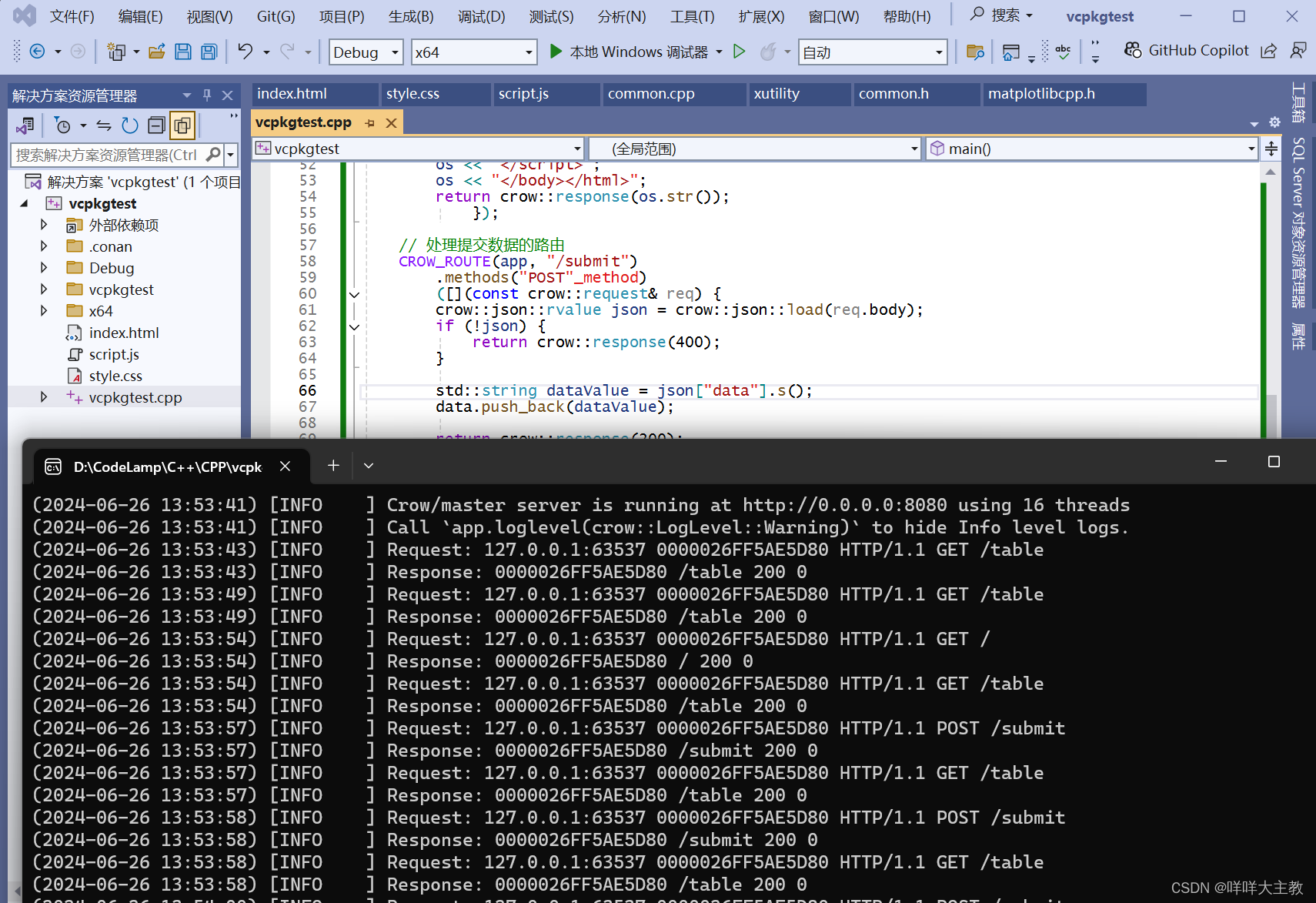
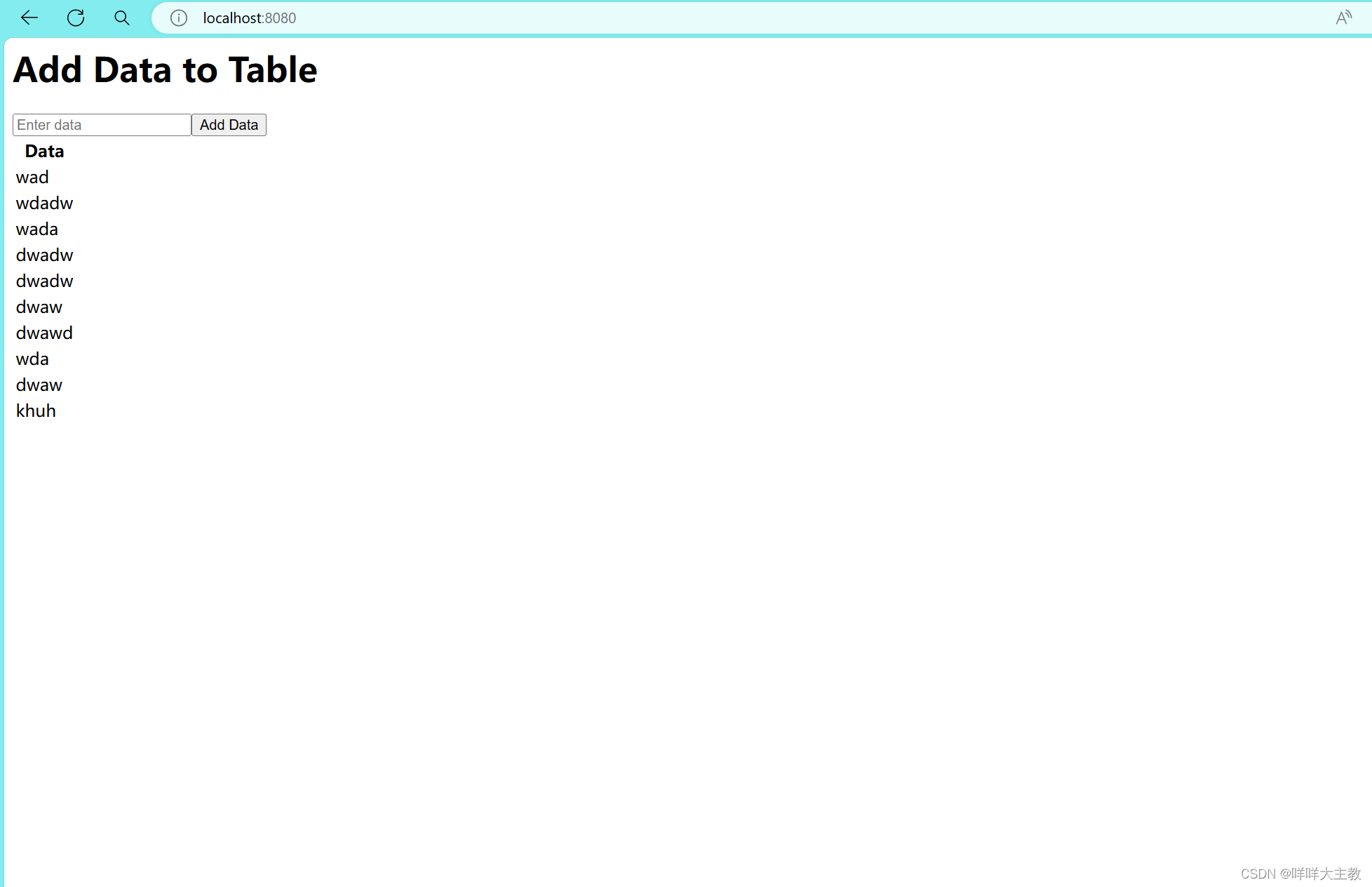
嗯....好吧,一般人是不会在后端代码里面嵌套这么一大坨html代码的对吧,所有我们将它们分离开来。
将html和js代码提取到index.html文件中。
html
<!DOCTYPE html>
<html>
<head>
    <title>Data Table</title>
</head>
<body>
    <h1>Add Data to Table</h1>
    <input type='text' id='dataInput' placeholder='Enter data'>
    <button onclick='addData()'>Add Data</button>
    <table id='dataTable'>
        <tr><th>Data</th></tr>
    </table>
    <script>
        function addData() {
            var input = document.getElementById('dataInput');
            var data = input.value;
            var xhr = new XMLHttpRequest();
            xhr.open('POST', '/submit', true);
            xhr.setRequestHeader('Content-Type', 'application/json');
            xhr.send(JSON.stringify({ data: data }));
            xhr.onload = function () {
                if (xhr.status === 200) {
                    input.value = '';
                    fetchData();
                }
            };
        }
        function fetchData() {
            var table = document.getElementById('dataTable');
            var xhr = new XMLHttpRequest();
            xhr.open('GET', '/table', true);
            xhr.send();
            xhr.onload = function () {
                if (xhr.status === 200) {
                    table.innerHTML = '<tr><th>Data</th></tr>' + xhr.responseText;
                }
            };
        }
        fetchData();
    </script>
</body>
</html>
cpp文件中的代码修改如下。
cpp
#include <crow.h>
#include <fstream>
#include <streambuf>
#include <string>
#include <vector>

std::vector<std::string> data;

int main() {
    crow::SimpleApp app;

    // 提供HTML文件
    CROW_ROUTE(app, "/")
        ([] {
        std::ifstream t("index.html");
        std::string html((std::istreambuf_iterator<char>(t)), std::istreambuf_iterator<char>());
        crow::response response(html);
        response.add_header("Content-Type", "text/html");
        return response;
            });

    // 处理提交数据的路由
    CROW_ROUTE(app, "/submit")
        .methods("POST"_method)
        ([](const crow::request& req) {
        crow::json::rvalue json = crow::json::load(req.body);
        if (!json) {
            return crow::response(400);
        }

        std::string dataValue = json["data"].s();
        data.push_back(dataValue);

        return crow::response(200);
            });

    // 返回更新后的表格数据
    CROW_ROUTE(app, "/table")
        ([] {
        std::ostringstream os;
        for (const auto& item : data) {
            os << "<tr><td>" << item << "</td></tr>";
        }
        return crow::response(os.str());
            });

    app.port(8080).multithreaded().run();
}
如果在浏览器中访问 `http://localhost:8080` 时只看到HTML源代码而不是页面内容,而且状态码是200,这可能是因为浏览器没有正确解析HTML内容,一种可能的原因是浏览器接收到的数据的Content-Type头部不正确,导致浏览器将其视为纯文本而不是HTML。可以尝试在Crow应用程序中为返回的HTML内容设置正确的Content-Type头部。
可以达到相同的效果。