消息队列
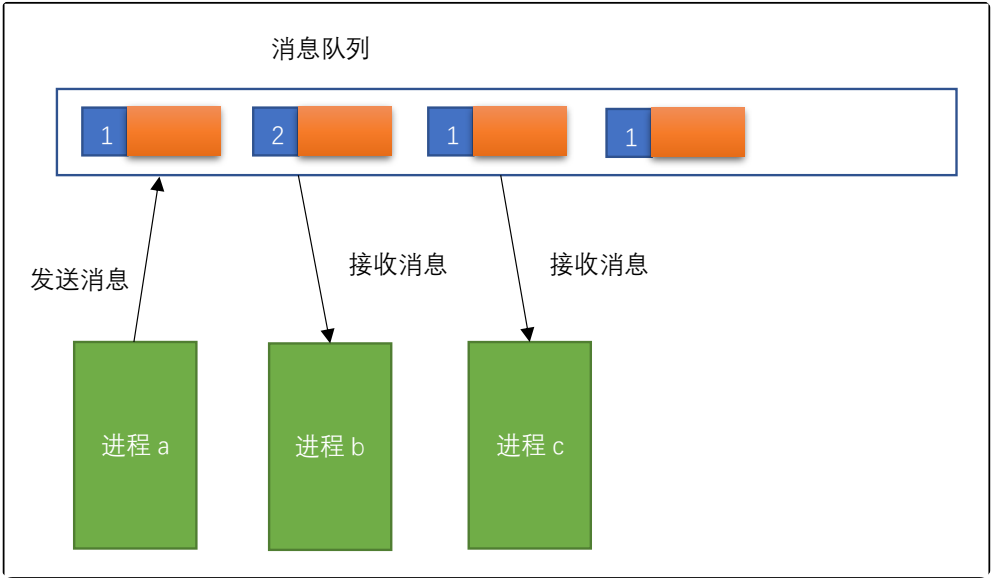
消息队列的核心特点
|-------|--------------|
| 特性 | 说明 |
| 结构化消息 | 消息有类型和内容 |
| 异步通信 | 发送和接收可以不同步 |
| 类型过滤 | 可以只接收特定类型的消息 |
| 持久化 | 消息会保留直到被读取 |
消息队列的四个核心函数
|----------|-----------|--------|
| 函数 | 作用 | 比喻 |
| msgget() | 创建/获取消息队列 | 租用邮局信箱 |
| msgsnd() | 发送消息 | 投递信件 |
| msgrcv() | 接收消息 | 收取信件 |
| msgctl() | 控制(删除等) | 退租信箱 |
例子:
cpp
#include <stdio.h>
#include <sys/msg.h>
#include <string.h>
#include <unistd.h>
#include <sys/wait.h>
// 定义消息结构
struct msgbuf {
    long mtype;
    char mtext[100];
};
int main() {
    int msgid;
    struct msgbuf msg;
    // 1. 创建消息队列
    msgid = msgget(IPC_PRIVATE, 0666);
    printf("1. 创建消息队列,ID = %d\n", msgid);
    pid_t pid = fork();
    if (pid == 0) {
        // 子进程:发送消息
        sleep(1);
        // 准备消息
        msg.mtype = 1;  // 消息类型1
        strcpy(msg.mtext, "Hello from Child!");
        // 2. 发送消息
        msgsnd(msgid, &msg, sizeof(msg.mtext), 0);
        printf("2. 子进程发送: type=%ld, content=%s\n", msg.mtype, msg.mtext);
    } else {
        // 父进程:接收消息
        printf("3. 父进程等待接收消息...\n");
        // 3. 接收类型为1的消息
        msgrcv(msgid, &msg, sizeof(msg.mtext), 1, 0);
        printf("4. 父进程收到: type=%ld, content=%s\n", msg.mtype, msg.mtext);
        wait(NULL);
        // 4. 删除消息队列
        msgctl(msgid, IPC_RMID, NULL);
        printf("5. 消息队列已删除\n");
    }
    return 0;
}
cpp
int msgid = msgget(IPC_PRIVATE, 0666);
// IPC_PRIVATE: 创建新的消息队列
// 0666: 读写权限
cpp
struct msgbuf msg;
msg.mtype = 1;                    // 设置消息类型
strcpy(msg.mtext, "Hello");       // 设置消息内容

msgsnd(msgid, &msg, sizeof(msg.mtext), 0);
// msgid: 消息队列ID
// &msg: 消息结构体指针
// sizeof(msg.mtext): 消息内容长度(不包括mtype)
// 0: 标志(0=阻塞)
cpp
struct msgbuf msg;
msgrcv(msgid, &msg, sizeof(msg.mtext), 1, 0);
// msgid: 消息队列ID
// &msg: 接收缓冲区
// sizeof(msg.mtext): 缓冲区大小
// 1: 接收类型为1的消息(0=接收任何类型)
// 0: 标志(0=阻塞)
多类型消息:
cpp
#include <stdio.h>
#include <sys/msg.h>
#include <string.h>
#include <unistd.h>
#include <sys/wait.h>
struct msgbuf {
    long mtype;
    char mtext[100];
};
int main() {
    int msgid = msgget(IPC_PRIVATE, 0666);
    struct msgbuf msg;
    pid_t pid = fork();
    if (pid == 0) {
        // 子进程:发送多种类型的消息
        msg.mtype = 1;  // 普通消息
        strcpy(msg.mtext, "普通通知");
        msgsnd(msgid, &msg, sizeof(msg.mtext), 0);
        msg.mtype = 10; // 紧急消息
        strcpy(msg.mtext, "紧急警报!");
        msgsnd(msgid, &msg, sizeof(msg.mtext), 0);
        msg.mtype = 5;  // 警告消息
        strcpy(msg.mtext, "系统警告");
        msgsnd(msgid, &msg, sizeof(msg.mtext), 0);
        printf("子进程发送了3条消息\n");
    } else {
        // 父进程:按优先级接收消息
        sleep(1);
        // 先接收紧急消息(类型10)
        msgrcv(msgid, &msg, sizeof(msg.mtext), 10, 0);
        printf收到紧急消息: %s\n", msg.mtext);
        // 再接收警告消息(类型5)
        msgrcv(msgid, &msg, sizeof(msg.mtext), 5, 0);
        printf("收到警告消息: %s\n", msg.mtext);
        // 最后接收普通消息(类型1)
        msgrcv(msgid, &msg, sizeof(msg.mtext), 1, 0);
        printf("收到普通消息: %s\n", msg.mtext);
        wait(NULL);
        msgctl(msgid, IPC_RMID, NULL);
    }
    return 0;
}
消息队列的阻塞特性
发送阻塞:
cpp
// 如果消息队列已满,msgsnd会阻塞
msgsnd(msgid, &msg, sizeof(msg.mtext), 0);  // 阻塞直到有空间

// 非阻塞发送(队列满立即返回错误)
msgsnd(msgid, &msg, sizeof(msg.mtext), IPC_NOWAIT);
接收阻塞:
cpp
// 如果没有消息,msgrcv会阻塞
msgrcv(msgid, &msg, sizeof(msg.mtext), 1, 0);  // 阻塞直到有消息

// 非阻塞接收(没有消息立即返回)
msgrcv(msgid, &msg, sizeof(msg.mtext), 1, IPC_NOWAIT);
消息队列 vs 其他IPC
|------|--------|--------|--------|
| 特性 | 消息队列 | 管道 | 共享内存 |
| 数据结构 | 结构化消息 | 字节流 | 原始内存 |
| 同步 | 内置同步 | 需要额外同步 | 需要额外同步 |
| 持久化 | 消息持久保存 | 数据不持久 | 数据持久 |
| 复杂度 | 中等 | 简单 | 复杂 |