obclient -h192.168.3.14 -P2881  -uroot@sys -p'xxx'

show databases;

use fengmysql


-- 创建表时定义自增列(默认 ORDER 模式)
CREATE TABLE t_user (
  id BIGINT NOT NULL AUTO_INCREMENT PRIMARY KEY,
  name VARCHAR(50)
) AUTO_INCREMENT = 1;

-- 显式指定 NOORDER 模式
CREATE TABLE t_order (
  id BIGINT NOT NULL AUTO_INCREMENT PRIMARY KEY,
  order_no VARCHAR(20)
) AUTO_INCREMENT_MODE = 'NOORDER';
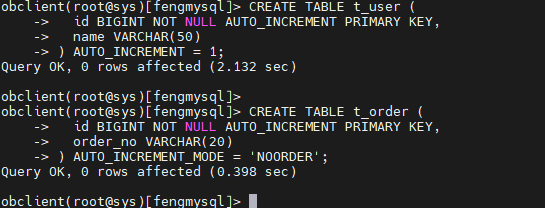
执行截图:
此时,已创建 t_user,t_order 两张表
2)插入实验
复制代码
INSERT INTO t_user (name) VALUES ('A'),('B'),('C');

select * from t_user;

commit;

-------
INSERT INTO t_order (order_no)  VALUES('order1'),('order2'),('order3');

select * from t_order ;
commit;
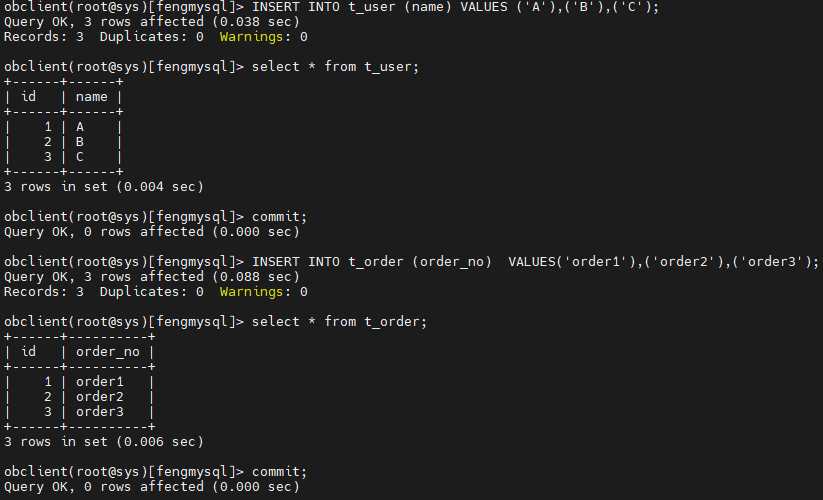
截图:
发现,都从1开始增长。再插入不同的条数,观察:
3)再插入不同条数
复制代码
INSERT INTO t_order (order_no)  VALUES('ord1'),('ord2');

INSERT INTO t_user (name) VALUES ('Ad');

select * from t_user;

select * from t_order;

commit;
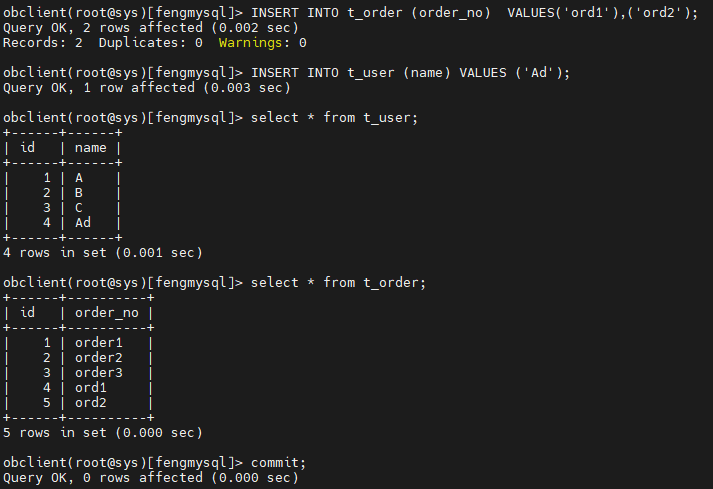
截图:
4)删除某行,看是否连续
复制代码
delete from t_order where id=5;

commit;

select * from t_order;

--删除后,再插入1条
insert into t_order(order_no) values(222);
commit;

select * from t_order;


--再插入2条
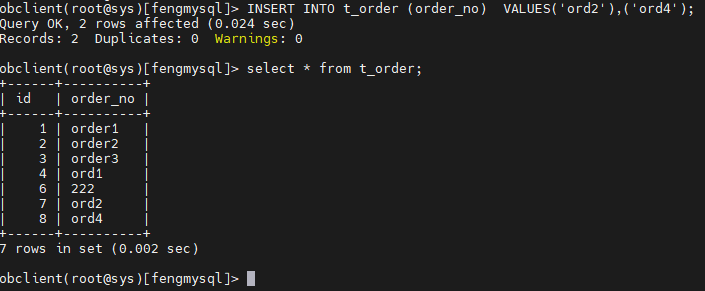
INSERT INTO t_order (order_no)  VALUES('ord2'),('ord4');
select * from t_order;
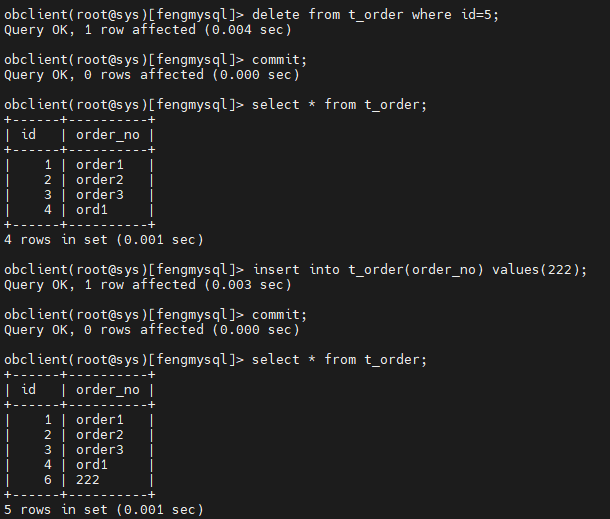
截图:
看到删除的那条就没有了,序号依次往下排,从6开始。
5)truncate 再观察 1开始
复制代码
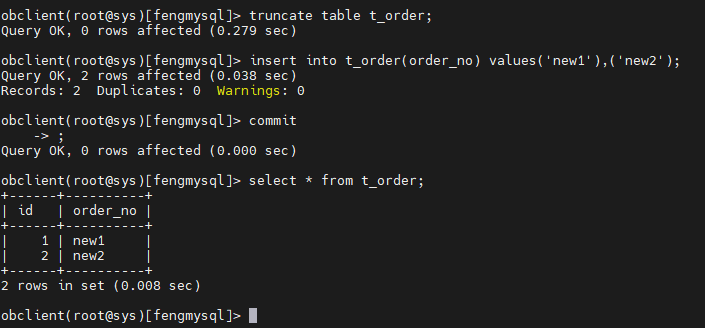
truncate table t_order;

insert into t_order(order_no) values('new1'),('new2');

commit;

select * from t_order;
截图:
发现 truncate 表之后,自增序列重新开始。
2.2 实验:oracle模式下 自增序列
1)切换背景
oracle 数据库中建表t_log, 可以实现自增模式:
复制代码
create table T_LOG
(
  logid         NUMBER generated always as identity (start with 1 maxvalue 9999999999999 cycle order),
  message       VARCHAR2(400)
)
如何切换oceanbase数据库呢?
2)oracle的语法测试
复制代码
obclient -h192.168.3.14 -P2881 -ufeng@fengoracle -p'xxx'

select user_name from user_tables;

create table T_LOG
(
  logid         NUMBER generated always as identity (start with 1 maxvalue 9999999999999 cycle order),
  message       VARCHAR2(400)
);

---改为 ok
create table T_LOG (   logid  NUMBER ,   message       VARCHAR2(400) );
截图:发现 直接用oracle创建语句,不可以
3)测试 auto_increment, 不可
复制代码
create table T_LOG1 (
logid  NUMBER not null AUTO_INCREMENT,
message  VARCHAR2(400)
);
CREATE SEQUENCE sequence_name
    [
        MINVALUE value -- 序列最小值
        MAXVALUE value -- 序列最大值
        START WITH value -- 序列起始值
        INCREMENT BY value -- 序列增长值
        CACHE cache -- 序列缓存个数
        CYCLE | NOCYCLE -- 序列循环或不循环
    ]

--语句
CREATE TABLE T_SEQ(
ID NUMBER NOT NULL PRIMARY KEY,
NAME VARCHAR2(400));

CREATE SEQUENCE seq_t_seq START WITH 1 INCREMENT BY 1;

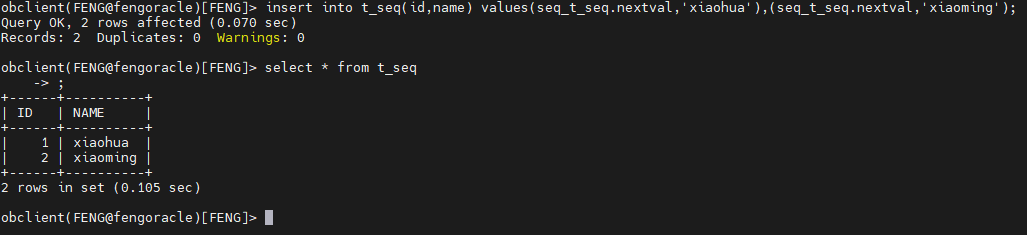
insert into t_seq(id,name) values(seq_t_seq.nextval,'xiaohua'),(seq_t_seq.nextval,'xiaoming');
截图:
5)类oracle自增方式 generated by default
复制代码
--oracle下:
create table T_LOG
(
  logid         NUMBER generated always as identity (start with 1 maxvalue 9999999999999 cycle order),
  message       VARCHAR2(400)
)

--oceanbase oracle模式下:
create table T_LOG(
id number generated by default as identity  maxvalue 21 start with 1 cycle order,
name varchar2(400)
);
截图: ok 创建成功。
注意:如果设置cycle 循环,且没有指定 cache 则maxvalue 必须大于一个 one cycle 默认20
否则 提示 OBE-04013: number to CACHE must be less than one cycle
指定cache也可以,建表语句修改如下:
复制代码
CREATE SEQUENCE seq1 START WITH 1 MINVALUE 1 MAXVALUE 5 INCREMENT BY 2 CYCLE CACHE 2;

--oceanbase oracle模式下:
create table T_LOG1(
id number generated by default as identity  maxvalue 4 start with 1 cycle order cache 3,
name varchar2(400)
);
截图: generated by default as identity maxvalue x start with 1 cycle order cache 3
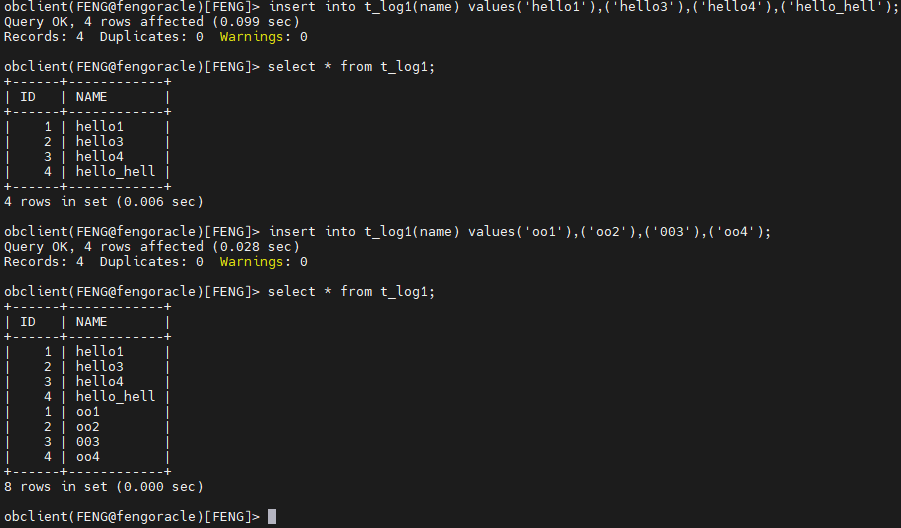
插入t_log1 (最大4,循环)
复制代码
insert into t_log1(name) values('hello1'),('hello3'),('hello4'),('hello_hell');

insert into t_log1(name) values('oo1'),('oo2'),('003'),('oo4');

select * from t_log1;
截图:
发现id自增,且循环。ok
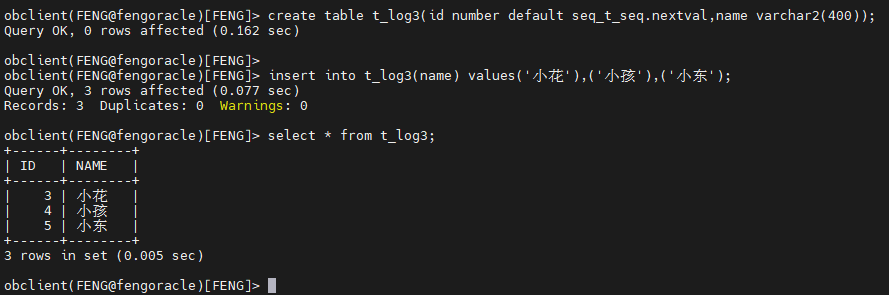
6)创建表时 字段默认序列
创建表,字段默认值为序列的值
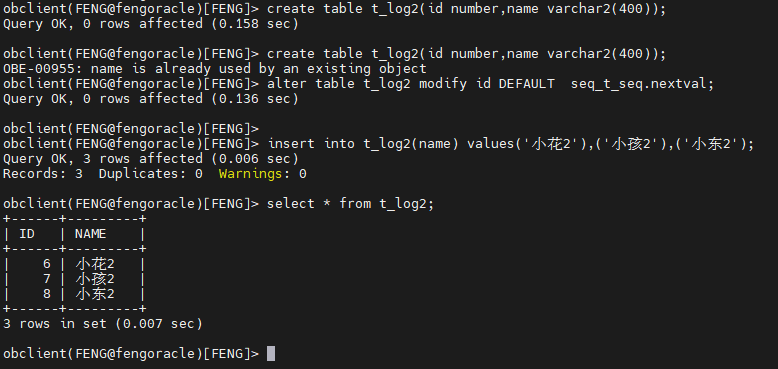
或者
后面改为默认值为序列值也可以
复制代码
create table t_log3(
id number default seq_t_seq.nextval,
name varchar2(400)
);

insert into t_log3(name) values('小花'),('小孩'),('小东');

或者:
create table t_log2(id number,name varchar2(400));

alter table t_log2 modify id DEFAULT  seq_t_seq.nextval;

insert into t_log2(name) values('小花2'),('小孩2'),('小东2');
 共同进步
共同进步