JavaScript 高级 - 第3天
了解构造函数原型对象的语法特征,掌握 JavaScript 中面向对象编程的实现方式,基于面向对象编程思想实现 DOM 操作的封装。
- 了解面向对象编程的一般特征
- 掌握基于构造函数原型对象的逻辑封装
- 掌握基于原型对象实现的继承
- 理解什么原型链及其作用
- 能够处理程序异常提升程序执行的健壮性
文章目录
编程思想
学习 JavaScript 中基于原型的面向对象编程序的语法实现,理解面向对象编程的特征。
面向过程编程
面向过程就是分析出解决问题所需要的步骤,然后用函数把这些步骤一步一步实现,使用的时候再一个一个的依次调用就可以了。
举个例子:蛋炒饭

简单来说,面向过程就是按照我们分析好的步骤,按照步骤解决问题。
面向对象编程(oop)
面向对象是把事务分解成为一个个对象,然后由对象之间分工与合作。
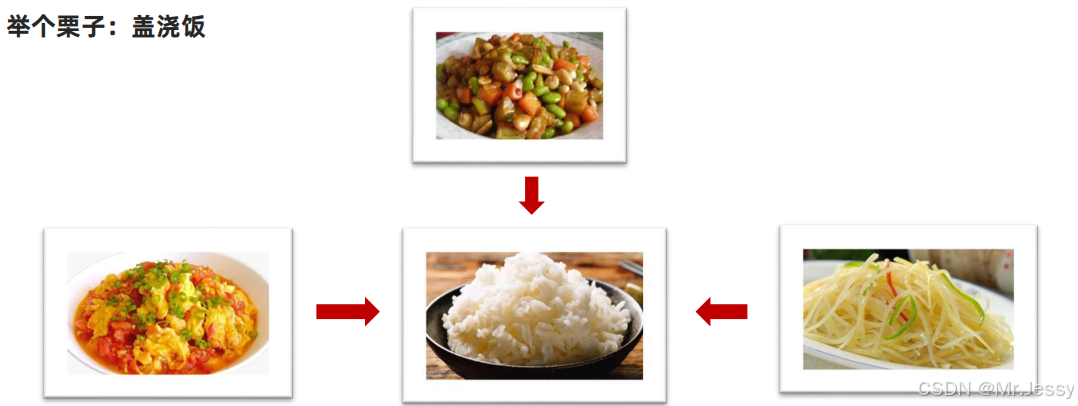
在面向对象程序开发思想中,每一个对象都是功能中心,具有明确分工。总之,面向对象是以对象功能来划分问题,而不是步骤。
面向对象编程具有灵活、代码可复用、容易维护和开发的优点,更适合多人合作的大型软件项目。
面向对象的特性:
- 封装性
- 继承性
- 多态性
面向过程和面向对象的对比
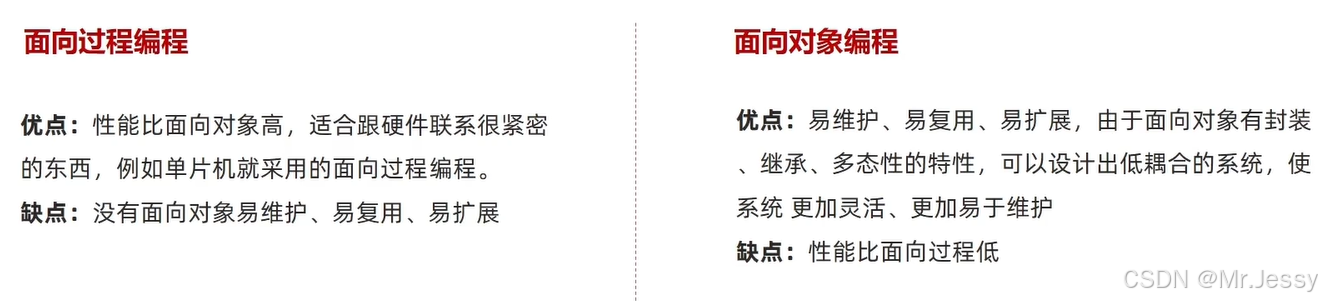
对比其他语言,前端更多是面向过程的。
构造函数
封装是面向对象思想中比较重要的一部分,JS面向对象可以通过构造函数实现的封装。
同样的将变量和函数组合到了一起并能通过this实现数据的共享,所不同的是借助构造函数创建出来的实例对象之间是彼此不影响的。
对比以下通过面向对象的构造函数实现的封装:
html
<script>
  // 构造函数 将公共的属性和方法封装到构造函数中
  function Person() {
    this.name = name
    this.age = age
    this.sing = () => {
      console.log('我会唱歌')
    }
  }

  // 实例对象 获得了构造函数中封装的所有逻辑
  let p1 = new Person('小明', 25)
  let p2 = new Person('小红', 22)

  // 对象彼此独立 互不影响
  console.log(p1 === p2) // false
</script>前面我们学过的构造函数方法很好用,但是存在浪费内存的问题:
html
<script>
  // 构造函数 将公共的属性和方法封装到构造函数中
  function Person() {
    this.name = name
    this.age = age
    this.sing = () => {
      console.log('我会唱歌')
    }
  }

  // 实例对象 获得了构造函数中封装的所有逻辑
  let p1 = new Person('小明', 25)
  let p2 = new Person('小红', 22)

  // 对象彼此独立 互不影响
  console.log(p1 === p2) // false
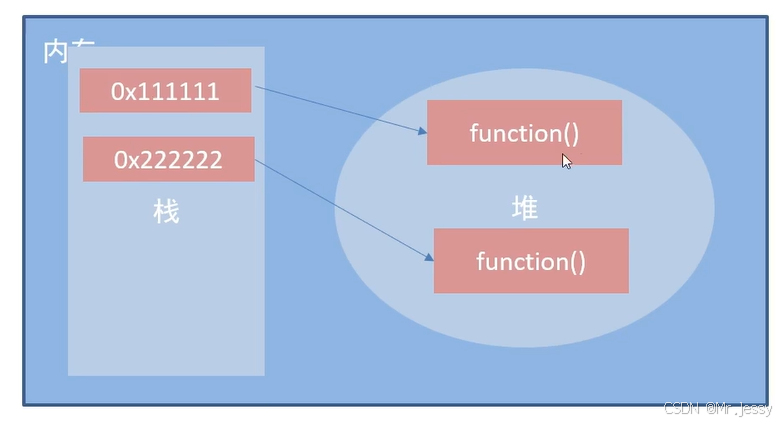
  // 两个对象指向堆中的地址不同 因此不是一个sing方法
  console.log(p1.sing === p2.sing)  // false
  // 但这两个对象中的sing方法内容是完全相同的 这意味着我们多开了一个空间再次存放sing方法 这就导致了内存的浪费
</script>
示意图:
总结:
- 构造函数体现了面向对象的封装特性
- 构造函数实例创建的对象彼此独立、互不影响
原型
原型对象
构造函数通过原型分配的函数是所有对象所共享的。
JavaScript 规定,每一个构造函数都有一个 prototype 属性,指向另一个对象,所以我们也称为原型对象。
html
<script>
  function Person() {
    this.name = name
  }

  // 每个构造函数都有 prototype 属性
  console.log(Person.prototype) // 原型对象 Object
</script这个对象可以挂载函数,对象实例化不会多次创建原型上函数,节约内存。
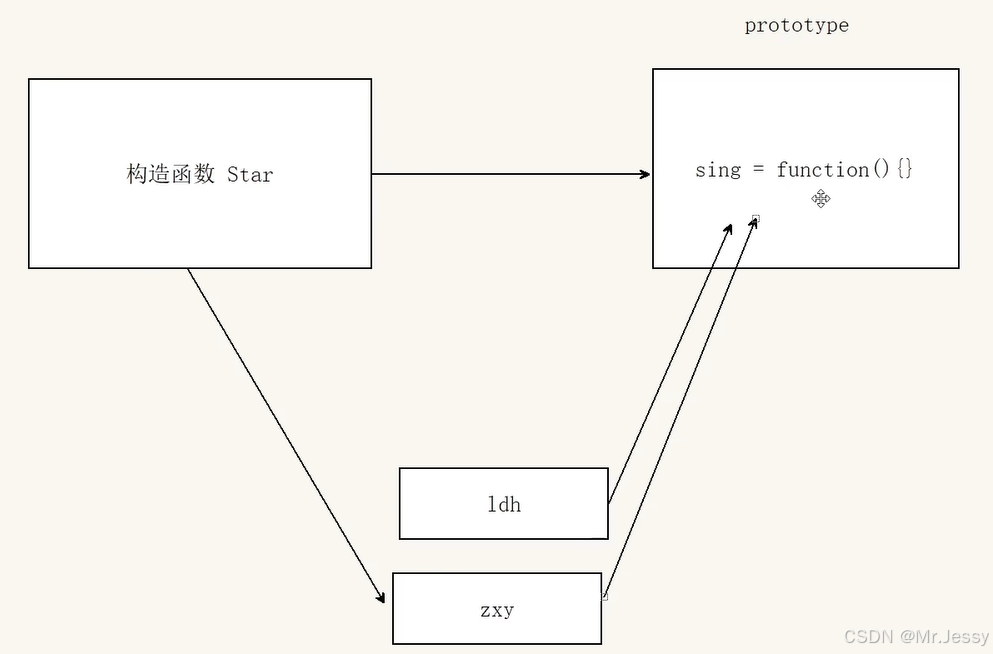
我们可以把那些不变 的方法,直接定义在 prototype 对象上,这样所有对象的实例就可以共享这些方法。我们还是以上面的例子来演示:
html
<script>
  // 公共的属性写到构造函数里
  function Person() {
    this.name = name
    this.age = age
  }

  // 公共的方法写到原型对象上 相当于给原型对象添加新方法
  Person.prototype.sing = function (){
    console.log('我会唱歌')
  }

  let ldh = new Person('刘德华', 55)
  let zxy = new Person('张学友', 58)
  ldh.sing()  // 调用 因为是ldh调用 因此sing的this指向ldh
  zxy.sing()  // 调用

  console.log(ldh.sing === zxy.sing)  // true
</script>构造函数和原型对象中的this都指向实例化的对象。
示意图:
了解了 JavaScript 中构造函数与原型对象的关系后,再来看原型对象具体的作用,如下代码所示:
html
<script>
  // 自定义两个数组扩展方法  求和 最大值
  // 1. 我们定义的这个方法,任何一个数组实例对象都可以使用
  // 2. 自定义的方法写到 数组.prototype 身上

  // 最大值 这里不推荐用箭头函数 因为箭头函数没有 this
  Array.prototype.max = function () {
    // 不需要传参 因为原型对象 this 指向调用者 即 arr
    // 但是 Math.max() 的参数不能是数组 因此我们需要使用展开运算符展开数组
    // 相当于 Math.max(1, 2, 3)
    this.Math.max(...this)
  }

  // 实例化
  const arr = [1, 2, 3]
  // 相当于 const arr = new Array(1, 2, 3)
 	arr.max() // 调用
  console.log(arr.max())  // 3

  // 求和
  Array.prototype.sum() = function () {
    return this.reduce((prev, item) => prev + item, 0)
  }
  console.log(arr.sum())  // 6
</script>
如果构造函数 Person 中定义和原型对象一样的方法,会发生什么呢:
html
<script>
  function Person() {
    // 此处定义同名方法 sayHi
    this.sayHi = function () {
      console.log('嗨!');
    }
  }

  // 为构造函数的原型对象添加方法
  Person.prototype.sayHi = function () {
    console.log('Hi~');
  }

  let p1 = new Person();
  p1.sayHi(); // 输出结果为 嗨!
</script>
构造函数 Person 中定义与原型对象中相同名称的方法,这时实例对象调用则是构造函中的方法 sayHi。
通过以上简单示例不难发现 JavaScript 中对象的工作机制:当访问对象的属性或方法时,先在当前实例对象是查找,然后再去原型对象查找,并且原型对象被所有实例共享。
html
<script>
	function Person() {
    // 此处定义同名方法 sayHi
    this.sayHi = function () {
      console.log('嗨!' + this.name)
    }
  }

  // 为构造函数的原型对象添加方法
  Person.prototype.sayHi = function () {
    console.log('Hi~' + this.name)
  }
  // 在构造函数的原型对象上添加属性
  Person.prototype.name = '小明'

  let p1 = new Person()
  p1.sayHi(); // 输出结果为 嗨!

  let p2 = new Person()
  p2.sayHi()
</script>总结:结合构造函数原型的特征,实际开发重往往会将封装的功能函数添加到原型对象中。
constructor 属性
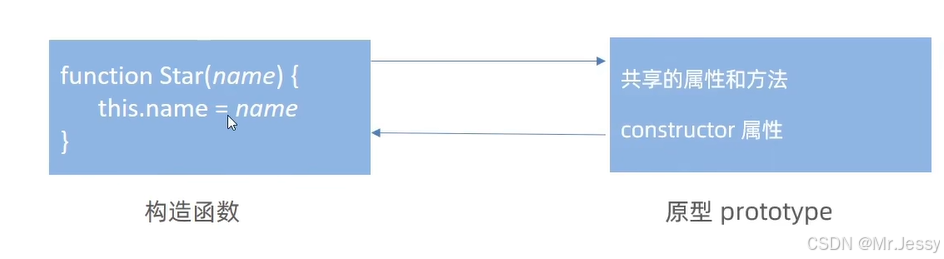
每个原型对象prototype里面都有个constructor属性(constructor就是构造函数的意思)。
作用:该属性指向该原型对象的构造函数 。简单来说,constructor就是原型对象用来找到爸爸的。
html
<script>
  // 构造函数 constructor
  function Star() {

  }
  console.log(Star.prototype)  // 原型对象中包含 constructor

  const ldh = new Star()
  console.log(Star.prototype.constructor === Star)  // true
</script>
使用场景:
如果有多个对象的方法,一个一个添加的方式太麻烦了,我们可以给原型对象采取对象形式赋值。
html
<script>
  function Star() {
  }
  console.log(Star.prototype)  // 此时还包含 constructor
  // 采用对象形式赋值 会覆盖原来的 prototype 对象
  // 那么就没有了 constructor
  Star.prototype = {
    sing: function () {
      console.log('唱歌')
    },
    dance: function () {
      console.log('跳舞')
    },
  }
  console.log(Star.prototype)  // 新增 sing dance 方法 但不包含 constructor
</script>但是这样就会覆盖 构造函数原型对象原来的内容,这样修改后的原型对象 constructor 就不再指向当前构造函数了,那么,原型对象就和普通的对象没有任何区别了。
为了解决这个问题,我们可以在修改后的原型对象中,添加 一个 constructor 指向原来的构造函数。
html
<script>
  function Star() {
  }

  Star.prototype = {
    // 重新指回创造这个原型对象的 构造函数
    constructor: Star,
    sing: function () {
      console.log('唱歌')
    },
    dance: function () {
      console.log('跳舞')
    },
  }
  console.log(Star.prototype)  // 既有新方法 也包含 constructor
</script>
对象原型
构造函数中可以创建实例对象,构造函数还有一个原型对象,一些公共的属性或者方法放到这个原型对象上,但为什么实例对象可以访问原型对象里面的属性和方法呢?
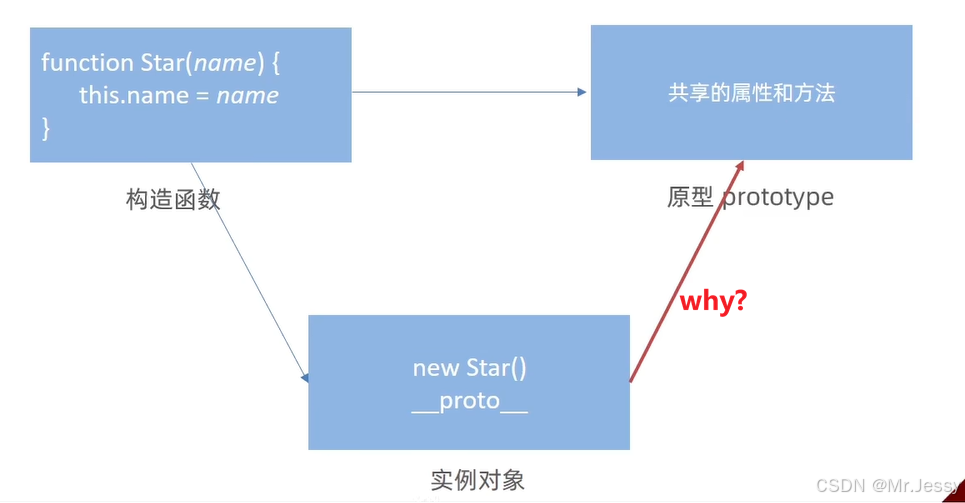
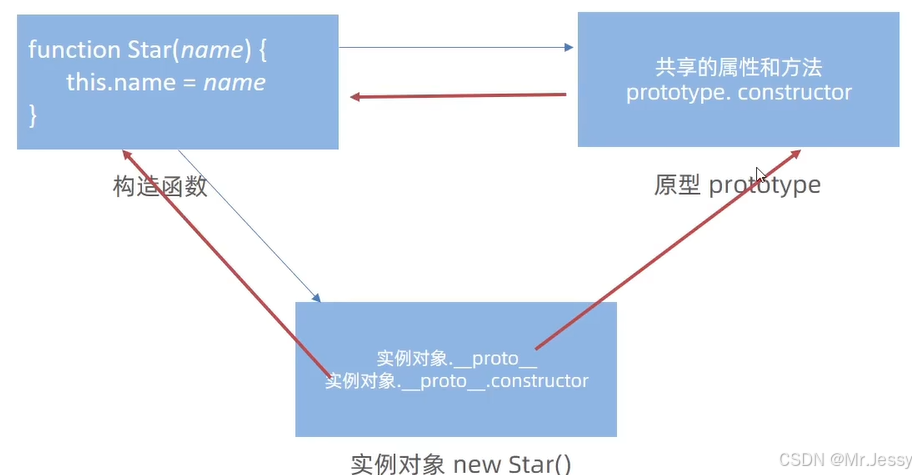
对象都会有一个属性__proto__指向构造函数的 prototype 原型对象,之所以我们对象可以使用构造函数 prototype 原型对象的属性和方法,就是因为对象有 __proto__原型的存在。我们到代码中体会一下:
html
<script>
  function Star() { }
  const ldh = new Star()
  console.log(ldh)  // 可以看到实例对象中包含 [[prototype]] 对象
  // 对象原型__proto__ 指向该构造函数的原型对象
  console.log(ldh.__proto__)  // 可以看到这个对象也有 constructor
  console.log(ldh.__proto__ === Star.prototype) // 指向prototype
  // 对象原型里的constructor 指向构造函数 Star
  console.log(ldh.__proto__.constructor === Star) // 指向父亲 Star

</script>简单来说,构造函数是父亲,创建了两个儿子,一个是哥哥(原型对象prototype),一个是弟弟(实例对象),而弟弟也会指向哥哥(通过__proto__ )。兄弟俩通过都constructor指向父亲。
注意:
__proto__是JS非标准属性,因此在浏览器中显示的是[[prototype]](标准)__proto__是只读的,只能获取,不能赋值[[prototype]]和__proto__意义相同- 用来表明当前实例对象指向哪个原型对象
prototype __proto__对象原型里面也有一个constructor属性,指向创建该实例对象的构造函数
原型继承
继承是面向对象编程的另一个特征,通过继承进一步提升代码封装的程度,JavaScript 中大多是借助原型对象实现继承的特性。
龙生龙、凤生凤、老鼠的儿子会打洞描述的正是继承的含义。
我们通过一个例子来体会这个过程:
html
<body>
  <script>
    // 构造两个函数
    function Woman() {
      eyes: 2,
      head: 1
    }
    // 实例对象
    const red = new Woman()
    console.log(red)  // {eyes: 2, head: 1}
    function Man() {
      eyes: 2,
      head: 1
    }
    const blue = new Man()
    console.log(blue)  // {eyes: 2, head: 1}
  </script>
</body>
可以发现这两个函数拥有相同的属性,那么我们可以把相同的属性封装成一个对象,让两个函数共享这一个对象,节约内存:
html
<body>
  <script>
    // 继续抽取 把公共的部分放到原型对象上
    const Person = {
      eyes: 2,
      head: 1
    }

    function Woman() {

    }
    // 通过 原型继承 将公共部分赋值给prototype 注意还要加上constructor
    Woman.prototype = Person
    Woman.prototype.constructor = Woman
    // 实例对象
    const red = new Woman()
    console.log(red)  // {eyes: 2, head: 1, constructor: f}

    function Man() {

    }
    // 通过 原型继承 Person
    Man.prototype = Person
    Man.prototype.constructor = Man
    const blue = new Man()
		console.log(blue)  // {eyes: 2, head: 1, constructor: f}
  </script>
</body>如果此时我们想给Woman增加一个新的方法:
html
<body>
  <script>
    // 继续抽取 把公共的部分放到原型对象上
    const Person = {
      eyes: 2,
      head: 1
    }

    function Woman() {

    }
    Woman.prototype = Person
    Woman.prototype.constructor = Woman
    // 给女人新添加一个方法 生孩子
    Woman.prototype.baby = function () {
      console.log('宝宝')
    }
    // 实例对象
    const red = new Woman()
    console.log(Woman.prototype) // 多了 baby 这个方法
    console.log(red)

    function Man() {

    }
    // 通过 原型继承 Person
    Man.prototype = Person
    Man.prototype.constructor = Man
    const blue = new Man()
    console.log(Man.prototype)  // 也多了 baby!这和我们的想法矛盾
		console.log(blue)
  </script>
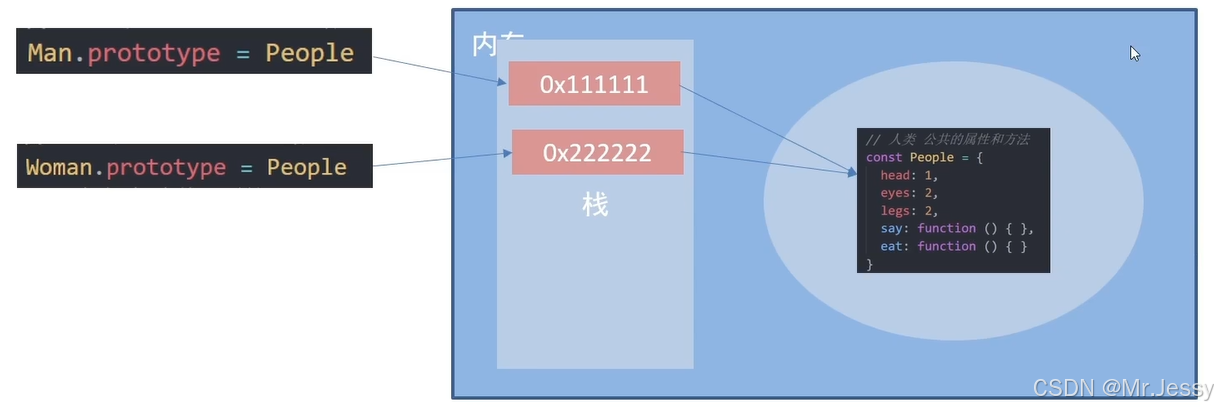
</body>当我们给Woman增加一个新的方法时,发现Man也被添加了同样的方法。这是因为男人和女人都同时使用了同一个对象,根据引用类型的特点,他们指向同一个对象,修改其中一个构造函数的方法另一方函数也会被影响:
如果想要解决这个问题,我们可以独立出它们赋值的对象,Woman对应Person1,Man对应Person2:
html
<body>
  <script>
    const Person1 = {
      eyes: 2,
      head: 1
    }
    const Person2 = {
      eyes: 2,
      head: 1
    }

    function Woman() {

    }
    // 分别对应不同的对
    Woman.prototype = Person1
    Woman.prototype.constructor = Woman
    // 给女人新添加一个方法 生孩子
    Woman.prototype.baby = function () {
      console.log('宝宝')
    }
    // 实例对象
    const red = new Woman()
    console.log(Woman.prototype)
    console.log(red)

    function Man() {

    }
    // 通过 原型继承 Person
    Man.prototype = Person2
    Man.prototype.constructor = Man
    const blue = new Man()
    console.log(Man.prototype)
		console.log(blue)
  </script>
</body>
但根据我们的封装思想,相同的部分是需要被抽取出来再次封装的,根据我们的需求:结构一样但不是同一个对象。由此,我们想到构造函数。
html
<body>
  <script>
		// 构造函数  new 出来的对象 结构一样,但是对象不一样
    function Person() {
      this.eyes = 2
      this.head = 1
    }

    function Woman() {

    }
    // 分别对应不同的对
    Woman.prototype = new Person()
    Woman.prototype.constructor = Woman
    // 给女人新添加一个方法 生孩子
    Woman.prototype.baby = function () {
      console.log('宝宝')
    }
    // 实例对象
    const red = new Woman()
    console.log(Woman.prototype) // 有 baby
    console.log(red)

    function Man() {

    }
    // 通过 原型继承 Person
    Man.prototype = new Person()
    Man.prototype.constructor = Man
    const blue = new Man()
    console.log(Man.prototype)  // 没有 baby!
		console.log(blue)
  </script>
</body>
这样,两个函数之间可以互不影响地修改自己的属性和方法。
总而言之,原型继承最核心的就是父构造函数和字构造函数之间的继承。
也就是Woman.prototype = new Person().
html
<script>
  // 构造函数  new 出来的对象 结构一样,但是对象不一样
  function Person() {
    this.eyes = 2
    this.head = 1
  }
  // console.log(new Person)
  // 女人 构造函数 继承 Person
  function Woman() {

  }
  // Woman 通过原型来继承 Person
  // 父构造函数(父类)   子构造函数(子类)
  // 子类的原型 =  new 父类
  Woman.prototype = new Person()   // {eyes: 2, head: 1}
  // 指回原来的构造函数
  Woman.prototype.constructor = Woman

  // 给女人添加一个方法  生孩子
  Woman.prototype.baby = function () {
    console.log('宝贝')
  }
  const red = new Woman()
  console.log(red)

  // 男人 构造函数 继承 Person
  function Man() {

  }
  // 通过 原型继承 Person
  Man.prototype = new Person()
  Man.prototype.constructor = Man
  const pink = new Man()
  console.log(pink)
</script>当然,原型继承也是有一定缺陷的,还有更严格的继承类class。
原型链
当我们构造函数时查看prototype时,会发现prototype也有__proto__:
html
<body>
  <script>
    function Person() {

    }
    const ldh = new Person()
    console.log(ldh.__proto__ === Person.prototype) // true
    console.log(Person.prototype) // 你会发现 prototype 也有__proto__
    // 其实每个对象都有一个__proto__
  </script>
</body>对象原型指向的是原型对象,那么prototype.__proto__指向哪个原型对象呢?
我们上面提到,__proto__是指向父类的prototype属性,那么这里的prototype.__proto__也应该是指向prototype的父类。prototype是一个对象,每个对象都有一个父类Object构造函数。如此,prototype.__proto__应该指向的是父类的prototype,也就是Object.prototype.
html
<body>
  <script>
    function Person() {

    }
    const ldh = new Person()
    console.log(ldh.__proto__ === Person.prototype) // true
    console.log(Person.prototype.__proto__ === Object.prototype) // true
  </script>
</body>这时候我们会想到,Object.prototype也是对象,那么Object.prototype.__proto__指向谁呢?
由于Object.prototype没有父类,因此Object.prototype.__proto__指向的是空指针null。
我们可以通过示意图来理解这种关系:
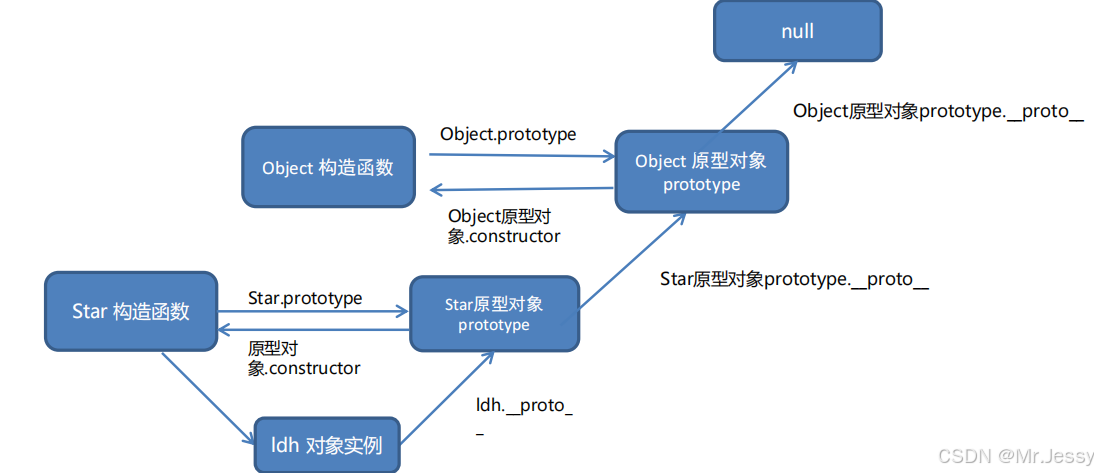
基于原型对象的继承使得不同构造函数的原型对象关联 在一起,并且这种关联的关系是一种链状 的结构,我们将原型对象的链状结构关系称为原型链。
原型链查找规则:
① 当访问一个对象的属性(包括方法)时,首先查找这个对象自身有没有该属性。
② 如果没有就查找它的原型 (也就是 __proto__指向的 prototype 原型对象,一般原型会存储公共的属性和方法)
③ 如果还没有就查找原型对象的原型 (Object的原型对象Object.prototype)
④ 依此类推一直找到 Object 为止(null)
⑤ __proto__对象原型的意义就在于为对象成员查找机制提供一个方向,或者说一条路线
⑥ 可以使用 instanceof 运算符用于检测构造函数的 prototype 属性是否出现在某个实例对象的原型链上。简单来说,就是检测某个实例对象是否属于某个构造函数。
html
<script>
	function Person() {

  }
  const ldh = new Person()
  console.log(ldh instanceof Person)  // true 属于
  console.log(ldh instanceof Object)  // true
  console.log(ldh instanceof Array)   // false
  console.log([1, 2, 3] instanceof Array) // true
  console.log(Array instanceof Object)  // true 数组也属于对象 因为数组也能通过构造函数创建出来 一切皆对象
</script>