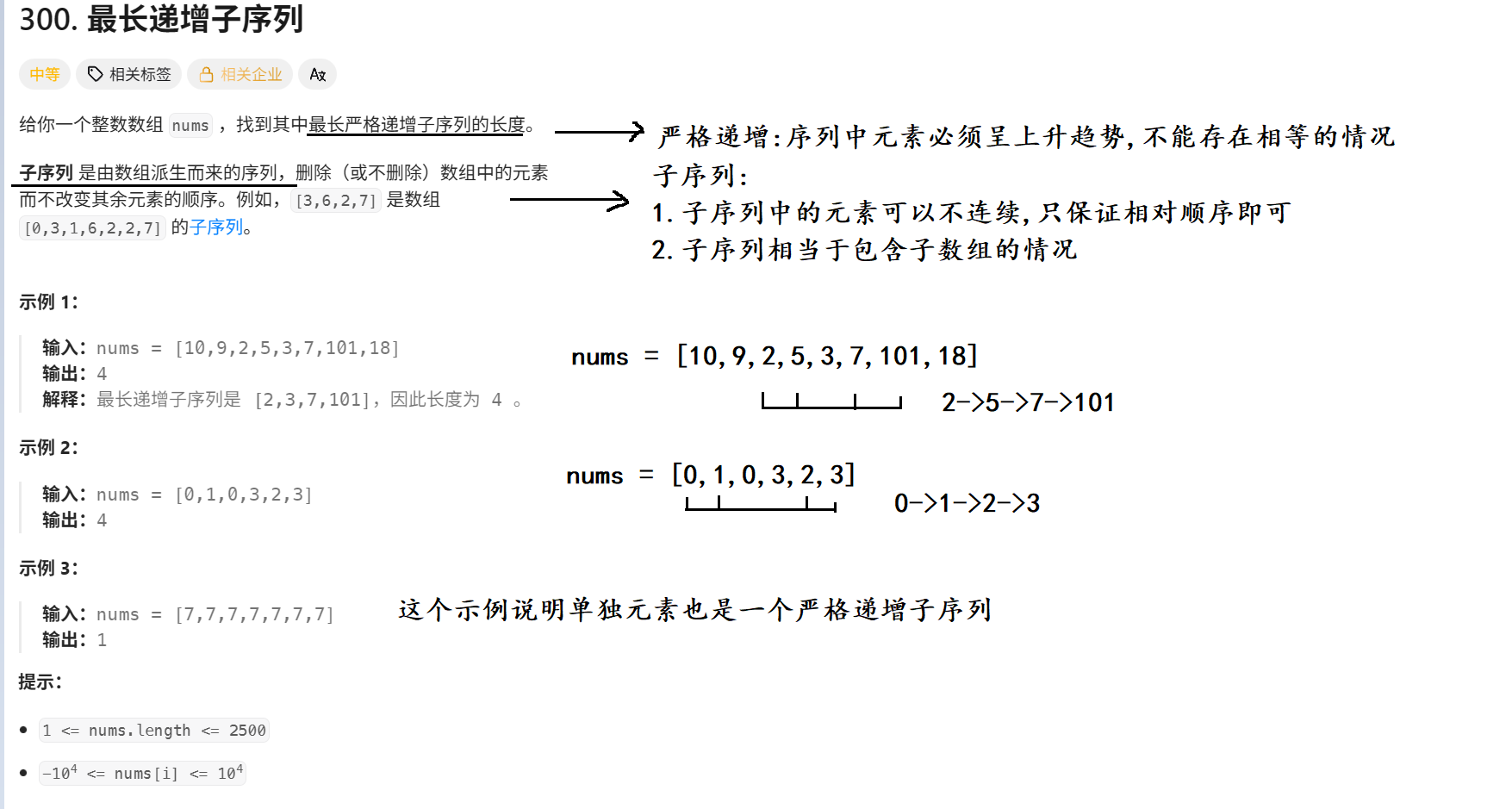
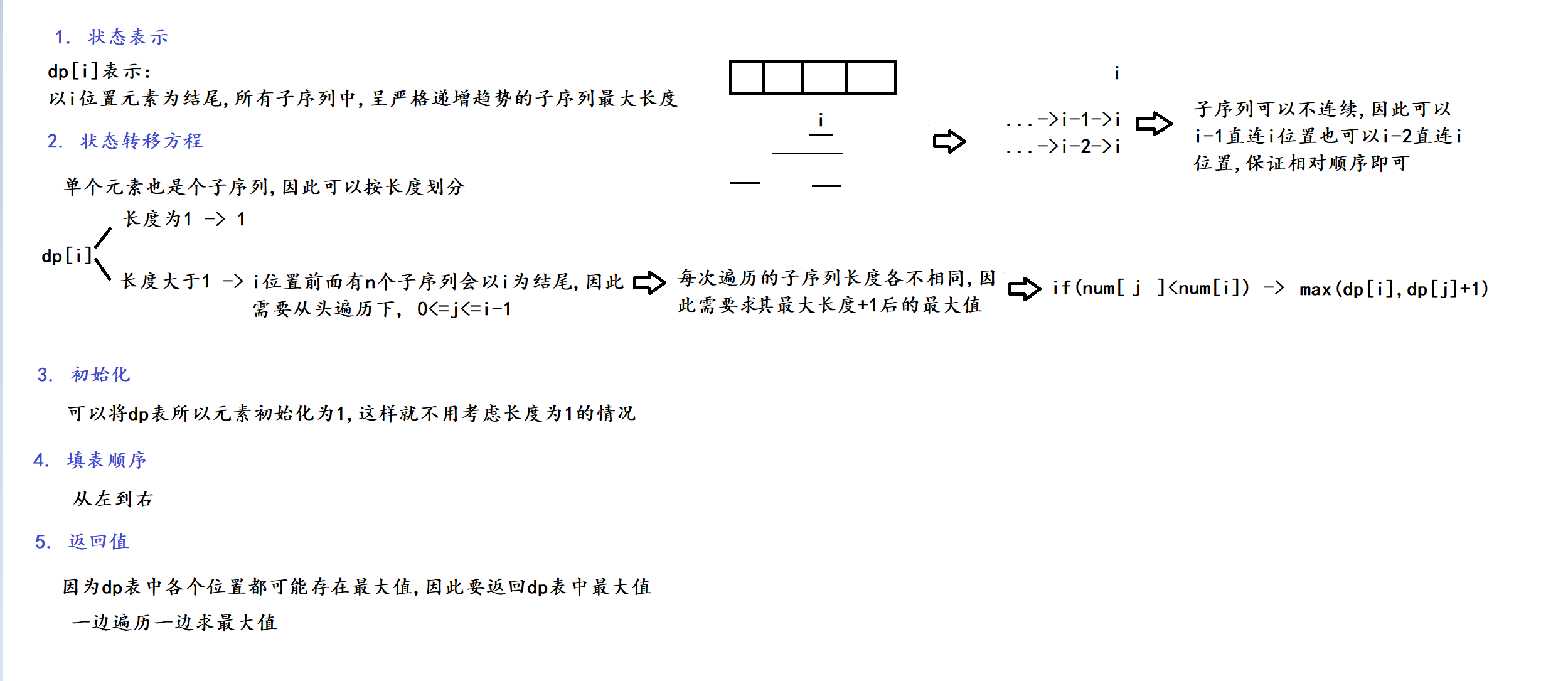
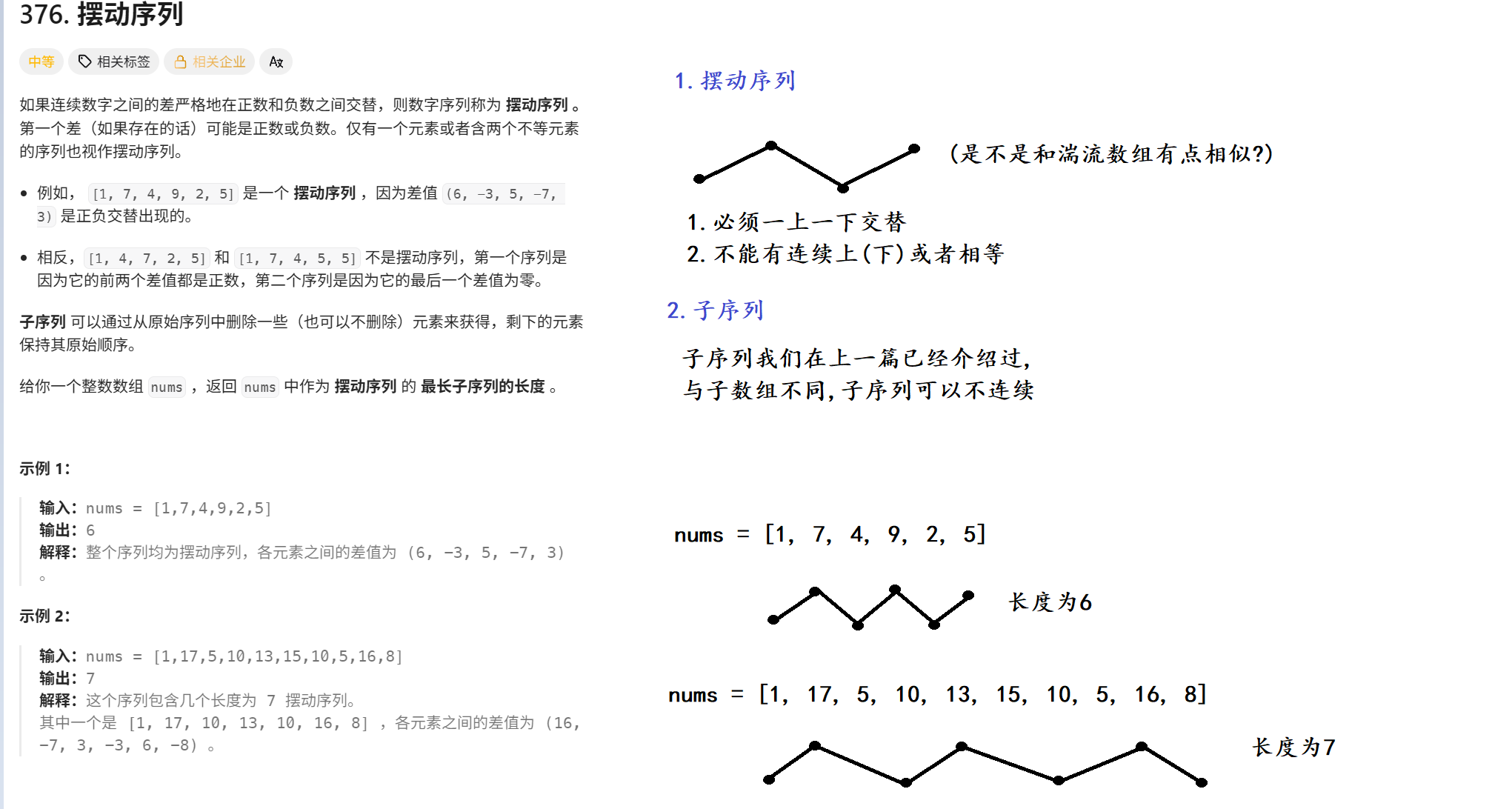
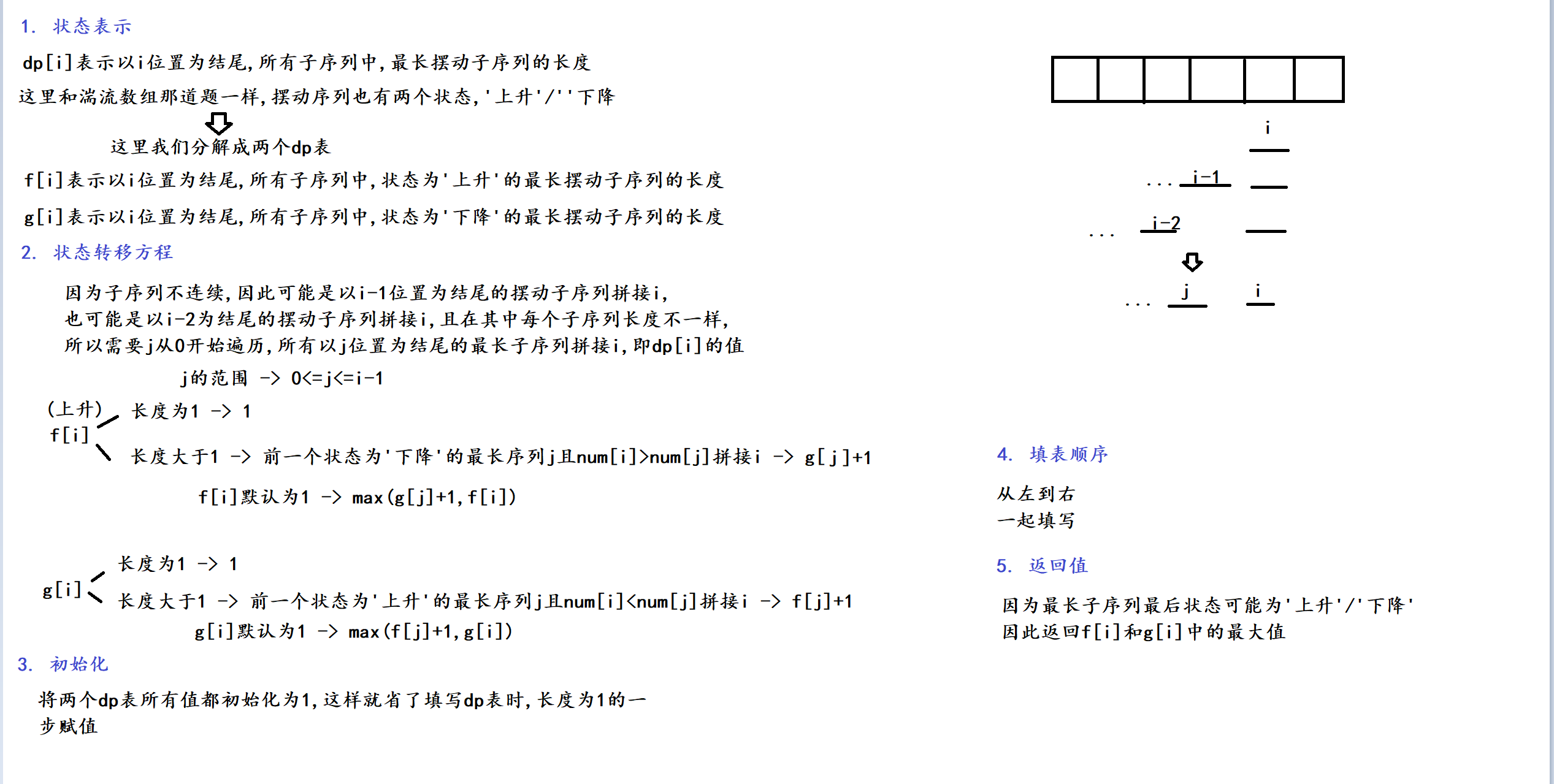
class Solution {
    public int lengthOfLIS(int[] nums) {
        int n = nums.length;
        int[] dp = new int[n];
        // 初始化dp表
        for (int i = 0; i < n; i++) {
            dp[i] = 1;
        }
        // 填表
        int ret = 1;
        for (int i = 1; i < n; i++) {
            for (int j = 0; j < i; j++) {
                if (nums[j] < nums[i]) {
                    dp[i] = Math.max(dp[i], dp[j] + 1);
                    ret = Math.max(ret, dp[i]);
                }
            }
        }
        return ret;
    }
}
class Solution {
    public int wiggleMaxLength(int[] nums) {
        int n = nums.length;
        int[] f = new int[n];
        int[] g = new int[n];
        // 初始化
        for (int i = 0; i < n; i++) {
            f[i] = g[i] = 1;
        }
        // 填表
        int ret = 1;
        for (int i = 0; i < n; i++) {
            for (int j = 0; j < i; j++) {
                if (nums[i] > nums[j]) {
                    f[i] = Math.max(f[i], g[j] + 1);
                }else if (nums[i] < nums[j]) {
                    g[i] = Math.max(g[i], f[j] + 1);
                }
                ret = Math.max(ret, Math.max(f[i], g[i]));
            }
        }
        return ret;
    }
}
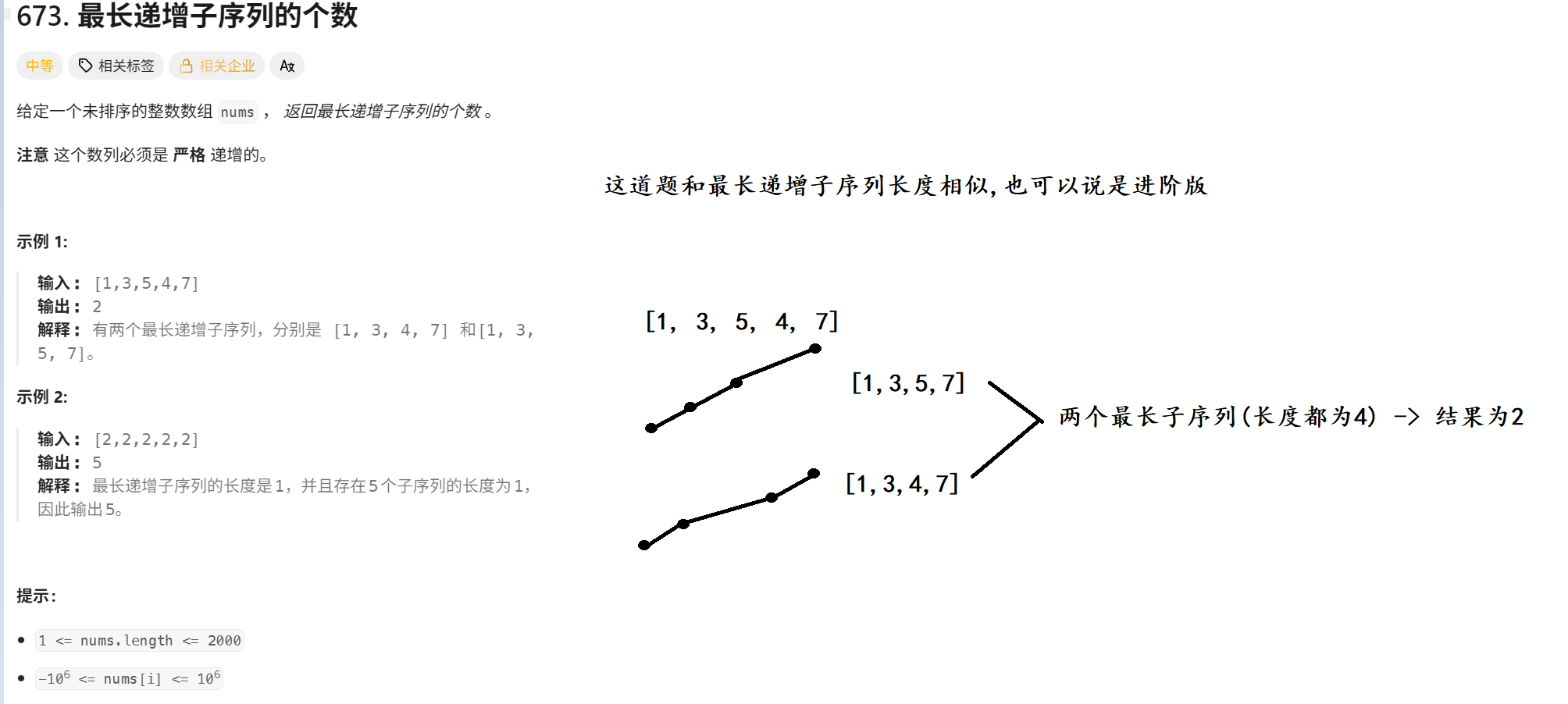
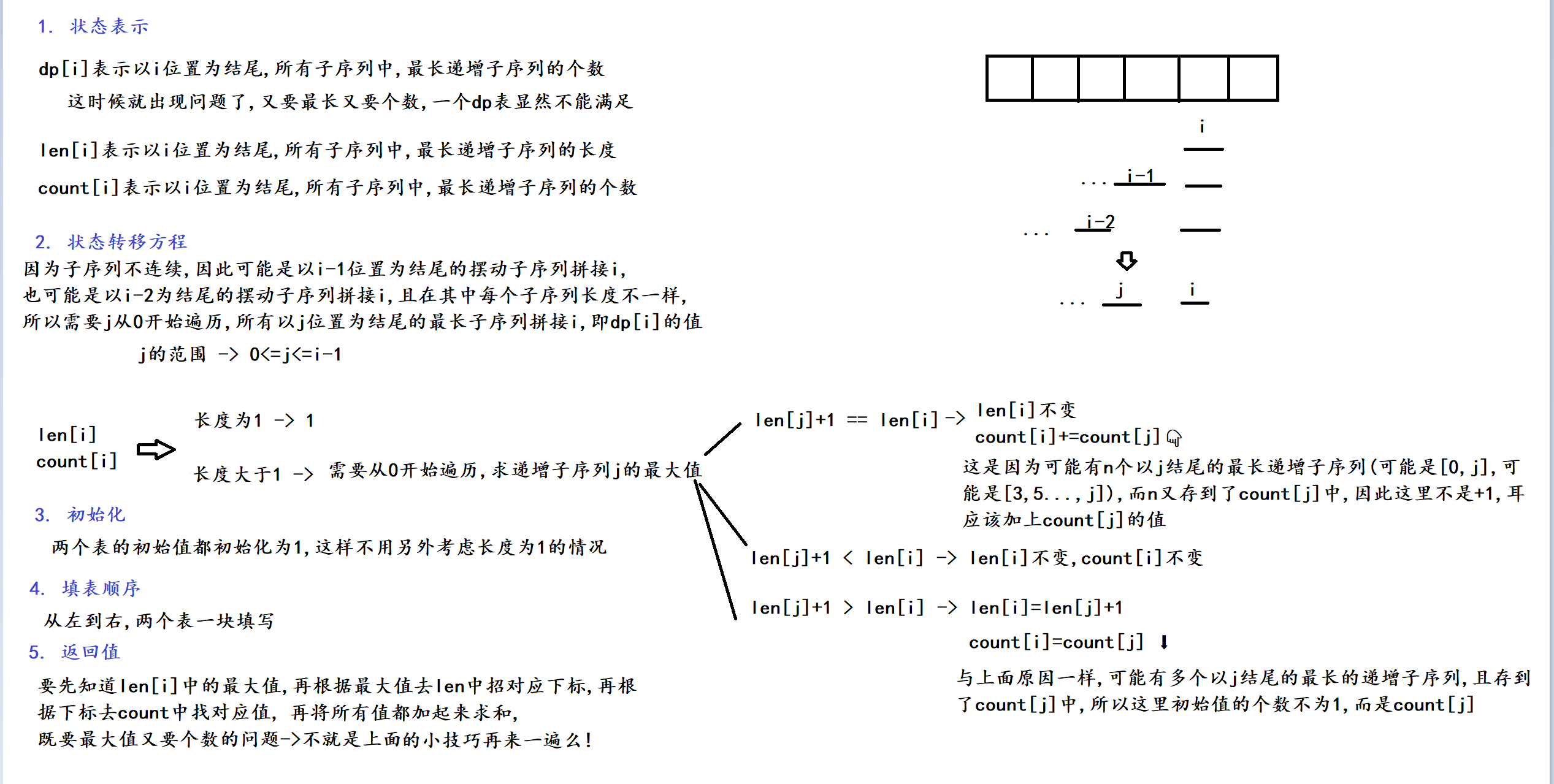
class Solution {
    public int findNumberOfLIS(int[] nums) {
        int n = nums.length;
        int[] len = new int[n];
        int[] count = new int[n];
        // 初始化
        for (int i = 0; i < n; i++) {
            len[i] = count[i] = 1;
        }
        // 填表, 并求最大个数
        int max = len[0];
        int ret = count[0];
        for (int i = 1; i < n; i++) {
            for (int j = 0; j < i; j++) {
                if (nums[j] < nums[i]) {
                    if (len[j] + 1 == len[i]) {
                        count[i] += count[j];
                    } else if (len[j] + 1 > len[i]) {
                        len[i] = len[j] + 1;
                        count[i] = count[j];
                    }
                }
            }
            if (len[i] == max) {
                ret += count[i];
            } else if (len[i] > max) {
                max = len[i];
                ret = count[i];
            }
        }
        return ret;
    }
}
class Solution {
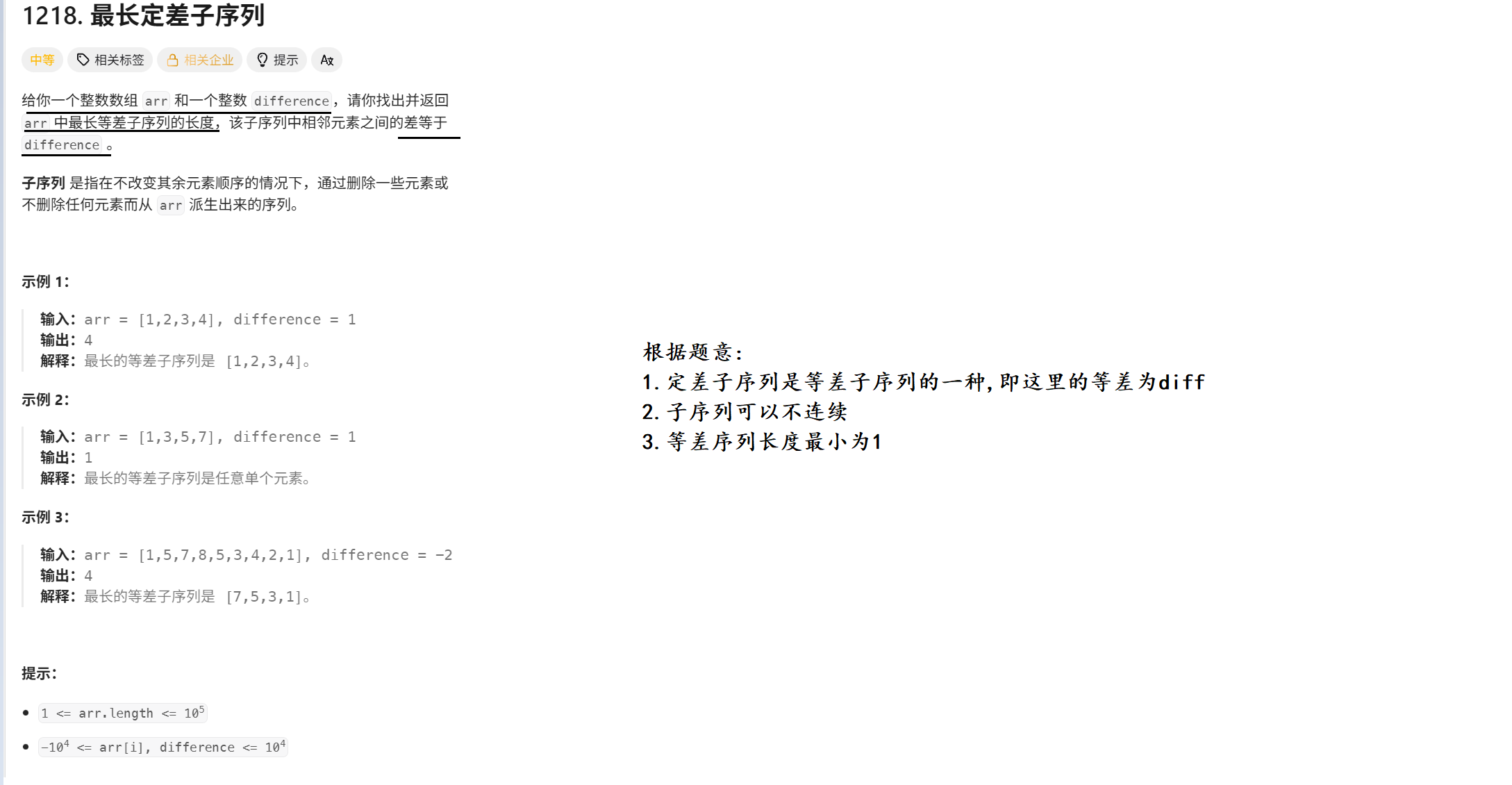
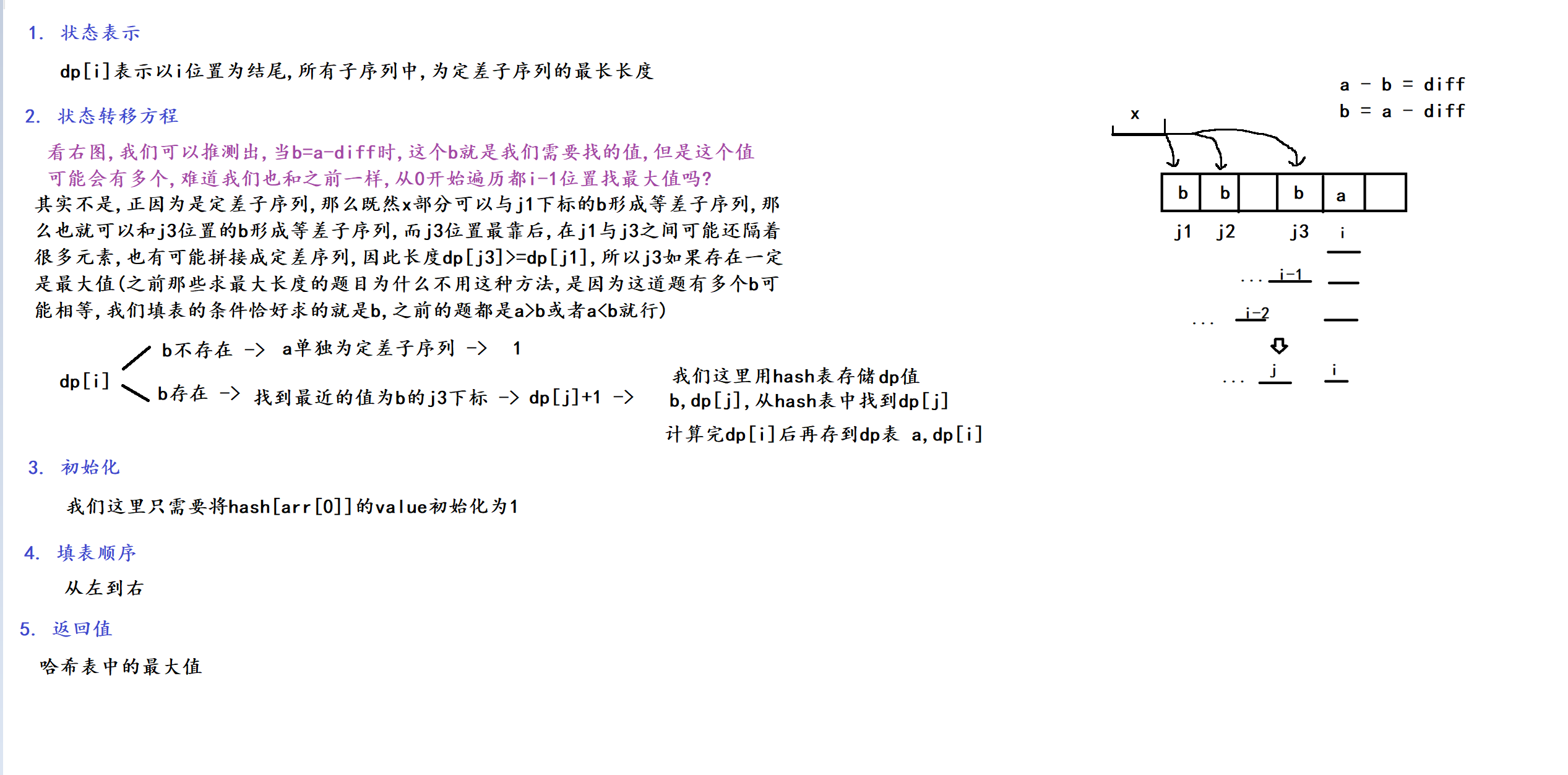
    public int longestSubsequence(int[] arr, int difference) {
        // 建立hash表
        int n = arr.length;
        HashMap<Integer,Integer> hash = new HashMap<>();
        // 初始化
        hash.put(arr[0], 1);
        // 填表
        int ret = 1;
        for (int i = 1; i < n; i++) {
            int a = arr[i];
            int b = a - difference;
            int dp = hash.getOrDefault(b, 0) + 1;
            hash.put(a, dp);
            ret = Math.max(ret, dp);
        }
        return ret;
    }
}
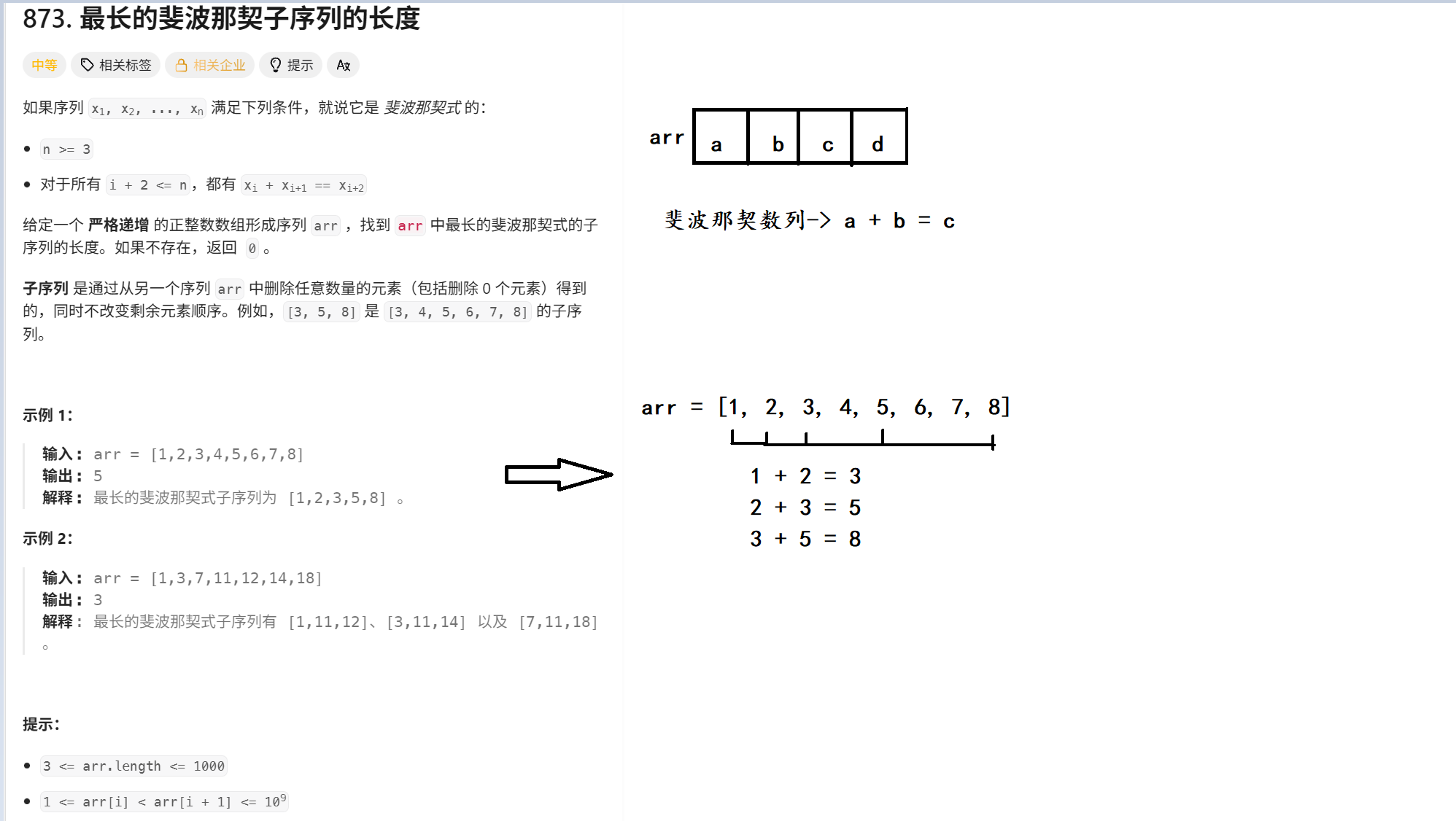
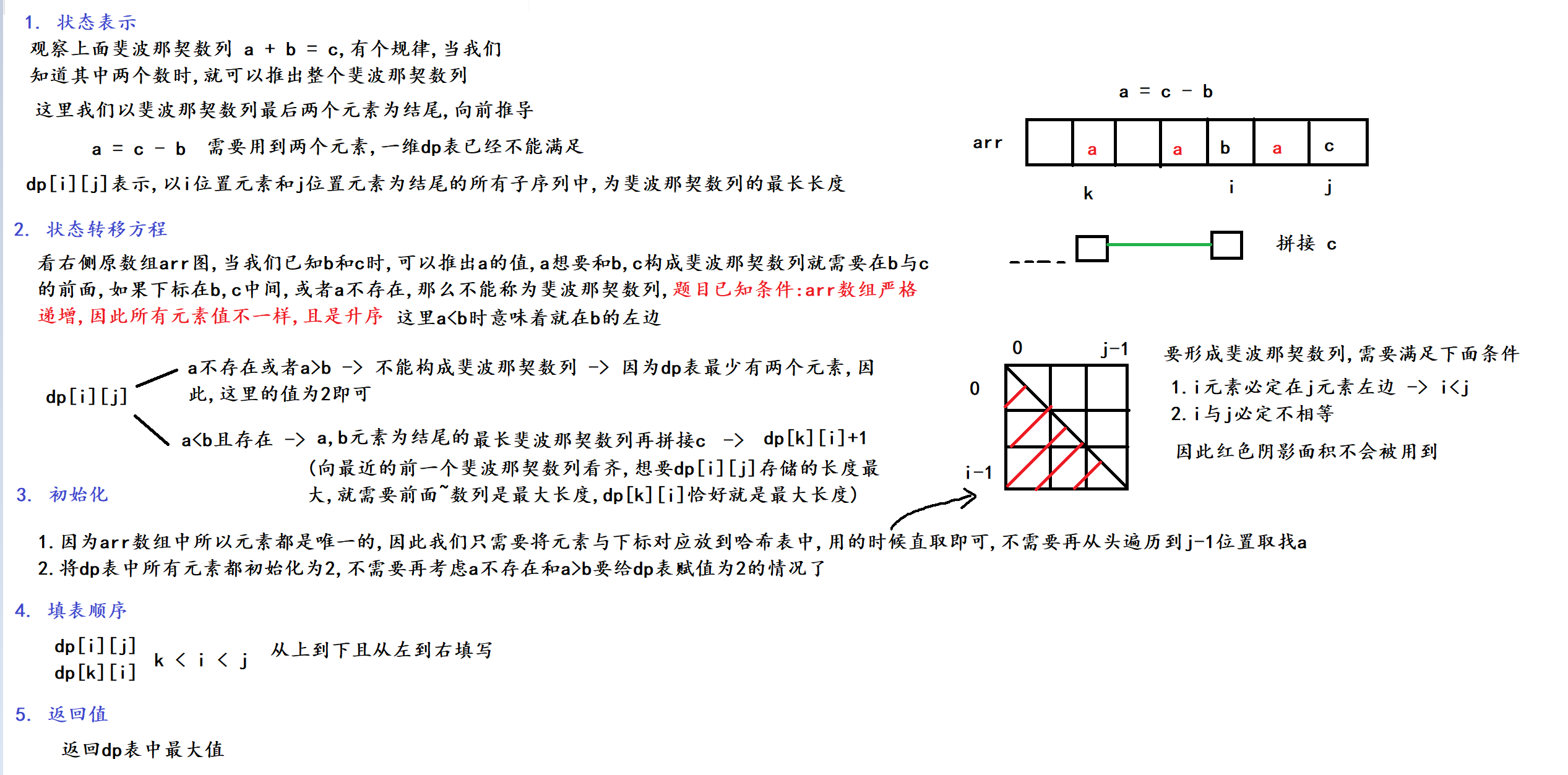
class Solution {
    public int lenLongestFibSubseq(int[] arr) {
        // 创建dp, hash表
        int n = arr.length;
        int[][] dp = new int[n][n];
        HashMap<Integer, Integer> hash = new HashMap<>();
        // 初始化dp, hash
        for (int i = 0; i < n; i++) {
            hash.put(arr[i], i);
            for (int j = i + 1; j < n; j++) {
                dp[i][j] = 2;
            }
        }
        // 填表
        int ret = 2;
        for (int i = 1; i < n; i++) {
            for (int j = i + 1; j < n; j++) {
                int a = arr[j] - arr[i];
                if (hash.containsKey(a) && a < arr[i]) {
                    dp[i][j] = dp[hash.get(a)][i] + 1;
                    ret = Math.max(ret, dp[i][j]);
                }
            }
        }
        return ret == 2 ? 0 : ret;
    }
}
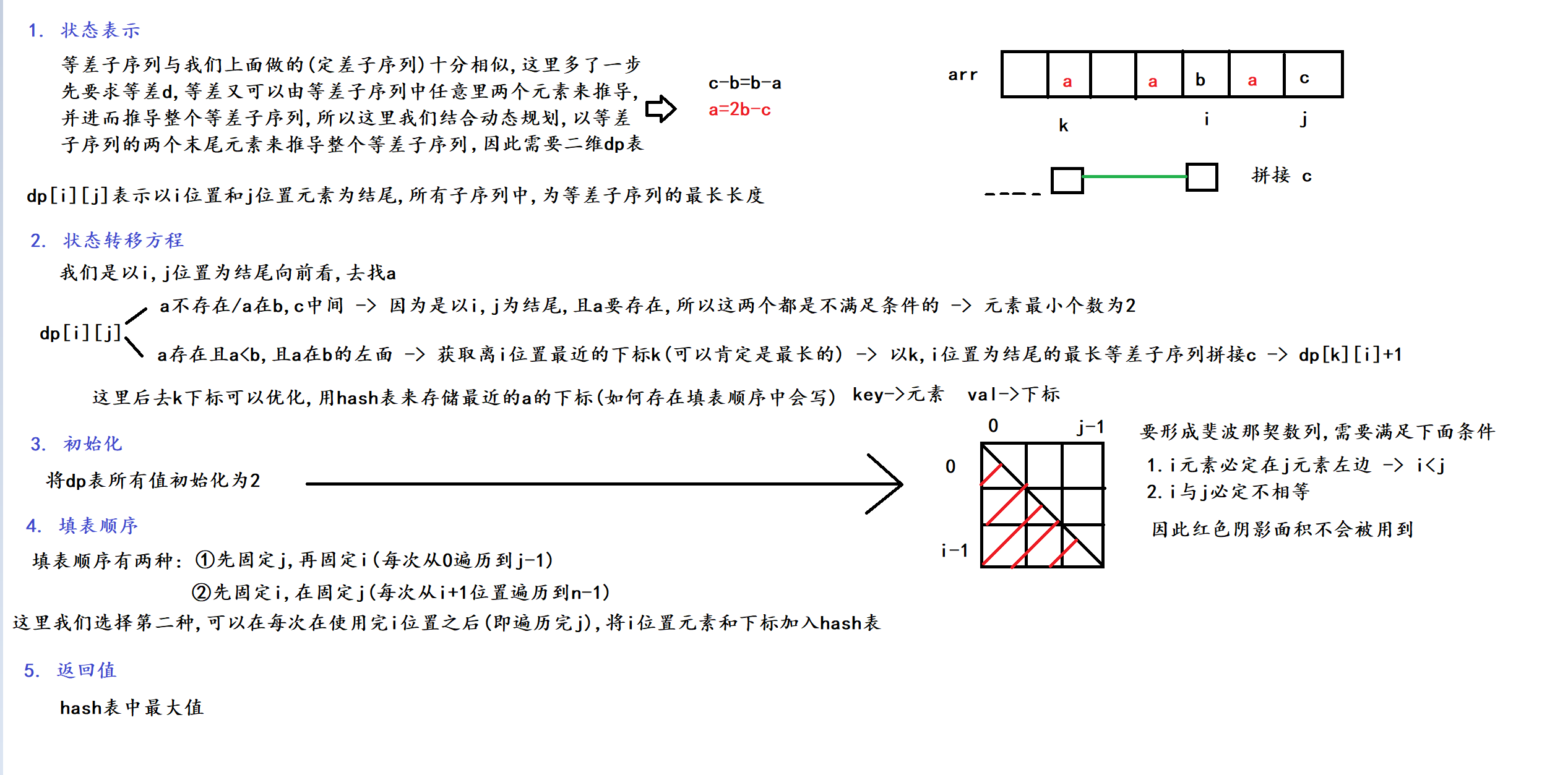
class Solution {
    public int longestArithSeqLength(int[] nums) {
        // 建表
        int n = nums.length;
        int[][] dp = new int[n][n];
        HashMap<Integer, Integer> hash = new HashMap<>();
        // 初始化
        for (int i = 0; i < n; i++) {
            for (int j = i + 1; j < n; j++) {
                dp[i][j] = 2;
            }
        }
        hash.put(nums[0], 0);
        // 填表
        int ret = 2;
        for (int i = 1; i < n; i++) {
            for (int j = i + 1; j < n; j++) {
                int a = nums[i] * 2 - nums[j];
                if (hash.containsKey(a)) {
                    dp[i][j] = dp[hash.get(a)][i] + 1;
                    ret = Math.max(ret, dp[i][j]);
                }
            }
            hash.put(nums[i], i);
        }
        return ret;
    }
}
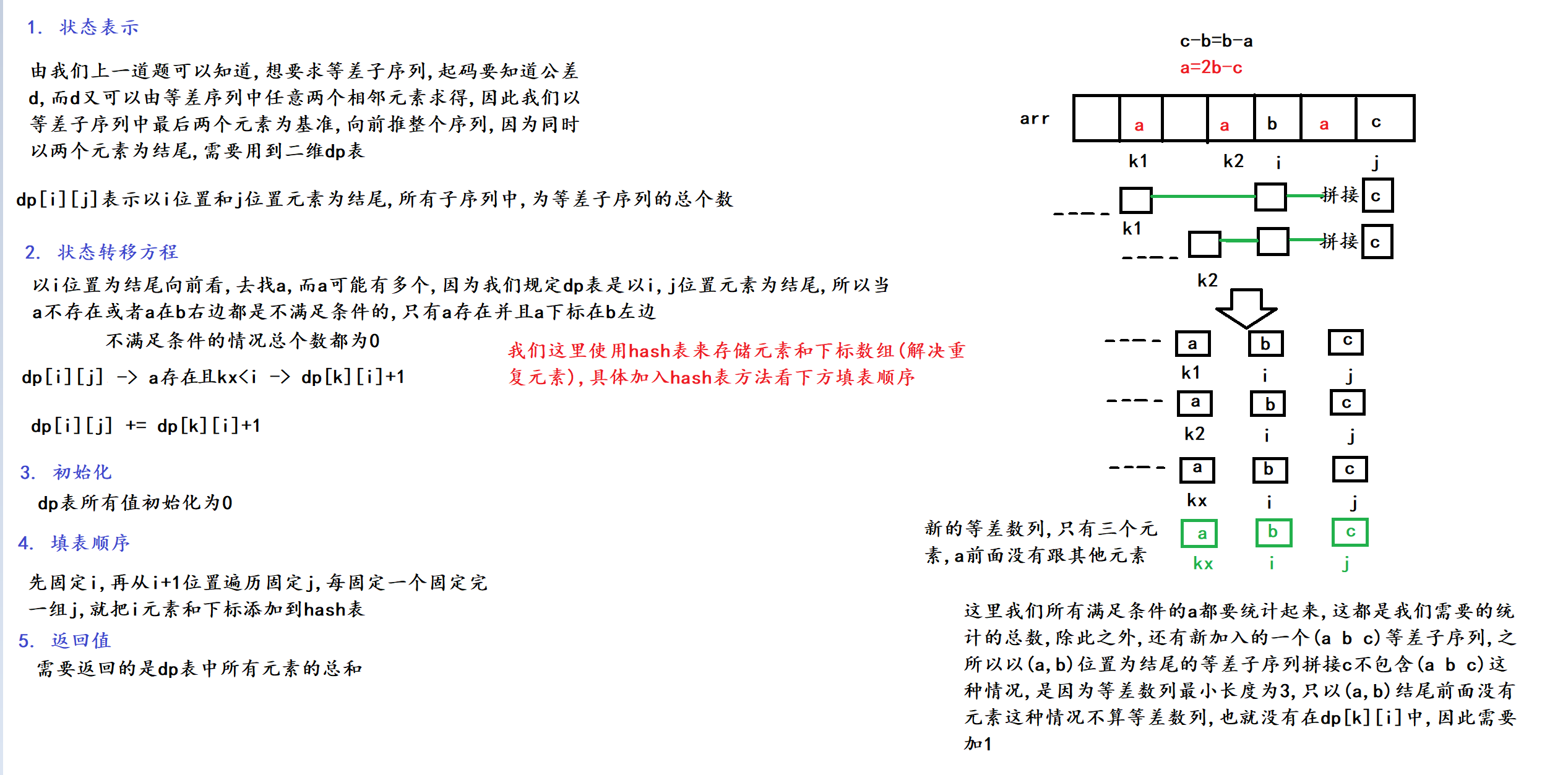
class Solution {
    public int numberOfArithmeticSlices(int[] nums) {
        // 建表,初始化
        int n = nums.length;
        int[][] dp = new int[n][n];
        Map<Long, List<Integer>> hash = new HashMap<>();
        hash.put((long)nums[0], new ArrayList<>());
        hash.get((long)nums[0]).add(0);
        // 填表
        int ret = 0;
        for (int i = 1; i < n; i++) {
            long b = (long)nums[i];
            for (int j = i + 1; j < n; j++) {
                long c = (long) nums[j];
                long a = 2L * b - c;
                // 这里a一定在b的左边, 不用多余判断
                if (hash.containsKey(a)) {
                    for (int k : hash.get(a)) {
                        dp[i][j] += dp[k][i] + 1;
                    }
                }
                ret += dp[i][j];
            }
            if (!hash.containsKey(b)) {
                hash.put(b, new ArrayList<>());
            }
            hash.get(b).add(i);
        }
        return ret;
    }
}