redis发布订阅是一种消息通知模式,发布者发送消息,订阅者接收消息。
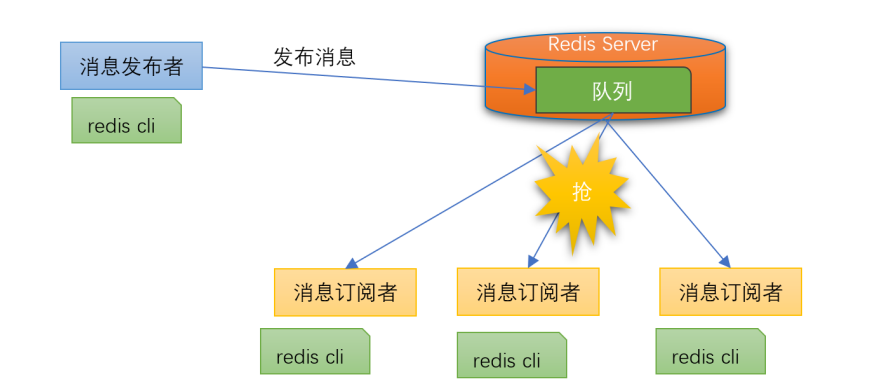
| 角色 | 说明 |
|---|---|
| 发布者 (Publisher) | 向频道发送消息的客户端 |
| 订阅者 (Subscriber) | 订阅频道接收消息的客户端 |
| 频道 (Channel) | 消息传递的管道/主题 |
基本命令
1. 订阅频道
#订阅一个或多个频道
SUBSCRIBE 频道1 频道2
#使用模式匹配订阅
PSUBSCRIBE news.* # 订阅所有以 news. 开头的频道
2. 取消订阅
# 退订指定频道
UNSUBSCRIBE channel1

# 退订模式匹配的频道
PUNSUBSCRIBE news.*
3. 发布消息
# 向指定频道发布消息
PUBLISH channel1 "Hello, World!"
4. 查看信息
# 查看活跃的频道
PUBSUB CHANNELS [pattern]

# 查看频道的订阅者数量
PUBSUB NUMSUB channel1

# 查看模式订阅的数量
PUBSUB NUMPAT
📝 代码示例
步骤:
-
连接到Redis服务器。
bool Redis::connect() { // 负责publish发布消息的上下文连接 _publish_context = redisConnect("127.0.0.1", 6379); if (nullptr == _publish_context) { cerr << "connect redis failed!" << endl; return false; } // 负责subscribe订阅消息的上下文连接 _subcribe_context = redisConnect("127.0.0.1", 6379); if (nullptr == _subcribe_context) { cerr << "connect redis failed!" << endl; return false; } // 在单独的线程中,监听通道上的事件,有消息给业务层进行上报 thread t([&]() { observer_channel_message(); }); t.detach(); cout << "connect redis-server success!" << endl; return true; } -
订阅者订阅一个或多个频道。
bool Redis::subscribe(int channel) { // SUBSCRIBE命令本身会造成线程阻塞等待通道里面发生消息,这里只做订阅通道,不接收通道消息 // 通道消息的接收专门在observer_channel_message函数中的独立线程中进行 // 只负责发送命令,不阻塞接收redis server响应消息,否则和notifyMsg线程抢占响应资源 if (REDIS_ERR == redisAppendCommand(this->_subcribe_context, "SUBSCRIBE %d", channel)) { cerr << "subscribe command failed!" << endl; return false; } // redisBufferWrite可以循环发送缓冲区,直到缓冲区数据发送完毕(done被置为1) int done = 0; while (!done) { if (REDIS_ERR == redisBufferWrite(this->_subcribe_context, &done)) { cerr << "subscribe command failed!" << endl; return false; } } // redisGetReply return true; } -
发布者向频道发布消息。
bool Redis::publish(int channel, string message) { redisReply *reply = (redisReply *)redisCommand(_publish_context, "PUBLISH %d %s", channel, message.c_str()); if (nullptr == reply) { cerr << "publish command failed!" << endl; return false; } freeReplyObject(reply); return true; } -
订阅者接收并处理消息。
void Redis::observer_channel_message()
{
    redisReply *reply = nullptr;
    while (REDIS_OK == redisGetReply(this->_subcribe_context, (void **)&reply))
    {
        // 订阅收到的消息是一个带三元素的数组
        if (reply != nullptr && reply->element[2] != nullptr && reply->element[2]->str != nullptr)
        {
            // 给业务层上报通道上发生的消息
            _notify_message_handler(atoi(reply->element[1]->str) , reply->element[2]->str);
        }

        freeReplyObject(reply);
    }

    cerr << ">>>>>>>>>>>>> observer_channel_message quit <<<<<<<<<<<<<" << endl;
}
Redis 发布订阅原理深度解析
🏗️ Redis 发布订阅架构总览
┌─────────────────────────────────────────────────────────┐
│                    Redis Server                          │
│                                                         │
│  ┌─────────────────────────────────────────────────┐  │
│  │             Pub/Sub 子系统                       │  │
│  │                                                 │  │
│  │  ┌────────────┐  ┌────────────┐  ┌────────────┐ │  │
│  │  │ Channel    │  │ Pattern    │  │ Clients    │ │  │
│  │  │ Hash Table │  │ List       │  │ List       │ │  │
│  │  └─────┬──────┘  └─────┬──────┘  └─────┬──────┘ │  │
│  │        │               │               │        │  │
│  └────────┼───────────────┼───────────────┼────────┘  │
│           │               │               │           │
│    ┌──────▼──────┐ ┌──────▼──────┐ ┌──────▼──────┐  │
│    │  普通订阅    │ │  模式订阅    │ │  客户端状态  │  │
│    └─────────────┘ └─────────────┘ └─────────────┘  │
└─────────────────────────────────────────────────────────┘
📚 核心数据结构
1. 频道订阅表
// Redis 源码中的数据结构(简化版)
typedef struct redisServer {
    // 普通频道订阅:字典,键是频道名,值是客户端链表
    dict *pubsub_channels;  // Map<channel_name, List<client>>

    // 模式订阅:链表,每个节点包含模式和客户端链表
    list *pubsub_patterns;  // List<{pattern, List<client>}>

    // ... 其他字段
} redisServer;
2. 客户端订阅状态
typedef struct client {
    // 客户端订阅的频道列表
    dict *pubsub_channels;  // Set<channel_name>

    // 客户端订阅的模式列表
    list *pubsub_patterns;  // List<pattern>

    // ... 其他字段
} client;
🔄 消息传递流程
发布消息的完整流程
1. 客户端发送: PUBLISH channel "message"
   ↓
2. Redis 接收命令并解析
   ↓
3. 查找 channel 的订阅者
   ├── 3.1 在 pubsub_channels 字典中查找 channel
   ├── 3.2 获取该 channel 的客户端链表
   └── 3.3 遍历链表,向每个客户端发送消息
   ↓
4. 查找模式匹配的订阅者
   ├── 4.1 遍历 pubsub_patterns 链表
   ├── 4.2 对每个 pattern,检查是否匹配 channel
   └── 4.3 向匹配的客户端发送消息
   ↓
5. 返回接收消息的客户端数量源码级解析(基于 Redis 6.x)
// pubsub.c - 发布消息的核心函数
void publishCommand(client *c) {
    int receivers = pubsubPublishMessage(c->argv[1], c->argv[2]);
    addReplyLongLong(c, receivers);
}

int pubsubPublishMessage(robj *channel, robj *message) {
    int receivers = 0;

    // 1. 向普通频道订阅者发送
    dictEntry *de = dictFind(server.pubsub_channels, channel);
    if (de) {
        list *list = dictGetVal(de);
        receivers += dictSize(list);

        // 遍历所有订阅该频道的客户端
        dictIterator *di = dictGetIterator(list);
        dictEntry *de;
        while ((de = dictNext(di)) != NULL) {
            client *c = dictGetKey(de);
            addReplyPubsubMessage(c, channel, message);
        }
        dictReleaseIterator(di);
    }

    // 2. 向模式订阅者发送
    if (listLength(server.pubsub_patterns)) {
        listIter li;
        listNode *ln;
        listRewind(server.pubsub_patterns, &li);

        while ((ln = listNext(&li)) != NULL) {
            pubsubPattern *pat = ln->value;

            // 检查频道是否匹配模式
            if (stringmatchlen(pat->pattern->ptr,
                               sdslen(pat->pattern->ptr),
                               channel->ptr,
                               sdslen(channel->ptr),0)) {
                addReplyPubsubPatMessage(pat->client, pat->pattern,
                                        channel, message);
                receivers++;
            }
        }
    }

    return receivers;
}
🔍 订阅机制详解
1. 普通订阅流程
// 客户端订阅频道的处理
void subscribeCommand(client *c) {
    for (int j = 1; j < c->argc; j++) {
        pubsubSubscribeChannel(c, c->argv[j]);
    }
}

void pubsubSubscribeChannel(client *c, robj *channel) {
    // 1. 将频道添加到客户端的订阅集合
    if (dictAdd(c->pubsub_channels, channel, NULL) == DICT_OK) {
        incrRefCount(channel);

        // 2. 将客户端添加到服务器的频道订阅列表
        dictEntry *de = dictFind(server.pubsub_channels, channel);
        if (de == NULL) {
            // 频道不存在,创建新的客户端列表
            clients = dictCreate(&pubsubDictType);
            dictAdd(server.pubsub_channels, channel, clients);
            incrRefCount(channel);
        } else {
            clients = dictGetVal(de);
        }

        // 3. 将客户端添加到频道的订阅者列表
        dictAdd(clients, c, NULL);
    }
}
2. 模式订阅流程
// 客户端模式订阅的处理
void psubscribeCommand(client *c) {
    for (int j = 1; j < c->argc; j++) {
        pubsubSubscribePattern(c, c->argv[j]);
    }
}

void pubsubSubscribePattern(client *c, robj *pattern) {
    // 1. 检查客户端是否已经订阅了此模式
    listIter li;
    listNode *ln;
    listRewind(c->pubsub_patterns, &li);
    while ((ln = listNext(&li)) != NULL) {
        pubsubPattern *pat = ln->value;
        if (equalStringObjects(pattern, pat->pattern)) {
            return; // 已订阅
        }
    }

    // 2. 创建新的模式订阅节点
    pubsubPattern *pat;
    pat = zmalloc(sizeof(*pat));
    pat->pattern = getDecodedObject(pattern);
    pat->client = c;

    // 3. 添加到客户端的模式列表
    listAddNodeTail(c->pubsub_patterns, pat);

    // 4. 添加到服务器的模式列表
    listAddNodeTail(server.pubsub_patterns, pat);
}
💾 内存数据结构图示
普通订阅数据结构
server.pubsub_channels (字典)
   |
   ├── "news" → dict(clients)
   │         ├── client1
   │         ├── client2
   │         └── client3
   │
   ├── "sports" → dict(clients)
   │           ├── client1
   │           └── client4
   │
   └── "weather" → dict(clients)
                └── client2

client.pubsub_channels (字典,客户端视角)
   |
   ├── client1: {"news", "sports"}
   ├── client2: {"news", "weather"}
   ├── client3: {"news"}
   └── client4: {"sports"}
模式订阅数据结构
server.pubsub_patterns (链表)
   |
   ├── node1: {pattern="news.*", client=client1}
   ├── node2: {pattern="*.sports", client=client2}
   ├── node3: {pattern="weather.*", client=client3}
   └── node4: {pattern="news.*", client=client4}

client.pubsub_patterns (链表,客户端视角)
   |
   ├── client1: ["news.*"]
   ├── client2: ["*.sports"]
   ├── client3: ["weather.*"]
   └── client4: ["news.*"]
🚀 高性能设计要点
1. 零拷贝消息传递
// Redis 使用引用计数,避免消息内容的复制
void addReplyPubsubMessage(client *c, robj *channel, robj *message) {
    // 增加引用计数,而不是复制消息内容
    incrRefCount(channel);
    incrRefCount(message);

    // 构建响应但不复制数据
    addReply(c, shared.mbulkhdr[3]);
    addReply(c, shared.messagebulk);
    addReplyBulk(c, channel);
    addReplyBulk(c, message);

    // 减少引用计数
    decrRefCount(channel);
    decrRefCount(message);
}
2. 批量消息发送优化
// 当多个客户端订阅同一频道时,优化网络发送
for (每个订阅者客户端) {
    if (clientHasPendingReplies(c)) {
        // 如果客户端输出缓冲区已有数据,先发送
        writeToClient(c, 0);
    }

    // 添加新消息到缓冲区
    addReplyPubsubMessage(c, channel, message);

    // 非阻塞发送尝试
    if (clientHasPendingReplies(c)) {
        writeToClient(c, 0);
    }
}
📊 内存与性能统计
PUBSUB 命令实现
// PUBSUB CHANNELS [pattern] - 获取活跃频道
void pubsubChannelsCommand(client *c) {
    dictIterator *di;
    dictEntry *de;
    long mblen = 0;
    void *replylen = NULL;

    // 遍历所有频道
    di = dictGetIterator(server.pubsub_channels);
    while((de = dictNext(di)) != NULL) {
        robj *cobj = dictGetKey(de);
        char *channel = cobj->ptr;

        // 如果有模式参数,进行匹配
        if (pattern && !stringmatchlen(pattern, patlen, channel, clen, 0))
            continue;

        addReplyBulk(c, cobj);
    }
    dictReleaseIterator(di);
}

// PUBSUB NUMSUB [channel ...] - 获取订阅者数量
// PUBSUB NUMPAT - 获取模式订阅数量
⚠️ 重要限制与边界条件
1. 消息不持久化
// Redis 不会将发布的消息写入磁盘
// 消息只在内存中传递
// 服务器重启或崩溃会导致消息丢失
2. 无消息确认机制
发布者 → Redis → 订阅者
    发送          接收
    ↓              ↓
  无确认 ←───── 无ACK
3. 客户端缓冲区限制
// 每个客户端有输出缓冲区限制
#define PROTO_REPLY_CHUNK_BYTES (16*1024) // 16KB 块

// 如果订阅者处理速度慢,缓冲区可能满
// Redis 会断开慢客户端连接
if (client->bufpos >= client->buf_soft_limit) {
    freeClient(client);
}
4. 订阅数量限制
// 理论上无限制,但受内存限制
// 每个订阅在内存中占用:
// - 频道名:共享字符串对象
// - 客户端指针:8字节
// - 字典条目开销:~24字节
🔄 与 Redis Streams 的对比
| 特性 | Pub/Sub | Streams |
|---|---|---|
| 消息持久化 | ❌ 不持久化 | ✅ 可持久化 |
| 消费者组 | ❌ 不支持 | ✅ 支持 |
| 消息确认 | ❌ 不支持 | ✅ 支持 |
| 历史消息 | ❌ 不保留 | ✅ 可回溯 |
| 性能 | ⭐⭐⭐⭐⭐ 极高 | ⭐⭐⭐⭐ 高 |
| 内存使用 | 临时内存 | 持久内存 |
🎯 设计哲学
1. 简单性优于复杂性
// Redis 选择简单的广播模型,而不是复杂的消息队列
// 设计目标:高吞吐量、低延迟
2. 内存速度优先
// 所有操作在内存中完成
// 使用高效的数据结构(字典、链表)
// 避免磁盘I/O和复杂的事务
3. 客户端驱动模型
// Redis 不主动推送,而是响应客户端命令
// 但 Pub/Sub 是例外,服务器主动向订阅者推送