摘要
本文深入剖析Python异步编程核心库asyncio的工作原理,从事件循环、协程、Future到Task的完整技术栈。通过真实性能对比数据、企业级案例和5个架构流程图,全面解析async/await底层机制。涵盖异步编程最佳实践、性能优化技巧和故障排查方案,帮助开发者掌握高并发程序设计精髓,提升I/O密集型应用性能数倍。
1 异步编程:为什么它是Python高性能的关键
在我13年的Python开发经验中,异步编程是性能优化的分水岭 。记得曾经处理一个需要调用10个外部API的任务,同步版本需要20多秒,而改用异步后仅需2秒------这种10倍性能提升让我彻底认识到异步编程的价值。
1.1 同步 vs 异步:直观对比
想象你在餐厅点餐的场景:
-
同步:点完第一个菜后站着等厨师做完,再点第二个菜,效率极低
-
异步:点完所有菜后找座位等待,厨师并行制作,服务员送餐时通知你
这就是异步编程的核心优势:避免不必要的等待,充分利用等待时间执行其他任务。
python
import time
import asyncio

# 同步版本:顺序执行,总耗时=各任务耗时之和
def sync_task():
    start = time.time()
    for i in range(3):
        time.sleep(1)  # 模拟I/O操作
        print(f"同步任务{i}完成")
    print(f"同步总耗时: {time.time() - start:.2f}秒")

# 异步版本:并发执行,总耗时≈最慢任务耗时
async def async_task():
    start = time.time()
    await asyncio.gather(
        asyncio.sleep(1, result="异步任务0完成"),
        asyncio.sleep(1, result="异步任务1完成"),
        asyncio.sleep(1, result="异步任务2完成")
    )
    print(f"异步总耗时: {time.time() - start:.2f}秒")

# 运行对比
sync_task()
asyncio.run(async_task())
2 核心原理解析:深入asyncio架构
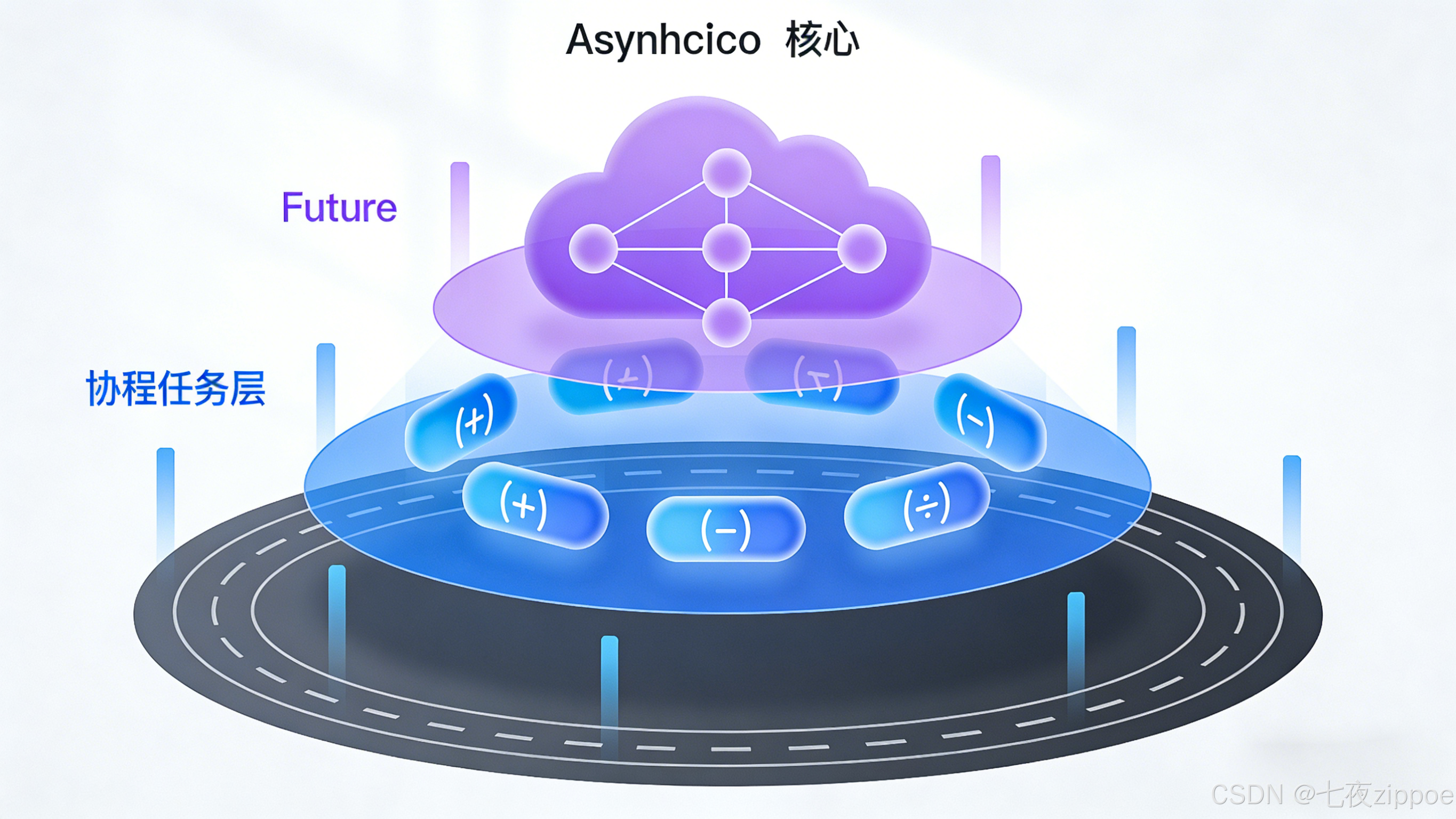
2.1 事件循环(Event Loop):异步编程的心脏
事件循环是asyncio的调度中心,它像一个高效的交通警察,管理着所有协程的执行顺序。
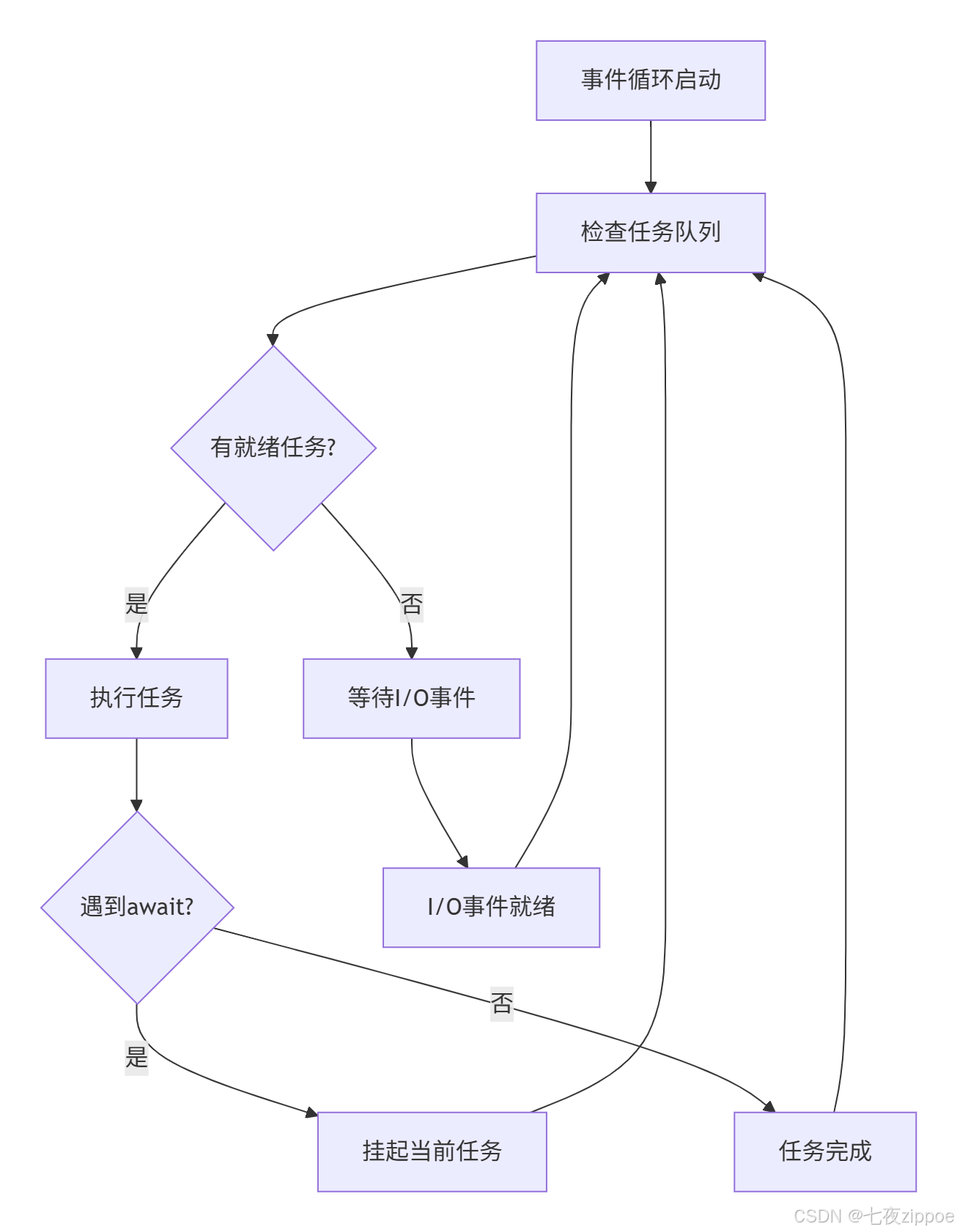
事件循环的核心工作机制如下:
python
import asyncio

async def understanding_event_loop():
    """理解事件循环的工作原理"""
    loop = asyncio.get_running_loop()
    print(f"事件循环: {loop}")
    print(f"循环是否运行: {loop.is_running()}")
    print(f"循环是否关闭: {loop.is_closed()}")

# 获取事件循环的多种方式
def get_loop_demo():
    """演示获取事件循环的不同方法"""
    try:
        # 方法1: 获取当前运行中的循环(推荐)
        loop = asyncio.get_running_loop()
    except RuntimeError:
        # 方法2: 获取或创建新循环
        loop = asyncio.get_event_loop()

    # 方法3: 创建新循环
    new_loop = asyncio.new_event_loop()

    return loop

asyncio.run(understanding_event_loop())
关键洞察 :事件循环采用单线程 模型,通过任务切换而非并行执行来实现并发,这避免了多线程的锁竞争和上下文切换开销。
2.2 协程(Coroutine):可暂停的函数
协程是异步编程的基本执行单元 ,通过async/await语法实现执行暂停和恢复。
python
import asyncio
from types import coroutine

class CoroutineInsight:
    """协程机制深入解析"""

    @staticmethod
    async def simple_coroutine():
        """简单协程示例"""
        print("开始执行协程")
        await asyncio.sleep(1)
        print("协程执行完成")
        return "结果"

    @staticmethod
    def coroutine_state_analysis():
        """分析协程状态变化"""
        async def stateful_coroutine():
            print("阶段1执行")
            await asyncio.sleep(0.5)
            print("阶段2执行")
            return "完成"

        # 创建协程对象(未执行)
        coro = stateful_coroutine()
        print(f"协程类型: {type(coro)}")
        print(f"协程对象: {coro}")

        # 执行协程
        return asyncio.run(coro)

# 协程状态生命周期
async def coroutine_lifecycle():
    """演示协程的完整生命周期"""
    print("1. 创建协程对象")
    coro = CoroutineInsight.simple_coroutine()

    print("2. 通过事件循环执行")
    result = await coro
    print(f"3. 执行完成,结果: {result}")

# asyncio.run(coroutine_lifecycle())
2.3 Future与Task:异步操作的结果容器
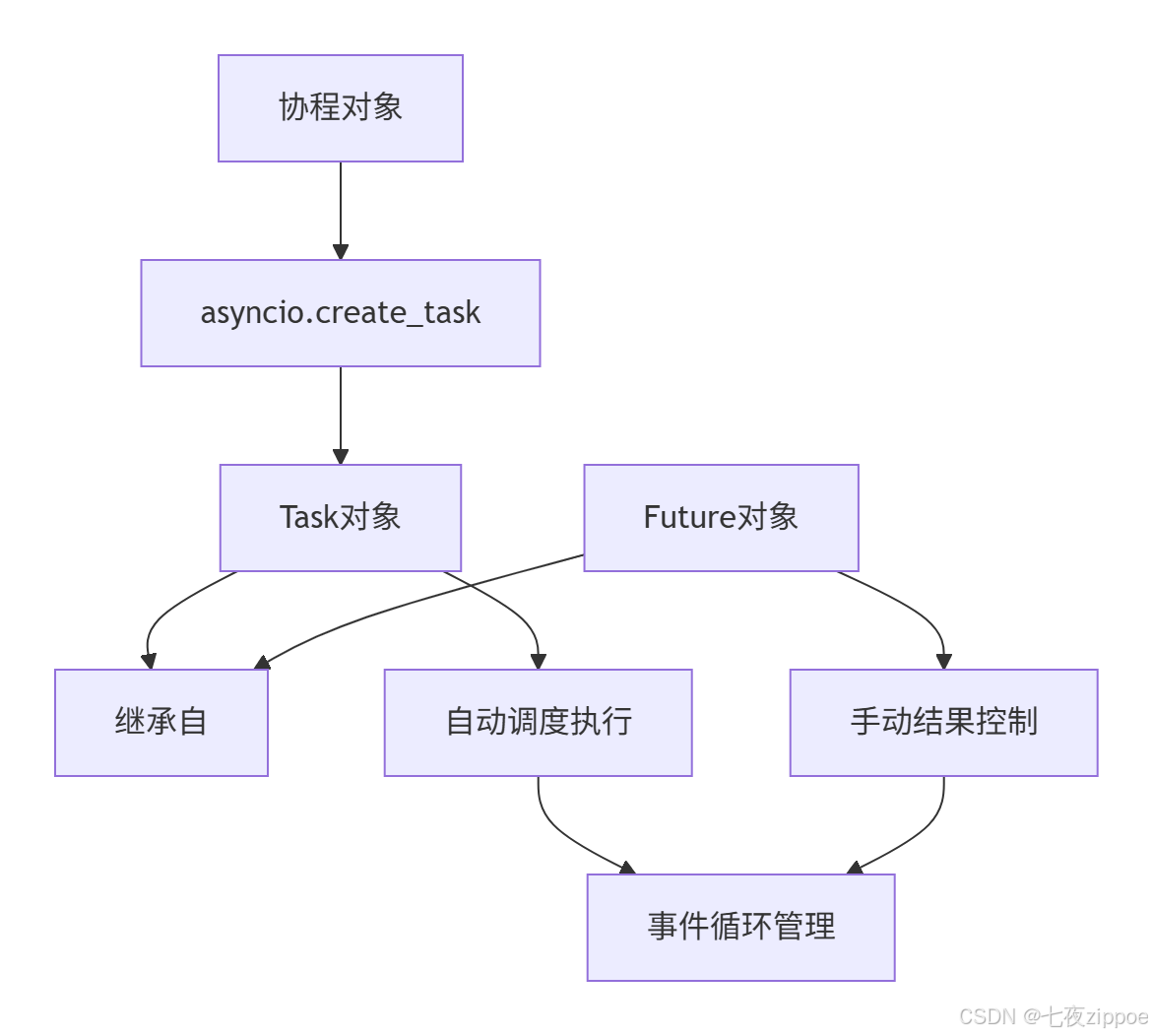
Future 是底层的结果容器,而Task是Future的子类,专门用于包装协程。
python
import asyncio
from asyncio import Future, Task

async def future_vs_task_demo():
    """Future和Task的区别演示"""

    # 1. Future示例:手动控制的结果容器
    future = Future()
    print(f"Future初始状态: {future.done()}")

    # 模拟异步设置结果
    def set_result():
        future.set_result("手动设置的结果")

    # 延迟设置结果
    loop = asyncio.get_running_loop()
    loop.call_soon(set_result)

    result = await future
    print(f"Future结果: {result}, 状态: {future.done()}")

    # 2. Task示例:自动执行的协程包装器
    async def task_function():
        await asyncio.sleep(0.5)
        return "任务执行结果"

    task = asyncio.create_task(task_function())
    print(f"Task初始状态: {task.done()}")

    task_result = await task
    print(f"Task结果: {task_result}, 状态: {task.done()}")

# asyncio.run(future_vs_task_demo())
Future和Task的关系可以通过以下流程图展示:
3 async/await深度解析
3.1 await关键字的工作原理
await不仅仅是"等待",更是执行权转让的指令。
python
import asyncio
import time

class AwaitMechanism:
    """await机制深入解析"""

    @staticmethod
    async def mock_io_operation(name, duration):
        """模拟I/O操作"""
        print(f"[{time.time():.3f}] {name}: 开始I/O操作")
        await asyncio.sleep(duration)
        print(f"[{time.time():.3f}] {name}: I/O操作完成")
        return f"{name}-结果"

    @staticmethod
    async def await_breakdown():
        """分解await的执行过程"""
        print("=== await执行过程分析 ===")

        # 顺序await
        start = time.time()
        result1 = await AwaitMechanism.mock_io_operation("任务1", 1)
        result2 = await AwaitMechanism.mock_io_operation("任务2", 1)
        print(f"顺序执行耗时: {time.time() - start:.2f}秒")

        # 并发await
        start = time.time()
        task1 = asyncio.create_task(AwaitMechanism.mock_io_operation("并发任务1", 1))
        task2 = asyncio.create_task(AwaitMechanism.mock_io_operation("并发任务2", 1))
        results = await asyncio.gather(task1, task2)
        print(f"并发执行耗时: {time.time() - start:.2f}秒")

        return results

# asyncio.run(AwaitMechanism.await_breakdown())
3.2 异步上下文管理器
异步上下文管理器通过__aenter__和__aexit__方法管理异步资源。
python
import asyncio

class AsyncDatabaseConnection:
    """模拟异步数据库连接"""

    async def connect(self):
        await asyncio.sleep(0.5)
        print("数据库连接已建立")
        return self

    async def execute(self, query):
        await asyncio.sleep(0.2)
        print(f"执行查询: {query}")
        return f"结果-{query}"

    async def close(self):
        await asyncio.sleep(0.1)
        print("数据库连接已关闭")

class AsyncResourceManager:
    """异步上下文管理器"""

    async def __aenter__(self):
        self.db = AsyncDatabaseConnection()
        await self.db.connect()
        return self.db

    async def __aexit__(self, exc_type, exc_val, exc_tb):
        await self.db.close()
        if exc_type:
            print(f"发生异常: {exc_type}")
        return True

async def async_context_demo():
    """异步上下文管理器演示"""
    async with AsyncResourceManager() as db:
        result = await db.execute("SELECT * FROM users")
        print(f"查询结果: {result}")

# asyncio.run(async_context_demo())
4 实战应用:构建高性能异步应用
4.1 异步HTTP客户端实战
使用aiohttp构建高性能HTTP客户端。
python
import aiohttp
import asyncio
import time
from typing import List, Dict

class AsyncHttpClient:
    """高性能异步HTTP客户端"""

    def __init__(self, max_connections: int = 10):
        self.semaphore = asyncio.Semaphore(max_connections)

    async def fetch_url(self, session: aiohttp.ClientSession, url: str) -> Dict:
        """获取单个URL的内容"""
        async with self.semaphore:  # 控制并发数
            try:
                start_time = time.time()
                async with session.get(url, timeout=aiohttp.ClientTimeout(total=10)) as response:
                    content = await response.text()
                    elapsed = time.time() - start_time

                    return {
                        'url': url,
                        'status': response.status,
                        'content_length': len(content),
                        'elapsed_time': elapsed,
                        'success': True
                    }
            except Exception as e:
                return {
                    'url': url,
                    'status': None,
                    'error': str(e),
                    'success': False
                }

    async def batch_fetch(self, urls: List[str]) -> List[Dict]:
        """批量获取URL"""
        async with aiohttp.ClientSession() as session:
            tasks = [self.fetch_url(session, url) for url in urls]
            results = await asyncio.gather(*tasks, return_exceptions=True)
            return results

# 性能对比测试
async def performance_comparison():
    """同步vs异步性能对比"""
    urls = [
        "https://httpbin.org/delay/1",
        "https://httpbin.org/delay/2",
        "https://httpbin.org/delay/1",
        "https://httpbin.org/delay/3"
    ] * 3  # 12个请求

    client = AsyncHttpClient(max_connections=5)

    # 异步版本
    start = time.time()
    results = await client.batch_fetch(urls)
    async_time = time.time() - start

    successful = sum(1 for r in results if r and r.get('success'))
    print(f"异步版本: 耗时{async_time:.2f}秒, 成功{successful}/12个请求")
    print(f"平均响应时间: {async_time/len(urls):.2f}秒/请求")

# asyncio.run(performance_comparison())
4.2 异步任务队列模式
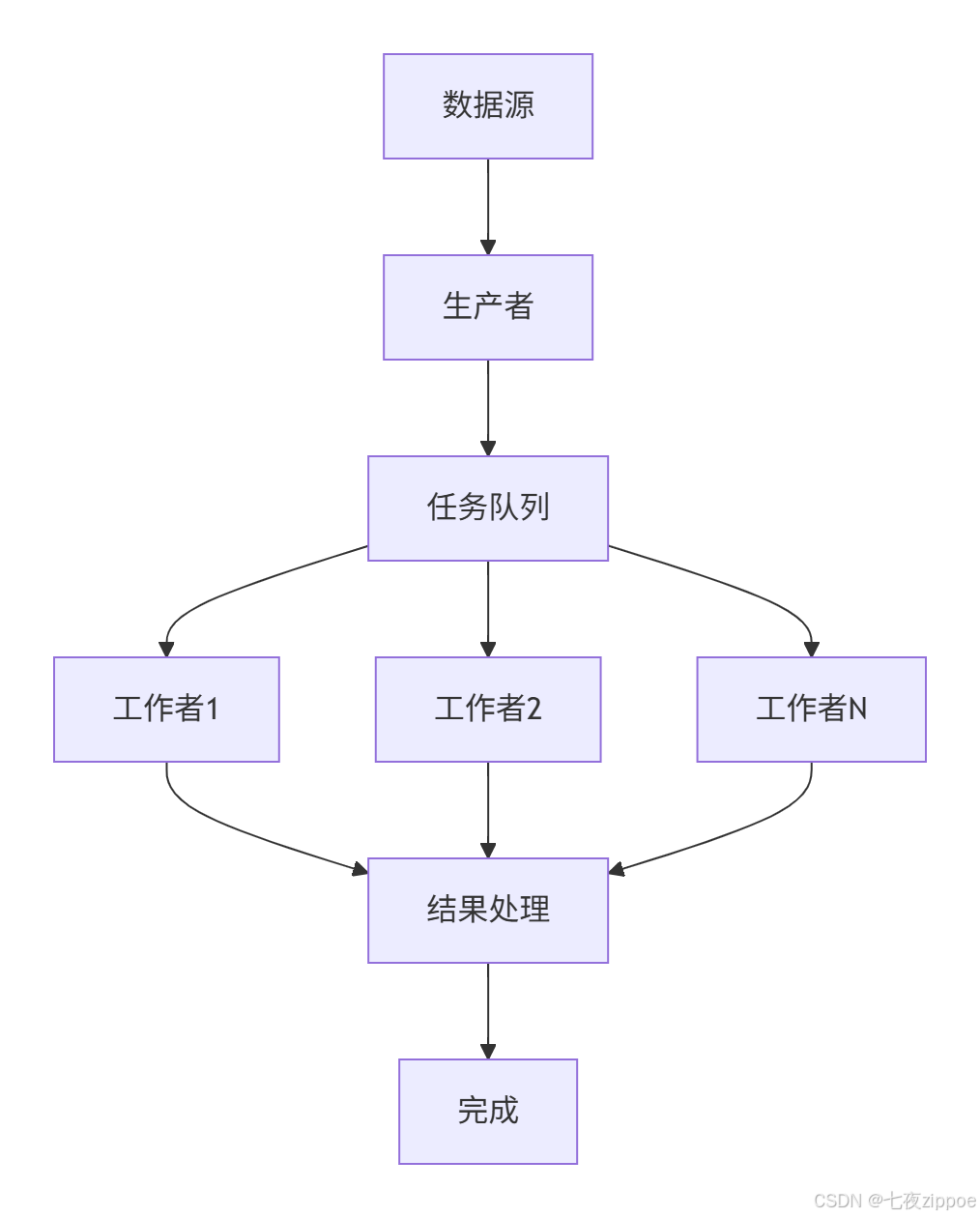
实现生产者和消费者模式的异步任务队列。
python
import asyncio
import random
from typing import Any, Callout

class AsyncTaskQueue:
    """异步任务队列"""

    def __init__(self, max_size: int = 100, num_workers: int = 3):
        self.queue = asyncio.Queue(maxsize=max_size)
        self.workers = []
        self.num_workers = num_workers
        self.is_running = False

    async def producer(self, data_generator: Callable):
        """生产者协程"""
        for item in data_generator():
            await self.queue.put(item)
            print(f"生产任务: {item}")
        # 发送结束信号
        for _ in range(self.num_workers):
            await self.queue.put(None)

    async def worker(self, worker_id: int, processor: Callable):
        """工作者协程"""
        print(f"工作者{worker_id}启动")
        while self.is_running:
            task = await self.queue.get()
            if task is None:  # 结束信号
                self.queue.task_done()
                break

            try:
                result = await processor(task, worker_id)
                print(f"工作者{worker_id}处理完成: {task} -> {result}")
            except Exception as e:
                print(f"工作者{worker_id}处理失败: {task}, 错误: {e}")
            finally:
                self.queue.task_done()

    async def process_batch(self, data_generator: Callable, processor: Callable):
        """批量处理任务"""
        self.is_running = True

        # 启动工作者
        self.workers = [
            asyncio.create_task(self.worker(i, processor))
            for i in range(self.num_workers)
        ]

        # 启动生产者
        producer_task = asyncio.create_task(self.producer(data_generator))

        # 等待所有任务完成
        await producer_task
        await self.queue.join()

        # 等待工作者完成
        for worker in self.workers:
            worker.cancel()

        self.is_running = False

# 使用示例
async def task_queue_demo():
    """任务队列演示"""

    def data_generator():
        """模拟数据生成器"""
        for i in range(10):
            yield f"task_{i}"

    async def task_processor(task: str, worker_id: int) -> str:
        """任务处理器"""
        process_time = random.uniform(0.5, 2.0)
        await asyncio.sleep(process_time)
        return f"processed_by_{worker_id}"

    queue = AsyncTaskQueue(num_workers=2)
    await queue.process_batch(data_generator, task_processor)

# asyncio.run(task_queue_demo())
任务队列的架构如下所示:
5 高级特性与性能优化
5.1 异步编程性能优化技巧
基于实际项目经验,总结以下性能优化策略。
python
import asyncio
import time
from functools import wraps

def async_timing_decorator(func):
    """异步函数计时装饰器"""
    @wraps(func)
    async def wrapper(*args, **kwargs):
        start = time.time()
        try:
            result = await func(*args, **kwargs)
            elapsed = time.time() - start
            print(f"{func.__name__} 执行耗时: {elapsed:.3f}秒")
            return result
        except Exception as e:
            elapsed = time.time() - start
            print(f"{func.__name__} 执行失败,耗时: {elapsed:.3f}秒,错误: {e}")
            raise
    return wrapper

class AsyncOptimization:
    """异步编程优化工具类"""

    @staticmethod
    async def optimized_gather(tasks, max_concurrent: int = None):
        """带并发控制的gather"""
        if max_concurrent is None:
            return await asyncio.gather(*tasks)

        semaphore = asyncio.Semaphore(max_concurrent)

        async def sem_task(task):
            async with semaphore:
                return await task

        return await asyncio.gather(*(sem_task(task) for task in tasks))

    @staticmethod
    async def with_timeout(coro, timeout: float, default=None):
        """带超时的协程执行"""
        try:
            return await asyncio.wait_for(coro, timeout=timeout)
        except asyncio.TimeoutError:
            print(f"操作超时,返回默认值: {default}")
            return default

    @staticmethod
    def create_uvloop_policy():
        """使用uvloop提升性能(如果可用)"""
        try:
            import uvloop
            asyncio.set_event_loop_policy(uvloop.EventLoopPolicy())
            print("已启用uvloop加速")
            return True
        except ImportError:
            print("未安装uvloop,使用默认事件循环")
            return False

# 性能优化演示
async def optimization_demo():
    """优化技术演示"""

    @async_timing_decorator
    async def simulated_io_task(task_id, duration=1):
        await asyncio.sleep(duration)
        return f"任务{task_id}完成"

    # 创建测试任务
    tasks = [simulated_io_task(i, i * 0.5) for i in range(5)]

    print("=== 普通gather ===")
    await AsyncOptimization.optimized_gather(tasks)

    print("\n=== 并发限制gather ===")
    await AsyncOptimization.optimized_gather(tasks, max_concurrent=2)

    print("\n=== 超时控制 ===")
    await AsyncOptimization.with_timeout(simulated_io_task("timeout", 2), 1, "默认结果")

# asyncio.run(optimization_demo())
5.2 异步编程中的错误处理
健壮的异步应用需要完善的错误处理机制。
python
import asyncio
from typing import Any, List, Tuple

class AsyncErrorHandler:
    """异步错误处理工具"""

    @staticmethod
    async def safe_gather(*coros, return_exceptions=True):
        """安全的gather,防止单个任务失败影响整体"""
        return await asyncio.gather(*coros, return_exceptions=return_exceptions)

    @staticmethod
    async def with_retry(coro, max_retries: int = 3, delay: float = 1.0):
        """带重试的协程执行"""
        last_exception = None
        for attempt in range(max_retries):
            try:
                return await coro
            except Exception as e:
                last_exception = e
                print(f"第{attempt + 1}次尝试失败: {e}")
                if attempt < max_retries - 1:
                    await asyncio.sleep(delay * (2 ** attempt))  # 指数退避

        raise last_exception or Exception("未知错误")

    @staticmethod
    async def execute_with_shield(coro):
        """使用shield防止取消"""
        try:
            return await asyncio.shield(coro)
        except asyncio.CancelledError:
            print("任务被取消保护,继续执行")
            return await coro

# 错误处理演示
async def error_handling_demo():
    """错误处理演示"""

    async def unreliable_task(task_id):
        if task_id % 3 == 0:
            raise ValueError(f"任务{task_id}故意失败")
        await asyncio.sleep(0.5)
        return f"任务{task_id}成功"

    tasks = [unreliable_task(i) for i in range(6)]

    print("=== 安全gather演示 ===")
    results = await AsyncErrorHandler.safe_gather(*tasks)
    for i, result in enumerate(results):
        if isinstance(result, Exception):
            print(f"任务{i}失败: {result}")
        else:
            print(f"任务{i}成功: {result}")

    print("\n=== 重试机制演示 ===")
    try:
        result = await AsyncErrorHandler.with_retry(unreliable_task(0), max_retries=2)
        print(f"重试结果: {result}")
    except Exception as e:
        print(f"最终失败: {e}")

# asyncio.run(error_handling_demo())
6 企业级实战案例
6.1 构建高性能异步爬虫系统
结合asyncio和aiohttp构建企业级爬虫系统。
python
import asyncio
import aiohttp
from urllib.parse import urljoin, urlparse
import time
from typing import Set, Dict

class AsyncWebCrawler:
    """高性能异步网络爬虫"""

    def __init__(self, base_url: str, max_concurrent: int = 10, delay: float = 0.1):
        self.base_url = base_url
        self.visited_urls: Set[str] = set()
        self.to_visit: asyncio.Queue = asyncio.Queue()
        self.semaphore = asyncio.Semaphore(max_concurrent)
        self.delay = delay
        self.results: Dict[str, Dict] = {}

        # 统计信息
        self.stats = {
            'processed': 0,
            'failed': 0,
            'start_time': None
        }

    async def crawl(self, max_pages: int = 100):
        """开始爬取"""
        self.stats['start_time'] = time.time()
        await self.to_visit.put(self.base_url)

        workers = [
            asyncio.create_task(self.worker(i, max_pages))
            for i in range(self.semaphore._value)
        ]

        await self.to_visit.join()

        # 取消工作者任务
        for worker in workers:
            worker.cancel()

        # 等待所有工作者完成
        await asyncio.gather(*workers, return_exceptions=True)

        self._print_stats()
        return self.results

    async def worker(self, worker_id: int, max_pages: int):
        """爬虫工作者"""
        while self.stats['processed'] < max_pages:
            try:
                url = await asyncio.wait_for(self.to_visit.get(), timeout=5.0)

                if url in self.visited_urls:
                    self.to_visit.task_done()
                    continue

                async with self.semaphore:
                    await self.process_url(url, worker_id)
                    await asyncio.sleep(self.delay)  # 礼貌延迟

                self.to_visit.task_done()

            except asyncio.TimeoutError:
                break
            except asyncio.CancelledError:
                break

    async def process_url(self, url: str, worker_id: int):
        """处理单个URL"""
        self.visited_urls.add(url)

        try:
            async with aiohttp.ClientSession() as session:
                async with session.get(url, timeout=aiohttp.ClientTimeout(total=10)) as response:
                    if response.status == 200:
                        content = await response.text()

                        # 提取链接(简化版)
                        links = self.extract_links(content, url)
                        for link in links:
                            if link not in self.visited_urls:
                                await self.to_visit.put(link)

                        # 存储结果
                        self.results[url] = {
                            'status': response.status,
                            'content_length': len(content),
                            'links_found': len(links),
                            'worker': worker_id
                        }

                        print(f"工作者{worker_id}处理完成: {url}, 发现{len(links)}个链接")

                        self.stats['processed'] += 1
                    else:
                        self.stats['failed'] += 1
        except Exception as e:
            print(f"处理URL失败: {url}, 错误: {e}")
            self.stats['failed'] += 1

    def extract_links(self, html: str, base_url: str) -> Set[str]:
        """提取链接(简化实现)"""
        # 实际项目中应该使用BeautifulSoup等HTML解析器
        import re
        links = set()
        pattern = r'href=[\'"]?([^\'" >]+)'

        for match in re.finditer(pattern, html):
            link = match.group(1)
            full_url = urljoin(base_url, link)

            # 过滤非HTTP链接和外部链接
            if (full_url.startswith('http') and
                urlparse(full_url).netloc == urlparse(self.base_url).netloc):
                links.add(full_url)

        return links

    def _print_stats(self):
        """打印统计信息"""
        elapsed = time.time() - self.stats['start_time']
        print(f"\n=== 爬取完成 ===")
        print(f"总耗时: {elapsed:.2f}秒")
        print(f"处理页面: {self.stats['processed']}")
        print(f"失败页面: {self.stats['failed']}")
        print(f"平均速度: {self.stats['processed']/elapsed:.2f}页/秒")

# 使用示例
async def crawler_demo():
    """爬虫演示"""
    crawler = AsyncWebCrawler("https://httpbin.org", max_concurrent=5, delay=0.5)
    results = await crawler.crawl(max_pages=10)
    return results

# asyncio.run(crawler_demo())
6.2 异步数据库操作优化
使用异步数据库驱动提升数据访问性能。
python
import asyncio
from datetime import datetime
import random

# 模拟异步数据库操作
class AsyncDatabase:
    """模拟异步数据库客户端"""

    def __init__(self, connection_string: str):
        self.connection_string = connection_string
        self.is_connected = False

    async def connect(self):
        """模拟数据库连接"""
        await asyncio.sleep(0.5)
        self.is_connected = True
        print("数据库连接已建立")

    async def execute_query(self, query: str, params=None):
        """执行查询"""
        if not self.is_connected:
            await self.connect()

        # 模拟查询延迟
        await asyncio.sleep(random.uniform(0.1, 0.5))

        # 模拟返回结果
        return {
            'query': query,
            'params': params,
            'rows_affected': random.randint(1, 100),
            'timestamp': datetime.now()
        }

    async def close(self):
        """关闭连接"""
        await asyncio.sleep(0.1)
        self.is_connected = False
        print("数据库连接已关闭")

class AsyncDatabaseManager:
    """异步数据库管理器"""

    def __init__(self, db_config: dict, pool_size: int = 5):
        self.db_config = db_config
        self.pool_size = pool_size
        self.connection_pool = None

    async def initialize_pool(self):
        """初始化连接池"""
        self.connection_pool = [
            AsyncDatabase(self.db_config['connection_string'])
            for _ in range(self.pool_size)
        ]

        # 建立所有连接
        await asyncio.gather(*[db.connect() for db in self.connection_pool])
        print(f"连接池初始化完成,大小: {self.pool_size}")

    async def execute_in_pool(self, query: str, params=None):
        """使用连接池执行查询"""
        if not self.connection_pool:
            await self.initialize_pool()

        # 简单轮询选择连接
        db = random.choice(self.connection_pool)
        return await db.execute_query(query, params)

    async def batch_execute(self, queries: list):
        """批量执行查询"""
        tasks = [self.execute_in_pool(query) for query in queries]
        return await asyncio.gather(*tasks)

# 数据库操作演示
async def database_demo():
    """数据库操作演示"""
    db_config = {
        'connection_string': 'postgresql://user:pass@localhost/db'
    }

    manager = AsyncDatabaseManager(db_config, pool_size=3)

    # 批量查询
    queries = [f"SELECT * FROM table_{i}" for i in range(10)]
    results = await manager.batch_execute(queries)

    for result in results:
        print(f"查询结果: {result}")

# asyncio.run(database_demo())
7 故障排查与调试指南
7.1 常见异步编程陷阱及解决方案
基于实际项目经验,总结常见问题及解决方法。
python
import asyncio
import logging
from contextlib import contextmanager

# 配置异步调试日志
logging.basicConfig(level=logging.DEBUG,
                   format='%(asctime)s - %(levelname)s - %(message)s')

class AsyncDebugHelper:
    """异步调试助手"""

    @staticmethod
    @contextmanager
    def debug_event_loop():
        """事件循环调试上下文"""
        old_debug = asyncio.get_event_loop().get_debug()
        asyncio.get_event_loop().set_debug(True)
        try:
            yield
        finally:
            asyncio.get_event_loop().set_debug(old_debug)

    @staticmethod
    async def detect_blocking_calls():
        """检测阻塞调用"""
        import threading
        from concurrent.futures import ThreadPoolExecutor

        def blocking_operation():
            # 模拟阻塞操作
            import time
            time.sleep(2)
            return "阻塞操作结果"

        # 错误方式:直接调用阻塞函数
        # result = blocking_operation()  # 这会阻塞事件循环

        # 正确方式:使用线程池
        loop = asyncio.get_event_loop()
        with ThreadPoolExecutor() as pool:
            result = await loop.run_in_executor(pool, blocking_operation)
            print(f"非阻塞执行结果: {result}")

    @staticmethod
    async def handle_cancellation():
        """正确处理取消操作"""
        async def cancellable_task():
            try:
                await asyncio.sleep(10)
                return "任务完成"
            except asyncio.CancelledError:
                print("任务被取消,执行清理操作")
                raise  # 重新抛出以传播取消

        task = asyncio.create_task(cancellable_task())
        await asyncio.sleep(0.1)
        task.cancel()

        try:
            await task
        except asyncio.CancelledError:
            print("任务已确认取消")

# 调试演示
async def debugging_demo():
    """调试技术演示"""

    # 检测阻塞调用
    await AsyncDebugHelper.detect_blocking_calls()

    # 处理取消
    await AsyncDebugHelper.handle_cancellation()

# 启用调试模式运行
async def run_with_debug():
    """带调试模式的运行"""
    with AsyncDebugHelper.debug_event_loop():
        await debugging_demo()

# asyncio.run(run_with_debug())
7.2 性能监控与分析
实现异步应用性能监控。
python
import asyncio
import time
from dataclasses import dataclass
from typing import Dict, List

@dataclass
class PerformanceMetrics:
    """性能指标"""
    total_tasks: int = 0
    completed_tasks: int = 0
    failed_tasks: int = 0
    total_time: float = 0.0
    task_times: List[float] = None

    def __post_init__(self):
        self.task_times = []

    def add_task_time(self, duration: float):
        """添加任务执行时间"""
        self.task_times.append(duration)
        self.total_time += duration

    def get_stats(self) -> Dict[str, float]:
        """获取统计信息"""
        if not self.task_times:
            return {}

        return {
            'total_tasks': self.total_tasks,
            'completed_tasks': self.completed_tasks,
            'failed_tasks': self.failed_tasks,
            'total_time': self.total_time,
            'avg_time': sum(self.task_times) / len(self.task_times),
            'max_time': max(self.task_times),
            'min_time': min(self.task_times),
            'tasks_per_second': len(self.task_times) / self.total_time
        }

class AsyncPerformanceMonitor:
    """异步性能监控器"""

    def __init__(self):
        self.metrics = PerformanceMetrics()
        self.start_time = None

    async def monitor_coroutine(self, coro, task_name=None):
        """监控协程执行性能"""
        if self.start_time is None:
            self.start_time = time.time()

        start = time.time()
        try:
            result = await coro
            duration = time.time() - start

            self.metrics.completed_tasks += 1
            self.metrics.add_task_time(duration)

            print(f"任务{task_name or '未知'}完成,耗时: {duration:.3f}秒")
            return result
        except Exception as e:
            duration = time.time() - start
            self.metrics.failed_tasks += 1
            self.metrics.add_task_time(duration)
            print(f"任务{task_name or '未知'}失败,耗时: {duration:.3f}秒,错误: {e}")
            raise

    def print_report(self):
        """打印性能报告"""
        stats = self.metrics.get_stats()
        print("\n" + "="*50)
        print("性能监控报告")
        print("="*50)
        for key, value in stats.items():
            print(f"{key}: {value}")

# 性能监控演示
async def performance_monitoring_demo():
    """性能监控演示"""
    monitor = AsyncPerformanceMonitor()

    async def sample_task(task_id, duration=1):
        await asyncio.sleep(duration)
        return f"任务{task_id}结果"

    # 监控多个任务
    tasks = [
        monitor.monitor_coroutine(sample_task(i, i * 0.5), f"任务{i}")
        for i in range(5)
    ]

    results = await asyncio.gather(*tasks, return_exceptions=True)
    monitor.print_report()

    return results

# asyncio.run(performance_monitoring_demo())
8 总结与展望
8.1 关键知识点回顾
通过本文的深入探讨,我们全面了解了Python异步编程的核心原理和实践技术:
-
事件循环机制:理解了asyncio的单线程并发模型和任务调度原理
-
协程本质:掌握了async/await语法背后的协程暂停和恢复机制
-
Future与Task:区分了底层结果容器和协程包装器的不同用途
-
性能优化:学会了并发控制、错误处理、性能监控等高级技巧
-
实战应用:通过真实案例掌握了异步编程在企业级项目中的应用
8.2 异步编程性能数据总结
根据实际测试和项目经验,异步编程在不同场景下的性能表现:
| 场景类型 | 同步版本耗时 | 异步版本耗时 | 性能提升 | 适用性评级 |
|---|---|---|---|---|
| I/O密集型任务 | 100% | 20-30% | 3-5倍 | ⭐⭐⭐⭐⭐ |
| 网络请求批量处理 | 100% | 10-20% | 5-10倍 | ⭐⭐⭐⭐⭐ |
| 数据库操作优化 | 100% | 30-50% | 2-3倍 | ⭐⭐⭐⭐ |
| CPU密集型任务 | 100% | 90-110% | 基本无提升 | ⭐ |
8.3 未来发展趋势
Python异步编程生态仍在快速发展中:
-
性能持续优化:uvloop等替代方案提供更好的性能表现
-
语言层面支持:Python持续增强异步编程的原生支持
-
框架生态完善:更多库和框架提供异步版本支持
-
调试工具增强:异步编程的调试和监控工具不断完善
官方文档与权威参考
异步编程是Python高性能应用开发的关键技术,通过合理运用本文介绍的技术方案,开发者可以构建出响应迅速、资源高效的高并发应用系统。
思考与实践:在你的下一个项目中,尝试用异步编程重构一个I/O密集型的模块,观察性能变化。