第一步:准备数据
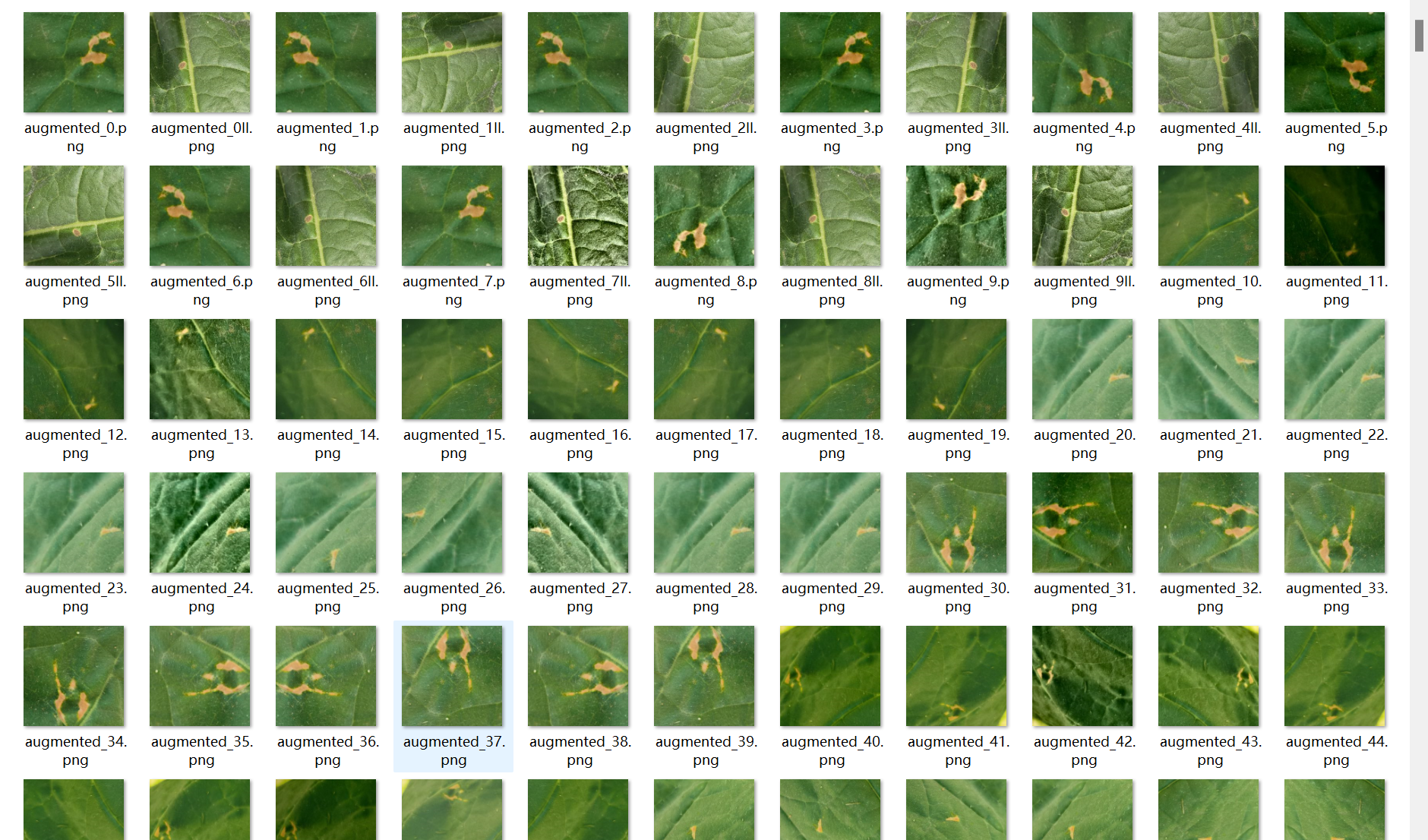
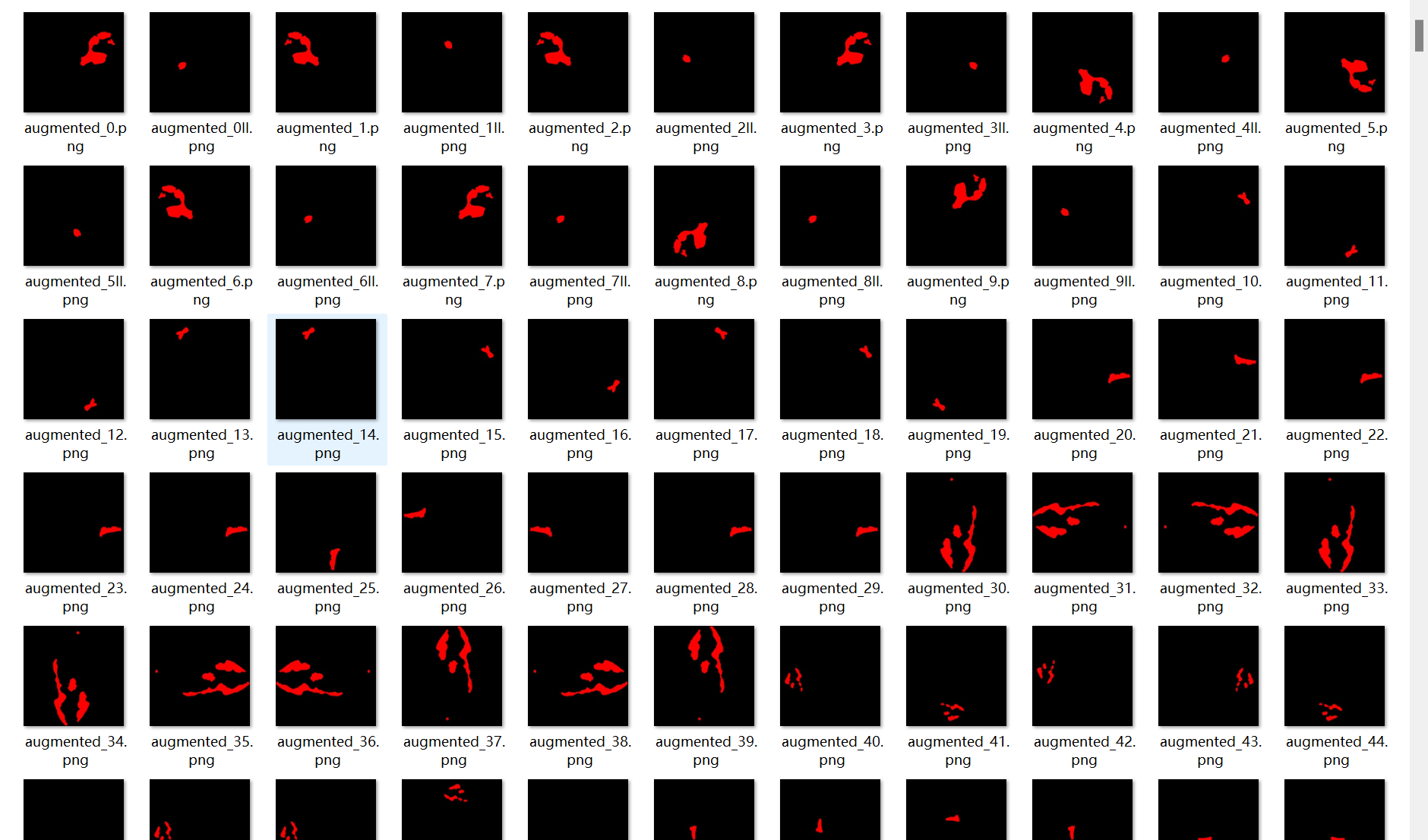
烟叶病害分割-深度学习图像分割数据集
烟叶病害分割数据,可直接应用到一些常用深度学习分割算法中,比如FCN、Unet、SegNet、DeepLabV1、DeepLabV2、DeepLabV3、DeepLabV3+、PSPNet、RefineNet、HRnet、Mask R-CNN、Segformer、DUCK-Net模型等
数据集总共有1500对图片,数据质量非常高,甚至可应用到工业落地的项目中
第二步:搭建模型
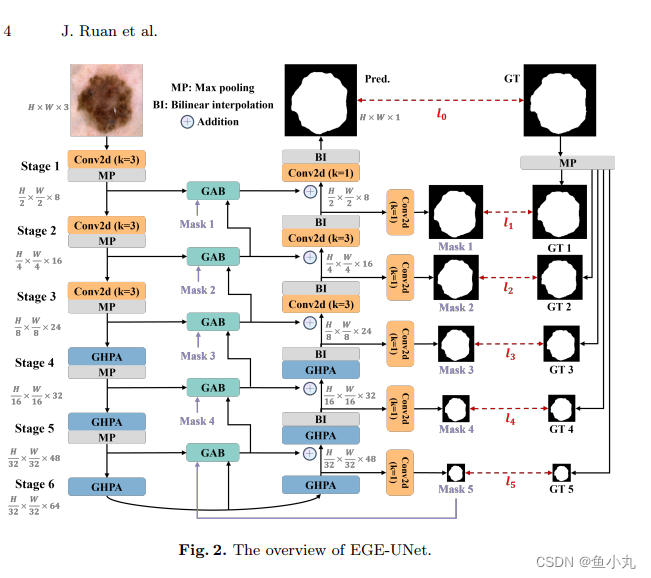
本文选择EGEUNet,其网络结构分别如下:
第三步:训练代码
1)损失函数为:dice_loss + focal_loss
2)网络代码:
python
class EGEUNet(nn.Module):

    def __init__(self, num_classes=1, input_channels=3, c_list=[8, 16, 24, 32, 48, 64], bridge=True, gt_ds=False):
        super().__init__()

        self.bridge = bridge
        self.gt_ds = gt_ds

        self.encoder1 = nn.Sequential(
            nn.Conv2d(input_channels, c_list[0], 3, stride=1, padding=1),
        )
        self.encoder2 = nn.Sequential(
            nn.Conv2d(c_list[0], c_list[1], 3, stride=1, padding=1),
        )
        self.encoder3 = nn.Sequential(
            nn.Conv2d(c_list[1], c_list[2], 3, stride=1, padding=1),
        )
        self.encoder4 = nn.Sequential(
            Grouped_multi_axis_Hadamard_Product_Attention(c_list[2], c_list[3]),
        )
        self.encoder5 = nn.Sequential(
            Grouped_multi_axis_Hadamard_Product_Attention(c_list[3], c_list[4]),
        )
        self.encoder6 = nn.Sequential(
            Grouped_multi_axis_Hadamard_Product_Attention(c_list[4], c_list[5]),
        )

        if bridge:
            self.GAB1 = group_aggregation_bridge(c_list[1], c_list[0])
            self.GAB2 = group_aggregation_bridge(c_list[2], c_list[1])
            self.GAB3 = group_aggregation_bridge(c_list[3], c_list[2])
            self.GAB4 = group_aggregation_bridge(c_list[4], c_list[3])
            self.GAB5 = group_aggregation_bridge(c_list[5], c_list[4])
            print('group_aggregation_bridge was used')
        if gt_ds:
            self.gt_conv1 = nn.Sequential(nn.Conv2d(c_list[4], 1, 1))
            self.gt_conv2 = nn.Sequential(nn.Conv2d(c_list[3], 1, 1))
            self.gt_conv3 = nn.Sequential(nn.Conv2d(c_list[2], 1, 1))
            self.gt_conv4 = nn.Sequential(nn.Conv2d(c_list[1], 1, 1))
            self.gt_conv5 = nn.Sequential(nn.Conv2d(c_list[0], 1, 1))
            print('gt deep supervision was used')

        self.decoder1 = nn.Sequential(
            Grouped_multi_axis_Hadamard_Product_Attention(c_list[5], c_list[4]),
        )
        self.decoder2 = nn.Sequential(
            Grouped_multi_axis_Hadamard_Product_Attention(c_list[4], c_list[3]),
        )
        self.decoder3 = nn.Sequential(
            Grouped_multi_axis_Hadamard_Product_Attention(c_list[3], c_list[2]),
        )
        self.decoder4 = nn.Sequential(
            nn.Conv2d(c_list[2], c_list[1], 3, stride=1, padding=1),
        )
        self.decoder5 = nn.Sequential(
            nn.Conv2d(c_list[1], c_list[0], 3, stride=1, padding=1),
        )
        self.ebn1 = nn.GroupNorm(4, c_list[0])
        self.ebn2 = nn.GroupNorm(4, c_list[1])
        self.ebn3 = nn.GroupNorm(4, c_list[2])
        self.ebn4 = nn.GroupNorm(4, c_list[3])
        self.ebn5 = nn.GroupNorm(4, c_list[4])
        self.dbn1 = nn.GroupNorm(4, c_list[4])
        self.dbn2 = nn.GroupNorm(4, c_list[3])
        self.dbn3 = nn.GroupNorm(4, c_list[2])
        self.dbn4 = nn.GroupNorm(4, c_list[1])
        self.dbn5 = nn.GroupNorm(4, c_list[0])

        self.final = nn.Conv2d(c_list[0], num_classes, kernel_size=1)

        self.apply(self._init_weights)

    def _init_weights(self, m):
        if isinstance(m, nn.Linear):
            trunc_normal_(m.weight, std=.02)
            if isinstance(m, nn.Linear) and m.bias is not None:
                nn.init.constant_(m.bias, 0)
        elif isinstance(m, nn.Conv1d):
            n = m.kernel_size[0] * m.out_channels
            m.weight.data.normal_(0, math.sqrt(2. / n))
        elif isinstance(m, nn.Conv2d):
            fan_out = m.kernel_size[0] * m.kernel_size[1] * m.out_channels
            fan_out //= m.groups
            m.weight.data.normal_(0, math.sqrt(2.0 / fan_out))
            if m.bias is not None:
                m.bias.data.zero_()

    def forward(self, x):

        out = F.gelu(F.max_pool2d(self.ebn1(self.encoder1(x)), 2, 2))
        t1 = out  # b, c0, H/2, W/2

        out = F.gelu(F.max_pool2d(self.ebn2(self.encoder2(out)), 2, 2))
        t2 = out  # b, c1, H/4, W/4

        out = F.gelu(F.max_pool2d(self.ebn3(self.encoder3(out)), 2, 2))
        t3 = out  # b, c2, H/8, W/8

        out = F.gelu(F.max_pool2d(self.ebn4(self.encoder4(out)), 2, 2))
        t4 = out  # b, c3, H/16, W/16

        out = F.gelu(F.max_pool2d(self.ebn5(self.encoder5(out)), 2, 2))
        t5 = out  # b, c4, H/32, W/32

        out = F.gelu(self.encoder6(out))  # b, c5, H/32, W/32
        t6 = out

        out5 = F.gelu(self.dbn1(self.decoder1(out)))  # b, c4, H/32, W/32
        if self.gt_ds:
            gt_pre5 = self.gt_conv1(out5)
            t5 = self.GAB5(t6, t5, gt_pre5)
            gt_pre5 = F.interpolate(gt_pre5, scale_factor=32, mode='bilinear', align_corners=True)
        else:
            t5 = self.GAB5(t6, t5)
        out5 = torch.add(out5, t5)  # b, c4, H/32, W/32

        out4 = F.gelu(F.interpolate(self.dbn2(self.decoder2(out5)), scale_factor=(2, 2), mode='bilinear',
                                    align_corners=True))  # b, c3, H/16, W/16
        if self.gt_ds:
            gt_pre4 = self.gt_conv2(out4)
            t4 = self.GAB4(t5, t4, gt_pre4)
            gt_pre4 = F.interpolate(gt_pre4, scale_factor=16, mode='bilinear', align_corners=True)
        else:
            t4 = self.GAB4(t5, t4)
        out4 = torch.add(out4, t4)  # b, c3, H/16, W/16

        out3 = F.gelu(F.interpolate(self.dbn3(self.decoder3(out4)), scale_factor=(2, 2), mode='bilinear',
                                    align_corners=True))  # b, c2, H/8, W/8
        if self.gt_ds:
            gt_pre3 = self.gt_conv3(out3)
            t3 = self.GAB3(t4, t3, gt_pre3)
            gt_pre3 = F.interpolate(gt_pre3, scale_factor=8, mode='bilinear', align_corners=True)
        else:
            t3 = self.GAB3(t4, t3)
        out3 = torch.add(out3, t3)  # b, c2, H/8, W/8

        out2 = F.gelu(F.interpolate(self.dbn4(self.decoder4(out3)), scale_factor=(2, 2), mode='bilinear',
                                    align_corners=True))  # b, c1, H/4, W/4
        if self.gt_ds:
            gt_pre2 = self.gt_conv4(out2)
            t2 = self.GAB2(t3, t2, gt_pre2)
            gt_pre2 = F.interpolate(gt_pre2, scale_factor=4, mode='bilinear', align_corners=True)
        else:
            t2 = self.GAB2(t3, t2)
        out2 = torch.add(out2, t2)  # b, c1, H/4, W/4

        out1 = F.gelu(F.interpolate(self.dbn5(self.decoder5(out2)), scale_factor=(2, 2), mode='bilinear',
                                    align_corners=True))  # b, c0, H/2, W/2
        if self.gt_ds:
            gt_pre1 = self.gt_conv5(out1)
            t1 = self.GAB1(t2, t1, gt_pre1)
            gt_pre1 = F.interpolate(gt_pre1, scale_factor=2, mode='bilinear', align_corners=True)
        else:
            t1 = self.GAB1(t2, t1)
        out1 = torch.add(out1, t1)  # b, c0, H/2, W/2

        out0 = F.interpolate(self.final(out1), scale_factor=(2, 2), mode='bilinear',
                             align_corners=True)  # b, num_class, H, W

        if self.gt_ds:
            return (torch.sigmoid(gt_pre5), torch.sigmoid(gt_pre4), torch.sigmoid(gt_pre3), torch.sigmoid(gt_pre2),
                    torch.sigmoid(gt_pre1)), torch.sigmoid(out0)
        else:
            return torch.sigmoid(out0)
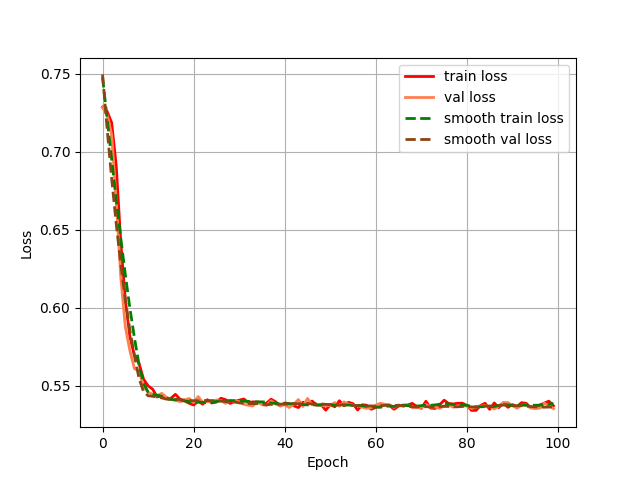
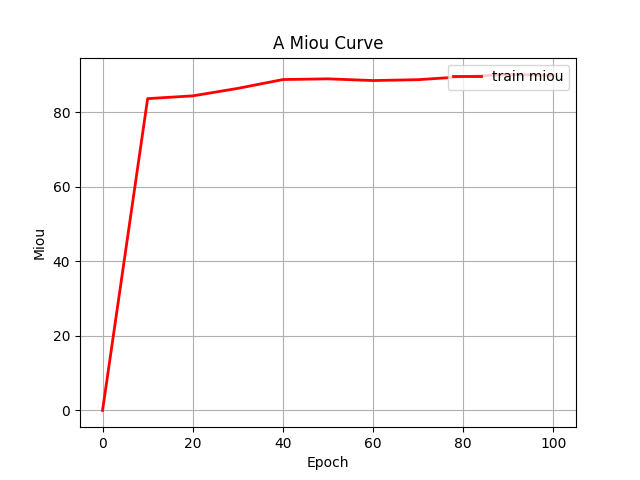
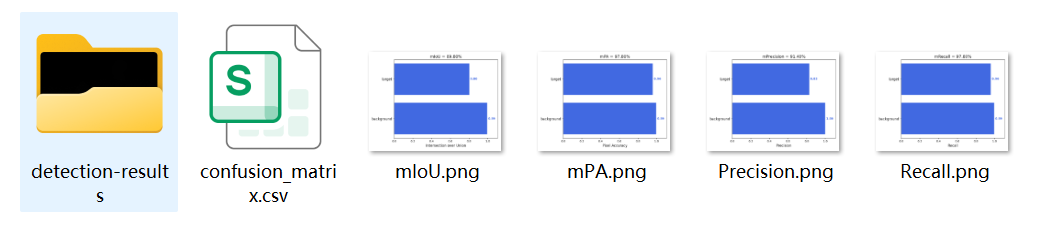
第四步:统计一些指标(训练过程中的loss和miou)
第五步:搭建GUI界面
第六步:整个工程的内容
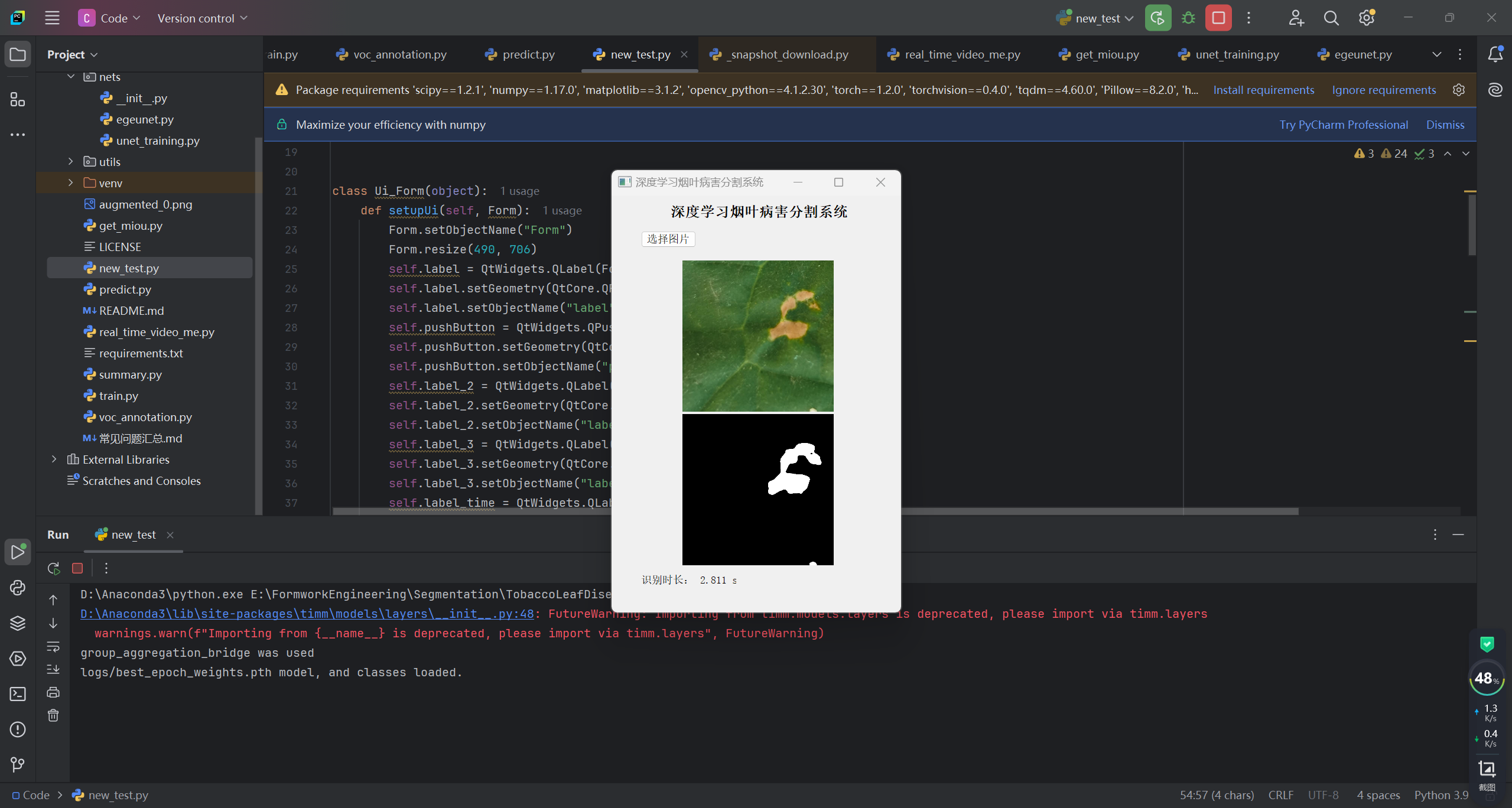
项目完整文件下载请见演示与介绍视频的简介处给出:➷➷➷
https://www.bilibili.com/video/BV1zRk4BUEx9/