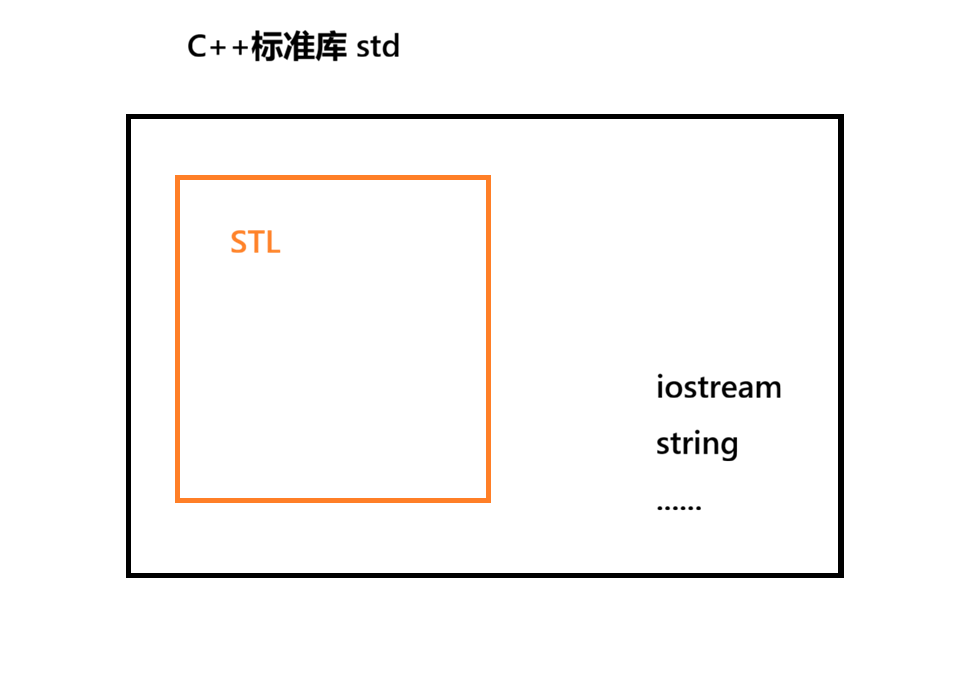
其实C++一次重大更新是STL横空出世,由惠普实验室两位大佬编写并进行开源,STL(Standard Template Library,标准模版库)是常见的数据结构和算法的库,是C++标准库的重要组成部分;后续改出很多版本,公众认可度较高且可读性较强的是gcc编译器采用的SGI版本,Linux采用的是gcc编译器。
C strxxx 系列库函数
C++ string 管理字符数组,增删改查+算法
string是STL六大分类容器的一部分,
https://legacy.cplusplus.com/reference/string/string/string/
1.Member functions
1.1 constructor
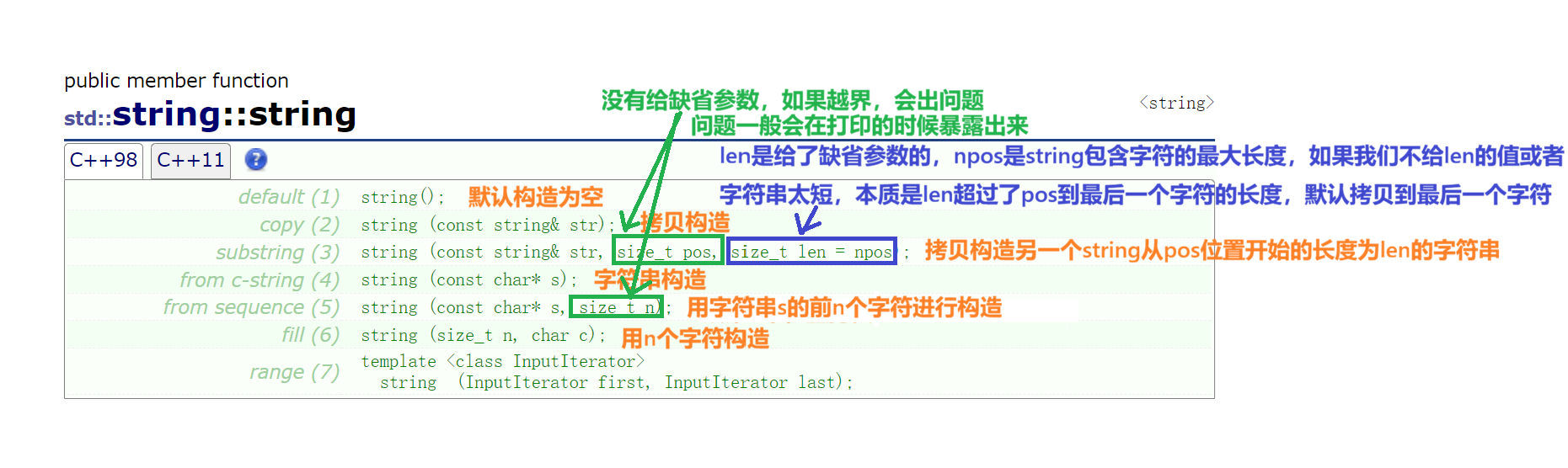
构造
cpp
int main() {
	string s1;//默认构造为空
	string s2("an apple a day, keep my enemies away");//字符串构造
	string s3(s2);//拷贝构造
	string s4(s2, 2);//从s2第2个位置拷贝构造
	string s5(s2, 80,1000);//从s2第2个位置拷贝构造三个字符
	string s6("an apple a day, keep my enemies away",100);//用字符串前n个字符进行构造
	string s7(10, 'a');//用10个字符a构造

	return 0;
}
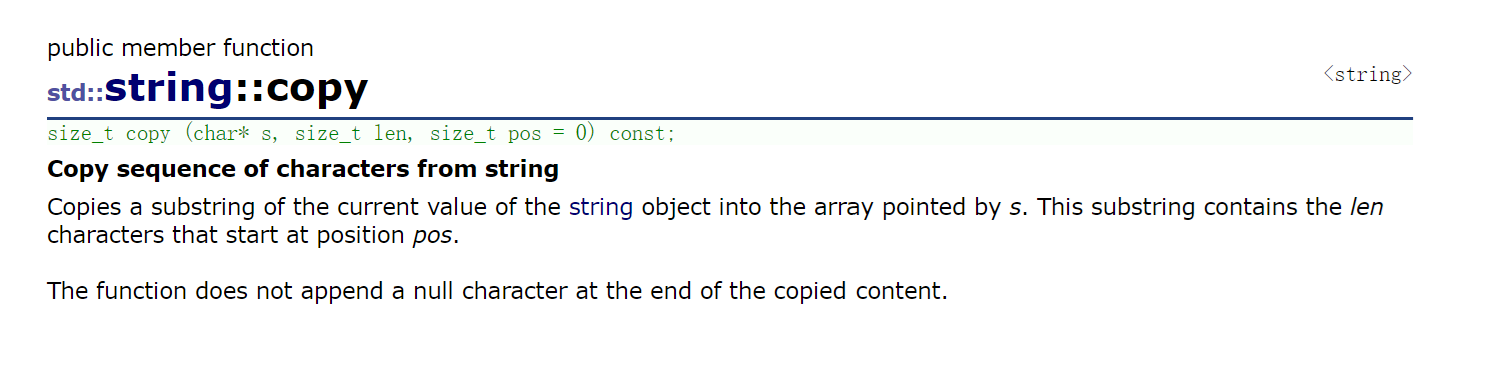
s1.copy(buffer, pos, len)把s1第pos个位置开始的len长度个字符拷贝给buffer,注意拷贝完的buffer默认没有'\0'
2.Iterators
迭代器的底层不一定完全是指针,有可能是封装的更复杂的数据结构
范围for早期C++和Java不支持,Python等语言支持,后来C++和Java也奉行"拿来主义",把范围for拿过来了;C++的范围for底层就是迭代器
cpp
int main() {
	string s1("guchen");
	for (auto& ch : s1) {//for (char& ch : s1)
		cout << ch <<" ";//查
		ch = 'a';//改
	}
	cout << s1 << endl;
	return 0;
}
但是string能用 ,一般不使用迭代器
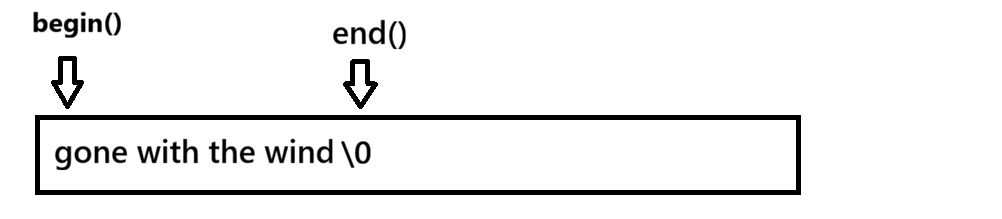
cpp
int main() {
	string s("gone with the wind");
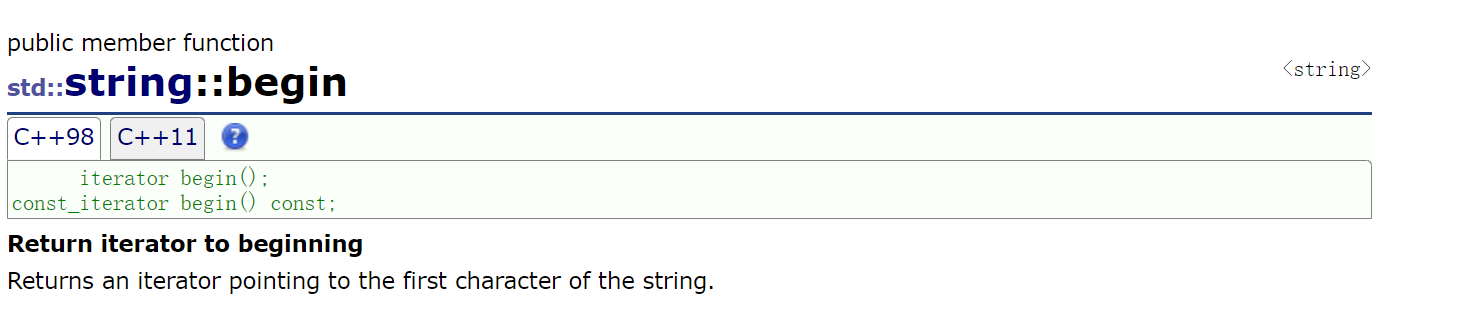
	string::iterator it = s.begin();
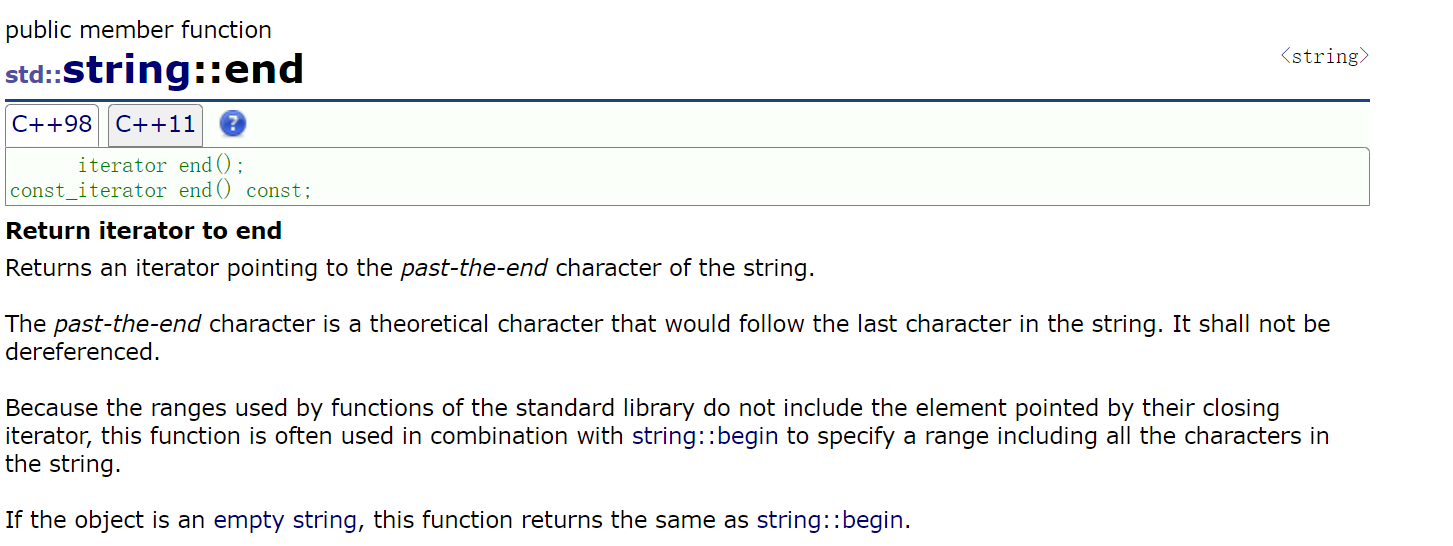
	while (it != s.end()) {
		(*it)++;//改
		cout << *it << " ";//查
		it++;//进行迭代
	}
	cout << endl;

	return 0;
}
输出如下
cpp
h p o f ! x j u i ! u i f ! x j o e迭代器是通用的
cpp
int main() {
	vector<int> v = { 1,2,3 };//顺序表
	vector<int>::iterator vit = v.begin();
	while (vit != v.end()) {
		cout << *vit << " ";
		vit++;
	}
	cout << endl;

	list<int> l = { 1,2,3 };//链表
	l.push_back(10);
	list<int>::iterator lit = l.begin();
	while (lit != l.end()) {
		cout << *lit << " ";
		lit++;
	}
	cout << endl;

	return 0;
}
对于max_size这个函数,不同编译器下的测试结果不一定相同
cpp
int main() {
	string s("gone with the wind");
	cout << s.max_size() << endl;

	return 0;
}
cpp
//VS2022测试结果
9223372036854775807
//Linux centos7 测试结果
4611686018427387897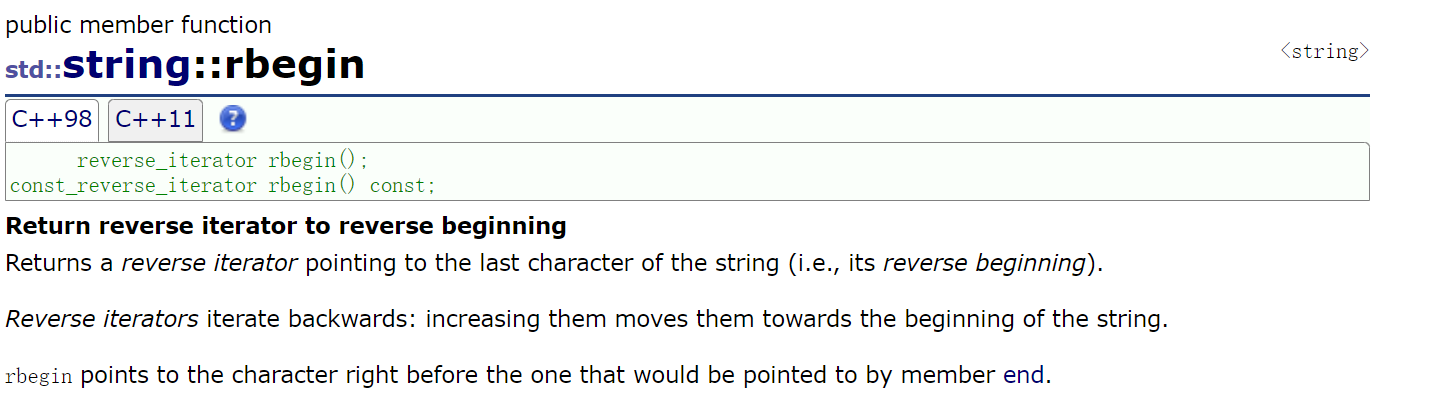
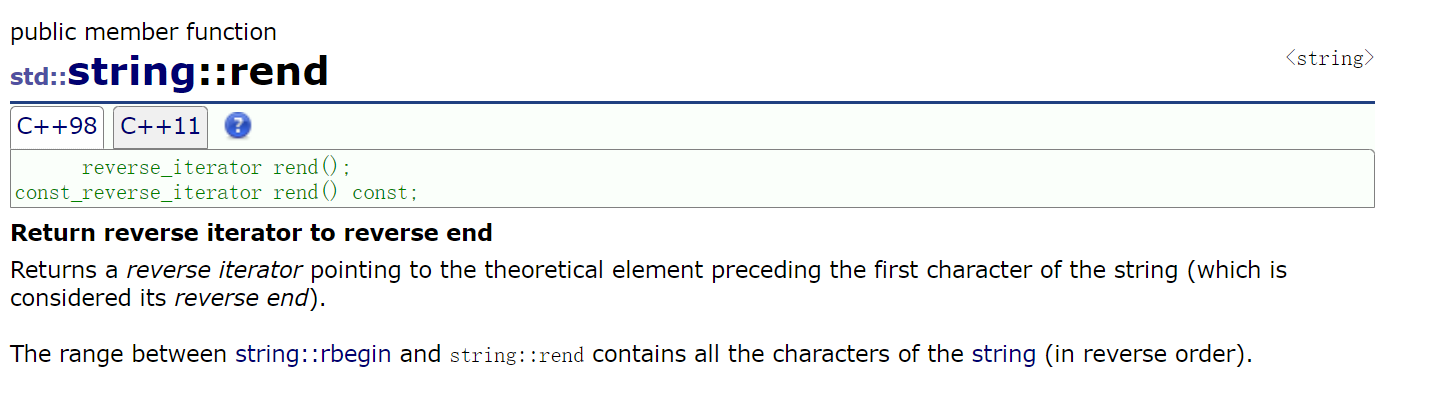
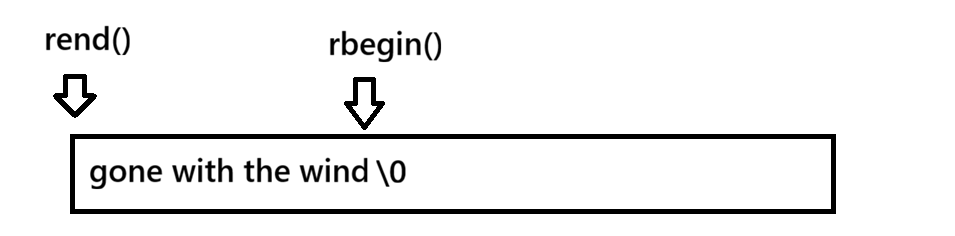
也可以反向迭代
cpp
int main() {
	string s("gone with the wind");
	auto it = s.rbegin();//等价于string::reverse_iterator it = s.rbegin();
	while (it != s.rend()) {
		(*it)++;
		cout << *it << " ";
		it++;
	}
	cout << endl;

	return 0;
}
后来C++11出了c四件套,就是上面四个本来就有的const版本,但是用的一般比较少

cpp
void Func(const string& s) {
	string::const_iterator it = s.begin();//此处加了const,权限不能放大
	while (it != s.end()) {
		cout << *it << " ";
		it++;
	}
	cout << endl;

	string::const_reverse_iterator rit = s.rbegin();
	while (rit != s.rend()) {
		cout << *rit << " ";
		rit++;
	}
	cout << endl;
}
int main() {
	string s1("guchen");
	Func(s1);
	return 0;
}
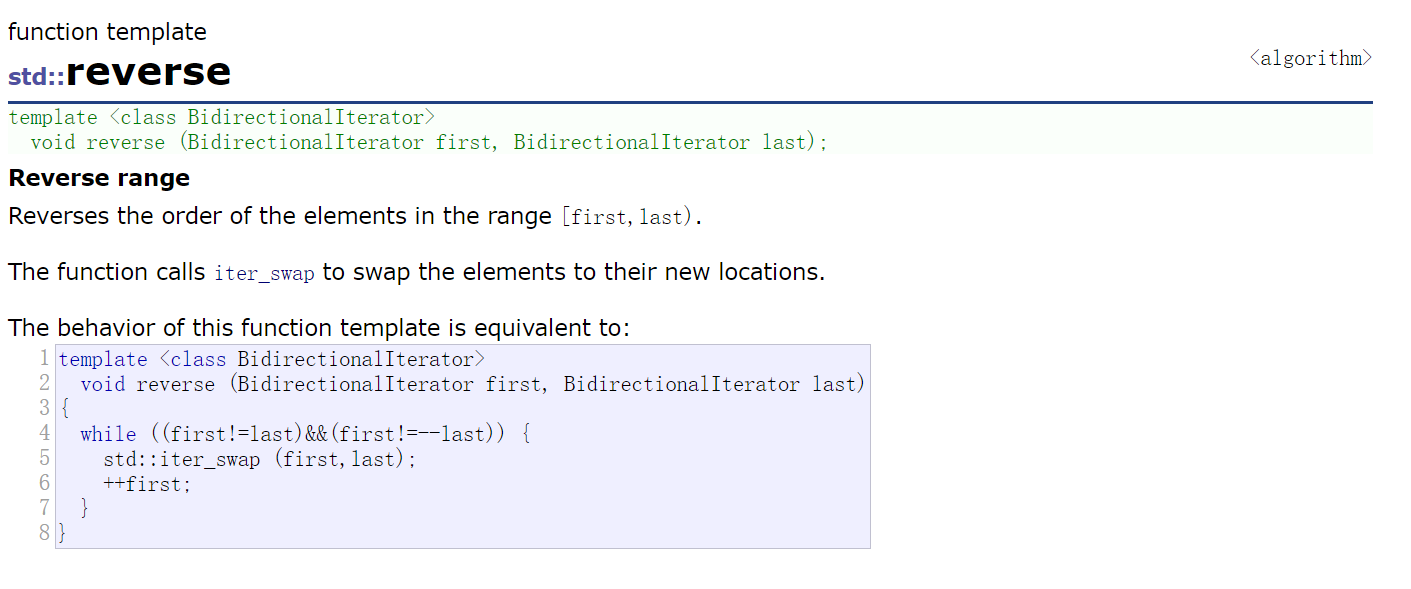
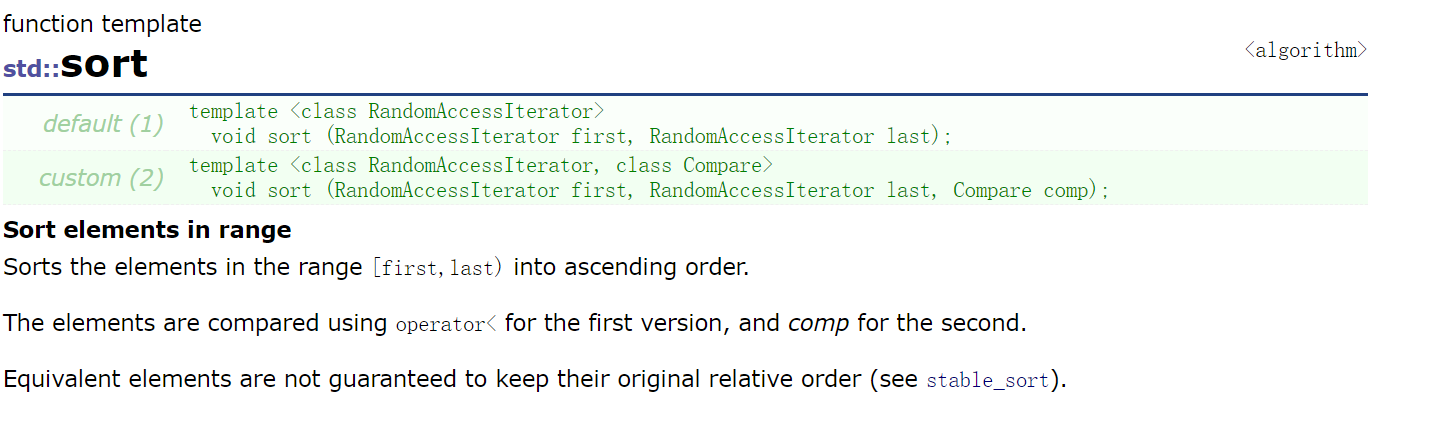
迭代器也可以结合算法使用,因为迭代器提供了统一的访问和修改容器数据的方式,算法可以通过迭代器,处理容器内数据
cpp
int main() {
	vector<int> v = { 3,2,1 };
	sort(v.begin(), v.end());
	reverse(v.begin(), v.end());

	list<int> l = { 1,2,3 };
	reverse(l.begin(), l.end());

	return 0;
}
3.Capacity
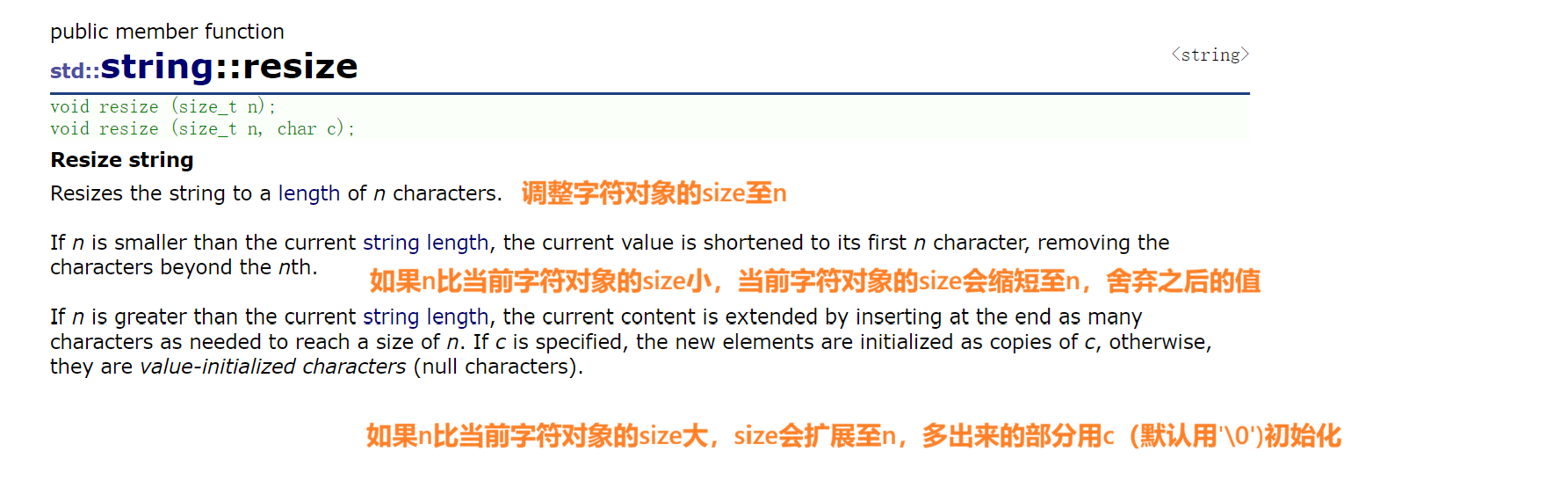
3.1 resize
cpp
int main() {
    string s("great expectations");
    s.resize(10,'a');

    return 0;
}
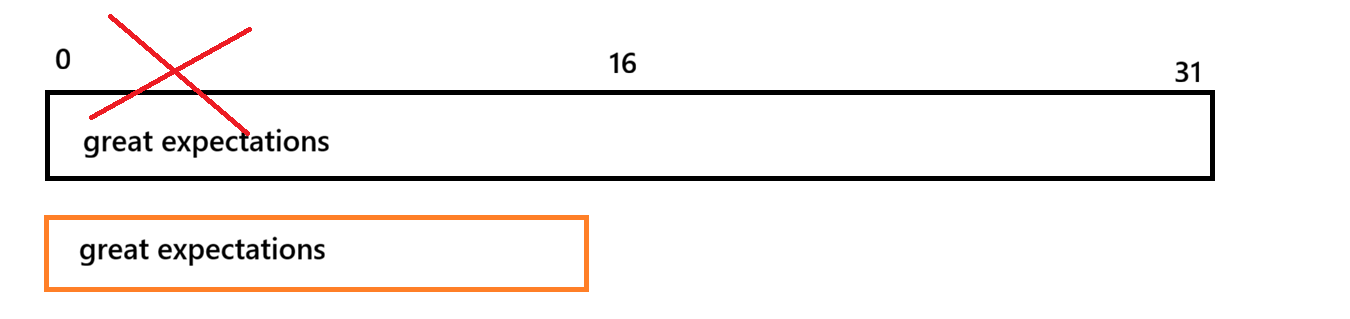
s的size本来为18,调整为10后,capacity并没有改变,因为缩容也是有代价的,因为C/C++内存管理不支持一段一段进行管理
不是说把16-31还给操作系统

而是重新开一片空间,把原有内容复制到新空间,更新地址,把原有空间释放,本质是时间换空间
cpp
  1 #include <iostream>
  2 #include <string>
  3 using namespace std;
  4 int main() {
  5
  6     string s("great expectations");
  7
  8     cout<<s.size()<<endl;
  9     cout<<s.capacity()<<endl;
 10     s.resize(35,'a');
 11
 12     cout<<s.size()<<endl;
 13     cout<<s.capacity()<<endl;

 14     string s1("great expectations");
 15
 16     cout<<s1.size()<<endl;
 17     cout<<s1.capacity()<<endl;
 18     s1.resize(10,'a');
 19
 20     cout<<s1.size()<<endl;
 21     cout<<s1.capacity()<<endl;
 22     return 0;
 23 }
输出如下
cpp
//VS2022
18
31
35
47
18
31
10
31

//g++ centos7
18
18//初始化18个字符,size和capacity都是18
35//resize到35,此时size是35,capacity是36(二倍式的扩容)
36
18
18
10//缩容到10,size是10,capacity还是18
18
3.2 reserve
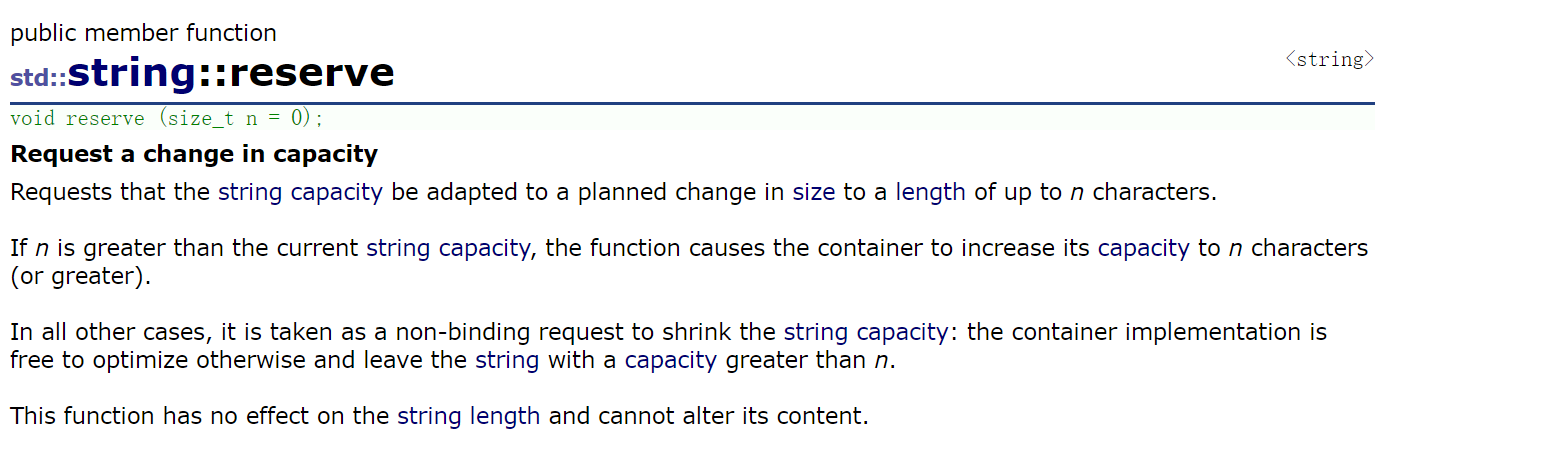

cpp
int main() {
    string s("great expectations");
    cout << s.size() << endl;
    cout << s.capacity() << endl;
    s.clear();//把size置为0
    cout << s.size() << endl;
    cout << s.capacity() << endl;
    s.reserve(10);
    cout << s.size() << endl;
    cout << s.capacity() << endl;

    return 0;
}
输出如下
cpp
//VS2022
18
31//初始化18个字符,size是18,capacity是31
0//clear之后size是0,capacity是31
31
0//此时reserve到10,capacity变成15
15

//g++ centos7
18
18
0
18
0
10
cpp
int main() {
    string s("great expectations");
    cout << s.size() << endl;
    cout << s.capacity() << endl;
    s.reserve(10);
    cout << s.size() << endl;
    cout << s.capacity() << endl;

    return 0;
}
输出如下
cpp
//VS2022
18
31//初始化18个字符,size是18,capacity是31
18
31//此时reserve到10,capacity还是31

//g++ centos7
18
18
18
18
3.3 shrink_to_fit
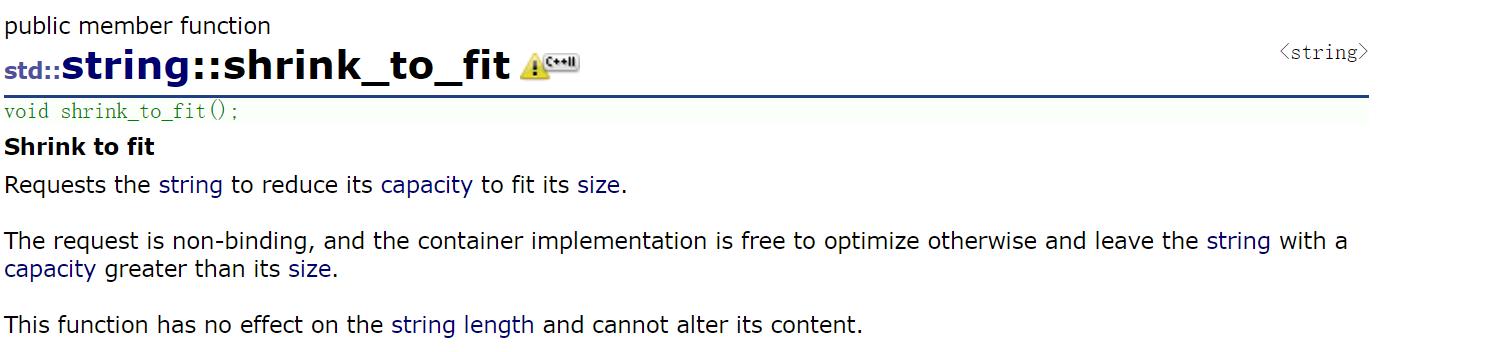
C++11引入的,Linux下编译要加上标准g++ code.cpp -std=c++11
cpp
int main() {
    string s("great expectations");
    cout << s.size() << endl;
    cout << s.capacity() << endl;
    s.clear();
    cout << s.size() << endl;
    cout << s.capacity() << endl;
    s.shrink_to_fit();
    cout << s.size() << endl;
    cout << s.capacity() << endl;

    return 0;
}
cpp
//VS2022
18
31
0
31
0
15

//g++ centos7
18
18
0
18
0
0
4. Element access
4.1 operator
string重载了运算符 ,字符对象可以像字符数组一样使用,但是二者原理不同
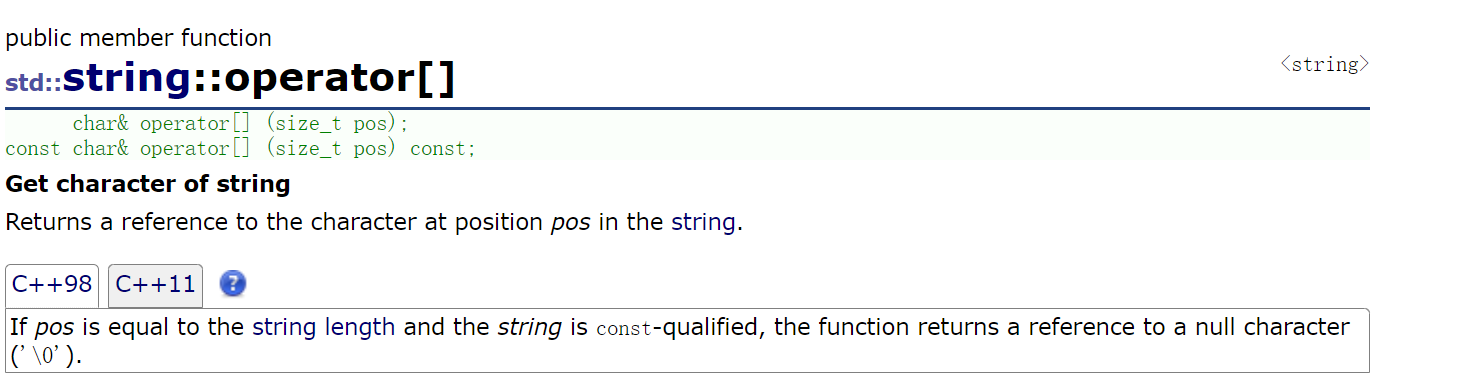
因为返回的是引用,所以可以修改
cpp
int main() {
    string s1("guchen");
    for (int i = 0; i < s1.size(); i++) {
        s1[i] = 'a';//改
        s1[i]++;//增
        cout << s1[i] << endl;//查
    }
  	s1.clear();//删,置s1.size()为0

    char s[] = "akui";
    for (int i = 0; i < sizeof(s); i++) {
        s[i] = 'b';
        cout << s[i] << endl;
    }
    s1[1];//s1.operator[](1)
    s[1];//*(s+1)
    return 0;
}
我们看到string下有size和length,因为container包括vector(顺序表),list(链表),map(红黑树),顺序表、链表、字符类说length长度还说的过去,但是红黑树说length就不合适了,所以s红黑树用size表征结点个数,而相较于string,STL出现的晚,所以string并没有归在STL中,但如果单单从逻辑上说的话,容器嘛,存储数据的地方,那肯定string也可以算在string的容器里了,所以string也引入了size

稍微看一下VS2022下的扩容逻辑
cpp
int main() {
	string s;
	int num = s.capacity();
	cout << s.capacity() << endl;
	for (int i = 0; i < 100; i++) {
		s += '0';
		if (num != s.capacity()) {
			cout << s.capacity() << endl;
			num = s.capacity();
		}
	}

	return 0;
}
输出如下
cpp
15
31
47
70
105
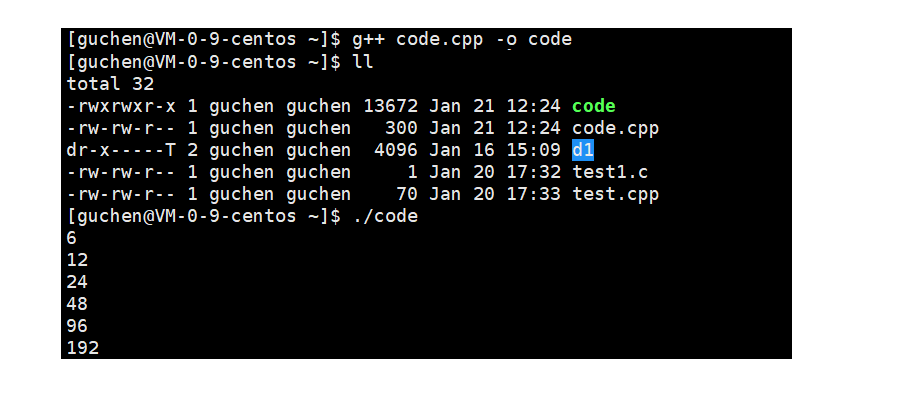
如果6个字符,capacity是15;24个字符,capacity是31;36个字符,capacity47;54个字符,capacity是63,扩容和开空间不完全是1个逻辑,开空间貌似是以最小的能够容纳数据的16的倍数开;
如果是Linux下g++编译器,是给多少字符,就给多少空间,二倍进行扩容
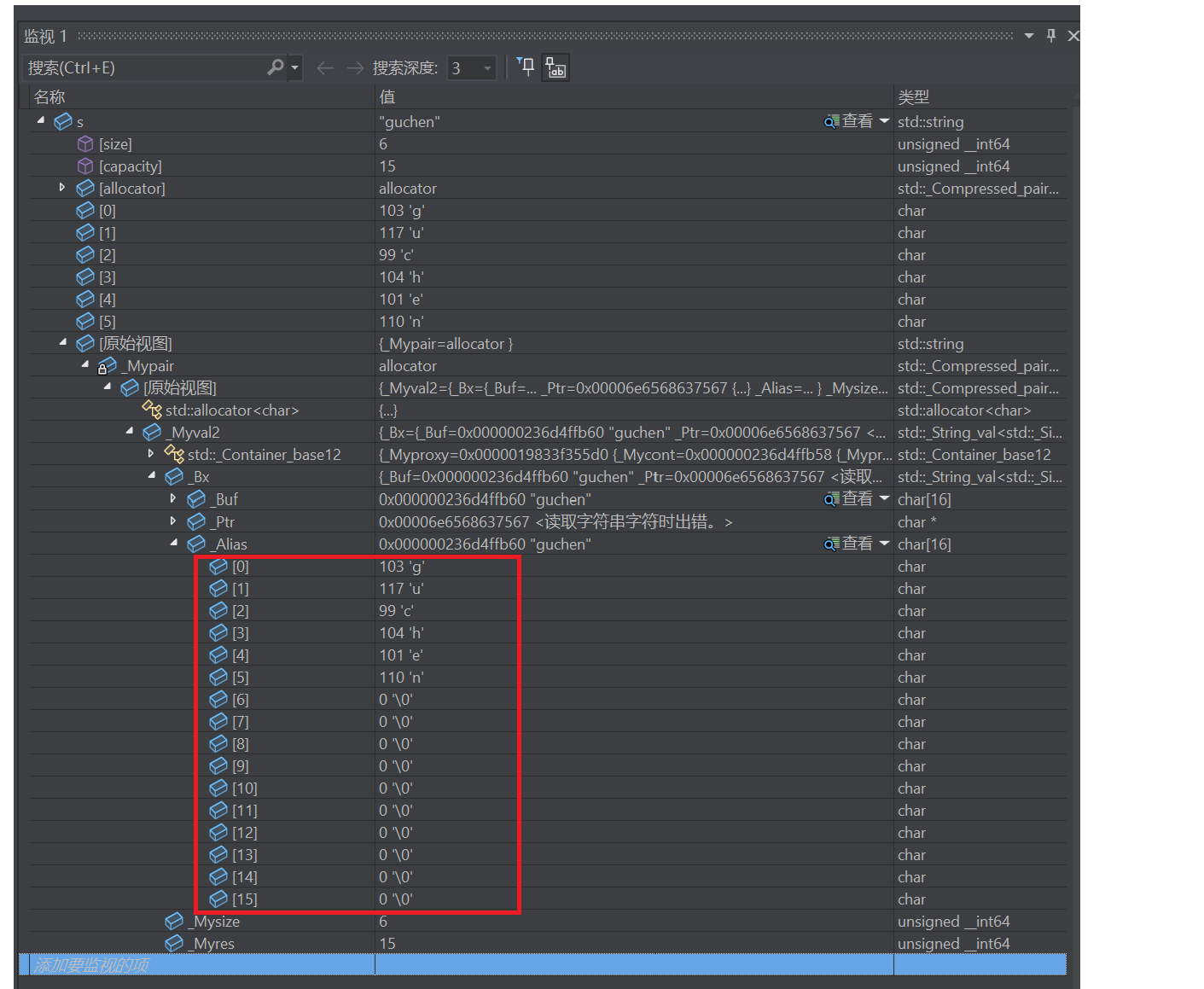
因为STL是一个规范,没有规定怎么实现,但底层实现大同小异
我们看到string s("guchen");初始化字符对象时6个字符开辟了16个空间,除了刚开始的字符剩下的以'\0'初始化,其实底层类似顺序表
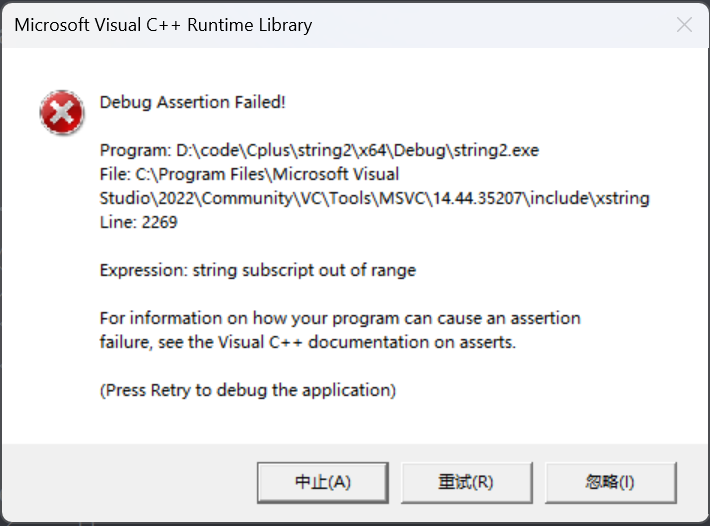
越界会断言
cpp
int main() {
    string s("great expectations");
    cout << s[40] << endl;

    return 0;
}
4.2 at
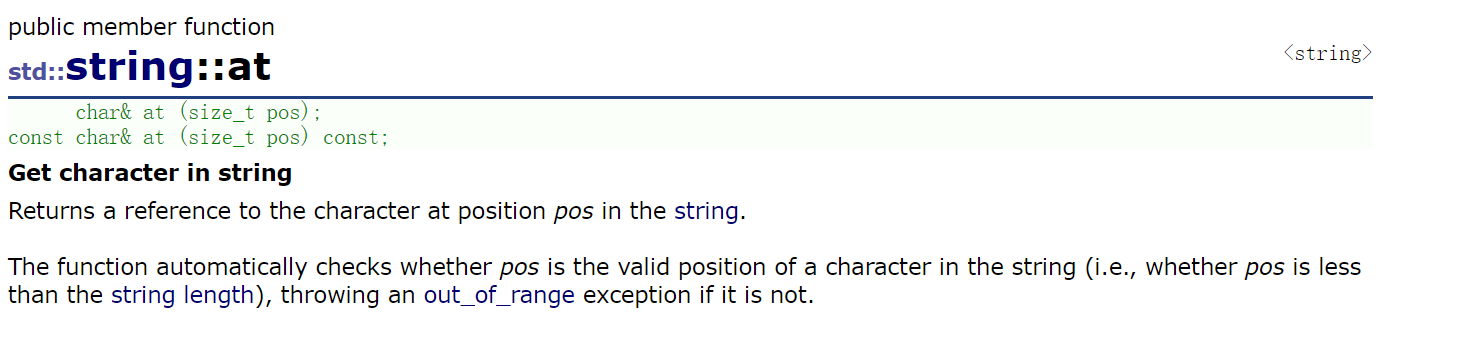
返回pos指向的字符,如果pos越界,抛异常
cpp
int main() {
    string s("great expectations");
    cout << s.at(1) << endl;

    return 0;
}输出r
cpp
int main() {
    string s("great expectations");
    cout << s.at(40) << endl;

    return 0;
}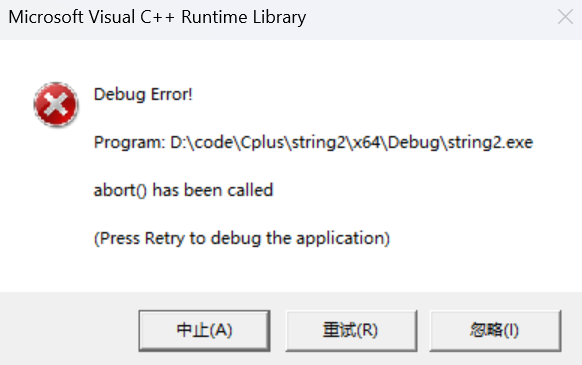
越界会抛异常
cpp
int main() {
    string s("tara");
    try {
        cout << s.at(40) << endl;
    }
    catch (const exception e) {
        cout << e.what() << endl;
    }
    return 0;
}
输出如下
cpp
invalid string position5.Modifiers
5.1 push_back
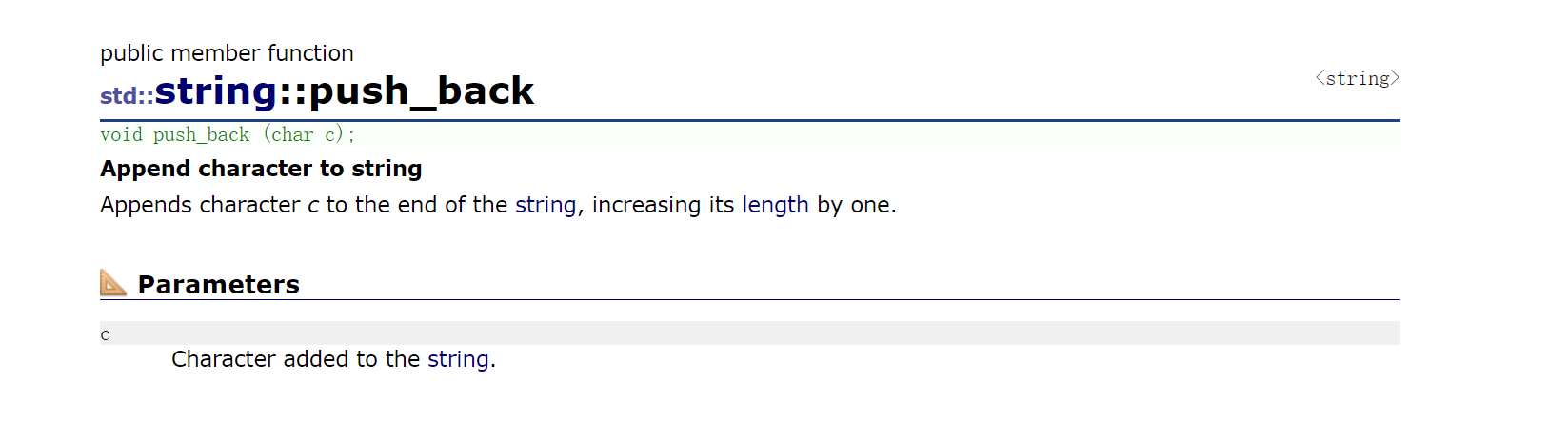
cpp
int main() {
	string s1("lemon");
	s1.push_back('i');
	cout << s1 << endl;//输出lemoni
	return 0;
}
5.2 append
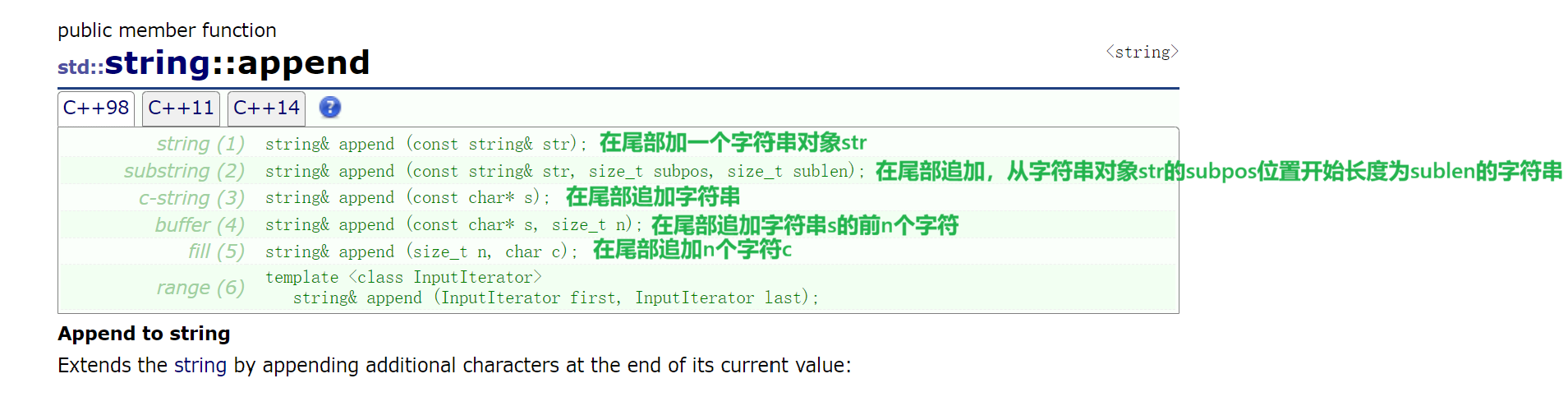
string一些接口有一些冗余
cpp
int main() {
	string s1("lemon ");
	string s2("sweet");
	s1.append(s2);
	s1.append(s2,2,3);
	s1.append("nice");
	s1.append("nice",2);
	s1.append(10, 'a');
	cout << s1 << endl;
	return 0;
}
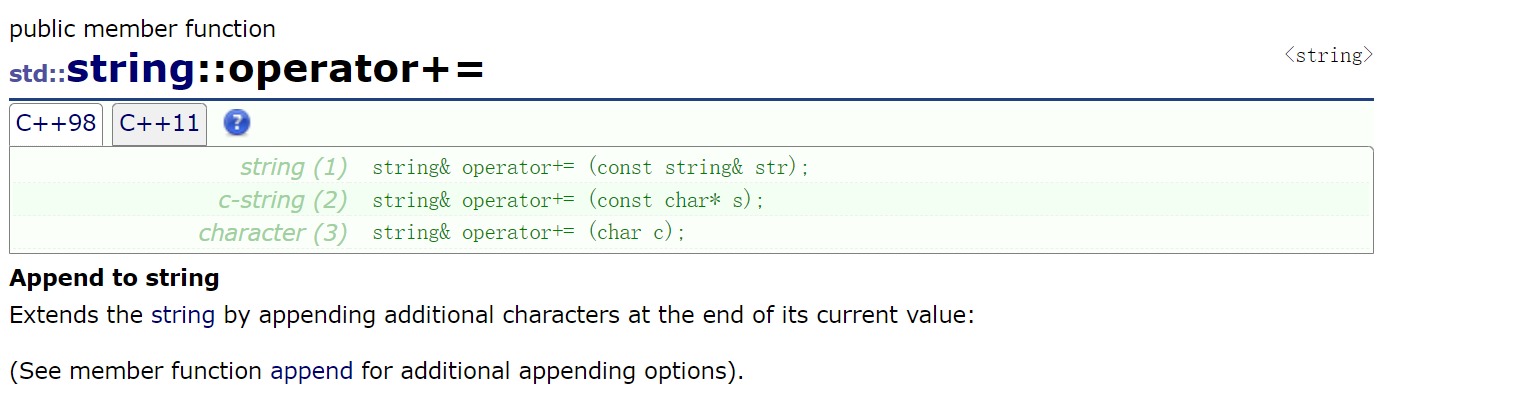
5.3 operator+=
其实+=就是append更好用
cpp
int main() {
	string s1("lemon ");
	string s2 = "sweet";//拷贝构造
	s1 += "c";
	s1 += s2;
	s1 += "nice";
	return 0;
}
也可以直接进行字符串对象比较
cpp
int main() {
	string s1("lemon ");
	string s2 = "sweet";

	cout << (s1 > s2) << endl;
	cout << (s1 == s2) << endl;//流插入的优先级比较高
	return 0;
}
切分为子串
cpp
int main() {
	string s1("https://cplusplus.com/reference/string/string/string/");
	string sub1(s1, 0, 6);//协议
	string sub2(s1, 8, 13);//域名
	string sub3(s1, 22);
	//string sub4(s1, 22,s1.size()-22);两种写法等价
	cout << sub1 << endl;
	cout << sub2 << endl;
	cout << sub3 << endl;
	return 0;
}
将输入的整数转成逆置后的字符串对象
cpp
int main() {
	size_t x,val;
	string strx;
	cin >> x;
	//假设x不为零
	while (x) {
		val = x % 10;
		strx += ('0' + val);
		x /= 10;
	}

	return 0;
}
5.4 assign
用一个新的字符串代替原有内容
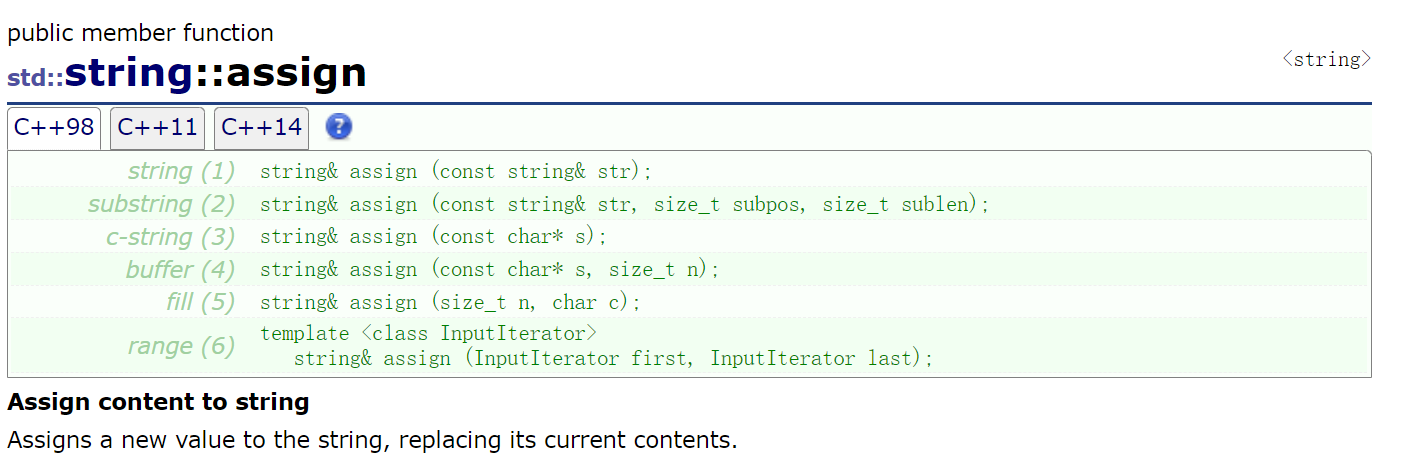
cpp
int main() {
    string s("great expectations");
    s.assign("normal no more");
    cout << s << endl;//输出normal no more

    return 0;
}
5.5 erase
迭代器区间一般都是左闭右开
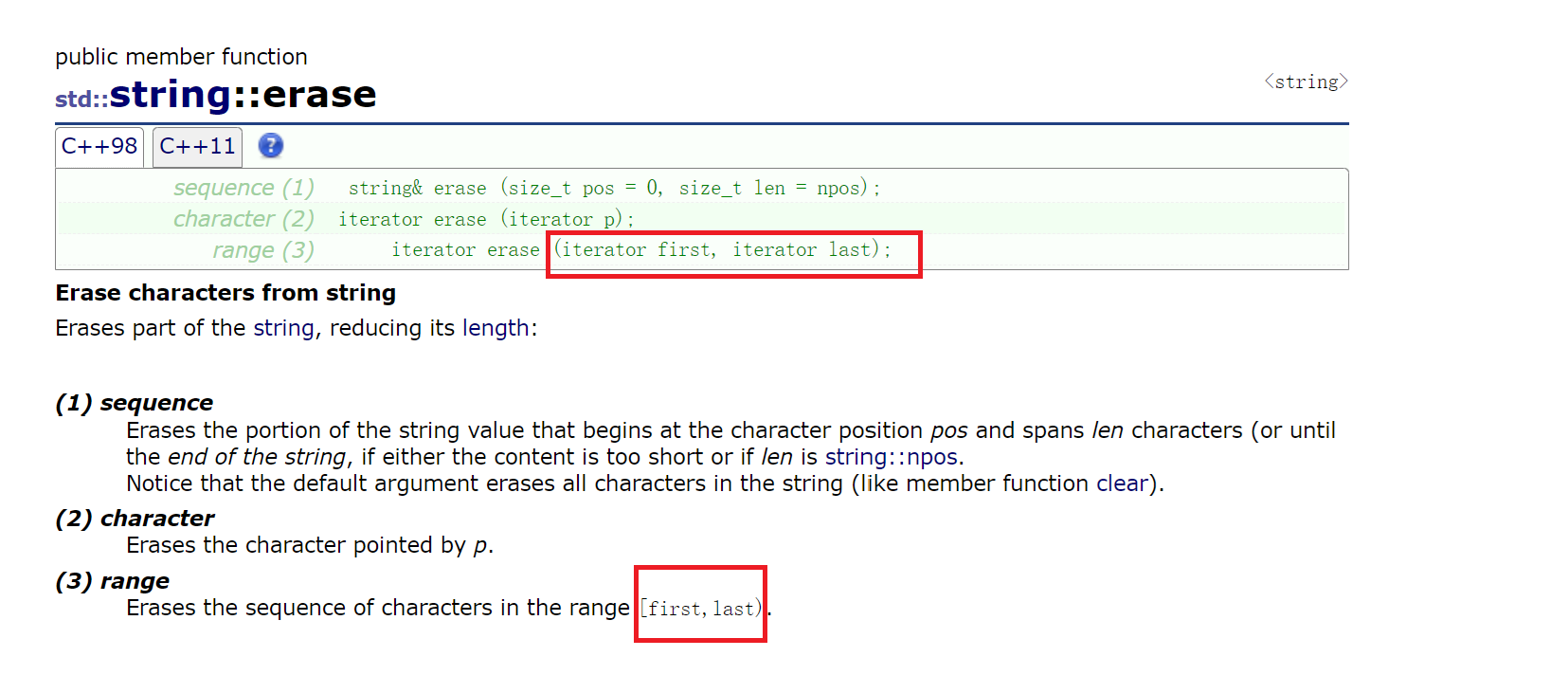
cpp
int main() {
    string s("great expectations");
    s.erase(s.begin(), s.begin() + 5);
    cout << s << endl;//输出expectations

    s.erase(s.begin());//抹掉刚开始的一个字符
	s.erase(5, 1);//从下标为5的字符开始,共抹掉一个字符
	s.erase(5);//只剩从头开始的5个字符

    return 0;
}
5.6 repalce
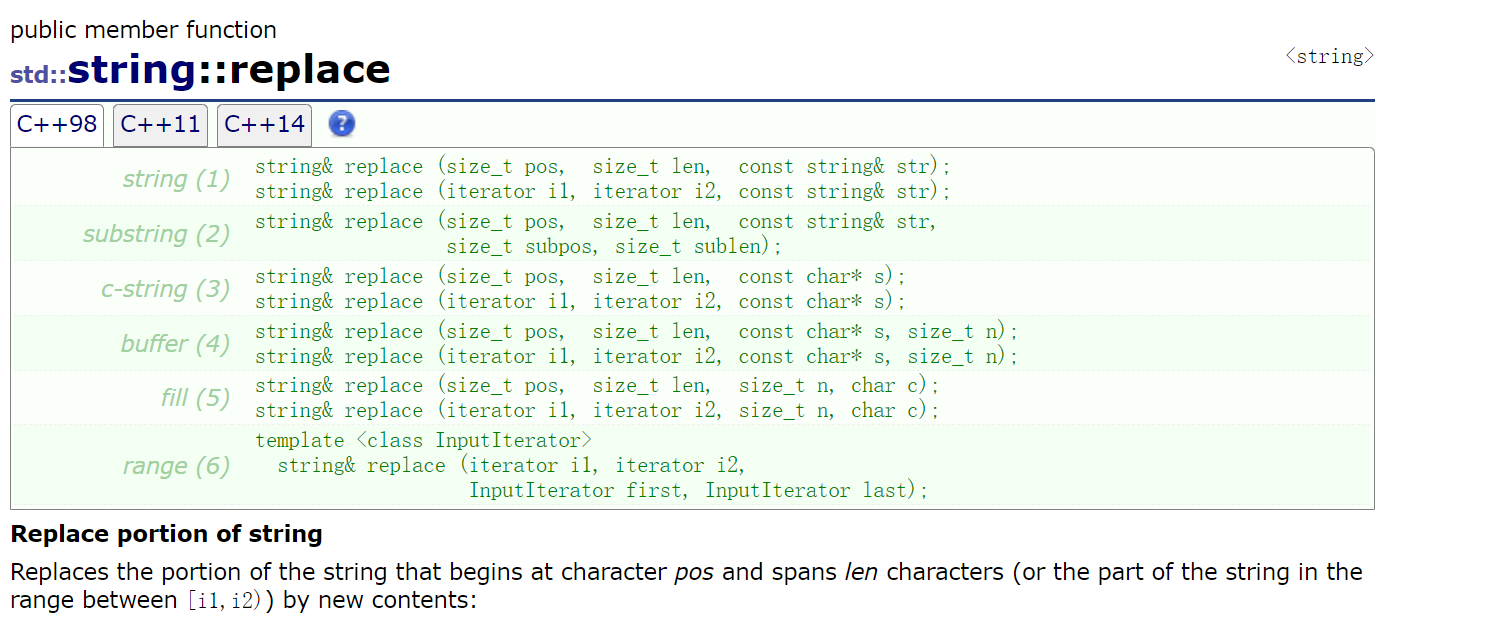
cpp
int main() {
    string s("apple peach");
	string s1("pear is sweet");
	s.replace(6, 4, s1);
	cout << s << endl;//输出apple pear is sweeth

    return 0;
}
5.7 swap
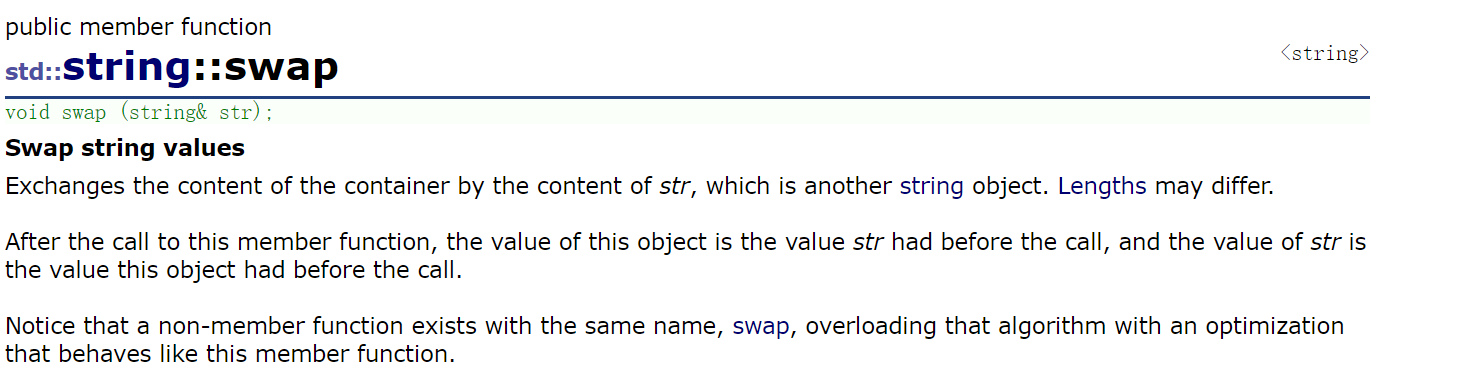
cpp
int main() {
    string s("apple peach");
    string s1("pear");
    s.swap(s1);

    return 0;
}
5.8 insert
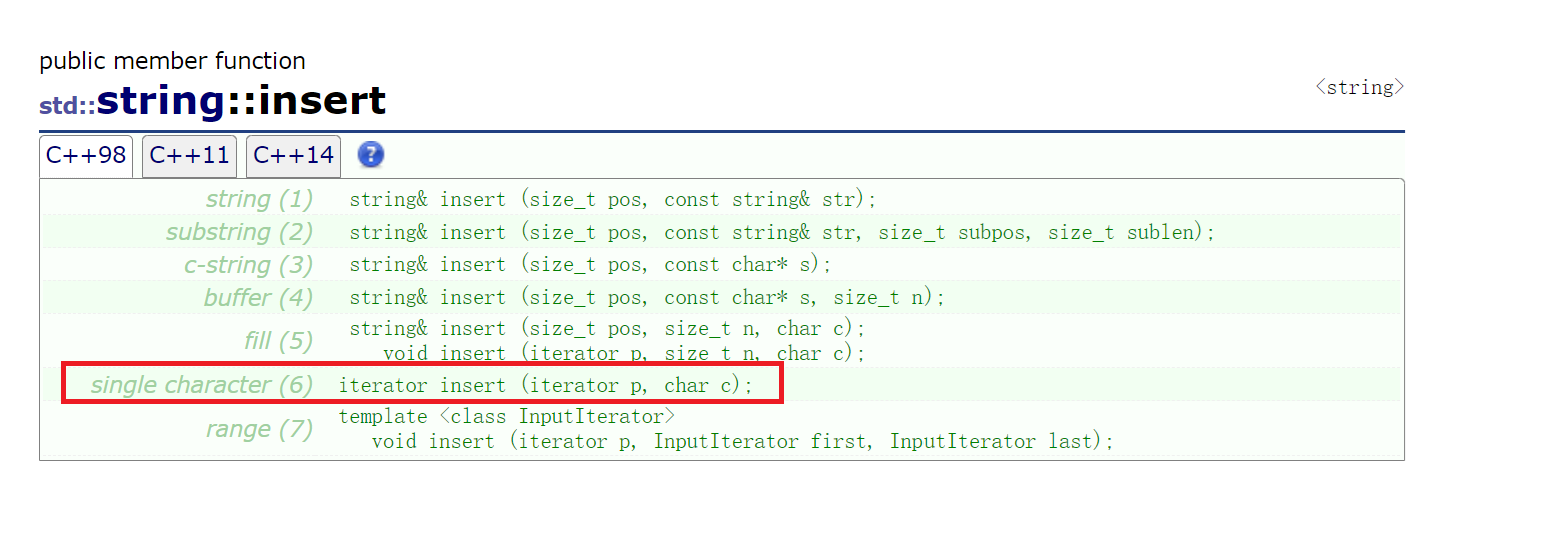
cpp
int main() {
    string s("tara");
    s.insert(0, 10, 'y');
    s.insert(s.begin()+10, 10, 'x');

    return 0;
}
6. String operations
6.1 c_str
因为C++是兼容C的,有的时候C++项目需要调用一些数据库,比如MySQL,但这些数据库只提供的C的接口,如果使用C类型的字符串,空间管理会麻烦很多,所以这个时候就需要获取字符串对象的字符串。
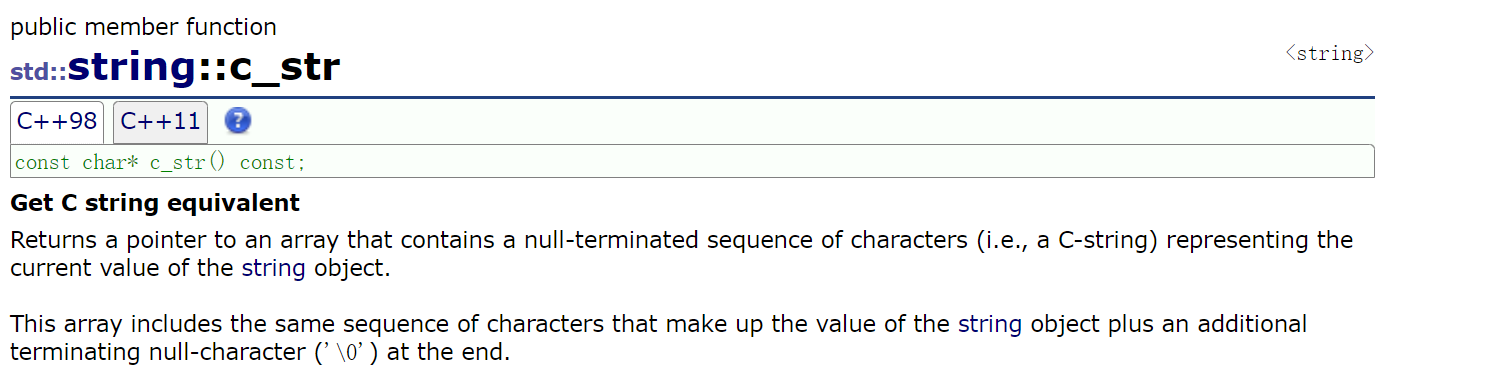
cpp
int main() {
    string s("apple peach");
    string s1("pear");
    const char* s2 = s.c_str();

    string filename = "test.cpp";
    filename += ".zip";
    FILE* fout = fopen(filename.c_str(), "r");
    return 0;
}
6.2 copy
拷贝
cpp
int main() {
	string s1("i was served lemons but i made lemonade");
	char buffer[20];
	s1.copy(buffer, 3, 2);
	buffer[3] = '\0';
	cout << buffer << endl;//输出was
	return 0;
}
6.3 find/rfind
从头开始找
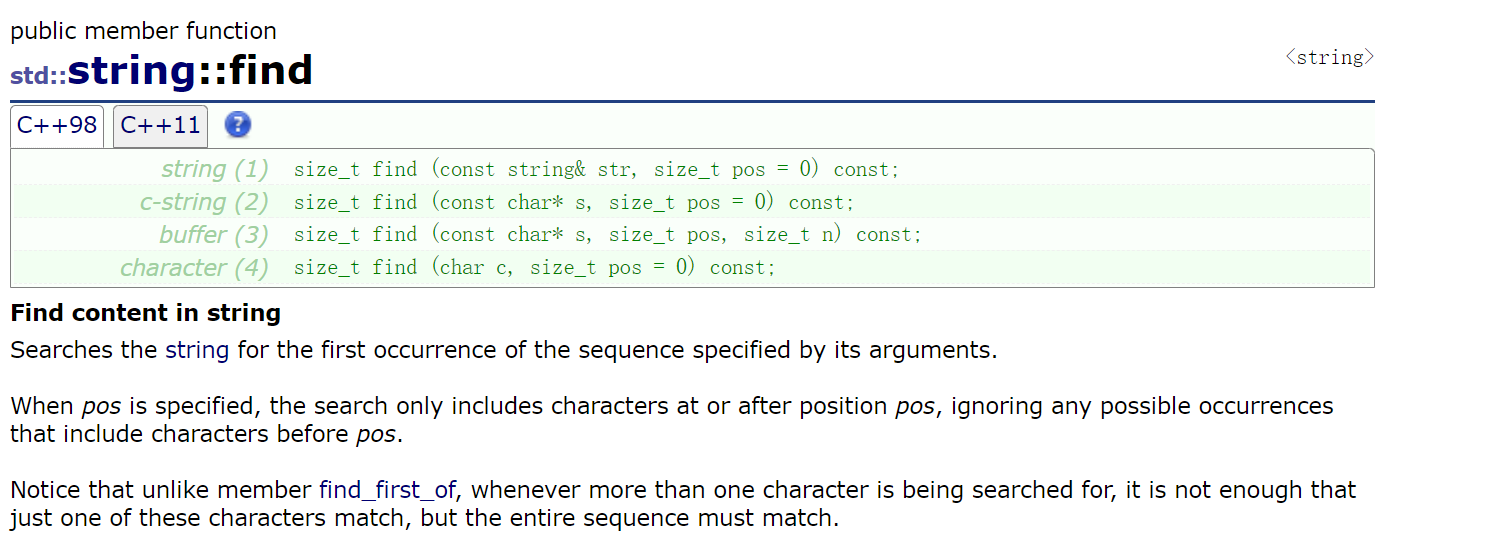
从尾开始找
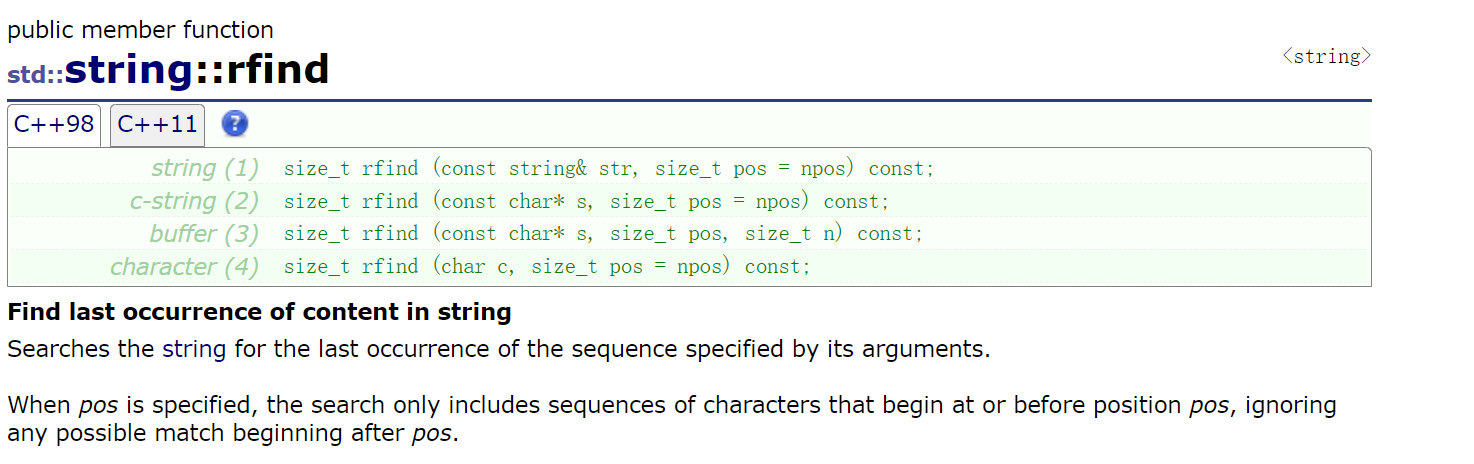
牛刀小试
cpp
class Solution {
public:
    int firstUniqChar(string s) {
        for(int i=0;i<s.size();i++){
            int pos1=s.find(s[i]);//该字符第一次出现的地方
            int pos2=s.rfind(s[i]);//该字符最后一次出现的地方
            if(pos1==pos2)//如果第一次和最后一次出现的位置相同,说明只出现了一次
                return i;
        }

        return -1;//如果没有找到,返回-1
    }
};
6.4 find_first_of/find_first_not_of
find_first_of
找到字符串对象中第一个与str/s任何字符(1)(2)(3)或c(4)相同的字符,返回下标
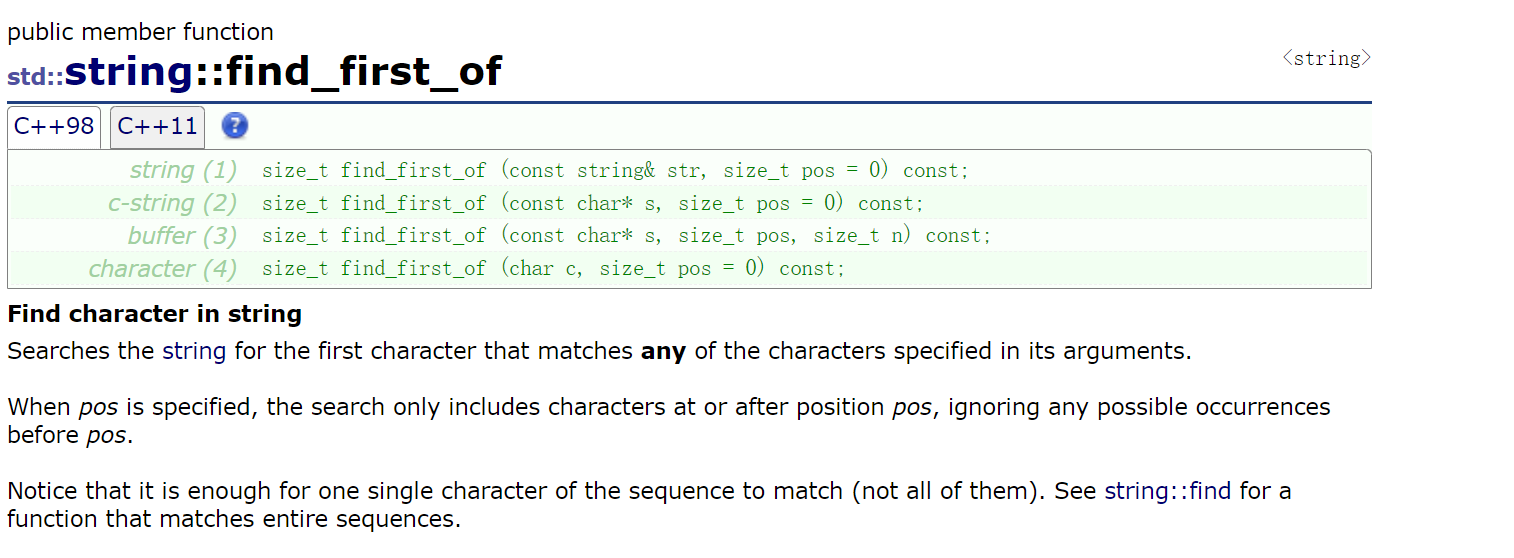
cpp
int main() {
    string s("tara testover");

    int pos = s.find_first_of("abcde");
    while (pos != string::npos) {
        s[pos] = '*';
        pos = s.find_first_of("abcde",pos+1);
    }

    cout << s << endl;

    return 0;
}
输出如下
cpp
t*r* t*stov*rfind_first_not_of
找到字符串对象中第一个与str/s任何字符(1)(2)(3)或c(4)不相同的字符,返回下标
6.5 find_last_of/find_last_not_of
find_last_of
找到字符串对象中最后 一个与str/s任何字符(1)(2)(3)或c(4)相同的字符,返回下标
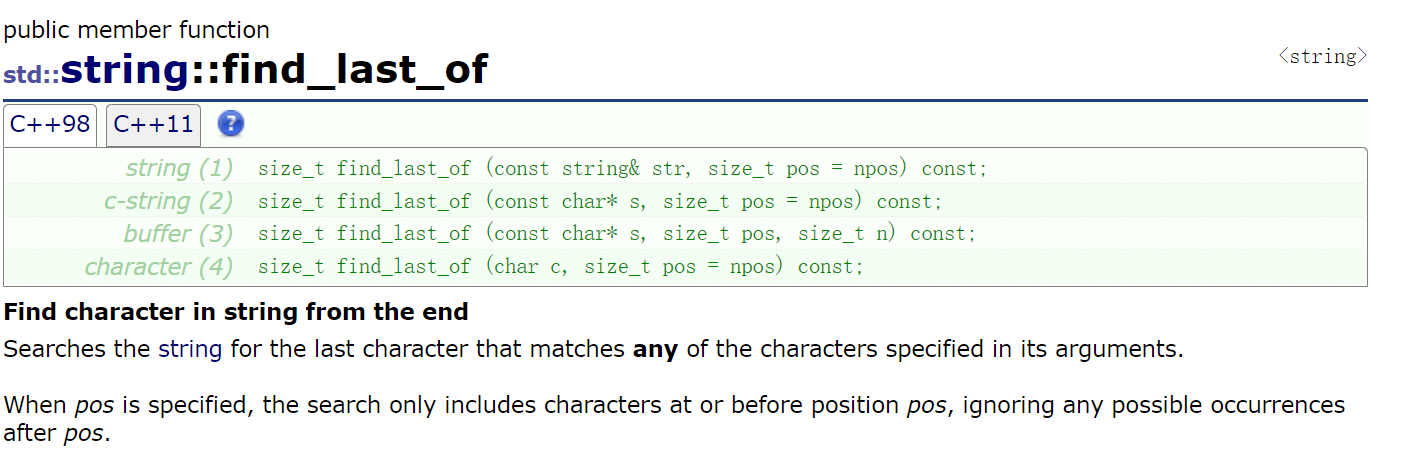
cpp
int main() {
    string s("tara testover");

    int pos = s.find_last_of("abcde");
    while (pos != string::npos) {
        s[pos] = '*';
        pos = s.find_last_of("abcde", pos - 1);
    }

    cout << s << endl;

    return 0;
}
输出如下
cpp
t*r* t*stov*rfind_last_not_of
找到字符串对象中最后一个与str/s任何字符(1)(2)(3)或c(4)不相同的字符,返回下标
6.6 substr
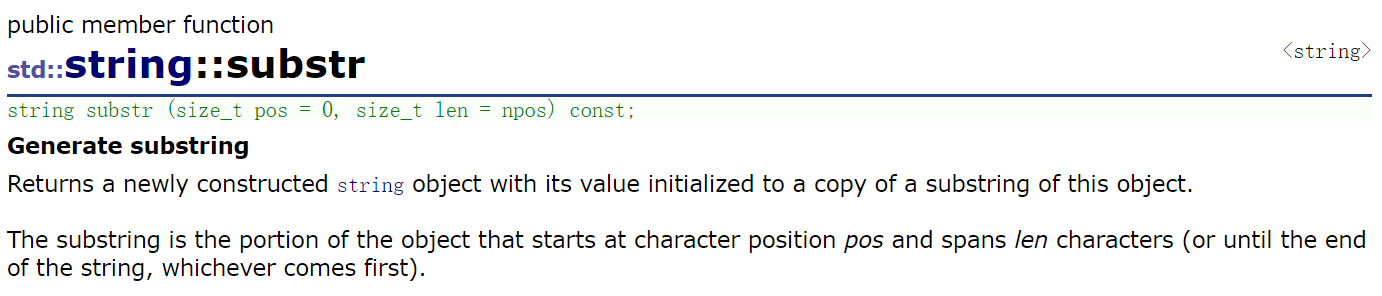
cpp
//将网址拆分为协议 域名 资源
void Divide(string& url1) {
    int pos1 = url1.find("://");
    if (pos1 != string::npos) {
        string protocol = url1.substr(0, pos1), domain;
        int pos2 = url1.find("/", pos1 + 3);
        if (pos2 != string::npos)
            domain += url1.substr(pos1 + 3, pos2 - (pos1 + 3));
        string uri = url1.substr(pos2 + 1);
        cout << protocol << endl;
        cout << domain << endl;
        cout << uri << endl;
    }
}

int main(){
    string url1 = "https://blog.csdn.net/m0_74328241?spm=1010.2135.3001.5343";
    string url2 = "https://leetcode.cn/problems/ba-zi-fu-chuan-zhuan-huan-cheng-zheng-shu-lcof/description/";
    string url3 = "https://legacy.cplusplus.com/reference/string/string/erase/";
    string url4 = "https://www.doubao.com/chat/36368173941801218";
    Divide(url4);
    return 0;
}
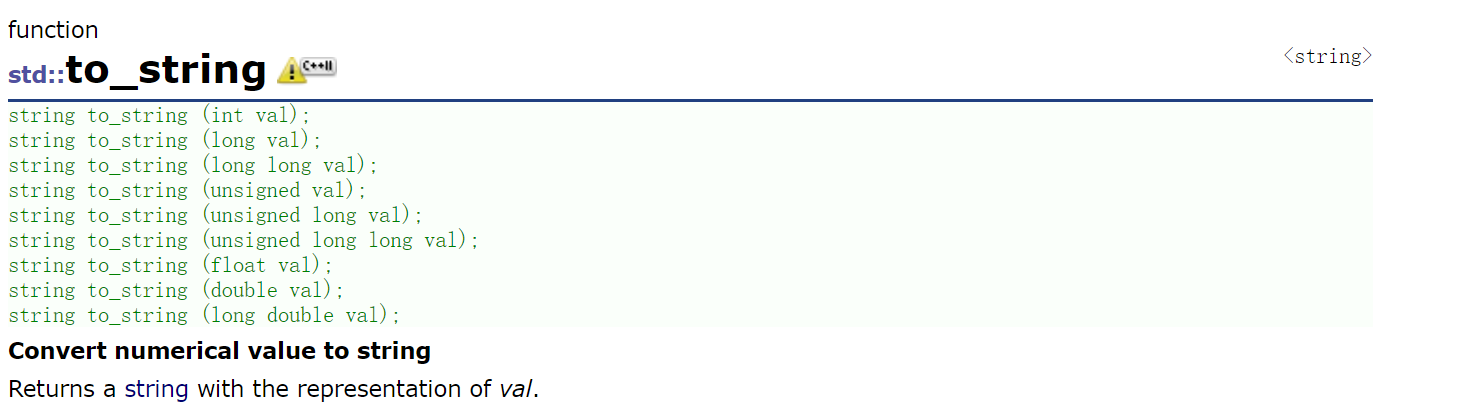
7.Convert to strings
cpp
int main(){
    char str1[] = "abcd";
    char str2[2];
    str2[0] = 98;//存储的是b
    char str3[] = "顾宸";

    cout << sizeof(str3) << endl;//输出5,和编码有关,ascii码不足以表示汉字,unicode编码,一个汉字两个字节,2^16-1=66535,足以表示常见的汉字(utf8,还有utf16 ,utf32等,还有gbk编码,很多生僻词包括的比较全,编码表,也就是值和符号的映射对应关系表)

    return 0;
}
8.牛刀小试
cpp
class Solution {
public:
    string addStrings(string num1, string num2) {
        string strRet;
        int end1=num1.size()-1,end2=num2.size()-1,carry=0,i=0, val1, val2,ret;
        while(end1>=0||end2>=0){//只要有一个字符串没处理完就接着处理
            val1=(end1>=0)?num1[end1]-'0':0;//0的ascii码值是48,我们要把ascii表示的字符数字转化为值对应的数字,-'0',相对值就是
            val2=end2>=0?num2[end2]-'0':0;
            ret=val1+val2+carry;
            carry=ret/10;
            strRet+=ret%10+'0';

            end1--;
            end2--;
        }

        //如果两个字符串长度相等,且产生进位,上面的处理逻辑不会处理这种情况,所以单独处理;亦或是两个字符串不相等,处理完最后一个字符串还产生进位
        if(carry==1)
            strRet+='1';
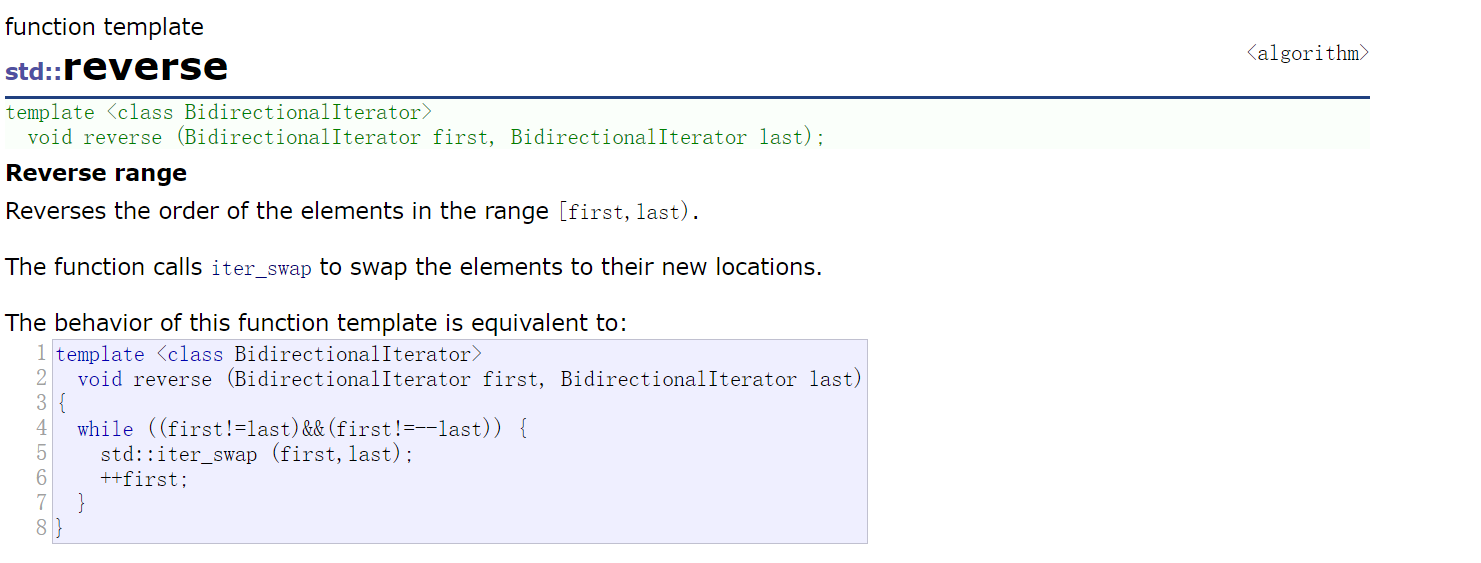
        reverse(strRet.begin(),strRet.end());//属于algorithm,记得包头文件
        return strRet;
    }
};
也可以通过头插的方式
cpp
class Solution {
public:
    string addStrings(string num1, string num2) {
        string strRet;
        int end1=num1.size()-1,end2=num2.size()-1,carry=0,i=0, val1, val2,ret;
        while(end1>=0||end2>=0){
            val1=(end1>=0)?num1[end1]-'0':0;
            val2=end2>=0?num2[end2]-'0':0;
            ret=val1+val2+carry;
            carry=ret/10;
            strRet.insert(strRet.begin(),ret%10+'0');
            end1--;
            end2--;
        }

        if(carry==1)
            strRet.insert(strRet.begin(), '1');

        return strRet;
    }
};
但是头插的效率会低一些,如果是尾插,每次是O(1),因为一般会维护tail指针,N次就是O(N);如果是头插,移动数据次数分别是1+2+...+N-1,是O(N^2)
cpp
class Solution {
public:
    void reverseString(vector<char>& s) {
        int left=0,right=s.size()-1;
        while(left<right){
            swap(s[left],s[right]);
            left++;
            right--;
        }
    }
};
cpp
#include <iostream>
#include <string>
using namespace std;

int main() {
    string s;
    getline(cin,s);//cin是istream类型的全局对象
    int pos = s.rfind(" ");
    if(pos!=string::npos)//npos是string的静态局部变量,可以通过类域访问,size_t的npos是2^32-1(32位下),int的话是-1
        cout<< (s.size()-(pos+1));
    else
        cout<< s.size();//如果pos是-1,说明不存在空格,只有一个单词,返回字符对象长度
}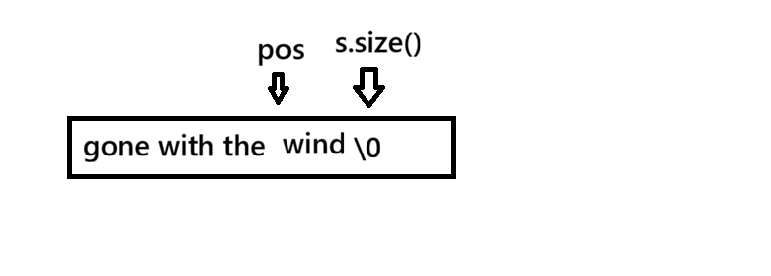
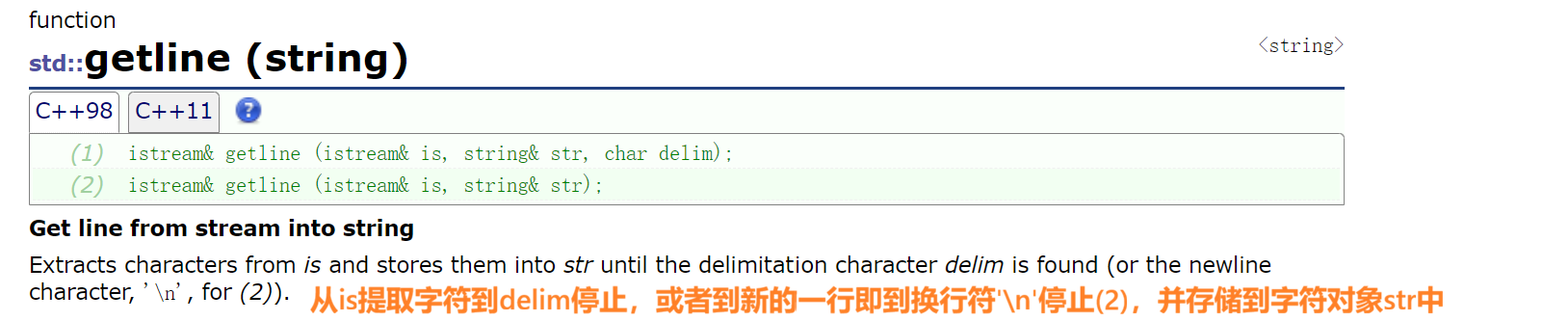
流提取存在的问题是,以空格或换行作为输入的分隔符用来处理多组输入,而这个题目输入的字符串是可能包含空格的,而getline是可以手动设置分隔符的,默认是换行;getline不是成员函数,所以可以直接调用