1. 模块概述
1.1 EventLoop
EventLoop 是一个绑定到特定线程的事件循环,它在一个无限循环中等待 IO 事件,并跨线程任务调度分发处理。
| 原则 | 含义 | 违反后果 |
|---|---|---|
| 线程绑定 | 一个 EventLoop 只能在一个线程中运行 | 多线程操作会导致数据竞争、崩溃 |
| 唯一性 | 一个线程只能有一个 EventLoop | 多个 Loop 会导致事件处理混乱 |
| 非阻塞 | Loop 不能长时间阻塞,否则无法处理其他事件 | 整个网络库卡死 |
跨线程任务调度机制:
- 其他线程可通过 runInLoop() 向 I/O 线程提交任务
- 通过 eventfd 实现无锁唤醒(比 pipe 更高效)
1.2 EventLoopThread
EventLoopThread 是网络库中的 IO 线程封装类,它实现了"One Loop Per Thread"模式。EventLoopThread 的核心设计目标包括:
- 线程创建与管理:创建并管理一个独立的 IO 线程
- EventLoop 生命周期:在线程中创建和销毁 EventLoop
- 线程同步:确保 EventLoop 创建完成后再返回
- 优雅退出:支持线程的优雅退出
cpp
+--------------------------------------------------+
|                EventLoopThread                   |
+--------------------------------------------------+
|                                                  |
|  +-------------+     +-------------+             |
|  |   Thread    |     |  EventLoop  |             |
|  |  (std::thread)   | (线程内创建) |              |
|  +-------------+     +-------------+             |
|                                                  |
|  +------------------------------------------+    |
|  |              同步机制                     |    |
|  |  mutex_ + condition_variable_            |    |
|  +------------------------------------------+    |
|                                                  |
+--------------------------------------------------+
启动流程:
+------------------+     +------------------+
|   主线程          |     |   IO 线程        |
|  (startLoop)     |     |  (threadFunc)    |
+------------------+     +------------------+
         |                        |
         |  thread_.start()       |
         |----------------------->|
         |                        |
         |  wait(loop_ != nullptr)|
         |                        |
         |                        |  创建 EventLoop
         |                        |  loop_ = &loop
         |                        |
         |                        |  notify_one()
         |<-----------------------|
         |                        |
         |  return loop_          |
         |                        |  loop.loop()
         |                        |  (事件循环运行)
1.3 EventLoopThreadPool
EventLoopThreadPool 是 mymuduo 网络库中的事件循环线程池,它管理一组 EventLoopThread,实现主从 Reactor模式。EventLoopThreadPool 的核心设计目标包括:
-
线程池管理:创建和管理多个 IO 线程
-
负载均衡:通过轮询策略分发新连接
-
事件循环管理:每个线程运行独立的 EventLoop
-
线程初始化:支持线程初始化回调
+--------------------------------------------------+
| EventLoopThreadPool |
+--------------------------------------------------+
| |
| +-------------+ |
| | baseLoop | (主 Reactor,接受新连接) |
| +-------------+ |
| |
| +-------------+ +-------------+ +-------------+
| | Loop0 | | Loop1 | | Loop2 |
| | (SubReactor)| | (SubReactor)| | (SubReactor)|
| +-------------+ +-------------+ +-------------+
| | | |
| v v v
| +----------+ +----------+ +----------+
| | Conn1 | | Conn3 | | Conn5 |
| | Conn2 | | Conn4 | | Conn6 |
| +----------+ +----------+ +----------+
| |
+--------------------------------------------------+
2. 源码
2.1 EventLoop.h
cpp
#pragma once
#include "NonCopyable.h"        // 禁用拷贝构造与赋值
#include "Timestamp.h"          // 时间戳工具类
#include "CurrentThread.h"      // 线程ID获取模块
#include <functional>           // 函数对象支持
#include <vector>               // 容器类型
#include <atomic>               // 原子操作支持
#include <memory>               // 智能指针
#include <mutex>                // 互斥锁

// 事件处理流程:
// 1. EventLoop调用Poller的poll()方法等待事件
// 2. Poller通过epoll_wait获取就绪事件,填充activeChannels_
// 3. EventLoop遍历activeChannels_,调用每个Channel的handleEvent()
// 4. Channel根据事件类型调用预先注册的回调函数
namespace mymuduo {
class Channel;
class Poller;
class EventLoop : NonCopyable {
public:
    using Functor = std::function<void()>; // 定义任务类型别名,支持任意可调用对象

    EventLoop();    // 构造函数(绑定当前线程)
    ~EventLoop();   // 析构函数(清理资源)
    void loop();    // 启动事件循环
    void quit();    // 退出事件循环

    Timestamp pollReturnTime() const { return pollRetureTime_; } // 获取poll操作的返回时间

    void runInLoop(Functor cb);   // 在当前loop线程中执行cb
    void queueInLoop(Functor cb); // 将任务加入队列,唤醒loop所在的线程执行cb
    void wakeup();                // 唤醒loop所在的线程

    // 管理Channel的生命周期 => poller的方法
    void updateChannel(Channel* channel);
    void removeChannel(Channel* channel);
    bool hasChannel(Channel* channel);

    bool isInLoopThread() const { return threadId_ == CurrentThread::tid(); } // 判断Eventloop是否在当前线程
private:
    void handleRead();          // 处理唤醒事件的回调函数
    void doPendingFunctors();   // 执行回调

    using ChannelList = std::vector<Channel*>; // 活跃Channel列表类型定义

    std::atomic_bool looping_;               // 循环标志
    std::atomic_bool quit_;                  // 退出标志
    const pid_t threadId_;                   // 所属线程ID
    Timestamp pollRetureTime_;               // poll返回时间
    std::unique_ptr<Poller> poller_;         // I/O多路复用器
    int wakeupFd_;                           // 唤醒用文件描述符
    std::unique_ptr<Channel> wakeupChannel_; // 唤醒通道
    ChannelList activeChannels_;             // 活跃Channel列表
    std::atomic_bool callingPendingFunctors_;// 任务执行中标志
    std::vector<Functor> pendingFunctors_;   // 待执行任务队列
    std::mutex mutex_;                       // 互斥锁保护共享数据
};
}
2.2 EventLoop.cpp
cpp
#include "EventLoop.h"
#include "LogStream.h"          // 日志模块
#include "Channel.h"            // 通道抽象
#include "Poller.h"             // 多路复用器
#include <sys/eventfd.h>        // eventfd系统调用
#include <unistd.h>             // 基础IO操作
#include <fcntl.h>              // 文件控制
#include <errno.h>              // 错误处理
#include <memory>               // 智能指针
namespace mymuduo {
// 线程局部变量,每个线程唯一的EventLoop实例指针,防止一个线程创建多个EventLoop
__thread EventLoop* t_loopInThisThread = nullptr;

// 定义poll超时时间(10秒)
const int kPollTimeMs = 10000;

// 创建eventfd文件描述符,用来唤醒subReactor处理新来的channel
int createEventfd() {
    // 创建非阻塞且close-on-exec的eventfd
    int evtfd = ::eventfd(0, EFD_NONBLOCK | EFD_CLOEXEC);
    if (evtfd < 0) {
        LOG_ERROR << "eventfd creation failed: " << errno;
        exit(-1);
    }
    return evtfd;
}

// EventLoop构造函数
EventLoop::EventLoop()
    : looping_(false)                              // 初始未启动循环
    , quit_(false)                                 // 初始不退出
    , callingPendingFunctors_(false)               // 初始无任务执行
    , threadId_(CurrentThread::tid())              // 绑定当前线程ID
    , poller_(Poller::newDefaultPoller(this))      // 创建默认Poller
    , wakeupFd_(createEventfd())                   // 创建唤醒用fd
    , wakeupChannel_(new Channel(this, wakeupFd_)) // 绑定唤醒通道
{
    LOG_DEBUG << "EventLoop created: " << this << " in thread " << threadId_;

    // 确保当前线程唯一绑定一个EventLoop
    if (t_loopInThisThread) {
        LOG_ERROR << "Another EventLoop exists in this thread!";
        exit(-1);
    } else {
        t_loopInThisThread = this;
    }

    // 设置唤醒事件的读回调函数
    wakeupChannel_->setReadCallback(std::bind(&EventLoop::handleRead, this));

    // 每个EventLoop都监听wakeupFd_的读事件
    wakeupChannel_->enableReading(); // channel::enableReading() -> EventLoop::updateChannel() -> Poller::updateChannel()
}

// EventLoop析构函数
EventLoop::~EventLoop() {
    wakeupChannel_->disableAll(); // 禁用所有事件监听
    wakeupChannel_->remove();     // 从Poller中移除通道
    ::close(wakeupFd_);           // 关闭文件描述符
    t_loopInThisThread = nullptr; // 清除线程局部变量
}

// 事件循环主函数
void EventLoop::loop() {
    looping_ = true;
    quit_ = false;
    LOG_INFO << "EventLoop started: " << this;

    // 主循环 I/O 线程,唯一有权操作 EventLoop、Poller、Channel的线程
    while (!quit_) {
        activeChannels_.clear();  // 清空活跃通道列表
        pollRetureTime_ = poller_->poll(kPollTimeMs, &activeChannels_);
        for (Channel* channel : activeChannels_) {
            // Poller监听事件,上报eventloop,通知channel处理相应事件
            channel->handleEvent(pollRetureTime_);
        }
        // 执行当前EventLoop需要处理的回调
        /**
         * IO线程 mainloop accept fd打包为channel分发给subloop
         * mainloop 注册一个cb,由subloop在这里执行(需要先用weakupfd唤醒subloop)
         */
        doPendingFunctors();
    }

    LOG_INFO << "EventLoop stopped: " << this;
    looping_ = false;
}

// 退出事件循环
// 1.loop在自己的线程中调用quit,直接设置quit_为true,循环会自然退出
// 2.在非loop的线程中,调用quit,需要先唤醒事件循环不让poll阻塞,才能让循环退出
void EventLoop::quit() {
    quit_ = true;
    // 如果在非EventLoop线程调用quit,需要唤醒事件循环
    if (!isInLoopThread()) wakeup();
}

// 在事件循环线程中执行任务
void EventLoop::runInLoop(Functor cb) {
    if (isInLoopThread())
        cb(); // 当前线程即事件循环线程,直接执行任务
    else
        queueInLoop(cb); // 跨线程调用,将任务加入队列
}

// 将任务加入队列(跨线程安全)
void EventLoop::queueInLoop(Functor cb) {
    {
        // 加锁保护任务队列
        std::unique_lock<std::mutex> lock(mutex_);
        pendingFunctors_.emplace_back(cb);
    }

    // 需要唤醒的情况:非当前loop的线程 或 正在执行回调但又有了新回调(不唤醒则执行完后又阻塞在poll)
    if (!isInLoopThread() || callingPendingFunctors_) {
        wakeup();
    }
}

// 处理唤醒事件(读取eventfd)
void EventLoop::handleRead() {
    uint64_t one = 1;
    ssize_t n = read(wakeupFd_, &one, sizeof(one));
    if (n != sizeof(one)) {
        LOG_ERROR << "EventLoop::handleRead() read " << n << " bytes instead of 8";
    }
}

// 唤醒事件循环(发生写入eventfd,epoll_wait被唤醒,处理wakeupchannel的读回调,并顺序执行到doPendingFunctors();)
void EventLoop::wakeup() {
    uint64_t one = 1;
    ssize_t n = write(wakeupFd_, &one, sizeof(one));
    if (n != sizeof(one)) {
        LOG_ERROR << "EventLoop::wakeup() wrote " << n << " bytes instead of 8";
    }
}

// 更新Channel(调用Poller的更新接口)
void EventLoop::updateChannel(Channel* channel) {
    poller_->updateChannel(channel);
}

// 移除Channel(调用Poller的移除接口)
void EventLoop::removeChannel(Channel* channel) {
    poller_->removeChannel(channel);
}

// 检查Channel是否存在(调用Poller的检查接口)
bool EventLoop::hasChannel(Channel* channel) {
    return poller_->hasChannel(channel);
}

// 执行待处理任务
void EventLoop::doPendingFunctors() {
    // 临时容器,用于批量取出任务
    std::vector<Functor> functors;

    // 标记当前正在执行任务(防止重复唤醒)
    callingPendingFunctors_ = true;

    {
        std::unique_lock<std::mutex> lock(mutex_);
        functors.swap(pendingFunctors_);  // 把pendingFunctors_的任务全部取出到局部的functors
        // 防止在执行任务时,有其他loop调用queueInLoop()加入任务而阻塞
    }

    // 执行所有任务(此时已释放锁)
    for (const Functor& functor : functors) {
        functor();  // 执行回调函数
    }

    // 恢复状态
    callingPendingFunctors_ = false;
}
}
2.3 EventLoopThread.h
cpp
#pragma once
#include "NonCopyable.h"
#include "Thread.h"
#include <functional>
#include <mutex>
#include <condition_variable>
#include <string>
namespace mymuduo
{
class EventLoop;
class EventLoopThread : NonCopyable
{
public:
    // 定义线程初始化回调函数的类型,接收一个EventLoop指针
    using ThreadInitCallback = std::function<void(EventLoop *)>;

    // 构造函数,接收线程初始化回调函数和线程名称(默认为空字符串)
    EventLoopThread(const ThreadInitCallback &cb = ThreadInitCallback(), const std::string &name = std::string());
    ~EventLoopThread();     // 析构函数

    EventLoop *startLoop(); // 启动事件循环并返回EventLoop指针

private:
    void threadFunc();  // 线程执行的函数,在新线程中运行

    EventLoop *loop_;              // 指向EventLoop的指针
    bool exiting_;                 // 退出标志
    Thread thread_;                // 封装的Thread对象
    std::mutex mutex_;             // 互斥锁,用于线程同步
    std::condition_variable cond_; // 条件变量,用于线程同步
    ThreadInitCallback callback_;  // 线程初始化回调函数,在threadFunc中调用
};
}
2.4 EventLoopThread.cpp
cpp
#include "EventLoopThread.h"
#include "EventLoop.h"
using namespace mymuduo;
// 构造函数实现
EventLoopThread::EventLoopThread(const ThreadInitCallback &cb,
                                 const std::string &name)
    : loop_(nullptr)  // 初始时EventLoop指针为空
    , exiting_(false)  // 初始退出标志为false
    , thread_(std::bind(&EventLoopThread::threadFunc, this), name)  // 创建Thread对象,绑定threadFunc方法
    , mutex_()
    , cond_()
    , callback_(cb) {}

// 析构函数实现
EventLoopThread::~EventLoopThread(){
    exiting_ = true;
    if (loop_ != nullptr){
        // 退出EventLoop
        loop_->quit();
        // 等待线程结束
        thread_.join();
    }
}

// 启动事件循环并返回EventLoop指针的方法实现
EventLoop *EventLoopThread::startLoop(){
    // 启动线程
    thread_.start();

    EventLoop *loop = nullptr;
    {
        // 加锁,确保线程安全
        std::unique_lock<std::mutex> lock(mutex_);
        // 等待EventLoop指针不为空,即新线程thread_中EventLoop已创建
        cond_.wait(lock, [this](){return loop_ != nullptr;});
        loop = loop_;
    }
    return loop;
}

// 线程执行的函数,在新线程中运行
void EventLoopThread::threadFunc(){
    // 创建一个EventLoop对象,one loop per thread,在线程中创建loop对象,线程关闭loop销毁,不用再外部管理loop
    EventLoop loop;

    if (callback_) callback_(&loop); // 执行线程初始化回调函数

    {
        // 加锁,确保线程安全
        std::unique_lock<std::mutex> lock(mutex_);
        // 将EventLoop指针赋值给loop_
        loop_ = &loop;
        // 通知等待的线程,EventLoop已创建
        cond_.notify_one();
    }
    // 启动EventLoop的事件循环
    loop.loop();
    {
        // 加锁,确保线程安全
        std::unique_lock<std::mutex> lock(mutex_);
        // 事件循环结束,将EventLoop指针置为空
        loop_ = nullptr;
    }
}
2.5 EventLoopThreadPool.h
cpp
#pragma once
#include "NonCopyable.h"
#include <functional>
#include <memory>
#include <vector>
#include <string>
namespace mymuduo
{
class EventLoop;
class EventLoopThread;
class EventLoopThreadPool : NonCopyable
{
public:
    // 定义线程初始化回调函数的类型,接收一个EventLoop指针
    using ThreadInitCallback = std::function<void(EventLoop *)>;

    EventLoopThreadPool(EventLoop *baseLoop, const std::string &nameArg);
    ~EventLoopThreadPool();

    void setThreadNum(int numThreads);        // 设置线程池中线程数量
    void start(const ThreadInitCallback &cb); // 启动线程池,cb为每个线程初始化时调用的回调函数
    EventLoop *getNextLoop();                 // 获取下一个事件循环,采用轮询策略
    std::vector<EventLoop *> getAllLoops();   // 获取所有事件循环的指针
private:
    EventLoop *baseLoop_;           // 基础事件循环(通常是主线程的事件循环)
    std::string name_;              // 线程池名称
    bool started_;                  // 线程池是否已启动
    int numThreads_;                // 线程池中线程数量
    int next_;                      // 轮询索引,用于选择下一个事件循环
    std::vector<std::unique_ptr<EventLoopThread>> threads_;  // 线程池中的线程对象
    std::vector<EventLoop *> loops_;  // 线程池中所有事件循环的指针
};
}  // namespace mymuduo
2.6 EventLoopThreadPool.cpp
cpp
#include "EventLoopThreadPool.h"
#include "EventLoopThread.h"
using namespace mymuduo;

/**
 * @brief 构造函数,初始化事件循环线程池
 * @param baseLoop 主事件循环(通常由主线程运行)
 * @param nameArg 线程池名称
 */
EventLoopThreadPool::EventLoopThreadPool(EventLoop *baseLoop, const std::string &nameArg)
    : baseLoop_(baseLoop)      // 主事件循环
    , name_(nameArg)           // 线程池名称
    , started_(false)          // 是否已启动标志
    , numThreads_(0)           // 线程数量初始化为0
    , next_(0){}               // 下一个选择的事件循环索引初始化为0

EventLoopThreadPool::~EventLoopThreadPool() {}

/**
 * @brief 设置线程池中线程的数量
 * @param numThreads 要设置的线程数量
 */
void EventLoopThreadPool::setThreadNum(int numThreads) {
    numThreads_ = numThreads;
}

/**
 * @brief 启动线程池
 * @param cb 线程初始化回调函数
 */
void EventLoopThreadPool::start(const ThreadInitCallback &cb){
    started_ = true;  // 标记线程池已启动

    // 创建并启动指定数量的线程
    for (int i = 0; i < numThreads_; ++i){
        // 为每个线程创建唯一的名称,char数组大小需要在编译时确定,故使用std::string
        std::string threadName = name_ + std::to_string(i);

        // 创建事件循环线程
        EventLoopThread *t = new EventLoopThread(cb, threadName);

        // 将线程对象存入线程列表
        threads_.push_back(std::unique_ptr<EventLoopThread>(t));

        // 启动线程的事件循环并保存返回的事件循环指针
        loops_.push_back(t->startLoop());
    }

    // 如果线程数量为0且提供了回调函数,则在主事件循环上执行回调
    if (numThreads_ == 0 && cb) {
        cb(baseLoop_);
    }
}

/**
 * @brief 获取下一个事件循环对象(轮询方式)
 * @return 返回下一个事件循环指针
 */
EventLoop *EventLoopThreadPool::getNextLoop(){
    EventLoop *loop = baseLoop_;  // 默认返回主事件循环

    // 如果线程池中有事件循环可用,则轮询选择一个
    if(!loops_.empty()){
        loop = loops_[next_];
        ++next_;
        // 如果到达末尾,从头开始
        if(next_ >= loops_.size()) {
            next_ = 0;
        }
    }

    return loop;
}

/**
 * @brief 获取所有事件循环对象
 * @return 包含所有事件循环指针的vector
 */
std::vector<EventLoop *> EventLoopThreadPool::getAllLoops(){
    // 如果线程池中没有事件循环,返回只包含主事件循环的vector
    if (loops_.empty()) {
        return std::vector<EventLoop *>(1, baseLoop_);
    }
    else {
        return loops_;
    }
}
3. 模块详解
3.1 EvenLoop
3.1.1 事件循环 loop
cpp
void EventLoop::loop() {
    looping_ = true;
    quit_ = false;

    while (!quit_) {  // 主循环
        activeChannels_.clear();  // 1. 清空上一次的活跃列表

        // 2. 等待事件(阻塞在这里)
        pollRetureTime_ = poller_->poll(kPollTimeMs, &activeChannels_);

        // 3. 处理所有就绪的 Channel
        for (Channel* channel : activeChannels_) {
            channel->handleEvent(pollRetureTime_);
        }

        // 4. 执行待处理任务(跨线程任务)
        doPendingFunctors();
    }

    looping_ = false;
}
时序:
cpp
时间轴 →

loop() 开始
    │
    ├─> poll() 阻塞等待 ──────────────┐
    │                                 │ (10 秒或事件到达)
    │                                 ▼
    │                         epoll_wait 返回
    │                                 │
    ├─> 遍历 activeChannels_          │
    │     channel->handleEvent()      │
    │                                 │
    ├─> doPendingFunctors()           │
    │     执行任务队列                 │
    │                                 │
    └─> 检查 quit_ ── 是 ──> 退出      │
              └─ 否 ──> 回到 poll() ──┘
3.1.2 跨线程无锁唤醒机制
cpp
// 在事件循环线程中执行任务
void EventLoop::runInLoop(Functor cb) {
    if (isInLoopThread())
        cb(); // 当前线程即事件循环线程,直接执行任务
    else
        queueInLoop(cb); // 跨线程调用,将任务加入队列
}

// 将任务加入队列(跨线程安全)
void EventLoop::queueInLoop(Functor cb) {
    {
        // 加锁保护任务队列
        std::unique_lock<std::mutex> lock(mutex_);
        pendingFunctors_.emplace_back(cb);
    }

    // 需要唤醒的情况:非当前loop的线程 或 正在执行回调但又有了新回调(不唤醒则执行完后又阻塞在poll)
    if (!isInLoopThread() || callingPendingFunctors_) {
        wakeup();
    }
}

// 唤醒事件循环(发生写入eventfd,epoll_wait被唤醒,处理wakeupchannel的读回调,并顺序执行到doPendingFunctors();)
void EventLoop::wakeup() {
    uint64_t one = 1;
    ssize_t n = write(wakeupFd_, &one, sizeof(one));
    if (n != sizeof(one)) {
        LOG_ERROR << "EventLoop::wakeup() wrote " << n << " bytes instead of 8";
    }
}

// 事件循环主函数
void EventLoop::loop() {
    looping_ = true;
    quit_ = false;
    LOG_INFO << "EventLoop started: " << this;

    // 主循环 I/O 线程,唯一有权操作 EventLoop、Poller、Channel的线程
    while (!quit_) {
        activeChannels_.clear();  // 清空活跃通道列表
        pollRetureTime_ = poller_->poll(kPollTimeMs, &activeChannels_);
        for (Channel* channel : activeChannels_) {
            // Poller监听事件,上报eventloop,通知channel处理相应事件
            channel->handleEvent(pollRetureTime_);
        }
        // 执行当前EventLoop需要处理的回调
        /**
         * IO线程 mainloop accept fd打包为channel分发给subloop
         * mainloop 注册一个cb,由subloop在这里执行(需要先用weakupfd唤醒subloop)
         */
        doPendingFunctors();
    }

    LOG_INFO << "EventLoop stopped: " << this;
    looping_ = false;
}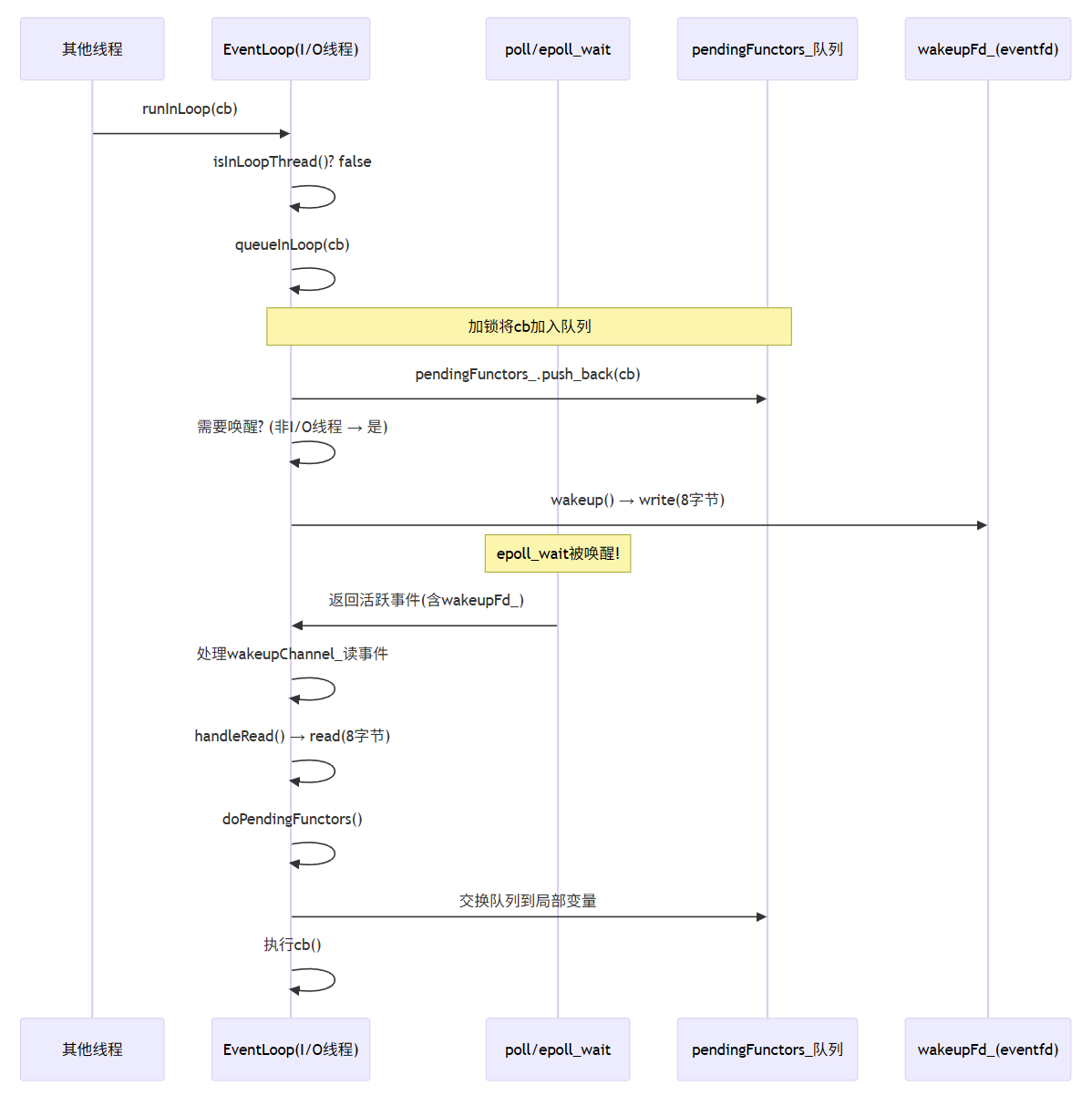
注意:其他线程与 EventLoop 线程操作的都是同一个 EventLoop!
**当其他线程调用 EventLoop::runInLoop(cb) 时,因 当前线程ID ≠ EventLoop.threadId_,自动转入 queueInLoop(cb):**先加锁将任务存入 pendingFunctors_ 队列,再判断"需唤醒"(跨线程调用 或 I/O 线程正执行任务中),随即调用 wakeup() 向 eventfd 写入 8 字节;此操作触发 epoll 事件,使阻塞在 poll() 的 EventLoop 线程立即返回,循环中先处理 wakeupChannel_ 的读事件(handleRead() 清空 eventfd),继而调用 doPendingFunctors():交换队列至局部变量(释放锁后无锁执行),逐个运行回调。全程仅入队时短暂加锁,任务执行完全串行化于 I/O 线程,既避免并发竞争,又确保新任务零延迟触发。
3.2 EventLoopThread 的生命周期管理
1. 创建阶段(构造函数)
cpp
EventLoopThread thread(callback, "SubReactor-1");- 内部状态 :
- loop_ = nullptr(EventLoop 尚未创建)
- exiting_ = false(未标记退出)
- thread_ 对象已构造但线程未启动(仅绑定 threadFunc)
2. 启动阶段(startLoop())
cpp
EventLoop* loop = thread.startLoop();| 主线程(调用者) | 新线程(worker) |
|---|---|
| 1. 调用 thread_.start() 启动新线程 | → |
| 2. 加锁 + cond_.wait() 阻塞等待 | 3. 执行 threadFunc() |
| 4. 栈上创建执行 threadFunc() | |
| 5. 执行初始化回调 callback_(&loop) | |
| 6. 加锁设置 loop_ = &loop | |
| 7. cond_.notify_one() 唤醒主线程 | |
| 8. 被唤醒,获取 loop_ 指针 | 9. 进入 loop.loop() 事件循环 |
| 10. 返回 loop 指针 | → 持续运行事件循环 |
- 生命周期绑定 :栈上创建 EventLoop(非堆分配),EventLoop 与线程栈帧同生共死,无需手动 delete
- 安全同步 :条件变量确保返回的指针必定有效(避免返回 nullptr)
3. 运行阶段(事件循环)
- 新线程持续执行 loop.loop()
- 所有 Channel 事件、跨线程任务均在此线程串行处理
- 外部通过返回的 loop 指针提交任务(如 loop->runInLoop(cb))
4. 退出阶段(析构函数)
cpp
// EventLoopThread 对象析构时
~EventLoopThread() {
  exiting_ = true;
  if (loop_ != nullptr) {
    loop_->quit();    // 1. 设置退出标志
    thread_.join();   // 2. 等待线程结束
  }
}退出流程:
- 主线程调用 loop_->quit() → 设置 quit_ = true
- 若在非 I/O 线程调用 → 自动 wakeup() 唤醒阻塞的 poll()
- 新线程中 loop.loop() 检测到 quit_ == true → 退出 while 循环
- threadFunc() 执行完毕:
- 加锁设置 loop_ = nullptr
- 栈上 EventLoop 对象自动析构(~EventLoop())
- thread_.join() 返回 → 析构完成
3.3 EventLoopThreadPool 负载均衡
cpp
/**
 * @brief 获取下一个事件循环对象(轮询方式)
 * @return 返回下一个事件循环指针
 */
EventLoop *EventLoopThreadPool::getNextLoop(){
    EventLoop *loop = baseLoop_;  // 默认返回主事件循环

    // 如果线程池中有事件循环可用,则轮询选择一个
    if(!loops_.empty()){
        loop = loops_[next_];
        ++next_;
        // 如果到达末尾,从头开始
        if(next_ >= loops_.size()) {
            next_ = 0;
        }
    }

    return loop;
}