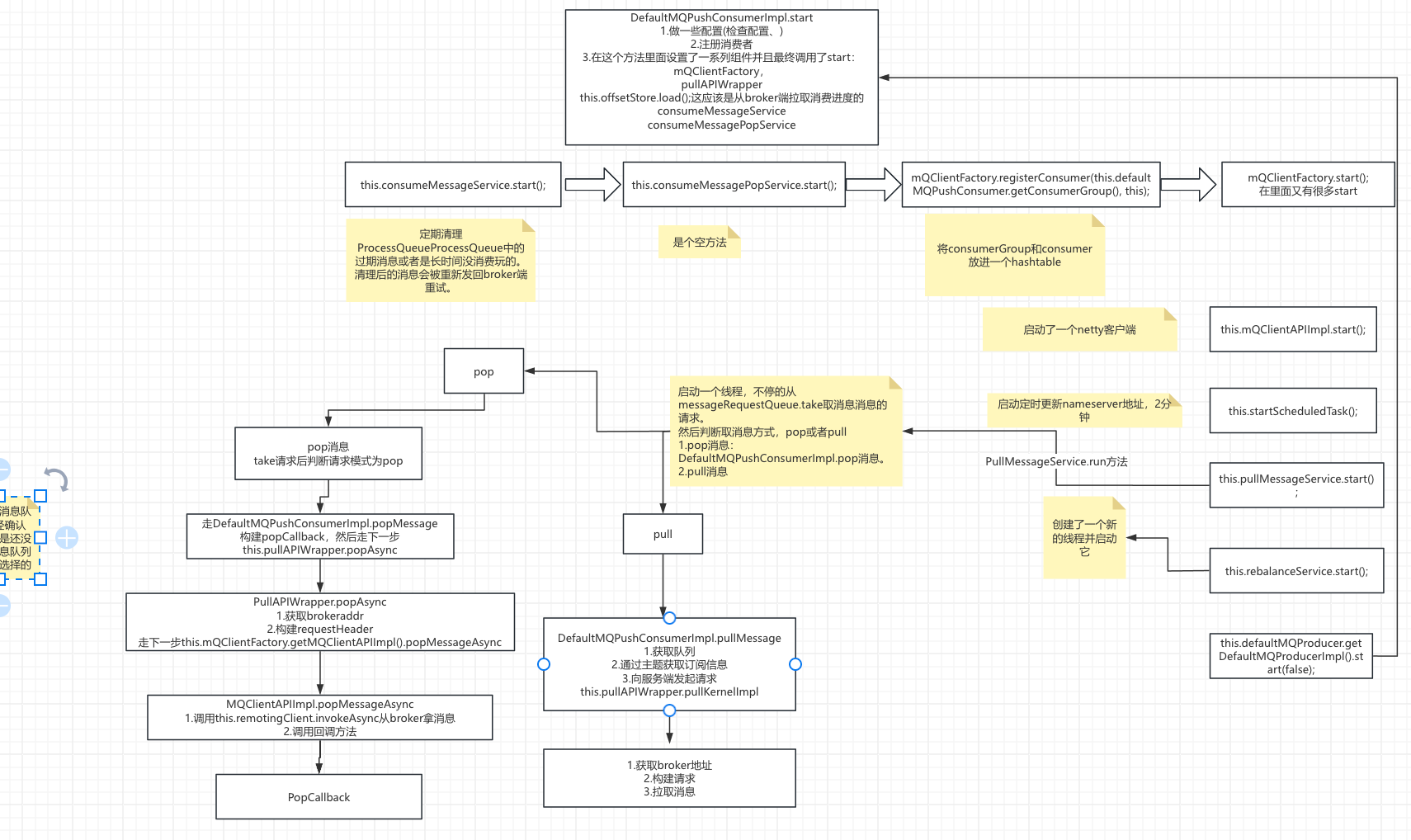
消费者代码(源码默认给的例子):
java
public class PushConsumer {
    public static final String TOPIC = "TopicTest";
    public static final String CONSUMER_GROUP = "CID_JODIE_1";
    public static final String NAMESRV_ADDR = "127.0.0.1:9876";
    public static void main(String[] args) throws InterruptedException, MQClientException {
        DefaultMQPushConsumer consumer = new DefaultMQPushConsumer(CONSUMER_GROUP);
        consumer.setNamesrvAddr(NAMESRV_ADDR);
        consumer.subscribe(TOPIC, "*");
        consumer.setConsumeFromWhere(ConsumeFromWhere.CONSUME_FROM_FIRST_OFFSET);
        consumer.setConsumeTimestamp("20181109221800");
        consumer.registerMessageListener(new MessageListenerConcurrently() {
            @Override
            public ConsumeConcurrentlyStatus consumeMessage(List<MessageExt> msgs, ConsumeConcurrentlyContext context) {
                System.out.printf("%s Receive New Messages: %s %n", Thread.currentThread().getName(), msgs);
                return ConsumeConcurrentlyStatus.CONSUME_SUCCESS;
            }
        });
        consumer.start();
        System.out.printf("Consumer Started.%n");
    }
}
直接进入DefaultMQPushConsumer.start()方法
java
 public void start() throws MQClientException {
        setConsumerGroup(NamespaceUtil.wrapNamespace(this.getNamespace(), this.consumerGroup));
        this.defaultMQPushConsumerImpl.start();
        //消费轨迹,
        if (enableTrace) {
            try {
                AsyncTraceDispatcher dispatcher = new AsyncTraceDispatcher(consumerGroup, TraceDispatcher.Type.CONSUME, traceTopic, rpcHook);
                dispatcher.setHostConsumer(this.defaultMQPushConsumerImpl);
                dispatcher.setNamespaceV2(namespaceV2);
                traceDispatcher = dispatcher;
                this.defaultMQPushConsumerImpl.registerConsumeMessageHook(new ConsumeMessageTraceHookImpl(traceDispatcher));
            } catch (Throwable e) {
                log.error("system mqtrace hook init failed ,maybe can't send msg trace data");
            }
        }
        if (null != traceDispatcher) {
            if (traceDispatcher instanceof AsyncTraceDispatcher) {
                ((AsyncTraceDispatcher) traceDispatcher).getTraceProducer().setUseTLS(isUseTLS());
            }
            try {
                traceDispatcher.start(this.getNamesrvAddr(), this.getAccessChannel());
            } catch (MQClientException e) {
                log.warn("trace dispatcher start failed ", e);
            }
        }
    }
可以看到这里主要设置了一个消费者组,然后调用了this.defaultMQPushConsumerImpl.start()。
进入这个实现类的start方法,可以说这里面才是真正的做了逻辑处理。在这里面有三个start,分别是:
1.this.consumeMessageService.start();2.this.consumeMessagePopService.start();3.mQClientFactory.start();这三个start分别做了什么事?对于第一个打断点进去可以看到是调用的
ConsumeMessageConcurrentlyService类的start方法,有这样一段代码
java
    public void start() {
        this.cleanExpireMsgExecutors.scheduleAtFixedRate(new Runnable() {

            @Override
            public void run() {
                try {
                    cleanExpireMsg();
                } catch (Throwable e) {
                    log.error("scheduleAtFixedRate cleanExpireMsg exception", e);
                }
            }

        }, this.defaultMQPushConsumer.getConsumeTimeout(), this.defaultMQPushConsumer.getConsumeTimeout(), TimeUnit.MINUTES);
    }
简单总结下来就是定时清理过期的消息,什么是过期的消息?带着这个问题继续往下看,代码太多就不贴上来了,总结下来就是在并发消费的情况下拉下来的消息超过一分钟没消费的话,就会将消息发送回broker端进行重试。
对于第二个this.consumeMessagePopService.start();目前断点进去看是一个空方法。
第三个mQClientFactory.start();就是比较重要的一个方法了。调用的是MQClientInstance的start方法。
java
 public void start() throws MQClientException {

        synchronized (this) {
            switch (this.serviceState) {
                case CREATE_JUST:
                    this.serviceState = ServiceState.START_FAILED;
                    // If not specified,looking address from name server
                    if (null == this.clientConfig.getNamesrvAddr()) {
                        this.mQClientAPIImpl.fetchNameServerAddr();
                    }
                    // Start request-response channel 启动一个netty客户端
                    this.mQClientAPIImpl.start();
                    // Start various schedule tasks 定时更新nameserver地址 2分钟更新一次
                    this.startScheduledTask();
                    // Start pull service  取消息 分为pull 跟pop两种
                    this.pullMessageService.start();
                    // Start rebalance service 创建一个新的线程并且启动它
                    this.rebalanceService.start();
                    // Start push service
                    this.defaultMQProducer.getDefaultMQProducerImpl().start(false);
                    log.info("the client factory [{}] start OK", this.clientId);
                    this.serviceState = ServiceState.RUNNING;
                    break;
                case START_FAILED:
                    throw new MQClientException("The Factory object[" + this.getClientId() + "] has been created before, and failed.", null);
                default:
                    break;
            }
}this.mQClientAPIImpl.start();启动netty客户端this.startScheduledTask();启动一个定时任务,两分钟更新一次nameserver地址this.pullMessageService.start();拉取消息,进入这个方法首先判断拉取消息的方式是pop还是pull核心代码来到这里:
java
public void run() {
        logger.info(this.getServiceName() + " service started");

        while (!this.isStopped()) {
            try {
                MessageRequest messageRequest = this.messageRequestQueue.take();
                if (messageRequest.getMessageRequestMode() == MessageRequestMode.POP) {
                    this.popMessage((PopRequest) messageRequest);
                } else {
                    this.pullMessage((PullRequest) messageRequest);
                }
            } catch (InterruptedException ignored) {
            } catch (Exception e) {
                logger.error("Pull Message Service Run Method exception", e);
            }
        }

        logger.info(this.getServiceName() + " service end");
    }
对于pop方式:
真正的实现地方在:DefaultMQPushConsumerImpl的popMessage方法:
这个方法的前面一些相关判断就不贴了。在这个方法里面创建了一个PopCallback的类,并且传入了PullAPIWrapper的popAsync方法。重点看看这个方法。
java
  PopCallback popCallback = new PopCallback() {
            @Override
            public void onSuccess(PopResult popResult) {
                if (popResult == null) {
                    log.error("pop callback popResult is null");
                    DefaultMQPushConsumerImpl.this.executePopPullRequestImmediately(popRequest);
                    return;
                }

                processPopResult(popResult, subscriptionData);

                switch (popResult.getPopStatus()) {
                    case FOUND:
                        long pullRT = System.currentTimeMillis() - beginTimestamp;
                        DefaultMQPushConsumerImpl.this.getConsumerStatsManager().incPullRT(popRequest.getConsumerGroup(),
                            popRequest.getMessageQueue().getTopic(), pullRT);
                        if (popResult.getMsgFoundList() == null || popResult.getMsgFoundList().isEmpty()) {
                            DefaultMQPushConsumerImpl.this.executePopPullRequestImmediately(popRequest);
                        } else {
                            DefaultMQPushConsumerImpl.this.getConsumerStatsManager().incPullTPS(popRequest.getConsumerGroup(),
                                popRequest.getMessageQueue().getTopic(), popResult.getMsgFoundList().size());
                            popRequest.getPopProcessQueue().incFoundMsg(popResult.getMsgFoundList().size());

                            DefaultMQPushConsumerImpl.this.consumeMessagePopService.submitPopConsumeRequest(
                                popResult.getMsgFoundList(),
                                processQueue,
                                popRequest.getMessageQueue());

                            if (DefaultMQPushConsumerImpl.this.defaultMQPushConsumer.getPullInterval() > 0) {
                                DefaultMQPushConsumerImpl.this.executePopPullRequestLater(popRequest,
                                    DefaultMQPushConsumerImpl.this.defaultMQPushConsumer.getPullInterval());
                            } else {
                                DefaultMQPushConsumerImpl.this.executePopPullRequestImmediately(popRequest);
                            }
                        }
                        break;
                    case NO_NEW_MSG:
                    case POLLING_NOT_FOUND:
                        DefaultMQPushConsumerImpl.this.executePopPullRequestImmediately(popRequest);
                        break;
                    case POLLING_FULL:
                        DefaultMQPushConsumerImpl.this.executePopPullRequestLater(popRequest, pullTimeDelayMillsWhenException);
                        break;
                    default:
                        DefaultMQPushConsumerImpl.this.executePopPullRequestLater(popRequest, pullTimeDelayMillsWhenException);
                        break;
                }

            }

            @Override
            public void onException(Throwable e) {
                if (!popRequest.getMessageQueue().getTopic().startsWith(MixAll.RETRY_GROUP_TOPIC_PREFIX)) {
                    log.warn("execute the pull request exception: {}", e);
                }

                if (e instanceof MQBrokerException && ((MQBrokerException) e).getResponseCode() == ResponseCode.FLOW_CONTROL) {
                    DefaultMQPushConsumerImpl.this.executePopPullRequestLater(popRequest, PULL_TIME_DELAY_MILLS_WHEN_BROKER_FLOW_CONTROL);
                } else {
                    DefaultMQPushConsumerImpl.this.executePopPullRequestLater(popRequest, pullTimeDelayMillsWhenException);
                }
            }
        };


        try {

            long invisibleTime = this.defaultMQPushConsumer.getPopInvisibleTime();
            if (invisibleTime < MIN_POP_INVISIBLE_TIME || invisibleTime > MAX_POP_INVISIBLE_TIME) {
                invisibleTime = 60000;
            }
            this.pullAPIWrapper.popAsync(popRequest.getMessageQueue(), invisibleTime, this.defaultMQPushConsumer.getPopBatchNums(),
                popRequest.getConsumerGroup(), BROKER_SUSPEND_MAX_TIME_MILLIS, popCallback, true, popRequest.getInitMode(),
                false, subscriptionData.getExpressionType(), subscriptionData.getSubString());
        } catch (Exception e) {
            log.error("popAsync exception", e);
            this.executePopPullRequestLater(popRequest, pullTimeDelayMillsWhenException);
        }
java
 public void popAsync(MessageQueue mq, long invisibleTime, int maxNums, String consumerGroup,
                         long timeout, PopCallback popCallback, boolean poll, int initMode, boolean order, String expressionType, String expression)
        throws MQClientException, RemotingException, InterruptedException {
        FindBrokerResult findBrokerResult = this.mQClientFactory.findBrokerAddressInSubscribe(mq.getBrokerName(), MixAll.MASTER_ID, true);
        if (null == findBrokerResult) {
            this.mQClientFactory.updateTopicRouteInfoFromNameServer(mq.getTopic());
            findBrokerResult = this.mQClientFactory.findBrokerAddressInSubscribe(mq.getBrokerName(), MixAll.MASTER_ID, true);
        }
        if (findBrokerResult != null) {
            PopMessageRequestHeader requestHeader = new PopMessageRequestHeader();
            requestHeader.setConsumerGroup(consumerGroup);
            requestHeader.setTopic(mq.getTopic());
            requestHeader.setQueueId(mq.getQueueId());
            requestHeader.setMaxMsgNums(maxNums);
            requestHeader.setInvisibleTime(invisibleTime);
            requestHeader.setInitMode(initMode);
            requestHeader.setExpType(expressionType);
            requestHeader.setExp(expression);
            requestHeader.setOrder(order);
            requestHeader.setBrokerName(mq.getBrokerName());
            //give 1000 ms for server response
            if (poll) {
                requestHeader.setPollTime(timeout);
                requestHeader.setBornTime(System.currentTimeMillis());
                // timeout + 10s, fix the too earlier timeout of client when long polling.
                timeout += 10 * 1000;
            }
            String brokerAddr = findBrokerResult.getBrokerAddr();
            this.mQClientFactory.getMQClientAPIImpl().popMessageAsync(mq.getBrokerName(), brokerAddr, requestHeader, timeout, popCallback);
            return;
        }
        throw new MQClientException("The broker[" + mq.getBrokerName() + "] not exist", null);
    }
可以看到这里才是真正拉取消息的地方首先构建请求类,然后调用MQClientAPIImpl的popMessageAsync。这里注意吧PopCallback也传入进来了,在这里就通过remotingClient.invokeAsync去调用远端获取消息了,然后就调用回调方法进行处理。
这里提出一个问题,它这里是拉的单条消息还是一批消息?我在面试中遇到过这个问题。可以思考一下,我最后会进行分析。
接下来看第二种pullMessage。
可以看到调用的方法是:DefaultMQPushConsumerImpl的pullMessage方法
java
  final MessageQueue messageQueue = pullRequest.getMessageQueue();
        final SubscriptionData subscriptionData = this.rebalanceImpl.getSubscriptionInner().get(messageQueue.getTopic());
        if (null == subscriptionData) {
            this.executePullRequestLater(pullRequest, pullTimeDelayMillsWhenException);
            log.warn("find the consumer's subscription failed, {}", pullRequest);
            return;
        }

        final long beginTimestamp = System.currentTimeMillis();

        PullCallback pullCallback = new PullCallback() {
        };

        boolean commitOffsetEnable = false;
        long commitOffsetValue = 0L;
        if (MessageModel.CLUSTERING == this.defaultMQPushConsumer.getMessageModel()) {
            commitOffsetValue = this.offsetStore.readOffset(pullRequest.getMessageQueue(), ReadOffsetType.READ_FROM_MEMORY);
            if (commitOffsetValue > 0) {
                commitOffsetEnable = true;
            }
        }

        String subExpression = null;
        boolean classFilter = false;
        SubscriptionData sd = this.rebalanceImpl.getSubscriptionInner().get(pullRequest.getMessageQueue().getTopic());
        if (sd != null) {
            if (this.defaultMQPushConsumer.isPostSubscriptionWhenPull() && !sd.isClassFilterMode()) {
                subExpression = sd.getSubString();
            }

            classFilter = sd.isClassFilterMode();
        }

        int sysFlag = PullSysFlag.buildSysFlag(
            commitOffsetEnable, // commitOffset
            true, // suspend
            subExpression != null, // subscription
            classFilter // class filter
        );
        try {
            //与服务端交互
            this.pullAPIWrapper.pullKernelImpl(
                pullRequest.getMessageQueue(),
                subExpression,
                subscriptionData.getExpressionType(),
                subscriptionData.getSubVersion(),
                pullRequest.getNextOffset(),
                this.defaultMQPushConsumer.getPullBatchSize(),
                this.defaultMQPushConsumer.getPullBatchSizeInBytes(),
                sysFlag,
                commitOffsetValue,
                BROKER_SUSPEND_MAX_TIME_MILLIS,
                CONSUMER_TIMEOUT_MILLIS_WHEN_SUSPEND,
                CommunicationMode.ASYNC,
                pullCallback
            );
        } catch (Exception e) {
            log.error("pullKernelImpl exception", e);
            this.executePullRequestLater(pullRequest, pullTimeDelayMillsWhenException);
        }
代码确实是有点多,而且我还省略了很大一部分判断逻辑和PullCallback的逻辑,先看看主流程。
首先从请求中获取队列信息,然后再从队列中根据topic获取订阅信息,然后调用PullAPIWrapper的pullKernelImpl方法。
java
public PullResult pullKernelImpl(
        final MessageQueue mq,
        final String subExpression,
        final String expressionType,
        final long subVersion,
        final long offset,
        final int maxNums,
        final int maxSizeInBytes,
        final int sysFlag,
        final long commitOffset,
        final long brokerSuspendMaxTimeMillis,
        final long timeoutMillis,
        final CommunicationMode communicationMode,
        final PullCallback pullCallback
    ) throws MQClientException, RemotingException, MQBrokerException, InterruptedException {
        //获取broker地址
        FindBrokerResult findBrokerResult =
            this.mQClientFactory.findBrokerAddressInSubscribe(this.mQClientFactory.getBrokerNameFromMessageQueue(mq),
                this.recalculatePullFromWhichNode(mq), false);
        if (null == findBrokerResult) {
            this.mQClientFactory.updateTopicRouteInfoFromNameServer(mq.getTopic());
            findBrokerResult =
                this.mQClientFactory.findBrokerAddressInSubscribe(this.mQClientFactory.getBrokerNameFromMessageQueue(mq),
                    this.recalculatePullFromWhichNode(mq), false);
        }


        if (findBrokerResult != null) {
            {
                // check version
                if (!ExpressionType.isTagType(expressionType)
                    && findBrokerResult.getBrokerVersion() < MQVersion.Version.V4_1_0_SNAPSHOT.ordinal()) {
                    throw new MQClientException("The broker[" + mq.getBrokerName() + ", "
                        + findBrokerResult.getBrokerVersion() + "] does not upgrade to support for filter message by " + expressionType, null);
                }
            }
            int sysFlagInner = sysFlag;

            if (findBrokerResult.isSlave()) {
                sysFlagInner = PullSysFlag.clearCommitOffsetFlag(sysFlagInner);
            }

            PullMessageRequestHeader requestHeader = new PullMessageRequestHeader();
            requestHeader.setConsumerGroup(this.consumerGroup);
            requestHeader.setTopic(mq.getTopic());
            requestHeader.setQueueId(mq.getQueueId());
            requestHeader.setQueueOffset(offset);
            requestHeader.setMaxMsgNums(maxNums);
            requestHeader.setSysFlag(sysFlagInner);
            requestHeader.setCommitOffset(commitOffset);
            requestHeader.setSuspendTimeoutMillis(brokerSuspendMaxTimeMillis);
            requestHeader.setSubscription(subExpression);
            requestHeader.setSubVersion(subVersion);
            requestHeader.setMaxMsgBytes(maxSizeInBytes);
            requestHeader.setExpressionType(expressionType);
            requestHeader.setBrokerName(mq.getBrokerName());

            String brokerAddr = findBrokerResult.getBrokerAddr();
            if (PullSysFlag.hasClassFilterFlag(sysFlagInner)) {
                brokerAddr = computePullFromWhichFilterServer(mq.getTopic(), brokerAddr);
            }

            PullResult pullResult = this.mQClientFactory.getMQClientAPIImpl().pullMessage(
                brokerAddr,
                requestHeader,
                timeoutMillis,
                communicationMode,
                pullCallback);

            return pullResult;
        }

        throw new MQClientException("The broker[" + mq.getBrokerName() + "] not exist", null);
    }
首先获取broker地址,然后构建请求,然后再执行
PullResult pullResult = this.mQClientFactory.getMQClientAPIImpl().pullMessage( brokerAddr, requestHeader, timeoutMillis, communicationMode, pullCallback);
这段代码是不是就很熟悉了,没错就是再上面的pop方式中是一样的。那么对于这两种方式有什么区别呢?为什么会有这两种方式?
本质上这两种方式都是客户端主动拉取消息,对于pop方式这是新版本中才有的模式,这种模式主要解决了以前一个消息队列被其某个consumer占用了导致消息堆积,现在pop模式会把消息分给其他消费者消费。
最后来看一下MQClientInstance 的start方法的this.rebalanceService.start();干了什么事情。
它干的事情就是遍历当前客户端的所有消费者,然后调用每个消费者的doRebalance.
java
 public boolean doRebalance(final boolean isOrder) {
        boolean balanced = true;
        Map<String, SubscriptionData> subTable = this.getSubscriptionInner();
        if (subTable != null) {
            for (final Map.Entry<String, SubscriptionData> entry : subTable.entrySet()) {
                final String topic = entry.getKey();
                try {
                    if (!clientRebalance(topic) && tryQueryAssignment(topic)) {
                        boolean result = this.getRebalanceResultFromBroker(topic, isOrder);
                        if (!result) {
                            balanced = false;
                        }
                    } else {
                        boolean result = this.rebalanceByTopic(topic, isOrder);
                        if (!result) {
                            balanced = false;
                        }
                    }
                } catch (Throwable e) {
                    if (!topic.startsWith(MixAll.RETRY_GROUP_TOPIC_PREFIX)) {
                        log.warn("rebalance Exception", e);
                        balanced = false;
                    }
                }
            }
        }

        this.truncateMessageQueueNotMyTopic();

        return balanced;
    }
然后去rebalanceByTopic方法,我把BROADCASTING的代码省略了,可以看到根据分配策略进行再平衡。
java
private boolean rebalanceByTopic(final String topic, final boolean isOrder) {
        boolean balanced = true;
        switch (messageModel) {
            case BROADCASTING: {
               break;
            case CLUSTERING: {
                Set<MessageQueue> mqSet = this.topicSubscribeInfoTable.get(topic);
                List<String> cidAll = this.mQClientFactory.findConsumerIdList(topic, consumerGroup);
                if (null == mqSet) {
                    if (!topic.startsWith(MixAll.RETRY_GROUP_TOPIC_PREFIX)) {
                        this.messageQueueChanged(topic, Collections.<MessageQueue>emptySet(), Collections.<MessageQueue>emptySet());
                        log.warn("doRebalance, {}, but the topic[{}] not exist.", consumerGroup, topic);
                    }
                }

                if (null == cidAll) {
                    log.warn("doRebalance, {} {}, get consumer id list failed", consumerGroup, topic);
                }

                if (mqSet != null && cidAll != null) {
                    List<MessageQueue> mqAll = new ArrayList<>();
                    mqAll.addAll(mqSet);

                    Collections.sort(mqAll);
                    Collections.sort(cidAll);

                    AllocateMessageQueueStrategy strategy = this.allocateMessageQueueStrategy;

                    List<MessageQueue> allocateResult = null;
                    try {
                        allocateResult = strategy.allocate(
                            this.consumerGroup,
                            this.mQClientFactory.getClientId(),
                            mqAll,
                            cidAll);
                    } catch (Throwable e) {
                        log.error("allocate message queue exception. strategy name: {}, ex: {}", strategy.getName(), e);
                        return false;
                    }

                    Set<MessageQueue> allocateResultSet = new HashSet<>();
                    if (allocateResult != null) {
                        allocateResultSet.addAll(allocateResult);
                    }

                    boolean changed = this.updateProcessQueueTableInRebalance(topic, allocateResultSet, isOrder);
                    if (changed) {
                        log.info(
                            "client rebalanced result changed. allocateMessageQueueStrategyName={}, group={}, topic={}, clientId={}, mqAllSize={}, cidAllSize={}, rebalanceResultSize={}, rebalanceResultSet={}",
                            strategy.getName(), consumerGroup, topic, this.mQClientFactory.getClientId(), mqSet.size(), cidAll.size(),
                            allocateResultSet.size(), allocateResultSet);
                        this.messageQueueChanged(topic, mqSet, allocateResultSet);
                    }

                    balanced = allocateResultSet.equals(getWorkingMessageQueue(topic));
                }
                break;
            }
            default:
                break;
        }

        return balanced;
    }
说一下前面提出的问题,消息的拉取不是单条单条的拉取的,而是一次拉取一批消息供消费者消费,会有一个定时任务,定期处理那些没有被消费的消息,重发回broker端重试。
整个流程总结: