目录
一,介绍单链表
单链表:单链表是一种在物理结构上非连续,在逻辑结构上连续的一种存储结构,也是一种线性表。
单链表的结构:
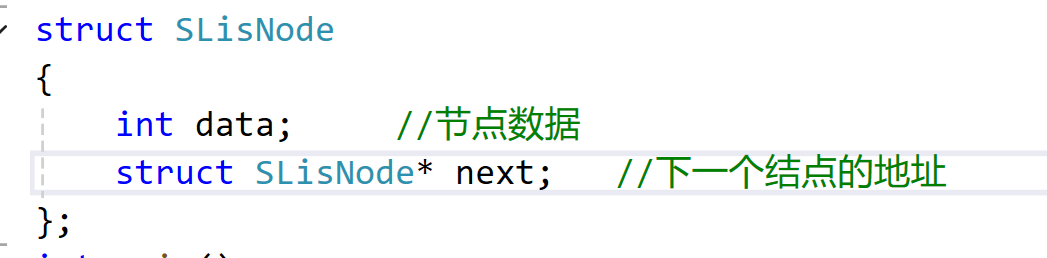
单链表由两部分构成:数据域和指针域。
数据域用来存放数据元素
指针域用来存放下一个节点的地址

二,顺序表和单链表的比较
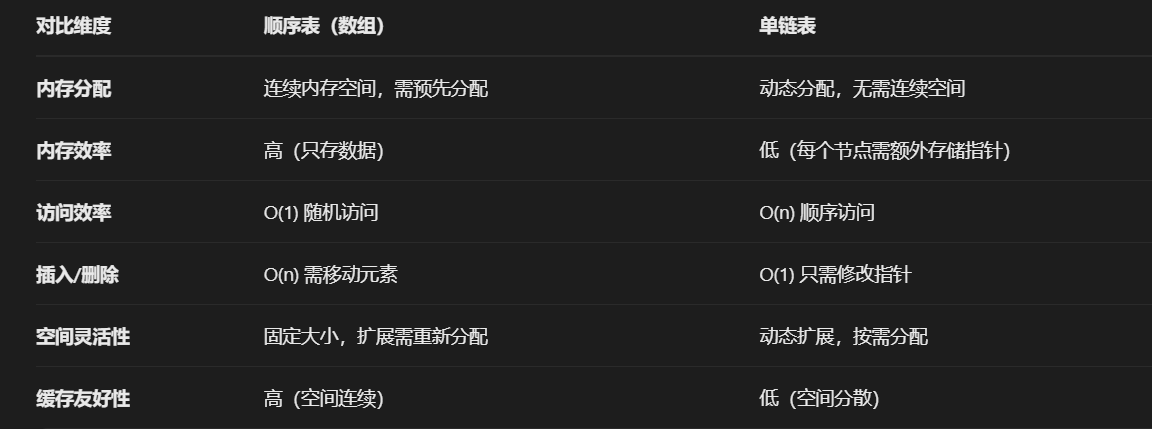
选择建议:
使用顺序表:
1,需要频繁访问数据
2,对内存效率要求高
3,开辟的内存数量固定或者可预估
4,不需要频繁进行数据的插入和删除
使用单链表:
1,需要频繁进行数据的插入和删除
2,数据量变化大,不可预估
3,不需要随机访问
三,单链表的实现
gitee代码链接:https://gitee.com/codelsj-w/test.3.15.c.git
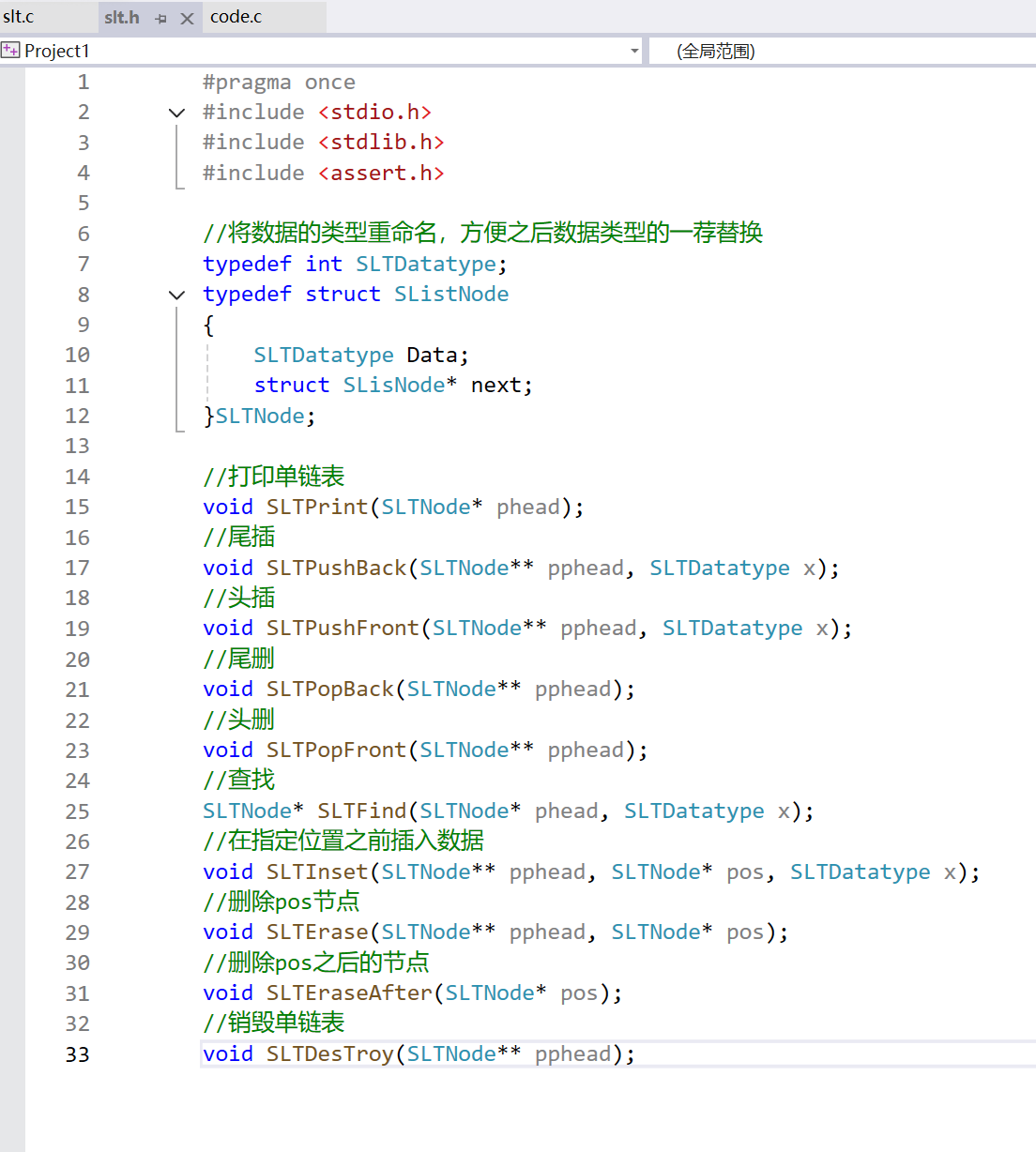
头文件:slt.h
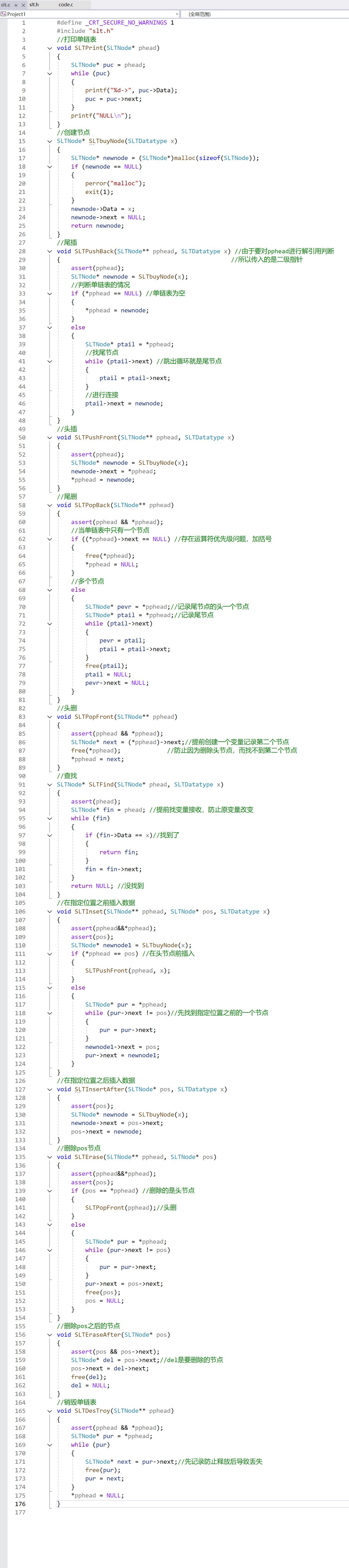
源文件:slt.c
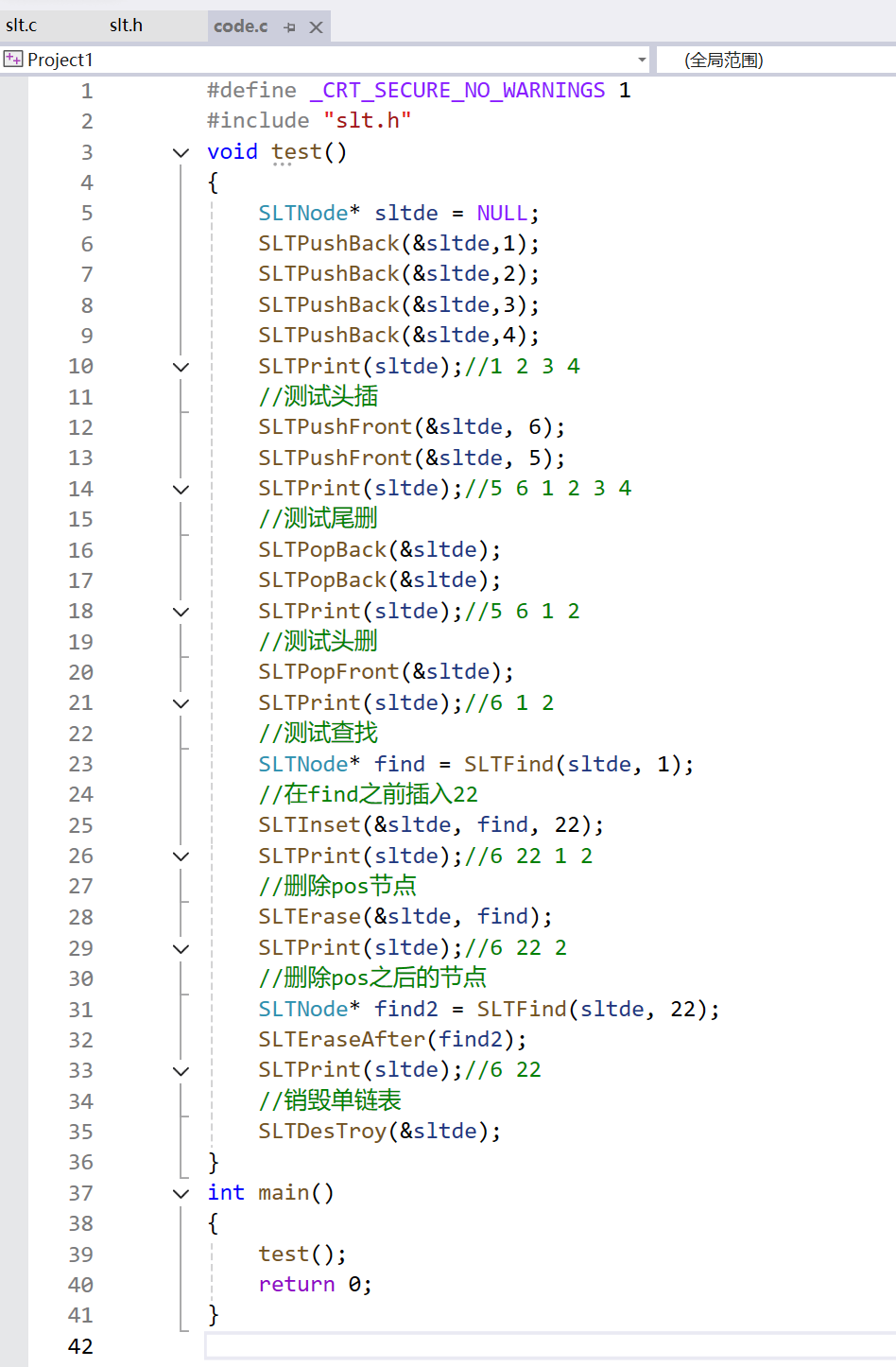
功能测试源文件:code.c
四,单链表例题实例
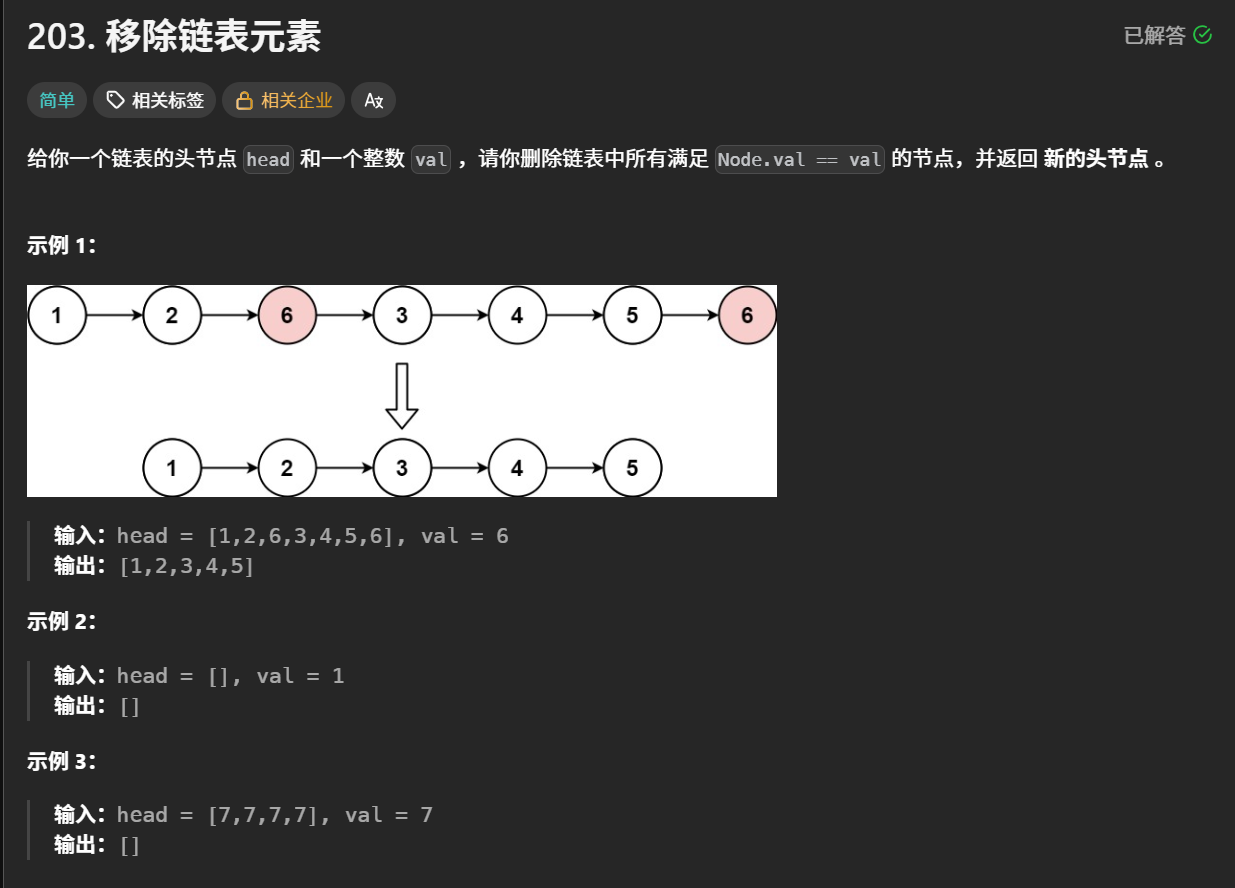
1,力扣--203,移除链表元素
题目:
解法思路:
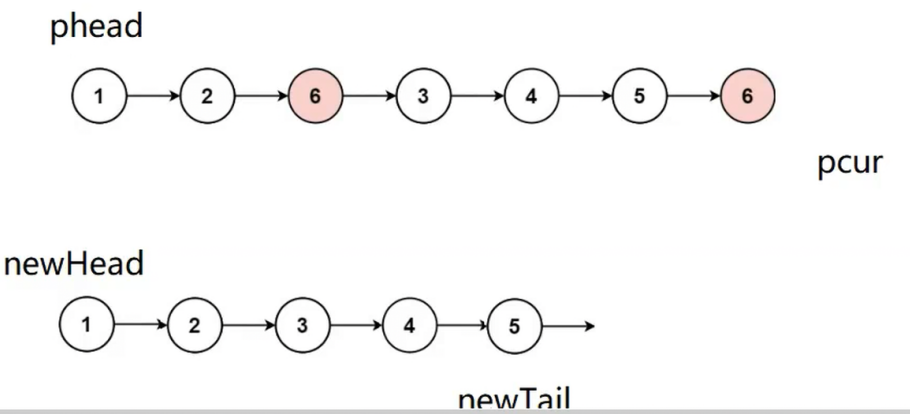
创建一个新的单链表将原链表中不是val的数据尾插到新的单链表中
代码实现:
cpp
/**
 * Definition for singly-linked list.
 * struct ListNode {
 *     int val;
 *     struct ListNode *next;
 * };
 */
 typedef struct ListNode ListNode;
struct ListNode* removeElements(struct ListNode* head, int val)
{
    //创建一个新的单链表
    ListNode *newhead,*newtail;
    newhead = newtail = NULL;
    ListNode* pcur = head;
    //遍历原链表
    while(pcur)
    {
        if(pcur->val != val)  //不是要删除的节点,就尾插
        {
            //如果是空链表
            if(newhead==NULL)
            {
                newhead = newtail = pcur;
            }
            //如果不是空链表
            else
            {
                newtail->next = pcur;
                newtail = pcur;
            }
        }
        pcur = pcur->next;
    }
    if(newhead)  //初始单链表可能为空
    {
        newtail->next = NULL; //让尾节点的下一个节点为空
    }
    return newhead;
}
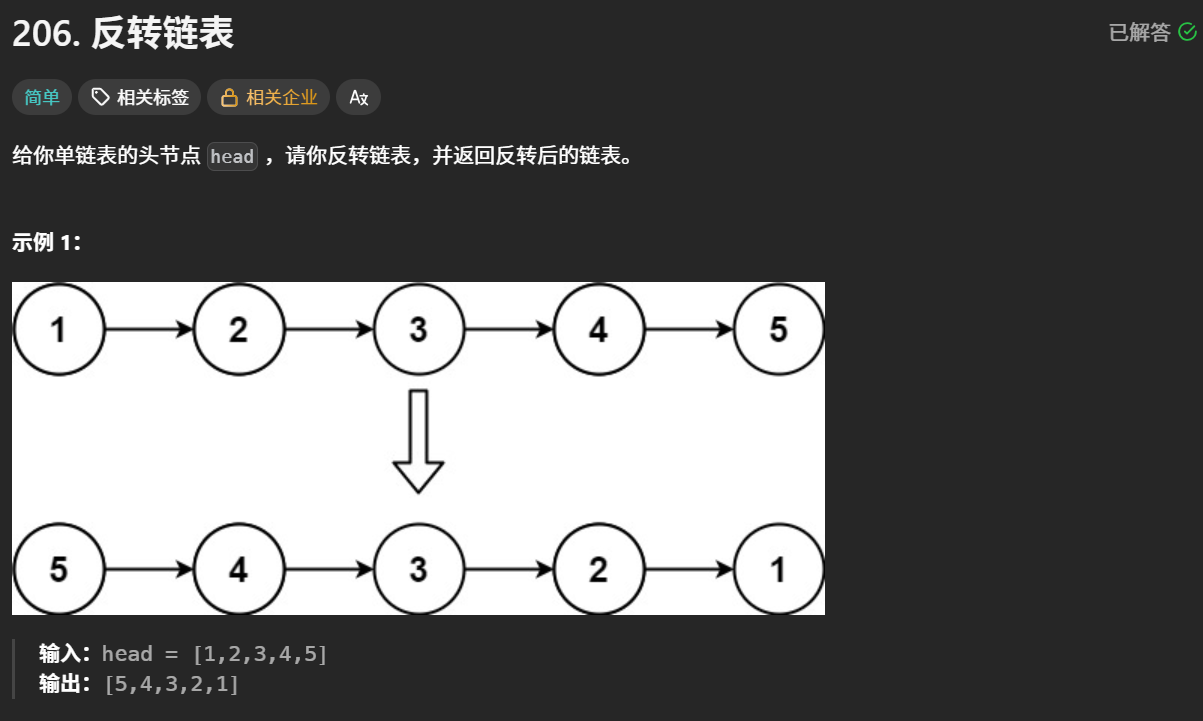
2,力扣--206.反转链表
题目:
解法思路:
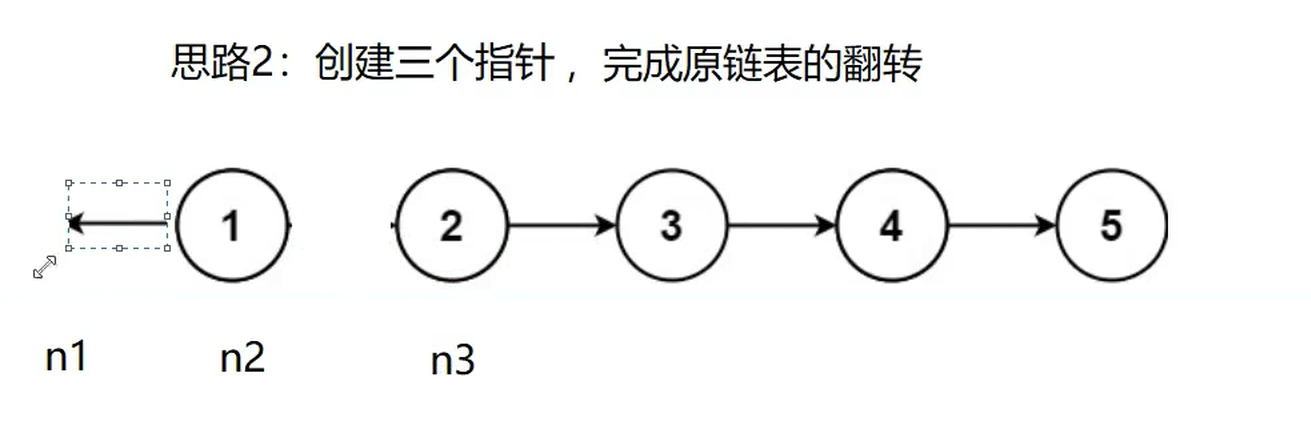
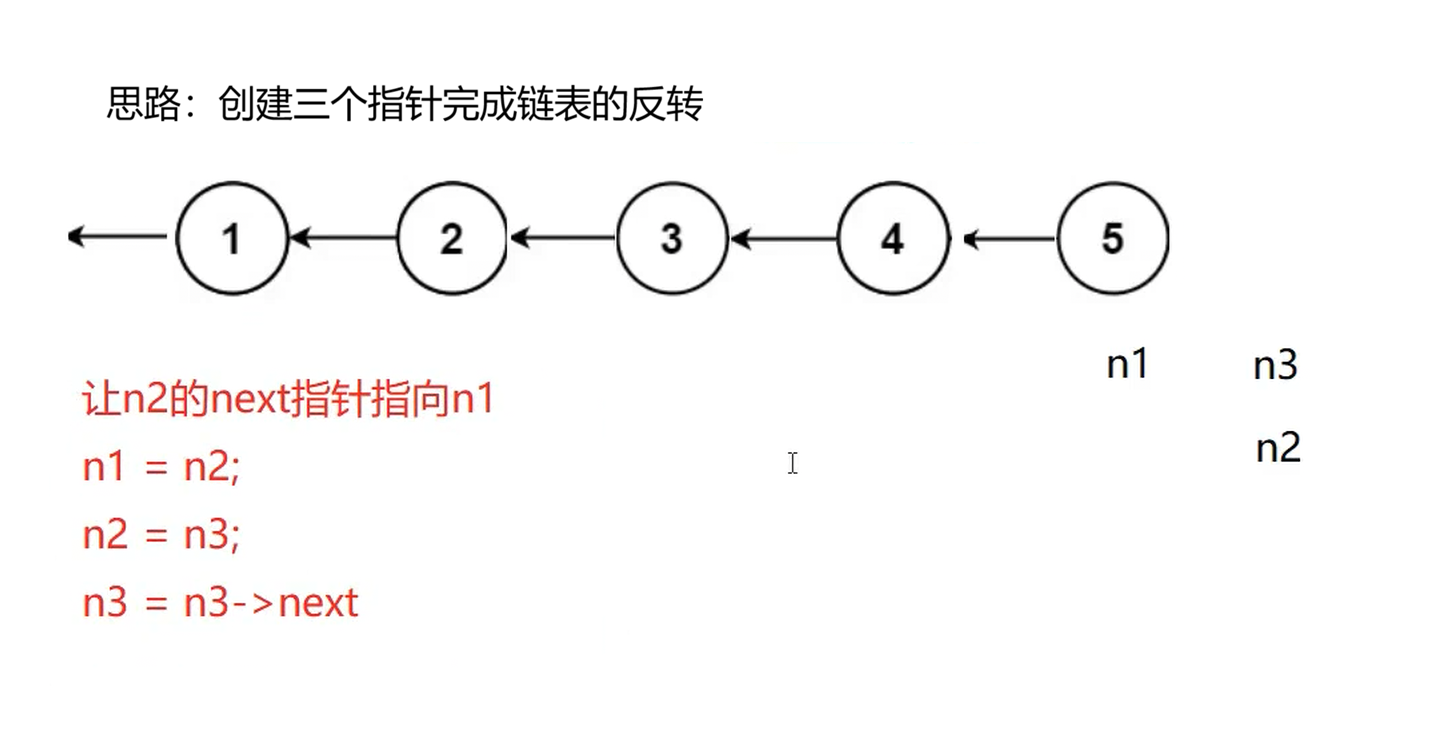
创建三个节点n1,n2,n3,n1和n2负责反转指针,n3负责记录位置,防止丢失
代码实现:
cpp
/**
 * Definition for singly-linked list.
 * struct ListNode {
 *     int val;
 *     struct ListNode *next;
 * };
 */
 typedef struct ListNode ListNode;
struct ListNode* reverseList(struct ListNode* head)
{
    //判空
    if(head == NULL)
    {
        return head;
    }
    //创建三个指针,n1,n2用来反转链表,n3用来记录位置,防止丢失
    ListNode* n1 = NULL;
    ListNode* n2 = head;
    ListNode* n3 = head->next;
    while(n2)
    {
        n2->next = n1;
        n1 = n2;
        n2 = n3;
        if(n3)    //最后一次n3已经为空不能访问下一个节点
        {
            n3 = n3->next;
        }
    }
    return n1;
}
3,力扣--876,链表的中间节点
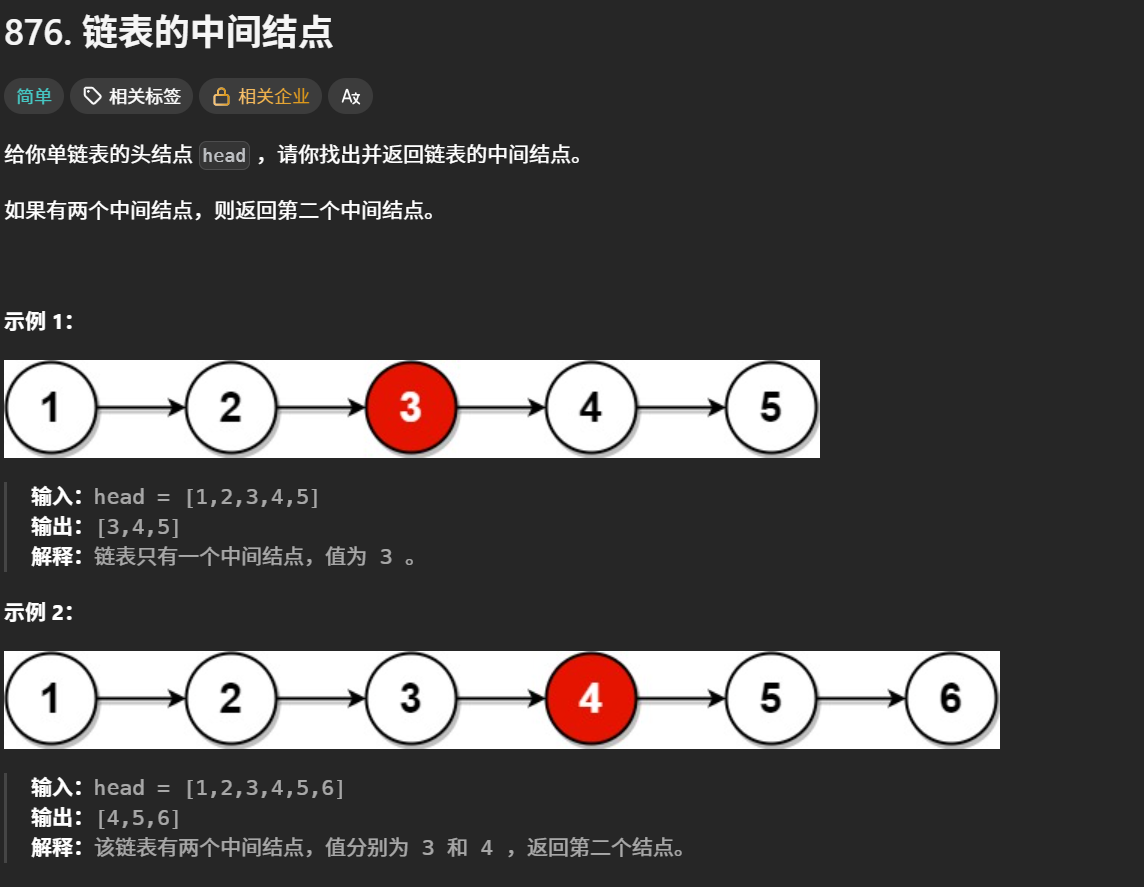
题目:
解法思路:
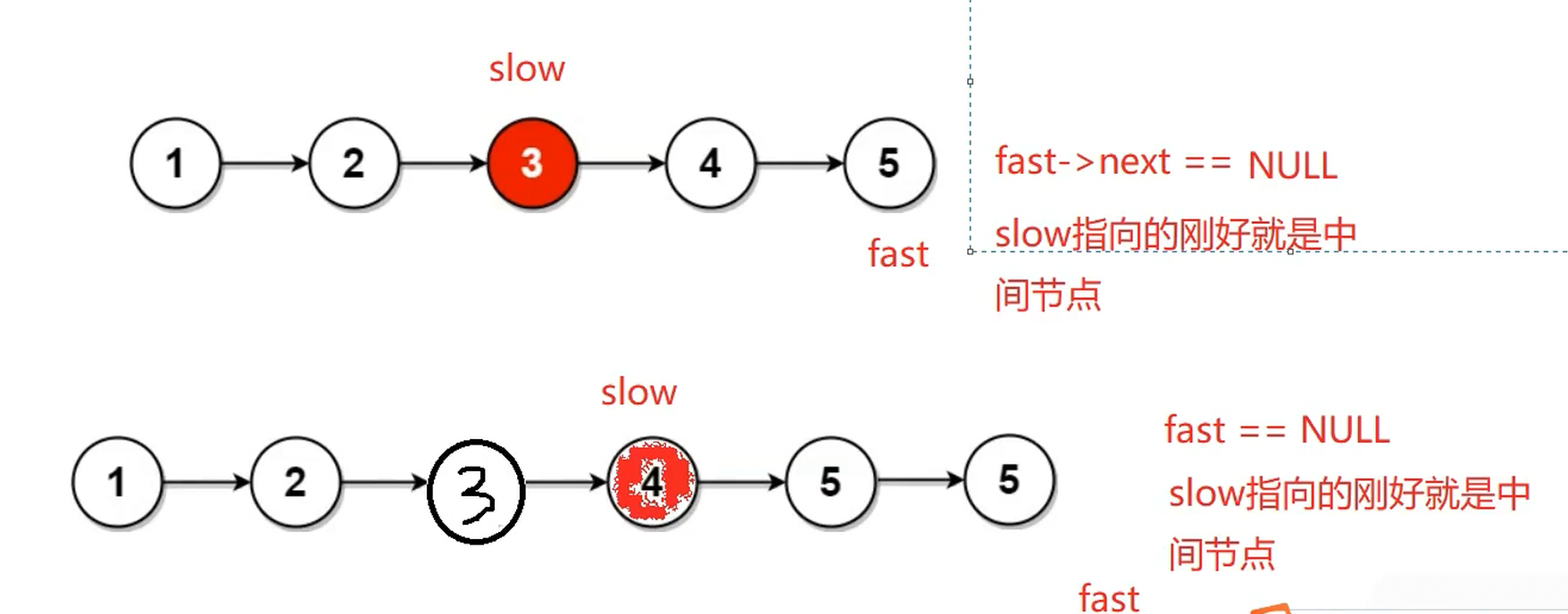
使用快慢指针,快指针每次走两步,慢指针每次走一步,这样当快指针走的步数一定是慢指针的两倍,当快指针走到链表的结尾时,慢指针正好走到链表的中间节点。
共有两种情况:链表的节点的数目为奇数或者偶数
代码实现:
cpp
/**
 * Definition for singly-linked list.
 * struct ListNode {
 *     int val;
 *     struct ListNode *next;
 * };
 */
 typedef struct ListNode ListNode;
struct ListNode* middleNode(struct ListNode* head)
{
    //创建快慢指针
    ListNode* slow = head;
    ListNode* fast = head;
    while(fast && fast->next)
    {
        fast = fast->next->next; //快指针每次走两步
        slow = slow->next;   //慢指针每次走一步
    }
    return slow;  //最后慢指针指向的就是链表的中间节点
}
补充:在while(fast && fast->next) 不可交换顺序为while(fast->next && fast)
原因:当链表中节点的数目为偶数时,fast最后为NULL,此时不能再对fast进行下一个节点的查找,会直接报错。
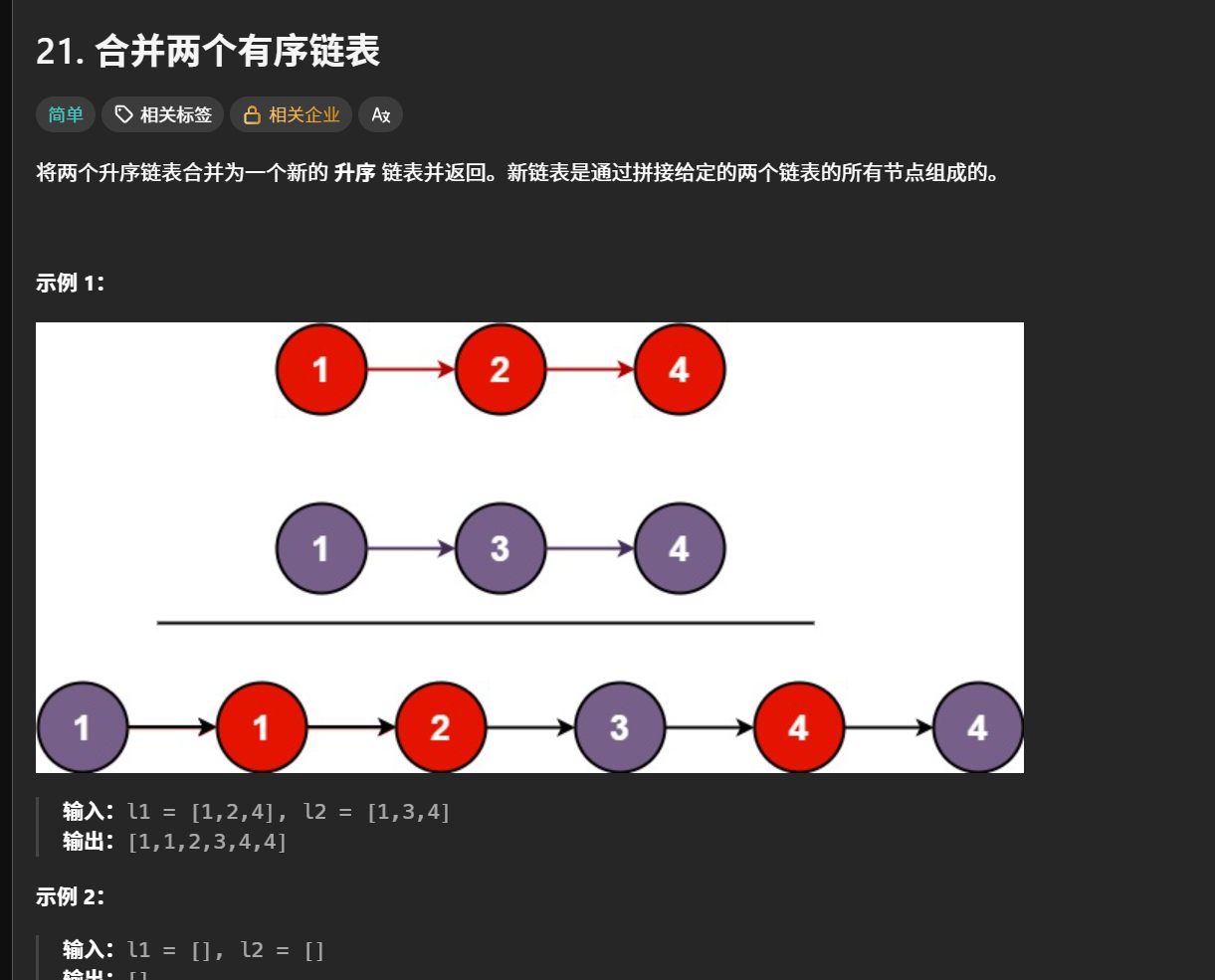
4,力扣--21,合并两个有序链表
题目:
解法思路:
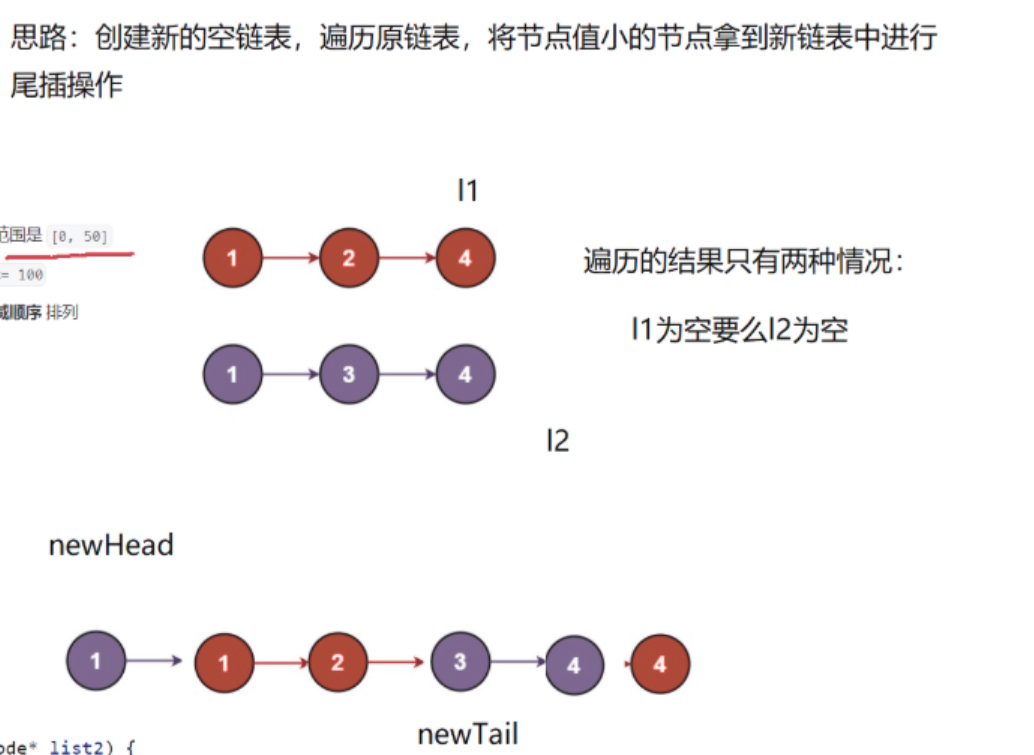
创建两个指针分别指向两个单链表的头节点,用于遍历,将节点的值进行比较,将两者的较小值尾插到新建的单链表当中。
代码实现:
cpp
/**
 * Definition for singly-linked list.
 * struct ListNode {
 *     int val;
 *     struct ListNode *next;
 * };
 */
 typedef struct ListNode ListNode;
struct ListNode* mergeTwoLists(struct ListNode* list1, struct ListNode* list2)
{
    //判空
    if(list1 == NULL)
    {
        return list2;
    }
    if(list2 == NULL)
    {
        return list1;
    }
    ListNode* l1 = list1;
    ListNode* l2 = list2;
    //创建一个新的单链表
    ListNode *newhead, *newtail;
    //newhead = newtail = NULL;
    //使得头节点为一个哨兵位
    newhead = newtail = (ListNode*)malloc(sizeof(ListNode));
    //尾插入元素
    while(l1 && l2)
    {
        if(l1->val < l2->val)
        {
            newtail->next = l1;
            newtail = newtail->next;
            l1 = l1->next;
        }
        else
        {
            newtail->next = l2;
            newtail = newtail->next;
            l2 = l2->next;
        }
    }
    //跳出循环时,l1或l2中一定还有元素
    if(l1)
    {
        newtail->next = l1;
    }
    if(l2)
    {
        newtail->next = l2;
    }
    //动态内存的释放
    ListNode* ret = newhead->next;//提前记录,防止释放后丢失
    free(newhead);
    newhead = NULL;
    return ret;
}
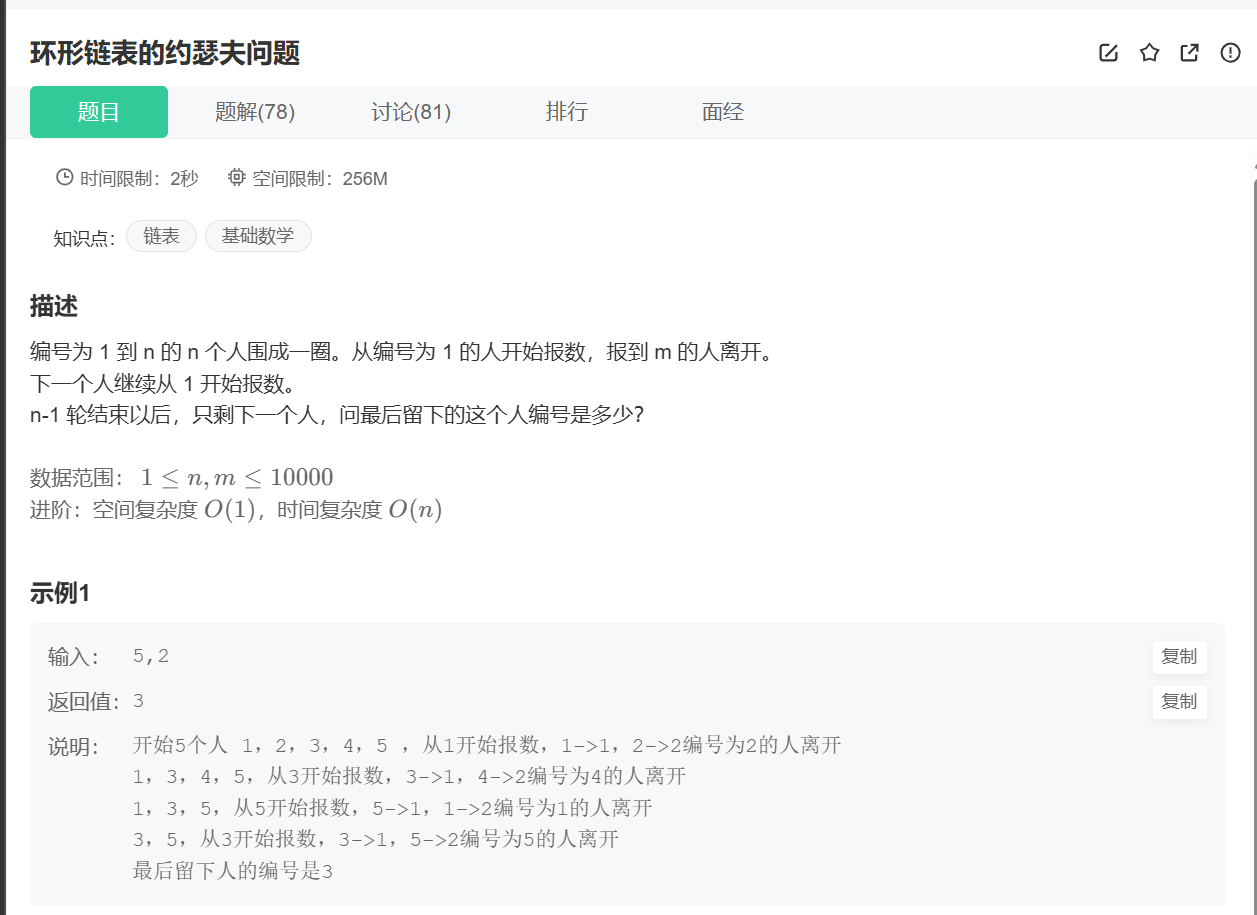
5,环形链表的约瑟夫问题
题目:
解法思路:
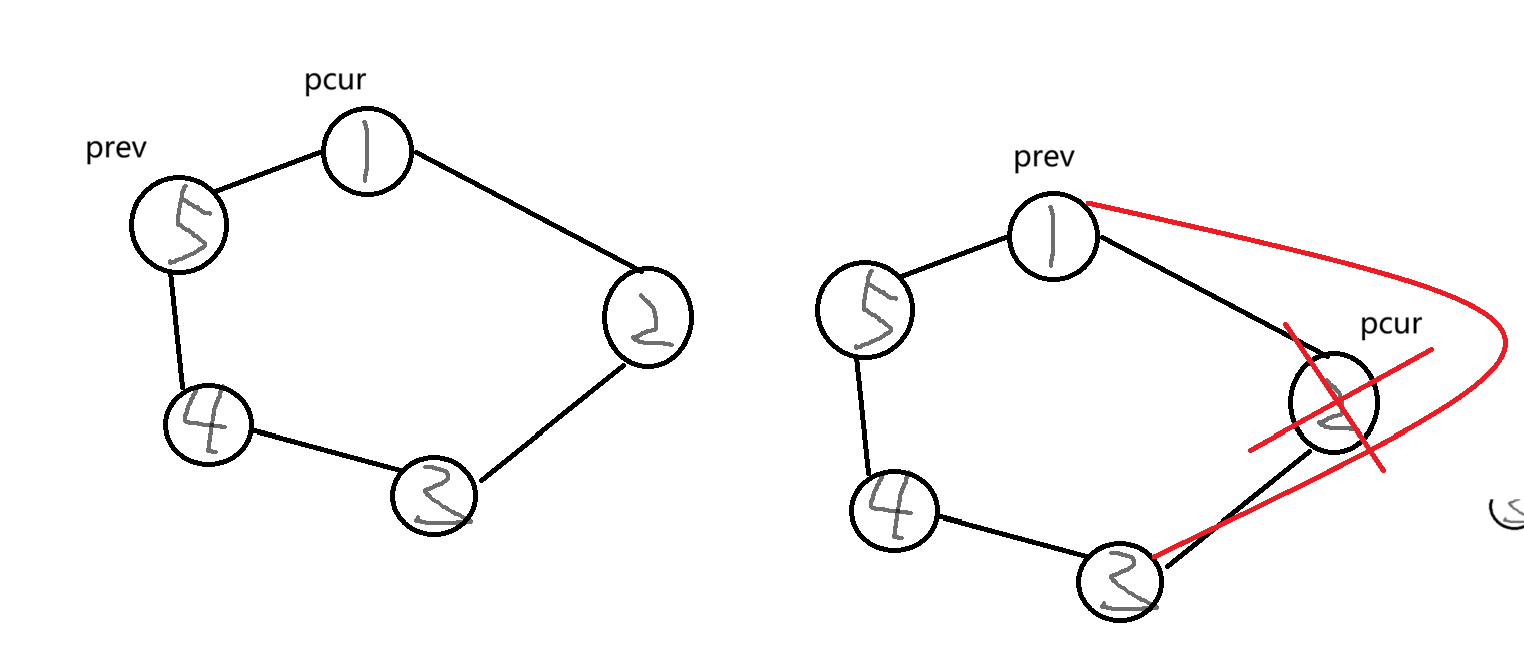
先创建一个循环链表,再创建两个指针,一个指向头节点,一个指向尾节点,进行对链表的循环,通过计数,删除要删除的元素
代码实现:
cpp
/**
 * 代码中的类名、方法名、参数名已经指定,请勿修改,直接返回方法规定的值即可
 *
 *
 * @param n int整型
 * @param m int整型
 * @return int整型
 */
 typedef struct ListNode ListNode;
 //创建一个节点
 ListNode* buyNode(int x)
 {
    ListNode* node = (ListNode*)malloc(sizeof(ListNode));
    if(node==NULL)
    {
        exit(1);
    }
    node->val = x;
    node->next = NULL;
    return node;
 }
 //创建循环链表
 ListNode* buycircle(int n)
 {
    //创建头尾节点
    ListNode* head = buyNode(1);
    ListNode* tail = head;
    //创建其他节点
    for(int i=2; i<=n; i++)
    {
        tail->next = buyNode(i);
        tail = tail->next;
    }
    //首尾相连
    tail->next = head;
    return tail;
 }
int ysf(int n, int m )
{
    ListNode* prev = buycircle(n);
    ListNode* pcur = prev->next;
    int count = 1;
    //当pcur的下一个元素是自己时,说明循环链表中只有这一个元素了
    while(pcur->next != pcur)
    {
        //删除元素
        if(count == m)
        {
            prev->next = pcur->next;
            free(pcur);
            pcur = prev->next;
            count = 1;  //将count重新赋值为1
        }
        else
        {
            prev = pcur;
            pcur = pcur->next;
            count++;
        }
    }
    return pcur->val;
}
6,力扣--分割链表
题目:
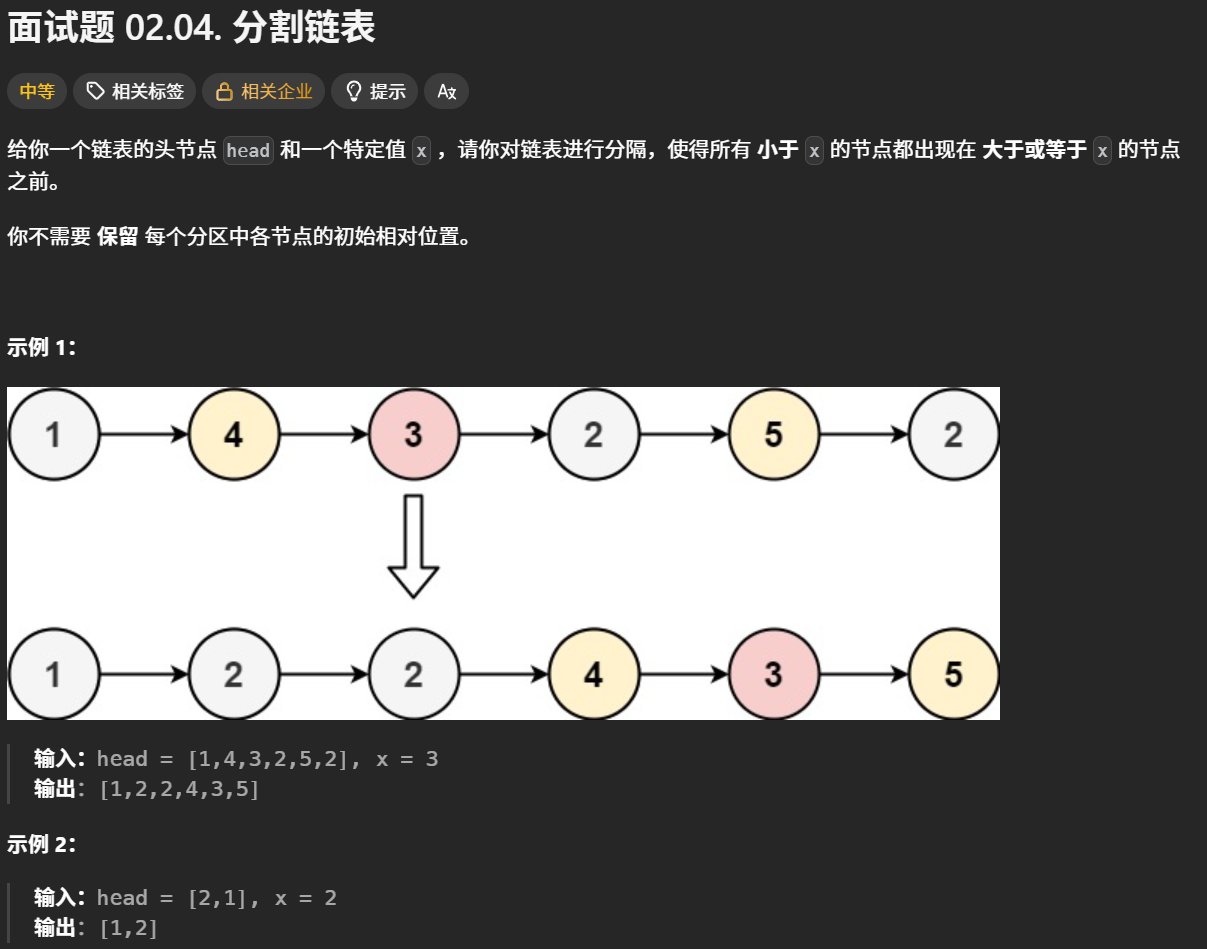
解法思路:
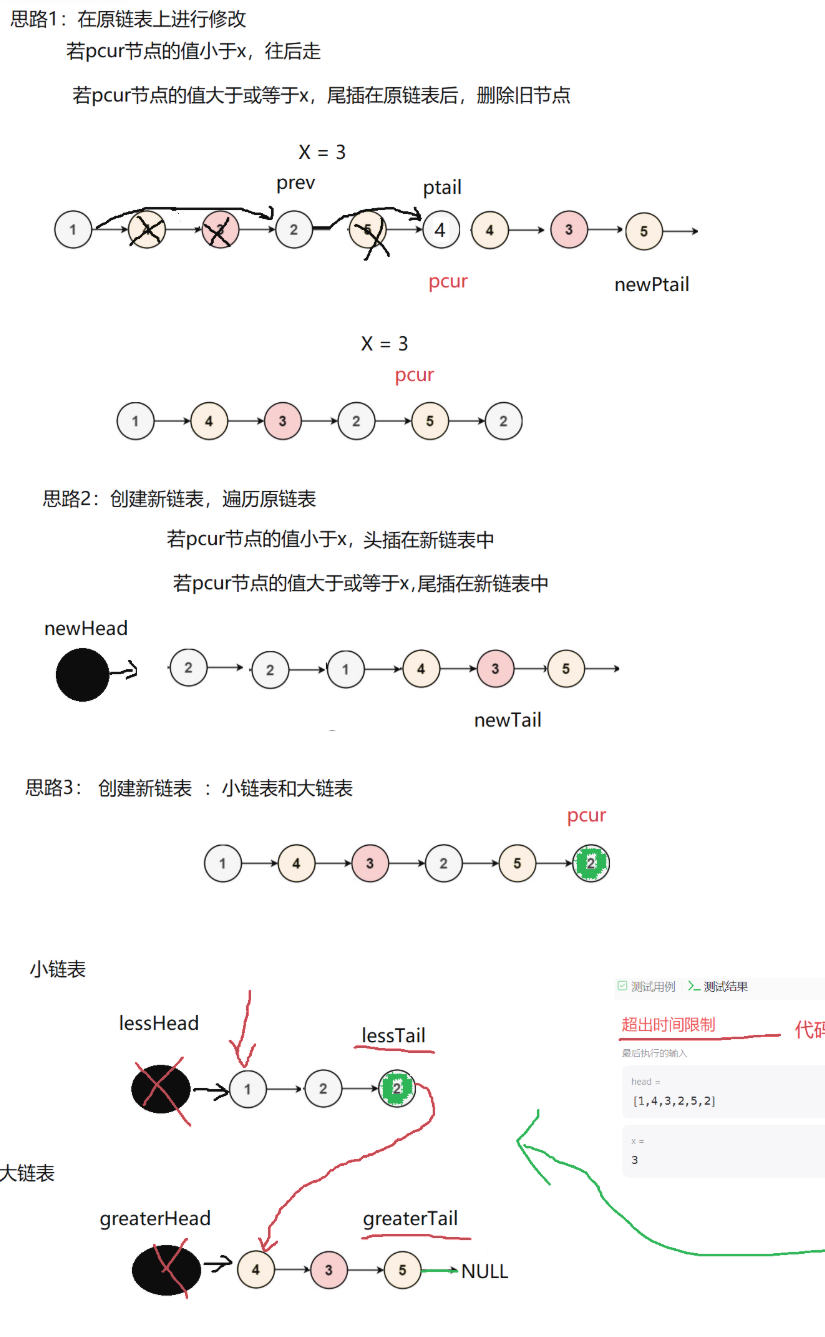
下面采用思路3进行实现
代码实现:
cpp
/**
 * Definition for singly-linked list.
 * struct ListNode {
 *     int val;
 *     struct ListNode *next;
 * };
 */
 typedef struct ListNode ListNode;
struct ListNode* partition(struct ListNode* head, int x)
{
    //判空
    if(head == NULL)
    {
        return head;
    }
    //创建两个单链表
    ListNode *lesshead,*lesstail;
    ListNode *greathead,*greattail;
    lesshead = lesstail = (ListNode*)malloc(sizeof(ListNode)); //接收小于x的值
    greathead = greattail = (ListNode*)malloc(sizeof(ListNode));//接收大于或等于x的值
    //遍历原链表
    ListNode* pcur = head;
    while(pcur)
    {
        //插入小链表
        if(pcur->val < x)
        {
            lesstail->next = pcur;
            lesstail = lesstail->next;
        }
        //插入大链表
        else
        {
            greattail->next = pcur;
            greattail = greattail->next;
        }
        pcur = pcur->next;
    }
    //修改大链表的尾节点的next的指向
    greattail->next = NULL;//如果不加这一行,就会出现死循环
    //大小链表进行连接
    lesstail->next = greathead->next;
    return lesshead->next;
}
可能出现的问题:
未添加:greattail->next = NULL;
导致以下情况的死循环:
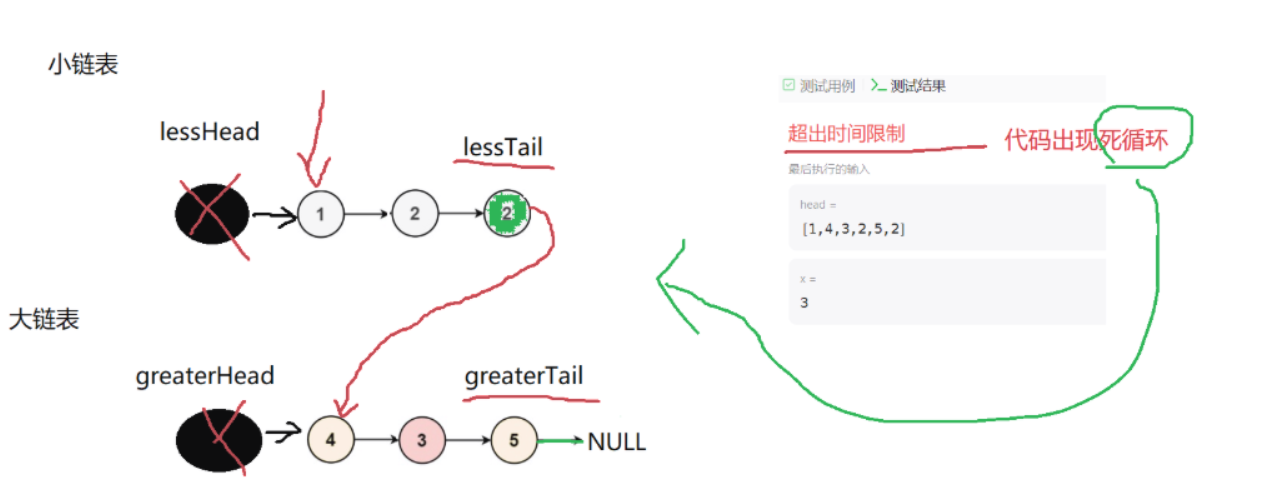
由于大链表中的5的下一个节点在原链表恰好是小链表中的元素2,导致循环时,5的下一个节点又跳转到了小链表中的2,导致无限循环(死循环 )