目录
[一.LangGraph 的其他特性](#一.LangGraph 的其他特性)
[1.使用 Overwrite 绕过 reducer](#1.使用 Overwrite 绕过 reducer)
[三.提示链模式(Prompt Chaining)](#三.提示链模式(Prompt Chaining))
六.协调者-工作者模式(Orchestrator-Workers)
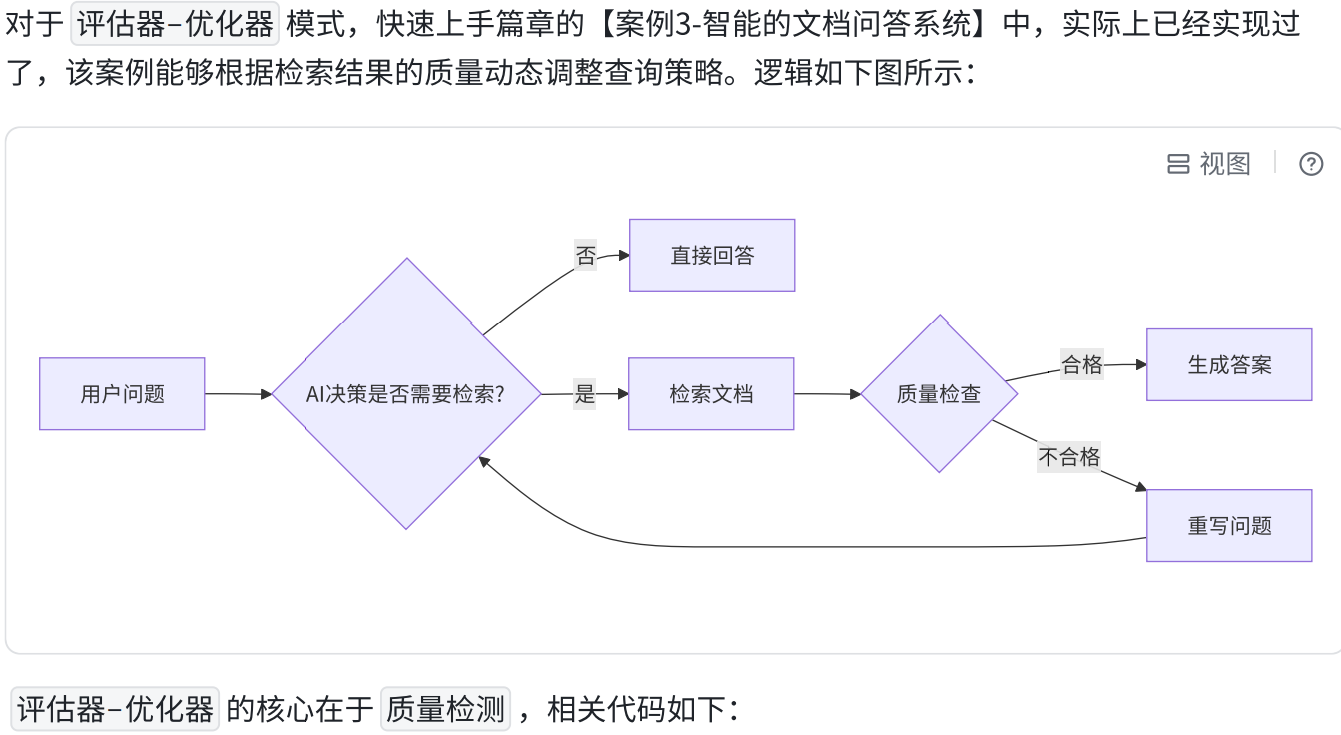
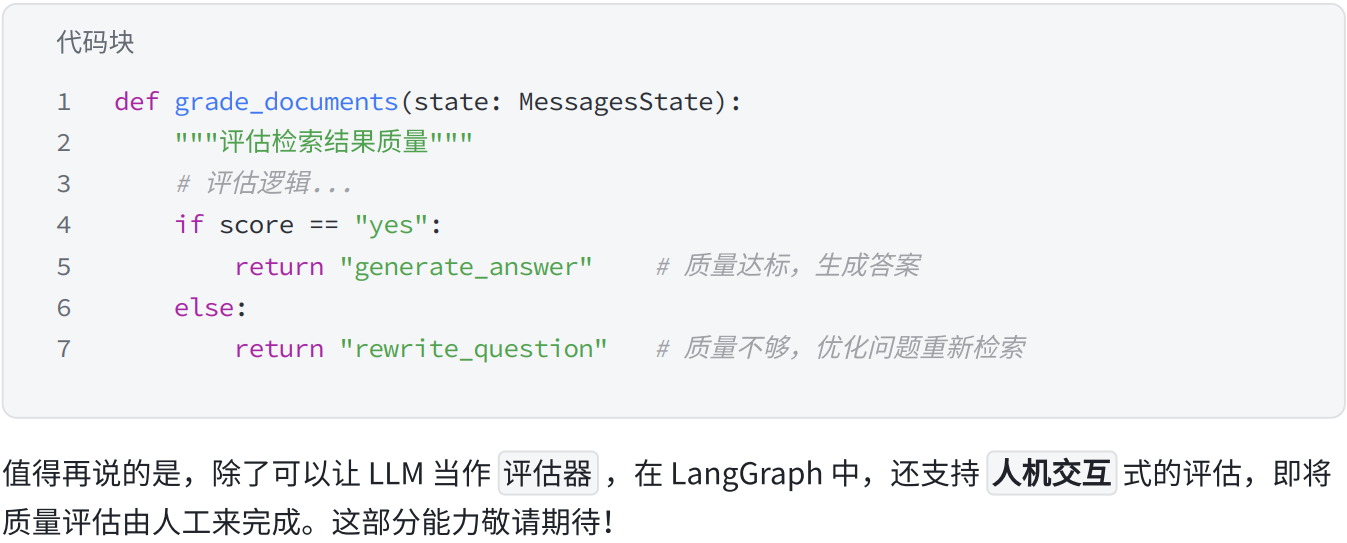
七.评估器-优化器模式(Evaluator-optimizer)
一.LangGraph 的其他特性
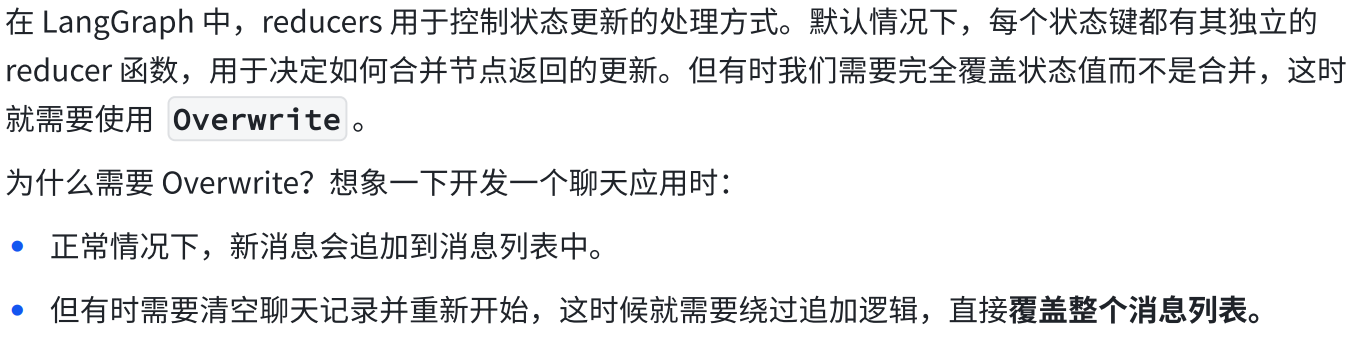
1.使用 Overwrite 绕过 reducer
cpp
import operator
from typing import TypedDict, Annotated

from langgraph.constants import START,END
from langgraph.graph import StateGraph
from langgraph.types import Overwrite
import os
os.environ["LANGCHAIN_TRACING_V2"] = "false"

class State(TypedDict):
    message: Annotated[list[str],operator.add]


#节点一.追加消息
def add_message(state: State):
    return {"message": ["first message"]}

#节点二.覆盖消息
def replace_message(state: State):
    return {"message": Overwrite(["replace message"])} #用新的列表覆盖老的列表

builder = StateGraph(State)
builder.add_node(add_message)
builder.add_node(replace_message)
builder.add_edge(START,"add_message")
builder.add_edge("add_message","replace_message")
builder.add_edge("replace_message",END)
graph = builder.compile()
result = graph.invoke({
    "message": [""]
})

print(result["message"])


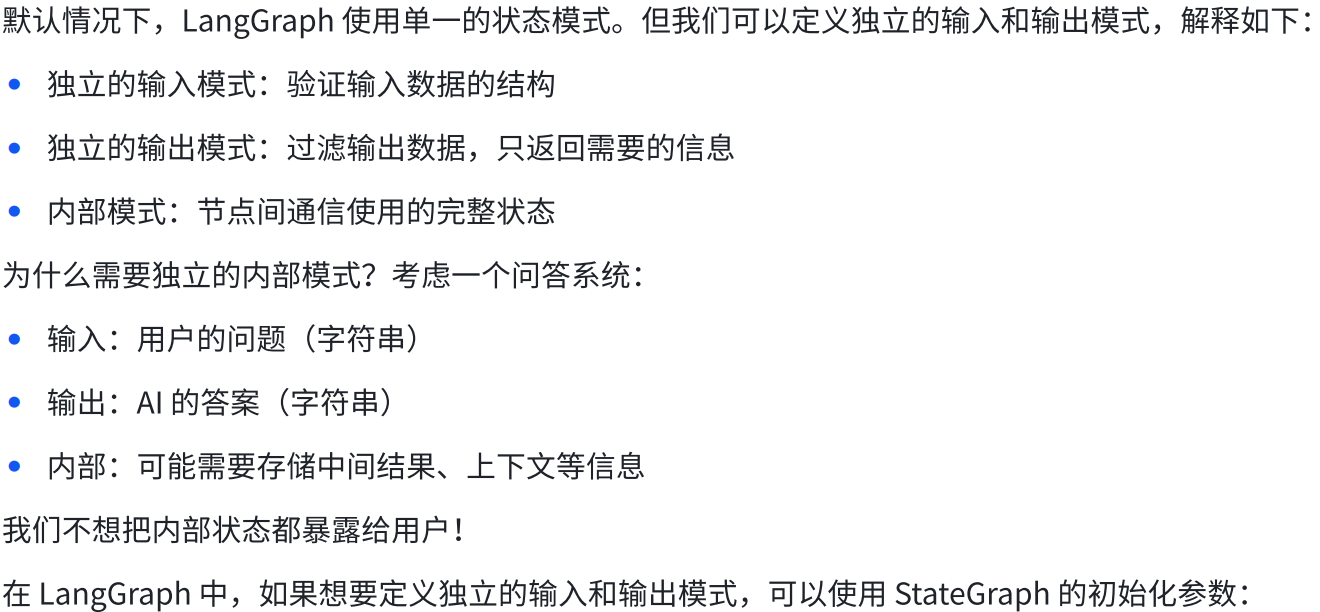
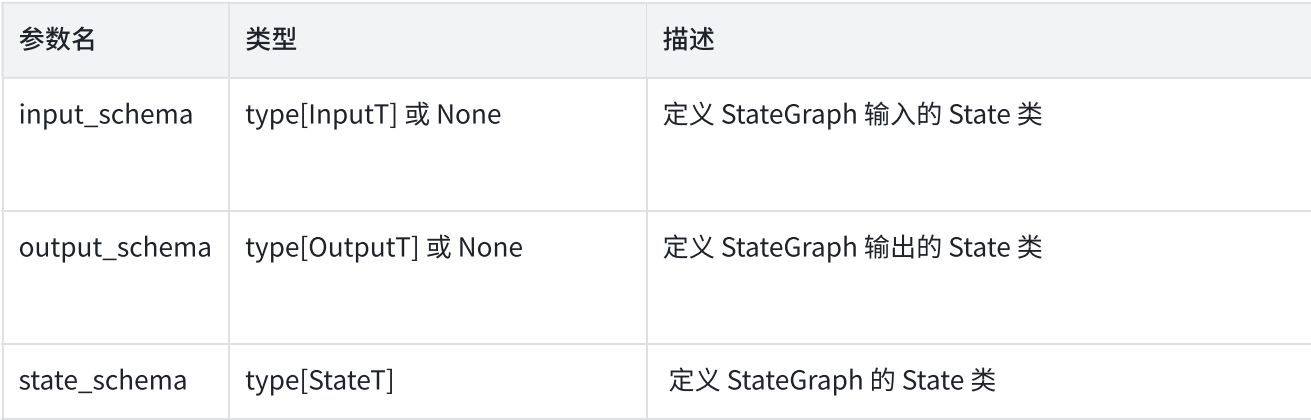
2.定义输入输出模式
cpp
from typing import TypedDict

from langgraph.constants import START,END
from langgraph.graph import StateGraph
import os
os.environ["LANGCHAIN_TRACING_V2"] = "false"


class InputState(TypedDict):
    question: str

class OuputState(TypedDict):
    answer: str

class State(InputState,OuputState):
    pass

def node(state: InputState):
    """通过问题生成答案"""
    return {
        "question": state["question"],
        "answer": f"Answer to: {state['question']}"
    }

builder = StateGraph(
    State,
    input_schema=InputState, #输入验证
    output_schema=OuputState #输出验证
)
builder.add_node(node)
builder.add_edge(START,"node")
builder.add_edge("node",END)

graph = builder.compile()
result = graph.invoke({
    "question":"i am a question"
})

#按照StateGraph(State)创建的图,执行后返回State
#希望得到的结果只有answer
print(result)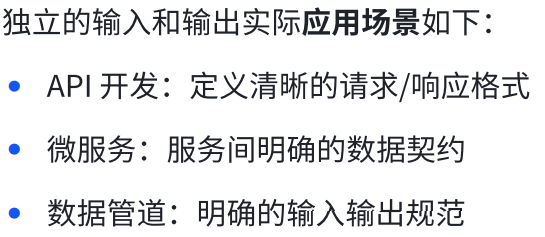
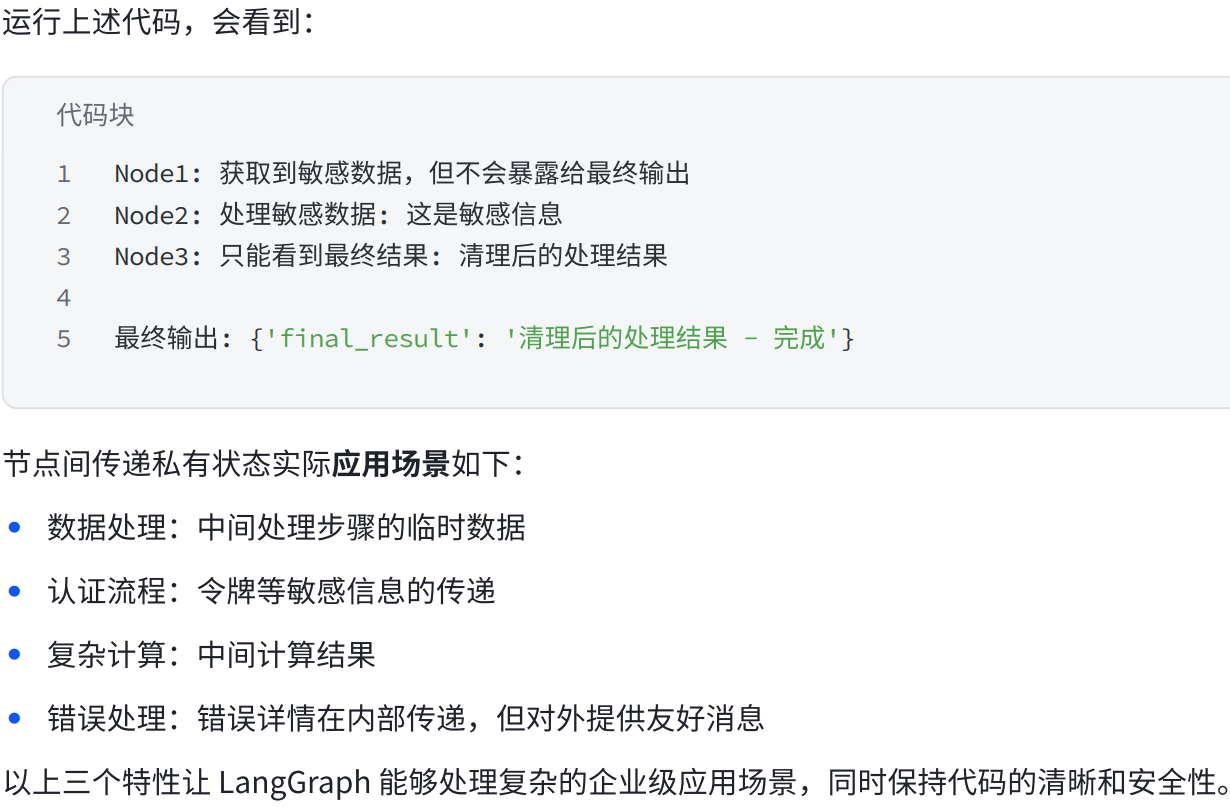
3.在节点间传递私有状态


cpp
from typing import TypedDict

from langgraph.constants import START,END
from langgraph.graph import StateGraph
import os
os.environ["LANGCHAIN_TRACING_V2"] = "false"

class State(TypedDict):
    result: str


class Node1OutputState(TypedDict):
    #隐式数据
    sensitive_data: str

class Node2InputState(TypedDict):
    #隐式数据
    sensitive_data: str

def node_1(state: State) -> Node1OutputState:
    """第一步: 获取隐私数据"""
    print("node1: 获取隐私数据")
    return {
        "sensitive_data": "我是隐私数据"
    }


def node_2(state: Node2InputState) -> State:
    """第二步: 获取隐私数据,去处理(生成非隐私数据)"""
    print("node2: 拿到隐私数据,去处理")
    return {
        "result": "处理后的数据"
    }


def node_3(state: State):
    """第三步: 构造返回结果"""
    print("node3: 构造返回结果")
    return {
        "result": state["result"] + "- 完成"
    }


builder = StateGraph(State)
#sequence: 这里我们在没有分支的情况下,可以直接添加3个工作流
#并且是按照顺序的
builder.add_sequence([node_1,node_2,node_3])
builder.add_edge(START,"node_1")
# builder.add_edges("node_3",END) #可以不指向END

graph = builder.compile()
print(graph.invoke({
    "result": ""
}))
二.工作流的常见模式

三.提示链模式(Prompt Chaining)
1.概念


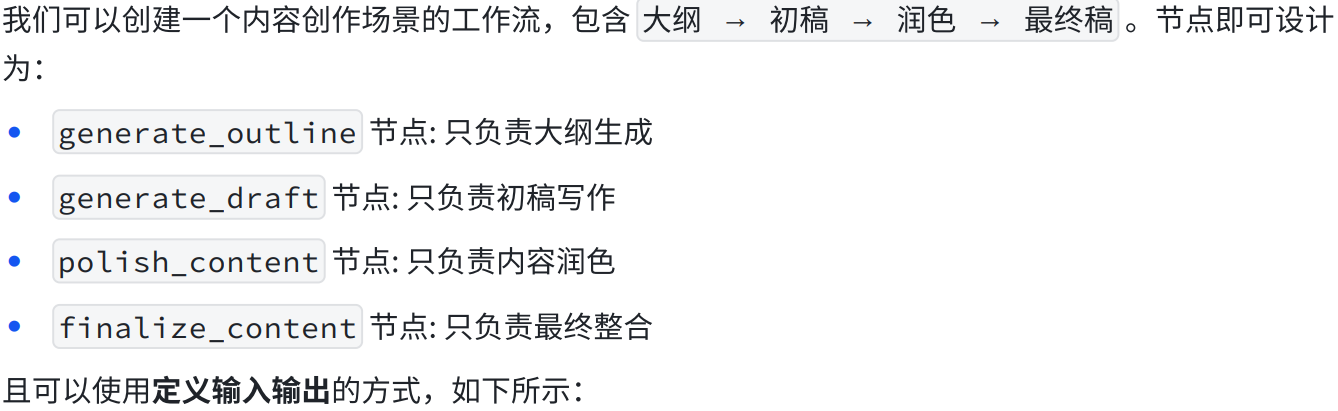
2.模式实践
python
# 1. 定义输⼊模式 - 只包含⽤⼾输⼊
class InputState(TypedDict):
    topic: str # ⽤⼾输⼊的主题
# 2. 定义输出模式 - 只包含最终结果
class OutputState(TypedDict):
    final_content: str # 最终的内容
# 3. 定义完整状态模式(内部使⽤)
class OverallState(InputState, OutputState):
    outline: str # 第⼀步:⽣成的⼤纲
    draft: str # 第⼆步:⽣成的初稿
    polished_draft: str # 第三步:润⾊后的稿件
python
from typing import TypedDict

from langchain_core.messages import HumanMessage
from langgraph.constants import START
from langgraph.graph import StateGraph


from langchain_community.chat_models import ChatZhipuAI

model = ChatZhipuAI(
    model="glm-5",
    # temperature=0.7,
    # api_key="你的智谱API_KEY"  # 如果你没配置环境变量就填这里
)

class InputState(TypedDict):
    topic: str

class OutputState(TypedDict):
    final_content: str

#3.过程中状态模式(内部使用)
class State(InputState, OutputState):
    outline: str #第一步: 生成的大纲
    draft: str   #第二步: 生成的初稿
    polished_draft: str #第三步: 润色后的稿件

#节点一
PROMPT_1 = (
    "根据主题⽣成⽂章⼤纲。\n"
    "主题:{topic}\n"
    "要求:"
    "1.只需两个最核⼼标题"
    "2.不⽤进⾏说明,只返回最终⼤纲"
)

def node_1(state: InputState):
    """根据主题生成内容大纲"""
    print("*" * 50)
    print(f"内容大纲生成中....\n")
    prompt = PROMPT_1.format(topic=state["topic"])
    result = model.invoke([HumanMessage(content=prompt)])
    print(f"大纲已经生成: \n{result.content}\n")
    return {
        "outline": result.content
    }


#节点二
PROMPT_2 = (
    "根据以下内容⽣成⽂章完整初稿。\n"
    "主题:{topic}\n"
    "⼤纲: "
    "{outline}\n"
    "要求:"
    "1.每个标题下,最多使⽤三句话的内容即可"
    "2.不⽤进⾏说明,只返回最终结果"
)

def node_2(state: State):
    """根据内容大纲生成完整初稿"""
    print("*" * 50)
    print(f"初稿生成中....\n")
    prompt = PROMPT_2.format(topic=state["topic"],outline=state["outline"])
    result = model.invoke([HumanMessage(content=prompt)])
    print(f"初稿已经生成: \n{result.content}\n")
    return {
        "draft": result.content
    }


#节点三
PROMPT_3 = (
    "根据⽂章初稿进⾏润⾊。\n"
    "主题:{topic}\n"
    "初稿: "
    "{draft}\n"
    "要求:"
    "1.润⾊后,⽂章不能太⻓"
)

def node_3(state: State):
    """润色初稿"""
    print("*" * 50)
    print(f"初稿润色中....\n")
    prompt = PROMPT_3.format(topic=state["topic"],draft=state["draft"])
    result = model.invoke([HumanMessage(content=prompt)])
    print(f"初稿润色完成: \n{result.content}\n")
    return {
        "polished_draft": result.content
    }


#节点四
PROMPT_4 = (
    "根据润⾊版⽂章,⽣成⽂章终稿。\n"
    "主题:{topic}\n"
    "⼤纲: "
    "{outline}\n"
    "润⾊版⽂章: "
    "{polished_draft}\n"
)

def node_4(state: State):
    """生成终稿"""
    print("*" * 50)
    print(f"终稿润色中....\n")
    prompt = PROMPT_4.format(topic=state["topic"],outline=state["outline"], polished_draft=state["polished_draft"])
    result = model.invoke([HumanMessage(content=prompt)])
    print(f"终稿生成完成: \n{result.content}\n")
    return {
        "final_content": result.content
    }


builder = StateGraph(
    State,
    input_schema=InputState, #输入验证
    output_schema=OutputState#输出过滤
)


builder.add_sequence([node_1, node_2, node_3, node_4])
builder.add_edge(START,"node_1")
chain = builder.compile()
result = chain.invoke({"topic": "人工智能的未来发展"})
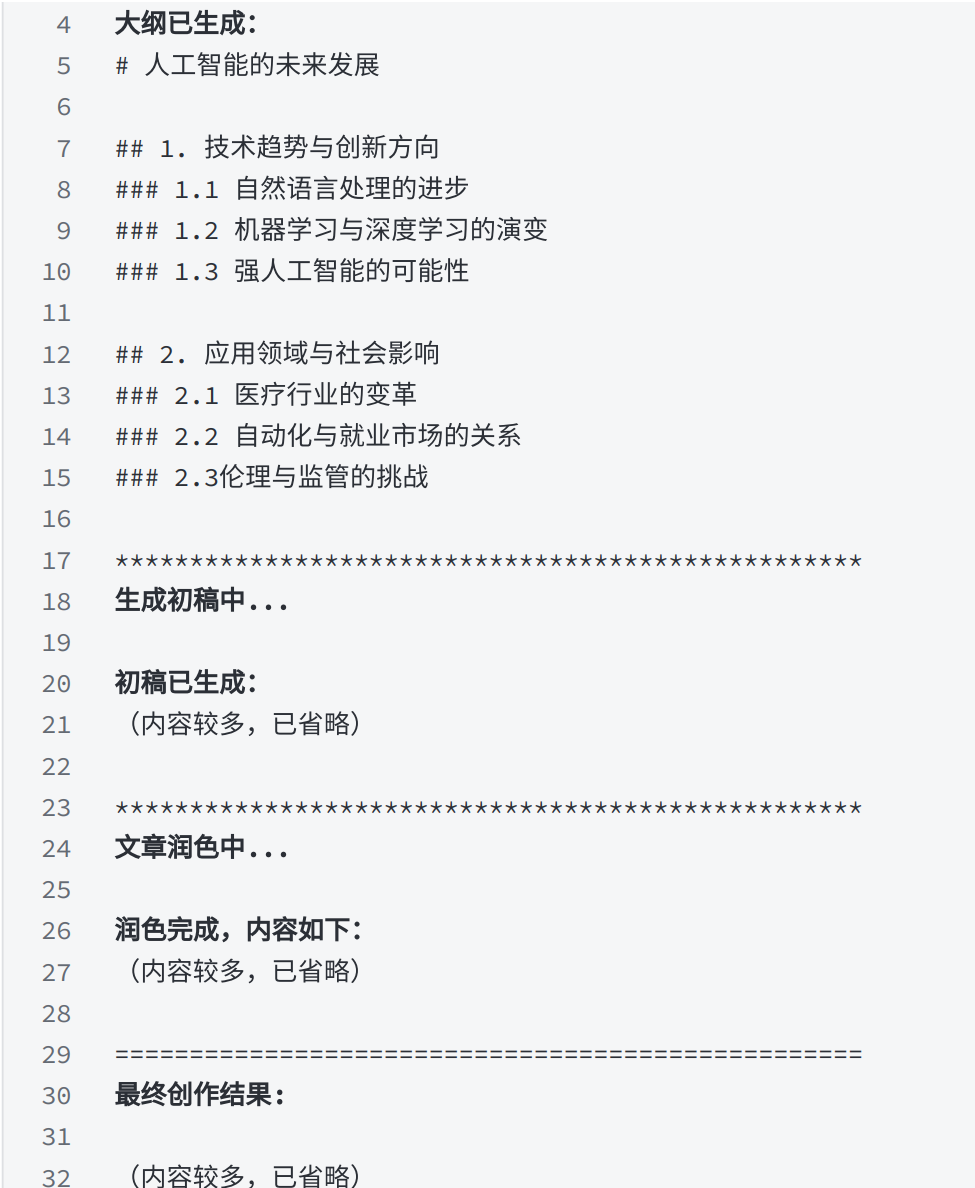
print(result)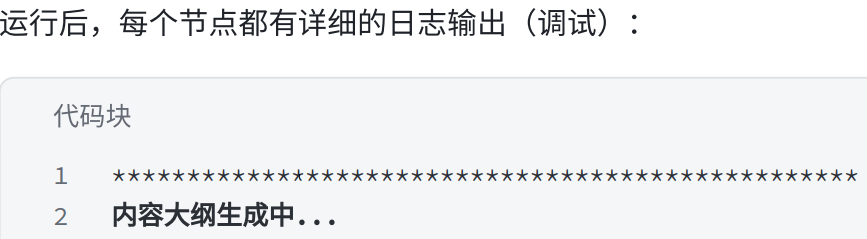
四.并行化模式(Parallelization)
1.概念
2.模式实践

python
from typing import TypedDict

from langgraph.constants import START, END
from langgraph.graph import StateGraph
import os
os.environ["LANGCHAIN_TRACING_V2"] = "false"

class AnalysisState(TypedDict):
    concept: str      # 概念
    market: str       # 市场分析
    competitor: str   # 竞品分析
    tech: str         # 技术分析
    report: str       # 汇总报告


# 三个并行分析任务
def market_task(state: AnalysisState):
    """市场分析"""
    return {"market": "用户关注续航、重量、防盗,对骑行社交有兴趣..."}


def competitor_task(state: AnalysisState):
    """竞品分析"""
    return {"competitor": "传统品牌智能化不足,互联网品牌续航和售后差..."}


def tech_task(state: AnalysisState):
    """技术分析"""
    return {"tech": "轻量化电池车身、GPS防盗、社交App集成..."}


# 汇总结果
def combine_results(state: AnalysisState):
    """生成最终报告"""
    report = f"产品分析报告\n\n"
    report += f"市场分析:\n{state['market']}\n\n"
    report += f"竞品分析:\n{state['competitor']}\n\n"
    report += f"技术分析:\n{state['tech']}\n\n"
    report += "建议:聚焦续航、防盗、社交功能的平衡发展"
    return {"report": report}


# 构建工作流
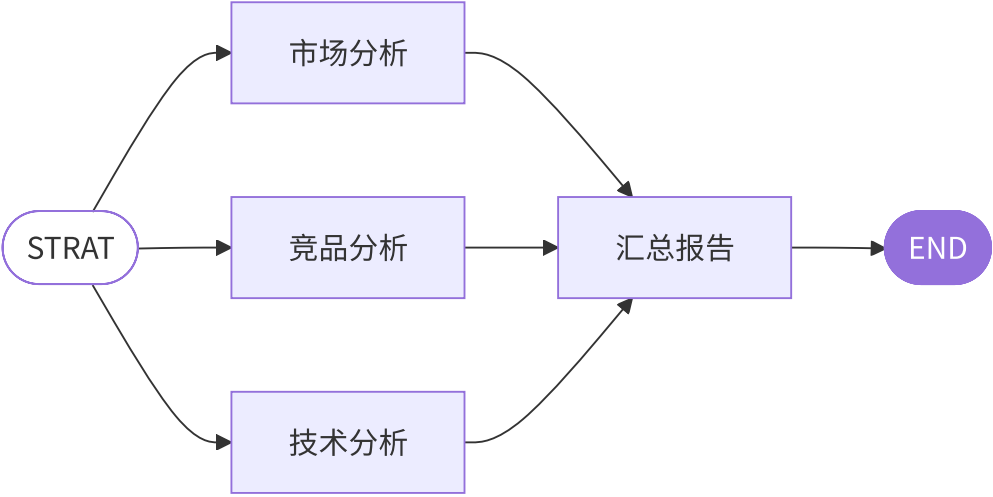
builder = StateGraph(AnalysisState)
builder.add_node("market", market_task)
builder.add_node("competitor", competitor_task)
builder.add_node("tech", tech_task)
builder.add_node("combine", combine_results)

# 并行执行三个分析
builder.add_edge(START, "market")
builder.add_edge(START, "competitor")
builder.add_edge(START, "tech")

# 汇总结果
builder.add_edge("market", "combine")
builder.add_edge("competitor", "combine")
builder.add_edge("tech", "combine")
builder.add_edge("combine", END)

workflow = builder.compile()
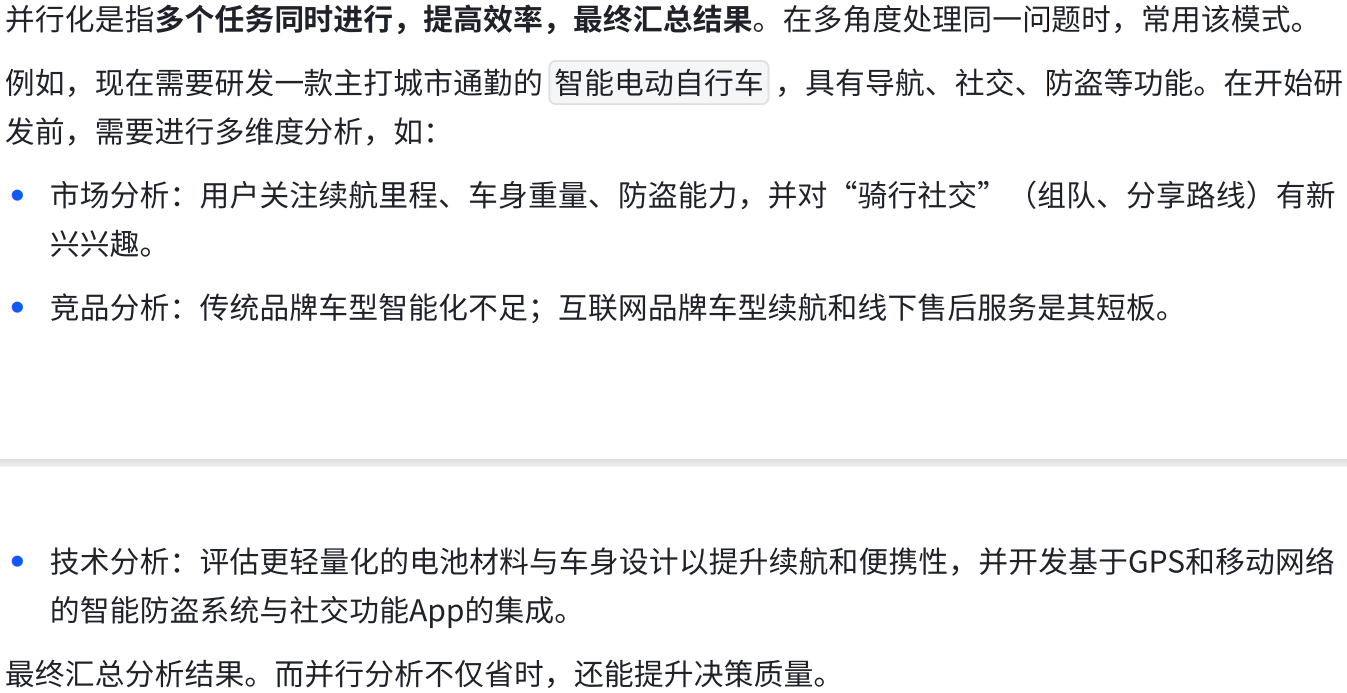
print(workflow.get_graph(xray=True).draw_mermaid())

# 使用
result = workflow.invoke({"concept": "城市通勤智能电动自行车"})
print(result["report"])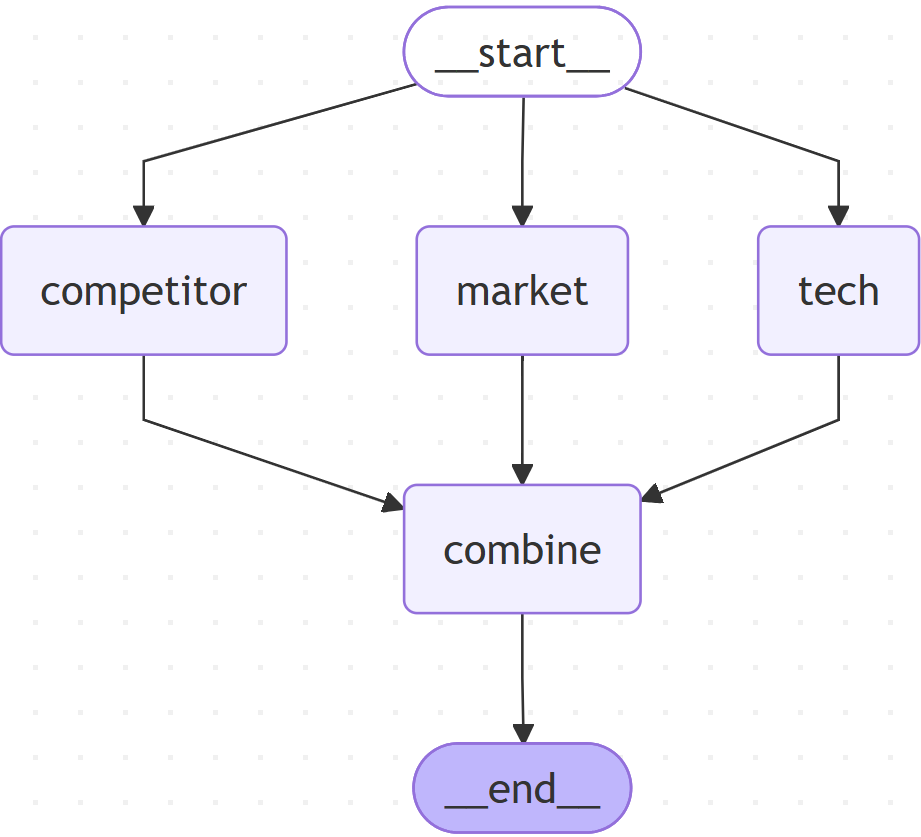
五.路由模式(Routing)
1.概念
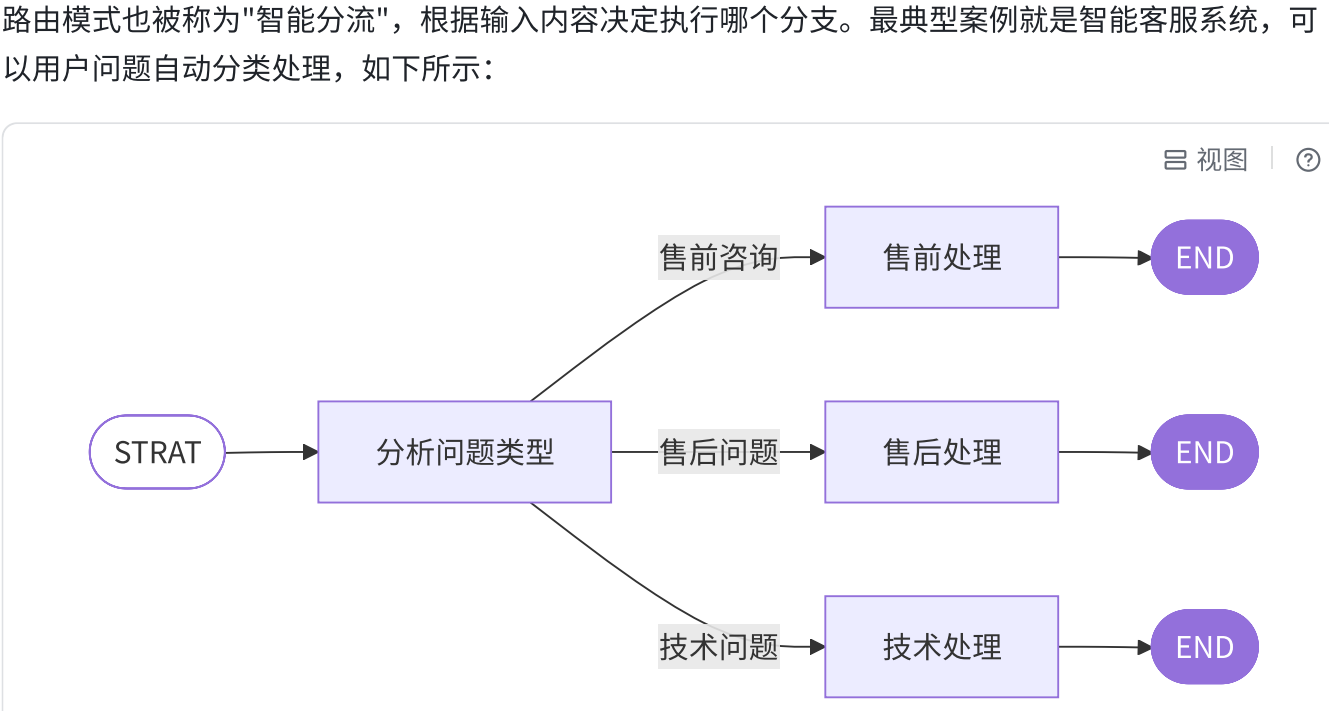
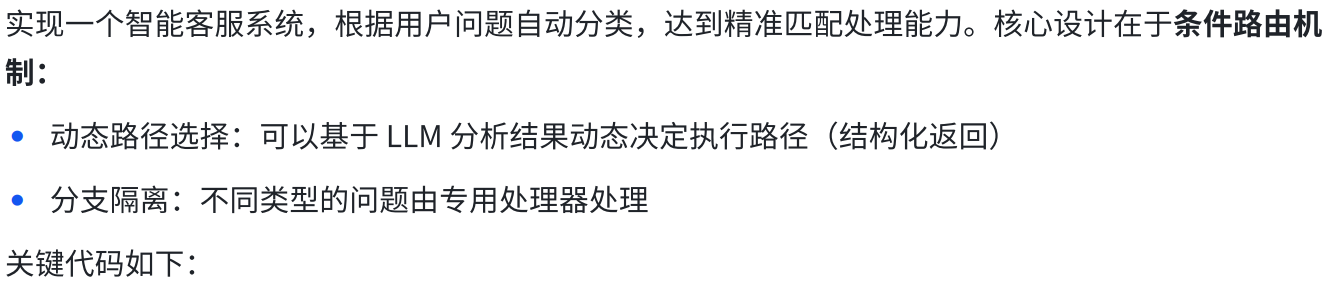
2.模式实践
python
# 定义路由决策的数据结构
class Route(BaseModel):
    step: Literal["pre_sale", "after_sale", "technical"] = Field(
    description="根据⽤⼾问题类型决定路由到售前、售后还是技术处理"
)
# 路由决策节点
def model_call_router(state: State):
    """分析⽤⼾输⼊,决定问题类型"""
    model = init_chat_model("gpt-4o-mini")
    decision = model.with_structured_output(Route).invoke(state["input"])
    return {"decision": decision.step}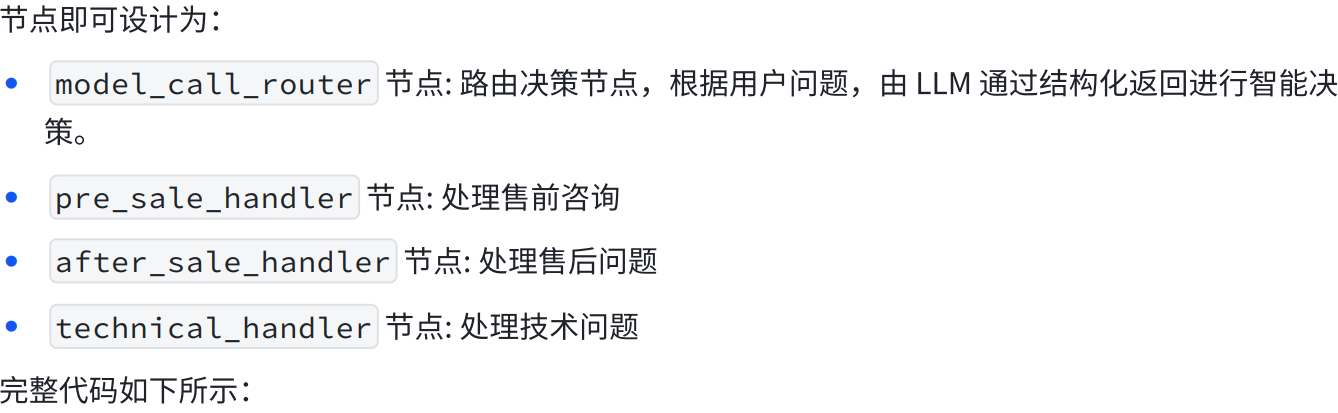
python
from langchain.chat_models import init_chat_model
from langgraph.constants import START, END
from langgraph.graph import StateGraph
from typing_extensions import Literal, TypedDict
from pydantic import BaseModel, Field


class State(TypedDict):
    input: str       # 用户输入
    decision: str    # 路由决策
    output: str      # 最终输出


# 定义路由决策的数据结构
class Route(BaseModel):
    step: Literal["pre_sale", "after_sale", "technical"] = Field(
        description="根据用户问题类型决定路由到售前、售后还是技术处理"
    )


# 路由决策节点
def model_call_router(state: State):
    """分析用户输入,决定问题类型"""
    model = init_chat_model("gpt-4o-mini")
    decision = model.with_structured_output(Route).invoke(state["input"])
    return {"decision": decision.step}


# 三个不同的处理节点
def pre_sale_handler(state: State):
    """处理售前咨询"""
    return {"output": "售前咨询已处理,处理内容....."}


def after_sale_handler(state: State):
    """处理售后问题"""
    return {"output": "售后问题已处理,处理内容....."}


def technical_handler(state: State):
    """处理技术问题"""
    return {"output": "技术问题已处理,处理内容....."}


# 路由函数 - 根据决策返回下一个节点
def route_decision(state: State):
    if state["decision"] == "pre_sale":
        return "pre_sale_handler"       # 去售前处理节点
    elif state["decision"] == "after_sale":
        return "after_sale_handler"     # 去售后处理节点
    elif state["decision"] == "technical":
        return "technical_handler"     # 去技术处理节点


# 构建路由工作流
router_builder = StateGraph(State)

# 添加处理节点
router_builder.add_node(pre_sale_handler)
router_builder.add_node(after_sale_handler)
router_builder.add_node(technical_handler)
router_builder.add_node(model_call_router)

# 先经过路由决策
router_builder.add_edge(START, "model_call_router")

# 条件边:根据路由结果选择分支
router_builder.add_conditional_edges(
    "model_call_router",
    route_decision,
    ["pre_sale_handler", "after_sale_handler", "technical_handler"]
)

# 所有分支最终都结束
router_builder.add_edge("pre_sale_handler", END)
router_builder.add_edge("after_sale_handler", END)
router_builder.add_edge("technical_handler", END)
router_workflow = router_builder.compile()


# 测试
test_cases = [
    "我想了解一下你们产品的价格和功能",    # 售前咨询
    "我购买的产品有质量问题,需要退货",    # 售后问题
    "这个软件安装后无法正常运行,报错代码0x80070005",  # 技术问题
    "请问你们的售后服务政策是什么",       # 售前咨询
    "我的订单已经发货但还没收到",        # 售后问题
    "如何配置数据库连接参数"             # 技术问题
]

for test_case in test_cases:
    print("*" * 50)
    result = router_workflow.invoke({"input": test_case})
    print(f"用户问题: {test_case}\n{result['output']}")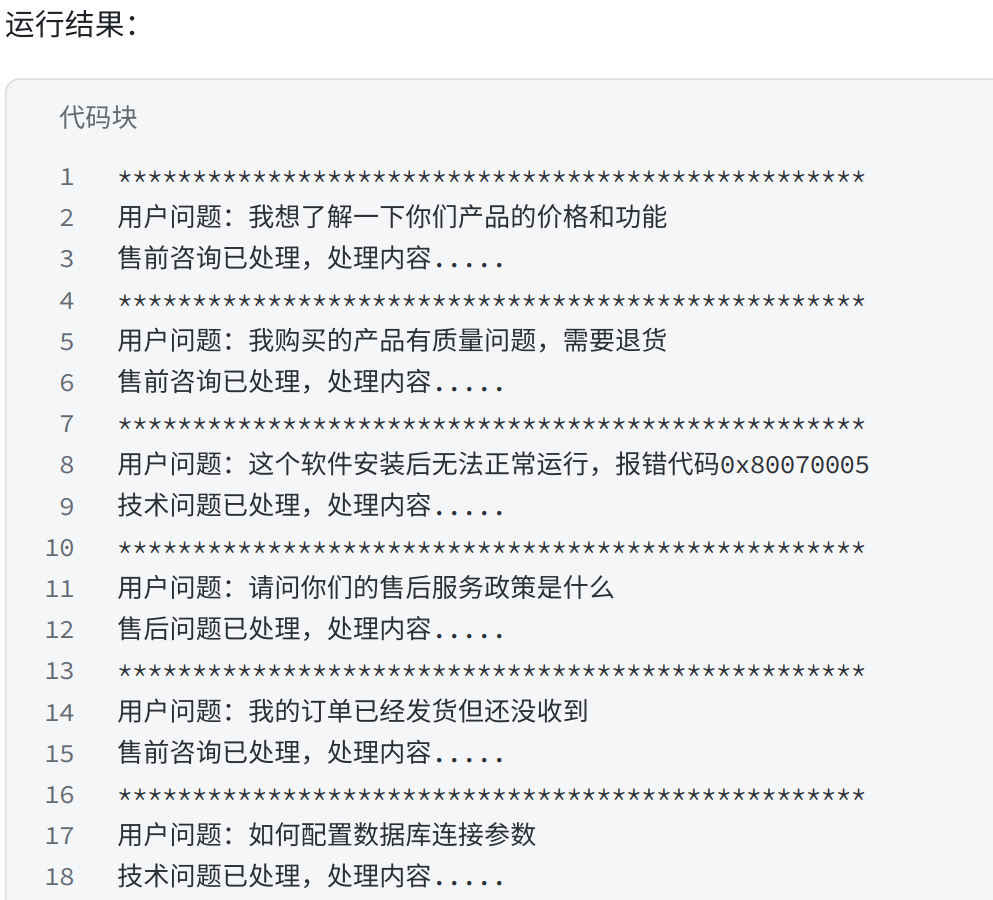
六.协调者-工作者模式(Orchestrator-Workers)
1.概念

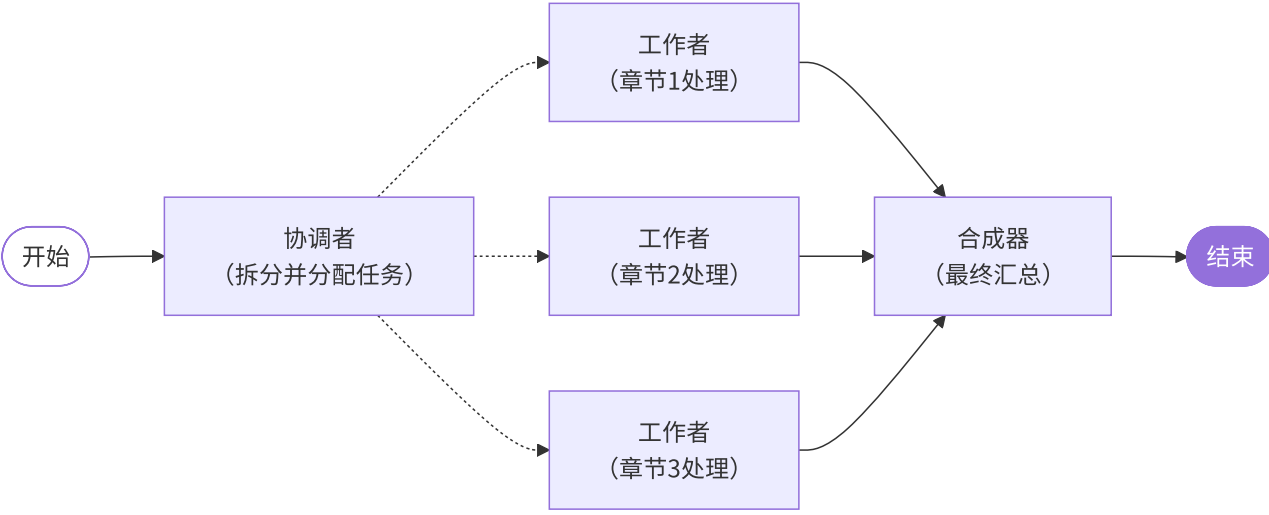
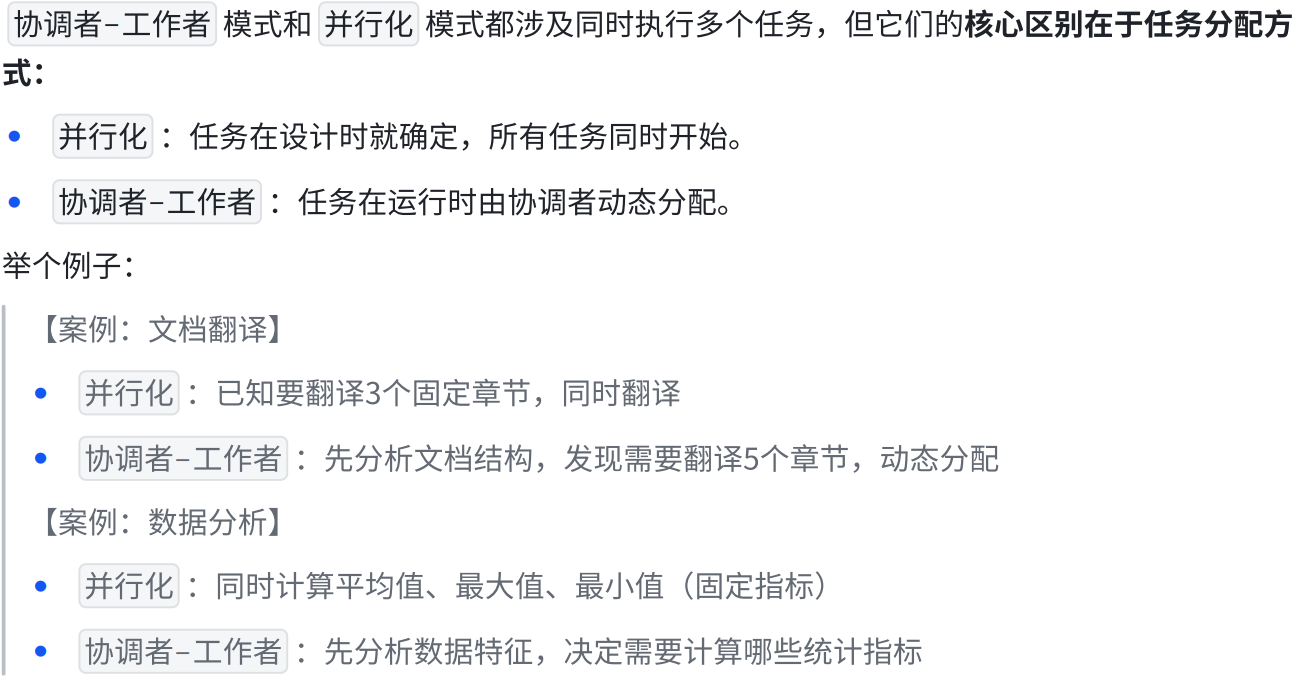
2.模式实践
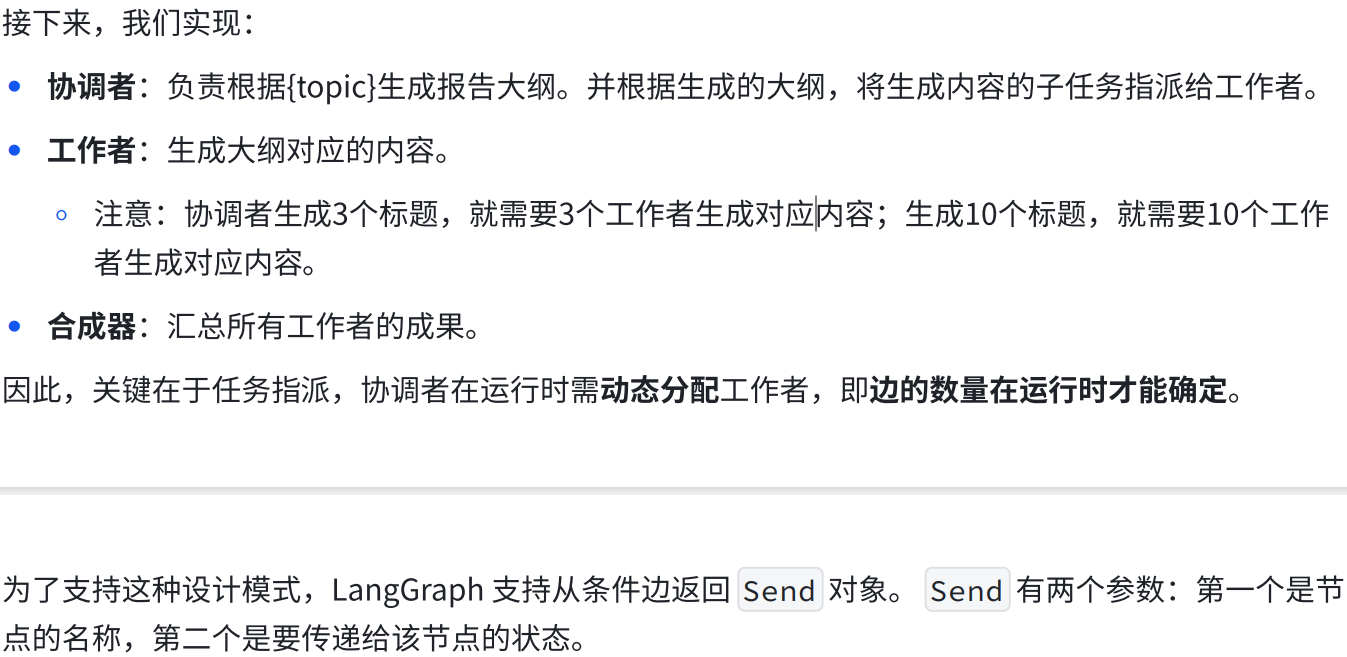
python
# 任务分配函数 - 关键部分!
def assign_workers(state: State):
    """为每个任务创建⼯作者"""
    # 为每个部分创建⼀个⼯作者任务
    return [Send("llm_call", {"section": section}) for section in state["sections"]]
graph.add_conditional_edges("node", assign_workers)
python
from langchain.chat_models import init_chat_model
from langgraph.constants import START, END
from langgraph.graph import StateGraph
from langgraph.types import Send
from typing import Annotated, TypedDict, List
import operator

from pydantic import BaseModel


class State(TypedDict):
    topic: str
    sections: list  # 协调者生成的计划
    completed_sections: Annotated[list, operator.add]  # 工作者完成的结果
    final_report: str


# 定义数据结构-结构化输出
class Section(BaseModel):
    name: str
    description: str


class Sections(BaseModel):
    sections: List[Section]


# 创建规划器
model = init_chat_model("gpt-4o-mini")

planner = model.with_structured_output(Sections)


# 协调者节点 - 制定计划
def orchestrator(state: State):
    """协调者: 分析任务并制定执行计划"""
    report_sections = planner.invoke(
        f"为主题'{state['topic']}'制定报告大纲,包含3个章节"
    )
    return {"sections": report_sections.sections}


# 工作者节点 - 执行具体任务
def llm_call(state: State):
    """工作者: 根据分配的任务生成内容"""
    section = state["section"]  # 从协调者接收的任务
    result = model.invoke(
        f"编写报告章节: {section.name}, 内容要求: {section.description}"
    )
    return {"completed_sections": [result.content]}  # 结果会自动合并


# 汇总节点
def synthesizer(state: State):
    """汇总所有工作者的成果"""
    completed_sections = state["completed_sections"]
    final_report = "\n\n---\n\n".join(completed_sections)
    return {"final_report": final_report}


# 任务分配函数 - 关键部分!
def assign_workers(state: State):
    """为每个任务创建工作者"""
    # 为每个章节创建一个工作者任务
    worker_tasks = []
    for section in state["sections"]:
        worker_tasks.append(
            Send("llm_call", {"section": section})  # 发送任务给工作者
        )
    return worker_tasks


# 构建工作流
builder = StateGraph(State)

builder.add_node("orchestrator", orchestrator)
builder.add_node("llm_call", llm_call)
builder.add_node("synthesizer", synthesizer)

builder.add_edge(START, "orchestrator")

# 关键: 协调者后创建多个工作者
builder.add_conditional_edges(
    "orchestrator",
    assign_workers,
    ["llm_call"]  # 创建的工作者都指向llm_call节点
)

# 所有工作者完成后汇总
builder.add_edge("llm_call", "synthesizer")
builder.add_edge("synthesizer", END)

worker = builder.compile()

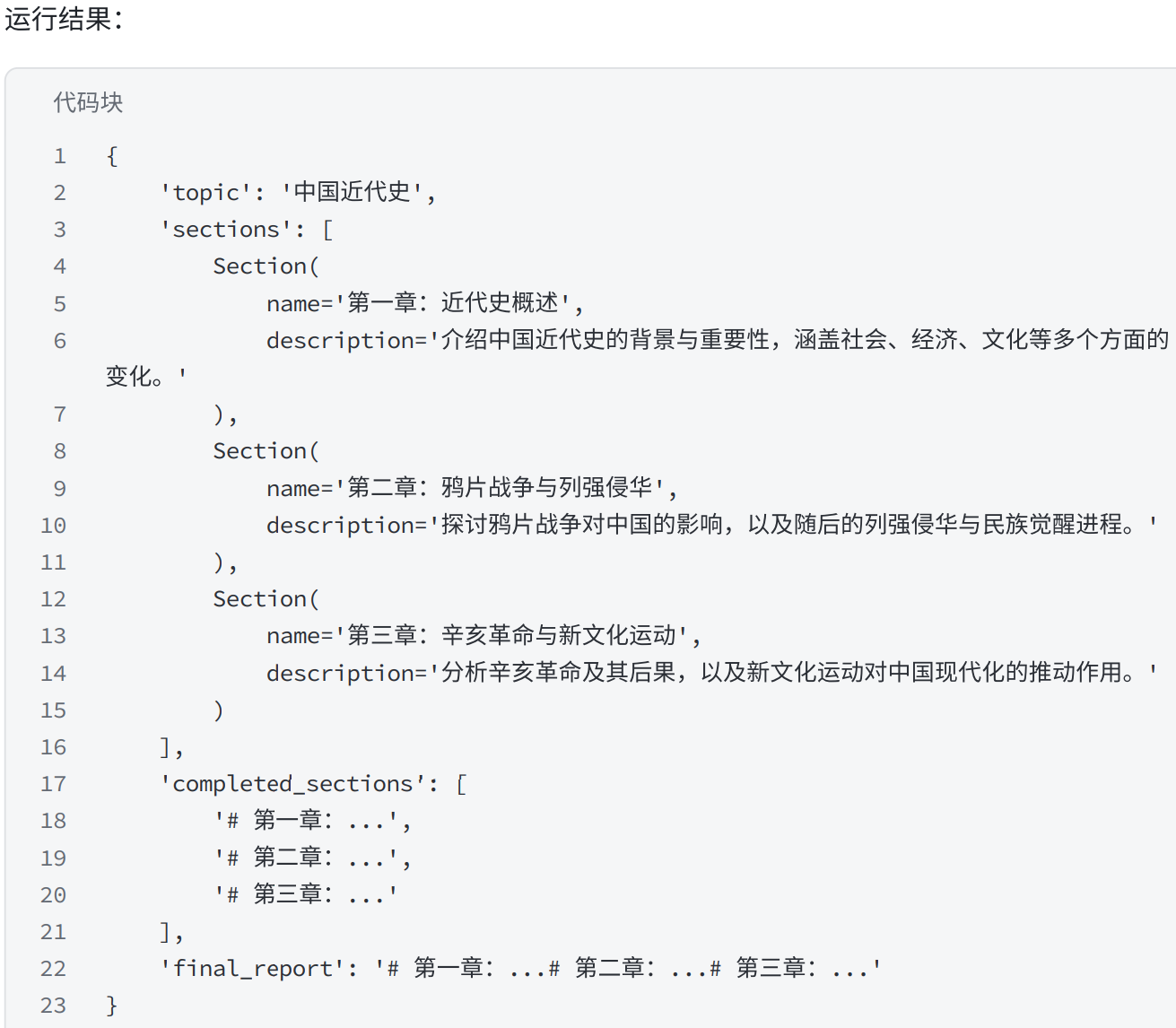
response = worker.invoke({"topic": "中国近代史"})
print(response)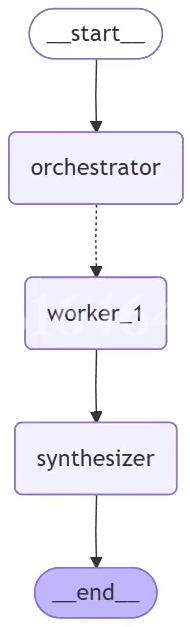
七.评估器-优化器模式(Evaluator-optimizer)
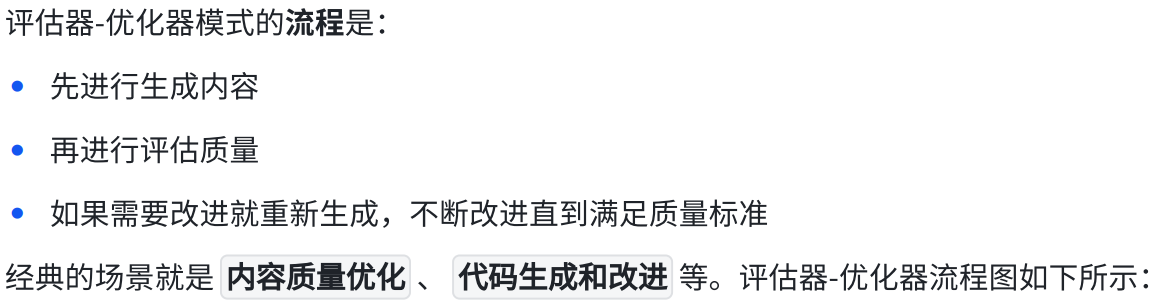
1.概念

2.模式实践