
🎁个人主页:小张同学824
🎉欢迎大家点赞👍评论📝收藏⭐文章


文章目录:
- Python并发编程实战:用多线程和协程加速智能体执行效率,速度飙升5倍的技术内幕
-
- 一、为什么Agent需要并发?
-
- [串行 vs 并发执行对比](#串行 vs 并发执行对比)
- 二、Python并发模型选择
-
- [2.1 三种并发模型对比](#2.1 三种并发模型对比)
- [2.2 Agent场景选择决策树](#2.2 Agent场景选择决策树)
- 三、并发Agent实战
-
- [3.1 基于Threading的并发工具调用](#3.1 基于Threading的并发工具调用)
- [3.2 基于Asyncio的高性能Agent](#3.2 基于Asyncio的高性能Agent)
- 四、并发多Agent系统
-
- [4.1 并行运行多个Agent](#4.1 并行运行多个Agent)
- 五、并发安全与错误处理
-
- [5.1 常见并发问题](#5.1 常见并发问题)
- [5.2 健壮的并发工具执行器](#5.2 健壮的并发工具执行器)
- 六、性能基准测试
- 总结
Python并发编程实战:用多线程和协程加速智能体执行效率,速度飙升5倍的技术内幕
当Agent需要同时处理多个任务、调用多个工具时,并发编程就成了必修课。本文详解Agent中的并发模式。
一、为什么Agent需要并发?
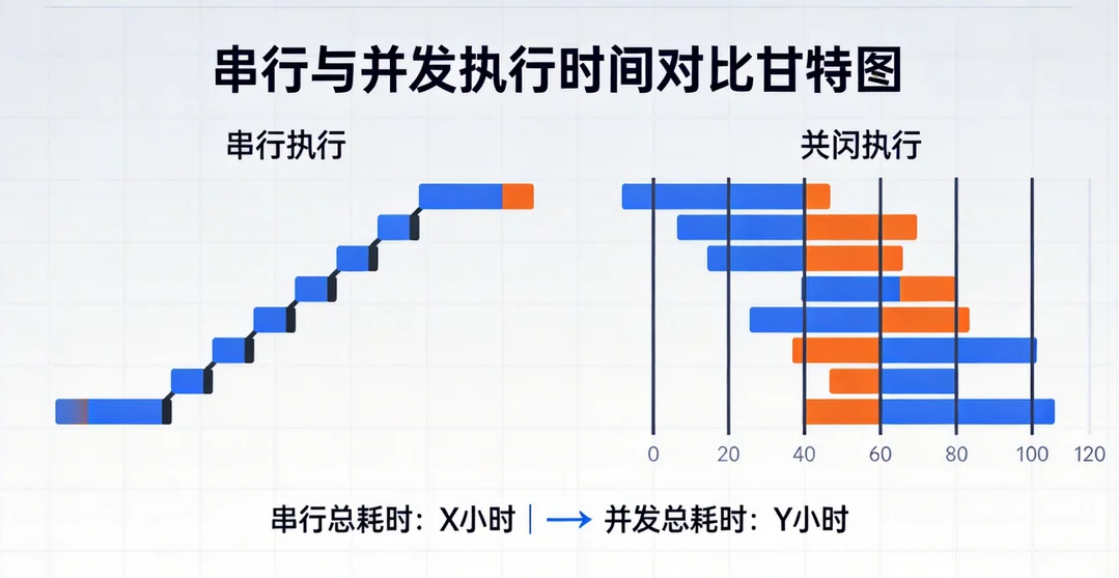
单个Agent在实际应用中经常面临同时执行多个独立任务的场景。串行执行不仅浪费时间,还影响用户体验。
串行 vs 并发执行对比
| 场景 | 串行耗时 | 并发耗时 | 提升倍数 |
|---|---|---|---|
| 查询5个API | 5x2s=10s | 2s | 5x |
| 分析10个文件 | 10x3s=30s | 3s | 10x |
| 搜索+计算+翻译 | 6s | 2s | 3x |
| 多Agent协作任务 | 15s | 5s | 3x |
二、Python并发模型选择
2.1 三种并发模型对比
| 模型 | 适用场景 | 特点 | Agent中的应用 |
|---|---|---|---|
| threading | I/O密集型 | GIL限制,轻量 | API调用、文件读写 |
| asyncio | I/O密集型 | 协程、高性能 | 异步API调用 |
| multiprocessing | CPU密集型 | 真正并行 | 数据处理、模型推理 |
2.2 Agent场景选择决策树
任务类型是什么?
├── 纯I/O(API调用、网络请求)
│   └── 推荐 asyncio(最高效)
├── I/O + 简单计算
│   └── 推荐 threading(简单易用)
├── CPU密集型(数据处理、ML推理)
│   └── 推荐 multiprocessing
└── 混合型
    └── 推荐 asyncio + ProcessPoolExecutor
三、并发Agent实战
3.1 基于Threading的并发工具调用
python
# concurrent/threaded_agent.py
import threading
import queue
import json
from openai import OpenAI
from concurrent.futures import ThreadPoolExecutor, as_completed

class ConcurrentToolAgent:
    """支持并发工具调用的Agent"""

    def __init__(self, api_key: str, max_workers: int = 5):
        self.client = OpenAI(api_key=api_key)
        self.max_workers = max_workers
        self.tool_registry = {}
        self._lock = threading.Lock()
        self._call_history = []

    def register_tool(self, name: str, func, description: str, parameters: dict):
        self.tool_registry[name] = {
            "func": func,
            "schema": {
                "type": "function",
                "function": {
                    "name": name,
                    "description": description,
                    "parameters": {
                        "type": "object",
                        "properties": parameters,
                        "required": list(parameters.keys())
                    }
                }
            }
        }

    def _execute_tool_safe(self, tool_name: str, arguments: dict) -> str:
        """线程安全的工具执行"""
        if tool_name not in self.tool_registry:
            return json.dumps({"error": f"未知工具: {tool_name}"})

        try:
            result = self.tool_registry[tool_name]["func"](**arguments)
            with self._lock:
                self._call_history.append({
                    "tool": tool_name,
                    "args": arguments,
                    "status": "success"
                })
            return json.dumps({"result": result}, ensure_ascii=False)
        except Exception as e:
            with self._lock:
                self._call_history.append({
                    "tool": tool_name,
                    "args": arguments,
                    "status": "error",
                    "error": str(e)
                })
            return json.dumps({"error": str(e)})

    def run(self, user_message: str, max_iterations: int = 5) -> str:
        messages = [
            {"role": "system", "content": "你是一个高效的AI助手,可以并行使用多个工具。"},
            {"role": "user", "content": user_message}
        ]

        tools_schema = [t["schema"] for t in self.tool_registry.values()]

        for _ in range(max_iterations):
            response = self.client.chat.completions.create(
                model="gpt-4o",
                messages=messages,
                tools=tools_schema,
                parallel_tool_calls=True
            )

            msg = response.choices[0].message
            messages.append(msg.to_dict())

            if not msg.tool_calls:
                return msg.content

            # 并行执行所有工具调用
            with ThreadPoolExecutor(max_workers=self.max_workers) as executor:
                futures = {}
                for tc in msg.tool_calls:
                    args = json.loads(tc.function.arguments)
                    future = executor.submit(
                        self._execute_tool_safe,
                        tc.function.name,
                        args
                    )
                    futures[future] = tc.id

                for future in as_completed(futures):
                    tool_call_id = futures[future]
                    result = future.result()
                    messages.append({
                        "role": "tool",
                        "tool_call_id": tool_call_id,
                        "content": result
                    })

        return "达到最大迭代次数"
3.2 基于Asyncio的高性能Agent
python
# concurrent/async_agent.py
import asyncio
import aiohttp
import json
from openai import AsyncOpenAI

class AsyncAgent:
    """基于asyncio的高性能异步Agent"""

    def __init__(self, api_key: str):
        self.client = AsyncOpenAI(api_key=api_key)
        self.tools = {}

    def register_tool(self, name: str, func, schema: dict):
        self.tools[name] = {"func": func, "schema": schema}

    async def run(self, user_message: str) -> str:
        messages = [
            {"role": "system", "content": "你是高效的异步AI助手。"},
            {"role": "user", "content": user_message}
        ]

        for _ in range(5):
            response = await self.client.chat.completions.create(
                model="gpt-4o",
                messages=messages,
                tools=[t["schema"] for t in self.tools.values()],
                parallel_tool_calls=True
            )

            msg = response.choices[0].message
            messages.append(msg.to_dict())

            if not msg.tool_calls:
                return msg.content

            # 异步并行执行所有工具
            tasks = []
            for tc in msg.tool_calls:
                args = json.loads(tc.function.arguments)
                tasks.append(self._call_tool_async(tc.id, tc.function.name, args))

            tool_results = await asyncio.gather(*tasks)

            for tool_call_id, result in tool_results:
                messages.append({
                    "role": "tool",
                    "tool_call_id": tool_call_id,
                    "content": result
                })

        return "达到最大迭代次数"

    async def _call_tool_async(self, tc_id, func_name, args):
        """异步执行单个工具"""
        if asyncio.iscoroutinefunction(self.tools[func_name]["func"]):
            result = await self.tools[func_name]["func"](**args)
        else:
            result = self.tools[func_name]["func"](**args)
        return tc_id, json.dumps({"result": result}, ensure_ascii=False)


# 异步工具示例
async def async_search_web(query: str) -> str:
    """异步网页搜索"""
    async with aiohttp.ClientSession() as session:
        # 调用搜索API
        async with session.get(
            f"https://api.example.com/search?q={query}"
        ) as resp:
            data = await resp.json()
            return json.dumps(data, ensure_ascii=False)

async def async_fetch_url(url: str) -> str:
    """异步获取网页内容"""
    async with aiohttp.ClientSession() as session:
        async with session.get(url) as resp:
            return await resp.text()
四、并发多Agent系统
4.1 并行运行多个Agent
python
# concurrent/parallel_agents.py

class ParallelAgentSystem:
    """并行多Agent系统"""

    def __init__(self, api_key: str):
        self.api_key = api_key
        self.agents = {}

    def add_agent(self, name: str, system_prompt: str):
        self.agents[name] = {
            "client": AsyncOpenAI(api_key=self.api_key),
            "system_prompt": system_prompt
        }

    async def run_parallel(self, task: str) -> dict:
        """所有Agent并行处理同一任务"""
        tasks = []
        for name, agent in self.agents.items():
            tasks.append(self._run_single_agent(name, agent, task))

        results = await asyncio.gather(*tasks)
        return dict(results)

    async def _run_single_agent(self, name: str, agent: dict, task: str):
        response = await agent["client"].chat.completions.create(
            model="gpt-4o",
            messages=[
                {"role": "system", "content": agent["system_prompt"]},
                {"role": "user", "content": task}
            ],
            temperature=0.7
        )
        return name, response.choices[0].message.content

    async def run_debate(self, topic: str, rounds: int = 3) -> str:
        """Agent间辩论"""
        agent_names = list(self.agents.keys())
        history = []

        for round_num in range(rounds):
            tasks = []
            for name in agent_names:
                perspective = "支持" if agent_names.index(name) % 2 == 0 else "反对"
                prompt = f"""辩论主题: {topic}
你的立场: {perspective}
辩论历史: {json.dumps(history, ensure_ascii=False)}
请给出第{round_num+1}轮的论点。"""

                tasks.append(
                    self._run_single_agent(name, self.agents[name], prompt)
                )

            round_results = await asyncio.gather(*tasks)
            history.append({
                f"round_{round_num+1}": dict(round_results)
            })

        # 裁判总结
        judge_prompt = f"""以下是关于"{topic}"的辩论记录:
{json.dumps(history, ensure_ascii=False)}

请作为裁判,总结各方观点并给出平衡的结论。"""

        response = await self.agents[agent_names[0]]["client"].chat.completions.create(
            model="gpt-4o",
            messages=[{"role": "user", "content": judge_prompt}],
            temperature=0.3
        )
        return response.choices[0].message.content


# 使用示例
async def main():
    system = ParallelAgentSystem(api_key="your-key")

    system.add_agent("技术专家",
        "你是AI技术专家,从技术可行性角度分析问题。")
    system.add_agent("商业分析师",
        "你是商业分析师,从商业价值和ROI角度分析问题。")
    system.add_agent("风险评估师",
        "你是风险评估专家,从安全和合规角度分析问题。")

    # 并行分析
    results = await system.run_parallel(
        "企业是否应该在2026年全面部署AI Agent?"
    )
    for name, answer in results.items():
        print(f"\n{name}: {answer[:200]}...")

    # 辩论模式
    debate_result = await system.run_debate(
        "AI Agent是否会取代大多数白领工作?"
    )
    print(f"\n辩论结论: {debate_result}")

asyncio.run(main())
五、并发安全与错误处理
5.1 常见并发问题
| 问题 | 描述 | 解决方案 |
|---|---|---|
| 竞态条件 | 多线程同时修改共享状态 | 使用Lock |
| 死锁 | 线程互相等待 | 设置超时 |
| 资源耗尽 | 过多并发连接 | 连接池 + 信号量 |
| 错误传播 | 子任务失败影响整体 | 隔离 + 降级 |
5.2 健壮的并发工具执行器
python
# concurrent/robust_executor.py
import asyncio
from functools import wraps

class RobustConcurrentExecutor:
    """带熔断和降级的并发执行器"""

    def __init__(self, max_concurrent: int = 10,
                 timeout: float = 30.0,
                 max_retries: int = 2):
        self.semaphore = asyncio.Semaphore(max_concurrent)
        self.timeout = timeout
        self.max_retries = max_retries
        self.circuit_breaker = {}  # 工具名 → 状态

    async def execute_with_protection(self, func, **kwargs):
        """带保护的执行"""
        async with self.semaphore:
            for attempt in range(self.max_retries):
                try:
                    result = await asyncio.wait_for(
                        func(**kwargs),
                        timeout=self.timeout
                    )
                    return {"status": "success", "data": result}
                except asyncio.TimeoutError:
                    print(f"⏰ 超时,重试 {attempt+1}/{self.max_retries}")
                except Exception as e:
                    print(f"❌ 错误: {e},重试 {attempt+1}/{self.max_retries}")

            return {"status": "failed", "error": "达到最大重试次数"}

    async def execute_batch(self, tasks: list) -> list:
        """批量执行任务,部分失败不影响整体"""
        results = await asyncio.gather(
            *[self.execute_with_protection(**task) for task in tasks],
            return_exceptions=True
        )
        return results
六、性能基准测试
测试环境与结果
python
# benchmark结果示例
benchmark_results = {
    "串行执行_5个API调用": {"time": "10.2s", "cpu": "5%", "memory": "50MB"},
    "threading_5个API调用": {"time": "2.3s", "cpu": "15%", "memory": "65MB"},
    "asyncio_5个API调用": {"time": "2.1s", "cpu": "10%", "memory": "55MB"},
    "串行执行_10个搜索": {"time": "30.5s", "cpu": "5%", "memory": "50MB"},
    "asyncio_10个搜索": {"time": "3.5s", "cpu": "12%", "memory": "60MB"},
}| 场景 | 串行 | Threading | Asyncio | 提升倍数 |
|---|---|---|---|---|
| 5个API调用 | 10.2s | 2.3s | 2.1s | ~5x |
| 10个搜索 | 30.5s | 3.8s | 3.5s | ~9x |
| 3个Agent并行 | 9.0s | 3.2s | 3.0s | ~3x |
| 混合I/O任务 | 15.0s | 4.5s | 3.8s | ~4x |

总结
并发是构建高性能Agent系统的关键:
- I/O密集型 用asyncio,CPU密集型用multiprocessing
- Function Calling的
parallel_tool_calls是天然的并发入口 - 多Agent系统天然适合并行执行
- 注意并发安全:信号量控制并发数,超时防止挂死,重试提高可靠性