**摘要:**本文介绍了一种名为智能通信速分多次传输技术(VDMT)的创新通信方法。该技术由速分控制系统和多次调控系统组成,通过将传感与通信过程分离并进行变速处理,实现电话信道的倍增扩容。VDMT采用预/应约机制、分组传送等技术,显著提升通信效率和质量,使现有电话信道容量至少翻倍。这项1993年的专利具有前瞻性,其"速率分离"、"人机协同"等理念为后来语音压缩、分组交换等技术发展提供了早期思路,展示了从"硬件扩容"到"软件优化"的通信技术发展路径。
**关键词:**邹晓辉先生;一项被时代低估但极具前瞻性的发明;人机交互和信号处理流程重构;信道倍增的软方案;许多核心概念;速率适配;传感与通信分离;异步传输;分组化语音;后来30年的通信发展中逐一成为主流;展示了发明人深刻的洞察力;我国早期自主知识产权通信技术;宝贵的思想遗产;足够的工程支持和产业转化;推动语音通信领域的另一条技术路径;即使在今天;其"人机协同挖潜信道"的理念;对于物联网、边缘智能中的低功耗通信优化;仍具有启发意义。
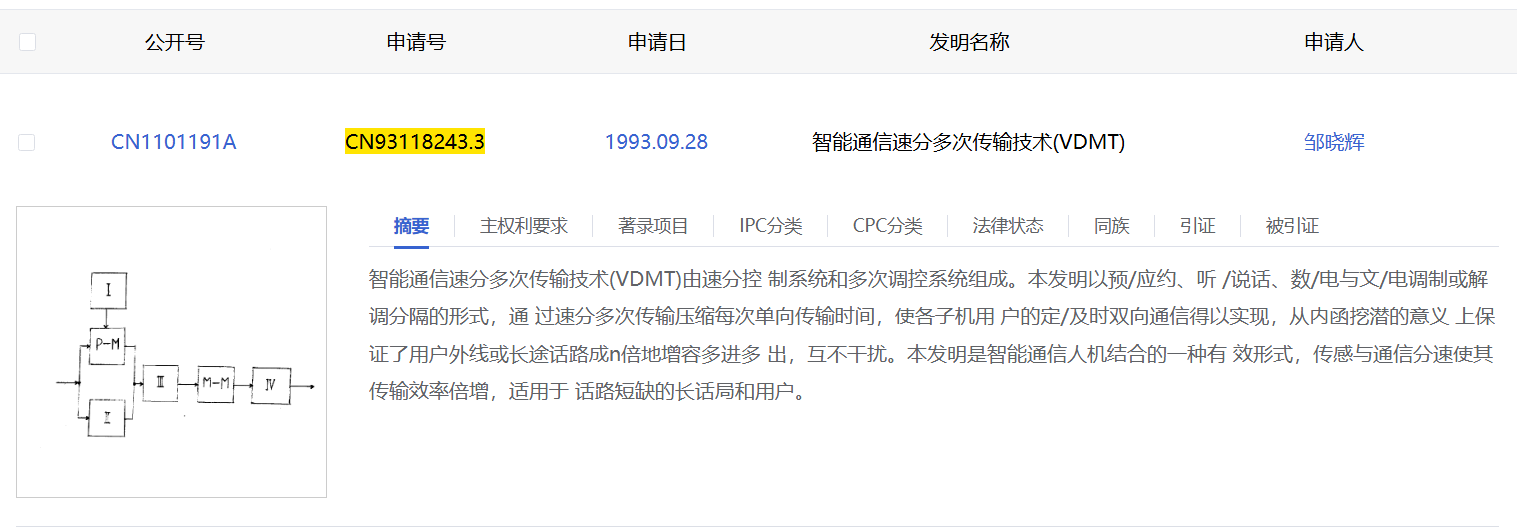
《智能通信速分多次传输技术(VDMT)》专利文件全文汉英双语对照版本,包括摘要、说明书及权利要求书。翻译力求准确传达原文技术内容,并对部分术语(如"速分"、"预/应约"、"定/及时"等)进行了合理英译。最后,附上系统点评。
摘要(Abstract)
中文:
智能通信速分多次传输技术(VDMT)由速分控制系统和多次调控系统组成。本发明以预/应约、听/说话、数/电与文/电调制或解调分隔的形式,通过速分多次传输压缩每次单向传输时间,使各子机用户的定时/及时双向通信得以实现,从内涵挖潜的意义上保证了用户外线或长途话路成n倍地增容多送多出,互不干扰。本发明是智能通信人机结合的一种有效形式,传感与通信分速使其传输效率倍增,适用于话路短缺的长话局和用户。
English:The Intelligent Communication Velocity-Division Multiple Transmission Technology (VDMT) consists of a velocity-division control system and a multiple regulation system. By adopting the separated forms of pre-arranged/on-demand calls, listening/speaking, digital/electrical and text/electrical modulation or demodulation, and by compressing each unidirectional transmission time through velocity-division multiple transmissions, the invention enables scheduled/real-time bidirectional communication for each subscriber unit. In terms of internal potential exploitation, it ensures that subscriber lines or long-distance trunk lines are multiplied by n times in capacity, allowing multiple concurrent transmissions without mutual interference. The invention represents an effective form of human-machine integration in intelligent communication. By separating the speeds of sensing and communication, it doubles the transmission efficiency, and is suitable for long-distance telephone bureaus and users facing a shortage of trunk lines.
说明书(Description)
中文:智能通信速分多次传输技术(VDMT),涉及电话通信及数字处理或传送领域。
现有频分多路传输技术(FDM)和时分多路传输技术(TDM)及码分多址传输技术(CDMA),借助电缆、光缆和卫星,已在交换、载波和数字化方面,使电话信道的外延扩充到了相当大的程度,与此相比较,由于人的说话速度对通信传输速率的限制,在通信传送的人机结合方面就显得极为滞后,因此,极大地制约了现代通信传输的速率和工作效率,使现行电话信道隐形闲置或浪费严重。
本发明的目的在于针对上述滞后及隐形浪费等缺陷或不足,创造了一种智能通信速分多次传输技术(VDMT),通过人机结合的优势,把通信与传感两过程进行阶段性分离和有针对性的组合,首先,从程序上调整拨号和通话的过程,使用数字脉冲信号与语言音频信号实现最佳传递,其次,在速度上对载波调制前或解调后的音频信号按通信与传感不同过程的具体要求做变速处理,最后,预/应约和定/及时进行分组传送,从而,使通信传输的总量、质量和结构均有显著改善,最终达到使现有电话信道的通信能力获得倍增之目的。
本发明由速分控制系统和多次调控系统组成,其特征是以子母机的形式,使Dial和Redial数字脉冲信号的人工与电子拨传的速度分隔,使传感过程和传递过程的语言的人工说/听与音频信号传送及录/放的速度分隔,以确保人机界面符合高情感或高理智的要求和机器自动传送过程符合高科技或高效率的性能要求,同时借助预/应约和定/及时分组传送技术分解双向通信的各次单向通信过程,实现携载前对音频信号的倍速传送,利用微处理器的部分人工智能倍速传送Redial脉冲信号,从而在整体上保证预/应约、定/及时和快传/录与慢说/听及录/放诸过程运行的各子系统形成协同倍增功能或效果并可通过预留的电脑、传真及可视电话等接口进行广泛的智能通信。
本发明是以速分多次传输的形式,将传感与通信进行适当的分离与组合,使录放音/象传感信息处理技术与电话传送技术相结合,着重对文/电或数/电以及音/载转换前的语言信号、脉冲信号和音频信号进行速分交换和多次传输的技术处理,通过人工智能的帮助,间接地提高了人说话或人工拨号的传递速度,从而在数量、质量和结构方面实现电话信道的综合倍增------至少可使现有各种电话通信信道增大或扩容一倍以上。
本发明的工作过程叙述如下:
预/应约通信,定/及时通信或对话,听/说传感信息处理,文/电或数/电转换,音频信号的倍速传送(携载前/去载后)。
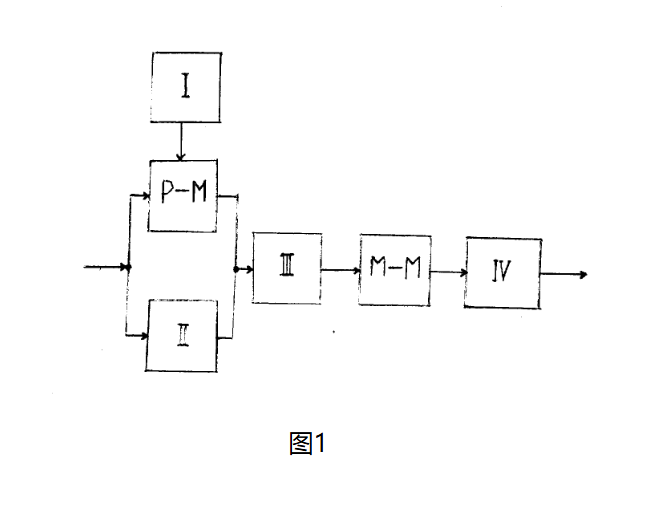
附图说明:
附图1、智能通信速分多次传输技术(VDMT)工作原理图
I、5WH Kiss/feeting语言提示应答/对话系统
Ⅱ、预/应约Redial系统
Ⅲ、IV、定/及时收发系统
P---M:听/说放/录传系统
M---M:快录传系统
本发明是现代智能通信人机结合的一种有效形式,特别是适用于急需提高电话通信效率或使其信道倍增的用户和电话局。
English:The Intelligent Communication Velocity-Division Multiple Transmission Technology (VDMT) relates to the field of telephone communication and digital processing or transmission.
Existing technologies such as Frequency-Division Multiplexing (FDM), Time-Division Multiplexing (TDM), and Code-Division Multiple Access (CDMA), utilizing cables, optical fibers, and satellites, have greatly expanded the extension of telephone channels in terms of switching, carrier waves, and digitization. In comparison, due to the limitation of human speaking speed on communication transmission rates, the human-machine integration in communication transmission has lagged significantly, thereby severely restricting the rate and efficiency of modern communication transmission and causing hidden idleness or serious waste of existing telephone channels.
The objective of the invention is to address the above-mentioned lag and hidden waste, and to create an Intelligent Communication Velocity-Division Multiple Transmission Technology (VDMT). By leveraging the advantages of human-machine integration, it performs phased separation and targeted combination of the communication and sensing processes. First, it adjusts the dialing and speaking processes programmatically to achieve optimal transmission of digital pulse signals and voice audio signals. Second, it performs variable-speed processing of audio signals before carrier modulation or after demodulation according to the specific requirements of different communication and sensing processes. Finally, it performs group transmission for pre-arranged/on-demand and scheduled/real-time calls. As a result, the total volume, quality, and structure of communication transmission are significantly improved, ultimately achieving the purpose of doubling the communication capacity of existing telephone channels.
The invention consists of a velocity-division control system and a multiple regulation system. Its characteristics are as follows: in the form of a master-subunit configuration, it separates the speeds of manual and electronic dialing transmission of Dial and Redial digital pulse signals; it also separates the speeds of manual listening/speaking of language in the sensing and transmission processes from the transmission and recording/playback of audio signals. This ensures that the human-machine interface meets the requirements of high emotional or high intellectual needs, while the automatic machine transmission process meets the performance requirements of high technology or high efficiency. Meanwhile, by employing pre-arranged/on-demand and scheduled/real-time group transmission technologies, it decomposes each unidirectional communication process of bidirectional communication, achieving double-speed transmission of audio signals before loading. It utilizes the partial artificial intelligence of microprocessors to double-speed transmit Redial pulse signals. Thus, it ensures synergistically multiplied functions or effects among subsystems operating in pre-arranged/on-demand, scheduled/real-time, fast transmission/recording, slow speaking/listening, and playback processes. It also reserves interfaces for computers, fax machines, and videophones to support extensive intelligent communication.
The invention, in the form of velocity-division multiple transmissions, appropriately separates and combines sensing and communication, integrating recording/playback of audio/video sensing information processing technology with telephone transmission technology. It focuses on velocity-division switching and multiple transmission processing of text/electrical or digital/electrical signals, as well as voice signals, pulse signals, and audio signals before audio/carrier conversion. With the aid of artificial intelligence, it indirectly increases the transmission speed of human speech or manual dialing, thereby achieving comprehensive multiplication of telephone channels in terms of quantity, quality, and structure---at least doubling the capacity of existing various telephone communication channels.
The working process of the invention is described as follows:
Pre-arranged/on-demand communication, scheduled/real-time communication or conversation, listening/speaking sensing information processing, text/electrical or digital/electrical conversion, double-speed transmission of audio signals (before loading / after unloading).
Brief description of the drawing:
Figure 1
-- Working principle diagram of the Intelligent Communication Velocity-Division Multiple Transmission Technology (VDMT)
I. 5WH Kiss/feeting voice prompt response/dialogue system
II. Pre-arranged/on-demand Redial system
III, IV. Scheduled/real-time transmission and reception systems
P--M: Listening/speaking playback/recording transmission system
M--M: Fast recording transmission system
The invention is an effective form of human-machine integration in modern intelligent communication, particularly suitable for users and telephone bureaus in urgent need of improving telephone communication efficiency or multiplying channel capacity.
权利要求书(Claims)
中文:
1、智能通信速分多次传输技术(VDMT)由速分控制系统和多次调控系统组成,其特征是以预/应约、听/说话、数/电与文/电调制或解调分隔的形式,通过速分多次传输压缩每次单向传输的时间,使各子机用户的定/及时双向通信得以实现,从内涵挖潜的意义上保证了用户外线或长途话路成倍地增容,多进多出,互不干扰。
2、根据权利要求1所述的VDMT,其特征是通过人机结合的优势互补,把通信与传感两过程进行阶段性分离和有针对性地组合,首先,从程序上调整拨号和通话的过程,使数字脉冲信号与语言音频信号实现最佳传递,其次,在速度上对载波调制前或解调后的音频信号按通信与传感不同过程的具体要求做变速处理,最后,预/应约和定/及时进行分组传送,从而,使通信传输的总量、质量和结构均有显著改善,最终达到使现有电话信道的通信能力获得倍增的目的。
3、根据权利要求1所述的VDMT,其特征是以子母机的形式,使Dial和Redial数字脉冲信号的人工与电子拨传的速度分隔,使传感过程和传递过程的语言信息与音频信号的传感与传送的速度分隔,确保人机界面与机器通信的过程同时满足高情感,高科技的要求,随心所欲表达的情感,简明厄要的思想表述,均能倍速传送,还可通过电脑、传真及可视电话预留接口以适应高智能、高情感的进一步通信需要。
4、根据权利要求1所述的VDMT,其特征是以速分多次传输的形式,将传感与通信进行适当的分离与组合,使录放音/象的传感信息处理技术与电话传送技术相结合,着重对文/电、数/电在调制前或解调后对语言信息、数字信息与音频信号、脉冲信号进行速分多次传输技术处理,借助人工智能,使人的说/听话和人工拨号过程与信息传输过程分离,从而在数量、质量和结构方面实现电话信道的综合倍增。
English:An Intelligent Communication Velocity-Division Multiple Transmission Technology (VDMT), consisting of a velocity-division control system and a multiple regulation system, characterized in that, by adopting the separated forms of pre-arranged/on-demand calls, listening/speaking, digital/electrical and text/electrical modulation or demodulation, and by compressing each unidirectional transmission time through velocity-division multiple transmissions, scheduled/real-time bidirectional communication for each subscriber unit is achieved, thereby, in the sense of internal potential exploitation, ensuring that subscriber lines or long-distance trunk lines are multiplied in capacity, allowing multiple concurrent transmissions without mutual interference.
The VDMT according to claim 1, characterized in that, by complementing the advantages of human-machine integration, the communication and sensing processes are phasedly separated and targetedly combined: first, the dialing and speaking processes are programmatically adjusted to achieve optimal transmission of digital pulse signals and voice audio signals; second, variable-speed processing is applied to audio signals before carrier modulation or after demodulation according to specific requirements of different communication and sensing processes; finally, pre-arranged/on-demand and scheduled/real-time calls are transmitted in groups, thereby significantly improving the total volume, quality, and structure of communication transmission, ultimately achieving the purpose of doubling the communication capacity of existing telephone channels.
The VDMT according to claim 1, characterized in that, in a master-subunit configuration, the speeds of manual and electronic dialing transmission of Dial and Redial digital pulse signals are separated, and the speeds of sensing and transmitting language information and audio signals in the sensing and transmission processes are separated, ensuring that the human-machine interface and the machine communication process simultaneously meet the requirements of high emotion and high technology. Emotions expressed freely and concise thoughts can be transmitted at double speed. Reserved interfaces for computers, fax machines, and videophones are provided to meet further communication needs of high intelligence and high emotion.
The VDMT according to claim 1, characterized in that, in the form of velocity-division multiple transmissions, sensing and communication are appropriately separated and combined, integrating recording/playback audio/video sensing information processing technology with telephone transmission technology, focusing on velocity-division multiple transmission processing of text/electrical, digital/electrical signals, as well as voice information, digital information, audio signals, and pulse signals before modulation or after demodulation. With the aid of artificial intelligence, the processes of human speaking/listening and manual dialing are separated from the information transmission process, thereby achieving comprehensive multiplication of telephone channels in terms of quantity, quality, and structure.
系统点评(Systematic Review)
《智能通信速分多次传输技术(VDMT)》是一项诞生于1993年的通信技术专利,其核心思想具有很强的超前性和原创性。在当时的通信环境下,主流技术仍以FDM、TDM和初期的CDMA为主,信道扩容主要依赖物理层的外延扩展(如光缆、卫星)。而VDMT另辟蹊径,从"人机结合"和"通信与传感过程分离"的角度,试图挖掘现有电话信道的内在潜力,本质上是一种面向语音通信的异步传输与变速处理方案。
积极评价
前瞻性的"速率分离"理念
专利明确提出"速分"------即根据人的感知过程(听、说)与机器传输过程对速率的不同要求,人为地进行变速处理(慢说快传)。这比后来广泛应用的语音压缩、静音抑制、分组语音等技术早了若干年。其思想甚至可视为对"异步传输模式(ATM)"中可变比特率(VBR)服务的一种朴素表达。
人机协同的系统工程视角
作者敏锐地指出:人的说话速度是通信传输效率的瓶颈。通过将人工拨号、语音输入等"传感"过程与信道上的"传输"过程在时间和速率上解耦,使信道可以以更高的速度传送预录或缓存的信息。这一思路类似于现代VoIP中的"存储-转发"与"变速播放",具有明显的实用价值。
结构化倍增信道的设想
专利不仅追求数量上的扩容(至少一倍以上),还强调"质量"和"结构"的改善。例如预/应约机制、定/及时分组传送,实际上是对双向通信中的并发与冲突管理的一种早期探索,类似于轻量级的介质访问控制(MAC)策略。
广泛兼容性与接口预留
设计中预留了电脑、传真、可视电话等接口,体现了对多媒体通信发展的预见性。在1993年个人电脑和互联网尚未普及时,这种开放架构是难能可贵的。
低成本内涵挖潜的意义
对于当时我国及许多发展中国家电话线路短缺的实际问题,VDMT提供了一种不依赖大量铺设新线路的"软扩容"方案,具有显著的经济性和现实可行性。
前瞻性分析
该专利中"听/说"与"传/收"分离的思想,与后来互联网通信中的"异步消息"、"语音邮箱"、"语音压缩实时传输"高度契合。尤其是在移动通信从2G到4G的发展中,语音编码速率不断降低,信道利用率大幅提升,本质上都是对"慢说快传"原则的工程实现。
"多次传输"和"分组传送"的提法,隐约指向了分组交换(packet switching)的核心特征------将连续的数据流切割为小单元独立传输。虽然专利未明确使用"分组"一词,但"多次""定/及时""快录传"等描述已具备包交换的雏形。
将人工智能用于拨号信号(Redial)的倍速传送,体现早期用AI优化通信控制的尝试,如今已成为智能通信网络(如基于机器学习的信道预测与调度)的常态。
系统意义上的潜在不足(以今日视角回顾)
当时缺乏强大的微处理器和高速A/D转换器,实现"变速录放"和"预/应约分组调度"的硬件成本可能较高,限制了大规模商用。
对于实时性要求极高的对话(如紧急通话),变速处理可能引入额外延迟或需要复杂的缓冲管理,专利未详细讨论延时与抖动的控制方法。
"速分"作为一个自创术语,未能像TDM、FDM那样形成通用技术范式,但其思想在后来被更先进的语音编码和分组传输技术所吸收。
总体结论
邹晓辉先生的VDMT是一项被时代低估但极具前瞻性的发明。它跳出了单纯物理层扩容的思维定式,从人机交互和信号处理流程重构的角度提出了信道倍增的"软方案"。许多核心概念------速率适配、传感与通信分离、异步传输、分组化语音------在后来30年的通信发展中逐一成为主流。该专利不仅展示了发明人深刻的洞察力,也为我国早期自主知识产权通信技术提供了一份宝贵的思想遗产。若能在当时获得足够的工程支持和产业转化,或许会推动语音通信领域的另一条技术路径。即使在今天,其"人机协同挖潜信道"的理念对于物联网、边缘智能中的低功耗通信优化,仍具有启发意义。