在制作专业的 PowerPoint 演示文稿时,页眉和页脚是重要的文档元素,能够展示公司名称、演示主题、日期时间和幻灯片编号等关键信息。这些元素不仅提升了文档的专业性,还帮助观众快速定位和理解演示内容。本文将介绍如何使用 Python 在 PowerPoint 演示文稿中 programmatically 添加和管理页眉页脚。
为什么需要 programmatically 管理页眉页脚
在实际应用场景中,手动设置每一页的页眉页脚效率低下,特别是在以下情况:
- 批量处理多个演示文稿:需要为一系列文档统一添加公司标识和页码
- 动态内容更新:根据演示日期或会议信息自动更新日期和时间
- 模板标准化:确保所有演示文稿遵循统一的格式规范
- 备注页管理:为演讲者备注添加专门的页眉页脚信息
通过 Python 编程方式操作页眉页脚,可以实现上述场景的自动化处理,显著提升工作效率。
环境准备
在开始之前,需要安装支持 PowerPoint 操作的 Python 库。Spire.Presentation for Python 提供了完整的页眉页脚操作 API。
bash
pip install Spire.Presentation安装完成后,即可在 Python 脚本中导入相关模块进行页眉页脚的设置和管理。
基础页眉页脚设置
PowerPoint 的页眉页脚功能主要通过 Presentation 对象的属性来控制。可以设置页脚文本、控制页脚可见性、显示幻灯片编号和日期时间。
python
from spire.presentation.common import *
from spire.presentation import *

outputFile = "HeaderAndFooter.pptx"

# 创建演示文稿对象
presentation = Presentation()

# 添加空白幻灯片
slide = presentation.Slides.Append()

# 添加页脚文本
presentation.SetFooterText("Demo of Spire.Presentation")

# 设置页脚可见
presentation.FooterVisible = True

# 设置幻灯片编号可见
presentation.SlideNumberVisible = True

# 设置日期时间可见
presentation.DateTimeVisible = True

# 保存文档
presentation.SaveToFile(outputFile, FileFormat.Pptx2010)
presentation.Dispose()
结果文档预览:
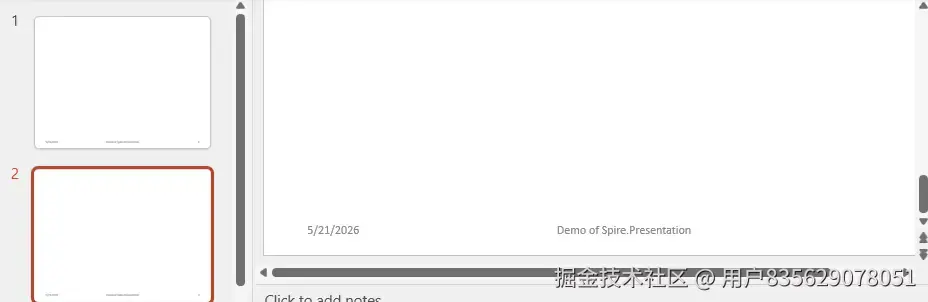
在这个示例中,通过四个关键属性控制了页眉页脚的显示:
SetFooterText():设置页脚显示的文本内容FooterVisible:控制页脚是否显示SlideNumberVisible:控制幻灯片编号是否显示DateTimeVisible:控制日期时间是否显示
这些属性的组合使用可以灵活配置演示文稿的页眉页脚样式。
管理备注母版页眉页脚
除了普通幻灯片的页眉页脚,PowerPoint 还支持为备注页(Notes)设置专门的页眉页脚。这在打印演讲者备注时非常有用,可以为备注页面添加独立的标识信息。
python
from spire.presentation.common import *
from spire.presentation import *

outputFile = "ManageNoteMasterHeaderFooter.pptx"

# 创建演示文稿对象
presentation = Presentation()

# 添加空白幻灯片
slide = presentation.Slides.Append()

# 获取备注母版
noteMasterSlide = presentation.NotesMaster

if noteMasterSlide is not None:
    # 遍历备注母版中的所有形状
    for shape in noteMasterSlide.Shapes:
        if shape.Placeholder is not None:
            # 检查是否为页眉占位符
            if shape.Placeholder.Type is PlaceholderType.Header:
                autoShape = shape if isinstance(shape, IAutoShape) else None
                if autoShape is not None:
                    autoShape.TextFrame.Text = "change the header by Spire"

            # 检查是否为页脚占位符
            if shape.Placeholder.Type is PlaceholderType.Footer:
                autoShape = shape if isinstance(shape, IAutoShape) else None
                if autoShape is not None:
                    autoShape.TextFrame.Text = "change the footer by Spire"

# 保存文档
presentation.SaveToFile(outputFile, FileFormat.Pptx2013)
presentation.Dispose()
这个示例展示了如何操作备注母版的页眉页脚:
- 通过
NotesMaster属性获取备注母版对象 - 遍历母版中的所有形状(Shapes)
- 检查形状的
Placeholder类型,识别页眉和页脚占位符 - 将形状转换为
IAutoShape类型后,修改其TextFrame.Text属性
这种方法允许精确控制备注页面的页眉页脚内容,与普通幻灯片的页眉页脚相互独立。
实用技巧
条件化显示页眉页脚
可以根据演示文稿的具体需求,有条件地启用或禁用某些页眉页脚元素:
python
# 仅显示页脚和幻灯片编号,不显示日期
presentation.SetFooterText("Company Name - 2024")
presentation.FooterVisible = True
presentation.SlideNumberVisible = True
presentation.DateTimeVisible = False
动态更新日期
如果需要显示当前日期,可以在运行时动态设置:
python
from datetime import datetime

# 获取当前日期并格式化
current_date = datetime.now().strftime("%Y-%m-%d")
presentation.SetFooterText(f"演示日期: {current_date}")
presentation.FooterVisible = True
批量处理多个文件
当需要为多个演示文稿统一设置页眉页脚时,可以使用循环处理:
python
import os

file_list = ["presentation1.pptx", "presentation2.pptx", "presentation3.pptx"]

for filename in file_list:
    presentation = Presentation()
    presentation.LoadFromFile(filename)

    presentation.SetFooterText("Confidential - Internal Use Only")
    presentation.FooterVisible = True
    presentation.SlideNumberVisible = True

    output_name = f"updated_{filename}"
    presentation.SaveToFile(output_name, FileFormat.Pptx2010)
    presentation.Dispose()
总结
本文介绍了使用 Python 在 PowerPoint 演示文稿中管理页眉页脚的方法,包括:
- 基础页眉页脚设置:添加页脚文本、控制可见性
- 备注母版页眉页脚管理:为演讲者备注设置独立的页眉页脚
- 实用技巧:条件化显示、动态更新日期、批量处理
通过这些技术,可以实现演示文稿页眉页脚的自动化管理,提升文档处理效率。Spire.Presentation for Python 提供的 API 使得这些操作变得简单直观,适合集成到各种自动化工作流中。