目录
[1. oled.c:](#1. oled.c:)
一.OLED原理
OLED屏幕由许多的小灯组成,有选择点亮一部分小灯,可以得到我们想要的图案。
屏幕上小灯排列的数目,称为分辨率。比如128*64分辨率:128列64行小灯。
stm32不会像之前控制RGB小灯一样使用一个IO口控制一个小灯,因为需要占用很多个引脚。因此,stm32通过屏幕驱动芯片:使用IIC或SPI等通信协议与屏幕驱动芯片进行通信就可以操控很多个小灯的亮灭。以128*64分辨率的oled屏幕为例:将其64行分为8页,每页有8行,保证可以用一个字节的数据来表示其中一页的某一列8个像素的亮灭。例如,我们通过IIC通信告诉屏幕驱动芯片,将第0页的第三列设置为0xC1,即1100 0001。那么,我们如何通过IIC通信操作屏幕驱动芯片呢?
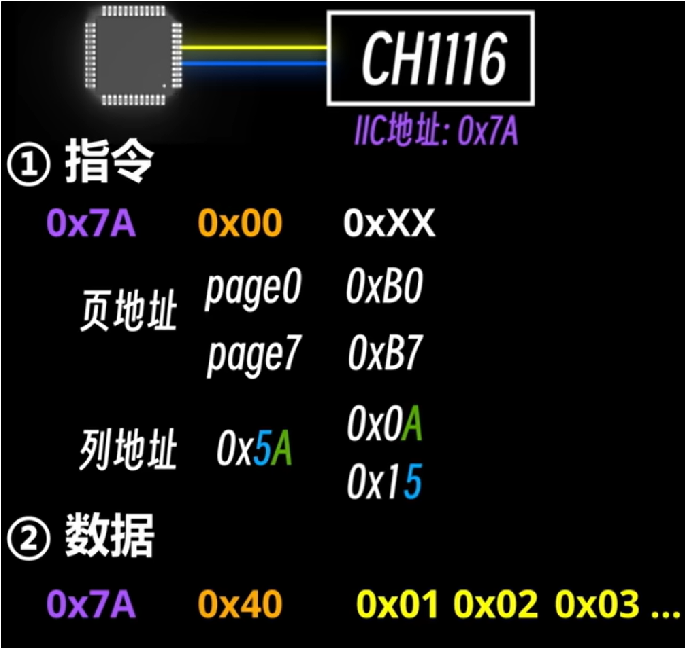
1.屏幕驱动芯片CH1116的IIC地址为0x7A
操控oled屏幕的通信分为两类:
(1)第一类为指令(给哪个从机发送,在从机具体哪个位置):0x7A(IIC地址,即给哪个从机发地址),0x00(固定开头指令),0xXX(一字节指令:在具体哪一页哪一列开始发送指令)
其中一字节指令:
设置页地址,page0:0xB0;fff page7:0xB7
设置列地址,设置90(0x5A):0x0A(列地址低四位设置为A),0x15(列地址高四位设置为5)
(2)第二类为数据(发送具体数据):
0x7A(IIC地址),0x40(开头),发送任意数量的数据
发送任意数量数据的规则:比如0x01,0x02.......屏幕驱动芯片根据当前页地址与列地址,将这些数据代表的像素亮灭表现在屏幕上,CH1116芯片设置完一字节的8个像素后,列地址会自动+1。
因此,我们只需将指令中的页地址设置为0x7A,0x00,0xB0,设置列地址:0x7A,0x00,0x00&0x7A,0x00,0x10,然后发送128字节(数据)直接完成一页屏幕的像素设置,然后将页地址递增,循环8次,即可完成整个屏幕的像素设置。

二.CubeMX
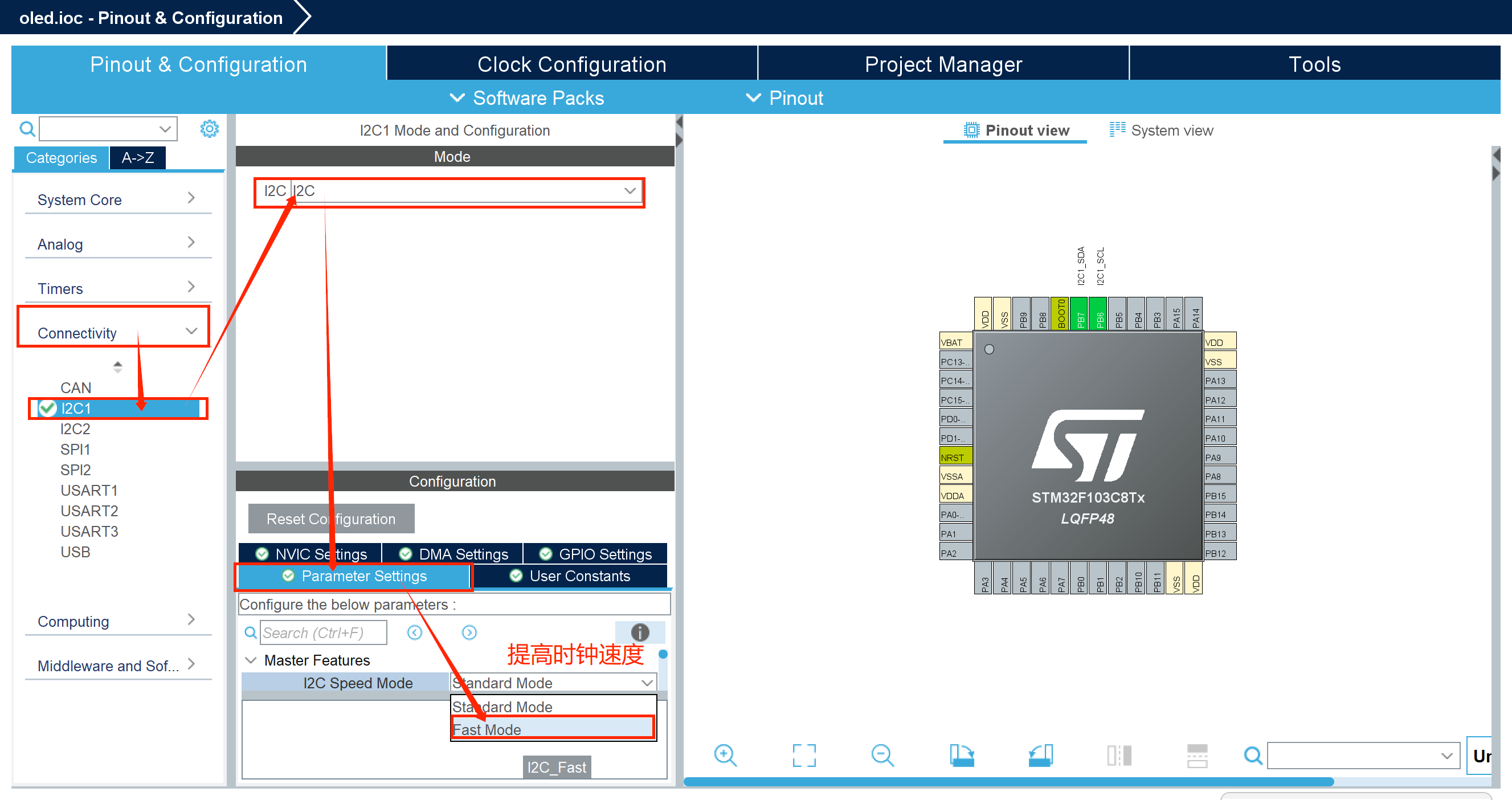
1.与CH1116通信的I2C1打开,设置I2C1模式
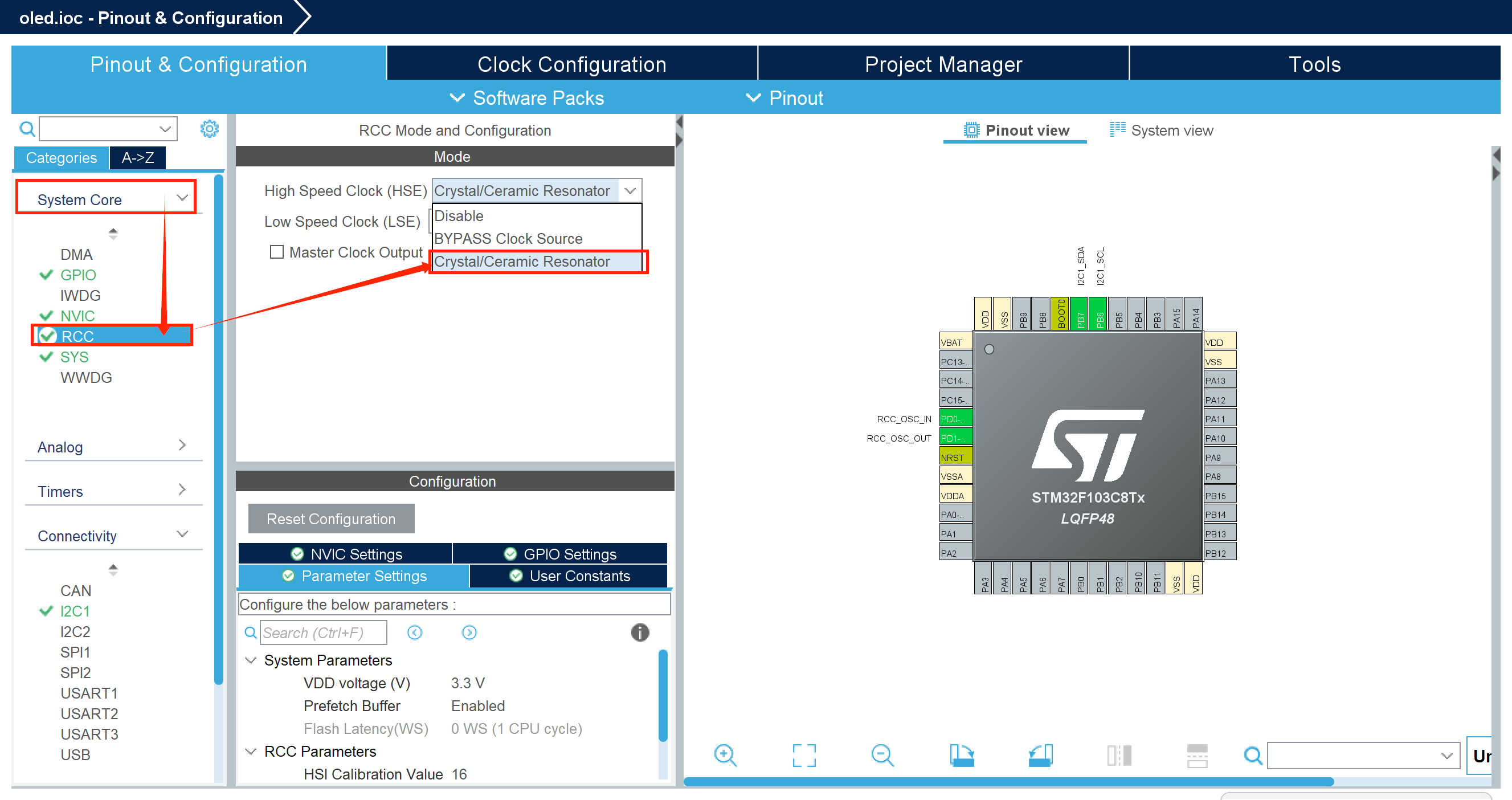
2.为了提速,使用外部晶振
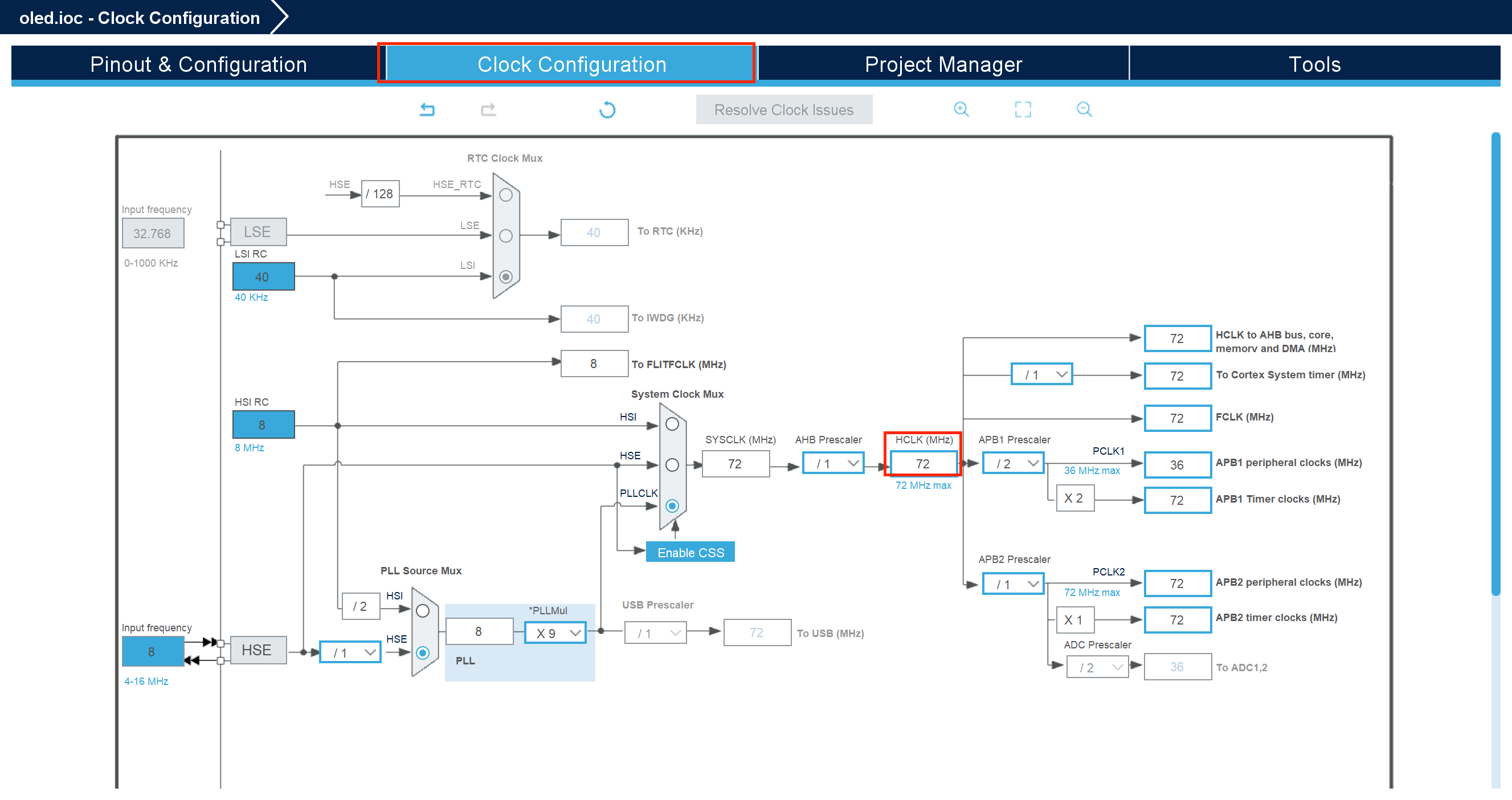
改为72MHz时钟频率
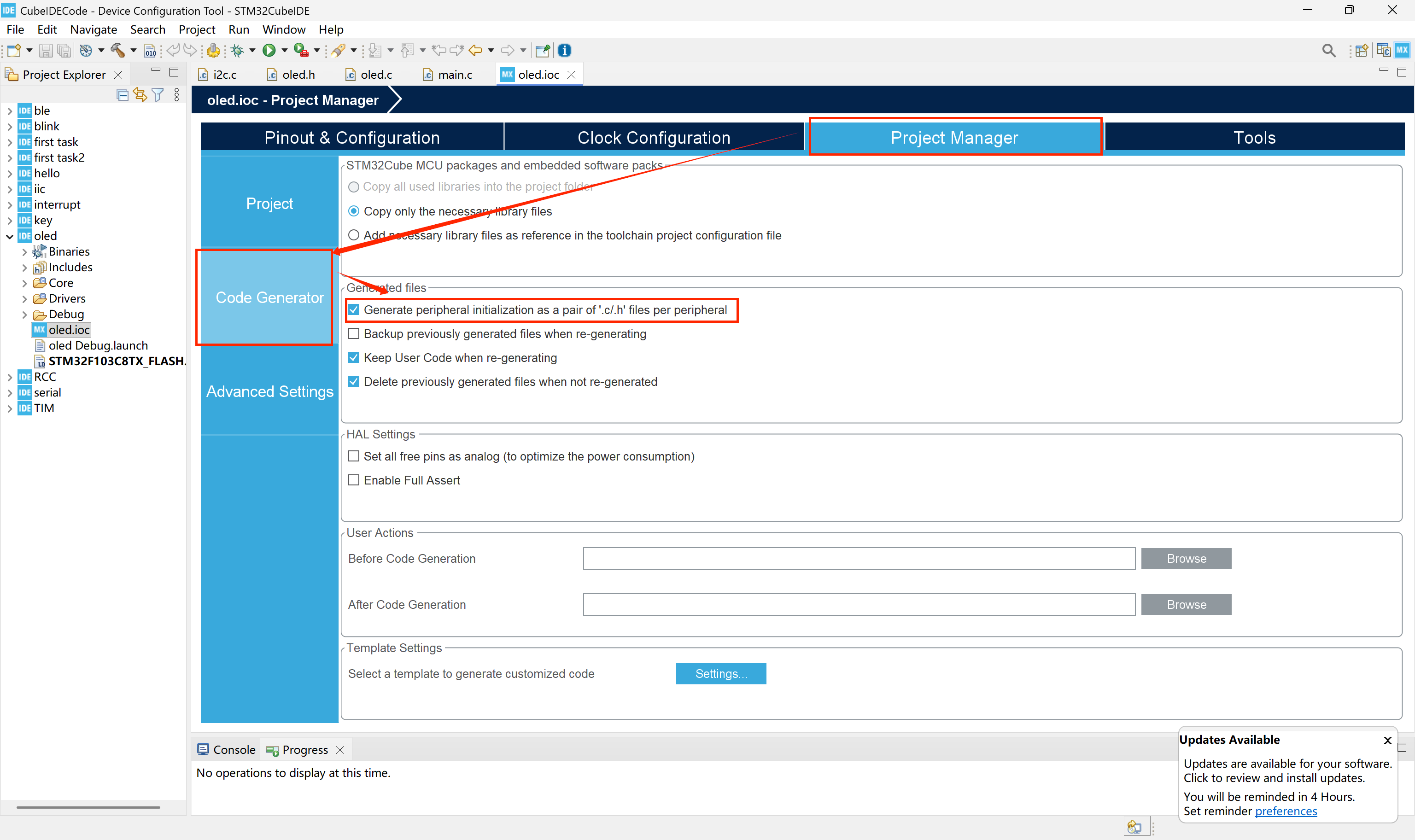
3.为每个外设生成单独的.c与.h文件
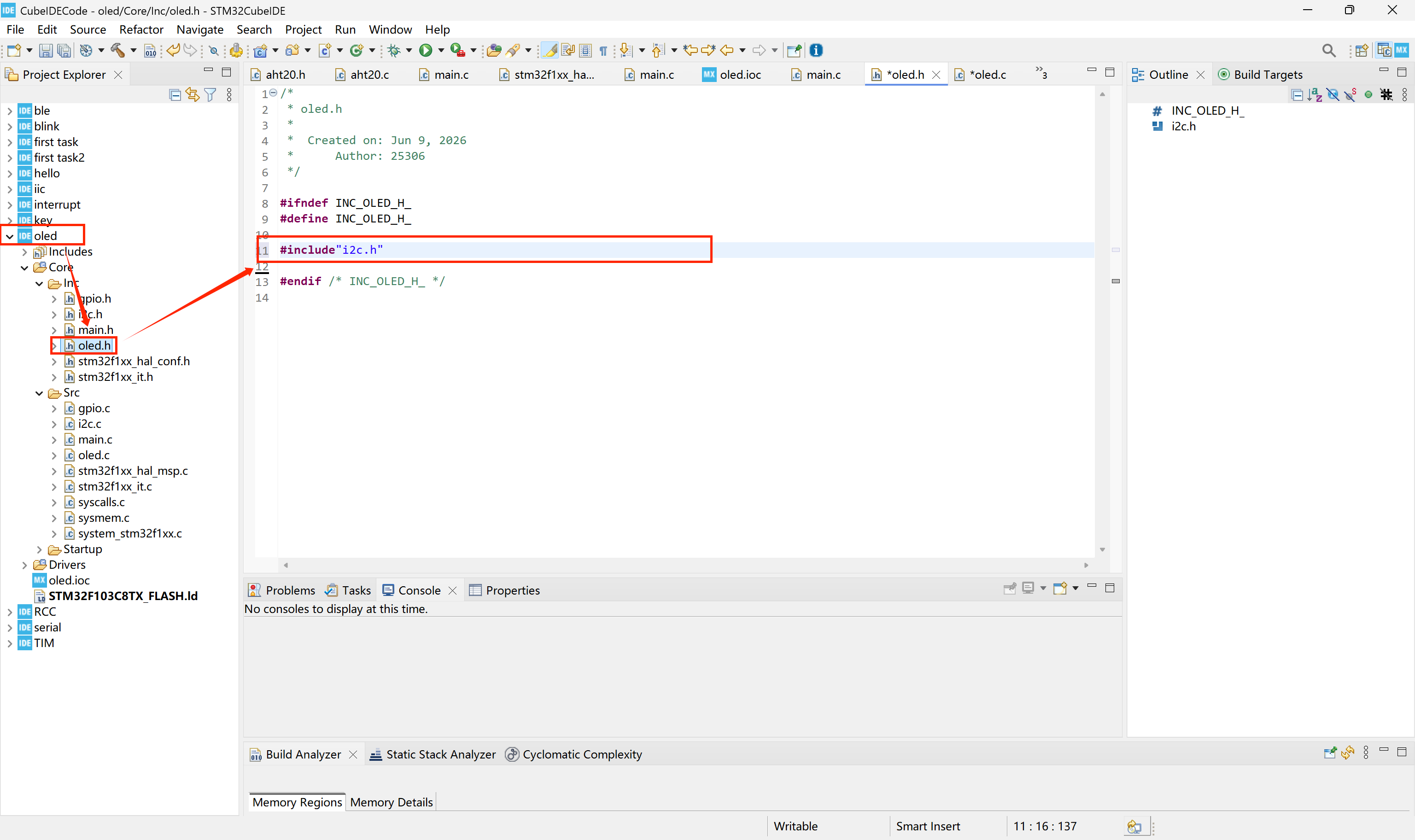
(1)再建立oled.h文件
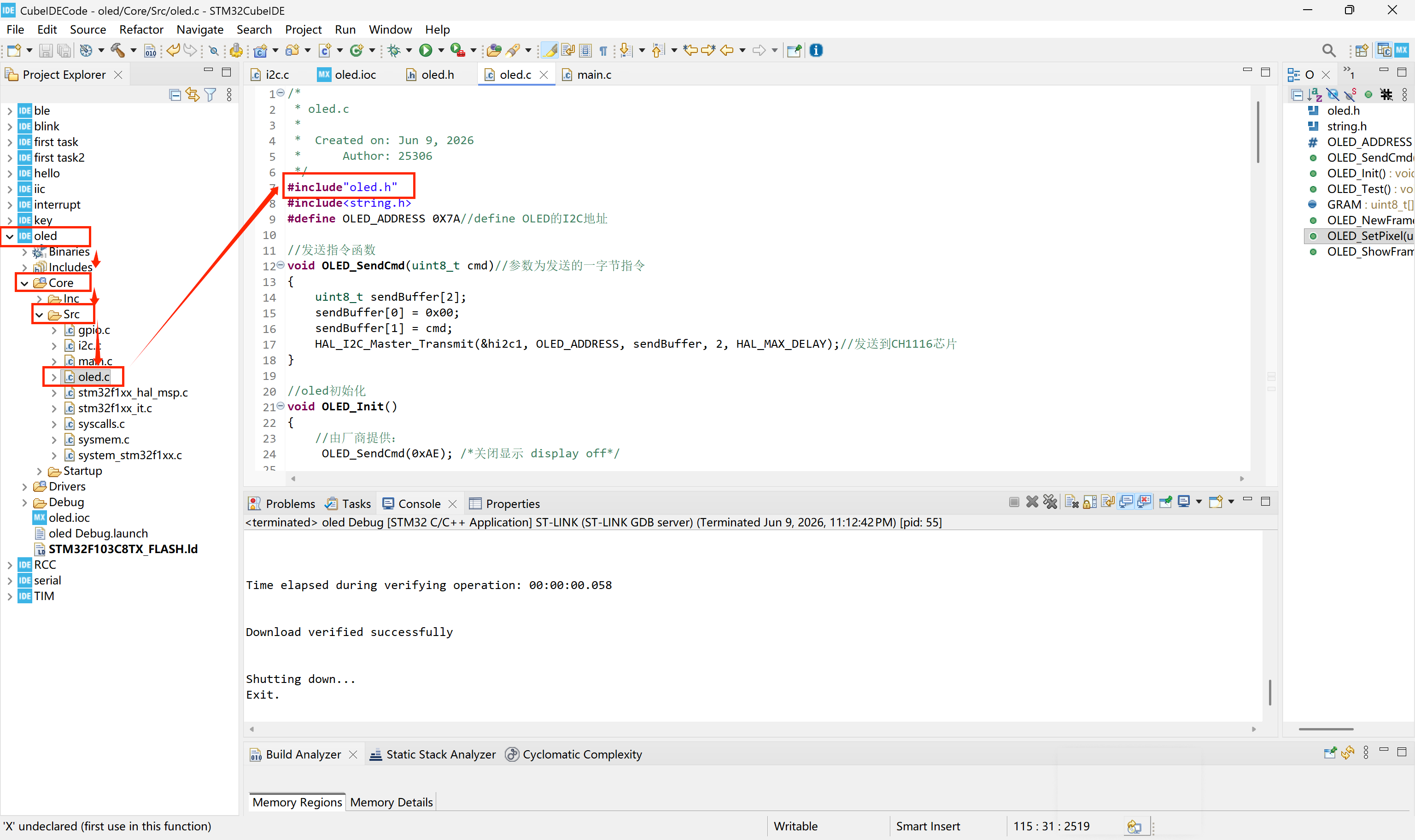
(2)再建立oled.c文件
三.代码:
实现在oled屏幕显示一个移动的小点
1. oled.c:
(1)发送指令函数
cpp//发送指令函数 void OLED_SendCmd(uint8_t cmd)//参数为发送的一字节指令 { uint8_t sendBuffer[2]; sendBuffer[0] = 0x00; sendBuffer[1] = cmd; HAL_I2C_Master_Transmit(&hi2c1, OLED_ADDRESS, sendBuffer, 2, HAL_MAX_DELAY);//发送到CH1116芯片 }(2)oled初始化
cppvoid OLED_Init() { //由厂商提供: OLED_SendCmd(0xAE); /*关闭显示 display off*/ OLED_SendCmd(0x02); /*设置列起始地址 set lower column address*/ OLED_SendCmd(0x10); /*设置列结束地址 set higher column address*/ OLED_SendCmd(0x40); /*设置起始行 set display start line*/ OLED_SendCmd(0xB0); /*设置页地址 set page address*/ OLED_SendCmd(0x81); /*设置对比度 contract control*/ OLED_SendCmd(0xCF); /*128*/ OLED_SendCmd(0xA1); /*设置分段重映射 从右到左 set segment remap*/ OLED_SendCmd(0xA6); /*正向显示 normal / reverse*/ OLED_SendCmd(0xA8); /*多路复用率 multiplex ratio*/ OLED_SendCmd(0x3F); /*duty = 1/64*/ OLED_SendCmd(0xAD); /*设置启动电荷泵 set charge pump enable*/ OLED_SendCmd(0x8B); /*启动DC-DC */ OLED_SendCmd(0x33); /*设置泵电压 set VPP 10V */ OLED_SendCmd(0xC8); /*设置输出扫描方向 COM[N-1]到COM[0] Com scan direction*/ OLED_SendCmd(0xD3); /*设置显示偏移 set display offset*/ OLED_SendCmd(0x00); /* 0x00 */ OLED_SendCmd(0xD5); /*设置内部时钟频率 set osc frequency*/ OLED_SendCmd(0xC0); OLED_SendCmd(0xD9); /*设置放电/预充电时间 set pre-charge period*/ OLED_SendCmd(0x1F); /*0x22*/ OLED_SendCmd(0xDA); /*设置引脚布局 set COM pins*/ OLED_SendCmd(0x12); OLED_SendCmd(0xDB); /*设置电平 set vcomh*/ OLED_SendCmd(0x40); OLED_NewFrame(); OLED_ShowFrame(); OLED_SendCmd(0xAF); /*开启显示 display ON*/ }(3)"显存"清空为0函数:
cpp//"显存": uint8_t GRAM[8][128]; //调用此函数后,开始画新的一帧屏幕,作用将显存清空为0,防止"花屏" //启动"刷新": void OLED_NewFrame() { //法一:双层for循环 // for(uint8_t i = 0; i < 8; i++) // { // for(uint8_t j = 0; j< 128; j++) // { // GRAM[i][j] = 0; // } // } //法二:memset函数 memset(GRAM, 0, sizeof(GRAM));//头文件string.h }(4)设置某个像素亮起的函数::
cpp//设置某个像素亮起的函数: //将(x,y)位置的像素设置为1 //设置像素点亮起: void OLED_SetPixel(uint8_t x, uint8_t y) { if(x >= 128 || y>= 64)//防止数组越界 { return; } GRAM[y/8][x] |= 0X01 << (y % 8); }(5)将显存显示到屏幕上的函数:
cpp//将显存显示到屏幕上的函数: //"展示": void OLED_ShowFrame() { uint8_t sendBuffer[129];//存储要发送的数据 sendBuffer[0] = 0x40;//0x40:表示发送的是显示在屏幕上的数据 for(uint8_t i = 0; i < 8 ; i++) { //其中一页 for(uint8_t j = 0; j < 128; j++) { sendBuffer[j+1] = GRAM[i][j]; } OLED_SendCmd(0xB0 + i);//注意+i OLED_SendCmd(0x02); OLED_SendCmd(0x10); HAL_I2C_Master_Transmit(&hi2c1, OLED_ADDRESS, sendBuffer, sizeof(sendBuffer), HAL_MAX_DELAY);//发送给oled屏幕 } }2.注意声明oled.h
cpp/* * oled.h * * Created on: Jun 9, 2026 * Author: 25306 */ #ifndef INC_OLED_H_ #define INC_OLED_H_ #include"i2c.h" //在oled.c文件中定义好的函数都要在oled.h文件中声明 void OLED_Init(); void OLED_Test(); void OLED_NewFrame(); void OLED_ShowFrame(); void OLED_SetPixel(uint8_t x, uint8_t y); #endif /* INC_OLED_H_ */
3.main.c
cpp/* USER CODE BEGIN Header */ /** ****************************************************************************** * @file : main.c * @brief : Main program body ****************************************************************************** * @attention * * Copyright (c) 2026 STMicroelectronics. * All rights reserved. * * This software is licensed under terms that can be found in the LICENSE file * in the root directory of this software component. * If no LICENSE file comes with this software, it is provided AS-IS. * ****************************************************************************** */ /* USER CODE END Header */ /* Includes ------------------------------------------------------------------*/ #include "main.h" #include "i2c.h" #include "gpio.h" /* Private includes ----------------------------------------------------------*/ /* USER CODE BEGIN Includes */ #include"oled.h" /* USER CODE END Includes */ /* Private typedef -----------------------------------------------------------*/ /* USER CODE BEGIN PTD */ /* USER CODE END PTD */ /* Private define ------------------------------------------------------------*/ /* USER CODE BEGIN PD */ /* USER CODE END PD */ /* Private macro -------------------------------------------------------------*/ /* USER CODE BEGIN PM */ /* USER CODE END PM */ /* Private variables ---------------------------------------------------------*/ /* USER CODE BEGIN PV */ /* USER CODE END PV */ /* Private function prototypes -----------------------------------------------*/ void SystemClock_Config(void); /* USER CODE BEGIN PFP */ /* USER CODE END PFP */ /* Private user code ---------------------------------------------------------*/ /* USER CODE BEGIN 0 */ /* USER CODE END 0 */ /** * @brief The application entry point. * @retval int */ int main(void) { /* USER CODE BEGIN 1 */ /* USER CODE END 1 */ /* MCU Configuration--------------------------------------------------------*/ /* Reset of all peripherals, Initializes the Flash interface and the Systick. */ HAL_Init(); /* USER CODE BEGIN Init */ /* USER CODE END Init */ /* Configure the system clock */ SystemClock_Config(); /* USER CODE BEGIN SysInit */ /* USER CODE END SysInit */ /* Initialize all configured peripherals */ MX_GPIO_Init(); MX_I2C1_Init(); /* USER CODE BEGIN 2 */ HAL_Delay(20);//OLED启动比stm32慢20ms OLED_Init();//要初始化 // OLED_NewFrame();//清空显存 // OLED_ShowFrame();//显存刷新到屏幕上 // OLED_Test();//让第0页前几个像素间隔亮起 /* USER CODE END 2 */ /* Infinite loop */ /* USER CODE BEGIN WHILE */ while (1) { for(uint8_t i = 0; i < 64; i++) { OLED_NewFrame(); OLED_SetPixel(2*i , i); OLED_ShowFrame(); } } /* USER CODE END WHILE */ /* USER CODE BEGIN 3 */ /* USER CODE END 3 */ } /** * @brief System Clock Configuration * @retval None */ void SystemClock_Config(void) { RCC_OscInitTypeDef RCC_OscInitStruct = {0}; RCC_ClkInitTypeDef RCC_ClkInitStruct = {0}; /** Initializes the RCC Oscillators according to the specified parameters * in the RCC_OscInitTypeDef structure. */ RCC_OscInitStruct.OscillatorType = RCC_OSCILLATORTYPE_HSE; RCC_OscInitStruct.HSEState = RCC_HSE_ON; RCC_OscInitStruct.HSEPredivValue = RCC_HSE_PREDIV_DIV1; RCC_OscInitStruct.HSIState = RCC_HSI_ON; RCC_OscInitStruct.PLL.PLLState = RCC_PLL_ON; RCC_OscInitStruct.PLL.PLLSource = RCC_PLLSOURCE_HSE; RCC_OscInitStruct.PLL.PLLMUL = RCC_PLL_MUL9; if (HAL_RCC_OscConfig(&RCC_OscInitStruct) != HAL_OK) { Error_Handler(); } /** Initializes the CPU, AHB and APB buses clocks */ RCC_ClkInitStruct.ClockType = RCC_CLOCKTYPE_HCLK|RCC_CLOCKTYPE_SYSCLK |RCC_CLOCKTYPE_PCLK1|RCC_CLOCKTYPE_PCLK2; RCC_ClkInitStruct.SYSCLKSource = RCC_SYSCLKSOURCE_PLLCLK; RCC_ClkInitStruct.AHBCLKDivider = RCC_SYSCLK_DIV1; RCC_ClkInitStruct.APB1CLKDivider = RCC_HCLK_DIV2; RCC_ClkInitStruct.APB2CLKDivider = RCC_HCLK_DIV1; if (HAL_RCC_ClockConfig(&RCC_ClkInitStruct, FLASH_LATENCY_2) != HAL_OK) { Error_Handler(); } } /* USER CODE BEGIN 4 */ /* USER CODE END 4 */ /** * @brief This function is executed in case of error occurrence. * @retval None */ void Error_Handler(void) { /* USER CODE BEGIN Error_Handler_Debug */ /* User can add his own implementation to report the HAL error return state */ __disable_irq(); while (1) { } /* USER CODE END Error_Handler_Debug */ } #ifdef USE_FULL_ASSERT /** * @brief Reports the name of the source file and the source line number * where the assert_param error has occurred. * @param file: pointer to the source file name * @param line: assert_param error line source number * @retval None */ void assert_failed(uint8_t *file, uint32_t line) { /* USER CODE BEGIN 6 */ /* User can add his own implementation to report the file name and line number, ex: printf("Wrong parameters value: file %s on line %d\r\n", file, line) */ /* USER CODE END 6 */ } #endif /* USE_FULL_ASSERT */