Tool 的安全性与执行沙箱:从 Docker 到 gVisor 的防御架构

作 者:吴佳浩(Alben)
公众号:全栈架构师笔记
系列专栏:《企业级 Agent 实战指南---------MCP 与 Agent Tools 工程化落地实战》· 第 03 篇
导读
拥有工具调用的 Agent 是生产力利器,没有安全沙箱的 Agent 是企业内网的定时炸弹。
很多团队以为在 Prompt 里写一句"严禁执行危险命令"就能防御攻击;但在间接提示词注入(Indirect Prompt Injection)面前,纯 Prompt 防御就像用纸糊的城墙。
安全不是模型的能力,安全是 Infra 的底线。从命令拦截、人工审批(HITL)到 gVisor 轻量级内核隔离,构建企业级 Tool 安全防护网。
在 Agent 落地初期,工程师通常习惯直接让 Agent 调用本地的 subprocess.run(command, shell=True) 或直接向数据库执行生成的 SQL。
但在真实的企业生产环境中,一旦 Agent 具备了"读写外部世界"的能力,以下三个灾难性的安全事故便会接踵而至:
| 灾难现象 | 具体攻击/故障表现 | 架构根因 |
|---|---|---|
| 1. 间接提示词注入 | Agent 读取了一封外部网页/邮件, | 将不可信的外部输入直接拼接进 |
| (Indirect Injection) | 网页内隐藏恶意指令诱导 Agent 删库 | 上下文,缺乏工具执行前的安全围栏 |
| 2. 容器逃逸与宿主破坏 | Agent 在执行 Python 脚本时尝试 | 仅使用传统 Docker 共享宿主内核, |
| (Container Escape) | 扫描内网端口并修改宿主机文件 | 缺乏基于独立内核级沙箱的硬件隔离 |
| 3. 高危操作越权执行 | Agent 误判上下文,自动向生产集群 | 缺乏基于动作风险评级的审批流 |
| (Unauthorized Write) | 执行了覆盖数据库的 Drop Table | (Human-in-the-Loop) 断点拦截机制 |
我们绝不能把系统的安全性寄托在大模型的"自觉性"上。
构建工业级 Agent,必须在底层基础设施(Infra)层面构筑三道坚不可摧的安全防线。
一、企业级 Tool 安全防御的三道纵深防线
一个合格的企业级 Agent 安全架构,必须遵循**纵深防御(Defense-in-Depth)**原则:
| 防御层级 | 核心机制 | 拦截目标 |
|---|---|---|
| 第一道:指令与规则 | AST 语法静态分析、高危黑名单、 | 阻断明显的 rm -rf、dd、格式化、 |
| (Static Gate) | 正则模式匹配 | 内部敏感 IP 访问 |
| 第二道:人机协同 | 风险分级矩阵 (Tier 0~3)、 | 针对生产写操作(Drop/Delete/Push) |
| (Human-in-Loop) | 交互式审批断点 (HITL) | 强制要求人工授权确认 |
| 第三道:物理隔离 | gVisor / Kata Containers / | 即使代码被注入恶意提权指令, |
| (Runtime Sandbox) | 独立轻量虚拟机沙箱 | 也只能在隔离沙箱中运行,无法逃逸 |
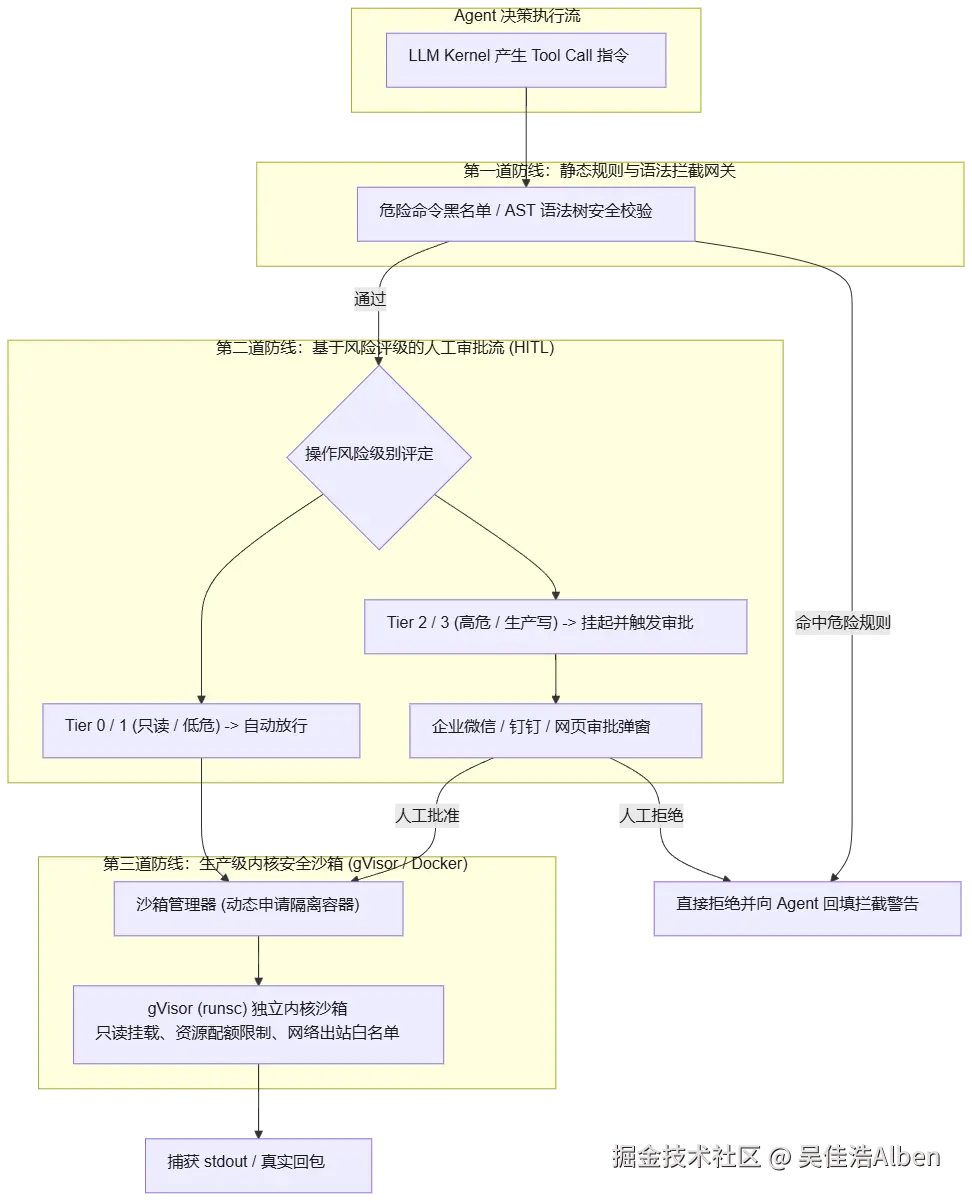
一句话总结这一章的核心观点:
静态规则防粗心,人工审批防越权,物理沙箱防逃逸。三层齐备,Agent 才能安全落地。
二、执行沙箱选型深水区:为什么传统 Docker 依然不够?
在选择底层代码执行沙箱时,许多团队以为开一个标准 Docker 容器就足够安全了。但在多租户云原生环境下,传统 Docker 存在着天然的逃逸隐患:
| 沙箱技术 | 隔离级别 | 启动延迟 | 内存/CPU 资源开销 |
|---|---|---|---|
| 1. Subprocess | 零隔离 (宿主机) | 毫秒级 (极快) | 极低 (无额外开销) |
| (本地原生进程) | 极度危险,严禁生产 | ||
| 2. Standard Docker | 命名空间/Cgroups | 1 ~ 3 秒 | 中等 (需常驻 Daemon) |
| (标准 Linux 容器) | 共享宿主机内核 | ||
| 3. gVisor (runsc) | 用户态独立内核 | 100 ~ 300 毫秒 | 低 (极高密度弹性) |
| (Google 开源沙箱) | 拦截所有系统调用 | 生产级兼顾隔离与性能 | |
| 4. Firecracker VM | 硬件级 MicroVM | 200 ~ 500 毫秒 | 较高 (独立虚拟机镜像) |
| (AWS 驱动微虚机) | 强物理隔离 |
- 🔸 传统 Docker 的致命缺陷:容器与宿主机共享同一个 Linux 内核。如果 Agent 执行的 Python 脚本利用了未修补的 Linux 内核提权漏洞(如 CVE-2024-21626),攻击者可以直接拿到宿主机 Root 权限;
- 🔸 gVisor(runsc)的架构优势 :Google 为无服务器(Serverless)打造的安全运行时。它在用户态用 Go 语言完整实现了一套虚拟的 Linux 内核,拦截并模拟所有的 syscall(系统调用),彻底切断了与宿主机真实内核的直接接触;
- 🔸 网络出站硬控制:沙箱内部默认禁用公网访问,仅通过白名单开放受控的企业内网 API。
一句话总结这一章的核心观点:
运行不可信大模型生成代码的唯一标准,是使用具备独立用户态虚拟内核的 gVisor 沙箱。
三、生产级代码实战:带静态门禁与审批断点的 Tool 安全调度器
以下为基于 Python 3.11+ 构建的企业级 Tool 安全调度引擎实现,完整包含危险命令静态分析、风险分级与人机协同审批状态机:
python
"""
tool_security_guard.py

企业级 Tool 安全网关与审批状态机

包含:
- Shell 命令静态安全分析
- 风险等级评估
- Human-in-the-Loop (HITL) 审批
- Tool Guardrails 安全执行包装
"""

import re
from enum import IntEnum
from typing import Any, Callable, Dict, Optional

from pydantic import BaseModel


# ============================================================
# 风险等级定义
# ============================================================


class ToolRiskLevel(IntEnum):
    """工具风险等级"""

    # 只读、纯计算类操作
    TIER_0_SAFE = 0

    # 低风险操作(创建临时文件等)
    TIER_1_LOW = 1

    # 中风险操作(代码修改、安装依赖等)
    TIER_2_MEDIUM = 2

    # 高风险操作(删除数据、重启服务等)
    TIER_3_CRITICAL = 3


# ============================================================
# 安全检查结果
# ============================================================


class SecurityCheckResult(BaseModel):
    """安全检查返回结果"""

    allowed: bool
    risk_level: ToolRiskLevel
    reason: str

    # 是否需要人工审批
    requires_human_approval: bool = False


# ============================================================
# Tool 安全引擎
# ============================================================


class ToolSecurityEngine:
    """
    Tool 安全网关核心引擎

    负责:
    1. Shell 黑名单检测
    2. 敏感路径检测
    3. 风险等级评估
    """

    def __init__(self):
        # ----------------------------------------------------
        # 高危 Shell 指令
        # ----------------------------------------------------

        self.banned_shell_patterns = [
            r"rm\s+(-rf|-fr|-r)\s+",
            r"mkfs\.",
            r"dd\s+if=",
            r":\(\)\{\s*:\|:&\s*\};:",  # Fork Bomb
            r"shutdown",
            r"reboot",
            r"chmod\s+777\s+/",
        ]

        # ----------------------------------------------------
        # 敏感文件路径
        # ----------------------------------------------------

        self.sensitive_path_patterns = [
            r"/etc/passwd",
            r"/etc/shadow",
            r"\.ssh/",
            r"\.env",
            r"id_rsa",
        ]

    def evaluate_bash_command(
        self,
        command: str,
    ) -> SecurityCheckResult:
        """
        Shell 命令安全评估

        检查流程:

        1. 黑名单命令
        2. 敏感路径
        3. 高危业务操作
        4. 中危代码修改
        5. 默认安全放行
        """

        cmd = command.strip()

        # ----------------------------------------------------
        # 1. 黑名单命令
        # ----------------------------------------------------

        for pattern in self.banned_shell_patterns:
            if re.search(pattern, cmd, re.IGNORECASE):
                return SecurityCheckResult(
                    allowed=False,
                    risk_level=ToolRiskLevel.TIER_3_CRITICAL,
                    reason=(
                        "Security Violation: "
                        f"Command matches banned pattern '{pattern}'"
                    ),
                )

        # ----------------------------------------------------
        # 2. 敏感路径访问
        # ----------------------------------------------------

        for pattern in self.sensitive_path_patterns:
            if re.search(pattern, cmd, re.IGNORECASE):
                return SecurityCheckResult(
                    allowed=False,
                    risk_level=ToolRiskLevel.TIER_3_CRITICAL,
                    reason=(
                        "Security Violation: "
                        f"Sensitive path '{pattern}' is blocked."
                    ),
                )

        # ----------------------------------------------------
        # 3. 高危生产操作
        # ----------------------------------------------------

        if any(
            keyword in cmd
            for keyword in [
                "drop database",
                "kubectl delete",
                "git push --force",
            ]
        ):
            return SecurityCheckResult(
                allowed=True,
                risk_level=ToolRiskLevel.TIER_3_CRITICAL,
                reason=(
                    "High-impact operation detected. "
                    "Human approval required."
                ),
                requires_human_approval=True,
            )

        # ----------------------------------------------------
        # 4. 中风险代码修改
        # ----------------------------------------------------

        if any(
            keyword in cmd
            for keyword in [
                "git commit",
                "patch",
                "npm install",
                "pip install",
            ]
        ):
            return SecurityCheckResult(
                allowed=True,
                risk_level=ToolRiskLevel.TIER_2_MEDIUM,
                reason="Code modification detected. Audit required.",
            )

        # ----------------------------------------------------
        # 5. 默认放行
        # ----------------------------------------------------

        return SecurityCheckResult(
            allowed=True,
            risk_level=ToolRiskLevel.TIER_0_SAFE,
            reason="Safe read-only execution.",
        )


# ============================================================
# Human-in-the-Loop
# ============================================================


class HumanInTheLoopManager:
    """
    Human-in-the-Loop (HITL) 审批管理器

    执行流程:

        Tool Request
              │
              ▼
        Security Engine
              │
              ▼
        Risk Evaluation
              │
      ┌───────┴────────┐
      │                │
    Safe          Critical
      │                │
      ▼                ▼
    Execute      Human Approval
      │                │
      └────────┬───────┘
               ▼
          Actual Executor
    """

    def __init__(
        self,
        approval_callback: Optional[
            Callable[[str, Dict[str, Any]], bool]
        ] = None,
    ):
        self.security_engine = ToolSecurityEngine()
        self.approval_callback = approval_callback

    def execute_with_guardrails(
        self,
        tool_name: str,
        arguments: Dict[str, Any],
        actual_executor: Callable[..., Any],
    ) -> Dict[str, Any]:
        """
        Tool 安全包装器

        所有 Tool 调用统一经过:

            Security Check
                    ↓
             Human Approval
                    ↓
             Actual Execution
        """

        # ----------------------------------------------------
        # Shell Tool 进行安全检查
        # ----------------------------------------------------

        if tool_name == "run_bash":
            command = arguments.get("command", "")

            result = self.security_engine.evaluate_bash_command(
                command
            )

            # 被安全策略拦截
            if not result.allowed:
                return {
                    "status": "error",
                    "error": (
                        "Security Guardrail Blocked: "
                        f"{result.reason}"
                    ),
                    "exit_code": -1,
                }

            # ------------------------------------------------
            # Human Approval
            # ------------------------------------------------

            if result.requires_human_approval:
                print(
                    "\n"
                    f"⚠️  [SECURITY WARNING] "
                    f"Human approval required:\n{command}\n"
                )

                approved = False

                if self.approval_callback:
                    approved = self.approval_callback(
                        tool_name,
                        arguments,
                    )
                else:
                    user_input = input(
                        "👉 Approve this operation? (yes/no): "
                    )

                    approved = (
                        user_input.strip().lower()
                        in ("y", "yes")
                    )

                if not approved:
                    return {
                        "status": "error",
                        "error": (
                            "Operation rejected "
                            "by human operator."
                        ),
                        "exit_code": -2,
                    }

        # ----------------------------------------------------
        # 放行执行
        # ----------------------------------------------------

        return actual_executor(**arguments)
本篇总结
- 🔸 Prompt 防御是纸糊的:不要相信模型在收到注入攻击后能自我约束,安全必须在 Infra 与协议层强制收敛;
- 🔸 纵深防御三步走:静态规则过滤低级错误,风险矩阵触发人工审批断点(HITL),独立沙箱兜底隔离;
- 🔸 容器隔离认准 gVisor:拒绝裸奔的 Subprocess 与共享内核的标准 Docker,采用轻量虚拟内核杜绝逃逸;
- 🔸 让 Agent 在受控沙箱里自由发挥,是企业级系统稳定运行的前提。
在下一篇中,我们将深入剖析:《Skill 为什么不同于 Tool?Agent 技能库的自演进与动态加载机制》,彻底厘清 Tool 与业务 SOP(Skill)的本质分水岭!
筒子们本篇为《企业级 Agent 实战指南》· 第二章的第 3 篇,后续续会更新完整的agent的开发的全部过程,如果你对Agent开发感兴趣不妨关注一下本合集。