多路转接epoll
目录
定位:基于等待多个文件描述符就绪事件的通知机制,为了处理大批量句柄而作了改进的poll
一、epoll接口
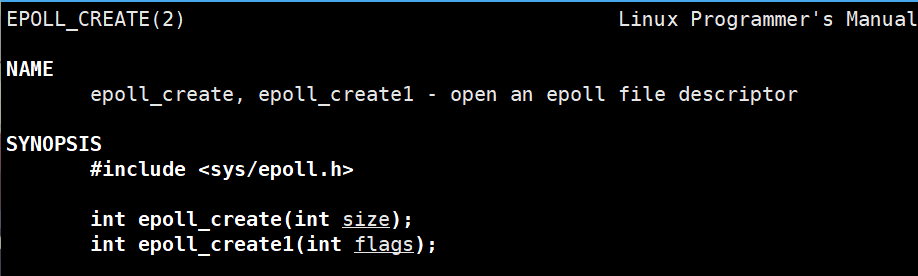
1.1.epoll_create函数
作用:创建一个epoll模型
参数:任意大于0的数(已经被忽略)
返回值:文件描述符
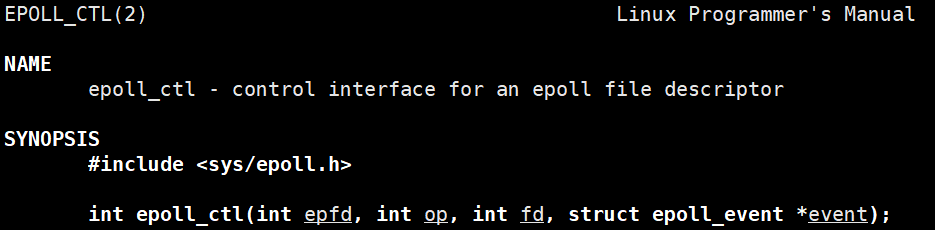
1.2.epoll_ctrl函数
作用:控制epoll的文件描述符(用户 → 内核)
参数1:epoll_create的返回值
参数2:设置操作类型
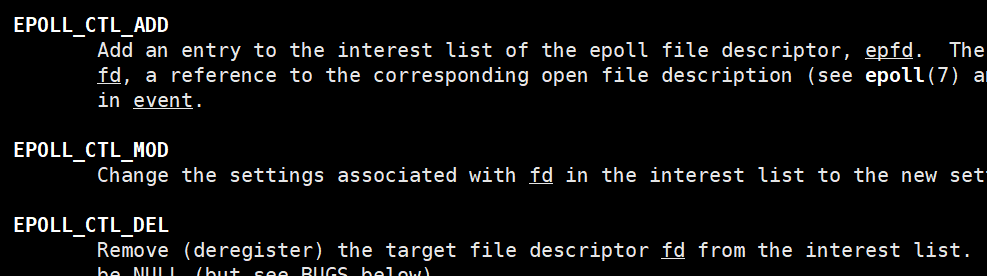
参数3:需要监听的文件描述符
参数4:设置监听事件,附带用户数据
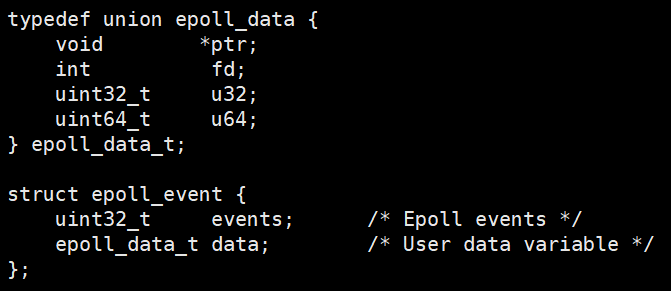
events对应以下几个宏集合
- EPOLLIN : 表示对应的文件描述符可以读
- EPOLLOUT : 表示对应的文件描述符可以写
- EPOLLPRI : 表示对应的文件描述符有紧急的数据可读
- EPOLLERR : 表示对应的文件描述符发⽣错误
- EPOLLHUP : 表示对应的文件描述符被挂断
- EPOLLET : 将EPOLL设为边缘触发模式
- EPOLLONESHOT:只监听⼀次事件,当监听完这次事件之后如果还需要继续监听这个socket的话,需要再次把这个socket加入到EPOLL红黑树里
返回值:
- 成功:0
- 失败:-1
1.3.epoll_wait函数
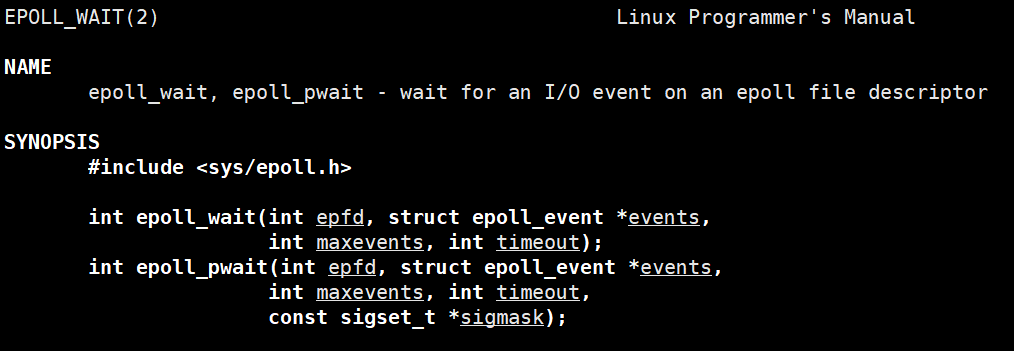
作用:控制epoll的文件描述符(内核 → 用户)
参数1:epoll_create的返回值
参数2:数组
参数3:数组长度
参数4:设置超时时间,单位为毫秒
二、epoll原理
2.1.示意图
红黑树本质:用户告诉内核,要关心哪个文件描述符,哪一个事件
就绪队列本质:内核告诉用户,哪一个文件描述符的哪些事件就绪
网络协议栈中的回调机制:一旦底层特定的文件描述符有数据就绪,就会自动进行回调
激活红黑树中的节点到就绪队列中,该机制被提前注册到文件描述符中
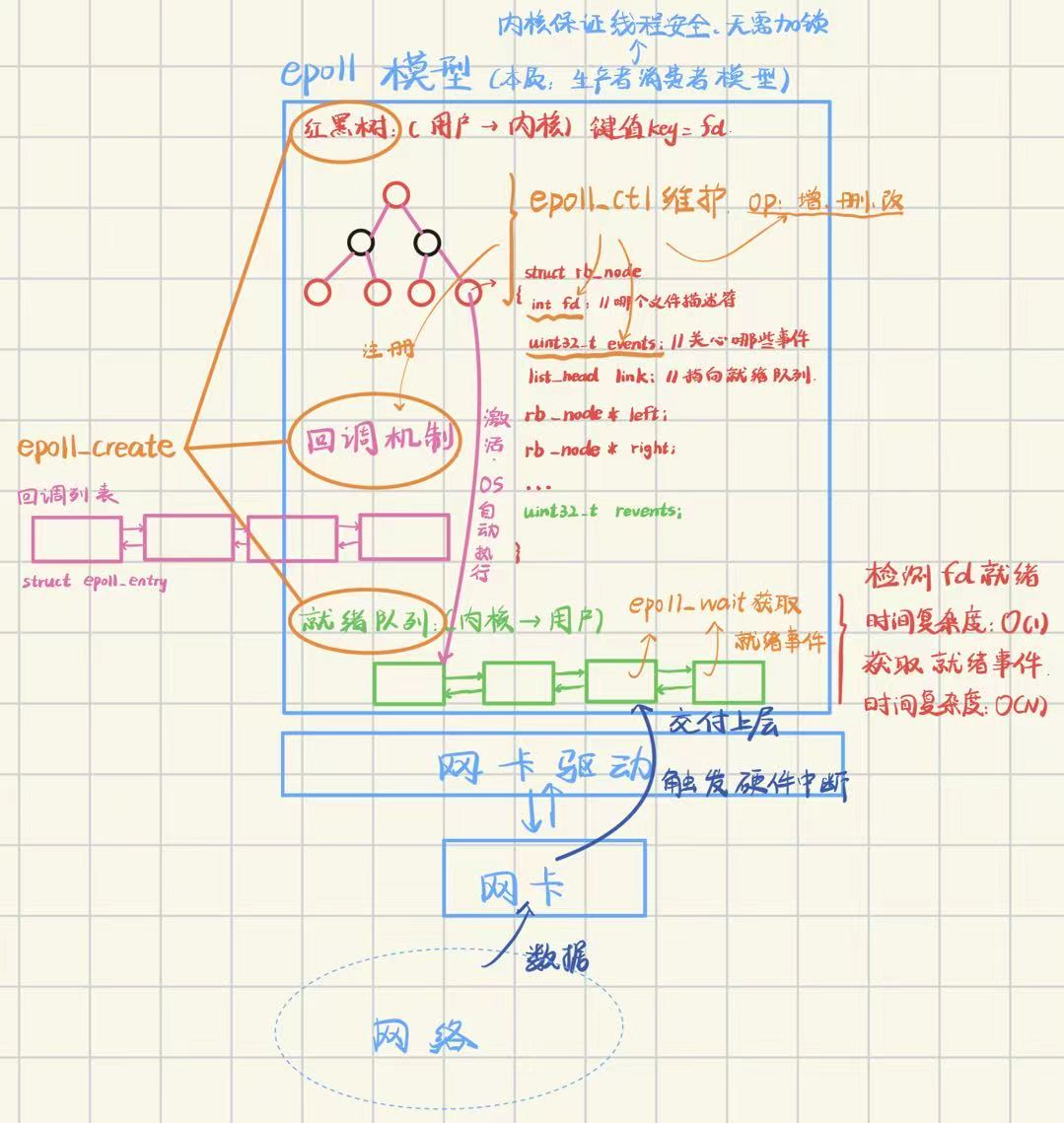
内核会严格按照零下标开始,依次拷贝保存就绪事件和文件描述符
应用层在处理就绪事件的时候,处理的都是就绪的,不用进行检测
2.2.内核结构
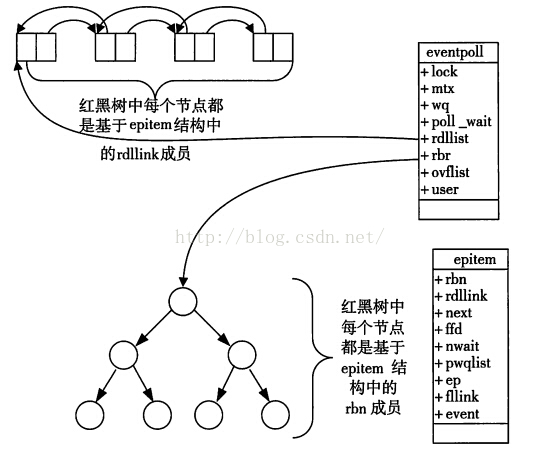
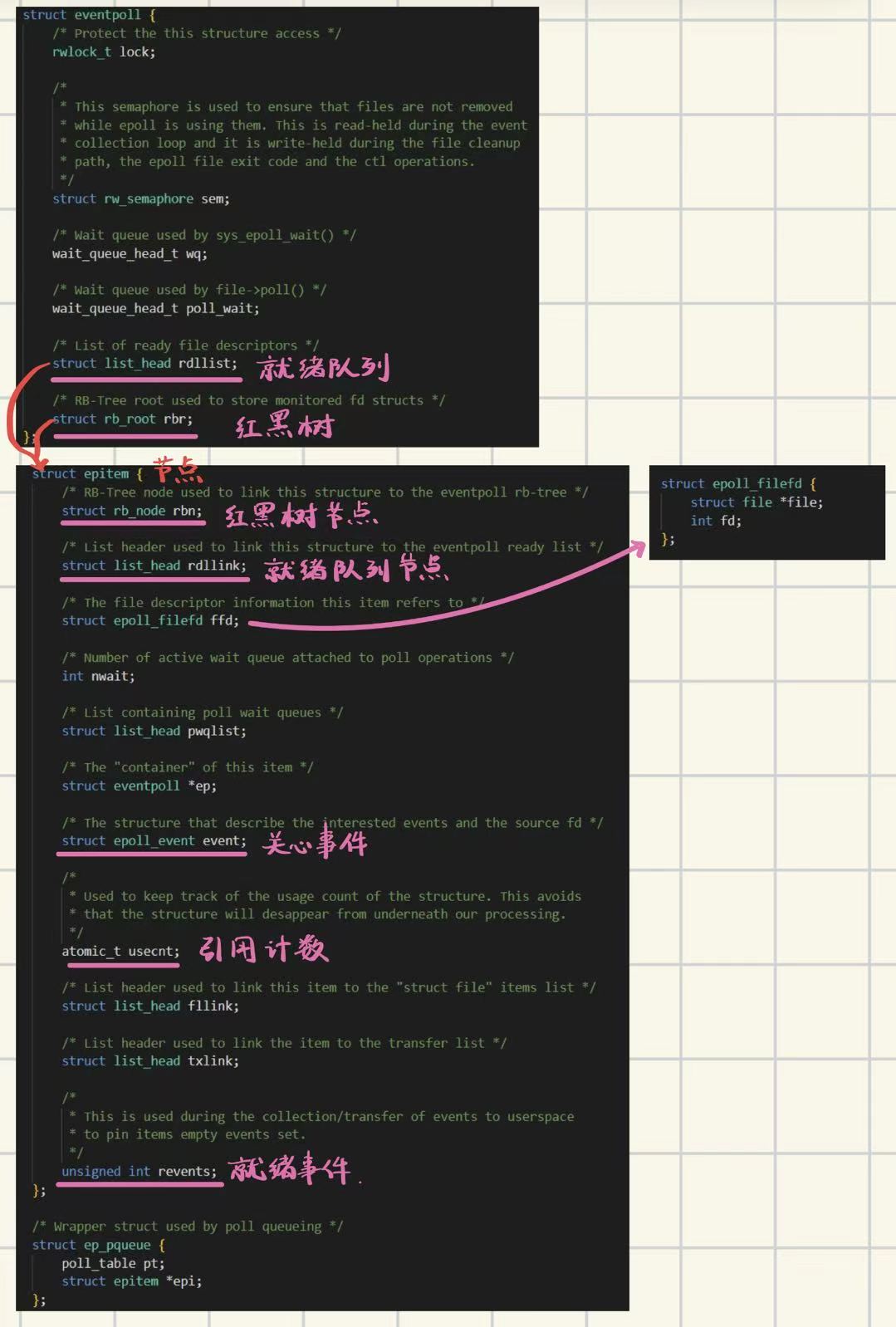
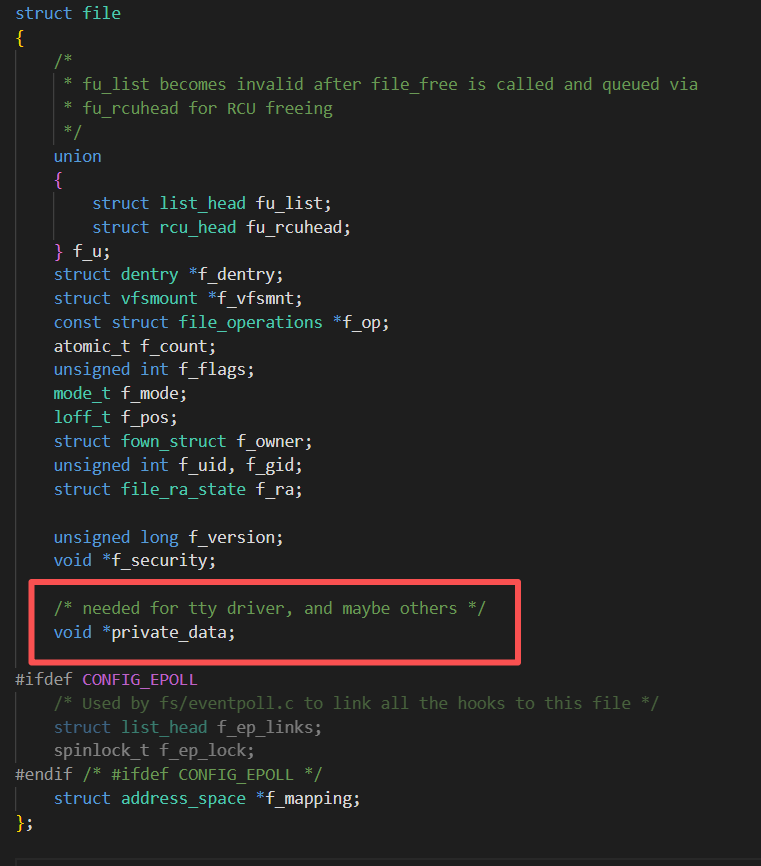
通过private_data指针找到eventpoll结构
2.3.回调机制
- sys_epoll_ctl
cpp
/*
 * The following function implements the controller interface for
 * the eventpoll file that enables the insertion/removal/change of
 * file descriptors inside the interest set.  It represents
 * the kernel part of the user space epoll_ctl(2).
 */
asmlinkage long
sys_epoll_ctl(int epfd, int op, int fd, struct epoll_event __user *event)
{
	int error;
	struct file *file, *tfile;
	struct eventpoll *ep;
	struct epitem *epi;
	struct epoll_event epds;

	DNPRINTK(3, (KERN_INFO "[%p] eventpoll: sys_epoll_ctl(%d, %d, %d, %p)\n",
		     current, epfd, op, fd, event));

	error = -EFAULT;
	if (ep_op_hash_event(op) &&
	    copy_from_user(&epds, event, sizeof(struct epoll_event)))
		goto eexit_1;

	/* Get the "struct file *" for the eventpoll file */
	error = -EBADF;
	file = fget(epfd);
	if (!file)
		goto eexit_1;

	/* Get the "struct file *" for the target file */
	tfile = fget(fd);
	if (!tfile)
		goto eexit_2;

	/* The target file descriptor must support poll */
	error = -EPERM;
	if (!tfile->f_op || !tfile->f_op->poll)
		goto eexit_3;

	/*
	 * We have to check that the file structure underneath the file descriptor
	 * the user passed to us _is_ an eventpoll file. And also we do not permit
	 * adding an epoll file descriptor inside itself.
	 */
	error = -EINVAL;
	if (file == tfile || !is_file_epoll(file))
		goto eexit_3;

	/*
	 * At this point it is safe to assume that the "private_data" contains
	 * our own data structure.
	 */
	ep = file->private_data;

	down_write(&ep->sem);

	/* Try to lookup the file inside our hash table */
	epi = ep_find(ep, tfile, fd);

	error = -EINVAL;
	switch (op) {
	case EPOLL_CTL_ADD:
		if (!epi) {
			epds.events |= POLLERR | POLLHUP;

			error = ep_insert(ep, &epds, tfile, fd);
		} else
			error = -EEXIST;
		break;
	case EPOLL_CTL_DEL:
		if (epi)
			error = ep_remove(ep, epi);
		else
			error = -ENOENT;
		break;
	case EPOLL_CTL_MOD:
		if (epi) {
			epds.events |= POLLERR | POLLHUP;
			error = ep_modify(ep, epi, &epds);
		} else
			error = -ENOENT;
		break;
	}

	/*
	 * The function ep_find() increments the usage count of the structure
	 * so, if this is not NULL, we need to release it.
	 */
	if (epi)
		ep_release_epitem(epi);

	up_write(&ep->sem);

eexit_3:
	fput(tfile);
eexit_2:
	fput(file);
eexit_1:
	DNPRINTK(3, (KERN_INFO "[%p] eventpoll: sys_epoll_ctl(%d, %d, %d, %p) = %d\n",
		     current, epfd, op, fd, event, error));

	return error;
}- ep_insert
cpp
static int ep_insert(struct eventpoll *ep, struct epoll_event *event, struct file *tfile, int fd)
{
	int error, revents, pwake = 0;
	unsigned long flags;
	struct epitem *epi;
	struct ep_pqueue epq;

	error = -ENOMEM;
	if (!(epi = kmem_cache_alloc(epi_cache, SLAB_KERNEL)))
		goto eexit_1;

	/* Item initialization follow here ... */
	ep_rb_initnode(&epi->rbn);
	INIT_LIST_HEAD(&epi->rdllink);
	INIT_LIST_HEAD(&epi->fllink);
	INIT_LIST_HEAD(&epi->txlink);
	INIT_LIST_HEAD(&epi->pwqlist);
	epi->ep = ep;
	ep_set_ffd(&epi->ffd, tfile, fd);
	epi->event = *event;
	atomic_set(&epi->usecnt, 1);
	epi->nwait = 0;

	/* Initialize the poll table using the queue callback */
	epq.epi = epi;
	init_poll_funcptr(&epq.pt, ep_ptable_queue_proc);

	/*
	 * Attach the item to the poll hooks and get current event bits.
	 * We can safely use the file* here because its usage count has
	 * been increased by the caller of this function.
	 */
	revents = tfile->f_op->poll(tfile, &epq.pt);

	/*
	 * We have to check if something went wrong during the poll wait queue
	 * install process. Namely an allocation for a wait queue failed due
	 * high memory pressure.
	 */
	if (epi->nwait < 0)
		goto eexit_2;

	/* Add the current item to the list of active epoll hook for this file */
	spin_lock(&tfile->f_ep_lock);
	list_add_tail(&epi->fllink, &tfile->f_ep_links);
	spin_unlock(&tfile->f_ep_lock);

	/* We have to drop the new item inside our item list to keep track of it */
	write_lock_irqsave(&ep->lock, flags);

	/* Add the current item to the rb-tree */
	ep_rbtree_insert(ep, epi);

	/* If the file is already "ready" we drop it inside the ready list */
	if ((revents & event->events) && !ep_is_linked(&epi->rdllink)) {
		list_add_tail(&epi->rdllink, &ep->rdllist);

		/* Notify waiting tasks that events are available */
		if (waitqueue_active(&ep->wq))
			__wake_up_locked(&ep->wq, TASK_UNINTERRUPTIBLE | TASK_INTERRUPTIBLE);
		if (waitqueue_active(&ep->poll_wait))
			pwake++;
	}

	write_unlock_irqrestore(&ep->lock, flags);

	/* We have to call this outside the lock */
	if (pwake)
		ep_poll_safewake(&psw, &ep->poll_wait);

	DNPRINTK(3, (KERN_INFO "[%p] eventpoll: ep_insert(%p, %p, %d)\n", current, ep, tfile, fd));

	return 0;

eexit_2:
	ep_unregister_pollwait(ep, epi);

	/*
	 * We need to do this because an event could have been arrived on some
	 * allocated wait queue.
	 */
	write_lock_irqsave(&ep->lock, flags);
	if (ep_is_linked(&epi->rdllink))
		ep_list_del(&epi->rdllink);
	write_unlock_irqrestore(&ep->lock, flags);

	kmem_cache_free(epi_cache, epi);
eexit_1:
	return error;
}- ep_ptable_queue_proc
cpp
/*
 * This is the callback that is used to add our wait queue to the
 * target file wakeup lists.
 */
static void ep_ptable_queue_proc(struct file *file, wait_queue_head_t *whead, poll_table *pt)
{
	struct epitem *epi = ep_item_from_epqueue(pt);
	struct eppoll_entry *pwq;

	if (epi->nwait >= 0 && (pwq = kmem_cache_alloc(pwq_cache, SLAB_KERNEL))) {
		init_waitqueue_func_entry(&pwq->wait, ep_poll_callback);
		pwq->whead = whead;
		pwq->base = epi;
		add_wait_queue(whead, &pwq->wait);
		list_add_tail(&pwq->llink, &epi->pwqlist);
		epi->nwait++;
	} else {
		/* We have to signal that an error occurred */
		epi->nwait = -1;
	}
}- ep_poll_callback
cpp
/*
 * This is the callback that is passed to the wait queue wakeup
 * machanism. It is called by the stored file descriptors when they
 * have events to report.
 */
static int ep_poll_callback(wait_queue_t *wait, unsigned mode, int sync, void *key)
{
	int pwake = 0;
	unsigned long flags;
	struct epitem *epi = ep_item_from_wait(wait);
	struct eventpoll *ep = epi->ep;

	DNPRINTK(3, (KERN_INFO "[%p] eventpoll: poll_callback(%p) epi=%p ep=%p\n",
		     current, epi->ffd.file, epi, ep));

	write_lock_irqsave(&ep->lock, flags);

	/*
	 * If the event mask does not contain any poll(2) event, we consider the
	 * descriptor to be disabled. This condition is likely the effect of the
	 * EPOLLONESHOT bit that disables the descriptor when an event is received,
	 * until the next EPOLL_CTL_MOD will be issued.
	 */
	if (!(epi->event.events & ~EP_PRIVATE_BITS))
		goto is_disabled;

	/* If this file is already in the ready list we exit soon */
	if (ep_is_linked(&epi->rdllink))
		goto is_linked;

	list_add_tail(&epi->rdllink, &ep->rdllist);

is_linked:
	/*
	 * Wake up ( if active ) both the eventpoll wait list and the ->poll()
	 * wait list.
	 */
	if (waitqueue_active(&ep->wq))
		__wake_up_locked(&ep->wq, TASK_UNINTERRUPTIBLE |
				 TASK_INTERRUPTIBLE);
	if (waitqueue_active(&ep->poll_wait))
		pwake++;

is_disabled:
	write_unlock_irqrestore(&ep->lock, flags);

	/* We have to call this outside the lock */
	if (pwake)
		ep_poll_safewake(&psw, &ep->poll_wait);

	return 1;
}
2.4.epoll的特点
接口使用方便:拆分成三个函数,分离输入输出参数,不需要循环设置要关注的文件描述符
数据拷贝轻量:只需在合适的时候调用EPOLL_CTL_ADD将文件描述符拷贝到内核
事件回调机制:避免遍历,使用回调方式将就绪的文件描述符从红黑树加入到就绪队列
没有数量限制:文件描述符数量没有上限
三、Epoll服务器实现
3.1.EpollServer.hpp
cpp
#pragma once

#include <iostream>
#include <memory>
#include <unistd.h>
#include <sys/epoll.h>
#include "Socket.hpp"
#include "Log.hpp"

using namespace SocketModule;
using namespace LogModule;

class EpollServer
{
    const static int size = 64;
    const static int defaultfd = -1;

public:
    EpollServer(int port)
        : _listensock(std::make_unique<TcpSocket>()), _isrunning(false), _epfd(defaultfd)
    {
        // 创建监听套接字 fd = 3
        _listensock->BuildTcpSocketMethod(port);
        // 创建epoll模型 fd = 4
        _epfd = epoll_create(256);
        if (_epfd < 0)
        {
            LOG(LogLevel::FATAL) << "epoll_create error";
            exit(EPOLL_CREATE_ERR);
        }
        LOG(LogLevel::INFO) << "epoll_create success: " << _epfd;
        // 将监听套接字设置到内核
        struct epoll_event ev;
        ev.events = EPOLLIN;
        ev.data.fd = _listensock->Fd();
        int n = epoll_ctl(_epfd, EPOLL_CTL_ADD, _listensock->Fd(), &ev);
        if (n < 0)
        {
            LOG(LogLevel::FATAL) << "add listensockfd failed";
            exit(EPOLL_CTL_ERR);
        }
    }

    void Start()
    {
        int timeout = 1000; // ms
        _isrunning = true;
        while (_isrunning)
        {
            int n = epoll_wait(_epfd, _revs, size, timeout);
            switch(n)
            {
                case 0:
                    LOG(LogLevel::DEBUG) << "time out...";
                    break;
                case -1:
                    LOG(LogLevel::FATAL) << "epoll error";
                    break;
                default:
                    Dispatcher(n);
                    break;
            }
        }
        _isrunning = false;
    }

    // 事件派发器
    void Dispatcher(int rnum)
    {
        LOG(LogLevel::DEBUG) << "event ready ..."; // LT: 水平触发模式
        for(int i = 0; i < rnum; i++)
        {
            int sockfd = _revs[i].data.fd;
            uint32_t revent = _revs[i].events;
            // 循环处理就绪事件
            if(revent & EPOLLIN)
            {
                // 读事件就绪
                if(sockfd == _listensock->Fd())
                {
                    // 获取新连接
                    Accepter();
                }
                else
                {
                    // 普通套接字可读
                    Recver(sockfd);
                }
            }
            // if(revent & EPOLLOUT)
            // {
            //     // 写事件就绪
            // }
        }
    }

    // IO处理器
    void Recver(int sockfd)
    {
        char buffer[1024];
        ssize_t n = recv(sockfd, buffer, sizeof(buffer) - 1, 0);
        if (n > 0)
        {
            buffer[n] = 0;
            std::cout << "client say@  " << buffer << std::endl;
        }
        else if (n == 0)
        {
            LOG(LogLevel::INFO) << "client quit...";
            // 从epoll中移除关心的文件描述符
            // 先移除, 再关闭, 确保移除合法fd
            int ret = epoll_ctl(_epfd, EPOLL_CTL_DEL, sockfd, nullptr);
            if(ret > 0)
            {
                LOG(LogLevel::INFO) << "remove sockfd success: " << sockfd;
            }
            close(sockfd);
        }
        else
        {
            LOG(LogLevel::ERROR) << "recv error";
            int ret = epoll_ctl(_epfd, EPOLL_CTL_DEL, sockfd, nullptr);
            if(ret > 0)
            {
                LOG(LogLevel::INFO) << "remove sockfd success: " << sockfd;
            }
            close(sockfd);
        }
    }

    // 连接管理器
    void Accepter()
    {
        InetAddr client;
        int sockfd = _listensock->Accept(&client);
        if (sockfd >= 0)
        {
            // 获取新连接
            LOG(LogLevel::INFO) << "get a new link, sockfd: " << sockfd << ", client is " << client.StringAddr();
            // 将新的套接字添加到内核
            struct epoll_event ev;
            ev.events = EPOLLIN;
            ev.data.fd = sockfd;
            int n = epoll_ctl(_epfd, EPOLL_CTL_ADD, sockfd, &ev);
            if(n < 0)
            {
                LOG(LogLevel::WARNING) << "add sockfd failed";
            }
            else
            {
                LOG(LogLevel::INFO) << "add sockfd success: " << sockfd;
            }
        }
    }

    void Stop()
    {
        _isrunning = false;
    }

    ~EpollServer()
    {
        _listensock->Close();
        if (_epfd > 0)
        {
            close(_epfd);
        }
    }

private:
    std::unique_ptr<Socket> _listensock;
    bool _isrunning;
    int _epfd;                     // epoll模型
    struct epoll_event _revs[size]; // 就绪事件数组
};
3.2.Main.cc
cpp
#include "EpollServer.hpp"

int main(int argc, char *argv[])
{
    if (argc != 2)
    {
        std::cout << "Usage: " << argv[0] << " port" << std::endl;
        exit(USAGE_ERR);
    }

    Enable_Console_Log_Strategy();
    uint16_t port = std::stoi(argv[1]);

    std::unique_ptr<EpollServer> svr = std::make_unique<EpollServer>(port);
    svr->Start();

    return 0;
}
3.3.Common.hpp
cpp
#pragma once

#include <iostream>
#include <unistd.h>
#include <string>
#include <cstring>
#include <sys/types.h>
#include <sys/socket.h>
#include <netinet/in.h>
#include <arpa/inet.h>

enum ExitCode
{
    OK = 0,
    USAGE_ERR,
    SOCKET_ERR,
    BIND_ERR,
    LISTEN_ERR,
    CONNECT_ERR,
    FORK_ERR,
    OPEN_ERR,
    EPOLL_CREATE_ERR,
    EPOLL_CTL_ERR
};

// 禁止拷贝
class NoCopy
{
public:
    NoCopy()
    {
    }
    ~NoCopy()
    {
    }
    NoCopy(const NoCopy &) = delete;
    const NoCopy &operator=(const NoCopy &) = delete;
};

#define CONV(addr) ((struct sockaddr *)&addr)
四、LT与ET模式
4.1.LT水平触发模式
水平触发:示波器长时间保持高电平或者低电平
**LT模式(Level Triggered):**水平触发工作模式(默认)
只要底层有报文,就要一直通知上层
上层知道还会通知,所以可以不读完
4.2.ET边缘触发模式
边缘触发:示波器从高电平变化为低电平,或者从低电平变化为高电平
**ET模式(Edge Triggered):**边缘触发工作模式
只有底层的数据发生从无到有,从有到多的变化时,才会通知上层
即使上层只把数据拿走一部分,后来数据没有新增,ET也不会通知
循环读取 + 非阻塞IO
ET通知就绪,用户必须通过循环读取本轮缓冲区的全部数据
recv读完缓冲区数据,用户并不清楚,继续调用recv会被阻塞
所以在ET模式下,必须将文件描述符设置为非阻塞的工作模式
LT VS ET
LT模式可以实现非阻塞轮询形式,但必须对程序员进行约束
ET模式则是通过操作系统来约束,增加IO读写方式的确定性
ET通知效率更高,有效通知数量最多
ET尽快读完所有数据,能给对方更新一个更大的窗口
提高对方滑动窗口大小,提高TCP传输效率,提高网络发送报文的并发度
PSH标志位本质:提醒上层读取数据
五、Reactor反应堆模式
5.1.模式框图
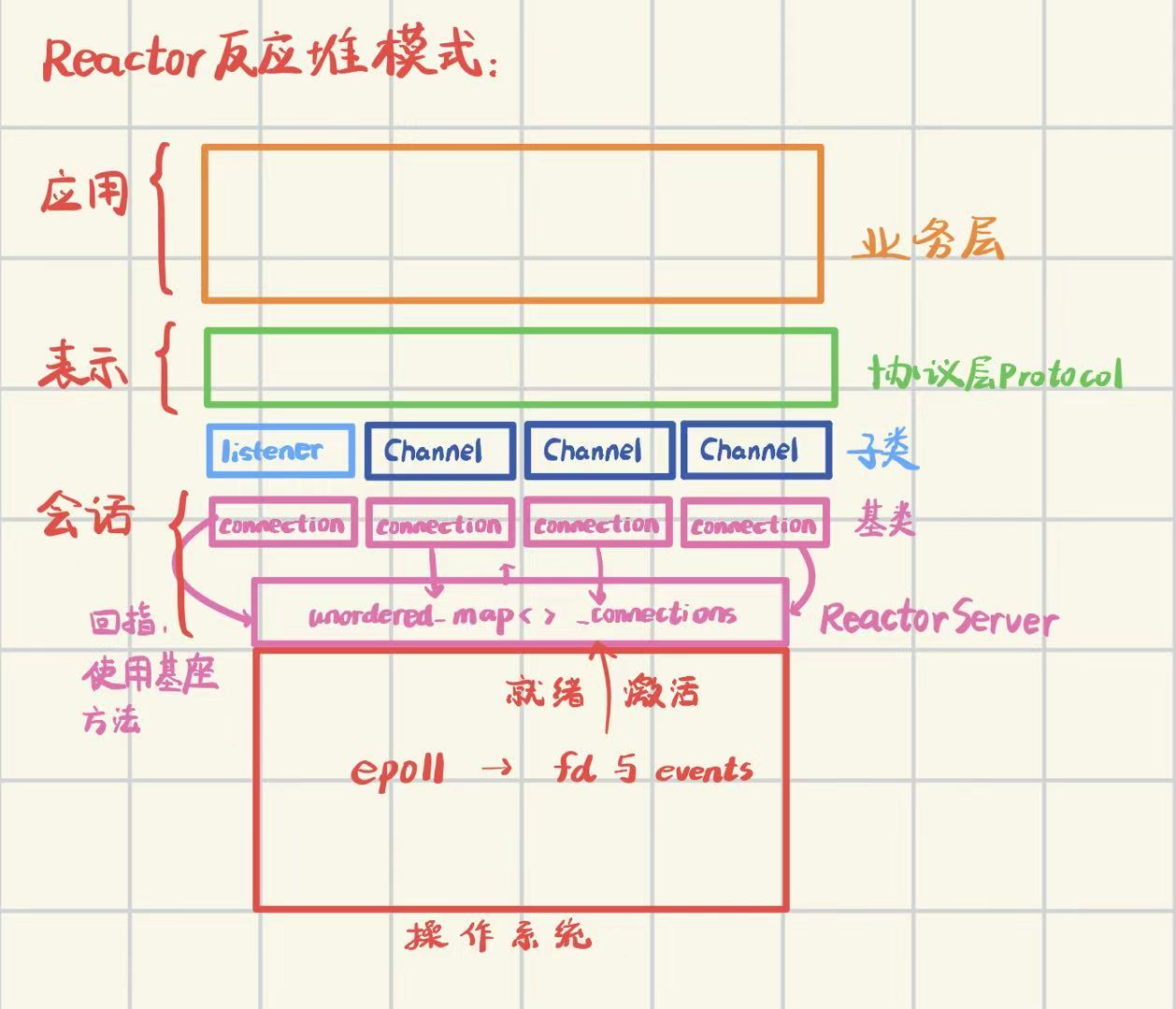
读事件的关心需要常设,写事件的关心需要按需设置
如果写事件设置为常设,epoll就会一直让写事件就绪
当把发送缓冲区写满后,再向epoll设置写事件的关心
手动开启EPOLLOUT,默认就要触发一次写事件
5.2.Epoller.hpp
cpp
#pragma once

#include <iostream>
#include <sys/epoll.h>
#include "Log.hpp"
#include "Common.hpp"

using namespace LogModule;

class Epoller
{
public:
    Epoller()
        : _epfd(-1)
    {
        _epfd = epoll_create(128);
        if (_epfd < 0)
        {
            LOG(LogLevel::FATAL) << "epoll_create error";
            exit(EPOLL_CREATE_ERR);
        }
        LOG(LogLevel::INFO) << "create epoll success: " << _epfd;
    }

    void ModEventHelper(int sockfd, uint32_t events, int oper)
    {
        struct epoll_event ev;
        ev.events = events;
        ev.data.fd = sockfd;
        int n = epoll_ctl(_epfd, oper, sockfd, &ev);
        if (n < 0)
        {
            LOG(LogLevel::ERROR) << "epoll_ctl error";
            return;
        }
        LOG(LogLevel::INFO) << "epoll_ctl success: " << sockfd;
    }

    void AddEvent(int sockfd, uint32_t events)
    {
        ModEventHelper(sockfd, events, EPOLL_CTL_ADD);
    }

    void ModEvent(int sockfd, uint32_t events)
    {
        ModEventHelper(sockfd, events, EPOLL_CTL_MOD);
    }

    void DelEvent(int sockfd)
    {
        int n = epoll_ctl(sockfd, EPOLL_CTL_DEL, sockfd, nullptr);
        (void)n;
    }

    int WaitEvents(struct epoll_event revs[], int maxnum, int timeout)
    {
        int n = epoll_wait(_epfd, revs, maxnum, timeout);
        if (n < 0)
        {
            LOG(LogLevel::WARNING) << "epoll_wait error";
        }
        else if (n == 0)
        {
            LOG(LogLevel::WARNING) << "epoll_wait timeout";
        }
        else
        {
            // TODO
        }
        return n;
    }

    ~Epoller()
    {
        if (_epfd >= 0)
        {
            close(_epfd);
        }
    }

private:
    int _epfd;
};
5.3.Reactor.hpp
cpp
#pragma once

#include <iostream>
#include <memory>
#include <unordered_map>
#include "Epoller.hpp"
#include "Connection.hpp"
#include "Log.hpp"

using namespace LogModule;

// 反应堆
class Reactor
{
    static const int revs_num = 128;

private:
    bool IsConnectionExitsHelper(int sockfd)
    {
        auto iter = _connections.find(sockfd);
        if (iter == _connections.end())
        {
            return false;
        }
        else
        {
            return true;
        }
    }

    bool IsConnectionExits(const std::shared_ptr<Connection> &conn)
    {
        return IsConnectionExitsHelper(conn->GetSockFd());
    }

    bool IsConnectionExits(int sockfd)
    {
        return IsConnectionExitsHelper(sockfd);
    }

    bool IsConnectionEmpty()
    {
        return _connections.empty();
    }

    int LoopOnce(int timeout)
    {
        return _epoller_ptr->WaitEvents(_revs, revs_num, timeout);
    }

    // 事件派发器
    void Dispatcher(int n)
    {
        for (int i = 0; i < n; i++)
        {
            int sockfd = _revs[i].data.fd;      // 就绪的文件描述符
            uint32_t revents = _revs[i].events; // 就绪的事件
            // 1. 将所有的异常处理统一转化成IO错误
            // 2. 将所有的IO异常统一转化成一个异常处理函数
            if (revents & EPOLLERR)
            {
                // 处理异常
                revents |= (EPOLLIN | EPOLLOUT);
            }
            if (revents & EPOLLHUP)
            {
                // 处理连接
                revents |= (EPOLLIN | EPOLLOUT);
            }
            if (revents & EPOLLIN)
            {
                // 读事件就绪
                if (IsConnectionExits(sockfd))
                {
                    _connections[sockfd]->Recver();
                }
            }
            if (revents & EPOLLOUT)
            {
                // 写事件就绪
                if (IsConnectionExits(sockfd))
                {
                    _connections[sockfd]->Sender();
                }
            }
        }
    }

public:
    Reactor()
        : _epoller_ptr(std::make_unique<Epoller>()), _isrunning(false)
    {
    }

    void Loop()
    {
        if (IsConnectionEmpty())
        {
            return;
        }
        _isrunning = true;
        int timeout = -1;
        while (_isrunning)
        {
            PrintConnection(); // debug
            int n = LoopOnce(timeout);
            Dispatcher(n);
        }
        _isrunning = false;
    }

    // 将新连接添加到哈希表, 写入到epoll内核
    void AddConnection(std::shared_ptr<Connection> &conn)
    {
        // 0. 不要重复添加连接
        if (IsConnectionExits(conn))
        {
            LOG(LogLevel::WARNING) << "conn is exits: " << conn->GetSockFd();
            return;
        }

        // 1. conn对应的fd与关心事件写入epoll内核
        uint32_t events = conn->GetEvent();
        int sockfd = conn->GetSockFd();
        _epoller_ptr->AddEvent(sockfd, events);

        // 2. 设置conn的回指指针
        conn->SetOwner(this);

        // 3. conn对象添加到哈希表中
        _connections[sockfd] = conn;
    }

    // 设置对读写事件的关心
    void EnableReadWrite(int sockfd, bool enableread, bool enablewrite)
    {
        // 判断文件描述符是否存在
        if (!IsConnectionExits(sockfd))
        {
            LOG(LogLevel::WARNING) << "EnableReadWrite, conn is exists: " << sockfd;
            return;
        }

        // 修改当前文件描述符对应的关心事件
        uint32_t new_event = (EPOLLET | (enableread ? EPOLLIN : 0) | (enablewrite ? EPOLLOUT : 0));
        _connections[sockfd]->SetEvent(new_event);

        // 写透内核, 调整文件描述符对特定事件的关心
        _epoller_ptr->ModEvent(sockfd, new_event);
    }

    // 删除连接
    void DelConnection(int sockfd)
    {
        // epoll移除的时候, sockfd必须合法
        _epoller_ptr->DelEvent(sockfd);

        // 从哈希表中移除自己
        _connections.erase(sockfd);

        // 关闭不需要的文件描述符
        close(sockfd);

        LOG(LogLevel::INFO) << "client quit: " << sockfd;
    }

    void PrintConnection()
    {
        std::cout << "当前Reactor正在管理的fd List: ";
        for(auto &conn : _connections)
        {
            std::cout << conn.second->GetSockFd() << " ";
        }
        std::cout << "\r\n";
    }

    void Stop()
    {
        _isrunning = false;
    }

    ~Reactor()
    {
    }

private:
    std::unique_ptr<Epoller> _epoller_ptr;                             // epoll模型
    std::unordered_map<int, std::shared_ptr<Connection>> _connections; // 管理所有的连接
    bool _isrunning;                                                   // 启动标志位
    struct epoll_event _revs[revs_num];                                // 就绪事件存储数组
};
5.4.Connection.hpp
cpp
#pragma once

// 封装文件描述符, 保证给每一个文件描述符一套缓冲区

#include <iostream>
#include <string>
#include <functional>
#include "InetAddr.hpp"

class Reactor;
class Connection;
using handler_t = std::function<std::string(std::string &)>;

// 基类
class Connection
{
public:
    Connection()
        : _events(0), _owner(nullptr)
    {
    }

    virtual void Recver() = 0;
    virtual void Sender() = 0;
    virtual void Excepter() = 0;
    virtual int GetSockFd() = 0;

    void RegisterHandler(handler_t handler)
    {
        _handler = handler;
    }

    void SetEvent(const uint32_t &events)
    {
        _events = events;
    }

    uint32_t GetEvent()
    {
        return _events;
    }

    void SetOwner(Reactor *owner)
    {
        _owner = owner;
    }

    Reactor *GetOwner()
    {
        return _owner;
    }

    ~Connection()
    {
    }

private:
    uint32_t _events; // 关心事件
    Reactor *_owner;  // 回指指针
public:
    handler_t _handler; // 回调方法
};
5.5.Listener.hpp
cpp
#pragma once

#include <iostream>
#include <memory>
#include "Epoller.hpp"
#include "Socket.hpp"
#include "Common.hpp"
#include "Connection.hpp"
#include "Channel.hpp"

using namespace SocketModule;

// 专门用来获取新连接

class Listener : public Connection
{
public:
    Listener(int port = defaultport)
        : _port(port), _listensock(std::make_unique<TcpSocket>())
    {
        _listensock->BuildTcpSocketMethod(_port);
        SetEvent(EPOLLIN | EPOLLET);
        SetNonBlock(_listensock->Fd());
    }

    void Recver() override
    {
        // LOG(LogLevel::DEBUG) << "进入Listener模块的Recver函数";
        // ET模式下, 循环获取全部连接, 监听套接字设置为非阻塞
        InetAddr client;
        while (true)
        {
            int sockfd = _listensock->Accept(&client);
            if (sockfd == ACCEPT_ERR)
            {
                break;
            }
            else if (sockfd == ACCEPT_CONTINUE)
            {
                continue;
            }
            else if (sockfd == ACCEPT_DONE)
            {
                break;
            }
            else
            {
                // 连接获取成功
                // 普通的文件描述符
                std::shared_ptr<Connection> conn = std::make_shared<Channel>(sockfd, client);
                conn->SetEvent(EPOLLIN | EPOLLET);
                if (_handler != nullptr)
                {
                    conn->RegisterHandler(_handler);
                }
                GetOwner()->AddConnection(conn);
            }
        }
    }

    int GetSockFd() override
    {
        return _listensock->Fd();
    }

    void Sender() override
    {
    }

    void Excepter() override
    {
    }

    ~Listener()
    {
    }

private:
    int _port;
    std::unique_ptr<Socket> _listensock;
};
5.6.Channel.hpp
cpp
#pragma once

#include <iostream>
#include <string>
#include <sys/types.h>
#include <sys/socket.h>
#include <memory>
#include <functional>
#include "Common.hpp"
#include "Connection.hpp"
#include "Log.hpp"
#include "InetAddr.hpp"

using namespace LogModule;
#define SIZE 1024

class Channel;

// 普通套接字封装

class Channel : public Connection
{
public:
    Channel(int sockfd, const InetAddr &client)
        : _sockfd(sockfd), _client_addr(client)
    {
        SetNonBlock(_sockfd);
    }

    void Recver() override
    {
        char buffer[SIZE];
        while (true) // 循环读取, 保证本轮事件数据读完(本层只解决IO问题)
        {
            // 粘包问题与序列反序列化问题(引入自定义协议, 由应用层解决)
            buffer[0] = 0; // 清空缓冲区
            ssize_t n = recv(_sockfd, buffer, sizeof(buffer) - 1, 0);
            if (n > 0)
            {
                buffer[n] = 0;
                _inbuffer += buffer; // 接收缓冲区中, 入队列的过程
            }
            else if (n == 0)
            {
                Excepter(); // 异常处理
                return;
            }
            else
            {
                if (errno == EAGAIN || errno == EWOULDBLOCK)
                {
                    // 底层数据读完
                    break;
                }
                else if (errno == EINTR)
                {
                    // 被信号中断
                    continue;
                }
                else
                {
                    // 读取出错
                    Excepter(); // 异常处理
                    return;
                }
            }
        }
        LOG(LogLevel::DEBUG) << "Channel Inbuffer: " << _inbuffer;
        if (!_inbuffer.empty())
        {
            _outbuffer += _handler(_inbuffer);
        }
        if (!_outbuffer.empty())
        {
            Sender();
            // GetOwner()->EnableReadWrite(_sockfd, true, true);
        }
    }

    void Sender() override
    {
        while (true)
        {
            ssize_t n = send(_sockfd, _outbuffer.c_str(), _outbuffer.size(), 0);
            if(n > 0)
            {
                _outbuffer.erase(0, n);
                if(_outbuffer.empty())
                {
                    break;
                }
            }
            else if(n == 0)
            {
                break;
            }
            else
            {
                if(errno == EAGAIN || errno == EWOULDBLOCK)
                {
                    // 缓冲区写满
                    break;
                }
                if(errno == EINTR)
                {
                    // 被信号中断
                    continue;
                }
                else
                {
                    // 发送出错
                    Excepter(); // 异常处理
                    return;
                }
            }
        }

        if(!_outbuffer.empty())
        {
            // 1. 发送缓冲区写满(发送条件不具备)
            // 开启对写事件的关心
            GetOwner()->EnableReadWrite(_sockfd, true, true);
        }
        else
        {
            // 2. 数据发送完毕
            // 关闭对写事件的关心
            GetOwner()->EnableReadWrite(_sockfd, true, false);
        }
    }

    int GetSockFd() override
    {
        return _sockfd;
    }

    void Excepter() override
    {
        // 处理所有的异常
        // 移除文件描述符, 删除connection
        GetOwner()->DelConnection(_sockfd);
    }

    std::string &Inbuffer()
    {
        return _inbuffer;
    }

    void AppendOutBuffer(const std::string &out)
    {
        _outbuffer += out;
    }

    ~Channel()
    {
    }

private:
    int _sockfd;            // 该连接的文件描述符
    std::string _inbuffer;  // 输入缓冲区
    std::string _outbuffer; // 输出缓冲区
    InetAddr _client_addr;  // 客户端信息
};
5.7.Protocol.hpp
cpp
#pragma once
#include <iostream>
#include <string>
#include <memory>
#include <jsoncpp/json/json.h>
#include <functional>
#include "Socket.hpp"
#include "Log.hpp"

// 自定义网络版本的计算器

using namespace SocketModule;
using namespace LogModule;

const std::string ProtSep = " ";

// client → server
class Request
{
public:
    Request()
    {
    }

    Request(int x, int y, char oper)
        : _x(x), _y(y), _oper(oper)
    {
    }

    // 序列化
    std::string Serialize()
    {
        Json::Value root;
        root["x"] = _x;
        root["y"] = _y;
        root["oper"] = _oper;

        Json::FastWriter writer;
        std::string s = writer.write(root);
        return s;
    }

    // 反序列化
    bool Deserialize(std::string &in)
    {
        Json::Value root;
        Json::Reader reader;
        bool ok = reader.parse(in, root);
        if (ok)
        {
            _x = root["x"].asInt();
            _y = root["y"].asInt();
            _oper = root["oper"].asInt();
        }
        return ok;
    }

    ~Request()
    {
    }

    int X()
    {
        return _x;
    }

    int Y()
    {
        return _y;
    }

    char Oper()
    {
        return _oper;
    }

private:
    int _x;
    int _y;
    char _oper;
};

// server → client
class Response
{
public:
    Response()
    {
    }

    Response(int result, int code)
        : _result(result), _code(code)
    {
    }

    // 序列化
    std::string Serialize()
    {
        Json::Value root;
        root["result"] = _result;
        root["code"] = _code;
        Json::FastWriter writer;
        return writer.write(root);
    }

    // 反序列化
    bool Deserialize(std::string &in)
    {
        Json::Value root;
        Json::Reader reader;
        bool ok = reader.parse(in, root);
        if (ok)
        {
            _result = root["result"].asInt();
            _code = root["code"].asInt();
        }
        return ok;
    }

    ~Response()
    {
    }

    void SetResult(int res)
    {
        _result = res;
    }

    void SetCode(int code)
    {
        _code = code;
    }

    void ShowResult()
    {
        std::cout << "计算结果是: " << _result << "[ " << _code << " ]" << std::endl;
    }

private:
    int _result; // 运算结果
    int _code;   // 0: success 1,2,3,4: 不同异常
};

const std::string sep = "\r\n";
using func_t = std::function<Response(Request &req)>; // 计算业务回调

class Protocol
{
public:
    Protocol()
    {
    }
    Protocol(func_t func)
        : _func(func)
    {
    }

    // 编码
    std::string Encode(const std::string jsonstr)
    {
        std::string len = std::to_string(jsonstr.size());
        return len + sep + jsonstr + sep;
    }

    // 解码
    bool Decode(std::string &buffer, std::string *package)
    {
        ssize_t pos = buffer.find(sep);
        if (pos == std::string::npos)
        {
            return false;
        }
        // 获取报文长度
        std::string package_len_str = buffer.substr(0, pos);
        int package_len_int = std::stoi(package_len_str);
        // 计算一个完整报文长度
        int target_len = package_len_str.size() + sep.size() + package_len_int + sep.size();
        // 保证buffer里至少有一个完整报文
        if (buffer.size() < target_len)
        {
            return false;
        }
        // 提取一个完整报文
        *package = buffer.substr(pos + sep.size(), package_len_int);
        // 将报文移除缓冲区
        buffer.erase(0, target_len);
        return true;
    }

    std::string Execute(std::string &package)
    {
        Request req;
        bool ok = req.Deserialize(package);
        if (!ok)
        {
            return std::string();
        }
        // 完成计算功能
        Response resp = _func(req);
        // 序列化
        std::string json_str = resp.Serialize();
        // 添加自定义长度
        std::string send_str = Encode(json_str);
        // 返回运算结果
        return send_str;
    }

    bool GetResponse(std::shared_ptr<Socket> &client, std::string &resp_buff, Response *resp)
    {
        while (true)
        {
            int n = client->Recv(&resp_buff);
            if (n > 0)
            {
                // 解析报文
                std::string json_package;
                while (Decode(resp_buff, &json_package))
                {
                    // 反序列化
                    resp->Deserialize(json_package);
                }
                return true;
            }
            else if (n == 0)
            {
                std::cout << "server quit" << std::endl;
                return false;
            }
            else
            {
                std::cout << "recv error" << std::endl;
                return false;
            }
        }
    }

    std::string BuildRequestString(int x, int y, char oper)
    {
        // 构建一个完整的请求
        Request req(x, y, oper);
        // 序列化
        std::string json_req = req.Serialize();
        // 添加自定义长度
        return Encode(json_req);
    }

    ~Protocol()
    {
    }

private:
    func_t _func; // 计算业务回调
};
5.8.NetCal.hpp
cpp
#pragma once

#include "Protocol.hpp"
#include <iostream>

class Cal
{
public:
    Response Execute(Request &req)
    {
        Response resp(0, 0);
        switch (req.Oper())
        {
        case '+':
            resp.SetResult(req.X() + req.Y());
            break;
        case '-':
            resp.SetResult(req.X() - req.Y());
            break;
        case '*':
            resp.SetResult(req.X() * req.Y());
            break;
        case '/':
        {
            if (req.Y() == 0)
            {
                resp.SetCode(1); // 1: 除0错误
            }
            else
            {
                resp.SetResult(req.X() / req.Y());
            }
        }
        break;
        case '%':
        {
            if (req.Y() == 0)
            {
                resp.SetCode(2); // 2: 模0错误
            }
            else
            {
                resp.SetResult(req.X() % req.Y());
            }
        }
        break;
        default:
            resp.SetCode(3); // 3: 非法操作
            break;
        }

        return resp;
    }
};
5.9.Main.cc
cpp
#include <iostream>
#include <string>
#include "Reactor.hpp"
#include "Listener.hpp"
#include "Channel.hpp"
#include "Log.hpp"
#include "Common.hpp"
#include "Protocol.hpp"
#include "NetCal.hpp"

static void Usage(std::string proc)
{
    std::cerr << "Usage: " << proc << " port" << std::endl;
}

// ./server port
int main(int argc, char *argv[])
{
    if (argc != 2)
    {
        Usage(argv[0]);
        exit(USAGE_ERR);
    }

    LogModule::ConsoleLogStrategy();
    uint16_t port = std::stoi(argv[1]);

    // 构建业务对象
    std::shared_ptr<Cal> cal = std::make_shared<Cal>();

    // 构建Protocol对象
    std::shared_ptr<Protocol> protocol = std::make_shared<Protocol>(
        [&cal](Request &req) -> Response
        {
            return cal->Execute(req);
        });

    // 构建Listener对象
    std::shared_ptr<Connection> conn = std::make_shared<Listener>(port);
    conn->RegisterHandler(
        [&protocol](std::string &inbuffer) -> std::string
        {
            std::string response_str;
            while (true)
            {
                std::string package;
                if (!protocol->Decode(inbuffer, &package))
                {
                    break;
                }
                response_str += protocol->Execute(package);
            }
            return response_str;
        });

    // 构建Reactor对象
    std::unique_ptr<Reactor> R = std::make_unique<Reactor>();

    R->AddConnection(conn);
    R->Loop();

    return 0;
}
5.10.TcpClient.cc
cpp
#include "Socket.hpp"
#include "Common.hpp"
#include "Protocol.hpp"
#include <iostream>
#include <string>
#include <memory>

using namespace SocketModule;

void Usage(std::string proc)
{
    std::cerr << "Usage: " << proc << " server_ip server_port" << std::endl;
}

// 获取数据
void GetDataFromStdin(int *x, int *y, char *oper)
{
    std::cout << "Please Enter x: ";
    std::cin >> *x;
    std::cout << "Please Enter y: ";
    std::cin >> *y;
    std::cout << "Please Enter oper: ";
    std::cin >> *oper;
}

int main(int argc, char *argv[])
{
    if (argc != 3)
    {
        Usage(argv[0]);
        exit(USAGE_ERR);
    }

    std::string server_ip = argv[1];
    uint16_t server_port = std::stoi(argv[2]);

    std::shared_ptr<Socket> client = std::make_shared<TcpSocket>();
    client->BuildTcpClientSocketMethod();

    if (client->Connect(server_ip, server_port) != 0)
    {
        // 连接失败
        std::cerr << "connect error" << std::endl;
        exit(CONNECT_ERR);
    }

    std::unique_ptr<Protocol> protocol = std::make_unique<Protocol>();
    std::string resp_buffer;

    // 服务器连接成功
    while (true)
    {
        // 获取数据
        int x, y;
        char oper;
        GetDataFromStdin(&x, &y, &oper);
        // 构建请求
        std::string req_str = protocol->BuildRequestString(x, y, oper);
        // 发送请求
        client->Send(req_str);
        // 获取应答
        Response resp;
        bool res = protocol->GetResponse(client, resp_buffer, &resp);
        if (res == false)
        {
            break;
        }
        // 显示结果
        resp.ShowResult();
    }
    client->Close();
    return 0;
}
5.11.Socket.hpp
cpp
#pragma once

#include <iostream>
#include <string>
#include <unistd.h>
#include <sys/socket.h>
#include <sys/types.h>
#include <netinet/in.h>
#include <arpa/inet.h>
#include <cstdlib>
#include "Log.hpp"
#include "Common.hpp"
#include "InetAddr.hpp"

namespace SocketModule
{
    using namespace LogModule;
    const static int gbacklog = 16;
    // 设计模式: 模板方法模式
    class Socket
    {
    public:
        virtual ~Socket() {}                                                  // 析构函数
        virtual void SocketOrDie() = 0;                                       // 创建套接字
        virtual void BindOrDie(uint16_t port) = 0;                            // 绑定IP和端口号
        virtual void ListenOrDie(int backlog) = 0;                            // 监听
        virtual int Accept(InetAddr *client) = 0;                             // 获取
        virtual void Close() = 0;                                             // 关闭
        virtual int Recv(std::string *out) = 0;                               // 读取
        virtual int Send(const std::string &message) = 0;                     // 写入
        virtual int Connect(const std::string &server_ip, uint16_t port) = 0; // 连接
        virtual int Fd() = 0;

    public:
        void BuildTcpSocketMethod(uint16_t port, int backlog = gbacklog)
        {
            SocketOrDie();
            BindOrDie(port);
            ListenOrDie(backlog);
        }
        void BuildTcpClientSocketMethod()
        {
            SocketOrDie();
        }
    };

    const static int defaultfd = -1;
    class TcpSocket : public Socket
    {
    public:
        TcpSocket()
            : _sockfd(defaultfd)
        {
        }
        TcpSocket(int fd)
            : _sockfd(fd)
        {
        }

        void SocketOrDie() override
        {
            _sockfd = ::socket(AF_INET, SOCK_STREAM, 0);
            if (_sockfd < 0)
            {
                LOG(LogLevel::FATAL) << "socket error";
                exit(SOCKET_ERR);
            }
            int opt = 1;
            setsockopt(_sockfd, SOL_SOCKET, SO_REUSEADDR, &opt, sizeof(opt));
            LOG(LogLevel::INFO) << "socket success: " << _sockfd;
        }

        void BindOrDie(uint16_t port) override
        {
            InetAddr localaddr(port);
            int n = ::bind(_sockfd, localaddr.NetAddrPtr(), localaddr.NetAddrLen());
            if (n < 0)
            {
                LOG(LogLevel::FATAL) << "bind error";
                exit(BIND_ERR);
            }
            LOG(LogLevel::INFO) << "bind success";
        }

        void ListenOrDie(int backlog) override
        {
            int n = ::listen(_sockfd, backlog);
            if (n < 0)
            {
                LOG(LogLevel::FATAL) << "listen error";
                exit(LISTEN_ERR);
            }
            int opt = 1;
            setsockopt(_sockfd, SOL_SOCKET, SO_REUSEADDR, &opt, sizeof(opt)); // 设置地址复用
            LOG(LogLevel::INFO) << "listen success";
        }

#define ACCEPT_ERR -3
#define ACCEPT_CONTINUE -2
#define ACCEPT_DONE -1
        int Accept(InetAddr *client) override
        {
            struct sockaddr_in peer;
            socklen_t len = sizeof(peer);
            int fd = ::accept(_sockfd, CONV(peer), &len);
            if (fd < 0)
            {
                // LOG(LogLevel::WARNING) << "accept warning...";
                // return -1;
                if (errno == EAGAIN || errno == EWOULDBLOCK)
                {
                    return ACCEPT_DONE; // 底层没有新连接
                }
                else if (errno == EINTR)
                {
                    return ACCEPT_CONTINUE; // 被信号中断, 继续读取
                }
                else
                {
                    LOG(LogLevel::WARNING) << "accept error";
                    return ACCEPT_ERR; // 读取出错
                }
            }
            return fd;
        }

        void Close() override
        {
            if (_sockfd >= 0)
            {
                ::close(_sockfd);
            }
        }

        int Recv(std::string *out) override
        {
            // 流式读取
            char buffer[4096];
            ssize_t n = ::recv(_sockfd, buffer, sizeof(buffer) - 1, 0);
            if (n > 0)
            {
                buffer[n] = 0;
                *out += buffer;
            }
            return n;
        }

        int Send(const std::string &message) override
        {
            return ::send(_sockfd, message.c_str(), message.size(), 0);
        }

        int Connect(const std::string &server_ip, uint16_t port) override
        {
            InetAddr server(server_ip, port);
            return ::connect(_sockfd, server.NetAddrPtr(), server.NetAddrLen());
        }

        int Fd() override
        {
            return _sockfd;
        }

        ~TcpSocket()
        {
        }

    private:
        int _sockfd;
    };
};
5.12.Log.hpp
cpp
#ifndef __LOG_HPP__
#define __LOG_HPP__

#include <iostream>
#include <string>
#include <filesystem> // C++17中 文件操作的相关封装
#include <fstream>
#include "Mutex.hpp"
#include <memory>
#include <unistd.h>
#include <sstream>
#include <ctime>
#include <cstdio>

namespace LogModule
{
    using namespace MutexModule;
    const std::string gsep = "\r\n";

    // 2. 刷新策略(策略模式: C++多态)

    // 策略基类
    class LogStrategy
    {
    public:
        ~LogStrategy() = default;
        virtual void SyncLog(const std::string &message) = 0;
    };

    // 策略a: 显示器打印
    class ConsoleLogStrategy : public LogStrategy
    {
    public:
        ConsoleLogStrategy()
        {
        }

        void SyncLog(const std::string &message) override
        {
            // 加锁
            LockGuard lockguard(_mutex);

            // 打印日志
            std::cout << message << gsep;
        }

        ~ConsoleLogStrategy()
        {
        }

    private:
        Mutex _mutex;
    };

    // 缺省参数
    const std::string defaultpath = "/var/log/";
    const std::string defaultfile = "my.log";

    // 策略b: 指定文件写入
    class FileLogStrategy : public LogStrategy
    {
    public:
        FileLogStrategy(const std::string &path = defaultpath, const std::string &file = defaultfile)
            : _path(path), _file(file)
        {
            // 加锁
            LockGuard lockguard(_mutex);
            // 如果当前路径存在
            if (std::filesystem::exists(_path))
            {
                return;
            }
            // 如果当前路径不存在
            try
            {
                std::filesystem::create_directories(_path);
            }
            catch (const std::filesystem::filesystem_error &e)
            {
                std::cerr << e.what() << "\n";
            }
        }

        void SyncLog(const std::string &message) override
        {
            // 加锁
            LockGuard lockguard(_mutex);
            // "./log" + "/" + "my.log"
            std::string filename = _path + (_path.back() == '/' ? "" : "/") + _file;
            // 以追加的方式打开文件
            std::ofstream out(filename, std::ios::app);
            if (!out.is_open())
            {
                return;
            }
            // 写入日志
            out << message << gsep;
            // 关闭文件
            out.close();
        }

        ~FileLogStrategy()
        {
        }

    private:
        std::string _path; // 日志文件所在路径
        std::string _file; // 日志文件名称

        Mutex _mutex; // 互斥锁
    };

    // 形成完整日志 && 根据策略选择不同刷新方式

    // 1. 形成日志等级
    enum class LogLevel
    {
        DEBUG,
        INFO,
        WARNING,
        ERROR,
        FATAL
    };
    std::string LeveltoStr(LogLevel level)
    {
        switch (level)
        {
        case LogLevel::DEBUG:
            return "DEBUG";
        case LogLevel::INFO:
            return "INFO";
        case LogLevel::WARNING:
            return "WARNING";
        case LogLevel::ERROR:
            return "ERROR";
        case LogLevel::FATAL:
            return "FATAL";
        default:
            return "UNKNOW";
        }
    }

    // 2. 获取时间方法
    std::string GetTimeStamp()
    {
        time_t curr = time(nullptr);
        struct tm curr_tm;
        localtime_r(&curr, &curr_tm);
        char timebuffer[128];
        snprintf(timebuffer, sizeof(timebuffer), "%4d-%02d-%02d %02d-%02d-%02d",
                 curr_tm.tm_year + 1900, curr_tm.tm_mon + 1, curr_tm.tm_mday,
                 curr_tm.tm_hour, curr_tm.tm_min, curr_tm.tm_sec);
        return timebuffer;
    }

    // 日志类
    class Logger
    {
    public:
        Logger()
        {
            // 默认使用显示器
            EnableConsoleLogStrategy();
        }

        void EnableFileLogStrategy()
        {
            _fflush_strategy = std::make_unique<FileLogStrategy>();
        }

        void EnableConsoleLogStrategy()
        {
            _fflush_strategy = std::make_unique<ConsoleLogStrategy>();
        }

        // 内部类: 表示未来的一条日志
        class LogMessage
        {
        public:
            LogMessage(LogLevel &level, std::string &src_name, int line_number, Logger &logger)
                : _curr_time(GetTimeStamp()), _level(level), _pid(getpid()), _src_name(src_name), _line_number(line_number), _logger(logger)
            {
                // 日志左半部分
                std::stringstream ss;
                ss << "[" << _curr_time << "] "
                   << "[" << LeveltoStr(_level) << "] "
                   << "[" << _pid << "] "
                   << "[" << _src_name << "] "
                   << "[" << _line_number << "] "
                   << "- ";
                _loginfo = ss.str();
            }
            template <typename T>
            LogMessage &operator<<(const T &info)
            {
                // 日志右半部分
                std::stringstream ss;
                ss << info;
                _loginfo += ss.str();
                return *this;
            }
            ~LogMessage()
            {
                if (_logger._fflush_strategy)
                {
                    _logger._fflush_strategy->SyncLog(_loginfo);
                }
            }

        private:
            std::string _curr_time; // 时间
            LogLevel _level;        // 等级
            pid_t _pid;             // 进程PID
            std::string _src_name;  // 文件名
            int _line_number;       // 行号
            std::string _loginfo;   // 一条完整的日志信息
            Logger &_logger;
        };

        LogMessage operator()(LogLevel level, std::string name, int line)
        {
            return LogMessage(level, name, line, *this);
        }

        ~Logger()
        {
        }

    private:
        std::unique_ptr<LogStrategy> _fflush_strategy;
    };

    // 全局日志对象
    Logger logger;

// 使用宏简化用户操作, 获取文件名和行号
#define LOG(level) logger(level, __FILE__, __LINE__)
#define Enable_Console_Log_Strategy() logger.EnableConsoleLogStrategy()
#define Enbale_File_Log_Strategy() logger.EnableFileLogStrategy()
};

#endif
5.13.InetAddr.hpp
cpp
#pragma once

#include <iostream>
#include <string>
#include <cstring>
#include <sys/types.h>
#include <sys/socket.h>
#include <netinet/in.h>
#include <arpa/inet.h>
#include "Common.hpp"

// 网络地址 <=> 主机地址

class InetAddr
{
public:
    InetAddr()
    {
    }
    InetAddr(struct sockaddr_in &addr)
    {
       SetAddr(addr);
    }
    InetAddr(const std::string &ip, uint16_t port)
        : _ip(ip), _port(port)
    {
        memset(&_addr, 0, sizeof(_addr));
        _addr.sin_family = AF_INET;
        // 主机序列 → 网络序列(端口号)
        _addr.sin_port = htons(_port);
        // 点分十进制 → 网络序列(IP地址)
        inet_pton(AF_INET, _ip.c_str(), &_addr.sin_addr);
    }
    InetAddr(uint16_t port)
        : _port(port), _ip("0")
    {
        memset(&_addr, 0, sizeof(_addr));
        _addr.sin_family = AF_INET;
        _addr.sin_port = htons(_port);
        _addr.sin_addr.s_addr = INADDR_ANY;
    }
    void SetAddr(struct sockaddr_in &addr)
    {
        _addr = addr;
        // 网络序列 → 主机序列(端口号)
        _port = ntohs(_addr.sin_port);
        // 网络序列 → 点分十进制(IP地址)
        char ipbuffer[64];
        inet_ntop(AF_INET, &_addr.sin_addr, ipbuffer, sizeof(_addr));
        _ip = ipbuffer;
    }
    uint16_t Port()
    {
        return _port;
    }
    std::string Ip()
    {
        return _ip;
    }
    const struct sockaddr_in &NetAddr()
    {
        return _addr;
    }
    const struct sockaddr *NetAddrPtr()
    {
        return CONV(_addr);
    }
    socklen_t NetAddrLen()
    {
        return sizeof(_addr);
    }
    bool operator==(const InetAddr &addr)
    {
        return addr._ip == _ip && addr._port == _port;
    }
    std::string StringAddr()
    {
        return _ip + " : " + std::to_string(_port);
    }
    ~InetAddr()
    {
    }

private:
    struct sockaddr_in _addr;
    std::string _ip;
    uint16_t _port;
};
5.14.Common.hpp
cpp
#pragma once

#include <iostream>
#include <unistd.h>
#include <string>
#include <cstring>
#include <sys/types.h>
#include <sys/socket.h>
#include <netinet/in.h>
#include <arpa/inet.h>
#include <fcntl.h>

enum ExitCode
{
    OK = 0,
    USAGE_ERR,
    SOCKET_ERR,
    BIND_ERR,
    LISTEN_ERR,
    CONNECT_ERR,
    FORK_ERR,
    OPEN_ERR,
    EPOLL_CREATE_ERR,
    EPOLL_CTL_ERR
};

// 禁止拷贝
class NoCopy
{
public:
    NoCopy()
    {
    }
    ~NoCopy()
    {
    }
    NoCopy(const NoCopy &) = delete;
    const NoCopy &operator=(const NoCopy &) = delete;
};

int defaultport = 8080;

void SetNonBlock(int fd)
{
    int fl = fcntl(fd, F_GETFL);
    if(fl < 0)
    {
        return;
    }
    fcntl(fd, F_SETFL, fl | O_NONBLOCK);
}

#define CONV(addr) ((struct sockaddr *)&addr)
5.15.Makefile
cpp
server:Main.cc
	g++ -o $@ $^ -std=c++17 -l jsoncpp
.PHONY:clean
clean:
	rm -f server
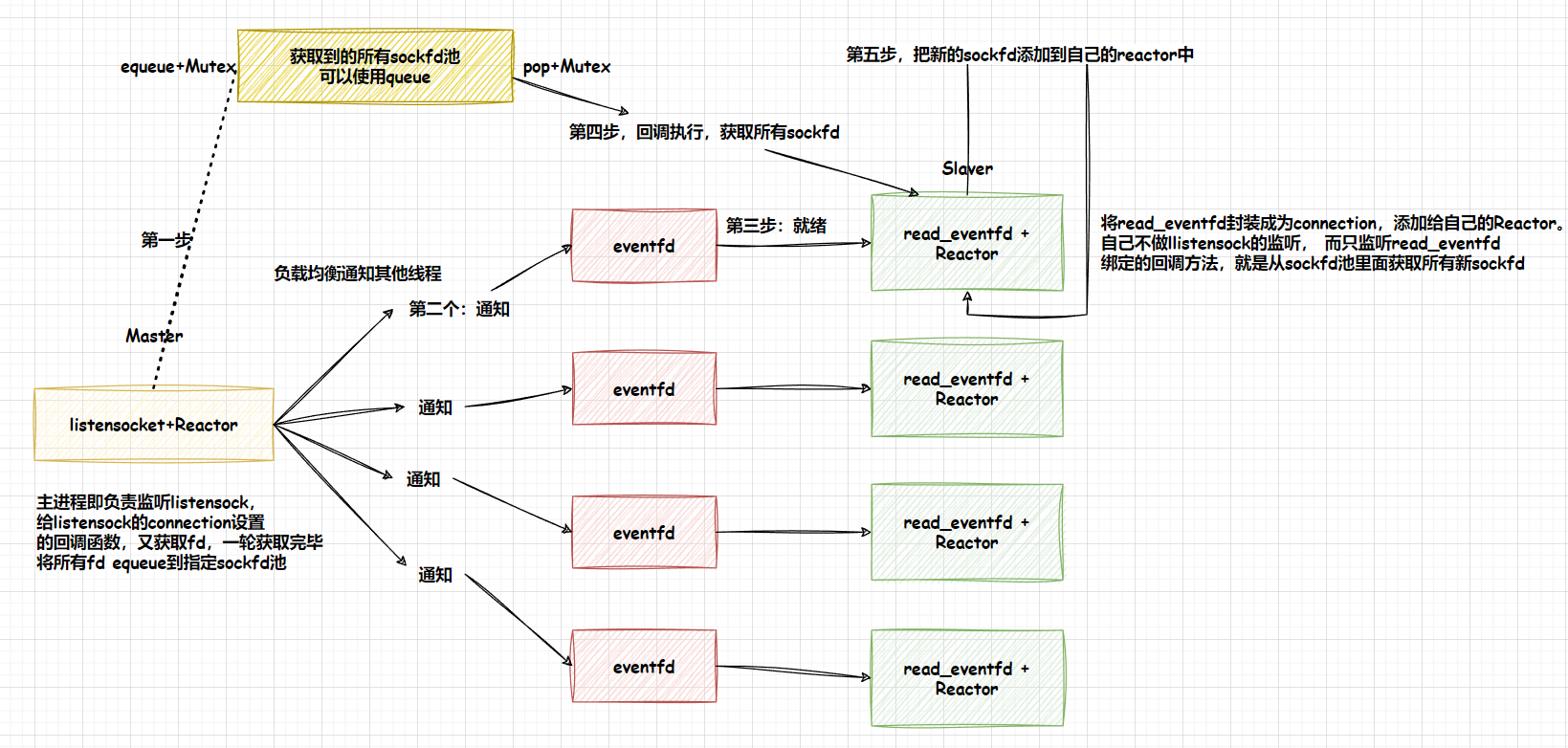
六、OTOL设计模式
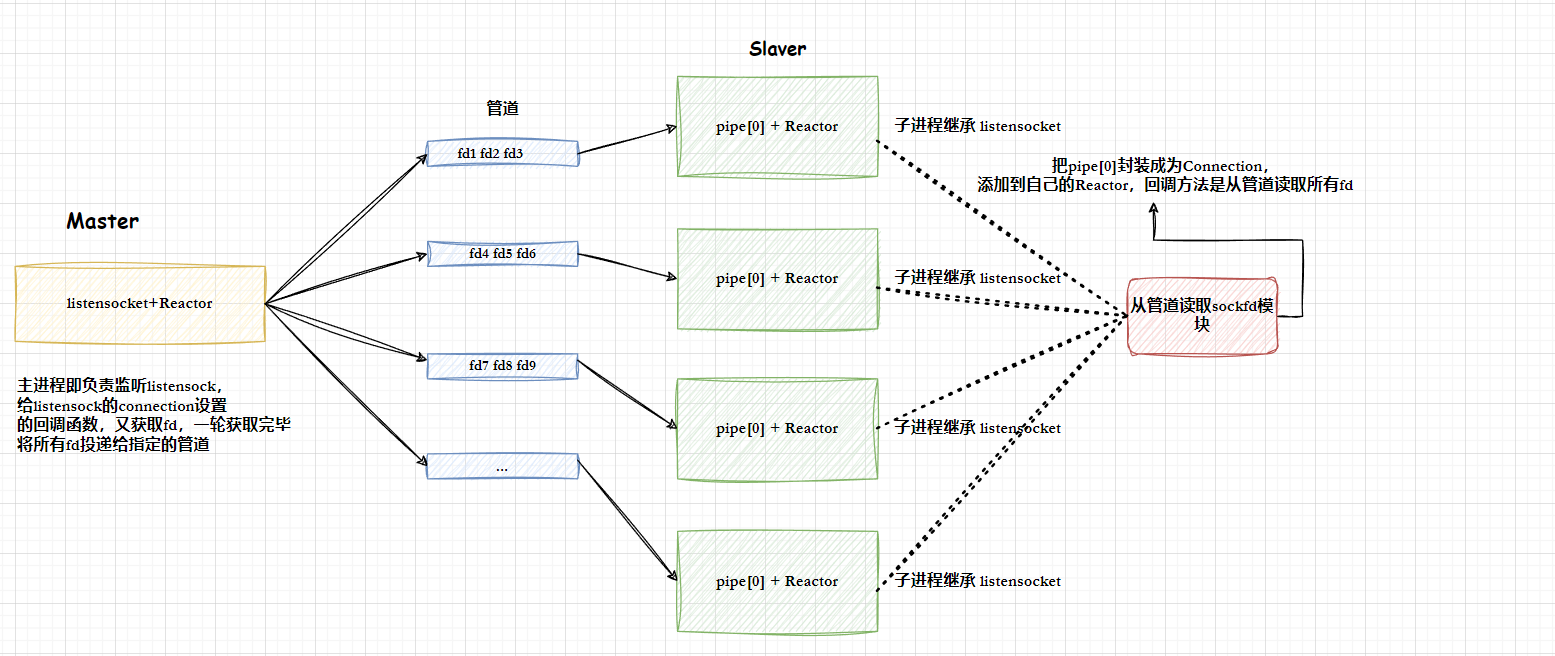
6.1.核心概念
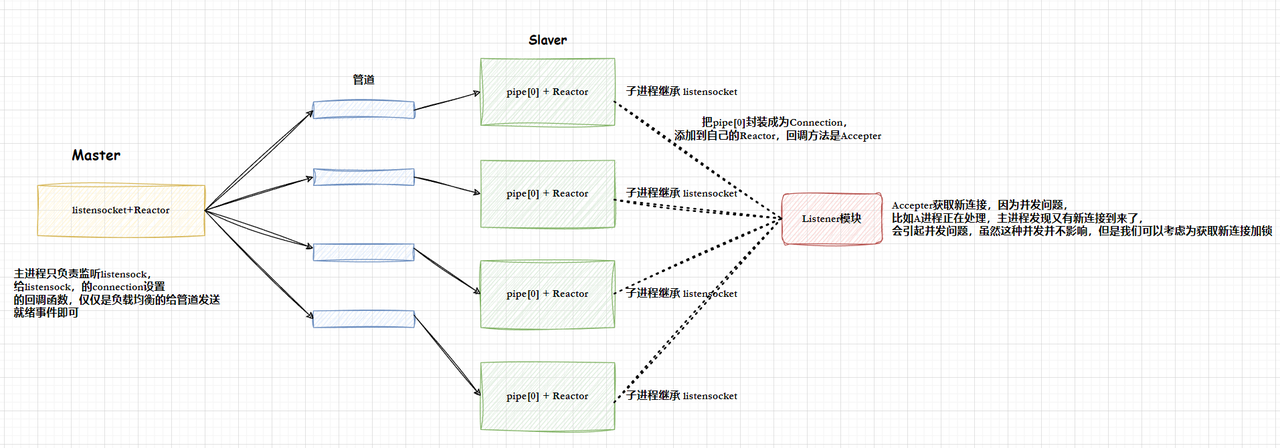
One Thread One Loop:描述基于事件驱动编程的架构
一个执行流,一个Reactor
每一个线程运行一个独立的事件循环,从而实现高效的并发处理
6.2.多进程实现方案
6.3.多线程实现方案
方案一:
方案二: