Basic statistics - 05. Confidence intervals
We have learned standard of mean in last notes, so how can we use it?
we can use it to calculate a confidence interval.
Example
We will pretend that we don't know the population mean in this example. Instead, we will here try to estimate it based on a sample from the population .
Here, we randomly select four individuals and measure their body heights.
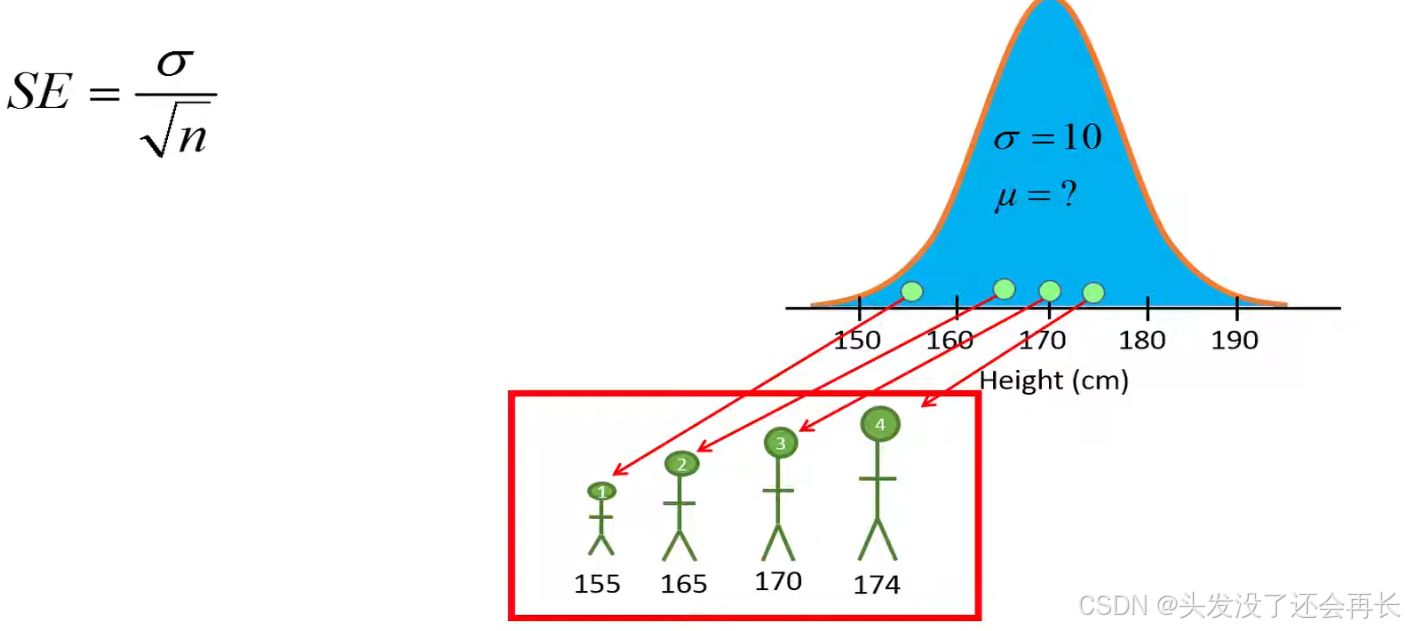
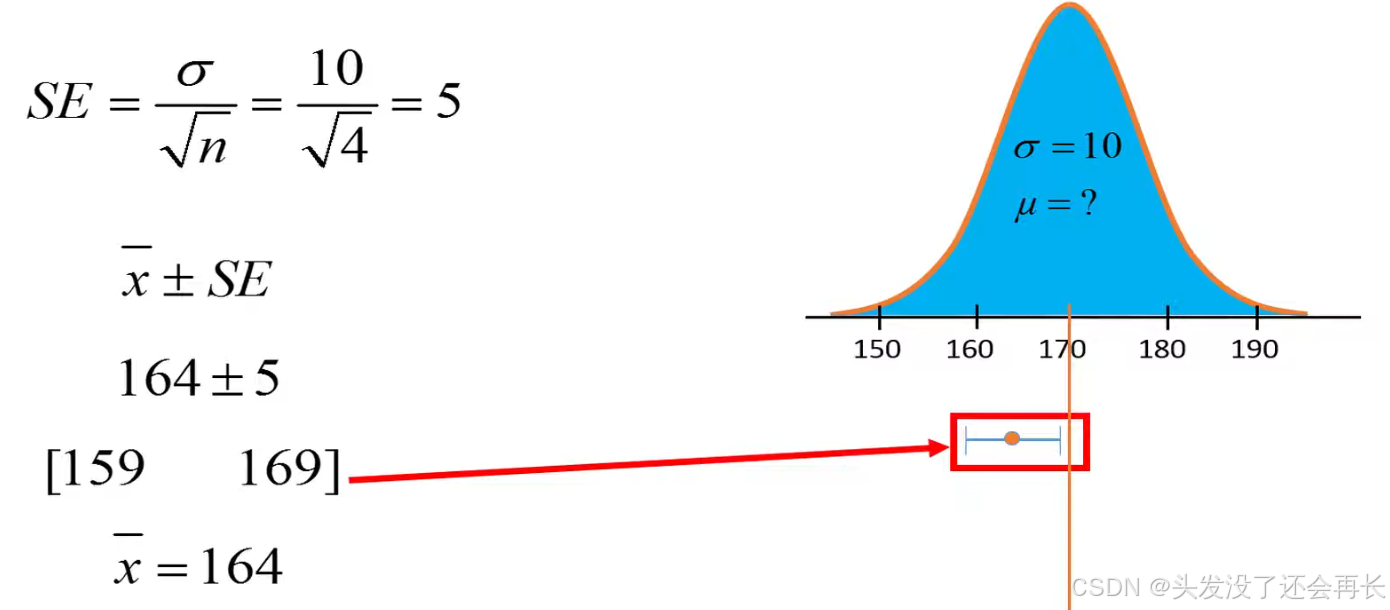
Then, we can calculate the SE and get interval 161 171
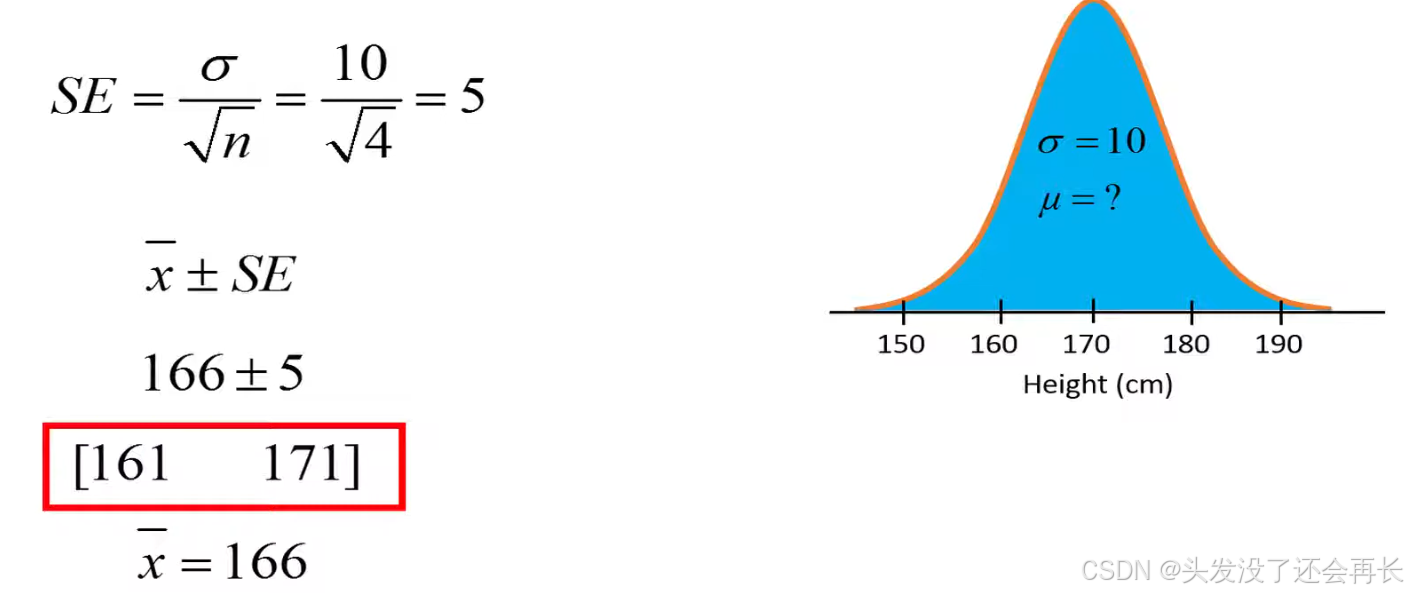
This interval calculated based on the estimated mean and the standard error, tells us that we are about 68% confident or certain that the true population mean is located inside this interval .
And the interval includes 170.
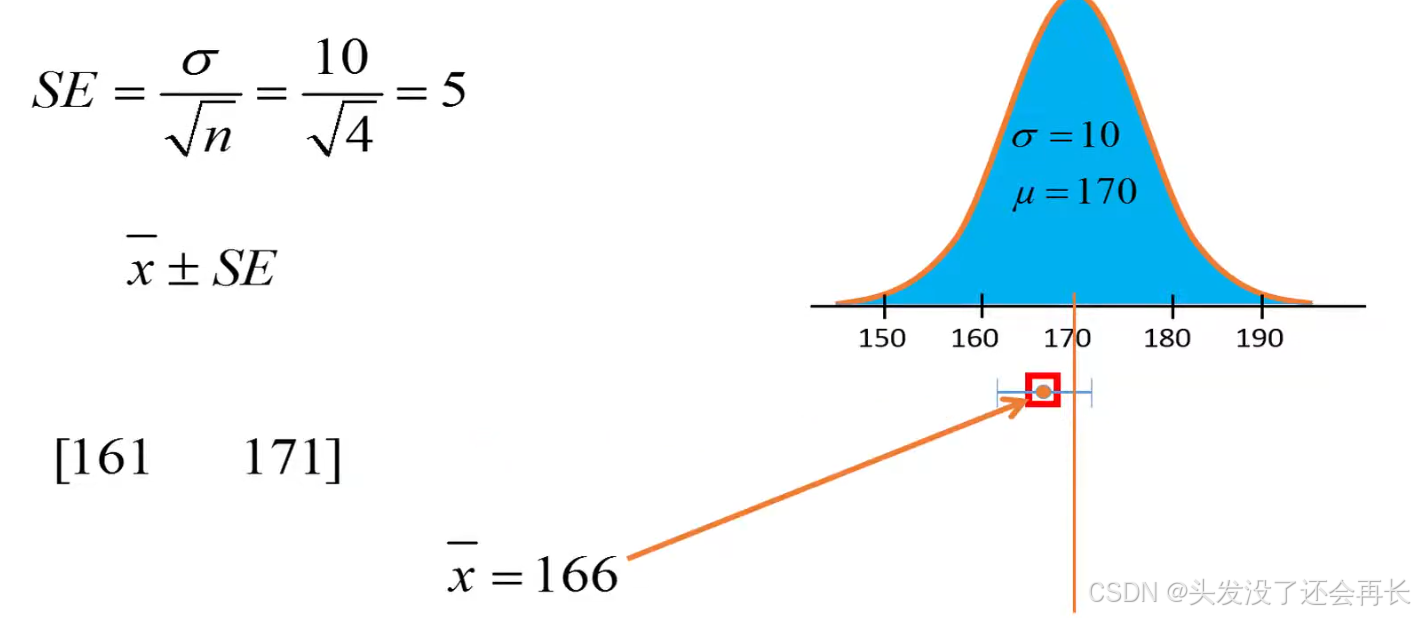
Another sample, the interval did not include the true population mean this time. because we only have 68% confidence, there is 32% risk that the interval does not include the population mean.
95% confidence interval
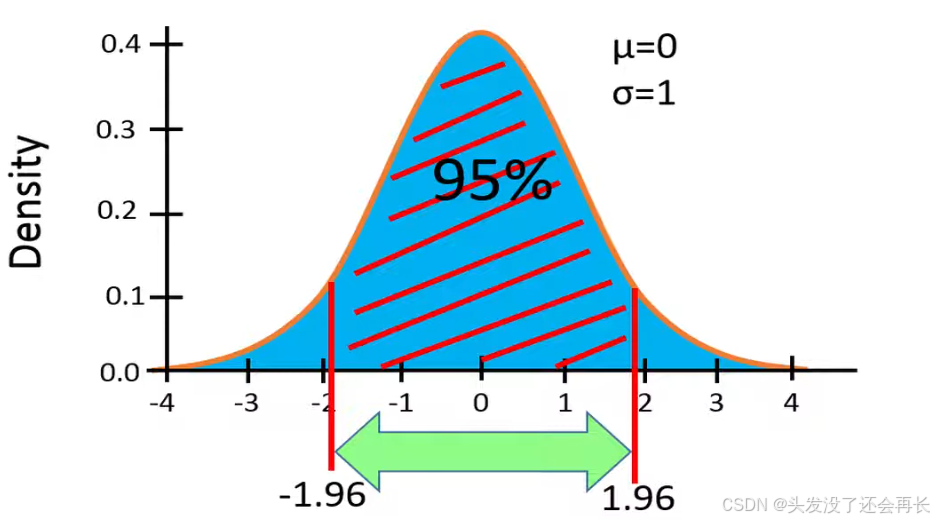
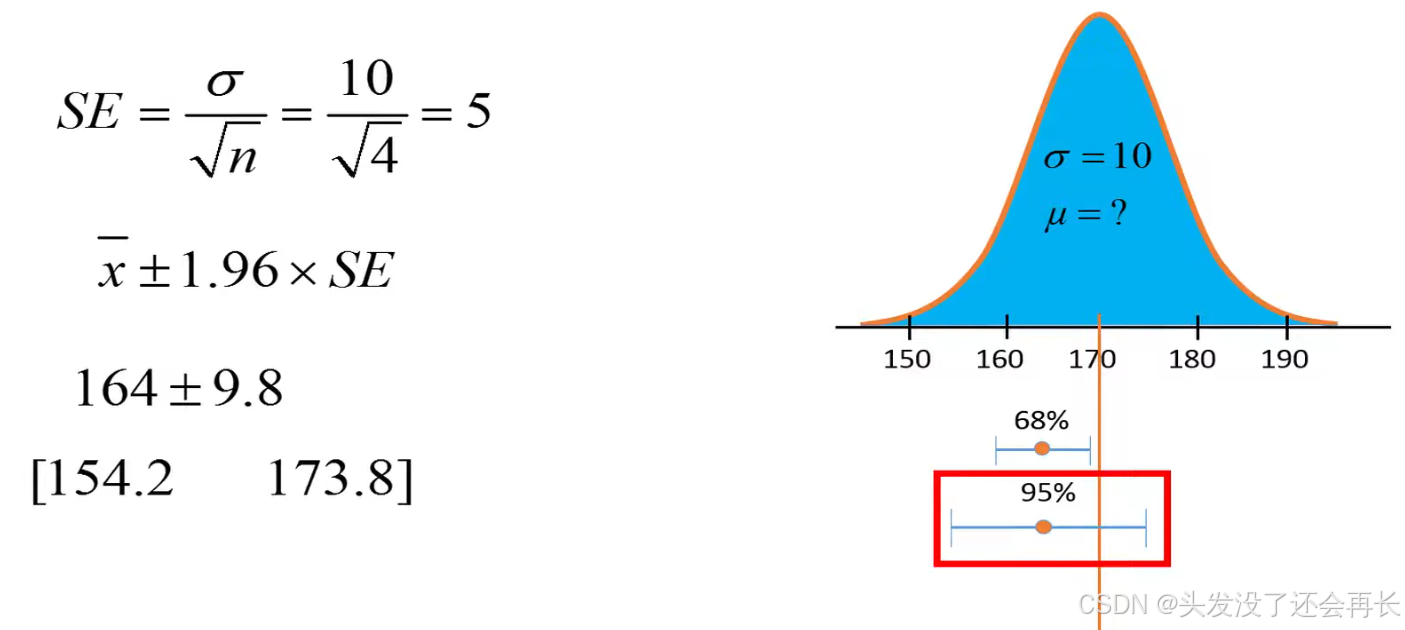
So, the last example mean is 164, if we use 95% confidence interval, it includes the true population mean.
Sample size
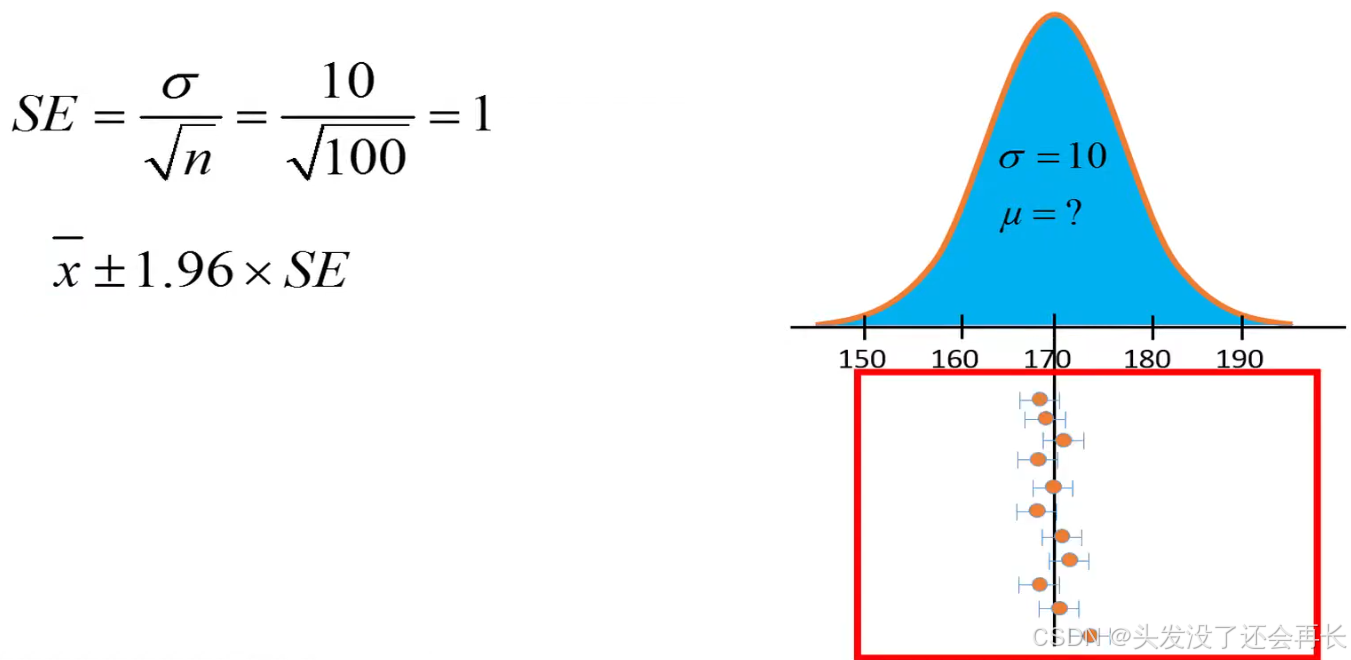
If we take a random sample of four individuals 100 times and compute 100 confidence intervals , we would expect that 95% of these confidence intervals include the true population mean.
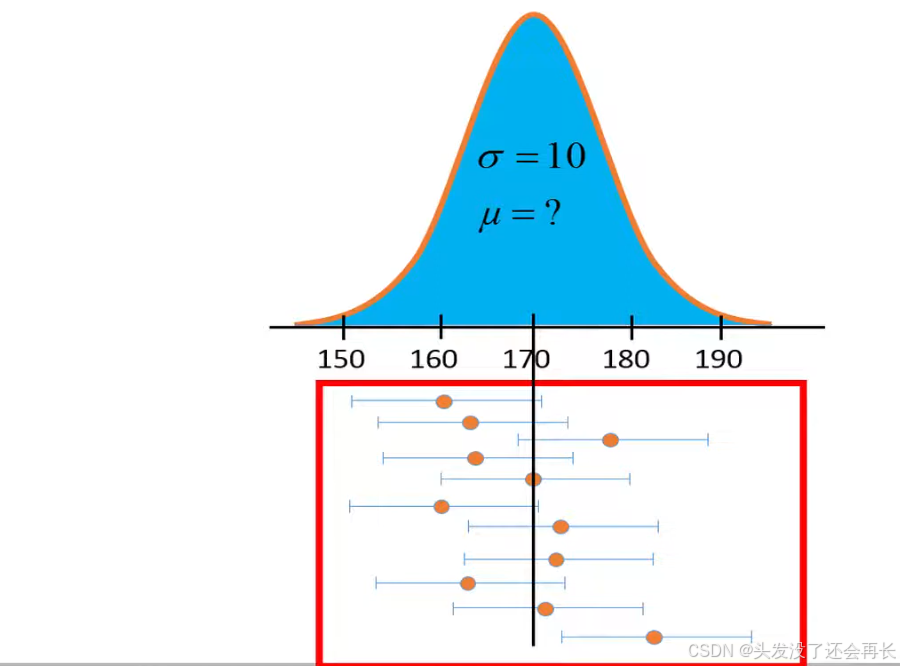
So the sample size = 100, we can get SE=1, the width of interval will be reduced from 9.8 to 1.96. the intervals will be narrower and more centered around population mean.
Which means we require a large sample size , which will reduce the standard error.
Standard error when sigma is unknown
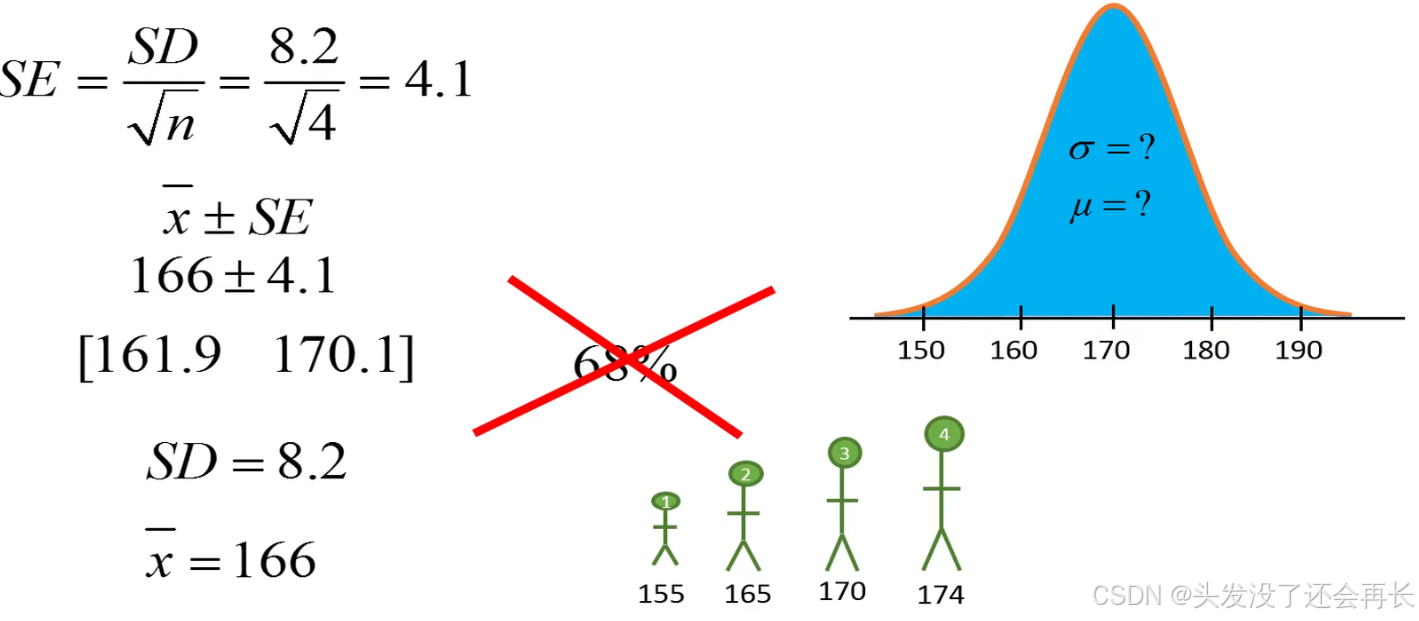
SD denotes that the standard deviation is an estimate of the true population standard deviation , sigma.
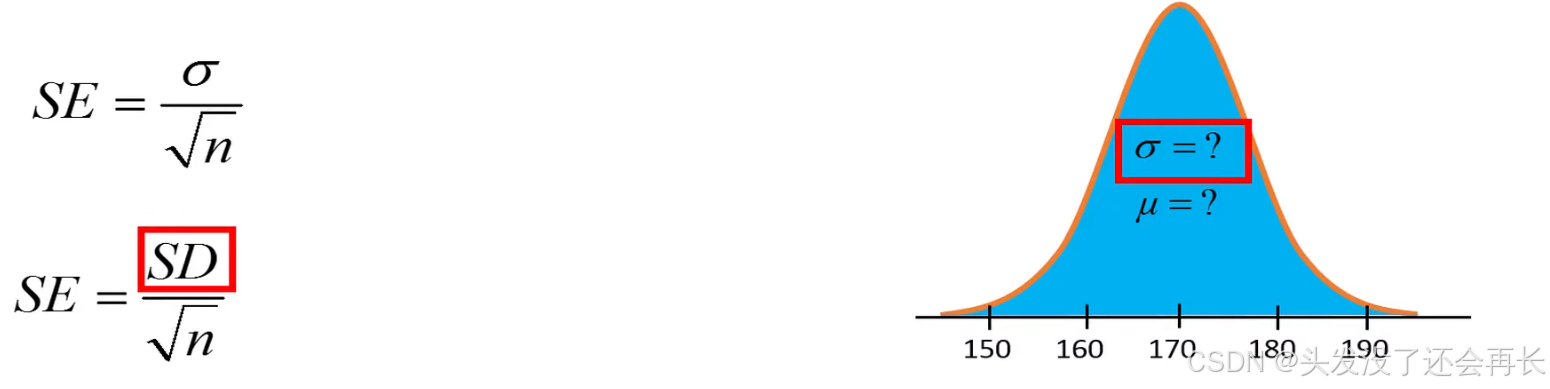
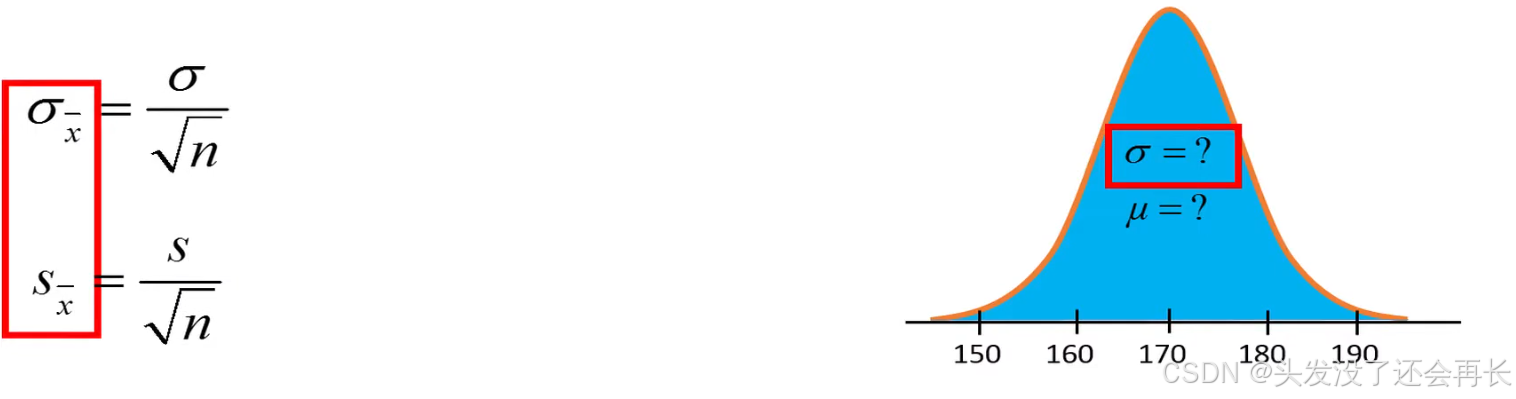
But, it is common to use these notations for the standard error of the mean based on the population standard deviation or based on the sample standard deviation .
If we use sample SD=8.2, we can get interval 161.9, 170.1,
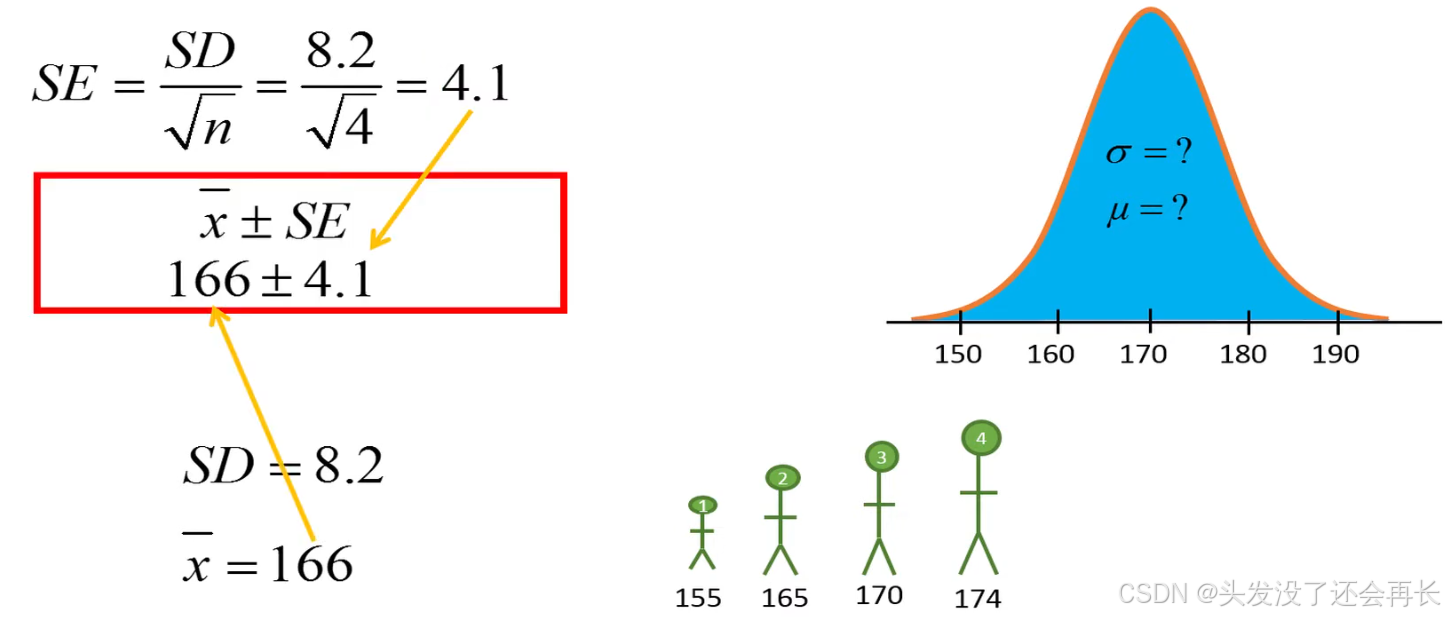
but since the SE is based a very small sample, we are no larger 68% certain that the interval includes the true population mean.