代码背景:
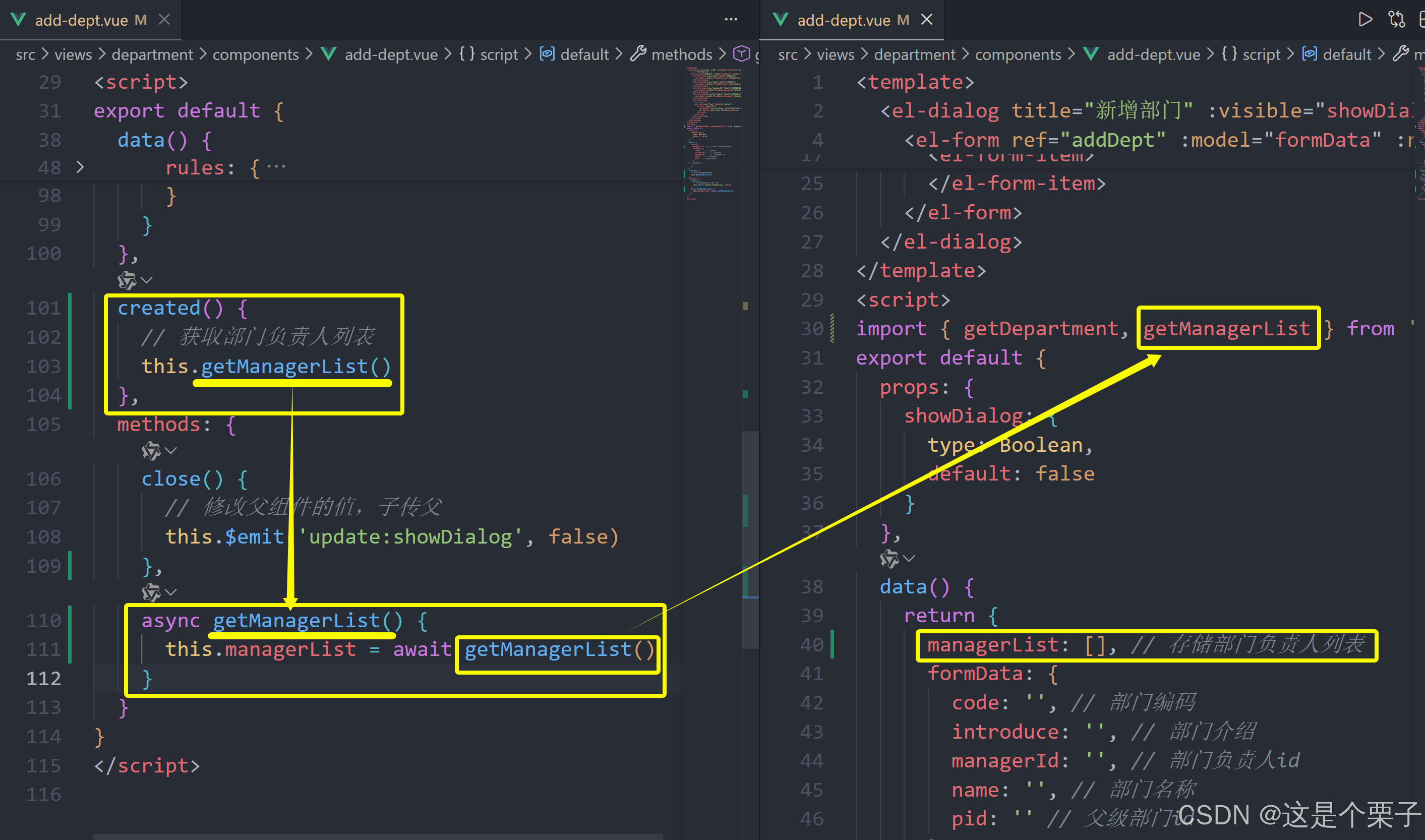
在分析以这段代码片段时,我注意到一个有趣的现象:
javascript
created() {
  // 获取部门负责人列表
  this.getManagerList()
}

methods: {
  async getManagerList() {
    this.managerList = await getManagerList()
  }
}
这里有三个需要注意的关键点:
- created 钩子中使用 this.getManagerList() 调用方法
- methods 中定义了 getManagerList 方法
- 在 getManagerList 方法内部又调用了同名的 getManagerList() 函数
深度解析
1. this 的正确使用
javascript
created() {
  // 正确:使用 this 调用组件方法
  this.getManagerList()
}
在 Vue 实例的生命周期钩子中,必须使用 this 来访问组件的方法和属性。这是因为:
- 生命周期钩子中的 this 指向 Vue 组件实例
- 直接调用 getManagerList() 会导致 "Uncaught ReferenceError: getManagerList is not defined" 错误
2. 同名函数与方法的潜在冲突
javascript
import { getManagerList } from 'getManagerList'

export default {
  methods: {
    async getManagerList() {
      // 这里调用的是哪个 getManagerList?
      this.managerList = await getManagerList()
    }
  }
}
这里存在一个同名但不同作用域的问题:
|--------|----------------|--------|---------|
| 类型 | 名称 | 来源 | 作用域 |
| 方法 | getManagerList | 组件 | 组件实例 |
| 函数 | getManagerList | 外部导入 | 模块作用域 |
在方法内部,当调用 getManagerList() 时:
- 它首先在当前方法作用域查找
- 如果没有找到,会向上查找模块作用域
- 因此,这里的 await getManagerList() 的 getManagerList()引用的是导入的函数(是调用的接口),而不是方法自身,所有重名没关系。
3. 为什么这不是递归?
这看起来像是递归调用,但实际上并不是:
javascript
async getManagerList() {
  // 如果没有导入同名函数,这将是递归调用,导致无限循环
  // 但由于有导入的同名函数,这里调用的是导入的函数
  this.managerList = await getManagerList()

  // 如果要递归调用自身,需要使用 this.getManagerList()
  // 这将导致无限循环
}
潜在问题与风险
1. 代码可读性差
javascript
// 容易混淆:哪个是哪个?
import { getManagerList } from '@/api/department'

methods: {
  async getManagerList() {
    const result = await getManagerList() // 导入的函数
    // 如果这里需要调用自身,就会产生歧义
    if (result.length === 0) {
      // 这是错误的递归调用方式
      // await getManagerList() 仍然调用的是导入的函数
    }
  }
}
2. 调试困难
当出现问题时,开发者可能会困惑:
- 是在调用哪个 getManagerList?
- 为什么修改了方法逻辑,但行为没有改变?
3. 维护风险
如果未来导入的函数名发生变化:
javascript
// 原代码
import { getManagerList } from '@/api/department'

// 如果后端API改为
import { fetchManagerList } from '@/api/department'

// 那么方法内部的调用就会出错
async getManagerList() {
  this.managerList = await getManagerList() // 错误:getManagerList 未定义
}
最佳实践建议
(1) 避免同名冲突
javascript
// 方案一:重命名导入的函数
import { getManagerList as fetchManagerList } from '@/api/department'

methods: {
  async getManagerList() {
    this.managerList = await fetchManagerList() // 清晰明了
  }
}

// 方案二:使用不同的方法名
import { getManagerList } from '@/api/department'

methods: {
  async fetchManagerData() {
    this.managerList = await getManagerList()
  }
}
(2) 清晰的命名约定
javascript
// 推荐命名规范
import {
  getManagerList as apiGetManagerList,
  createDepartment as apiCreateDepartment
} from '@/api/department'

methods: {
  // 方法名描述动作
  async loadManagerList() {
    this.managerList = await apiGetManagerList()
  },

  async initializeDepartmentData() {
    await this.loadManagerList()
    // 其他初始化逻辑
  }
}
在实际开发中,建议团队制定统一的命名规范,例如:
- API 函数使用 fetchXxx 或 getXxxFromAPI 前缀
- 组件方法使用动作描述如 loadXxx、handleXxx、initXxx
- 数据属性使用名词如 userList、loadingState
(3) 使用箭头函数避免 this 问题
javascript
created() {
  // 箭头函数会继承外部作用域的 this
  const fetchData = async () => {
    await this.getManagerList()
  }
  fetchData()
},

methods: {
  getManagerList() {
    // 注意:箭头函数不能用作方法
    // 因为箭头函数没有自己的 this
  }
}