目录
[1. SeqList.h 头文件](#1. SeqList.h 头文件)
[2. SeqList.c 源文件](#2. SeqList.c 源文件)
[3. Contact.h 头文件](#3. Contact.h 头文件)
[4. Contact.c 源文件](#4. Contact.c 源文件)
[5. test.c 源文件](#5. test.c 源文件)
[6. 代码补充](#6. 代码补充)
[6.1 基于顺序表实现通讯录项目](#6.1 基于顺序表实现通讯录项目)
[6.2 对顺序表改名操作注意事项编辑](#6.2 对顺序表改名操作注意事项编辑)
正文开始:
1. SeqList.h 头文件
cpp
#pragma once

#define _CRT_SECURE_NO_WARNINGS 1

#include <stdio.h>
#include <stdlib.h>
#include <assert.h>

#include "Contact.h"


typedef peoInfo SLDataType;

//动态顺序表
typedef struct SeqList
{
	SLDataType* arr;
	int size; //有效数据个数
	int capacity; //空间大小
}SL;

//顺序表初始化
void SLInit(SL* ps);

//顺序表的销毁
void SLDestroy(SL* ps);

//头部插入 / 尾部插入
void SLPushBack(SL* ps, SLDataType x);
void SLPushFront(SL* ps, SLDataType x);

//头部删除 / 尾部删除
void SLPopBack(SL* ps);
void SLPopFront(SL* ps);

//指定位置之前插入/删除数据
void SLInsert(SL* ps, int pos, SLDataType x);
void SLErase(SL* ps, int pos);
2. SeqList.c 源文件
cpp
#define _CRT_SECURE_NO_WARNINGS

#include"SeqList.h"

void SLInit(SL* ps)
{
	ps->arr = NULL;
	ps->size = ps->capacity = 0;
}

//顺序表的销毁
void SLDestroy(SL* ps)
{
	if (ps->arr) //等价于  if(ps->arr != NULL)
	{
		free(ps->arr);
	}
	ps->arr = NULL;
	ps->size = ps->capacity = 0;
}

void SLCheckCapacity(SL* ps)
{
	//插入数据之前先看空间够不够
	if (ps->capacity == ps->size)
	{
		//三目表达式
		int newCapacity = ps->capacity == 0 ? 4 : 2 * ps->capacity;
		SLDataType* tmp = (SLDataType*)realloc(ps->arr, newCapacity * sizeof(SLDataType));//要申请多大的空间
		if (tmp == NULL)
		{
			perror("realloc fail!");
			exit(1);//直接退出程序,不再继续执行
		}
		//空间申请成功
		ps->arr = tmp;
		ps->capacity = newCapacity;
	}
}

//尾插
void SLPushBack(SL* ps, SLDataType x)
{
	assert(ps); //等价与assert(ps != NULL)

	SLCheckCapacity(ps);
	ps->arr[ps->size++] = x;
}

//头插
void SLPushFront(SL* ps, SLDataType x)
{
	assert(ps);
	SLCheckCapacity(ps);

	//先让顺序表中已有的数据整体往后挪动一位
	for (int i = ps->size; i > 0; i--)
	{
		ps->arr[i] = ps->arr[i - 1];//arr[1] = arr[0]
	}
	ps->arr[0] = x;
	ps->size++;
}

void SLPopBack(SL* ps)
{
	assert(ps);
	assert(ps->size);//顺序表不为空
	--ps->size;
}

void SLPopFront(SL* ps)
{
	assert(ps);
	assert(ps->size);

	//数据整体往前挪动一位
	for (int i = 0; i < ps->size - 1; i++)
	{
		ps->arr[i] = ps->arr[i + 1]; //arr[size-2] = arr[size-1]
	}
	ps->size--;
}

//在指定位置之前插入数据
// 1 2   size = 2
//pos 0 -1 100000
void SLInsert(SL* ps, int pos, SLDataType x)
{
	assert(ps);
	assert(pos >= 0 && pos <= ps->size);

	//插入数据前先查看空间够不够
	SLCheckCapacity(ps);

	//让pos及之后的数据整体往后挪动一位
	for (int i = ps->size; i > pos; i--)
	{
		ps->arr[i] = ps->arr[i - 1];//arr[pos+1] = arr[pos]
	}
	ps->arr[pos] = x;
	ps->size++;
}

//删除指定位置的数据
void SLErase(SL* ps, int pos)
{
	assert(ps);
	assert(pos >= 0 && pos < ps->size);

	for (int i = pos; i < ps->size - 1; i++)
	{
		ps->arr[i] = ps->arr[i + 1];
	}
	ps->size--;
}
3. Contact.h 头文件
cpp
#pragma once

#define NAME_MAX 20
#define GENDER_MAX 10
#define TEL_MAX 20
#define ADDR_MAX 100

//定义联系人数据 结构
//姓名 性别 年龄 电话 地址
typedef struct personInfo
{
	char name[NAME_MAX];
	char gender[GENDER_MAX];
	int age;
	char tel[TEL_MAX];
	char addr[ADDR_MAX];
}peoInfo;


//要用到顺序表相关的方法,对通讯录的操作实际就是对顺序表进行操作

//给顺序表改个名字,叫做通讯录。
typedef struct SeqList Contact; //sl
//typedef SL Contact; 此写法错误

//通讯录相关的方法

//通讯录的初始化
void ContactInit(Contact* con);

//通讯录的销毁
void ContactDesTroy(Contact* con);

//通讯录添加数据
void ContactAdd(Contact* con);

//通讯录删除数据
void ContactDel(Contact* con);

//通讯录的修改
void ContactModify(Contact* con);

//通讯录查找
void ContactFind(Contact* con);

//展示通讯录数据
void ContactShow(Contact* con);
4. Contact.c 源文件
cpp
#define _CRT_SECURE_NO_WARNINGS

#include "Contact.h"
#include "SeqList.h"

//通讯录的初始化
void ContactInit(Contact* con)//sl
{
	//实际上要进行的是顺序表的初始化
	//顺序表的初始化已经实现好了
	SLInit(con);
}

//通讯录的销毁
void ContactDesTroy(Contact* con)
{
	SLDestroy(con);
}

//通讯录添加数据
void ContactAdd(Contact* con)
{
	//获取用户输入的内容:姓名+性别+年龄+电话+地址
	peoInfo info;
	printf("请输入要添加的联系人姓名:\n");
	scanf("%s", info.name); //此处因为info.name为数组首元素地址,所以无需取地址符号

	printf("请输入要添加的联系人性别:\n");
	scanf("%s", info.gender);

	printf("请输入要添加的联系人年龄:\n");
	scanf("%d", &info.age);

	printf("请输入要添加的联系人电话:\n");
	scanf("%s", info.tel);

	printf("请输入要添加的联系人住址:\n");
	scanf("%s", info.addr);

	//往通讯录中添加联系人数据
	SLPushBack(con, info);
}

//展示通讯录数据
void ContactShow(Contact* con)
{
	//表头:姓名  性别 年龄 电话  地址
	printf("%s %s %s %s %s\n", "姓名", "性别", "年龄", "电话", "地址");
	//遍历通讯录,按照格式打印每个联系人数据
	for (int i = 0; i < con->size; i++)
	{
		printf("%3s %3s %3d %3s %3s\n", //手动调整一下格式
			con->arr[i].name,
			con->arr[i].gender,
			con->arr[i].age,
			con->arr[i].tel,
			con->arr[i].addr
		);
	}
}

int FindByName(Contact* con, char name[])
{
	for (int i = 0; i < con->size; i++)
	{
		if (0 == strcmp(con->arr[i].name, name))
		{
			//找到了
			return i;
		}
	}
	//没有找到
	return -1;
}

//通讯录删除数据
void ContactDel(Contact* con)
{
	//要删除的数据必须要存在,才能执行删除操作
	//查找
	char name[NAME_MAX];
	printf("请输入要删除的联系人姓名:\n");
	scanf("%s", name);

	int find = FindByName(con, name);
	if (find < 0)
	{
		printf("要删除的联系人数据不存在!\n");
		return;
	}
	//要删除的联系人数据存在--->知道了要删除的联系人数据对应的下标
	SLErase(con, find);
	printf("删除成功!\n");
}


//通讯录的修改
void ContactModify(Contact* con)
{
	//要修改的联系人数据存在
	char name[NAME_MAX];
	printf("请输入要修改的用户姓名:\n");
	scanf("%s", name);

	int find = FindByName(con, name);
	if (find < 0)
	{
		printf("要修改的联系人数据不存在!\n");
		return;
	}
	//直接修改
	printf("请输入新的姓名:\n");
	scanf("%s", con->arr[find].name);

	printf("请输入新的性别:\n");
	scanf("%s", con->arr[find].gender);

	printf("请输入新的年龄:\n");
	scanf("%d", &con->arr[find].age);

	printf("请输入新的电话:\n");
	scanf("%s", con->arr[find].tel);

	printf("请输入新的住址:\n");
	scanf("%s", con->arr[find].addr);

	printf("修改成功!\n");
}

//通讯录查找
void ContactFind(Contact* con)
{
	//11

	char name[NAME_MAX];
	printf("请输入要查找的联系人姓名\n");
	scanf("%s", name);

	int find = FindByName(con, name);
	if (find < 0)
	{
		printf("要查找的联系人数据不存在!\n");
		return;
	}
	// 姓名 性别 年龄 电话  地址
	// 11   11   11   11   11
	printf("%s %s %s %s %s\n", "姓名", "性别", "年龄", "电话", "地址");
	printf("%3s %3s %3d %3s %3s\n", //手动调整一下格式
		con->arr[find].name,
		con->arr[find].gender,
		con->arr[find].age,
		con->arr[find].tel,
		con->arr[find].addr
	);
}
5. test.c 源文件
cpp
#define _CRT_SECURE_NO_WARNINGS

#include "SeqList.h"

//通讯录的测试
void test1()
{
	//创建的通讯录对象  实际上就是 顺序表对象,等价于SL sl
	Contact con;

	ContactInit(&con);
	ContactDesTroy(&con);

}

void test2()
{
	Contact con;

	ContactInit(&con);
	ContactAdd(&con);
	ContactShow(&con);

	ContactDesTroy(&con);
}

void test3()
{
	Contact con;

	ContactInit(&con);
	ContactAdd(&con);
	ContactAdd(&con);
	ContactShow(&con);

	ContactDel(&con);
	ContactShow(&con);

	ContactDesTroy(&con);
}

void test4()
{
	Contact con;

	ContactInit(&con);
	ContactAdd(&con);
	ContactAdd(&con);
	ContactShow(&con);

	ContactModify(&con);
	ContactShow(&con);

	ContactDesTroy(&con);
}

void test5()
{
	Contact con;

	ContactInit(&con);
	ContactAdd(&con);
	ContactAdd(&con);
	ContactShow(&con);

	ContactFind(&con);

	ContactDesTroy(&con);
}

//int main()
//{
//	//test1();
//	//test2();
//	//test3();
//	//test4();
//	test5();
//
//	return 0;
//}

void menu()
{
	printf("******************通讯录******************\n");
	printf("*******1.增加联系人   2.删除联系人********\n");
	printf("*******3.修改联系人   4.查找联系人********\n");
	printf("*******5.展示联系人   0.   退出  *********\n");
	printf("******************************************\n");
}

int main()
{
	int op = -1;
	Contact con;
	ContactInit(&con);

	do {
		menu();
		printf("请选择您的操作:\n");
		scanf("%d", &op);

		//要根据对应的op执行不同的操作
		switch (op)
		{
		case 1:
			ContactAdd(&con);
			break;
		case 2:
			ContactDel(&con);
			break;
		case 3:
			ContactModify(&con);
			break;
		case 4:
			ContactFind(&con);
			break;
		case 5:
			ContactShow(&con);
			break;
		case 0:
			printf("退出通讯录....\n");
			break;
		default:
			printf("输入错误,请重新选择您的操作!\n");
			break;
		}
	} while (op != 0);

	ContactDesTroy(&con);
	return 0;
}
6. 代码补充
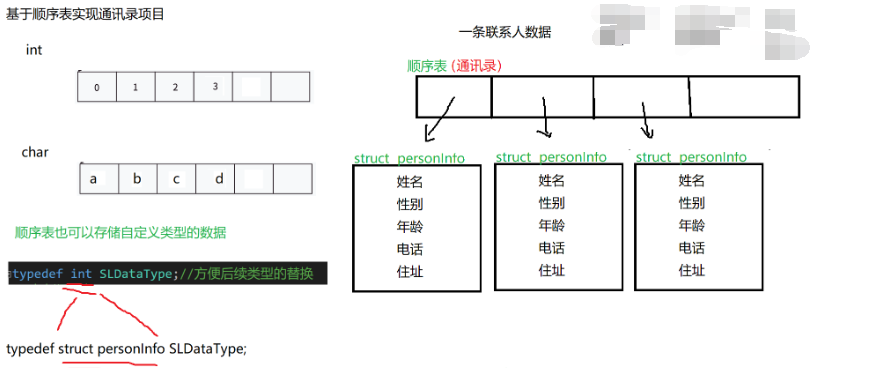
6.1 基于顺序表实现通讯录项目
6.2 对顺序表改名操作注意事项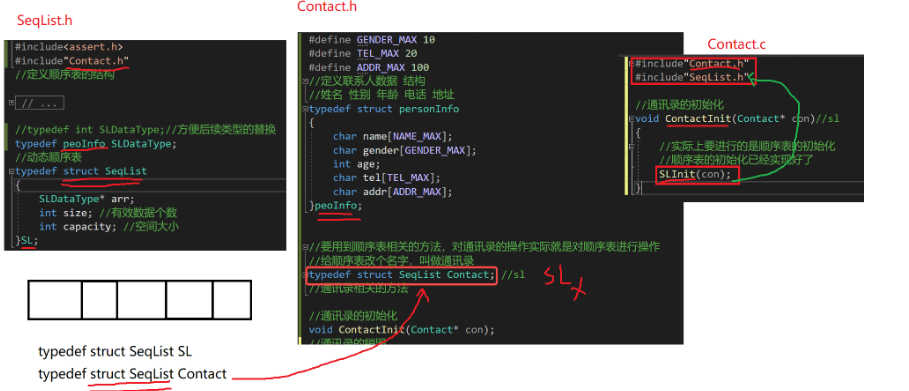
1. 在头文件Contact.h中,对顺序表重命名的操作中不能将代码写为" typedef SL Contact; ",因为在头文件Contact.h中没有包含头文件SeqList.h(此举相当于程序预处理、编译等过程中,头文件SeqList.h中的内容因为没有在头文件Contact.h中展开,所以头文件Contact.h中的" typedef SL Contact; "这行代码,编译器不能解读出将结构体struct SeqList改名为SL的SL的含义,所以会报错)。从而用前置声明: "typedef struct SeqList Contact;" ,这一操作才能将顺序表正确重命名为Contact(重命名为了让程序有更好的阅读性)。而头文件Contact.h中之所以不选择包含头文件SeqList.h,是因为头文件SeqList.h中已经包含了头文件Contact.h,所以如果头文件Contact.h中再包含头文件SeqList.h的话会出现交叉使用头文件的现象,此现象会报错。
**2.**而在头文件SeqList.h却能直接将peoInfo (头文件Contact.h中的结构体struct personInfo的重命名) 重命名为SLDataType,是因为头文件SeqList.h中包含了头文件Contact.h。