Makefile 的使用
双向链表
typedef struct person
{
char name32;
int age;
char sex;
int score;
} DATATYPE;
typedef struct dounode
{
DATATYPE data;
struct dounode *prev;
struct dounode *next; // 多了一个向前的指针
} DouLinkNode;
typedef struct list
{
DouLinkNode *head;
int clen;
} DouLinkList;
typedef enum
{
DIR_FORWARD,
DIR_BACKWARD
} DIRECT;
概念图:
函数基本类型: 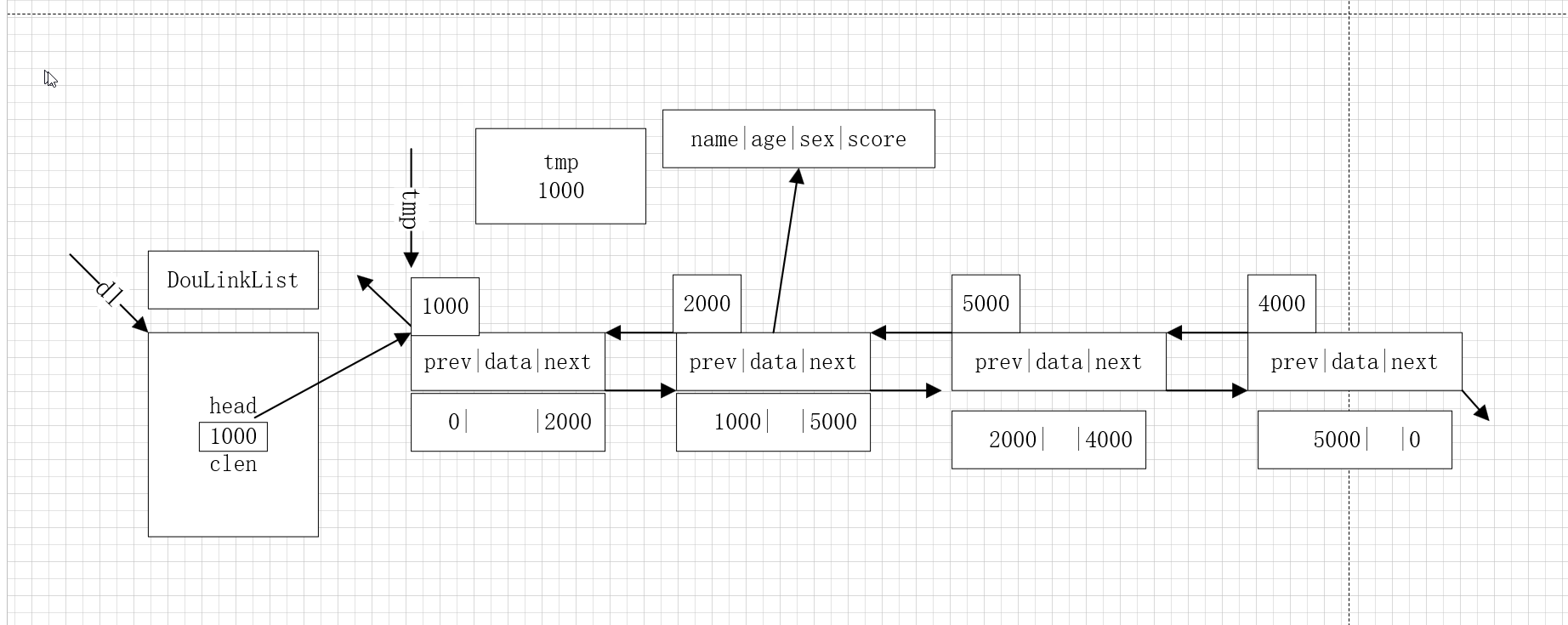
DouLinkList *CreateDouLinkList()
{
}
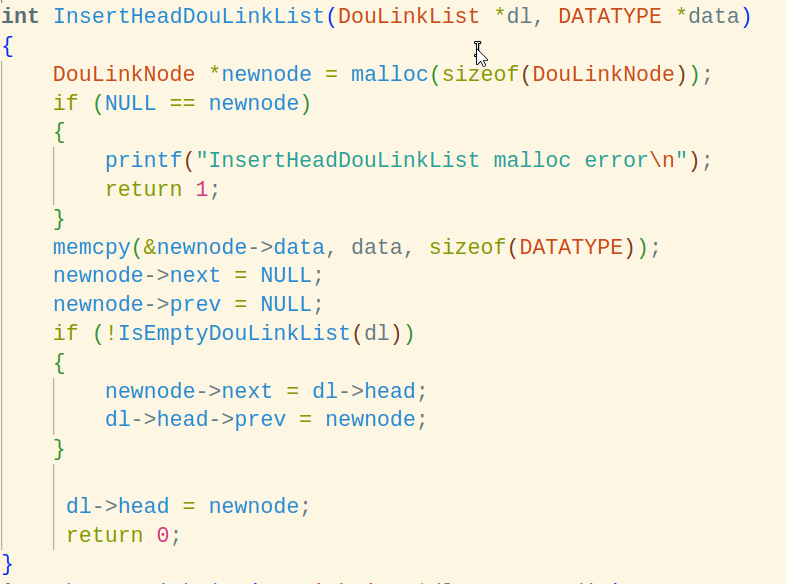
头插函数
int InsertHeadDouLinkList(DouLinkList *dl, DATATYPE *data)
bash
int InsertHeadDouLinkList(DouLinkList *dl, DATATYPE *data)
{
  DouLinkNode *newnode = malloc(sizeof(DouLinkNode));
  if (NULL == newnode)
  {
    printf("error");
    DouLinkNode *next = NULL;
    DouLinkNode *prev = NULL;
    if (!IsEmptyDouLinkList(dl))
    {
      newnode->next = dl->head;   // 新的指向头节点
      dl->head->prev = newnode;   // 头节点的前一个指向新节点的本身。
    }
    dl->head = newnode;   // 如果为空的时候,头节点指向新的节点,也就实现了插入头节点的概念。
    dl->clen++;
    return 0;
  }
}
int ShowDouLinkList(DouLinkList *dl, DIRECT dir)
cpp
int ShowDouLinkList(DouLinkList *dl, DIRECT dir)
{
  DouLinkNode *tmp = dl->head;
  if (DIR_FORWARD == dir)   // 判断遍历方向是否为正向
  {
    while (tmp)  //
    {
      printf("%s %d %c %d", tmp->data.name, tmp->data.age, tmp->data.sex, tmp->data.score);
      tmp = tmp->next;  // 向后移动一个节点,(最终的顺序和插入的顺序是相反的)
    }
  }
  else
  {
    while (tmp->next)
    {
      tmp = tmp->next;   // 循环到这里之后 ,tmp 已经指向最后一个节点。
    }
    while (tmp)  //
    {
      printf("%s %d %c %d", tmp->data.name, tmp->data.age, tmp->data.sex, tmp->data.score);
      tmp = tmp->prev; //开始到推,从末尾到头进行输出。
    }
  }
  return 0;
}
int InserTailDouLinkList(DouLinkList *dl, DATATYPE *data)
{
}
DouLinkNode *FindDouLinkList(DouLinkList *dl, char *name)
{
}
int ModifyDouLinkList(DouLinkList *dl, char *name, DATATYPE *newdata)
{
}
int DeleteDouLinkList(DouLinkList *dl, char *name)
{
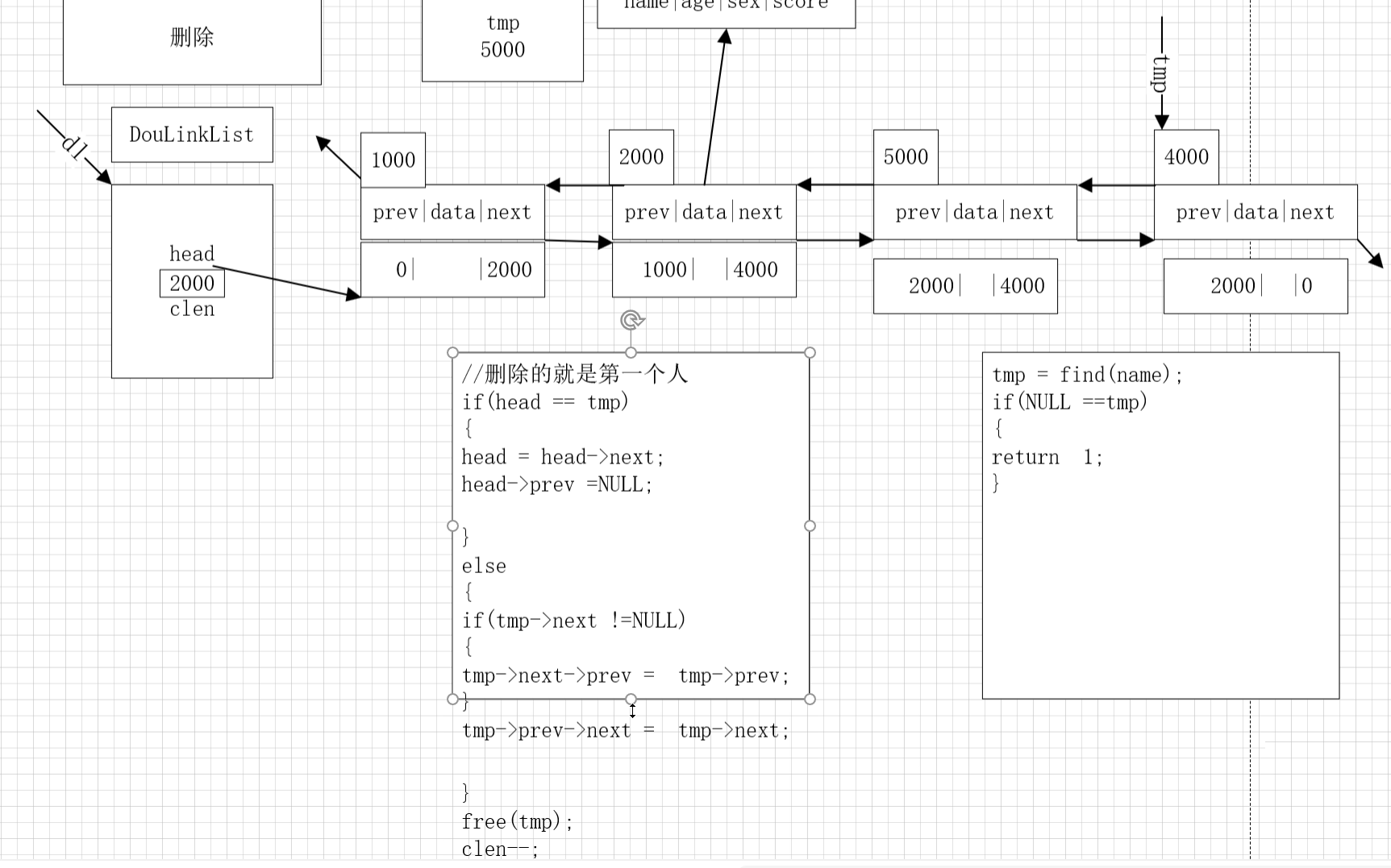
}
int IsEmptyDouLinkList(DouLinkList *dl)
{
}
int GetSizeDouLinkList(DouLinkList *dl)
{
}
int DestroyDouLinkList(DouLinkList *dl)
{
}