红黑树
目录
一、红黑树的特点
一种二叉搜索树
每个节点增加一个存储位表示节点颜色(红色 or 黑色)
通过对任何一条从根到叶子的路径上各个节点的颜色进行约束
确保没有一条路径会比其他路径长出2倍,从而接近平衡
二、红黑树的规则
- 每个节点不是红色就是黑色
- 根节点是黑色
- 一个节点是红色,则它的两个孩子节点必须是黑色(任意一条路径不会有连续的红色节点)
- 对于任意一个节点,从该节点到其所有NULL节点的简单路径上,均包含相同数量的黑色节点
(从根开始每条路径黑色节点的数量都是相等的)
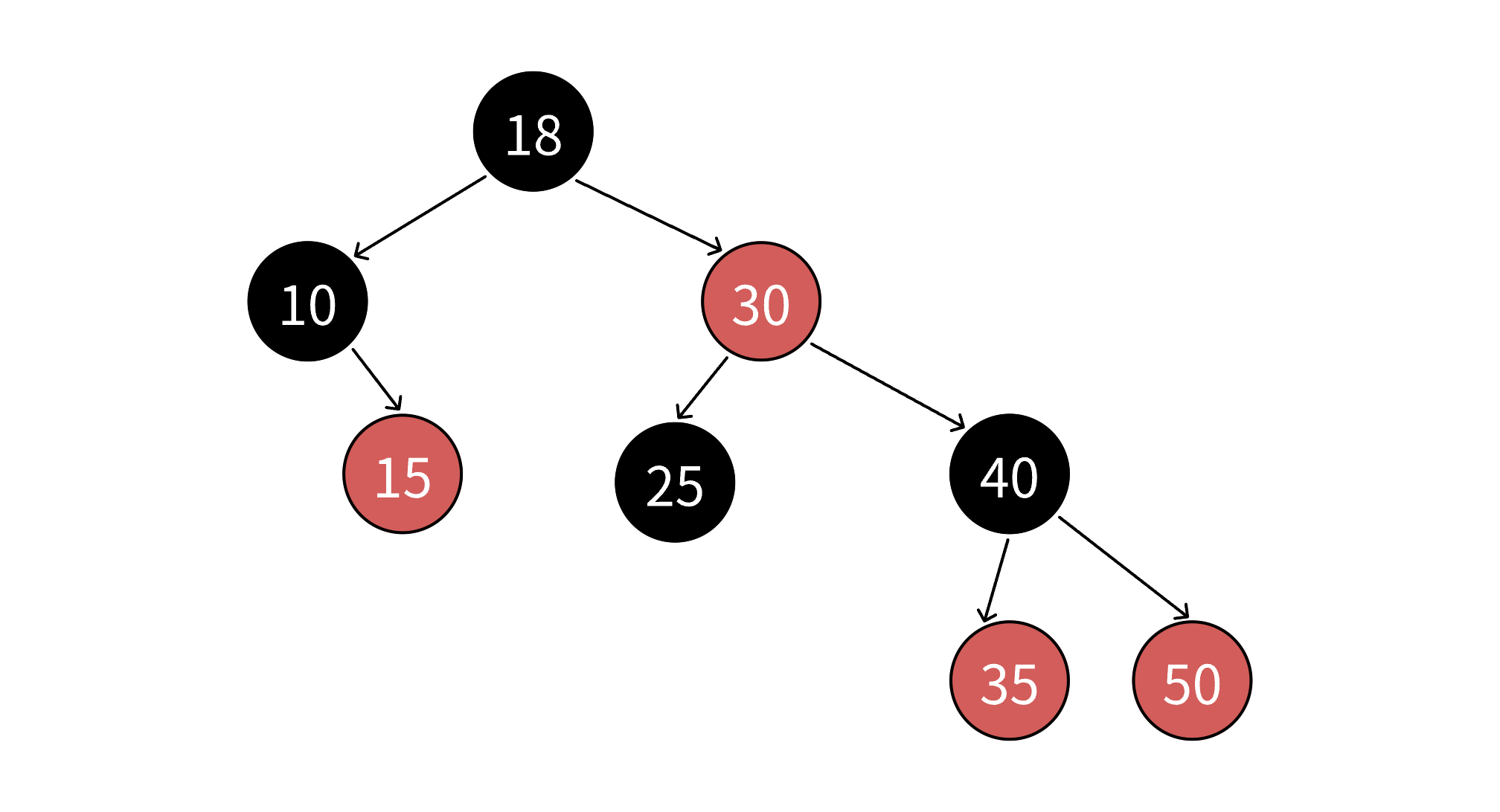
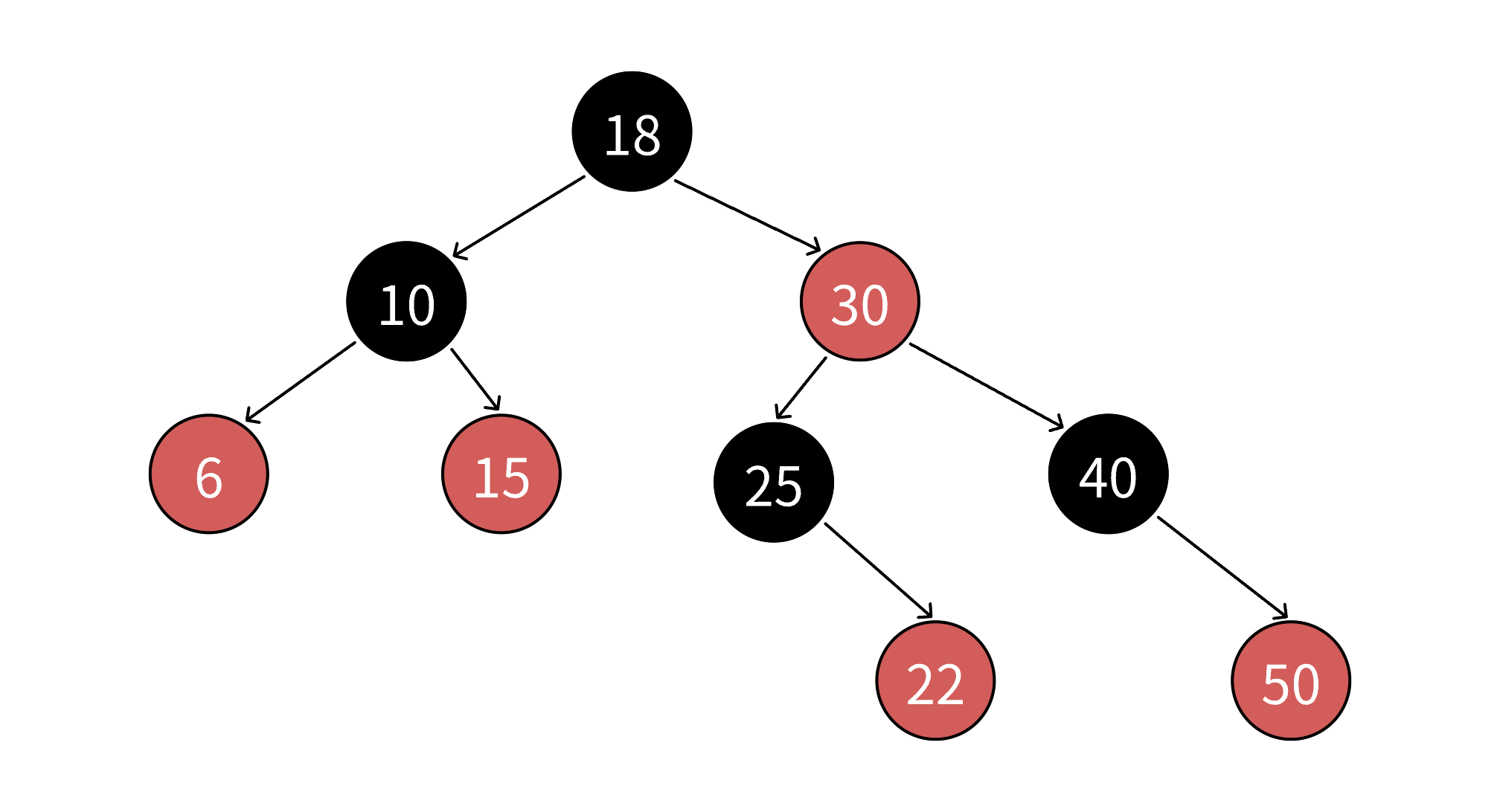
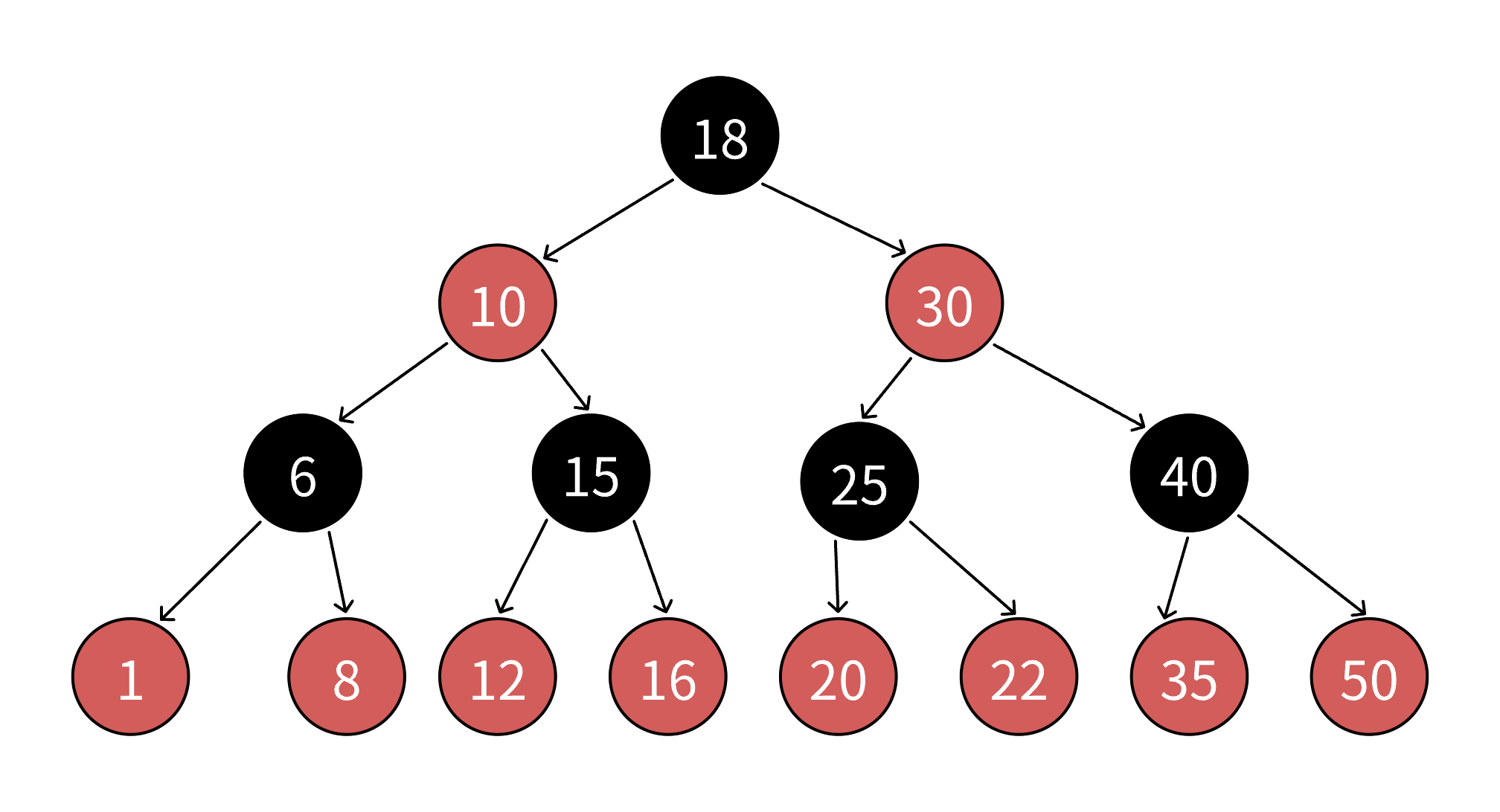
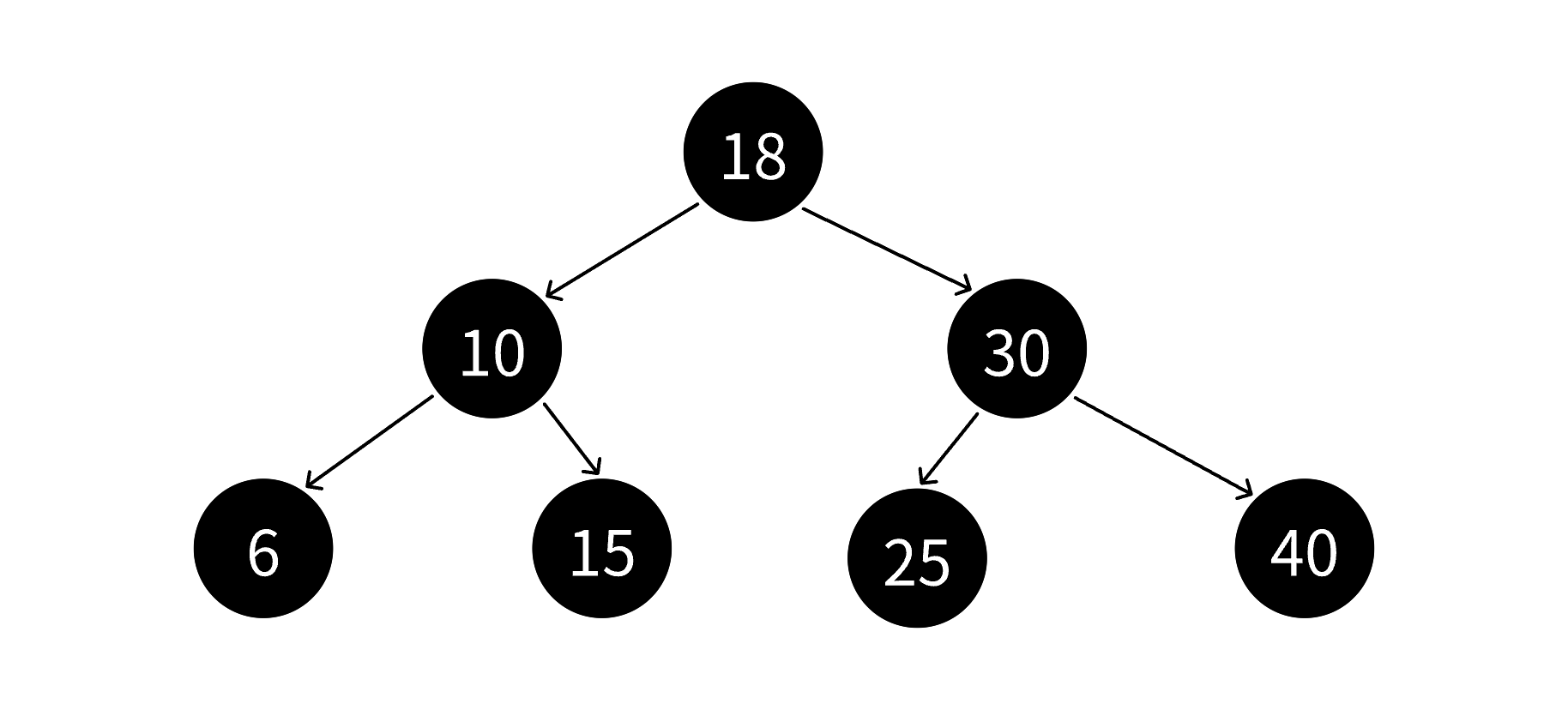
**问:**任何确保最长路径不超过最短路径的2倍?
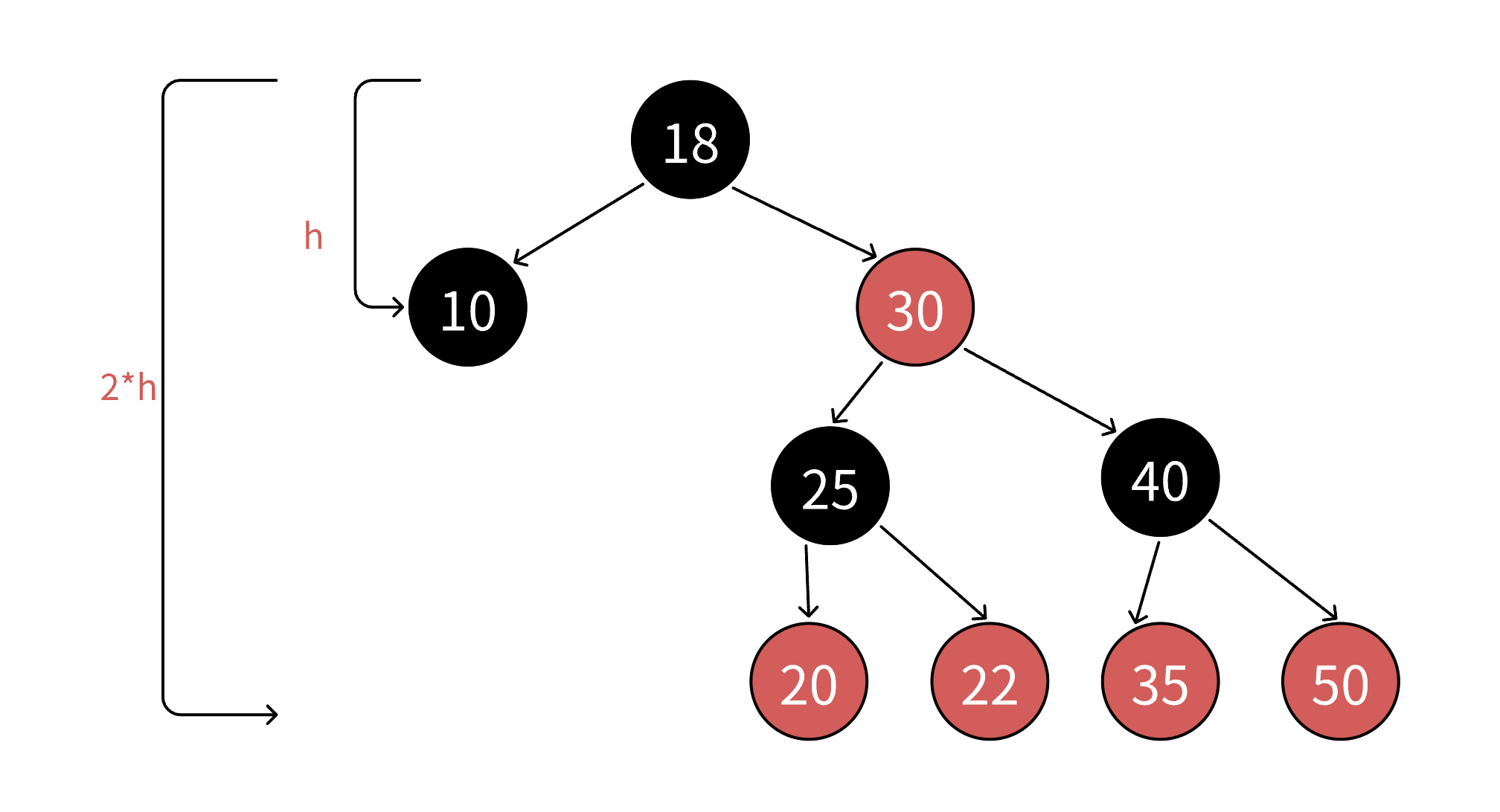
假设每条路径有x个黑色节点
最短路径:x(全为黑节点)
最长路径:2*x(全为一黑一红)
由此可得:x < h < 2 * x
三、红黑树的效率
假设N是红黑树中节点数量,h是最短路径长度
可得:2^h - 1 <= N < 2^(2*h) - 1
由此推出:h ≈ logN
红黑树增删查改最坏(最长路径):2 * logN
时间复杂度:O(logN)
AVL树通过高度差控制了平衡
红黑树通过4条规则的颜色约束,间接实现了近似平衡
效率属于同一档次,插入相同的节点,红黑树旋转次数更少
四、红黑树的实现
4.1.红黑树的结构
颜色定义
cpp
//枚举值表示颜色
//0-RED 1-BLACK
enum Colour
{
	RED,
	BLACK
};
树节点结构
cpp
//默认实现方式为K/V
template<class K,class V>
struct RBTreeNode
{
	pair<K, V> _kv;
	RBTreeNode<K, V>* _left;
	RBTreeNode<K, V>* _right;
	RBTreeNode<K, V>* _parent;
	Colour _col;

	RBTreeNode(const pair<K, V>& kv)
		:_kv(kv)
		,_left(nullptr)
		,_right(nullptr)
		,_parent(nullptr)
	{}
};
树结构
cpp
template < class K, class V>
class RBTree
{
	typedef RBTreeNode<K, V> Node;
public:

private:
	Node * _root = nullptr;
};
4.2.红黑树的插入
按二叉搜索树规则进行插入
如果是空树插入,新增节点是黑色节点
如果是非空树插入,新增节点必须是红色节点
(非空树插入,新增黑色节点破坏了规则4)
非空树插入后,新增节点必须为红色节点
如果父亲节点是黑色的,则没有违法规则
如果父亲节点是红色的,则违法了规则3
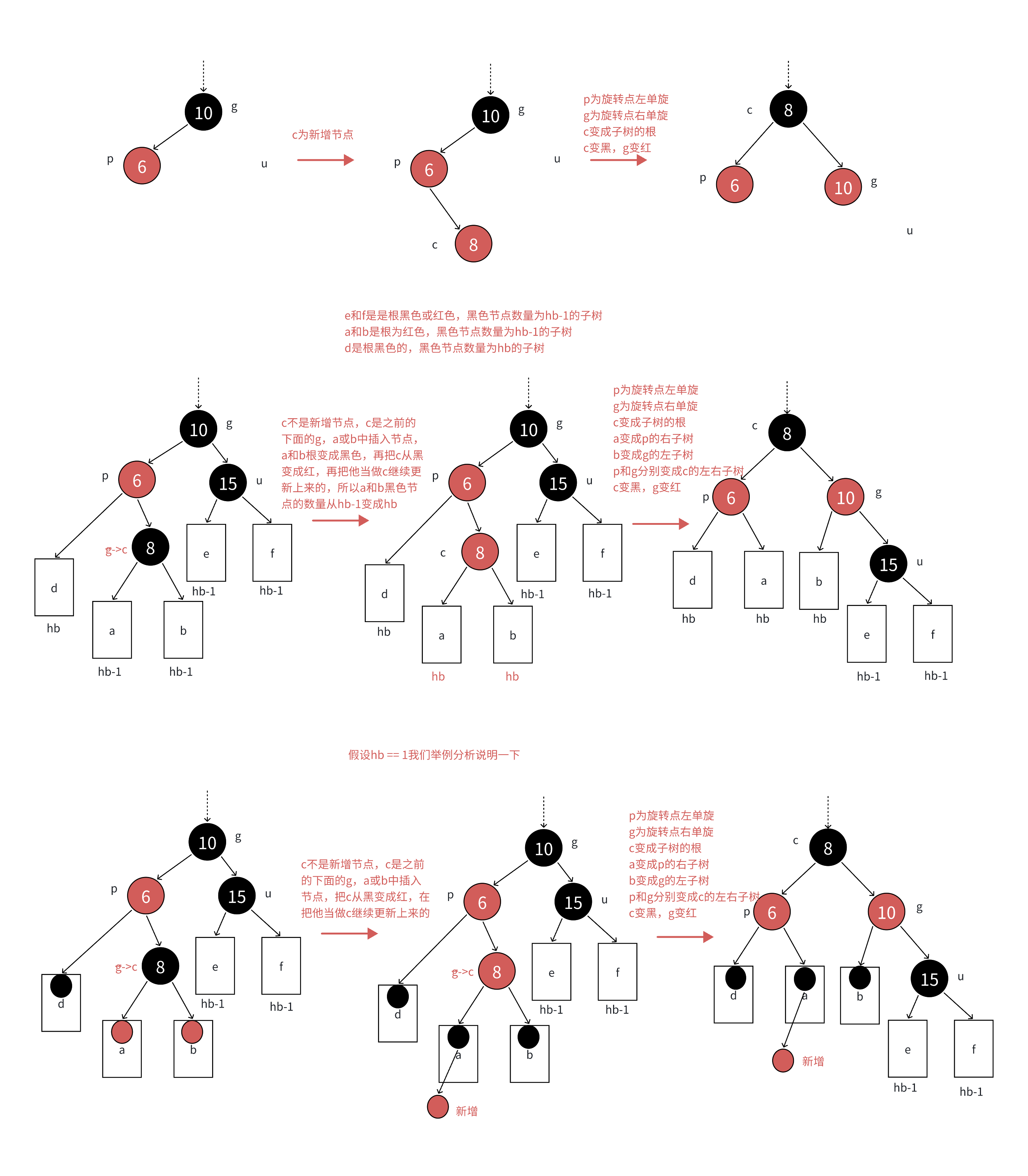
(注:此时c是红色,p是红色,g必须为黑色,三个节点颜色固定,主要看节点u)
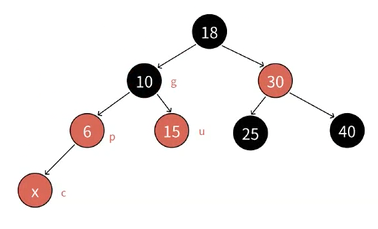
注:
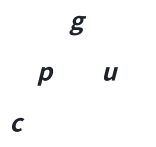
新增节点为c(cur)c的父亲节点为p(parent)
p的父亲节点为g(grand)p的兄弟节点为u(uncle)
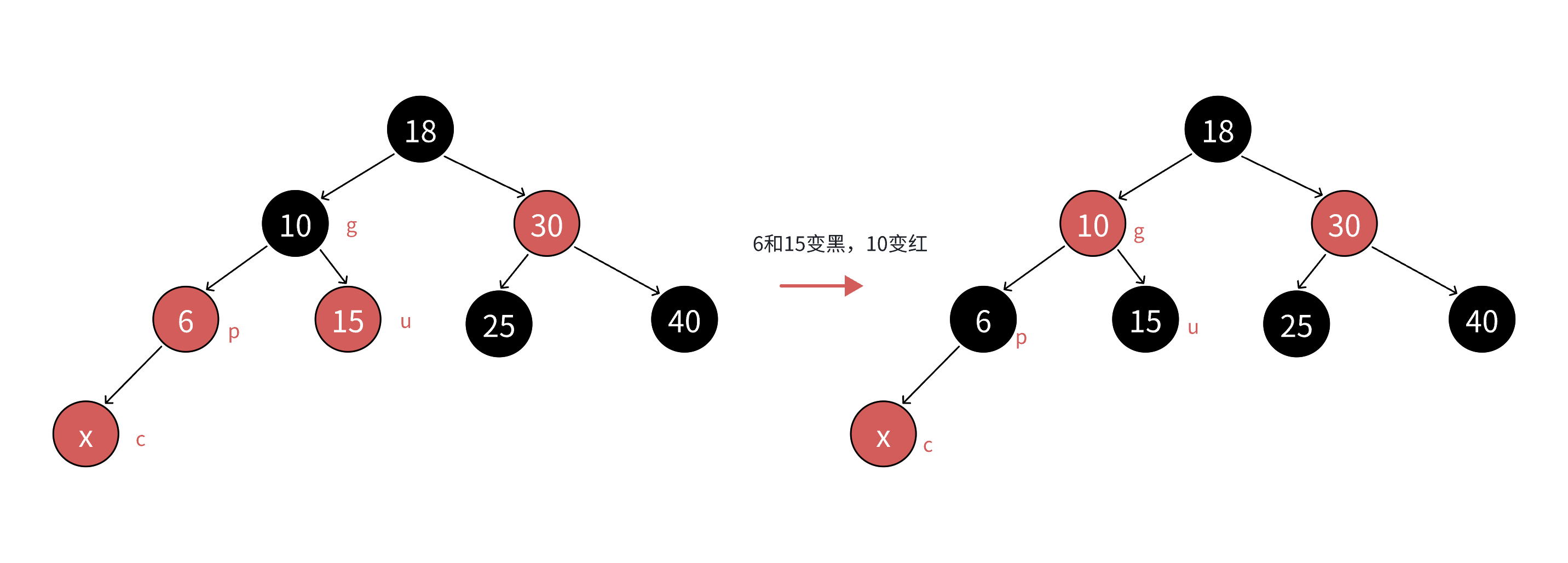
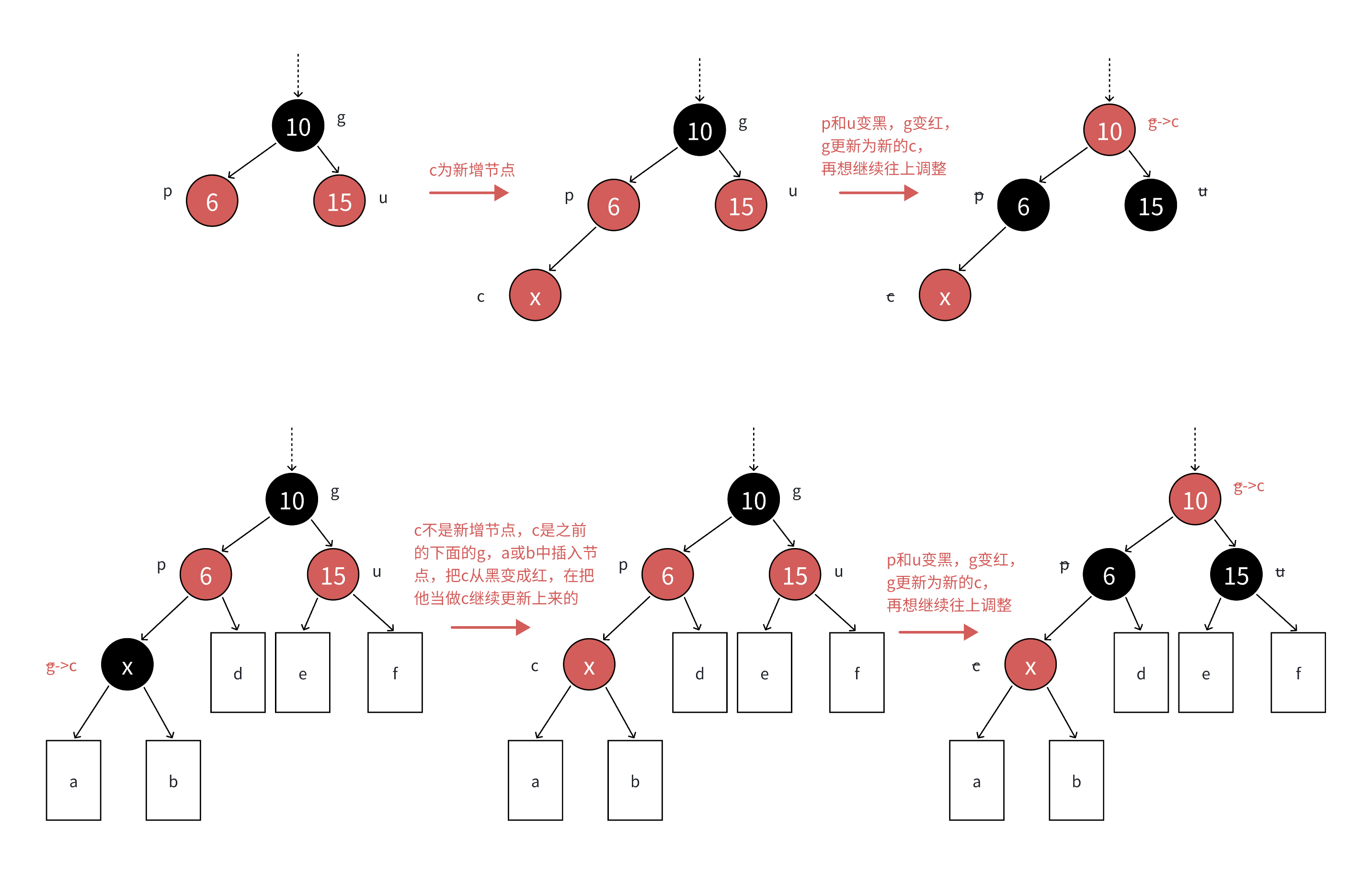
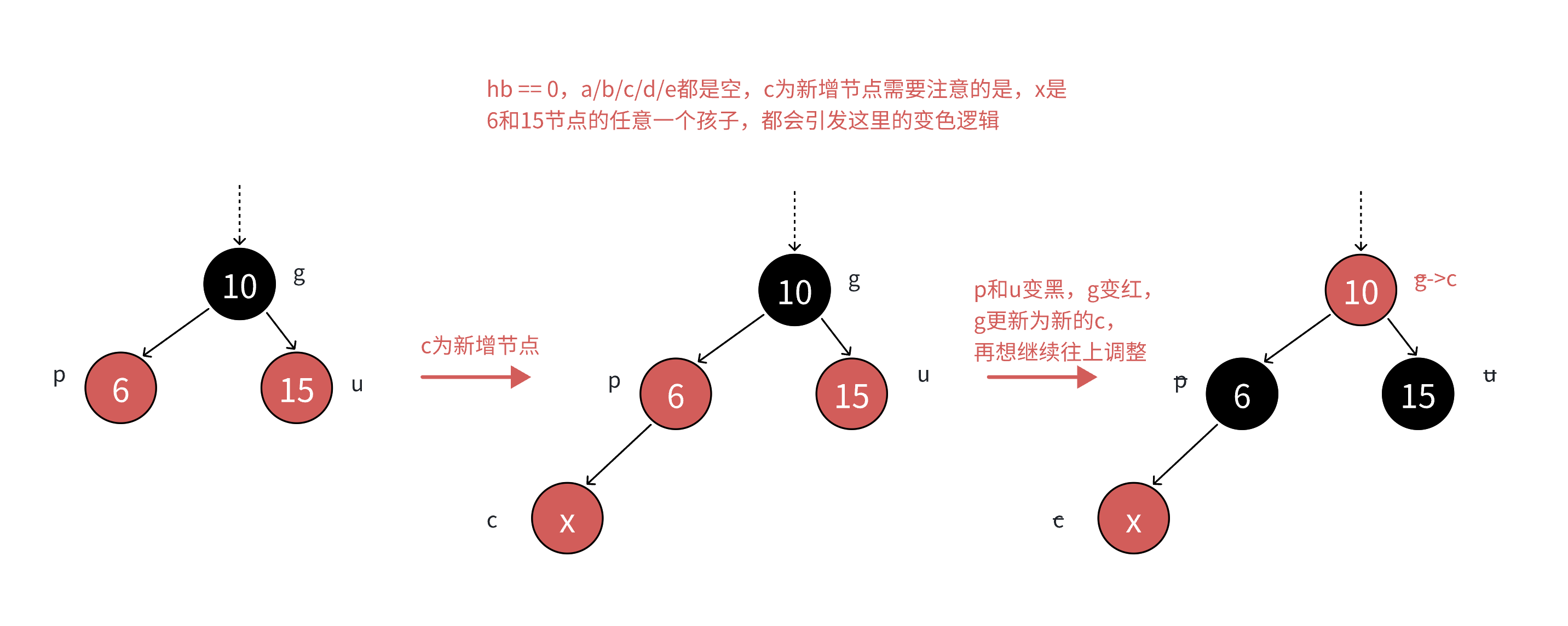
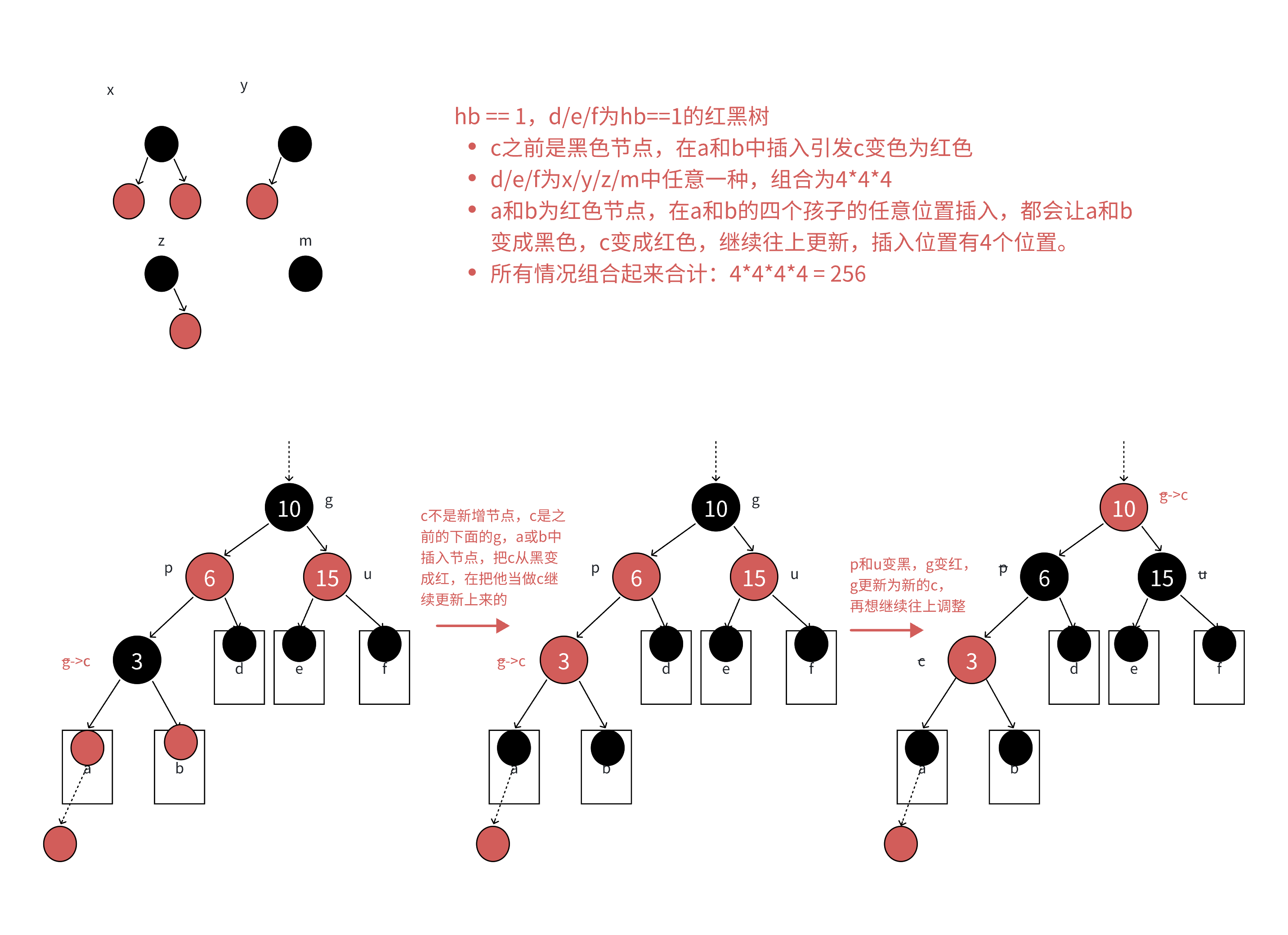
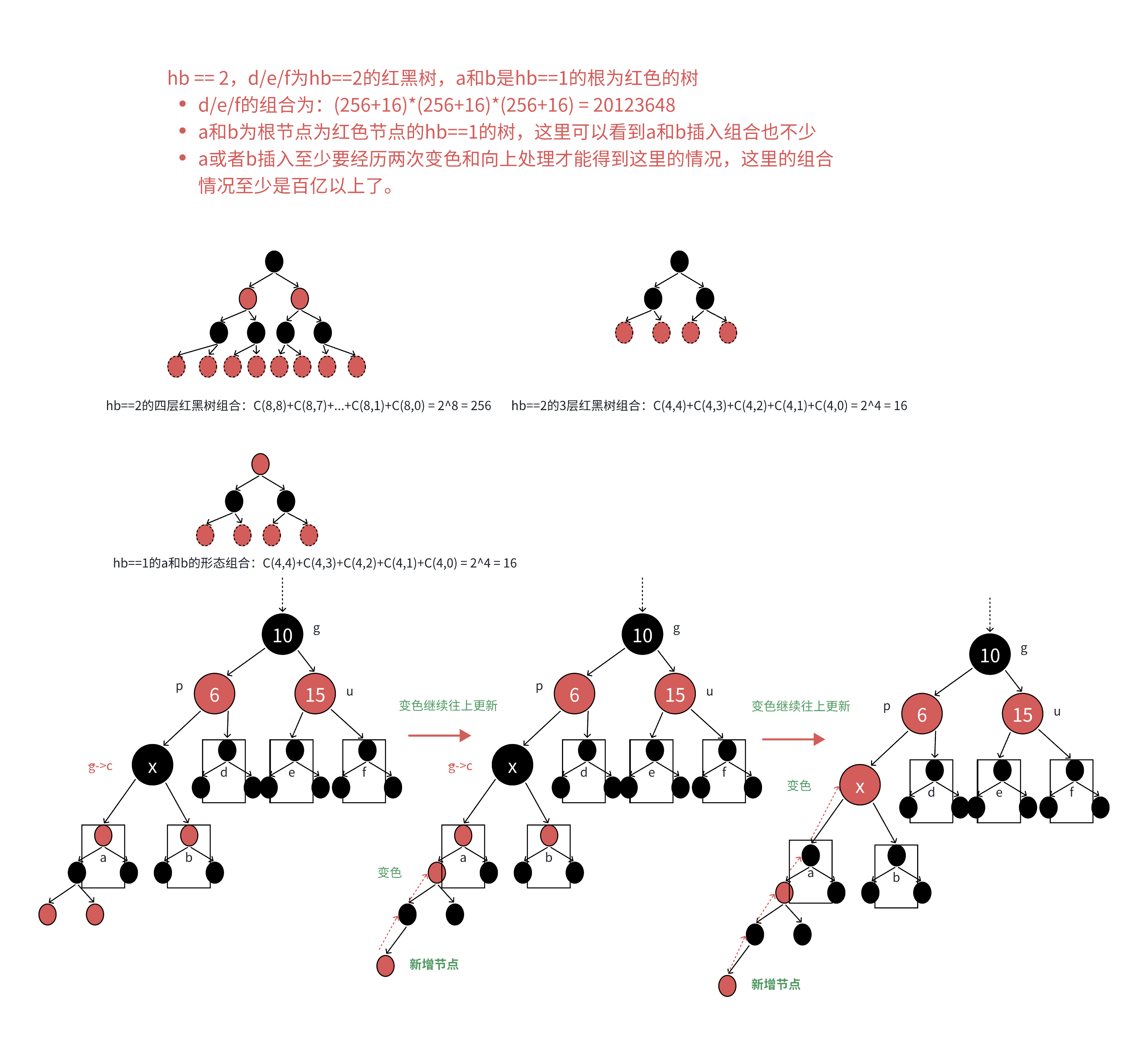
**情况1:**变色
c为红、p为红、g为黑,u存在且为红
将p和u变黑、g变红,再把g当作新的c,继续向上更新
**情况2:**单旋+变色
c为红、p为红、g为黑,u不存在或者u存在且为黑
u不存在:c一定为新增节点
u存在:c一定不为新增节点
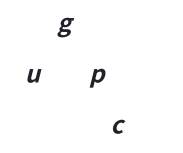
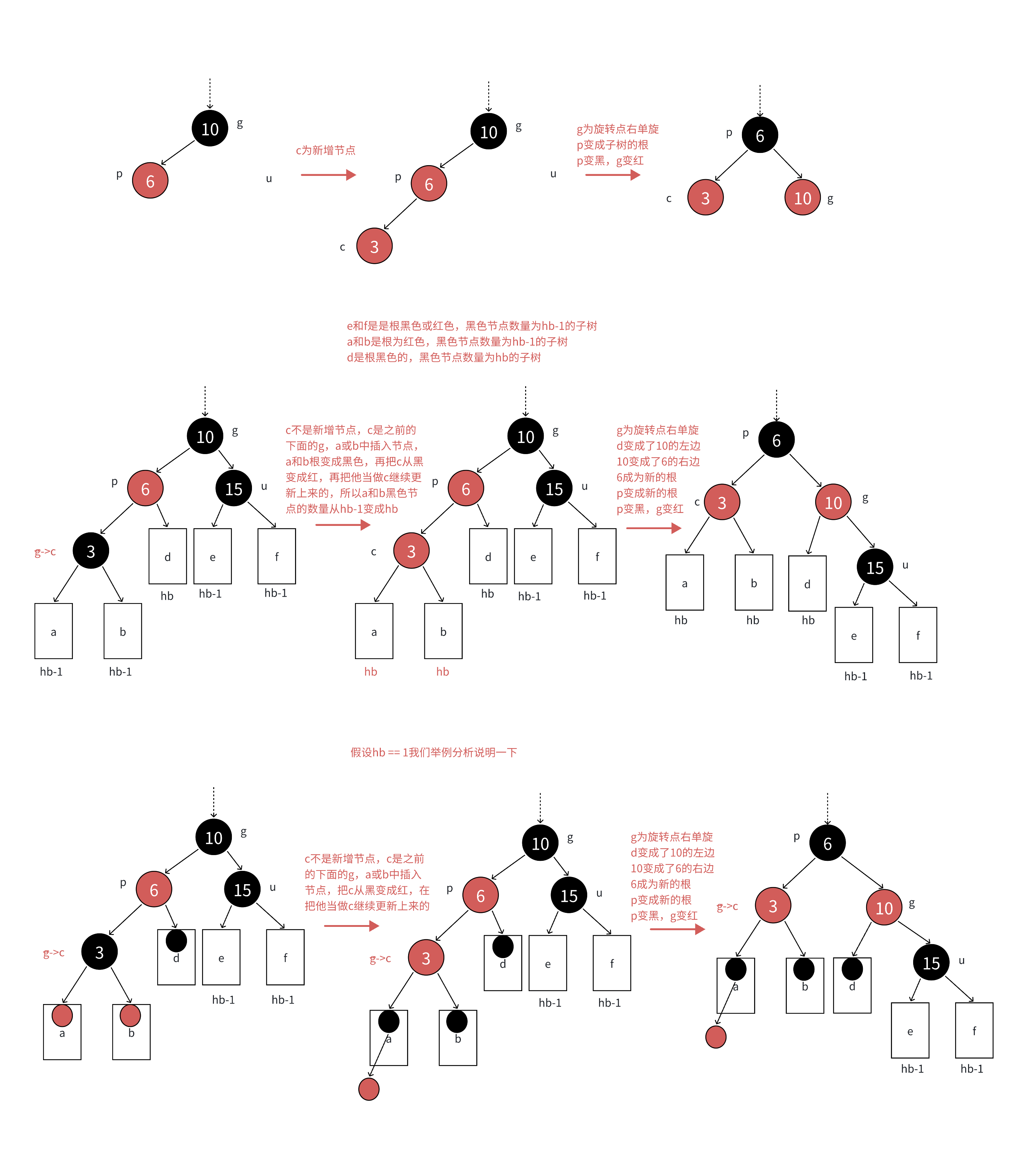
**情况3:**双旋+变色
c为红、p为红、g为黑,u不存在或者u存在且为黑
u不存在:c一定为新增节点
u存在:c一定不为新增节点
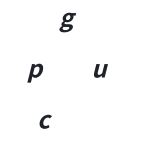
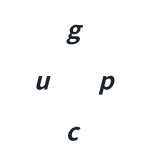
插入总代码
cpp
bool Insert(const pair<K, V>& kv)
{
	//如果为空树
	if (_root == nullptr)
	{
		//将根节点赋为新节点
		_root = new Node(kv);
		//根节点颜色设置为黑色
		_root->_col = BLACK;
		//返回插入成功
		return true;
	}
	//父节点为空
	Node* parent = nullptr;
	//当前节点为根节点
	Node* cur = _root;
	//遍历二叉树
	//循环条件为cur不为空
	while (cur)
	{
		//如果当前节点的key值小于新节点的key值
		if (cur->_kv.first < kv.first)
		{
			//更新父节点
			parent = cur;
			//更新当前节点(指向右子树)
			cur = cur->_right;
		}
		else if (cur->_kv.first > kv.first)//如果当前节点的key值大于新节点的key值
		{
			//更新父节点
			parent = cur;
			//更新当前节点(指向左子树)
			cur = cur->_left;
		}
		else//当前节点的key值等于新节点的key值
		{
			//存在重复值,返回插入失败
			return false;
		}
	}
	//将当前节点(指向空)赋为新节点
	cur = new Node(kv);
	//将插入节点设置为红色
	cur->_col = RED;
	//如果父节点的key值小于新节点的key值
	if (parent->_kv.first < kv.first)
	{
		//将新节点赋为父节点的右子树
		parent->_right = cur;
	}
	else//如果父节点的key值大于新节点的key值
	{
		//将新节点赋为父节点的左子树
		parent->_left = cur;
	}
	//将当前节点与父节点链接
	cur->_parent = parent;

	//循环条件:1、父亲节点存在 2、父亲节点颜色为红色
	while (parent && parent->_col == RED)
	{
		//记录祖父节点
		Node* grandfather = parent->_parent;
		if (parent == grandfather->_left)//如果父亲节点在祖父节点左边
		{
			//  g
			//p   u
			Node* uncle = grandfather->_right;//叔父节点在祖父节点右边
			if (uncle && uncle->_col == RED)//如果叔父节点存在,且为红色
			{
				//将父亲节点与叔父节点设置为黑色
				parent->_col = uncle->_col = BLACK;
				//祖父节点设置为红色
				grandfather->_col = RED;
				//继续向上处理
				//将祖父节点更新为当前节点
				cur = grandfather;
				//祖先节点的父亲节点更新为父亲节点
				parent = cur->_parent;
			}
			else//如果叔父节点不存在,或者为黑色
			{
				if (cur == parent->_left)//如果新增节点在父亲节点的左边(右单旋)
				{
					//      g
					//   p   (u)
					//c
					//祖父节点右单旋
					RotateR(grandfather);
					//父亲节点设为黑色
					parent->_col = BLACK;
					//祖父节点设为红色
					grandfather->_col = RED;
				}
				else//如果新增节点在父亲节点的右边(左右双旋)
				{
					//      g
					//   p   (u)
					//      c
					//父亲节点左单旋
					RotateL(parent);
					//祖父节点右单旋
					RotateR(grandfather);
					//当插入节点设为黑色
					cur->_col = BLACK;
					//祖父节点设为红色
					grandfather->_col = RED;
				}
				break;

			}
		}
		else//如果父亲节点在祖父节点右边
		{
			//  g
			//u   p
			Node* uncle = grandfather->_left;//叔父节点在祖父节点左边
			if (uncle && uncle->_col == RED)//如果叔父节点存在,且为红色
			{
				//将父亲节点与叔父节点设置为黑色
				parent->_col = uncle->_col = BLACK;
				//祖父节点设置为红色
				grandfather->_col = RED;
				//继续向上处理
				//将祖父节点更新为当前节点
				cur = grandfather;
				//祖先节点的父亲节点更新为父亲节点
				parent = cur->_parent;
			}
			else//如果叔父节点不存在,或者为黑色
			{
				if (cur == parent->_right)//如果新增节点在父亲节点的右边(左单旋)
				{
					//      g
					// (u)   p
					//            c
					//祖父节点左单旋
					RotateL(grandfather);
					//父亲节点设为黑色
					parent->_col = BLACK;
					//祖父节点设为红色
					grandfather->_col = RED;
				}
				else//如果新增节点在父亲节点的右边(右左双旋)
				{
					//      g
					// (u)   p
					//      c
					//父亲节点右单旋
					RotateR(parent);
					//祖父节点左单旋
					RotateL(grandfather);
					//当插入节点设为黑色
					cur->_col = BLACK;
					//祖父节点设为红色
					grandfather->_col = RED;
				}
				break;
			}
		}
	}
	//保证根节点为黑色
	_root->_col = BLACK;
	//返回插入成功
	return true;
}
4.3.红黑树的检查
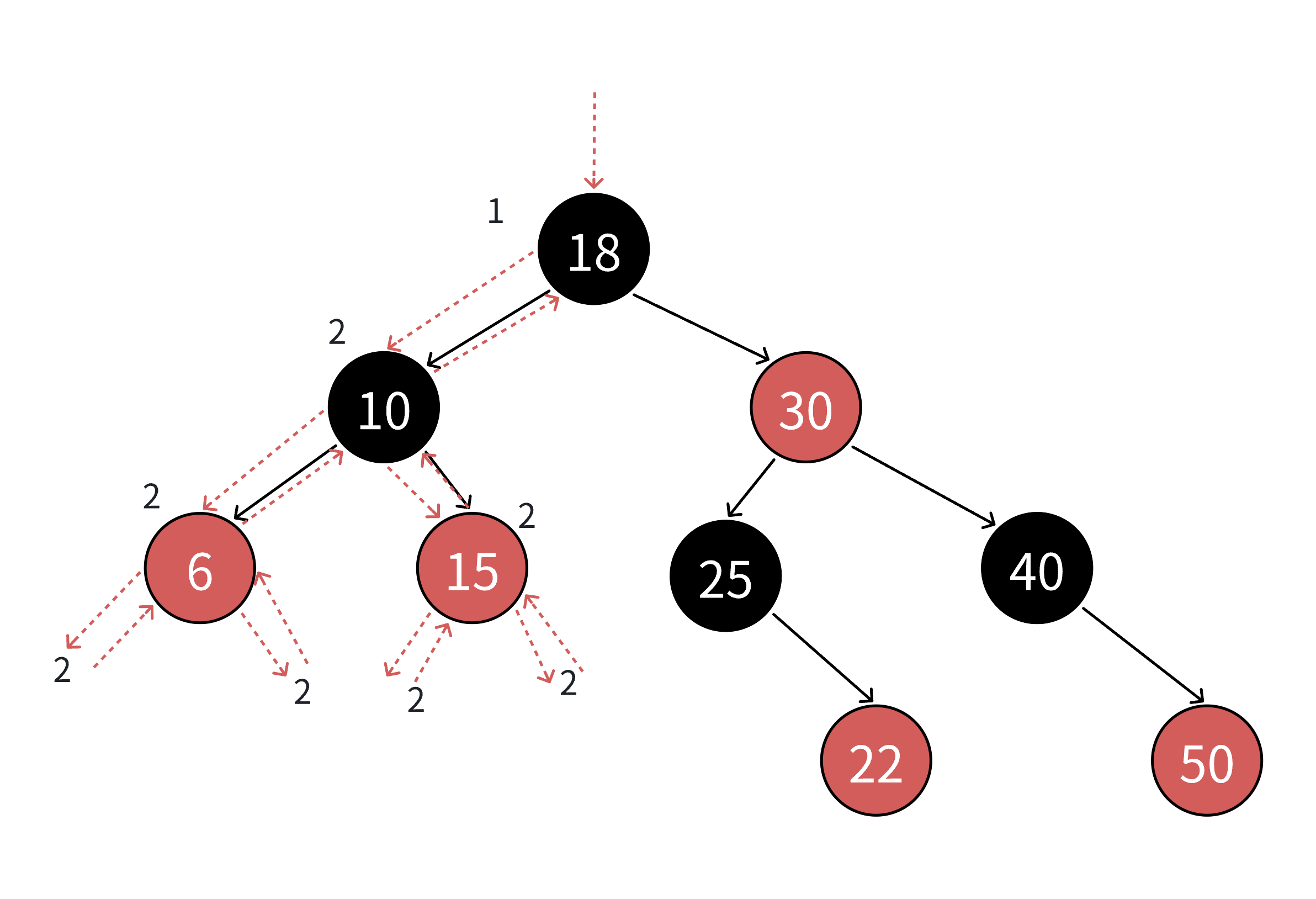
**规则1:**枚举颜色类型,保证了颜色不是黑色就是红色
**规则2:**直接检查根的颜色
**规则3:**前序遍历检查父亲的颜色
**规则4:**前序遍历,用形参记录从根节点到当前节点的黑色节点数量,走到空就计算出一条路径的
黑色节点再以任意一条路径的黑色节点数量作为参考值,进行比较
4.4.红黑树总代码
cpp
#pragma once
#include <iostream>
using namespace std;
#include "assert.h"
#include "stdbool.h"

//枚举值表示颜色
//0-RED 1-BLACK
enum Colour
{
	RED,
	BLACK
};

//默认实现方式为K/V
template<class K,class V>
struct RBTreeNode
{
	pair<K, V> _kv;
	RBTreeNode<K, V>* _left;
	RBTreeNode<K, V>* _right;
	RBTreeNode<K, V>* _parent;
	Colour _col;

	RBTreeNode(const pair<K, V>& kv)
		:_kv(kv)
		,_left(nullptr)
		,_right(nullptr)
		,_parent(nullptr)
	{}
};

template <class K, class V>
class RBTree
{
	typedef RBTreeNode<K, V> Node;
public:
	//右单旋
	void RotateR(Node* parent)
	{
		Node* subL = parent->_left;
		Node* subLR = subL->_right;
		parent->_left = subLR;
		if (subLR)
		{
			subLR->_parent = parent;
		}
		Node* pParent = parent->_parent;
		subL->_right = parent;
		parent->_parent = subL;
		if (parent == _root)
		{
			_root = subL;
			_root->_parent = nullptr;
		}
		else
		{
			if (pParent->_left == parent)
			{
				pParent->_left = subL;
			}
			else
			{
				pParent->_right = subL;
			}
			subL->_parent = pParent;
		}
	}

	//左单旋
	void RotateL(Node* parent)
	{
		Node* subR = parent->_right;
		Node* subRL = subR->_left;
		parent->_right = subRL;
		if (subRL)
		{
			subRL->_parent = parent;
		}
		Node* pParent = parent->_parent;
		subR->_left = parent;
		parent->_parent = subR;
		if (pParent == nullptr)
		{
			_root = subR;
			subR->_parent = nullptr;
		}
		else
		{
			if (parent == pParent->_left)
			{
				pParent->_left = subR;
			}
			else
			{
				pParent->_right = subR;
			}
			subR->_parent = pParent;
		}
	}

	bool Insert(const pair<K, V>& kv)
	{
		//如果为空树
		if (_root == nullptr)
		{
			//将根节点赋为新节点
			_root = new Node(kv);
			//根节点颜色设置为黑色
			_root->_col = BLACK;
			//返回插入成功
			return true;
		}
		//父节点为空
		Node* parent = nullptr;
		//当前节点为根节点
		Node* cur = _root;
		//遍历二叉树
		//循环条件为cur不为空
		while (cur)
		{
			//如果当前节点的key值小于新节点的key值
			if (cur->_kv.first < kv.first)
			{
				//更新父节点
				parent = cur;
				//更新当前节点(指向右子树)
				cur = cur->_right;
			}
			else if (cur->_kv.first > kv.first)//如果当前节点的key值大于新节点的key值
			{
				//更新父节点
				parent = cur;
				//更新当前节点(指向左子树)
				cur = cur->_left;
			}
			else//当前节点的key值等于新节点的key值
			{
				//存在重复值,返回插入失败
				return false;
			}
		}
		//将当前节点(指向空)赋为新节点
		cur = new Node(kv);
		//将插入节点设置为红色
		cur->_col = RED;
		//如果父节点的key值小于新节点的key值
		if (parent->_kv.first < kv.first)
		{
			//将新节点赋为父节点的右子树
			parent->_right = cur;
		}
		else//如果父节点的key值大于新节点的key值
		{
			//将新节点赋为父节点的左子树
			parent->_left = cur;
		}
		//将当前节点与父节点链接
		cur->_parent = parent;

		//循环条件:1、父亲节点存在 2、父亲节点颜色为红色
		while (parent && parent->_col == RED)
		{
			//记录祖父节点
			Node* grandfather = parent->_parent;
			if (parent == grandfather->_left)//如果父亲节点在祖父节点左边
			{
				//  g
				//p   u
				Node* uncle = grandfather->_right;//叔父节点在祖父节点右边
				if (uncle && uncle->_col == RED)//如果叔父节点存在,且为红色
				{
					//将父亲节点与叔父节点设置为黑色
					parent->_col = uncle->_col = BLACK;
					//祖父节点设置为红色
					grandfather->_col = RED;
					//继续向上处理
					//将祖父节点更新为当前节点
					cur = grandfather;
					//祖先节点的父亲节点更新为父亲节点
					parent = cur->_parent;
				}
				else//如果叔父节点不存在,或者为黑色
				{
					if (cur == parent->_left)//如果新增节点在父亲节点的左边(右单旋)
					{
						//      g
						//   p   (u)
						//c
						//祖父节点右单旋
						RotateR(grandfather);
						//父亲节点设为黑色
						parent->_col = BLACK;
						//祖父节点设为红色
						grandfather->_col = RED;
					}
					else//如果新增节点在父亲节点的右边(左右双旋)
					{
						//      g
						//   p   (u)
						//      c
						//父亲节点左单旋
						RotateL(parent);
						//祖父节点右单旋
						RotateR(grandfather);
						//当插入节点设为黑色
						cur->_col = BLACK;
						//祖父节点设为红色
						grandfather->_col = RED;
					}
					break;

				}
			}
			else//如果父亲节点在祖父节点右边
			{
				//  g
				//u   p
				Node* uncle = grandfather->_left;//叔父节点在祖父节点左边
				if (uncle && uncle->_col == RED)//如果叔父节点存在,且为红色
				{
					//将父亲节点与叔父节点设置为黑色
					parent->_col = uncle->_col = BLACK;
					//祖父节点设置为红色
					grandfather->_col = RED;
					//继续向上处理
					//将祖父节点更新为当前节点
					cur = grandfather;
					//祖先节点的父亲节点更新为父亲节点
					parent = cur->_parent;
				}
				else//如果叔父节点不存在,或者为黑色
				{
					if (cur == parent->_right)//如果新增节点在父亲节点的右边(左单旋)
					{
						//      g
						// (u)   p
						//            c
						//祖父节点左单旋
						RotateL(grandfather);
						//父亲节点设为黑色
						parent->_col = BLACK;
						//祖父节点设为红色
						grandfather->_col = RED;
					}
					else//如果新增节点在父亲节点的右边(右左双旋)
					{
						//      g
						// (u)   p
						//      c
						//父亲节点右单旋
						RotateR(parent);
						//祖父节点左单旋
						RotateL(grandfather);
						//当插入节点设为黑色
						cur->_col = BLACK;
						//祖父节点设为红色
						grandfather->_col = RED;
					}
					break;
				}
			}
		}
		//保证根节点为黑色
		_root->_col = BLACK;
		//返回插入成功
		return true;
	}

	//中序遍历打印
	void InOrder()
	{
		_InOrder(_root);
		cout << endl;
	}

	//平衡检测
	bool IsBalanceTree()
	{
		return _IsBalanceTree(_root);
	}

	//高度计算
	int Height()
	{
		return _Height(_root);
	}

	//节点计算
	int Size()
	{
		return _Size(_root);
	}

	//查找
	Node* Find(const K& key)
	{
		Node* cur = _root;
		while (cur)
		{
			if (cur->_kv.first < key)
			{
				cur = cur->_right;
			}
			else if (cur->_kv.first > key)
			{
				cur = cur->_left;
			}
			else
			{
				return cur;
			}
		}
		return nullptr;
	}

	//检查
	bool IsBalance()
	{
		if (_root == nullptr)
		{
			return true;
		}
		if (_root->_col == RED)
		{
			return false;
		}
		//参考值
		int refNum = 0;
		Node* cur = _root;
		while (cur)
		{
			if (cur->_col == BLACK)
			{
				++refNum;
			}

			cur = cur->_left;
		}
		return Check(_root, 0, refNum);
	}
private:
	bool Check(Node* root, int blackNum, const int refNum)
	{
		if (root == nullptr)
		{
			//前序遍历走到空时
			//意味着一条路径走完了
			if (refNum != blackNum)
			{
				cout << "存在黑色结点的数量不相等的路径" << endl;
				return false;
			}

			return true;
		}

		//检查孩子不太方便,因为孩子有两个,且不一定存在
		//反过来检查父亲就方便多了
		if (root->_col == RED && root->_parent->_col == RED)
		{
			cout << root->_kv.first << "存在连续的红色结点" << endl;
			return false;
		}

		if (root->_col == BLACK)
		{
			blackNum++;
		}

		return Check(root->_left, blackNum, refNum) && Check(root->_right, blackNum, refNum);
	}

	void _InOrder(Node* root)
	{
		if (root == nullptr)
		{
			return;
		}
		_InOrder(root->_left);
		cout << root->_kv.first << ":" << root->_kv.second << endl;
		_InOrder(root->_right);
	}

	int _Height(Node* root)
	{
		if (root == nullptr)
		{
			return 0;
		}
		int leftHeight = _Height(root->_left);
		int rightHeight = _Height(root->_right);

		return leftHeight > rightHeight ? leftHeight + 1 : rightHeight + 1;
	}

	int _Size(Node* root)
	{
		if (root == nullptr)
		{
			return 0;
		}
		return _Size(root->_left) + _Size(root->_right) + 1;
	}
	Node * _root = nullptr;
};
测试代码
cpp
#define _CRT_SECURE_NO_WARNINGS 1
#include "RBTree.h"
#include <vector>

//测试插入,中序遍历代码
void TestRBTree1()
{
	RBTree<int, int> t;
	int a[] = { 4, 2, 6, 1, 3, 5, 15, 7, 16, 14 };
	for (auto e : a)
	{
		t.Insert({ e, e });
	}
	t.InOrder();
	cout << t.IsBalance() << endl;
}

//插入一堆随机值,测试平衡,高度和性能
void TestRBTree2()
{
	const int N = 1000000;
	vector<int> v;
	v.reserve(N);
	srand(time(0));

	for (size_t i = 0; i < N; i++)
	{
		v.push_back(rand() + i);
	}

	size_t begin2 = clock();
	RBTree<int, int> t;
	for (auto e : v)
	{
		t.Insert(make_pair(e, e));
	}
	size_t end2 = clock();

	cout << "Insert:" << end2 - begin2 << endl;
	cout << t.IsBalance() << endl;

	cout << "Height:" << t.Height() << endl;
	cout << "Size:" << t.Size() << endl;

	size_t begin1 = clock();

	////确定在的值
	///*for (auto e : v)
	//{
	//	t.Find(e);
	//}*/

	// 随机值
	for (size_t i = 0; i < N; i++)
	{
		t.Find((rand() + i));
	}

	size_t end1 = clock();
	cout << "Find:" << end1 - begin1 << endl;
}

int main()
{
	TestRBTree1();
	TestRBTree2();
	return 0;
}