QEMU学习之路(12)--- 使用qemu-system-riscv64测试IOMMU
一、前言
QEMU安装参考:QEMU学习之路(3)--- qemu-system-riscv64安装
Linux相关安装参考:QEMU学习之路(6)--- RISC-V 64 启动Linux
二、安装QEMU
QEMU 从 10.0.0 版本开始正式支持 RISC-V IOMMU,所以我们需要安装的QEMU版本10.0.0 版本后,我当前安装的版本为10.2.1;

三、构建Linux
Linux内核从6.13+后支持RISC-V IOMMU,我现在以linux-6.14版本为例;
bash
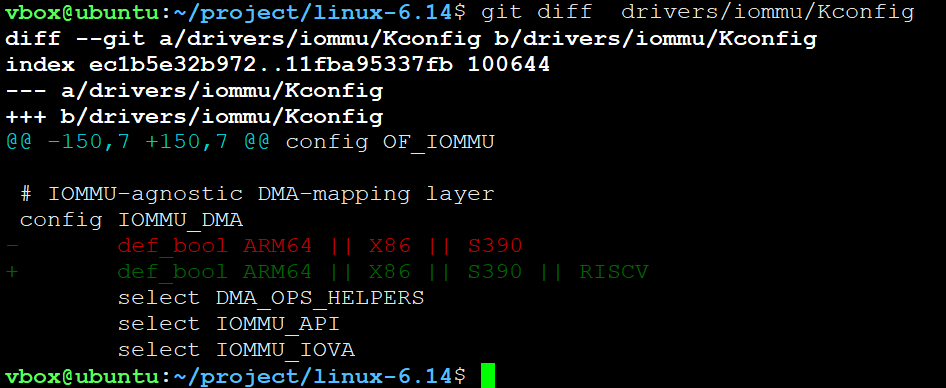
git clone https://mirrors.tuna.tsinghua.edu.cn/git/linux.git -b v6.14 linux-6.14获取源码后我们需要做一些修改,打开drivers/iommu/Kconfig 文件,找到config IOMMU_DMA选项,添加RISCV支持
然后再配置内核
bash
make ARCH=riscv CROSS_COMPILE=riscv64-linux-gnu- defconfig然后开始编译内核
bash
make ARCH=riscv CROSS_COMPILE=riscv64-linux-gnu- -j $(nproc)四、构建rootfs
1、获取busybox 源码
bash
git clone https://gitee.com/mirrors/busyboxsource -b 1_35_0 busybox-1.35.02、设置环境变量
bash
export CROSS_COMPILE=riscv64-linux-gnu-3、使用默认配置
bash
make defconfig4、配置静态编译
使用如下命令进入配置界面
bash
make menuconfig使用以下选项,选择静态方式编译busybox,目的是将程序的所有依赖库直接打包进二进制文件,避免了Linux系统运行时依赖动态库。
bash
Settings  --->
    [*] Build static binary (no shared libs)
另外如果使用较新的riscv64-linux-gnu-gcc工具,需要将tc功能去掉,这个功能已经在新版本被抛弃了
bash
Networking Utilities  --->
	[ ] tc (8.3 kb)
5、编译busybox
bash
make -j $(nproc)6、安装
新建一个rootfs目录,将busybox安装到该目录下
bash
mkdir ../rootfs; make install CONFIG_PREFIX=../rootfs在rootfs文件夹下新建如下目录:
bash
mkdir etc proc sys dev lib lib64 root并且新建init文件,写入内容如下所示
bash
#!/bin/sh

mount -t proc proc /proc
mount -t sysfs sysfs /sys
mount -t devtmpfs devtmpfs /dev

echo "Kernel: $(uname -r)"
echo "Machine: $(uname -m)"

exec /sbin/init
然后给init文件添加可执行权限
bash
chmod +x init使用如下命令打包
bash
find . | cpio -H newc -o | gzip > ../rootfs.cpio.gz使用如下命令启动
bash
/opt/qemu/bin/qemu-system-riscv64                               \
    -machine virt,aia=aplic-imsic,iommu-sys=on -cpu rv64        \
    -m 2G -smp 2 -nographic                                     \
    -kernel ../../linux-6.14/arch/riscv/boot/Image              \
    -initrd ./rootfs.cpio.gz                                    \
    -append "console=ttyS0 earlycon=sbi root=/dev/ram0 rw"      \
    -device edu,dma_mask=0xffffffff                             \
    -device virtio-net-pci,netdev=net0 -netdev user,id=net0
五、进行测试
创建hello.c文件,内容如下所示:
c
#include <linux/kernel.h>
#include <linux/module.h>
#include <linux/pci.h>
#include <linux/init.h>
#include <linux/errno.h>
#include <linux/cdev.h>
#include <linux/device.h>
#include <linux/dma-mapping.h>
#include <linux/io.h>

#define HELLO_PCI_DEVICE_ID     0x11e8
#define HELLO_PCI_VENDOR_ID     0x1234
#define HELLO_PCI_REVISION_ID   0x10

#define ONCHIP_MEM_BASE         0x40000
#define DMA_BUF_SIZE            4096

static struct pci_device_id ids[] = {
    { PCI_DEVICE(HELLO_PCI_VENDOR_ID, HELLO_PCI_DEVICE_ID), },
    { 0 , }
};

struct hello_pci_info_t {
    dev_t dev_id;
    struct cdev char_dev;
    struct class *class;
    struct device *device;
    struct pci_dev *pdev;
    void __iomem *address_bar0;
    atomic_t dma_running;
    spinlock_t lock;
    wait_queue_head_t r_wait;
};

static struct hello_pci_info_t hello_pci_info;

MODULE_DEVICE_TABLE(pci, ids);
MODULE_LICENSE("GPL");
MODULE_AUTHOR("Fixed Driver");
MODULE_DESCRIPTION("PCIe DMA Character Driver");

static irqreturn_t hello_pci_irq_handler(int irq, void *dev_info)
{
    struct hello_pci_info_t *info = dev_info;
    u32 irq_status;

    // get irq_stutas
    irq_status = ioread32(info->address_bar0 + 0x24);
    // 你要的中断打印
    printk("hello_pcie: get irq status: 0x%0x\n", irq_status);
    // clean irq
    iowrite32(irq_status, info->address_bar0 + 0x64);

    // get irq_stutas
    irq_status = ioread32(info->address_bar0 + 0x24);
    if(irq_status == 0x00){
        printk("hello_pcie: receive irq and clean success. \n");
    }else{
        printk("hello_pcie: receive irq but clean failed !!! \n");
        return IRQ_NONE;
    }

    atomic_set(&info->dma_running, 0);
    smp_wmb();
    wake_up_interruptible(&info->r_wait);

    return IRQ_HANDLED;
}

static int hello_pcie_open(struct inode *inode, struct file *file)
{
    file->private_data = &hello_pci_info;
    dev_dbg(&hello_pci_info.pdev->dev, "Device opened\n");
    return 0;
}

static int hello_pcie_close(struct inode *inode, struct file *file)
{
    dev_dbg(&hello_pci_info.pdev->dev, "Device closed\n");
    return 0;
}

static void dma_write_block(dma_addr_t dma_addr, int count, struct hello_pci_info_t *info)
{
    unsigned long flags;

    spin_lock_irqsave(&info->lock, flags);

    iowrite32(lower_32_bits(dma_addr), info->address_bar0 + 0x80);
    iowrite32(upper_32_bits(dma_addr), info->address_bar0 + 0x84);
    iowrite32(ONCHIP_MEM_BASE,        info->address_bar0 + 0x88);
    iowrite32(0,                      info->address_bar0 + 0x8c);
    iowrite32(count,                  info->address_bar0 + 0x90);
    iowrite32(0x05,                   info->address_bar0 + 0x98);

    spin_unlock_irqrestore(&info->lock, flags);
}

static void dma_read_block(dma_addr_t dma_addr, int count, struct hello_pci_info_t *info)
{
    unsigned long flags;

    spin_lock_irqsave(&info->lock, flags);

    iowrite32(ONCHIP_MEM_BASE,        info->address_bar0 + 0x80);
    iowrite32(0,                      info->address_bar0 + 0x84);
    iowrite32(lower_32_bits(dma_addr), info->address_bar0 + 0x88);
    iowrite32(upper_32_bits(dma_addr), info->address_bar0 + 0x8c);
    iowrite32(count,                  info->address_bar0 + 0x90);
    iowrite32(0x07,                   info->address_bar0 + 0x98);

    spin_unlock_irqrestore(&info->lock, flags);
}

static ssize_t hello_pcie_write(struct file *file, const char __user *buf, size_t cnt, loff_t *offt)
{
    struct hello_pci_info_t *info = file->private_data;
    int ret;
    u8 *databuf;
    dma_addr_t dma_addr;

    if (cnt > DMA_BUF_SIZE)
        return -EINVAL;

    databuf = dma_alloc_coherent(&info->pdev->dev, DMA_BUF_SIZE, &dma_addr, GFP_KERNEL);
    if (!databuf)
        return -ENOMEM;
    else {
        dev_info(&info->pdev->dev, "get dma_handle_addr success: 0x%0llx\n", (unsigned long long)dma_addr);
    }

    if (copy_from_user(databuf, buf, cnt)) {
        ret = -EFAULT;
        goto out_free;
    }

    atomic_set(&info->dma_running, 1);
    smp_wmb();

    dma_write_block(dma_addr, cnt, info);

    ret = wait_event_interruptible(info->r_wait, !atomic_read(&info->dma_running));
    if (ret)
        goto out_free;

    ret = cnt;

out_free:
    dma_free_coherent(&info->pdev->dev, DMA_BUF_SIZE, databuf, dma_addr);
    return ret;
}

static ssize_t hello_pcie_read(struct file *file, char __user *buf, size_t cnt, loff_t *offt)
{
    struct hello_pci_info_t *info = file->private_data;
    int ret;
    u8 *databuf;
    dma_addr_t dma_addr;

    if (cnt > DMA_BUF_SIZE)
        return -EINVAL;

    databuf = dma_alloc_coherent(&info->pdev->dev, DMA_BUF_SIZE, &dma_addr, GFP_KERNEL);
    if (!databuf)
        return -ENOMEM;
    else {
        dev_info(&info->pdev->dev, "get dma_handle_addr success: 0x%0llx\n", (unsigned long long)dma_addr);
    }

    atomic_set(&info->dma_running, 1);
    smp_wmb();

    dma_read_block(dma_addr, cnt, info);

    ret = wait_event_interruptible(info->r_wait, !atomic_read(&info->dma_running));
    if (ret)
        goto out_free;

    if (copy_to_user(buf, databuf, cnt)) {
        ret = -EFAULT;
        goto out_free;
    }

    ret = cnt;

out_free:
    dma_free_coherent(&info->pdev->dev, DMA_BUF_SIZE, databuf, dma_addr);
    return ret;
}

static struct file_operations hello_pcie_fops = {
    .owner    = THIS_MODULE,
    .open     = hello_pcie_open,
    .release  = hello_pcie_close,
    .read     = hello_pcie_read,
    .write    = hello_pcie_write,
};

static int hello_pcie_probe(struct pci_dev *pdev, const struct pci_device_id *id)
{
    int ret;
    int bar = 0;
    resource_size_t len;

    ret = pci_enable_device(pdev);
    if (ret)
        return ret;

    ret = dma_set_mask_and_coherent(&pdev->dev, DMA_BIT_MASK(64));
    if (ret) {
        dev_err(&pdev->dev, "DMA mask failed\n");
        goto err_disable;
    }

    pci_set_master(pdev);

    ret = pci_request_region(pdev, bar, "hello_pcie_bar0");
    if (ret)
        goto err_disable;

    len = pci_resource_len(pdev, bar);
    hello_pci_info.address_bar0 = pci_iomap(pdev, bar, len);
    if (!hello_pci_info.address_bar0) {
        ret = -ENOMEM;
        goto err_release;
    }

    hello_pci_info.pdev = pdev;

    ret = request_irq(pdev->irq, hello_pci_irq_handler, 0, "hello_pci", &hello_pci_info);
    if (ret) {
        dev_err(&pdev->dev, "IRQ request failed\n");
        goto err_iounmap;
    }

    iowrite32(0x80, hello_pci_info.address_bar0 + 0x20);

    spin_lock_init(&hello_pci_info.lock);
    init_waitqueue_head(&hello_pci_info.r_wait);
    atomic_set(&hello_pci_info.dma_running, 0);

    ret = alloc_chrdev_region(&hello_pci_info.dev_id, 0, 1, "hello_pcie");
    if (ret)
        goto err_irq;

    cdev_init(&hello_pci_info.char_dev, &hello_pcie_fops);
    hello_pci_info.char_dev.owner = THIS_MODULE;
    ret = cdev_add(&hello_pci_info.char_dev, hello_pci_info.dev_id, 1);
    if (ret)
        goto err_unreg;

    hello_pci_info.class = class_create("hello_pcie");
    if (IS_ERR(hello_pci_info.class)) {
        ret = PTR_ERR(hello_pci_info.class);
        goto err_cdev;
    }

    hello_pci_info.device = device_create(hello_pci_info.class, &pdev->dev,
                                         hello_pci_info.dev_id, NULL, "hello_pcie");
    if (IS_ERR(hello_pci_info.device)) {
        ret = PTR_ERR(hello_pci_info.device);
        goto err_class;
    }

    dev_info(&pdev->dev, "PCIe probe success\n");
    return 0;

err_class:
    class_destroy(hello_pci_info.class);
err_cdev:
    cdev_del(&hello_pci_info.char_dev);
err_unreg:
    unregister_chrdev_region(hello_pci_info.dev_id, 1);
err_irq:
    free_irq(pdev->irq, &hello_pci_info);
err_iounmap:
    pci_iounmap(pdev, hello_pci_info.address_bar0);
err_release:
    pci_release_region(pdev, bar);
err_disable:
    pci_disable_device(pdev);
    return ret;
}

static void hello_pcie_remove(struct pci_dev *pdev)
{
    iowrite32(0x00, hello_pci_info.address_bar0 + 0x20);
    free_irq(pdev->irq, &hello_pci_info);

    device_destroy(hello_pci_info.class, hello_pci_info.dev_id);
    class_destroy(hello_pci_info.class);
    cdev_del(&hello_pci_info.char_dev);
    unregister_chrdev_region(hello_pci_info.dev_id, 1);

    pci_iounmap(pdev, hello_pci_info.address_bar0);
    pci_release_region(pdev, 0);
    pci_disable_device(pdev);

    dev_info(&pdev->dev, "PCIe remove success\n");
}

static struct pci_driver hello_pci_driver = {
    .name     = "hello_pcie",
    .id_table = ids,
    .probe    = hello_pcie_probe,
    .remove   = hello_pcie_remove,
};

static int __init hello_pci_init(void)
{
    return pci_register_driver(&hello_pci_driver);
}

static void __exit hello_pci_exit(void)
{
    pci_unregister_driver(&hello_pci_driver);
}

module_init(hello_pci_init);
module_exit(hello_pci_exit);
编写Makefile如下所示,使用make命令进行编译;
bash
KERNELDIR=/home/william/project/linux-5.18
export ARCH=riscv
export CROSS_COMPILE=riscv64-linux-gnu-

obj-m := hello.o

all:
        make -C ${KERNELDIR} M=${PWD} modules

clean:
        make -C ${KERNELDIR} M=${PWD} clean

.PHONY: all clean
编写testapp.c文件如下所示:
c
#include "stdio.h"
#include "stdint.h"
#include "unistd.h"
#include "sys/types.h"
#include "sys/stat.h"
#include "fcntl.h"
#include "stdlib.h"
#include "string.h"

#define BUFFER_LENGTH 128

int main(int argc, char *argv[])
{
    int fd, retvalue;
    char *filename = "/dev/hello_pcie";
    unsigned char *write_buf = malloc(BUFFER_LENGTH);
    unsigned char *read_buf = malloc(BUFFER_LENGTH);

    /* 打开驱动设备文件 */
    fd = open(filename, O_RDWR);
    if(fd < 0){
        printf("file %s open failed!\n", filename);
        return -1;
    }

    for(int i = 0;i < BUFFER_LENGTH;i++)
    {
        write_buf[i] = i;
    }

    /* 向/dev/hello_pcie文件写入数据 */
    retvalue = write(fd, write_buf, BUFFER_LENGTH);
    if(retvalue < 0){
        printf("Write %s Failed!\n", filename);
        close(fd);
        return -1;
    }
    printf("write success, data: 0x%0x, 0x%0x, 0x%0x, 0x%0x, 0x%0x, 0x%0x, 0x%0x, 0x%0x\n", write_buf[0], write_buf[1], write_buf[2], write_buf[3], write_buf[4], write_buf[5], write_buf[6], write_buf[7]);

    retvalue = read(fd, read_buf, BUFFER_LENGTH);
    if(retvalue < 0){
        printf("Read %s Failed!\n", filename);
        close(fd);
        return -1;
    }
    printf("read success, data: 0x%0x, 0x%0x, 0x%0x, 0x%0x, 0x%0x, 0x%0x, 0x%0x, 0x%0x\n", read_buf[0], read_buf[1], read_buf[2], read_buf[3], read_buf[4], read_buf[5], read_buf[6], read_buf[7]);

    retvalue = close(fd); /* 关闭文件 */
    if(retvalue < 0){
        printf("file %s close failed!\r\n", filename);
        return -1;
    }

    return 0;
}
使用如下命令编译成可执行文件:
bash
riscv64-linux-gnu-gcc -static testapp.c -o test.x然后将hello.ko和test.x拷贝到rootfs/root/文件夹下,重新生成rootfs.cpio.gz后启动系统
bash
rm -rf rootfs.cpio.gz

rm -rf rootfs/root/hello.ko
cp hello/hello.ko rootfs/root/hello.ko
cp hello/test.x rootfs/root/test.x

cd rootfs; find . | cpio -H newc -o | gzip > ../rootfs.cpio.gz
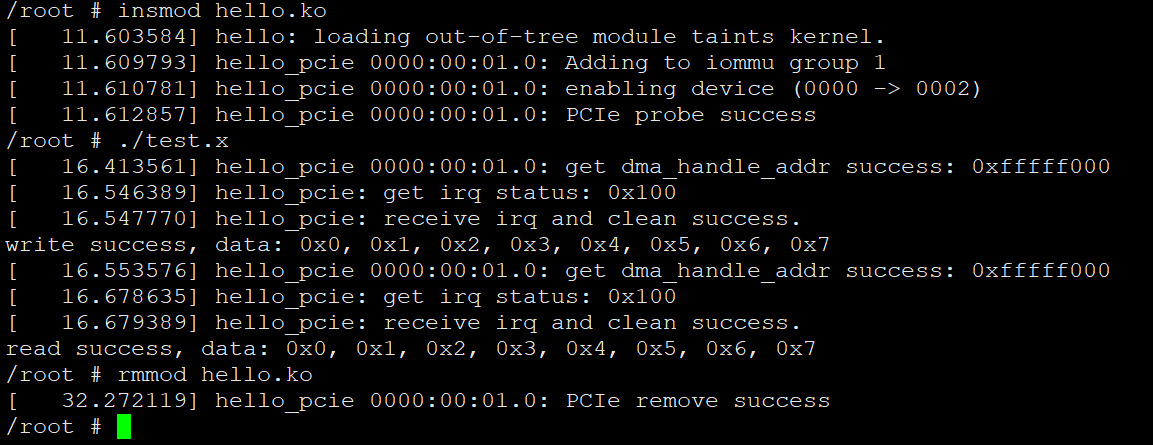
重新进入系统后到root目录下,加载驱动,执行测试如下所示:
然后使用如下命令查看一下IOMMU的工作类型:
bash
cat /sys/bus/pci/devices/0000:00:01.0/iommu_group/type