目录
[一、为什么普通 LLM 能力有限](#一、为什么普通 LLM 能力有限)
[二、什么是 Function Calling](#二、什么是 Function Calling)
[三、Function Calling 的核心思想](#三、Function Calling 的核心思想)
[四、第一个 Function Calling 示例](#四、第一个 Function Calling 示例)
[五、OpenAI Function Calling 原理](#五、OpenAI Function Calling 原理)
[六、Function Calling 工作流程](#六、Function Calling 工作流程)
[八、为什么 Agent 必须依赖 Function Calling](#八、为什么 Agent 必须依赖 Function Calling)
[九、什么是 Structured Output](#九、什么是 Structured Output)
[十、JSON 格式输出](#十、JSON 格式输出)
[十一、Pydantic 结构化输出](#十一、Pydantic 结构化输出)
[十二、LangChain Structured Output](#十二、LangChain Structured Output)
[十四、Function Calling 与 Structured Output 的关系](#十四、Function Calling 与 Structured Output 的关系)
[十五、企业级 AI 系统架构](#十五、企业级 AI 系统架构)
[十六、Function Calling 实战案例](#十六、Function Calling 实战案例)
[什么是 Function Calling?](#什么是 Function Calling?)
[Function Calling 的作用是什么?](#Function Calling 的作用是什么?)
[什么是 Structured Output?](#什么是 Structured Output?)
[为什么 Agent 依赖 Function Calling?](#为什么 Agent 依赖 Function Calling?)
[JSON 输出有什么优势?](#JSON 输出有什么优势?)
一、前言
很多初学者第一次接触大语言模型(LLM)时,会觉得它非常强大。
例如:
能写代码

能翻译

能回答问题

能生成文章
但是当真正开发 AI 应用时,很快会发现一个问题:
LLM 只能生成文本例如:
用户提问:
帮我查一下北京天气普通 LLM 只能回答:
我无法获取实时天气数据因为:
LLM 并不能直接访问互联网

也不能直接调用系统接口
这时就需要:
Function Calling即:
函数调用

工具调用

函数回调
能力。
而另一项关键能力:
Structured Output即:
结构化输出能够让模型返回:
JSON

对象

数据结构
而不是一段无法解析的自然语言。
本文将带你掌握:
什么是 Function Calling

为什么需要 Function Calling

Function Calling 工作原理

什么是 Structured Output

JSON 输出规范

LangChain 如何实现函数调用

Agent 如何依赖 Function Calling
一、为什么普通 LLM 能力有限
传统 LLM:
输入问题

↓

模型推理

↓

输出文本
架构:

例如:
今天北京天气怎么样?模型:
抱歉,我无法访问实时天气。原因:
模型无法直接操作外部世界不能:
访问数据库

查询天气

发送邮件

调用接口

执行代码
因此:
需要赋予模型工具能力二、什么是 Function Calling
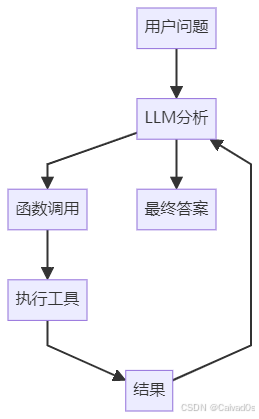
Function Calling:
函数调用本质:
让模型决定

什么时候调用工具

调用哪个工具

传递什么参数
例如:
用户:
查询北京天气模型分析后:
{
  "function":"get_weather",
  "city":"北京"
}
系统接收到后:
get_weather("北京")执行。
流程:
三、Function Calling 的核心思想
过去:
LLM直接回答现在:
LLM负责决策

程序负责执行
职责划分:
| 组件 | 职责 |
|---|---|
| LLM | 判断调用什么工具 |
| Function | 执行具体操作 |
| 应用系统 | 返回结果 |
可以理解为:
LLM 是大脑

Function 是双手
四、第一个 Function Calling 示例
定义天气函数:
python
def get_weather(city):
    return f"{city} 当前温度 28℃"
用户:
北京天气如何?模型输出:
{
  "name":"get_weather",
  "arguments":{
      "city":"北京"
  }
}
程序:
result = get_weather("北京")结果:
北京 当前温度 28℃五、OpenAI Function Calling 原理
定义工具:
python
tools = [
    {
        "type":"function",
        "function":{
            "name":"get_weather",
            "description":"查询天气",
            "parameters":{
                "type":"object",
                "properties":{
                    "city":{
                        "type":"string"
                    }
                }
            }
        }
    }
]
发送请求:
python
response = client.chat.completions.create(
    model="gpt-4o",
    messages=messages,
    tools=tools
)
模型返回:
python
{
  "tool_calls":[
      {
          "name":"get_weather",
          "arguments":{
              "city":"北京"
          }
      }
  ]
}
六、Function Calling 工作流程
完整流程:
sequenceDiagram

User->>LLM: 北京天气

LLM->>Tool: get_weather("北京")

Tool->>LLM: 28℃

LLM->>User: 北京当前温度28℃
七、常见工具场景
查询天气
get_weather(city)查询数据库
query_user(id)调用搜索引擎
search_google(keyword)发邮件
send_email(to, content)查询订单
query_order(order_no)八、为什么 Agent 必须依赖 Function Calling
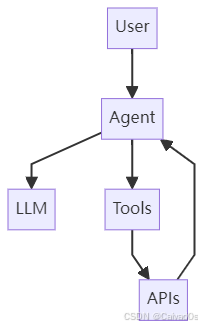
Agent 本质:
LLM

+

Tool Calling
没有工具调用:
Agent = 聊天机器人有工具调用:
Agent = 智能助手架构:
九、什么是 Structured Output
除了工具调用。
另一项重要能力:
Structured Output即:
结构化输出很多时候:
我们不希望模型返回:
张三今年25岁,是Java工程师。而希望:
python
{
    "name":"张三",
    "age":25,
    "job":"Java工程师"
}
因为:
程序更容易解析十、JSON 格式输出
最常见形式:
python
{
  "username":"admin",
  "age":18,
  "email":"admin@test.com"
}
Prompt:
python
请仅返回JSON格式:
{
  "username":"",
  "age":0
}
输出:
python
{
  "username":"Tom",
  "age":20
}
十一、Pydantic 结构化输出
现代 LLM 推荐:
Pydantic定义模型:
python
from pydantic import BaseModel

class User(BaseModel):
    name:str
    age:int
模型输出:
{
  "name":"Tom",
  "age":20
}
自动转换:
python
user = User.model_validate_json(
    response
)
十二、LangChain Structured Output
定义数据结构:
python
from pydantic import BaseModel

class Weather(BaseModel):
    city:str
    temperature:int
绑定:
python
structured_llm = llm.with_structured_output(
    Weather
)
调用:
python
result = structured_llm.invoke(
    "北京天气"
)
输出:
python
Weather(
    city="北京",
    temperature=28
)
十三、为什么需要格式化输出
传统输出:
北京今天晴天,温度28度。程序解析困难。
结构化输出:
python
{
  "city":"北京",
  "temperature":28
}
程序可直接使用。
优势:
稳定

可解析

可校验

适合生产环境
十四、Function Calling 与 Structured Output 的关系
很多人会混淆。
区别:
| 技术 | 作用 |
|---|---|
| Function Calling | 调用工具 |
| Structured Output | 输出结构化数据 |
Function Calling:
解决执行问题Structured Output:
解决数据格式问题十五、企业级 AI 系统架构
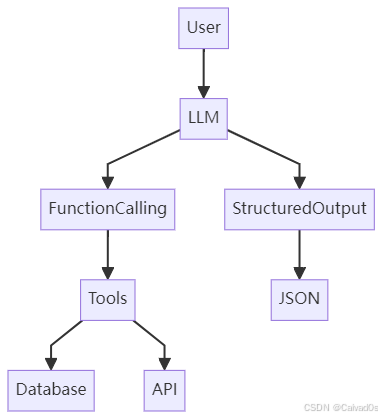
现代 AI 系统:
Prompt

+

Function Calling

+

Structured Output

+

Memory

+

RAG

+

Agent
架构:
十六、Function Calling 实战案例
智能客服:
用户:
查询订单10086模型:
python
{
  "function":"query_order",
  "order_no":"10086"
}
系统:
query_order("10086")返回:
{
  "status":"已发货"
}
最终:
您的订单已发货。十七、面试高频问题
什么是 Function Calling?
让模型决定调用哪个工具以及传递什么参数Function Calling 的作用是什么?
赋予模型访问外部系统的能力什么是 Structured Output?
让模型输出固定格式的数据结构为什么 Agent 依赖 Function Calling?
Agent需要通过工具完成任务JSON 输出有什么优势?
易解析

易校验

适合系统集成
十八、总结
Function Calling 和 Structured Output 是现代 LLM 应用开发中的两项核心能力。
它们解决了两个关键问题:
Function Calling

解决:
模型如何执行任务

Structured Output

解决:
模型如何返回标准数据
可以这样理解:
Prompt
负责沟通

Function Calling
负责行动

Structured Output
负责规范数据

Memory
负责记忆

RAG
负责查知识

Agent
负责完成目标
因此:
Function Calling 让 LLM 从"会说话"变成"会做事",Structured Output 让 LLM 从"输出文本"变成"输出数据"。
掌握这两项技术后,你就真正具备了开发企业级 AI Agent、智能客服、知识库问答系统、自动化办公助手等现代 AI 应用的核心能力。