二叉树
在实际开发中,二叉树(尤其是它的各种优化变体,如红黑树、B/B+树、Trie树等)的应用无处不在。在真实的工业界,它们主要支撑了以下几个核心场景:
- 数据库与文件系统的底层存储引擎(B+树)
这是二叉树在工业界最伟大、最广泛的使用场景。
关系型数据库(如 MySQL):底层索引使用的是 B+树(多叉平衡搜索树)。它保证了数据查询的时间复杂度为 O(logN) ,并且由于树的高度极低,完美契合磁盘的块读取机制,极大减少了磁盘 I/O。
NoSQL 数据库(如 MongoDB):底层索引通常使用 B树。
文件系统(如 EXT4, NTFS):管理磁盘上的海量文件和目录,底层也是基于树形结构来快速定位文件。 - 内存中的高效数据检索(红黑树)
当数据完全在内存中时,我们需要一种既能快速查找,又能快速插入/删除的结构,红黑树(一种自平衡二叉搜索树) 是绝对的主力:
Java 集合框架:TreeMap、TreeSet 底层全是红黑树,用于在内存中维护一个有序的键值对集合。
Linux 内核:Linux 的进程调度(CFS调度器)、内存管理(VMA管理)、定时器管理等核心模块,大量使用红黑树来管理海量动态数据。
Nginx:底层使用红黑树来管理定时器事件和路由配置。 - 字符串处理与路由匹配(Trie 字典树)
Trie 树(前缀树) 是一种特殊的树,专门用来处理字符串:
搜索引擎的自动补全:你在搜索框输入"app",下拉框瞬间提示"apple"、"application",底层就是 Trie 树的前缀匹配。
网络路由(最长前缀匹配):路由器的路由表查找、IP 地址匹配,大量使用 Trie 树及其压缩变体(Patricia Tree)。
敏感词过滤/词频统计:在海量文本中快速判断某个词是否存在。 - 编译器与语法解析(抽象语法树 AST)
代码编译:当你写下 a = b + c 时,编译器(如 Java 的 javac,C++ 的 GCC)首先会将其解析成一棵抽象语法树(AST),然后再对这棵树进行遍历和优化,最后生成机器码。
前端工具链:Webpack、Babel、ESLint 等前端构建和代码检查工具,底层都是将 JavaScript 代码解析为 AST 树,然后通过遍历这棵树来进行代码转换或语法检查。 - 业务系统中的层级关系与表达式计算
组织架构与分类:公司部门层级、电商的商品多级分类、评论区的多级嵌套回复,在数据库中通常用树形结构(如邻接表、闭包表)来存储和查询。
表达式求值:数学公式 1 + 2 * 3 在计算时,会被解析成二叉树,通过后序遍历来保证运算优先级。
文章目录
-
- 二叉树
-
- 94.二叉树的中序遍历
- 104.二叉树的最大深度
- [226. 翻转二叉树](#226. 翻转二叉树)
- 101.对称二叉树
- [543. 二叉树的直径](#543. 二叉树的直径)
- 102.二叉树的层序遍历
- [108. 将有序数组转换为二叉搜索树](#108. 将有序数组转换为二叉搜索树)
- [98. 验证二叉搜索树](#98. 验证二叉搜索树)
- [230. 二叉搜索树中第 K 小的元素](#230. 二叉搜索树中第 K 小的元素)
- [199. 二叉树的右视图](#199. 二叉树的右视图)
- [114. 二叉树展开为链表](#114. 二叉树展开为链表)
- [105. 从前序与中序遍历序列构造二叉树](#105. 从前序与中序遍历序列构造二叉树)
- [437. 路径总和 III](#437. 路径总和 III)
- 236.二叉树的最近公共祖先
- [124. 二叉树中的最大路径和](#124. 二叉树中的最大路径和)
- 递归总结
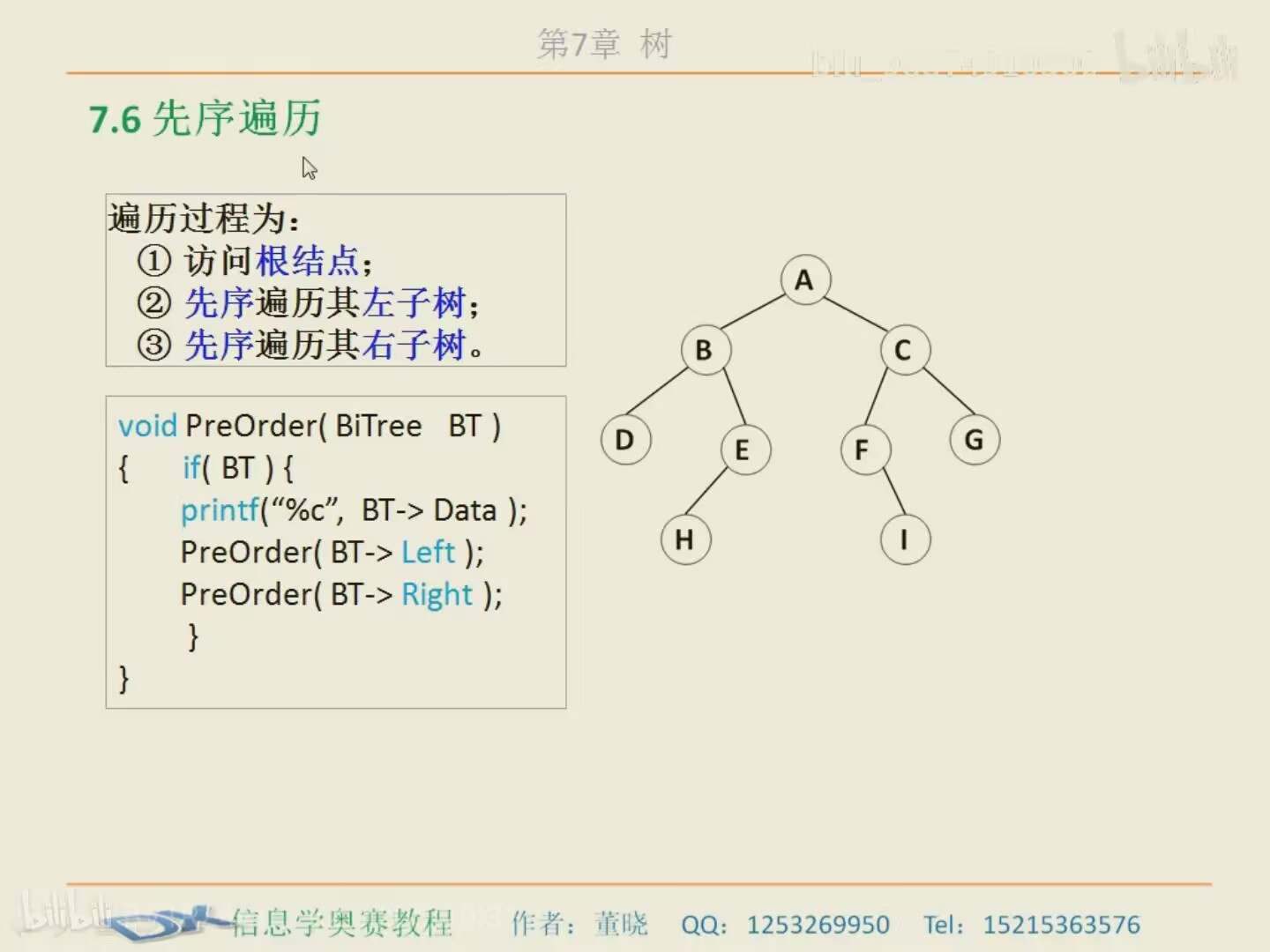
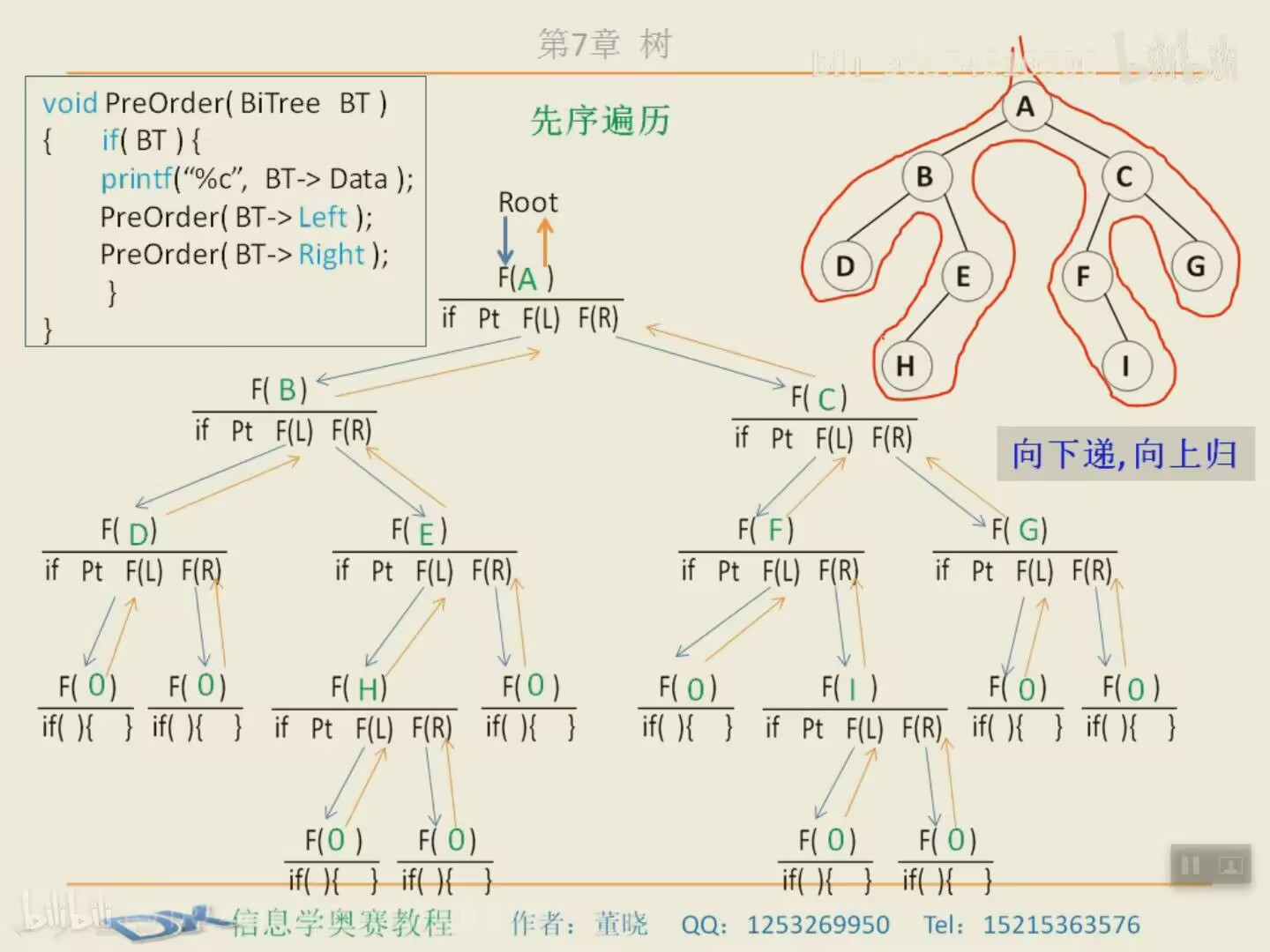
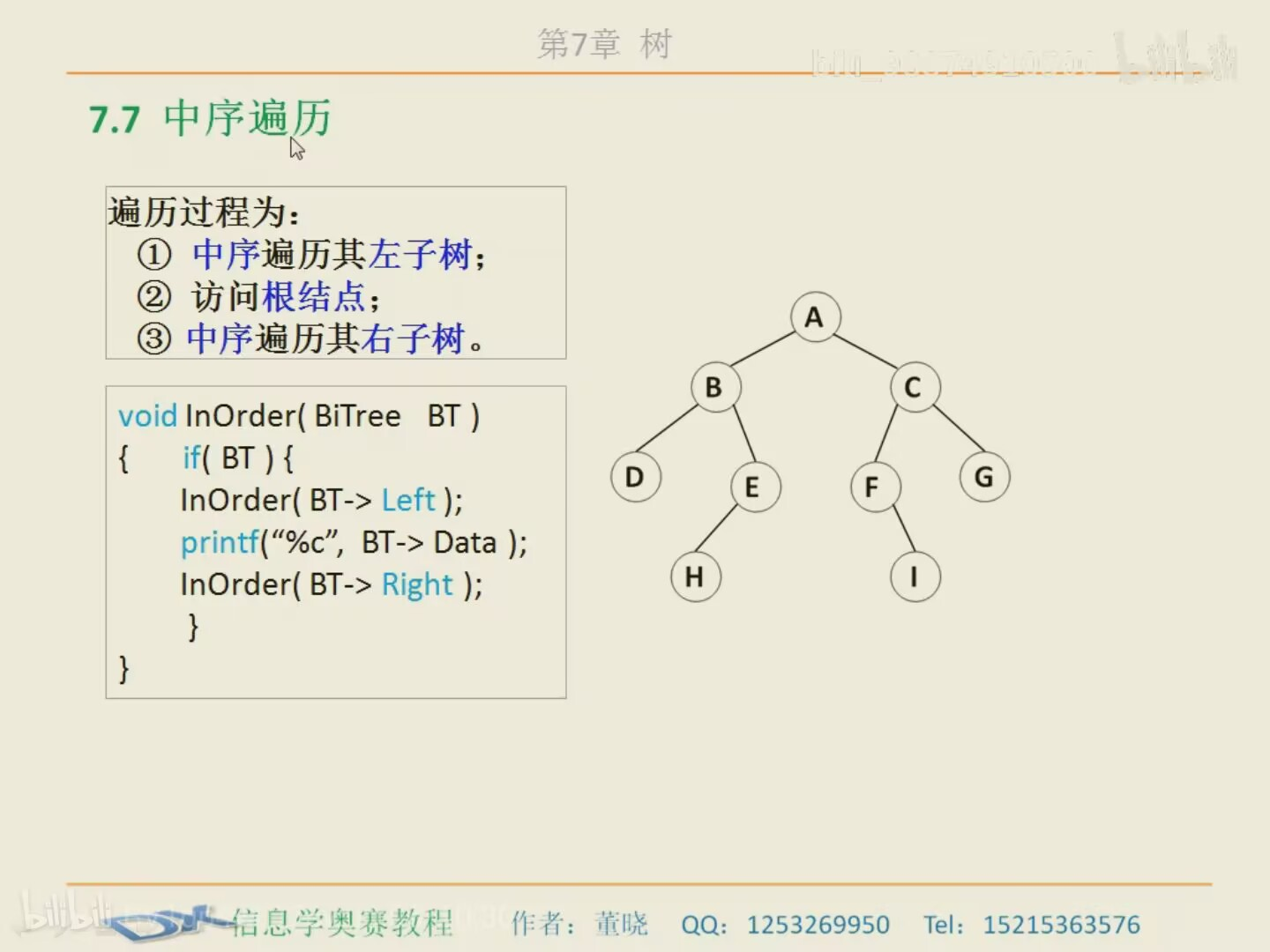
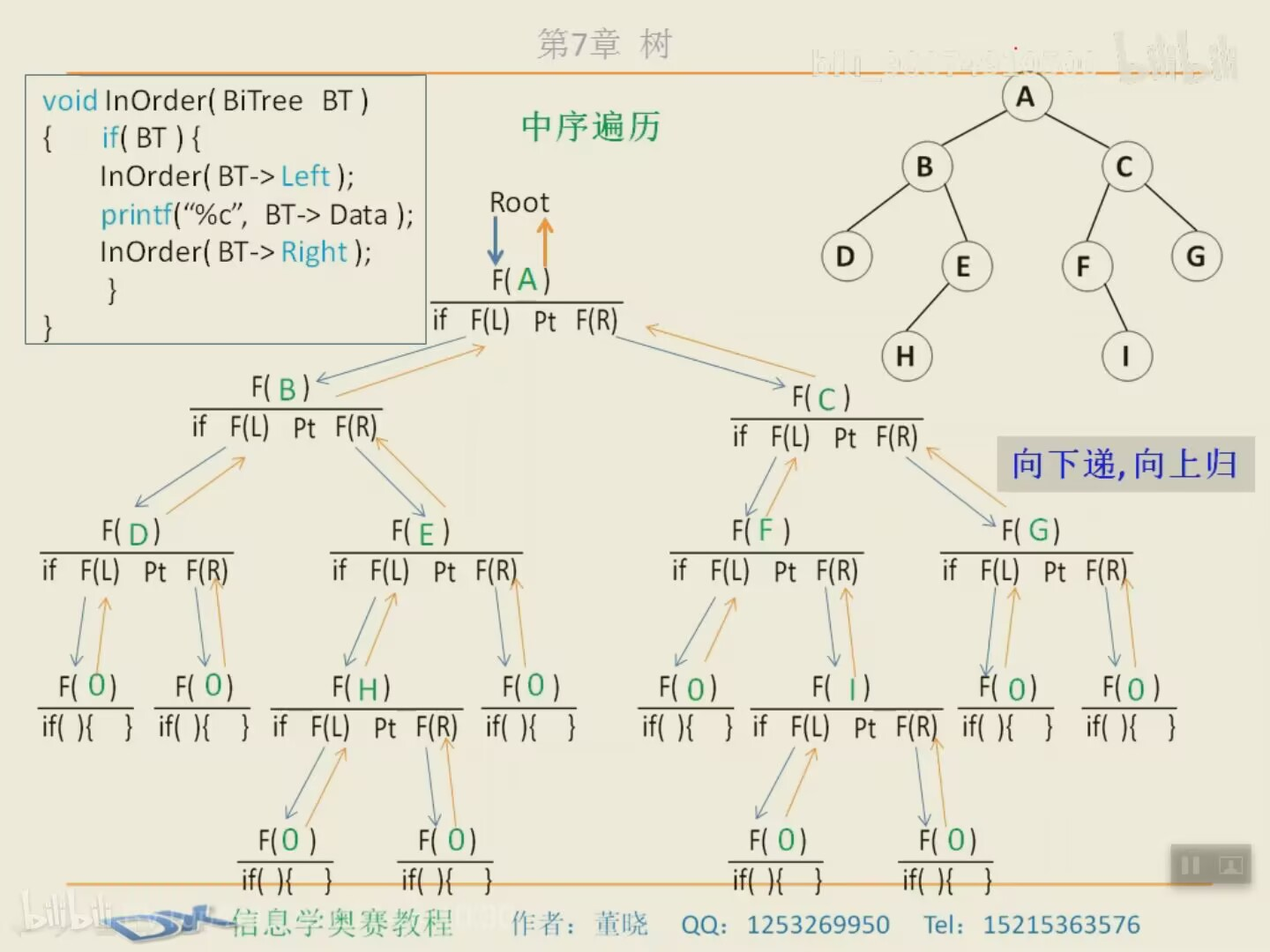
94.二叉树的中序遍历
java
/**
 * Definition for a binary tree node.
 * public class TreeNode {
 *     int val;
 *     TreeNode left;
 *     TreeNode right;
 *     TreeNode() {}
 *     TreeNode(int val) { this.val = val; }
 *     TreeNode(int val, TreeNode left, TreeNode right) {
 *         this.val = val;
 *         this.left = left;
 *         this.right = right;
 *     }
 * }
 */
class Solution {
    public List<Integer> inorderTraversal(TreeNode root) {
        List<Integer> res = new ArrayList<>();
        inorder(root,res);
        return res;
    }
    public void inorder(TreeNode root,List<Integer> res){
        if(root == null)return;
        inorder(root.left,res);
        res.add(root.val);
        inorder(root.right,res);
    }
}
104.二叉树的最大深度
递归
java
/**
 * Definition for a binary tree node.
 * public class TreeNode {
 *     int val;
 *     TreeNode left;
 *     TreeNode right;
 *     TreeNode() {}
 *     TreeNode(int val) { this.val = val; }
 *     TreeNode(int val, TreeNode left, TreeNode right) {
 *         this.val = val;
 *         this.left = left;
 *         this.right = right;
 *     }
 * }
 */
class Solution {
    public int maxDepth(TreeNode root) {
        if(root == null)return 0;
        int left = maxDepth(root.left);
        int right = maxDepth(root.right);
        return Math.max(left,right) + 1;
    }
}
226. 翻转二叉树
先递归到底,再交换
java
/**
 * Definition for a binary tree node.
 * public class TreeNode {
 *     int val;
 *     TreeNode left;
 *     TreeNode right;
 *     TreeNode() {}
 *     TreeNode(int val) { this.val = val; }
 *     TreeNode(int val, TreeNode left, TreeNode right) {
 *         this.val = val;
 *         this.left = left;
 *         this.right = right;
 *     }
 * }
 */
class Solution {
    public TreeNode invertTree(TreeNode root) {
        if (root == null)
            return null;
        invertTree(root.left);
        invertTree(root.right);

        TreeNode temp = root.left;
        root.left = root.right;
        root.right = temp;
        return root;
    }
}
101.对称二叉树
将整棵树的对称问题,转化为判断"左子树"和"右子树"是否互为镜像。通过 check 函数,每次递归都严格比较两个节点的值是否相等,然后让左节点的"左孩子"与右节点的"右孩子"对比,同时让左节点的"右孩子"与右节点的"左孩子"对比(即交叉比较),一路递归到底,只要所有交叉对应的节点都匹配,整棵树就是对称的
java
/**
 * Definition for a binary tree node.
 * public class TreeNode {
 *     int val;
 *     TreeNode left;
 *     TreeNode right;
 *     TreeNode() {}
 *     TreeNode(int val) { this.val = val; }
 *     TreeNode(int val, TreeNode left, TreeNode right) {
 *         this.val = val;
 *         this.left = left;
 *         this.right = right;
 *     }
 * }
 */
class Solution {
    public boolean isSymmetric(TreeNode root) {
        return check(root.left,root.right);
    }

    public boolean check(TreeNode left,TreeNode right){
        //两边都为空 对称
        if(left == null && right == null)return true;
        //只有一边为空或者值不同 不对称
        if(left == null || right == null || left.val != right.val)return false;
        //继续向下交叉比较
        return check(left.left,right.right) && check(left.right,right.left);
    }
}
543. 二叉树的直径
遍历二叉树,在计算最大深度的同时,顺带把直径算出来
在当前节点拐点的直径长度 = 左子树的最大深度 + 右子树的最大深度
返回给父节点的是当前子树的最大深度= max(左子树的最大深度,右子树的最大深度)+1
java
/**
 * Definition for a binary tree node.
 * public class TreeNode {
 *     int val;
 *     TreeNode left;
 *     TreeNode right;
 *     TreeNode() {}
 *     TreeNode(int val) { this.val = val; }
 *     TreeNode(int val, TreeNode left, TreeNode right) {
 *         this.val = val;
 *         this.left = left;
 *         this.right = right;
 *     }
 * }
 */
class Solution {
    private int res = 0;
    public int diameterOfBinaryTree(TreeNode root) {
        maxDepth(root);
        return res;
    }

    public int maxDepth(TreeNode root){
        if(root == null)return 0;
        int left = maxDepth(root.left);
        int right = maxDepth(root.right);

        res = Math.max(res,left + right);
        return Math.max(left,right) + 1;
    }
}
102.二叉树的层序遍历
BFS
- cur数组存当前正在遍历的节点
- nxt数组存被遍历节点的左右子节点
- vals数组存部分答案
- 遍历cur,把左右子节点记录到nxt中,同时把节点值记录到数组vals中,遍历结束后把vals加到答案里
- 遍历结束把cur替换成nxt,开始下一轮循环
- cur不为空就证明还没遍历完
java
/**
 * Definition for a binary tree node.
 * public class TreeNode {
 *     int val;
 *     TreeNode left;
 *     TreeNode right;
 *     TreeNode() {}
 *     TreeNode(int val) { this.val = val; }
 *     TreeNode(int val, TreeNode left, TreeNode right) {
 *         this.val = val;
 *         this.left = left;
 *         this.right = right;
 *     }
 * }
 */
class Solution {
    public List<List<Integer>> levelOrder(TreeNode root) {
        if(root == null)return List.of();

        List<List<Integer>> ans = new ArrayList<>();
        List<TreeNode> cur = List.of(root);
        while(!cur.isEmpty()){
            List<TreeNode> nxt = new ArrayList<>();
            List<Integer> vals = new ArrayList<>(cur.size());
            for(TreeNode node : cur){
                vals.add(node.val);
                if(node.left != null)nxt.add(node.left);
                if (node.right != null) nxt.add(node.right);
            }
            cur = nxt;
            ans.add(vals);
        }
        return ans;

    }
}
优化一下,把cur数组和nxt数组用一个队列替代
java
/**
 * Definition for a binary tree node.
 * public class TreeNode {
 *     int val;
 *     TreeNode left;
 *     TreeNode right;
 *     TreeNode() {}
 *     TreeNode(int val) { this.val = val; }
 *     TreeNode(int val, TreeNode left, TreeNode right) {
 *         this.val = val;
 *         this.left = left;
 *         this.right = right;
 *     }
 * }
 */
class Solution {
    public List<List<Integer>> levelOrder(TreeNode root) {
        if(root == null)return List.of();

        List<List<Integer>> ans = new ArrayList<>();
        Queue<TreeNode> q = new ArrayDeque<>();
        q.add(root);
        while(!q.isEmpty()){
            int n = q.size();
            List<Integer> vals = new ArrayList<>(n);
            while(n > 0){
                TreeNode node = q.poll();
                vals.add(node.val);
                if (node.left != null)  q.add(node.left);
                if (node.right != null) q.add(node.right);
                n--;
            }
            ans.add(vals);
        }
        return ans;

    }
}
108. 将有序数组转换为二叉搜索树
平衡二叉搜索树:每个节点的左子树和右子树高度相差不超过1
由于给定的数组是严格升序的,要构建一棵高度平衡的二叉搜索树(BST),关键在于每次都选取当前区间的中间元素作为根节点 ,这样能保证左右子树的节点数量尽可能相等;随后,以中间元素为界,将数组一分为二,递归地对左半区间构建左子树、对右半区间构建右子树,直到区间越界(left > right)时返回 null 作为递归出口,最终自底向上拼接出一棵完美的平衡二叉搜索树。
java
/**
 * Definition for a binary tree node.
 * public class TreeNode {
 *     int val;
 *     TreeNode left;
 *     TreeNode right;
 *     TreeNode() {}
 *     TreeNode(int val) { this.val = val; }
 *     TreeNode(int val, TreeNode left, TreeNode right) {
 *         this.val = val;
 *         this.left = left;
 *         this.right = right;
 *     }
 * }
 */
class Solution {
    public TreeNode sortedArrayToBST(int[] nums) {
        return build(nums,0,nums.length-1);
    }

    public TreeNode build(int[] nums,int left,int right){
        if(left > right)return null;
        int mid = (left + right)/2;
        TreeNode root = new TreeNode(nums[mid]);
        root.left = build(nums,left,mid-1);
        root.right = build(nums,mid +1,right);
        return root;
    }
}
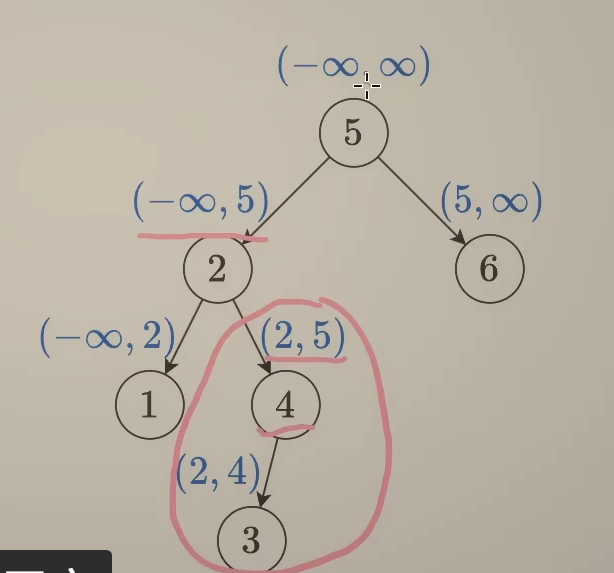
98. 验证二叉搜索树
- 前序遍历:先判断再递归
- 中序遍历:大于上一个节点
- 后序遍历:先递归再判断
递归时除了要传当前节点,还要传开区间的范围
java
/**
 * Definition for a binary tree node.
 * public class TreeNode {
 *     int val;
 *     TreeNode left;
 *     TreeNode right;
 *     TreeNode() {}
 *     TreeNode(int val) { this.val = val; }
 *     TreeNode(int val, TreeNode left, TreeNode right) {
 *         this.val = val;
 *         this.left = left;
 *         this.right = right;
 *     }
 * }
 */
class Solution {
    public boolean isValidBST(TreeNode root) {
        return check(root,Long.MIN_VALUE,Long.MAX_VALUE);
    }

    public boolean check(TreeNode root,long min,long max){
        if(root == null)return true;
        int temp = root.val;
        if(temp <= min || temp >= max)return false;
        return check(root.left,min,temp) && check(root.right,temp,max);
    }
}
230. 二叉搜索树中第 K 小的元素
中序遍历 一棵二叉搜索树,输出的结果是一个从小到大排好序的数组
非递归法
用栈实现
利用栈完美模拟了二叉搜索树的中序遍历(左-根-右)过程:首先通过一个内层循环"一路向左" ,将途径的所有节点依次压入栈中直到最底端;接着从栈顶弹出节点 (此时弹出的即为当前树中的最小值),将其访问计数器加 1,若计数等于
k则直接返回该节点的值;最后将指针转向该节点的右子树 ,并在外层循环中重复上述"向左压栈、弹栈计数、转向右子树"的过程,直到精准命中第k小的元素
java
/**
 * Definition for a binary tree node.
 * public class TreeNode {
 *     int val;
 *     TreeNode left;
 *     TreeNode right;
 *     TreeNode() {}
 *     TreeNode(int val) { this.val = val; }
 *     TreeNode(int val, TreeNode left, TreeNode right) {
 *         this.val = val;
 *         this.left = left;
 *         this.right = right;
 *     }
 * }
 */
class Solution {
    public int kthSmallest(TreeNode root, int k) {
        Deque<TreeNode> stack = new ArrayDeque<>();
        TreeNode curr = root;
        int cnt = 0;
        while(curr != null || !stack.isEmpty()){
            //遇到节点就先压栈,一直往左走,直到走到最左下角的叶子节点
            while(curr != null){
                stack.push(curr);
                curr = curr.left;
            }
            //弹栈访问得到最小的节点
            curr = stack.pop();
            cnt++;
            if(cnt == k)return curr.val;
            //转向右子树
            curr = curr.right;
        }
        return -1;
    }
}
递归法
java
/**
 * Definition for a binary tree node.
 * public class TreeNode {
 *     int val;
 *     TreeNode left;
 *     TreeNode right;
 *     TreeNode() {}
 *     TreeNode(int val) { this.val = val; }
 *     TreeNode(int val, TreeNode left, TreeNode right) {
 *         this.val = val;
 *         this.left = left;
 *         this.right = right;
 *     }
 * }
 */
class Solution {
    private int count = 0;
    private int result = -1;
    public int kthSmallest(TreeNode root, int k) {
        inorder(root,k);
        return result;
    }
    public void inorder(TreeNode node,int k){
        if(node == null||result != -1)return;
        inorder(node.left,k);
        count++;
        if(count == k){
            result = node.val;
            return;
        }
        inorder(node.right,k);
    }
}
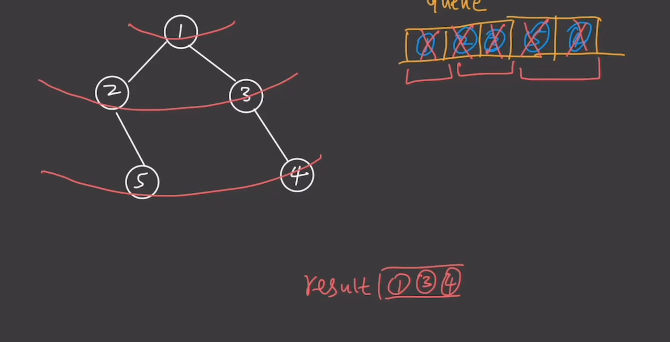
199. 二叉树的右视图
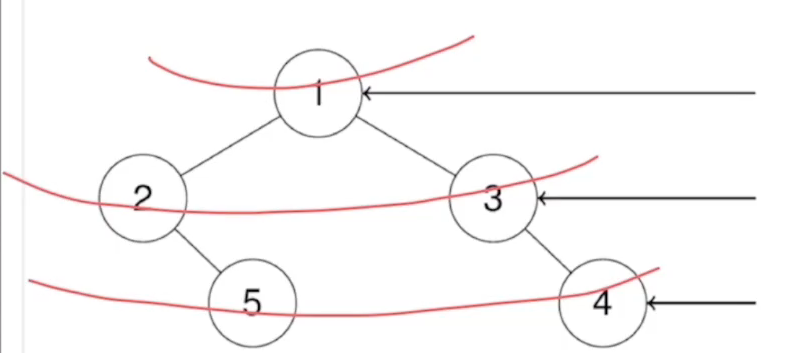
一层一层遍历,取每层最后一个数,就是右边能看到的
java
/**
 * Definition for a binary tree node.
 * public class TreeNode {
 *     int val;
 *     TreeNode left;
 *     TreeNode right;
 *     TreeNode() {}
 *     TreeNode(int val) { this.val = val; }
 *     TreeNode(int val, TreeNode left, TreeNode right) {
 *         this.val = val;
 *         this.left = left;
 *         this.right = right;
 *     }
 * }
 */
class Solution {
    public List<Integer> rightSideView(TreeNode root) {
        if (root == null) {
            return List.of();
        }
        List<Integer> res = new ArrayList<>();
        Queue<TreeNode> q = new ArrayDeque<>();
        q.add(root);
        while (!q.isEmpty()) {
            int levelSize = q.size();
            TreeNode rightNode = null;
            for (int i = 0; i < levelSize; i++) {
                TreeNode cur = q.poll();
                if (i == levelSize - 1)
                    res.add(cur.val);
                if (cur.left != null)
                    q.add(cur.left);
                if (cur.right != null)
                    q.add(cur.right);
            }
        }
        return res;
    }
}
114. 二叉树展开为链表
java
/**
 * Definition for a binary tree node.
 * public class TreeNode {
 *     int val;
 *     TreeNode left;
 *     TreeNode right;
 *     TreeNode() {}
 *     TreeNode(int val) { this.val = val; }
 *     TreeNode(int val, TreeNode left, TreeNode right) {
 *         this.val = val;
 *         this.left = left;
 *         this.right = right;
 *     }
 * }
 */
class Solution {
    public TreeNode res;
    public void flatten(TreeNode root) {
        if(root == null)return;
        //开一个列表 用来存前序遍历的节点顺序
        List<TreeNode> list = new ArrayList<>();
        inorder(root,list);

        //遍历列表,重新把节点串成链表
        for(int i=0;i<list.size()-1;i++){
            TreeNode cur = list.get(i);
            TreeNode next = list.get(i+1);

            cur.left = null;
            cur.right = next;
        }
    }
    public void inorder(TreeNode node,List<TreeNode> list){
        if(node == null)return;
        list.add(node);
        inorder(node.left,list);
        inorder(node.right,list);
    }
}
优化
首先通过递归将当前节点的左右子树分别展平为链表,接着暂存右链表,将左链表整体移到右指针上并置空左指针,最后顺着移过来的左链表一路走到最右端,将暂存的右链表拼接在末尾,从而完成当前节点的展平
java
/**
 * Definition for a binary tree node.
 * public class TreeNode {
 *     int val;
 *     TreeNode left;
 *     TreeNode right;
 *     TreeNode() {}
 *     TreeNode(int val) { this.val = val; }
 *     TreeNode(int val, TreeNode left, TreeNode right) {
 *         this.val = val;
 *         this.left = left;
 *         this.right = right;
 *     }
 * }
 */
class Solution {
    public void flatten(TreeNode root) {
        if(root == null)return;
        flatten(root.left);//把左子树展平
        flatten(root.right);//把右子树展平
        TreeNode temp = root.right;
        root.right = root.left;
        root.left = null;
        TreeNode cur = root;
        while(cur.right != null)cur = cur.right;//走到原左子树的最后
        cur.right = temp;//把原右子树挂到最后
    }
}
105. 从前序与中序遍历序列构造二叉树
从前序遍历中找到根节点,用这个根节点取中序遍历中分开左右子树,接着继续递归分开每部分左右子树
java
/**
 * Definition for a binary tree node.
 * public class TreeNode {
 *     int val;
 *     TreeNode left;
 *     TreeNode right;
 *     TreeNode() {}
 *     TreeNode(int val) { this.val = val; }
 *     TreeNode(int val, TreeNode left, TreeNode right) {
 *         this.val = val;
 *         this.left = left;
 *         this.right = right;
 *     }
 * }
 */
class Solution {
    Map<Integer,Integer> inorderMap = new HashMap<>();
    public TreeNode buildTree(int[] preorder, int[] inorder) {
        for(int i=0;i<inorder.length;i++){
            inorderMap.put(inorder[i],i);
        }
        return build(preorder,inorder,0,preorder.length-1,0,inorder.length-1);

    }
    public TreeNode build(int[] preorder,int[] inorder,int preStart,int preEnd,int inStart,int inEnd){
        if(preStart > preEnd || inStart > inEnd){
            return null;
        }
        //取先序遍历初节点作为根节点
        TreeNode node = new TreeNode(preorder[preStart]);
        //根据根节点去中序遍历里,找到左右子树的范围
        int index = inorderMap.get(node.val);

        int leftPreStart = preStart + 1;
        int leftPreEnd = preStart + (index - inStart);
        int leftInStart = inStart;
        int leftInEnd = index - 1;
        node.left = build(preorder,inorder,leftPreStart,leftPreEnd,leftInStart,leftInEnd);

        int rightPreStart = preStart + 1 + (index - inStart);
        int rightPreEnd = preStart + (index - inStart) + (inEnd -index);
        int rightInStart = index + 1;
        int rightInEnd = inEnd;
        node.right = build(preorder,inorder,rightPreStart,rightPreEnd,rightInStart,rightInEnd);

        return node;
    }
}
437. 路径总和 III
- 枚举所有路径的起点
- 计算以某个节点为起点的满足条件的路径的个数
java
/**
 * Definition for a binary tree node.
 * public class TreeNode {
 *     int val;
 *     TreeNode left;
 *     TreeNode right;
 *     TreeNode() {}
 *     TreeNode(int val) { this.val = val; }
 *     TreeNode(int val, TreeNode left, TreeNode right) {
 *         this.val = val;
 *         this.left = left;
 *         this.right = right;
 *     }
 * }
 */
class Solution {
    public int pathSum(TreeNode root, int targetSum) {
        if(root == null)return 0;
        Queue<TreeNode> q = new ArrayDeque<>();
        q.add(root);
        int total = 0;
        while(!q.isEmpty()){
            TreeNode node = q.poll();
            total += dfs(node,0,targetSum);
            if(node.left != null)q.add(node.left);
            if(node.right != null)q.add(node.right);
        }

        return total;
    }

    public int dfs(TreeNode node,long cur_sum,int targetSum){
        if(node == null)return 0;
        cur_sum += node.val;
        int count = 0;
        if(cur_sum == targetSum)count++;
        count += dfs(node.left,cur_sum,targetSum);
        count += dfs(node.right,cur_sum,targetSum);
        return count;
    }
}
优化
前缀和+递归+回溯
从根节点出发,每走一步就计算前缀和并"查账"看能否凑出目标值,然后"记账"并继续向下探索;探索完当前分支返回时,必须手动"擦账"以隔离不同分支,而前缀和的值则依靠递归栈自动回退
java
/**
 * Definition for a binary tree node.
 * public class TreeNode {
 *     int val;
 *     TreeNode left;
 *     TreeNode right;
 *     TreeNode() {}
 *     TreeNode(int val) { this.val = val; }
 *     TreeNode(int val, TreeNode left, TreeNode right) {
 *         this.val = val;
 *         this.left = left;
 *         this.right = right;
 *     }
 * }
 */
class Solution {
    int ans = 0;
    public int pathSum(TreeNode root, int targetSum) {
        Map<Long,Integer> map = new HashMap<>();
        map.put(0L,1);
        dfs(root,map,0,targetSum);
        return ans;
    }
    public void dfs(TreeNode root,Map<Long,Integer> map,long cur,int targetSum){
        if(root == null)return;

        cur += root.val;
        ans += map.getOrDefault(cur-targetSum,0);
        map.put(cur,map.getOrDefault(cur,0)+1);

        dfs(root.left,map,cur,targetSum);
        dfs(root.right,map,cur,targetSum);

        map.put(cur,map.getOrDefault(cur,0)-1);

        return;
    }
}
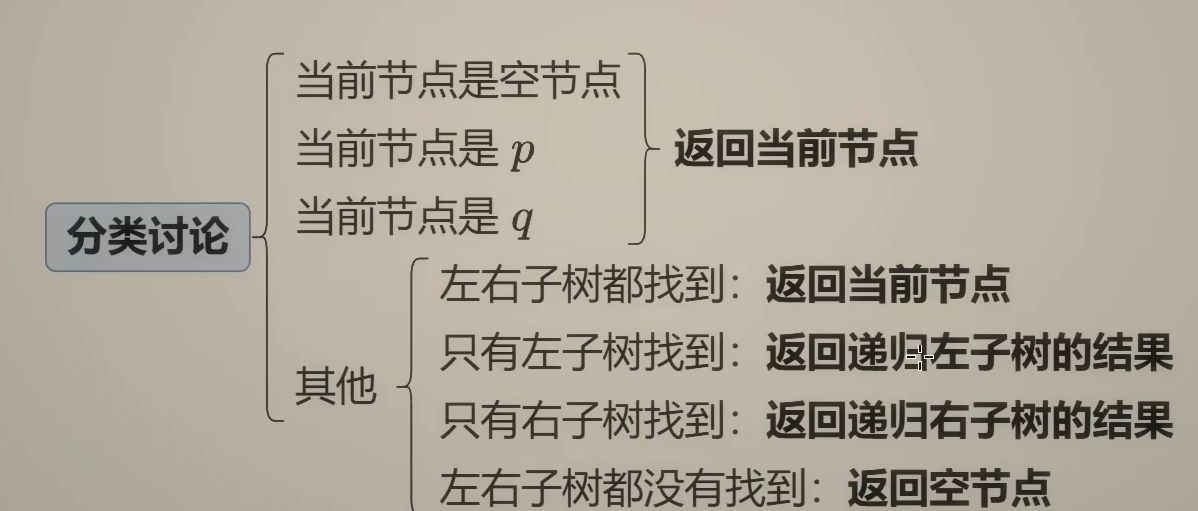
236.二叉树的最近公共祖先
java
/**
 * Definition for a binary tree node.
 * public class TreeNode {
 *     int val;
 *     TreeNode left;
 *     TreeNode right;
 *     TreeNode(int x) { val = x; }
 * }
 */
class Solution {
    public TreeNode lowestCommonAncestor(TreeNode root, TreeNode p, TreeNode q) {
        if(root == null || root == p || root == q){
            return root;//找到p或q就不往下递归了
        }
        TreeNode left = lowestCommonAncestor(root.left,p,q);
        TreeNode right = lowestCommonAncestor(root.right,p,q);

        if(left != null && right != null)return root;//左右都找到,当前节点是最近公共祖先

        //只有左子树找到,返回左子树的返回值
        //只有右子树找到,返回右子树的返回值
        //左右子树都没找到,返回null
        return left != null ? left : right;
    }
}
124. 二叉树中的最大路径和
- 算全局答案时:左 + 根 + 右(路径分叉,到此为止)。
- 算返回值时:根 + max(左, 右)(路径不分叉,继续向上)
java
/**
 * Definition for a binary tree node.
 * public class TreeNode {
 *     int val;
 *     TreeNode left;
 *     TreeNode right;
 *     TreeNode() {}
 *     TreeNode(int val) { this.val = val; }
 *     TreeNode(int val, TreeNode left, TreeNode right) {
 *         this.val = val;
 *         this.left = left;
 *         this.right = right;
 *     }
 * }
 */
class Solution {
    private int res;
    public int maxPathSum(TreeNode root) {
        res = root.val;
        dfs(root);
        return res;
    }

    public int dfs(TreeNode root){
        if(root == null){
            return 0;
        }
        int lmax = Math.max(0,dfs(root.left));
        int rmax = Math.max(0,dfs(root.right));
        res = Math.max(res,lmax + rmax + root.val);

        return root.val + Math.max(lmax,rmax);
    }
}
递归总结
由于子问题的规模比原问题小,不断递下去,总会有个尽头
即递归的边界条件,直接返回它的答案
递归return的时候,怎么知道return到哪里的?
return 能精准返回,是因为 JVM 底层维护了一个"调用栈":每次调用函数时,系统都会压入一张"便签纸",记录下当前的局部变量和返回地址(执行到了哪一行) ;当函数执行 return 时,系统会弹出这张便签纸,并顺着上面记录的返回地址,将计算结果精准送回上一层调用处,继续往下执行