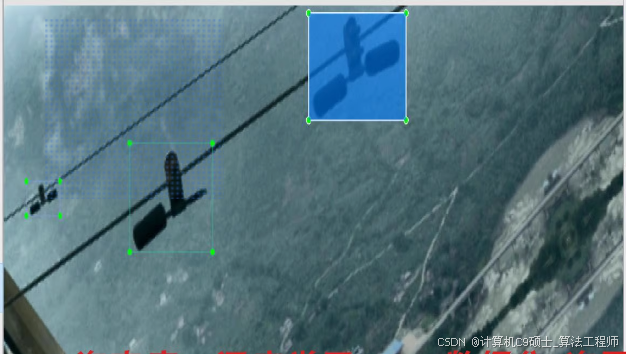
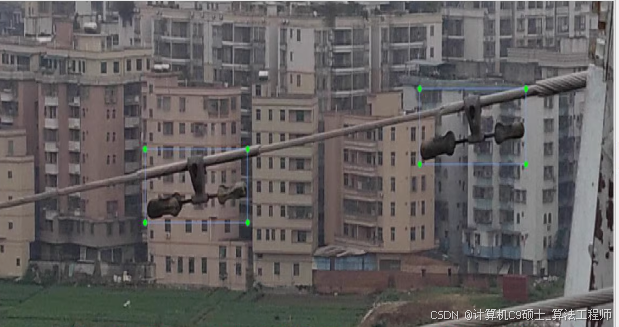
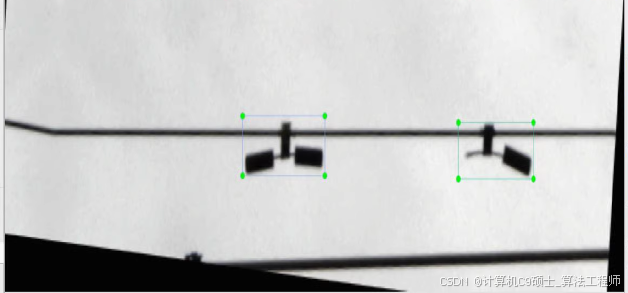
防震锤缺陷检测数据集 1000张 防震锤 带标注 voc yolo分类名: (图片张数, 标注个数)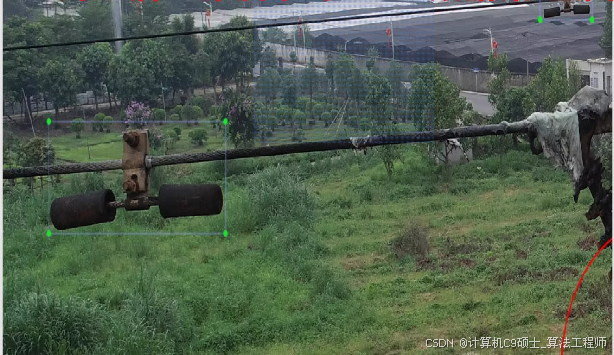
none_ defect ive:
(636,1 808)
defective: (831, 933)
总数:
(1000,2741)
总类(nc): 2类
使用YOLOv8进行训练的完整步骤。我们将确保所有步骤都是一键运行的,以便你可以轻松地进行模型训练和评估。
数据集介绍
数据集概述
- 数据集名称:Anti-Vibration Hammer Defect Detection Dataset (AVHDDD)
- 数据类型:图像
- 目标任务:防震锤缺陷检测
- 样本数量:1000张图像
- 标注格式:VOC (XML) 和 YOLO (TXT)
- 类别 :2类
- 无缺陷 (none_defective)
- 缺陷 (defective)
数据集统计
- 无缺陷 (none_defective):636张图像,1808个框
- 缺陷 (defective):831张图像,933个框
- 总计:1000张图像,2741个框
数据集目录结构
AVHDDD/
├── images/
│   ├── train/
│   └── val/
├── labels_voc/
│   ├── train/
│   └── val/
├── labels_yolo/
│   ├── train/
│   └── val/
└── data.yaml
数据集配置文件
创建一个data.yaml文件,配置数据集的路径和类别信息:
yaml
path: ./AVHDDD  # 数据集路径
train: images/train  # 训练集图像路径
val: images/val  # 验证集图像路径

nc: 2  # 类别数
names: ['none_defective', 'defective']  # 类别名称
转换标注格式
假设标注文件是VOC格式的XML文件,我们需要将它们转换为YOLO格式的TXT文件。
转换脚本
python
import xml.etree.ElementTree as ET
import os

def convert_voc_to_yolo(voc_file, yolo_file, class_names):
    tree = ET.parse(voc_file)
    root = tree.getroot()

    width = int(root.find('size/width').text)
    height = int(root.find('size/height').text)

    with open(yolo_file, 'w') as f:
        for obj in root.findall('object'):
            class_name = obj.find('name').text
            if class_name not in class_names:
                continue
            class_id = class_names.index(class_name)

            bbox = obj.find('bndbox')
            x_min = float(bbox.find('xmin').text)
            y_min = float(bbox.find('ymin').text)
            x_max = float(bbox.find('xmax').text)
            y_max = float(bbox.find('ymax').text)

            x_center = (x_min + x_max) / 2.0 / width
            y_center = (y_min + y_max) / 2.0 / height
            w = (x_max - x_min) / width
            h = (y_max - y_min) / height

            f.write(f"{class_id} {x_center} {y_center} {w} {h}\n")

def convert_all_voc_to_yolo(voc_dir, yolo_dir, class_names):
    os.makedirs(yolo_dir, exist_ok=True)
    for filename in os.listdir(voc_dir):
        if filename.endswith('.xml'):
            voc_file = os.path.join(voc_dir, filename)
            yolo_file = os.path.join(yolo_dir, filename.replace('.xml', '.txt'))
            convert_voc_to_yolo(voc_file, yolo_file, class_names)

if __name__ == "__main__":
    class_names = ['none_defective', 'defective']
    voc_train_dir = 'AVHDDD/labels_voc/train'
    yolo_train_dir = 'AVHDDD/labels_yolo/train'
    convert_all_voc_to_yolo(voc_train_dir, yolo_train_dir, class_names)

    voc_val_dir = 'AVHDDD/labels_voc/val'
    yolo_val_dir = 'AVHDDD/labels_yolo/val'
    convert_all_voc_to_yolo(voc_val_dir, yolo_val_dir, class_names)
YOLOv8训练代码
-
安装YOLOv8库和依赖项:
bashgit clone https://github.com/ultralytics/ultralytics.git cd ultralytics pip install -r requirements.txt -
训练模型:
pythonfrom ultralytics import YOLO def train_model(data_yaml_path, model_config, epochs, batch_size, img_size, augment): # 加载模型 model = YOLO(model_config) # 训练模型 results = model.train( data=data_yaml_path, epochs=epochs, batch=batch_size, imgsz=img_size, augment=augment ) # 保存模型 model.save("runs/train/avhddd/best.pt") if __name__ == "__main__": data_yaml_path = 'AVHDDD/data.yaml' model_config = 'yolov8n.yaml' epochs = 100 batch_size = 16 img_size = 640 augment = True train_model(data_yaml_path, model_config, epochs, batch_size, img_size, augment)
详细解释
-
安装YOLOv8和依赖项:
- 克隆YOLOv8仓库并安装所有必要的依赖项。
-
训练模型:
- 导入YOLOv8库。
- 加载模型配置文件。
- 调用
model.train方法进行训练。 - 保存训练后的最佳模型。
运行训练脚本
将上述脚本保存为一个Python文件(例如train_yolov8_avhddd.py),然后运行它。
bash
python train_yolov8_avhddd.py评估模型
-
评估模型 :
pythonfrom ultralytics import YOLO def evaluate_model(data_yaml_path, weights_path, img_size, conf_threshold): # 加载模型 model = YOLO(weights_path) # 评估模型 results = model.val( data=data_yaml_path, imgsz=img_size, conf=conf_threshold ) # 打印评估结果 print(results) if __name__ == "__main__": data_yaml_path = 'AVHDDD/data.yaml' weights_path = 'runs/train/avhddd/best.pt' img_size = 640 conf_threshold = 0.4 evaluate_model(data_yaml_path, weights_path, img_size, conf_threshold)
详细解释
- 评估模型 :
- 导入YOLOv8库。
- 加载训练好的模型权重。
- 调用
model.val方法进行评估。 - 打印评估结果。
运行评估脚本
将上述脚本保存为一个Python文件(例如evaluate_yolov8_avhddd.py),然后运行它。
bash
python evaluate_yolov8_avhddd.py一键运行脚本
为了实现一键运行,可以将图像预处理、训练和评估脚本合并到一个主脚本中,并添加命令行参数来控制运行模式。
python
import argparse
import os
import xml.etree.ElementTree as ET
from ultralytics import YOLO

def convert_voc_to_yolo(voc_file, yolo_file, class_names):
    tree = ET.parse(voc_file)
    root = tree.getroot()

    width = int(root.find('size/width').text)
    height = int(root.find('size/height').text)

    with open(yolo_file, 'w') as f:
        for obj in root.findall('object'):
            class_name = obj.find('name').text
            if class_name not in class_names:
                continue
            class_id = class_names.index(class_name)

            bbox = obj.find('bndbox')
            x_min = float(bbox.find('xmin').text)
            y_min = float(bbox.find('ymin').text)
            x_max = float(bbox.find('xmax').text)
            y_max = float(bbox.find('ymax').text)

            x_center = (x_min + x_max) / 2.0 / width
            y_center = (y_min + y_max) / 2.0 / height
            w = (x_max - x_min) / width
            h = (y_max - y_min) / height

            f.write(f"{class_id} {x_center} {y_center} {w} {h}\n")

def convert_all_voc_to_yolo(voc_dir, yolo_dir, class_names):
    os.makedirs(yolo_dir, exist_ok=True)
    for filename in os.listdir(voc_dir):
        if filename.endswith('.xml'):
            voc_file = os.path.join(voc_dir, filename)
            yolo_file = os.path.join(yolo_dir, filename.replace('.xml', '.txt'))
            convert_voc_to_yolo(voc_file, yolo_file, class_names)

def train_model(data_yaml_path, model_config, epochs, batch_size, img_size, augment):
    # 加载模型
    model = YOLO(model_config)

    # 训练模型
    results = model.train(
        data=data_yaml_path,
        epochs=epochs,
        batch=batch_size,
        imgsz=img_size,
        augment=augment
    )

    # 保存模型
    model.save("runs/train/avhddd/best.pt")

def evaluate_model(data_yaml_path, weights_path, img_size, conf_threshold):
    # 加载模型
    model = YOLO(weights_path)

    # 评估模型
    results = model.val(
        data=data_yaml_path,
        imgsz=img_size,
        conf=conf_threshold
    )

    # 打印评估结果
    print(results)

def main(mode):
    class_names = ['none_defective', 'defective']
    data_yaml_path = 'AVHDDD/data.yaml'
    model_config = 'yolov8n.yaml'
    epochs = 100
    batch_size = 16
    img_size = 640
    conf_threshold = 0.4
    augment = True

    if mode == 'convert':
        voc_train_dir = 'AVHDDD/labels_voc/train'
        yolo_train_dir = 'AVHDDD/labels_yolo/train'
        convert_all_voc_to_yolo(voc_train_dir, yolo_train_dir, class_names)

        voc_val_dir = 'AVHDDD/labels_voc/val'
        yolo_val_dir = 'AVHDDD/labels_yolo/val'
        convert_all_voc_to_yolo(voc_val_dir, yolo_val_dir, class_names)
    elif mode == 'train':
        train_model(data_yaml_path, model_config, epochs, batch_size, img_size, augment)
    elif mode == 'eval':
        weights_path = 'runs/train/avhddd/best.pt'
        evaluate_model(data_yaml_path, weights_path, img_size, conf_threshold)
    else:
        print("Invalid mode. Use 'convert', 'train', or 'eval'.")

if __name__ == "__main__":
    parser = argparse.ArgumentParser(description="Convert, train, or evaluate YOLOv8 on the Anti-Vibration Hammer Defect Detection Dataset.")
    parser.add_argument('mode', type=str, choices=['convert', 'train', 'eval'], help="Mode: 'convert', 'train', or 'eval'")
    args = parser.parse_args()

    main(args.mode)
详细解释
-
命令行参数:
- 使用
argparse库添加命令行参数,控制脚本的运行模式(转换、训练或评估)。
- 使用
-
主函数:
- 根据传入的模式参数,调用相应的转换、训练或评估函数。
运行主脚本
将上述脚本保存为一个Python文件(例如main_yolov8_avhddd.py),然后运行它。
转换标注格式
bash
python main_yolov8_avhddd.py convert训练模型
bash
python main_yolov8_avhddd.py train评估模型
bash
python main_yolov8_avhddd.py eval总结
通过以上步骤,你可以准备好防震锤缺陷检测数据集,并使用YOLOv8进行训练和评估。希望这些信息对你有帮助!