栈的概念
栈是一种特殊的线性表,其只允许在固定的一端进行插入和删除元素操作。进行数据插入和删除操作的一端称为栈顶,另一端称为栈底。栈中的数据元素遵守后进先出LIFO(Last In First Out)的原则。
画个图理解一下
咱们可以观察到,进出数据只在栈顶进行
实现栈用数组最方便
栈的实现
cpp
#pragma once
#include<stdio.h>
#include<stdlib.h>
#include<stdbool.h>
#include<assert.h>
typedef int STDataType;

typedef struct Stack {
	STDataType* a;
	int top;
	int capacity;
}ST;

void STInit(ST* pst);//初始化
void STDestroy(ST* pst);//销毁

void STPush(ST* pst, STDataType x);//入栈
void STPop(ST* pst);//出栈

STDataType STTop(ST* pst);//获取栈顶元素
int STSize(ST* pst);//获取数据个数

bool STEmpty(ST* pst);//判空
cpp
#define _CRT_SECURE_NO_WARNINGS 1
#include"Stack.h"
void STInit(ST* pst)
{
	assert(pst);
	pst->a = NULL;
	pst->capacity = 0;
	pst->top = 0;
}

void STDestroy(ST* pst)
{
	assert(pst);
	free(pst->a);
	pst->a = NULL;
	pst->capacity = 0;
	pst->top = 0;
}

void STPush(ST* pst, STDataType x)
{
	assert(pst);
	if (pst->capacity == pst->top) {
		int newcapacity = pst->capacity == 0 ? 4 : pst->capacity * 2;
		STDataType* temp = (STDataType*)realloc(pst->a, newcapacity * sizeof(STDataType));//扩容扩的是数组,不是结构体
		if (temp == NULL) {
			perror("realloc fail");
			return;
		}
		pst->a = temp;
		pst->capacity = newcapacity;

	}
	pst->a[pst->top] = x;
	pst->top++;
}
void STPop(ST* pst)
{
	assert(pst);
	assert(pst->top > 0);
	pst->top--;
}

STDataType STTop(ST* pst) {
	assert(pst);
	return  pst->a[pst->top - 1];
}

int STSize(ST* pst)
{
	assert(pst);
	return pst->top - 1;
}

bool STEmpty(ST* pst)
{
	assert(pst);
	return pst->top == 0;
}
栈的应用
let's看题目
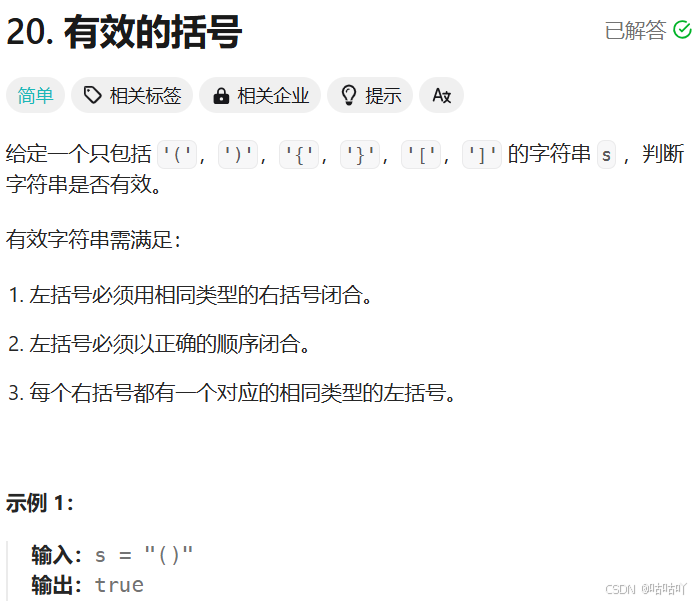
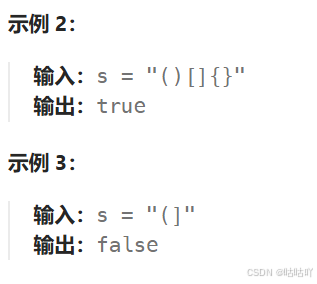
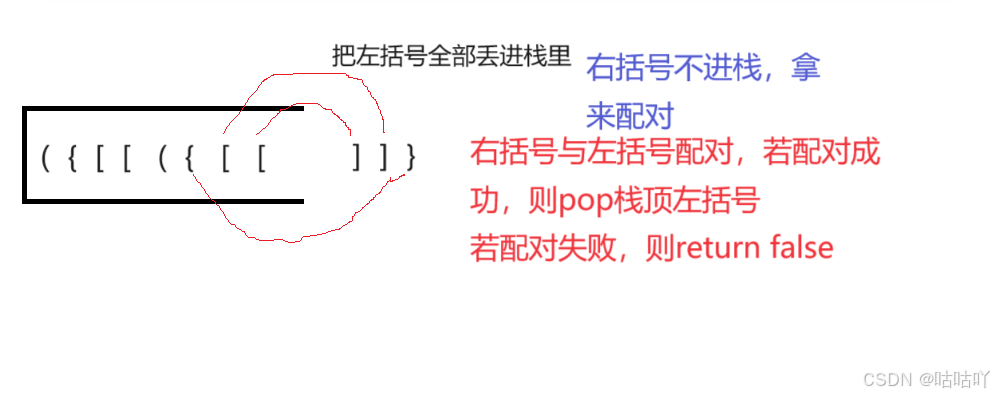
然后是代码实现
cpp
#include<stdio.h>
#include<stdlib.h>
#include<stdbool.h>
#include<assert.h>
typedef char STDataType;

typedef struct Stack {
	STDataType* a;
	int top;
	int capacity;
}ST;


void STInit(ST* pst)
{
	assert(pst);
	pst->a = NULL;
	pst->capacity = 0;
	pst->top = 0;
}

void STDestroy(ST* pst)
{
	assert(pst);
	free(pst->a);
	pst->a = NULL;
	pst->capacity = 0;
	pst->top = 0;
}

void STPush(ST* pst, STDataType x)
{
	assert(pst);
	if (pst->capacity == pst->top) {
		int newcapacity = pst->capacity == 0 ? 4 : pst->capacity * 2;
		ST* temp = (ST*)realloc(pst->a, newcapacity * sizeof(STDataType));//扩容扩的是数组,不是结构体
		if (temp == NULL) {
			perror("realloc fail");
			return;
		}
		pst->a = temp;
		pst->capacity = newcapacity;

	}
	pst->a[pst->top] = x;
	pst->top++;
}
void STPop(ST* pst)
{
	assert(pst);
	assert(pst->top > 0);
	pst->top--;
}

STDataType STTop(ST* pst) {
	assert(pst);
	return  pst->a[pst->top - 1];
}

int STSize(ST* pst)
{
	assert(pst);
	return pst->top - 1;
}

bool STEmpty(ST* pst)
{
	assert(pst);
	return pst->top == 0;
}

bool isValid(char* s) {
    ST st;
    STInit(&st);
    while(*s){
        if(*s=='('||*s=='{'||*s=='['){
            STPush(&st,*s);
        }
        else{
            if(STEmpty(&st)){
                return false;
            }
            char top=STTop(&st);
            STPop(&st);
            if((top=='('&&*s!=')')||(top=='{'&&*s!='}')||(top=='['&&*s!=']')){
                STDestroy(&st);
                return false;
            }
        }
        ++s;
    }
    bool ret=STEmpty(&st);
    STDestroy(&st);
    return ret;
}