
❤个人主页:
链表环结构
- 0.前言
- 1.环形链表(基础)
- 2.环形链表Ⅱ(中等)
- 3.证明相遇条件及结论
-
- [3.1 问题1特殊情况证明](#3.1 问题1特殊情况证明)
- [3.2 问题1普适性证明](#3.2 问题1普适性证明)

0.前言
在这篇博客中,我们将深入探讨链表环结构的检测方法:
Floyd算法的原理:如何通过快慢指针检测环?
环入口的定位:如何找到环的起点?
通过这篇博客,我会对链表中的环结构进行相关证明解释,总结学习。
1.环形链表(基础)
题目链接:https://leetcode.cn/problems/linked-list-cycle/description/
题目描述:

代码实现:
c
/**
 * Definition for singly-linked list.
 * struct ListNode {
 *     int val;
 *     struct ListNode *next;
 * };
 */

bool hasCycle(struct ListNode *head) {
    struct ListNode*slow,*fast;
    slow = fast = head;
    while(fast&&fast->next)
    {
        slow=slow->next;
        fast=fast->next->next;

          if(slow==fast)
             return true;
    }
    return false;
}
代码解释:
这个题目的实现逻辑比较简单,我们定义快慢指针来进行实现,fast指针每次走2步,slow指针每次走1步,当快指针和慢指针相遇的时候,如果链表中存在环,则返回 true 。否则,返回 false。
2.环形链表Ⅱ(中等)
题目链接:https://leetcode.cn/problems/linked-list-cycle-ii/description/
题目描述:
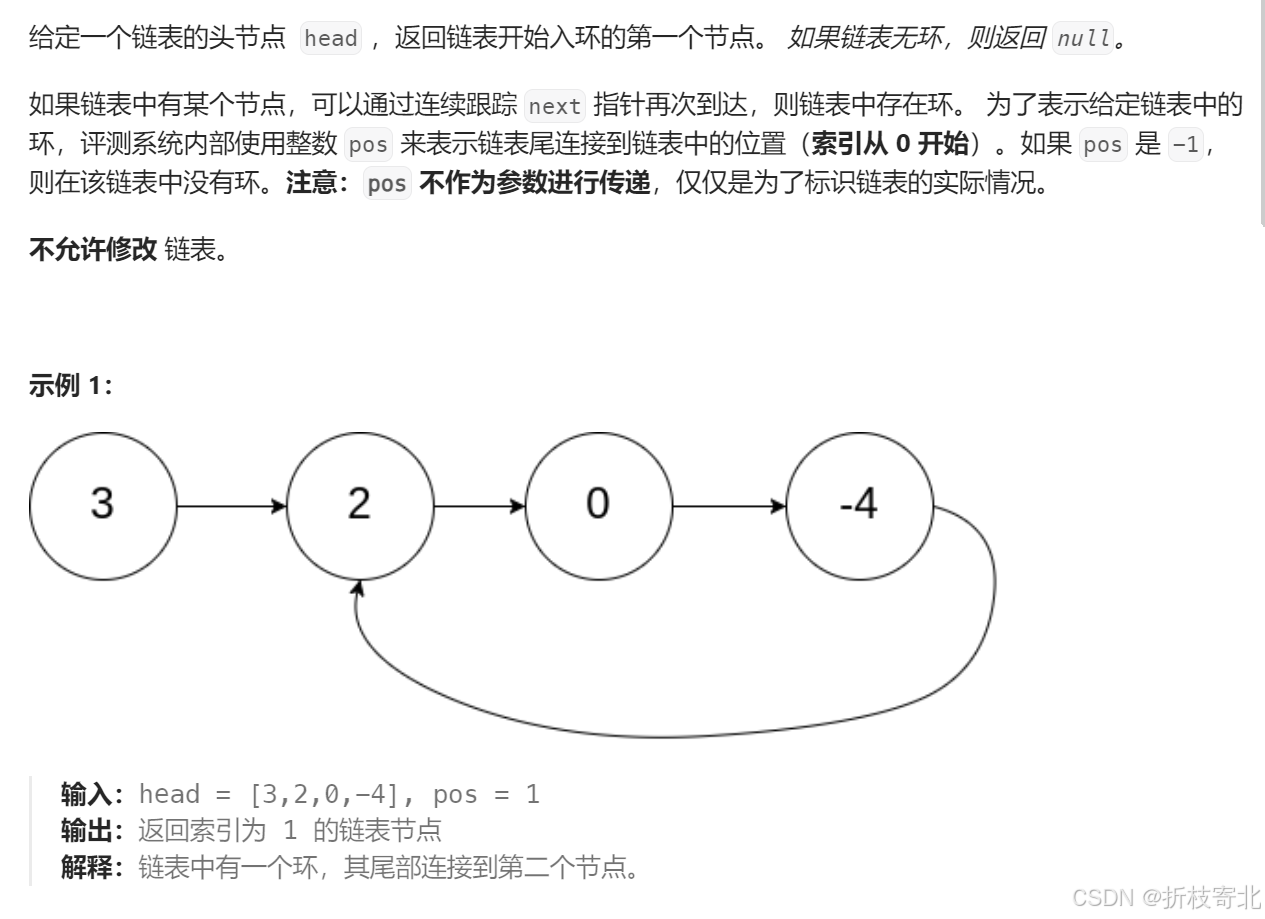
代码实现1:
c
struct ListNode* detectCycle(struct ListNode* head) {
    struct ListNode* fast;
    struct ListNode* slow;
    fast = slow = head;

    while (fast && fast->next)
    {
        //快慢指针依次走
        slow = slow->next;
        fast = fast->next->next;

        if (slow == fast)
        {
            struct ListNode* start = head;
            struct ListNode* meet = slow;
            while (meet != start)
            {
                meet = meet->next;
                start = start->next;
            }
            return meet;
        }
    }
    return NULL;
}
代码解释1:
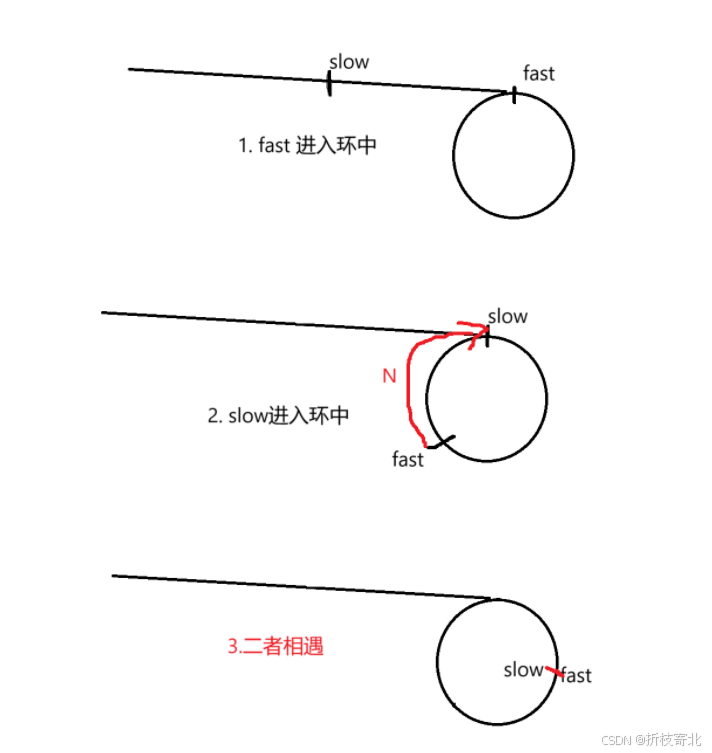
代码实现2:
c
/**
 * Definition for singly-linked list.
 * struct ListNode {
 *     int val;
 *     struct ListNode *next;
 * };
 */
struct ListNode *getIntersectionNode(struct ListNode *headA, struct ListNode *headB)
{
    struct ListNode* tailA=headA,*tailB=headB;
    int lenA=1,lenB=1;

    while(tailA)
    {
        tailA=tailA->next;
        ++lenA;
    }
    while(tailB)
    {
        tailB=tailB->next;
        ++lenB;
    }

    int gap=abs(lenA-lenB);
    struct ListNode* longlist=headA,*shortList=headB;

    if(lenA<lenB)
    {
        longlist=headB;
        shortList=headA;
    }

    while(gap--)
    {
        longlist=longlist->next;
    }

    while(longlist!=shortList)
    {
        longlist=longlist->next;
        shortList=shortList->next;
    }
    return longlist;

}

struct ListNode *detectCycle(struct ListNode *head) {
    struct ListNode* fast;
    struct ListNode* slow;
    fast=slow=head;

    while(fast&&fast->next)
    {
        //快慢指针依次走
        slow=slow->next;
        fast=fast->next->next;

        if(slow==fast)
        {
            //转换成求交点
            struct ListNode* meet=slow;
            struct ListNode* lt1=meet->next;
            struct ListNode* lt2=head;
            meet->next=NULL;
            return getIntersectionNode(lt1,lt2);
        }
    }
    return NULL;
}
代码解释2:
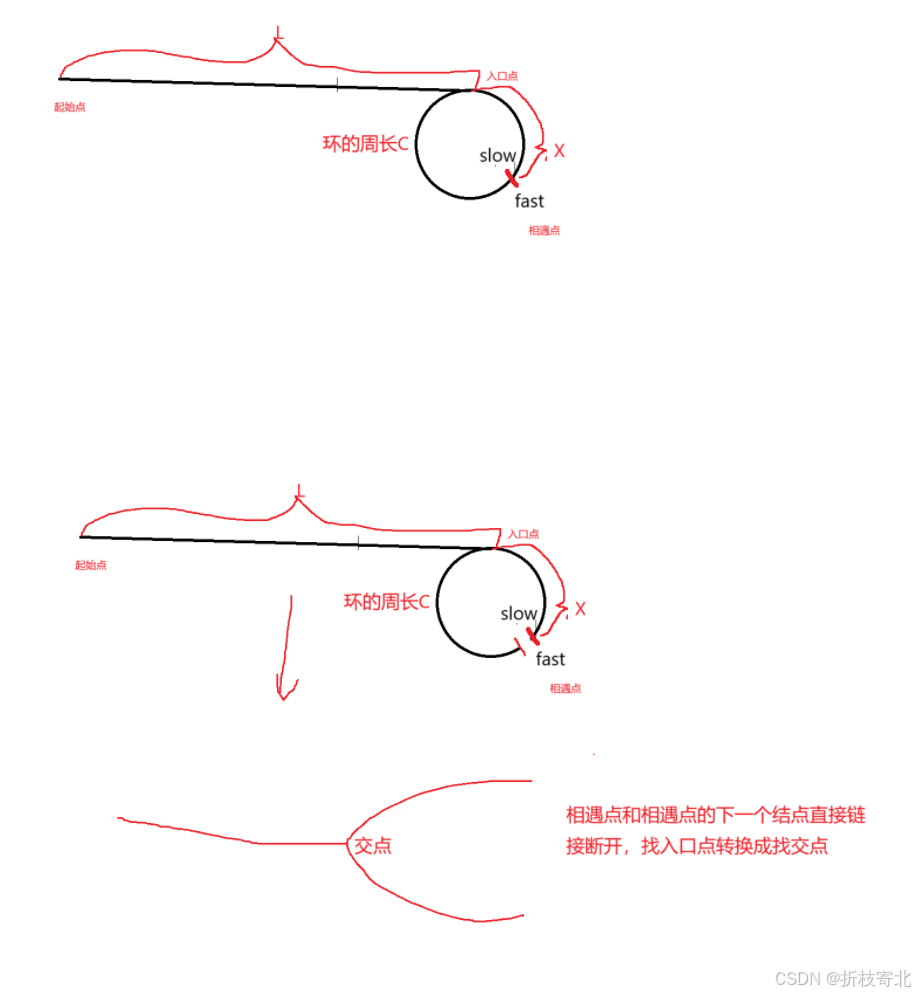
3.证明相遇条件及结论
3.1 问题1特殊情况证明
问题1: 为什么slow走1步,fast走2步,他们会相遇吗?会不会错过?请证明
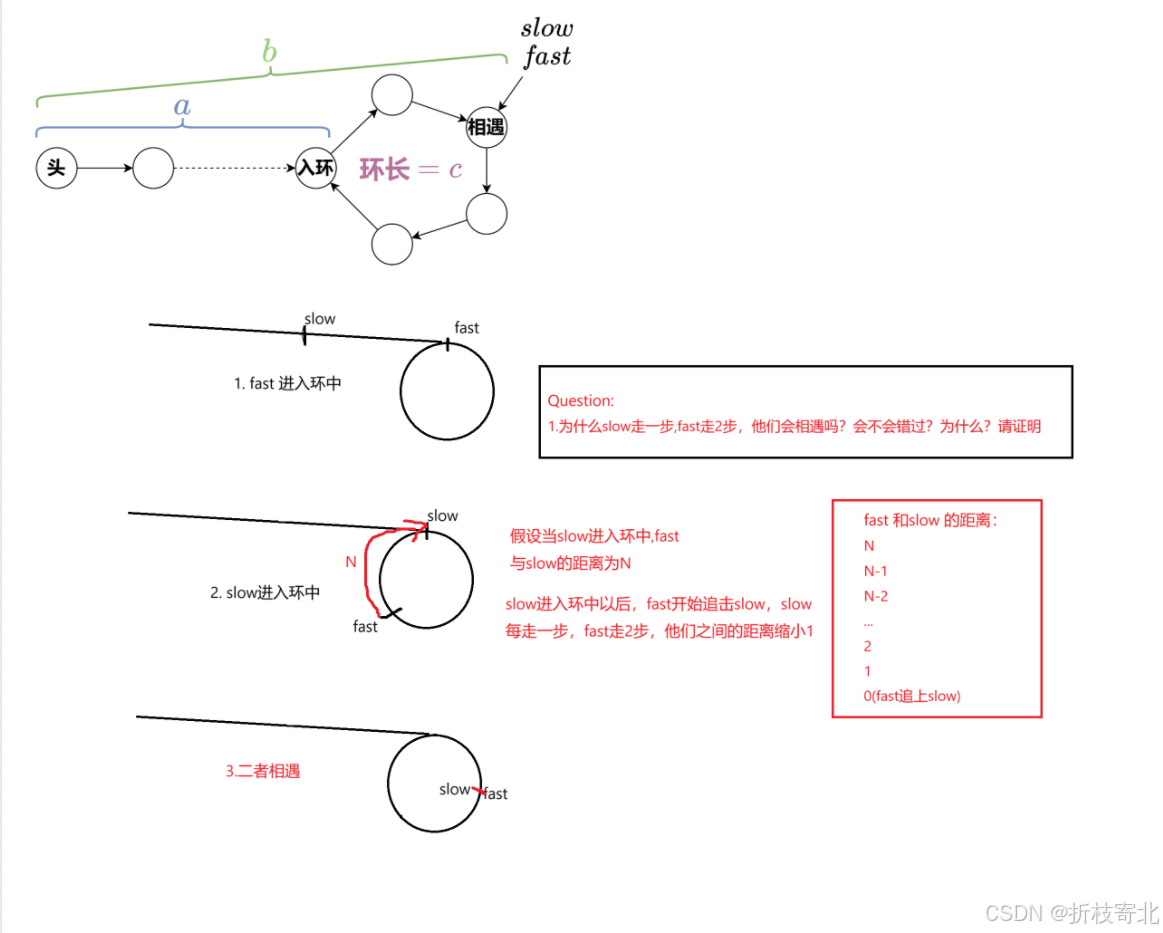
3.2 问题1普适性证明
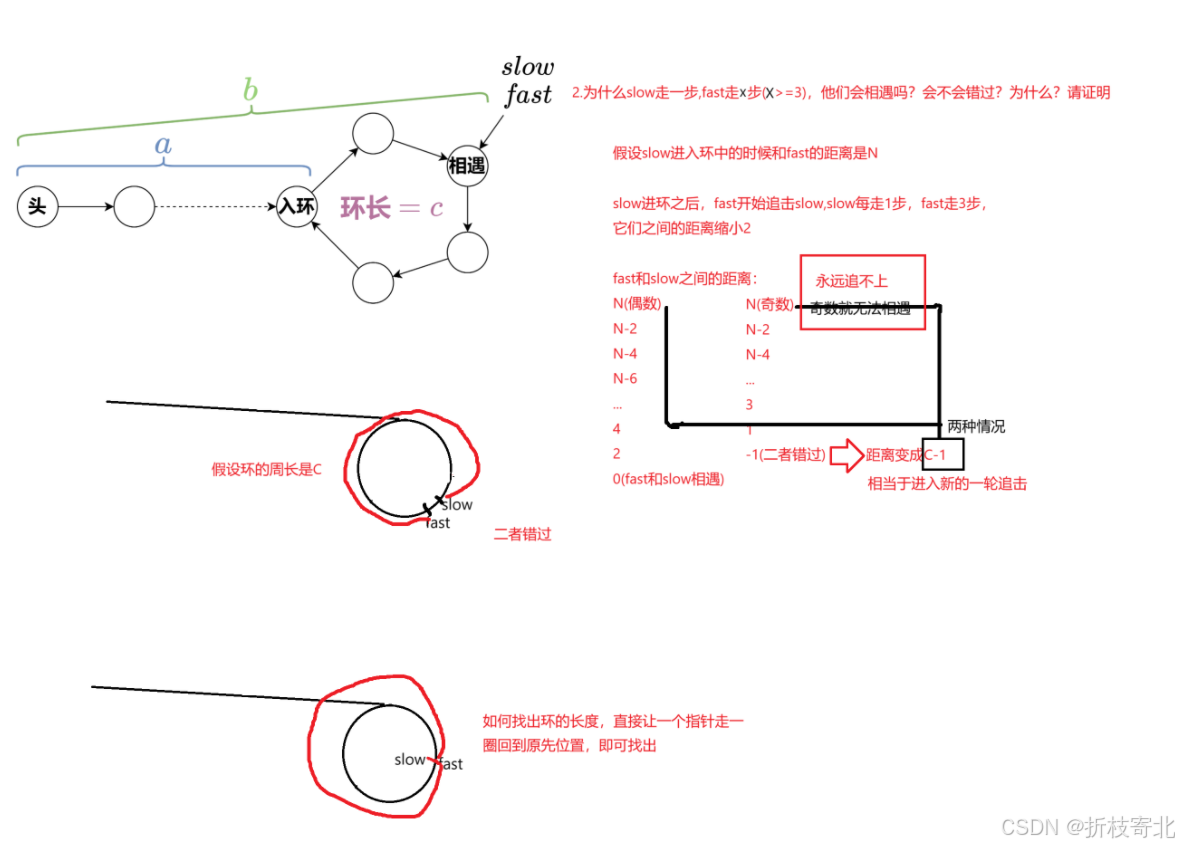
问题:为什么slow走1步,fast走3步(x>=3),他们会相遇吗?会不会错过?请证明
感谢您的阅读支持!!!
后续会持续更新的!!!
文末投票支持一下!!!
