NVIDIA RTX PC开源AI工具升级:加速LLM和扩散模型的性能革命
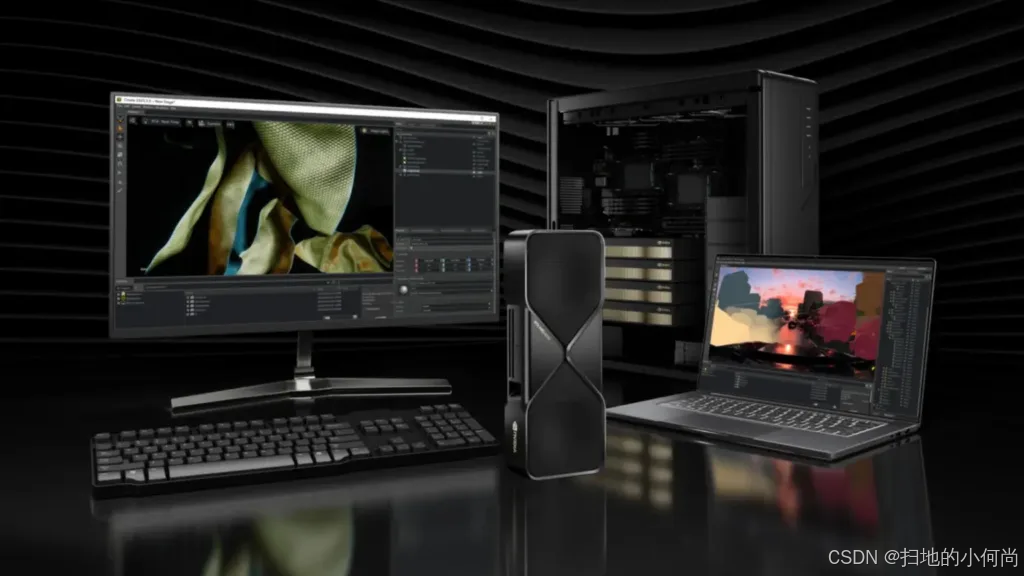
在人工智能快速发展的今天,PC端的AI开发活动正在经历爆炸式增长。这一趋势的驱动力来自于小型语言模型(SLMs)和扩散模型质量的显著提升,如FLUX.2、GPT-OSS-20B和Nemotron 3 Nano等模型的出现。与此同时,ComfyUI、llama.cpp、Ollama和Unsloth等AI PC框架也在不断进行功能升级,其受欢迎程度在过去一年中翻了一番,使用PC级模型的开发者数量更是增长了十倍。开发者们不再仅仅是在实验生成式AI工作流,而是在NVIDIA GPU上构建下一代软件栈,从数据中心延伸到NVIDIA RTX AI PC。
在CES 2026大会上,NVIDIA宣布了针对AI PC开发者生态系统的多项重要更新,涵盖了从底层框架优化到高层应用工具的全方位升级。本文将深入探讨这些开源工具的最新性能提升,并提供详细的代码示例,帮助开发者充分利用NVIDIA RTX平台的强大算力。
一、ComfyUI的持续性能改进:扩散模型加速的新里程碑
ComfyUI作为扩散模型领域最受欢迎的开源框架之一,在NVIDIA的协作下实现了显著的性能突破。通过PyTorch-CUDA的深度优化,ComfyUI现已支持NVFP4和FP8量化格式,这些量化格式分别实现了60%和40%的显存节省,同时大幅提升了推理性能。开发者使用NVFP4格式可获得平均3倍的性能提升,使用NVFP8格式则可获得2倍的性能提升。
1.1 ComfyUI核心优化特性详解
ComfyUI的最新更新包含了多项关键优化技术,每一项都针对扩散模型推理的特定瓶颈进行了精准优化。
NVFP4支持:线性层可以使用NVFP4格式运行,配合优化的内核实现,相比FP16和BF16线性层可提供3-4倍的吞吐量提升。这一优化特别适合大规模扩散Transformer模型。
融合FP8量化/反量化内核:通过消除内存带宽受限的操作,这些融合内核显著提升了模型性能。对于没有第四代Tensor Core的NVIDIA RTX GPU(Ada架构之前),FP8工作负载的性能得到了进一步改善。
权重流式传输:利用并发的系统内存和CPU计算流,权重流式传输技术可以隐藏内存延迟并提高吞吐量,特别适合VRAM有限的GPU。
混合精度支持:模型可以在单个网络中组合多种数值格式,实现精细化调优以获得最佳的准确性和性能平衡。
RMS和RoPE融合:扩散Transformer中常见的内存带宽受限算子被融合,减少了内存使用和延迟。这一优化惠及所有数据类型的DiT模型。
1.2 ComfyUI NVFP4量化工作流代码示例
下面展示如何在ComfyUI中使用NVFP4量化格式加载和运行扩散模型:
python
import torch
import comfy.model_management as mm
from comfy.sd import load_checkpoint_guess_config
import comfy.utils

# 配置NVFP4量化参数
# enable_nvfp4: 启用NVFP4量化格式
# nvfp4_linear_only: 仅对线性层应用NVFP4量化,保持其他层使用原始精度
quantization_config = {
    'enable_nvfp4': True,          # 启用NVFP4量化以获得3-4x性能提升
    'nvfp4_linear_only': True,     # 仅量化线性层,平衡性能和质量
    'fallback_dtype': torch.float16  # 非量化层的回退数据类型
}

# 加载预训练的扩散模型检查点
# 支持的模型包括:FLUX.2, FLUX.1-dev, FLUX.1-Kontext, Qwen-Image, Z-Image等
checkpoint_path = "/path/to/flux2_nvfp4.safetensors"

# load_checkpoint_guess_config会自动检测模型配置
# 并应用适当的量化设置
model, clip, vae, clip_vision = load_checkpoint_guess_config(
    checkpoint_path,
    output_vae=True,           # 同时加载VAE用于图像解码
    output_clip=True,          # 加载CLIP用于文本编码
    embedding_directory=None,  # 可选的嵌入目录
    quantization=quantization_config  # 应用NVFP4量化配置
)

# 将模型移动到GPU并设置为推理模式
device = mm.get_torch_device()  # 自动选择最佳GPU设备
model.to(device)
model.eval()  # 设置为评估模式,禁用dropout等训练特性

# 准备文本提示词
prompt_text = "A futuristic cityscape at sunset with flying cars"

# 使用CLIP编码文本提示词
# tokenize: 将文本转换为token序列
# encode_from_tokens: 将tokens编码为条件向量
tokens = clip.tokenize(prompt_text)
cond, pooled = clip.encode_from_tokens(tokens, return_pooled=True)

# 配置采样参数
# steps: 去噪步数,更多步数通常产生更高质量但更慢
# cfg: 分类器自由引导强度,控制提示词的影响力
# sampler_name: 采样器类型,如euler, dpmpp_2m等
sampling_params = {
    'steps': 20,              # 20步去噪,平衡质量和速度
    'cfg': 7.5,              # 标准的CFG强度
    'sampler_name': 'euler',  # Euler采样器,快速且稳定
    'scheduler': 'normal',    # 标准调度器
    'denoise': 1.0           # 完全去噪
}

# 生成初始噪声张量
# latent_image: 潜在空间的噪声,尺寸取决于目标分辨率
batch_size = 1
latent_height = 64  # 对应512像素高度(8倍下采样)
latent_width = 64   # 对应512像素宽度(8倍下采样)
latent_channels = 4  # VAE潜在空间通道数

latent_image = torch.randn(
    batch_size, latent_channels, latent_height, latent_width,
    device=device, dtype=torch.float16
)

# 执行去噪采样过程
# 使用NVFP4量化的模型进行推理,享受3-4x性能提升
print("开始使用NVFP4量化模型生成图像...")
with torch.inference_mode():  # 推理模式,进一步优化内存和速度
    # 这里的采样过程会自动利用NVFP4优化的线性层
    samples = comfy.sample.sample(
        model,
        noise=latent_image,
        positive=cond,
        negative=None,  # 可选的负面提示词
        cfg=sampling_params['cfg'],
        steps=sampling_params['steps'],
        sampler_name=sampling_params['sampler_name']
    )

    # 使用VAE解码潜在表示为图像
    # decode: 将潜在空间张量转换为RGB图像
    decoded_images = vae.decode(samples)

# 后处理:将张量转换为可保存的图像格式
# 从[-1, 1]范围转换到[0, 255]范围
images = (decoded_images + 1.0) / 2.0  # 归一化到[0, 1]
images = torch.clamp(images, 0, 1)     # 裁剪到有效范围
images = (images * 255).to(torch.uint8)  # 转换为8位整数

# 保存生成的图像
from PIL import Image
import numpy as np

for i, img_tensor in enumerate(images):
    # 转换张量格式:(C, H, W) -> (H, W, C)
    img_np = img_tensor.permute(1, 2, 0).cpu().numpy()
    img_pil = Image.fromarray(img_np)
    img_pil.save(f"output_nvfp4_{i}.png")
    print(f"图像已保存: output_nvfp4_{i}.png")

print("NVFP4量化推理完成!")
1.3 ComfyUI混合精度配置示例
混合精度支持允许在同一模型中组合多种数值格式,实现精细化的性能和质量平衡:
python
import torch
from comfy.model_patcher import ModelPatcher
import comfy.model_management as mm

# 定义混合精度策略
# 不同层使用不同的精度以优化性能和质量
mixed_precision_config = {
    # 注意力层使用FP16以保持质量
    'attention_layers': {
        'dtype': torch.float16,
        'quantize': False  # 不量化注意力层
    },
    # 线性层使用NVFP4以最大化性能
    'linear_layers': {
        'dtype': 'nvfp4',
        'quantize': True,
        'calibration': 'minmax'  # 使用min-max校准
    },
    # 卷积层使用FP8平衡性能和质量
    'conv_layers': {
        'dtype': 'fp8',
        'quantize': True,
        'calibration': 'histogram'  # 使用直方图校准
    },
    # 归一化层保持FP32以确保数值稳定性
    'norm_layers': {
        'dtype': torch.float32,
        'quantize': False
    }
}

def apply_mixed_precision(model, config):
    """
    应用混合精度配置到模型

    参数:
        model: ComfyUI模型对象
        config: 混合精度配置字典

    返回:
        patched_model: 应用混合精度后的模型
    """
    # 创建模型补丁器用于动态修改模型
    patcher = ModelPatcher(model)

    # 遍历模型的所有模块
    for name, module in model.named_modules():
        # 根据模块类型应用相应的精度配置
        if 'attn' in name.lower():
            # 注意力模块
            layer_config = config['attention_layers']
            if not layer_config['quantize']:
                # 转换为指定的浮点精度
                module.to(dtype=layer_config['dtype'])
                print(f"注意力层 {name} 使用 {layer_config['dtype']}")

        elif isinstance(module, torch.nn.Linear):
            # 线性层
            layer_config = config['linear_layers']
            if layer_config['quantize']:
                # 应用NVFP4量化
                if layer_config['dtype'] == 'nvfp4':
                    # 使用NVFP4量化线性层权重
                    quantize_linear_nvfp4(module, layer_config['calibration'])
                    print(f"线性层 {name} 量化为 NVFP4")

        elif isinstance(module, (torch.nn.Conv1d, torch.nn.Conv2d, torch.nn.Conv3d)):
            # 卷积层
            layer_config = config['conv_layers']
            if layer_config['quantize'] and layer_config['dtype'] == 'fp8':
                # 应用FP8量化
                quantize_conv_fp8(module, layer_config['calibration'])
                print(f"卷积层 {name} 量化为 FP8")

        elif isinstance(module, (torch.nn.LayerNorm, torch.nn.GroupNorm, torch.nn.BatchNorm2d)):
            # 归一化层
            layer_config = config['norm_layers']
            module.to(dtype=layer_config['dtype'])
            print(f"归一化层 {name} 使用 {layer_config['dtype']}")

    return patcher

def quantize_linear_nvfp4(linear_module, calibration='minmax'):
    """
    将线性层量化为NVFP4格式

    参数:
        linear_module: torch.nn.Linear模块
        calibration: 校准方法 ('minmax' 或 'histogram')
    """
    weight = linear_module.weight.data

    if calibration == 'minmax':
        # Min-Max校准:使用权重的最小值和最大值
        w_min = weight.min()
        w_max = weight.max()
        scale = (w_max - w_min) / 15.0  # NVFP4有16个量化级别(0-15)
        zero_point = -w_min / scale
    elif calibration == 'histogram':
        # 直方图校准:使用权重分布的百分位数
        w_min = torch.quantile(weight, 0.01)  # 1%百分位
        w_max = torch.quantile(weight, 0.99)  # 99%百分位
        scale = (w_max - w_min) / 15.0
        zero_point = -w_min / scale

    # 执行量化
    # 公式: q = round((w - zero_point) / scale)
    quantized = torch.round((weight - w_min) / scale).clamp(0, 15)

    # 存储量化参数
    linear_module.weight_scale = scale
    linear_module.weight_zero_point = zero_point
    linear_module.weight_quantized = quantized.to(torch.uint8)

    # 标记为NVFP4量化
    linear_module.quantization_type = 'nvfp4'

def quantize_conv_fp8(conv_module, calibration='histogram'):
    """
    将卷积层量化为FP8格式

    参数:
        conv_module: torch.nn.Conv模块
        calibration: 校准方法
    """
    weight = conv_module.weight.data

    # FP8量化使用动态范围缩放
    if calibration == 'histogram':
        # 基于直方图的动态范围确定
        abs_max = torch.quantile(weight.abs(), 0.99)
    else:
        # 简单的最大值方法
        abs_max = weight.abs().max()

    # FP8 E4M3格式的最大值约为448
    fp8_max = 448.0
    scale = fp8_max / abs_max

    # 量化到FP8范围
    quantized = (weight * scale).clamp(-fp8_max, fp8_max)

    # 存储量化参数
    conv_module.weight_scale = scale
    conv_module.weight_quantized = quantized
    conv_module.quantization_type = 'fp8'

# 使用示例
print("应用混合精度配置...")
patched_model = apply_mixed_precision(model, mixed_precision_config)
print("混合精度配置完成!")
1.4 ComfyUI权重流式传输优化
对于VRAM有限的GPU,权重流式传输技术可以显著提升性能:
python
import torch
import threading
from queue import Queue

class WeightStreamer:
    """
    权重流式传输管理器
    利用并发的系统内存和CPU计算流隐藏内存延迟
    """

    def __init__(self, model, device, stream_buffer_size=2):
        """
        初始化权重流式传输器

        参数:
            model: 要流式传输的模型
            device: 目标GPU设备
            stream_buffer_size: 流式缓冲区大小(层数)
        """
        self.model = model
        self.device = device
        self.stream_buffer_size = stream_buffer_size

        # 创建CUDA流用于异步传输
        self.compute_stream = torch.cuda.Stream(device=device)
        self.transfer_stream = torch.cuda.Stream(device=device)

        # 权重缓冲队列
        self.weight_queue = Queue(maxsize=stream_buffer_size)

        # 将模型权重保存在CPU内存中
        self.cpu_weights = {}
        for name, param in model.named_parameters():
            self.cpu_weights[name] = param.data.cpu().pin_memory()  # 使用固定内存加速传输
            param.data = torch.empty(0)  # 释放GPU内存

        print(f"权重流式传输器初始化完成,缓冲区大小: {stream_buffer_size}")

    def prefetch_weights(self, layer_names):
        """
        预取指定层的权重到GPU

        参数:
            layer_names: 要预取的层名称列表
        """
        def transfer_worker():
            for name in layer_names:
                if name in self.cpu_weights:
                    # 在传输流中异步传输权重
                    with torch.cuda.stream(self.transfer_stream):
                        gpu_weight = self.cpu_weights[name].to(
                            self.device,
                            non_blocking=True  # 非阻塞传输
                        )
                        self.weight_queue.put((name, gpu_weight))

        # 在后台线程中启动传输
        transfer_thread = threading.Thread(target=transfer_worker)
        transfer_thread.start()

    def get_weight(self, layer_name):
        """
        获取层权重(如果尚未加载则等待)

        参数:
            layer_name: 层名称

        返回:
            weight: GPU上的权重张量
        """
        # 从队列中获取预取的权重
        name, weight = self.weight_queue.get()

        # 确保传输完成
        self.transfer_stream.synchronize()

        return weight

    def forward_with_streaming(self, x, layer_sequence):
        """
        使用权重流式传输执行前向传播

        参数:
            x: 输入张量
            layer_sequence: 层序列(按执行顺序)

        返回:
            output: 输出张量
        """
        # 预取前几层的权重
        initial_layers = layer_sequence[:self.stream_buffer_size]
        self.prefetch_weights(initial_layers)

        output = x
        for i, layer in enumerate(layer_sequence):
            # 预取下一批权重
            if i + self.stream_buffer_size < len(layer_sequence):
                next_layer = layer_sequence[i + self.stream_buffer_size]
                self.prefetch_weights([next_layer])

            # 获取当前层权重
            weight = self.get_weight(layer.name)

            # 在计算流中执行层计算
            with torch.cuda.stream(self.compute_stream):
                # 临时恢复权重
                original_weight = layer.weight.data
                layer.weight.data = weight

                # 执行层计算
                output = layer(output)

                # 清理权重(可选,取决于内存策略)
                layer.weight.data = original_weight

            # 同步计算流
            self.compute_stream.synchronize()

        return output

# 使用权重流式传输的示例
print("初始化权重流式传输...")
streamer = WeightStreamer(
    model=model,
    device=device,
    stream_buffer_size=3  # 同时缓冲3层权重
)

# 定义层执行序列
layer_sequence = [
    model.input_blocks[0],
    model.input_blocks[1],
    model.middle_block,
    # ... 更多层
]

# 执行流式推理
print("使用权重流式传输执行推理...")
with torch.inference_mode():
    output = streamer.forward_with_streaming(latent_image, layer_sequence)
print("流式推理完成!")ComfyUI的这些优化代码示例可以在ComfyUI Kitchen仓库中找到。NVFP4和FP8检查点也已在HuggingFace上发布,包括最新的LTX-2、FLUX.2、FLUX.1-dev、FLUX.1-Kontext、Qwen-Image和Z-Image模型。
二、llama.cpp和Ollama的RTX AI PC加速
对于小型语言模型(SLMs),混合专家(MoE)模型的token生成吞吐量性能在NVIDIA GPU上的llama.cpp中提升了35%,在RTX PC上的Ollama中提升了30%。

2.1 llama.cpp核心优化详解
llama.cpp的最新更新包含了多项针对NVIDIA RTX GPU的关键优化:
GPU token采样:将多种采样算法(TopK、TopP、Temperature、minK、minP和多序列采样)卸载到GPU,提高响应的质量、一致性和准确性,同时提升性能。
QKV投影并发 :支持运行并发CUDA流以加速模型推理。使用GGML_CUDA_GRAPH_OPT=1标志启用此功能。
MMVQ内核优化:将数据预加载到寄存器并通过增加GPU在其他任务上的利用率来隐藏延迟,从而加速内核。
更快的模型加载时间:在DGX Spark上模型加载时间提升高达65%,在RTX GPU上提升15%。
Blackwell GPU原生MXFP4支持:在Blackwell GPU上使用硬件级NVFP4第五代Tensor Core,LLM的提示处理速度提升高达25%。
2.2 llama.cpp GPU Token采样完整示例
下面展示如何在llama.cpp中启用GPU token采样以获得更好的性能和质量:
cpp
#include "llama.h"
#include "common.h"
#include <vector>
#include <string>
#include <iostream>

// GPU Token采样配置结构
struct GPUSamplingConfig {
    // TopK采样:从概率最高的K个token中采样
    int top_k = 40;              // K值,0表示禁用

    // TopP采样(核采样):从累积概率达到P的最小token集合中采样
    float top_p = 0.95f;         // P值,1.0表示禁用

    // Temperature采样:控制分布的随机性
    float temperature = 0.8f;    // 温度值,1.0为原始分布,<1更确定,>1更随机

    // MinK采样:确保至少考虑K个token
    int min_k = 1;               // 最小K值

    // MinP采样:只考虑概率大于P*max_prob的token
    float min_p = 0.05f;         // 最小概率阈值

    // 重复惩罚:降低已生成token的概率
    float repeat_penalty = 1.1f; // 惩罚系数,1.0表示无惩罚
    int repeat_last_n = 64;      // 考虑最近N个token进行惩罚

    // GPU采样开关
    bool use_gpu_sampling = true;  // 启用GPU采样以获得更好的性能

    // 批处理大小(用于多序列采样)
    int n_batch = 512;           // 批处理token数量
    int n_parallel = 4;          // 并行序列数量
};

// 初始化llama.cpp上下文并启用GPU采样
class LlamaCppGPUSampler {
private:
    llama_model* model;
    llama_context* ctx;
    GPUSamplingConfig config;

public:
    LlamaCppGPUSampler(const std::string& model_path, const GPUSamplingConfig& cfg)
        : config(cfg) {

        // 设置模型参数
        llama_model_params model_params = llama_model_default_params();
        model_params.n_gpu_layers = 99;  // 将所有层卸载到GPU
        model_params.use_mmap = true;    // 使用内存映射加速加载
        model_params.use_mlock = false;  // 不锁定内存(允许交换)

        // 加载模型
        std::cout << "加载模型: " << model_path << std::endl;
        model = llama_load_model_from_file(model_path.c_str(), model_params);
        if (!model) {
            throw std::runtime_error("无法加载模型");
        }

        // 设置上下文参数
        llama_context_params ctx_params = llama_context_default_params();
        ctx_params.n_ctx = 4096;              // 上下文窗口大小
        ctx_params.n_batch = config.n_batch;  // 批处理大小
        ctx_params.n_parallel = config.n_parallel;  // 并行序列数
        ctx_params.n_threads = 8;             // CPU线程数
        ctx_params.n_threads_batch = 8;       // 批处理线程数

        // 关键:启用GPU采样
        ctx_params.offload_kqv = true;        // 将KQV卸载到GPU
        ctx_params.flash_attn = true;         // 启用Flash Attention

        // 创建上下文
        std::cout << "创建上下文(启用GPU采样)..." << std::endl;
        ctx = llama_new_context_with_model(model, ctx_params);
        if (!ctx) {
            llama_free_model(model);
            throw std::runtime_error("无法创建上下文");
        }

        std::cout << "GPU采样初始化完成!" << std::endl;
    }

    ~LlamaCppGPUSampler() {
        if (ctx) llama_free(ctx);
        if (model) llama_free_model(model);
    }

    // 使用GPU采样生成文本
    std::string generate(const std::string& prompt, int max_tokens = 512) {
        // 对提示词进行分词
        std::vector<llama_token> tokens;
        tokens.resize(prompt.size() + 1);
        int n_tokens = llama_tokenize(
            model,
            prompt.c_str(),
            prompt.size(),
            tokens.data(),
            tokens.size(),
            true,   // add_bos: 添加序列开始标记
            false   // special: 不解析特殊token
        );
        tokens.resize(n_tokens);

        std::cout << "提示词token数: " << n_tokens << std::endl;

        // 准备批处理
        llama_batch batch = llama_batch_init(config.n_batch, 0, config.n_parallel);

        // 添加提示词token到批处理
        for (size_t i = 0; i < tokens.size(); i++) {
            llama_batch_add(batch, tokens[i], i, {0}, false);
        }

        // 最后一个token需要生成logits
        batch.logits[batch.n_tokens - 1] = true;

        // 评估提示词
        if (llama_decode(ctx, batch) != 0) {
            llama_batch_free(batch);
            throw std::runtime_error("llama_decode失败");
        }

        // 生成循环
        std::string generated_text;
        int n_cur = batch.n_tokens;
        int n_decode = 0;

        std::cout << "开始生成(使用GPU采样)..." << std::endl;

        while (n_decode < max_tokens) {
            // 获取logits(已在GPU上)
            float* logits = llama_get_logits_ith(ctx, batch.n_tokens - 1);
            int n_vocab = llama_n_vocab(model);

            // 在GPU上执行采样
            llama_token new_token = sample_token_gpu(logits, n_vocab);

            // 检查是否为结束标记
            if (new_token == llama_token_eos(model)) {
                std::cout << "\n遇到EOS标记,生成结束" << std::endl;
                break;
            }

            // 将token转换为文本
            char buf[256];
            int n = llama_token_to_piece(model, new_token, buf, sizeof(buf));
            if (n > 0) {
                generated_text.append(buf, n);
                std::cout << std::string(buf, n) << std::flush;
            }

            // 准备下一次解码
            llama_batch_clear(batch);
            llama_batch_add(batch, new_token, n_cur, {0}, true);

            n_cur++;
            n_decode++;

            // 解码下一个token
            if (llama_decode(ctx, batch) != 0) {
                std::cout << "\nllama_decode失败" << std::endl;
                break;
            }
        }

        llama_batch_free(batch);
        std::cout << "\n生成完成!总共生成 " << n_decode << " 个token" << std::endl;

        return generated_text;
    }

private:
    // 在GPU上执行token采样
    llama_token sample_token_gpu(float* logits, int n_vocab) {
        // 创建采样候选数组
        std::vector<llama_token_data> candidates;
        candidates.reserve(n_vocab);

        for (int i = 0; i < n_vocab; i++) {
            candidates.push_back({i, logits[i], 0.0f});
        }

        llama_token_data_array candidates_p = {
            candidates.data(),
            candidates.size(),
            false  // sorted: 尚未排序
        };

        // 应用重复惩罚(在GPU上执行)
        if (config.repeat_penalty != 1.0f) {
            // 获取最近的token用于惩罚
            std::vector<llama_token> last_tokens(config.repeat_last_n);
            // ... 填充last_tokens ...

            llama_sample_repetition_penalties(
                ctx,
                &candidates_p,
                last_tokens.data(),
                last_tokens.size(),
                config.repeat_penalty,  // repeat_penalty
                0.0f,                   // alpha_frequency
                0.0f                    // alpha_presence
            );
        }

        // 应用Temperature(在GPU上执行)
        if (config.temperature != 1.0f) {
            llama_sample_temp(ctx, &candidates_p, config.temperature);
        }

        // 应用MinP过滤(在GPU上执行)
        if (config.min_p > 0.0f) {
            llama_sample_min_p(ctx, &candidates_p, config.min_p, config.min_k);
        }

        // 应用TopK采样(在GPU上执行)
        if (config.top_k > 0) {
            llama_sample_top_k(ctx, &candidates_p, config.top_k, config.min_k);
        }

        // 应用TopP采样(在GPU上执行)
        if (config.top_p < 1.0f) {
            llama_sample_top_p(ctx, &candidates_p, config.top_p, config.min_k);
        }

        // 从候选中采样token(在GPU上执行)
        llama_token token = llama_sample_token(ctx, &candidates_p);

        return token;
    }
};

// 主函数示例
int main() {
    // 配置GPU采样参数
    GPUSamplingConfig config;
    config.top_k = 40;
    config.top_p = 0.95f;
    config.temperature = 0.8f;
    config.repeat_penalty = 1.1f;
    config.use_gpu_sampling = true;  // 启用GPU采样

    try {
        // 初始化采样器
        // 支持的模型:Nemotron Nano V2, Qwen 3 30B, GPT-OSS-20B等
        LlamaCppGPUSampler sampler(
            "/path/to/nemotron-nano-v2-q4_k_m.gguf",
            config
        );

        // 生成文本
        std::string prompt = "Explain quantum computing in simple terms:";
        std::string generated = sampler.generate(prompt, 512);

        std::cout << "\n\n=== 完整生成结果 ===" << std::endl;
        std::cout << prompt << generated << std::endl;

    } catch (const std::exception& e) {
        std::cerr << "错误: " << e.what() << std::endl;
        return 1;
    }

    return 0;
}
2.3 llama.cpp CUDA图优化和QKV并发
使用CUDA图和QKV并发可以进一步提升性能:
bash
#!/bin/bash

# llama.cpp编译脚本(启用CUDA图优化和QKV并发)

# 设置环境变量以启用优化特性
export GGML_CUDA_GRAPH_OPT=1        # 启用CUDA图优化
export GGML_CUDA_FA_ALL_QUANTS=1    # 对所有量化格式启用Flash Attention
export CUDA_LAUNCH_BLOCKING=0       # 允许异步CUDA操作

# 编译llama.cpp(启用CUDA和优化)
cd /path/to/llama.cpp
mkdir -p build && cd build

cmake .. \
    -DLLAMA_CUBLAS=ON \              # 启用CUDA支持
    -DLLAMA_CUDA_FA=ON \             # 启用Flash Attention
    -DLLAMA_CUDA_GRAPHS=ON \         # 启用CUDA图
    -DLLAMA_CUDA_PEER_MAX_BATCH_SIZE=128 \  # 设置对等传输批大小
    -DCMAKE_BUILD_TYPE=Release       # 发布模式

make -j$(nproc)

echo "llama.cpp编译完成(已启用CUDA图和QKV并发)"

# 运行推理(使用优化标志)
./bin/main \
    -m /path/to/model.gguf \
    -p "Explain the theory of relativity:" \
    -n 512 \
    --n-gpu-layers 99 \              # 将所有层卸载到GPU
    --batch-size 512 \               # 批处理大小
    --ctx-size 4096 \                # 上下文大小
    --threads 8 \                    # CPU线程数
    --backend-sampling \             # 启用后端采样(GPU采样)
    --flash-attn \                   # 启用Flash Attention
    --temp 0.8 \                     # 温度
    --top-k 40 \                     # TopK
    --top-p 0.95 \                   # TopP
    --repeat-penalty 1.1             # 重复惩罚
Python绑定示例:
python
import os
import ctypes
from llama_cpp import Llama

# 设置环境变量以启用CUDA图优化
os.environ['GGML_CUDA_GRAPH_OPT'] = '1'
os.environ['GGML_CUDA_FA_ALL_QUANTS'] = '1'

# 初始化llama.cpp(启用所有优化)
llm = Llama(
    model_path="/path/to/nemotron-nano-v2-q4_k_m.gguf",
    n_gpu_layers=99,        # 将所有层卸载到GPU
    n_ctx=4096,             # 上下文窗口大小
    n_batch=512,            # 批处理大小
    n_threads=8,            # CPU线程数
    use_mmap=True,          # 使用内存映射
    use_mlock=False,        # 不锁定内存
    # 启用Flash Attention和CUDA图
    flash_attn=True,        # Flash Attention
    offload_kqv=True,       # 将KQV卸载到GPU
    # GPU采样配置
    logits_all=False,       # 只计算最后一个token的logits
    vocab_only=False,       # 加载完整模型
    verbose=True            # 显示详细信息
)

print("llama.cpp初始化完成(已启用CUDA图和QKV并发)")

# 生成文本(使用GPU采样)
prompt = """You are a helpful AI assistant. Answer the following question:

Question: What are the key differences between quantum computing and classical computing?

Answer:"""

print("开始生成(使用GPU采样和CUDA图优化)...")

# 使用流式生成以获得更好的用户体验
output = llm(
    prompt,
    max_tokens=512,         # 最大生成token数
    temperature=0.8,        # 温度
    top_k=40,              # TopK采样
    top_p=0.95,            # TopP采样
    repeat_penalty=1.1,    # 重复惩罚
    stop=["Question:", "\n\n"],  # 停止序列
    stream=True            # 启用流式输出
)

# 打印流式输出
full_response = ""
for chunk in output:
    text = chunk['choices'][0]['text']
    print(text, end='', flush=True)
    full_response += text

print("\n\n生成完成!")

# 性能统计
print(f"\n性能统计:")
print(f"- 提示词token数: {chunk['usage']['prompt_tokens']}")
print(f"- 生成token数: {chunk['usage']['completion_tokens']}")
print(f"- 总token数: {chunk['usage']['total_tokens']}")
2.4 Ollama优化配置示例
Ollama的最新更新包括Flash Attention、改进的内存管理和LogProbs API:
python
import requests
import json

# Ollama API端点
OLLAMA_API = "http://localhost:11434/api"

# 配置Ollama以使用Flash Attention和优化的内存管理
def configure_ollama_optimizations():
    """
    配置Ollama以启用所有性能优化
    """
    # Ollama配置文件路径(根据操作系统不同)
    # Linux: ~/.ollama/config.json
    # Windows: %USERPROFILE%\.ollama\config.json

    config = {
        # Flash Attention配置(默认启用)
        "flash_attention": {
            "enabled": True,           # 启用Flash Attention
            "tile_size": 128,          # 瓦片大小,影响内存和性能平衡
            "use_cuda_graphs": True    # 使用CUDA图优化
        },

        # 内存管理配置
        "memory": {
            "gpu_memory_fraction": 0.9,  # 分配90%的GPU内存给Ollama
            "enable_unified_memory": True,  # 启用统一内存(GPU+CPU)
            "offload_layers": "auto"     # 自动决定层卸载策略
        },

        # 性能优化
        "performance": {
            "num_parallel": 4,           # 并行请求数
            "num_thread": 8,             # CPU线程数
            "batch_size": 512,           # 批处理大小
            "use_mmap": True             # 使用内存映射
        },

        # GGML库优化
        "ggml": {
            "cuda_graph_opt": True,      # CUDA图优化
            "fa_all_quants": True        # 对所有量化格式启用FA
        }
    }

    print("Ollama优化配置:")
    print(json.dumps(config, indent=2))
    return config

# 使用LogProbs API进行高级采样
def generate_with_logprobs(prompt, model="nemotron-nano:latest"):
    """
    使用Ollama的LogProbs API生成文本
    LogProbs可用于分类、困惑度计算和自我评估

    参数:
        prompt: 输入提示词
        model: 模型名称

    返回:
        response: 包含生成文本和logprobs的响应
    """
    url = f"{OLLAMA_API}/generate"

    payload = {
        "model": model,
        "prompt": prompt,
        "stream": False,  # 非流式以获取完整logprobs

        # 采样参数
        "options": {
            "temperature": 0.8,
            "top_k": 40,
            "top_p": 0.95,
            "repeat_penalty": 1.1,
            "num_predict": 512,  # 最大生成token数

            # 启用LogProbs
            "num_ctx": 4096,     # 上下文大小
            "num_batch": 512,    # 批处理大小
            "num_gpu": 99,       # GPU层数
            "num_thread": 8,     # CPU线程数

            # Flash Attention(默认启用)
            "flash_attn": True,

            # 返回logprobs
            "logprobs": True,    # 启用logprobs返回
            "top_logprobs": 5    # 返回前5个token的logprobs
        }
    }

    print(f"发送请求到Ollama API...")
    response = requests.post(url, json=payload)

    if response.status_code == 200:
        result = response.json()
        return result
    else:
        raise Exception(f"API请求失败: {response.status_code} - {response.text}")

# 使用LogProbs进行文本分类
def classify_with_logprobs(text, categories, model="nemotron-nano:latest"):
    """
    使用LogProbs进行零样本文本分类

    参数:
        text: 要分类的文本
        categories: 类别列表
        model: 模型名称

    返回:
        classification: 分类结果和置信度
    """
    # 构建分类提示词
    prompt = f"""Classify the following text into one of these categories: {', '.join(categories)}

Text: {text}

Category:"""

    # 生成并获取logprobs
    result = generate_with_logprobs(prompt, model)

    # 提取生成的类别和logprobs
    generated_text = result['response'].strip()

    # 如果API返回了logprobs,计算每个类别的概率
    if 'logprobs' in result:
        logprobs = result['logprobs']

        # 找到与类别匹配的token
        category_probs = {}
        for category in categories:
            # 计算类别的对数概率
            category_lower = category.lower()
            if category_lower in generated_text.lower():
                # 从logprobs中提取概率
                prob = 0.0
                if 'token_logprobs' in logprobs:
                    # 计算平均对数概率
                    token_logprobs = logprobs['token_logprobs']
                    if len(token_logprobs) > 0:
                        prob = sum(token_logprobs) / len(token_logprobs)

                category_probs[category] = prob

        # 找到概率最高的类别
        if category_probs:
            best_category = max(category_probs, key=category_probs.get)
            confidence = category_probs[best_category]
        else:
            best_category = generated_text
            confidence = 0.0
    else:
        best_category = generated_text
        confidence = 0.0

    return {
        'category': best_category,
        'confidence': confidence,
        'all_probabilities': category_probs if 'logprobs' in result else {}
    }

# 计算困惑度(Perplexity)
def calculate_perplexity(text, model="nemotron-nano:latest"):
    """
    使用LogProbs计算文本的困惑度
    困惑度是语言模型质量的重要指标

    参数:
        text: 输入文本
        model: 模型名称

    返回:
        perplexity: 困惑度值
    """
    import math

    # 使用模型评估文本
    result = generate_with_logprobs(text, model)

    if 'logprobs' in result and 'token_logprobs' in result['logprobs']:
        token_logprobs = result['logprobs']['token_logprobs']

        # 计算平均负对数似然
        avg_neg_log_likelihood = -sum(token_logprobs) / len(token_logprobs)

        # 困惑度 = exp(平均负对数似然)
        perplexity = math.exp(avg_neg_log_likelihood)

        return {
            'perplexity': perplexity,
            'avg_log_likelihood': -avg_neg_log_likelihood,
            'num_tokens': len(token_logprobs)
        }
    else:
        return {'perplexity': None, 'error': 'LogProbs not available'}

# 主函数示例
if __name__ == "__main__":
    # 配置优化
    print("=== 配置Ollama优化 ===")
    config = configure_ollama_optimizations()

    # 示例1:基本生成
    print("\n=== 示例1:基本文本生成 ===")
    prompt = "Explain the concept of machine learning in simple terms:"
    result = generate_with_logprobs(prompt)
    print(f"生成结果: {result['response']}")

    # 示例2:文本分类
    print("\n=== 示例2:使用LogProbs进行文本分类 ===")
    text_to_classify = "The stock market reached new highs today as investors reacted positively to economic data."
    categories = ["Technology", "Finance", "Sports", "Politics", "Entertainment"]
    classification = classify_with_logprobs(text_to_classify, categories)
    print(f"分类结果: {classification['category']}")
    print(f"置信度: {classification['confidence']:.4f}")
    print(f"所有概率: {classification['all_probabilities']}")

    # 示例3:困惑度计算
    print("\n=== 示例3:计算文本困惑度 ===")
    sample_text = "The quick brown fox jumps over the lazy dog."
    perplexity_result = calculate_perplexity(sample_text)
    print(f"困惑度: {perplexity_result['perplexity']:.2f}")
    print(f"平均对数似然: {perplexity_result['avg_log_likelihood']:.4f}")
print(f"Token数: {perplexity_result['num_tokens']}")可以通过访问llama.cpp仓库和Ollama仓库来获取最新的优化代码,并在LM Studio或Ollama App等应用中进行测试。
三、LTX-2高级音视频模型:RTX AI PC上的云级性能
NVIDIA与Lightricks合作发布了LTX-2模型权重,这是一个先进的音视频模型,可以与云端模型竞争,并且可以在RTX AI PC或DGX Spark上运行。这是一个开放的、生产就绪的音视频基础模型,可生成长达20秒的同步AV内容,分辨率高达4K,帧率可达50fps,并为开发者、研究人员和工作室提供多模态控制以实现高扩展性。

模型权重提供BF16和NVFP8两种格式。量化检查点实现了30%的内存减少,使模型能够在RTX GPU和DGX Spark上高效运行。
3.1 LTX-2音视频生成完整示例
下面展示如何使用LTX-2模型生成高质量的音视频内容:
python
import torch
import torchaudio
import torchvision
from diffusers import DiffusionPipeline
from transformers import CLIPTextModel, CLIPTokenizer
import numpy as np
from PIL import Image

class LTX2AudioVideoGenerator:
    """
    LTX-2音视频生成器
    支持4K分辨率、50fps帧率和多模态控制
    """

    def __init__(self, model_path, use_fp8=True, device="cuda"):
        """
        初始化LTX-2生成器

        参数:
            model_path: 模型路径(BF16或NVFP8格式)
            use_fp8: 是否使用FP8量化(节省30%内存)
            device: 计算设备
        """
        self.device = device
        self.use_fp8 = use_fp8

        print(f"加载LTX-2模型({'NVFP8' if use_fp8 else 'BF16'}格式)...")

        # 加载LTX-2管道
        # LTX-2是一个音视频联合生成模型
        self.pipeline = DiffusionPipeline.from_pretrained(
            model_path,
            torch_dtype=torch.float8_e4m3fn if use_fp8 else torch.bfloat16,
            variant="fp8" if use_fp8 else None,
            use_safetensors=True
        )

        # 启用内存优化
        self.pipeline.enable_model_cpu_offload()  # CPU卸载以节省VRAM
        self.pipeline.enable_vae_slicing()        # VAE切片以减少内存峰值
        self.pipeline.enable_attention_slicing()  # 注意力切片

        # 如果可用,启用xFormers优化
        try:
            self.pipeline.enable_xformers_memory_efficient_attention()
            print("已启用xFormers内存高效注意力")
        except:
            print("xFormers不可用,使用标准注意力")

        self.pipeline = self.pipeline.to(device)

        print("LTX-2模型加载完成!")

    def generate_video(
        self,
        prompt,
        audio_prompt=None,
        duration=10.0,
        resolution=(3840, 2160),  # 4K分辨率
        fps=50,
        num_inference_steps=50,
        guidance_scale=7.5,
        seed=None
    ):
        """
        生成音视频内容

        参数:
            prompt: 视频描述文本
            audio_prompt: 音频描述文本(可选)
            duration: 视频时长(秒),最长20秒
            resolution: 视频分辨率(宽,高)
            fps: 帧率,最高50fps
            num_inference_steps: 去噪步数
            guidance_scale: 引导强度
            seed: 随机种子

        返回:
            video: 视频张量 (T, C, H, W)
            audio: 音频张量 (C, T)
        """
        # 验证参数
        if duration > 20.0:
            print("警告:时长超过20秒,将截断到20秒")
            duration = 20.0

        if fps > 50:
            print("警告:帧率超过50fps,将限制到50fps")
            fps = 50

        # 计算总帧数
        num_frames = int(duration * fps)

        # 设置随机种子以确保可复现性
        if seed is not None:
            torch.manual_seed(seed)
            np.random.seed(seed)

        print(f"生成参数:")
        print(f"  - 提示词: {prompt}")
        print(f"  - 音频提示词: {audio_prompt or '(无)'}")
        print(f"  - 时长: {duration}秒")
        print(f"  - 分辨率: {resolution[0]}x{resolution[1]}")
        print(f"  - 帧率: {fps}fps")
        print(f"  - 总帧数: {num_frames}")
        print(f"  - 去噪步数: {num_inference_steps}")

        # 准备多模态输入
        # LTX-2支持文本、图像和音频的联合控制
        inputs = {
            'prompt': prompt,
            'num_frames': num_frames,
            'height': resolution[1],
            'width': resolution[0],
            'num_inference_steps': num_inference_steps,
            'guidance_scale': guidance_scale,
            'output_type': 'pt'  # 返回PyTorch张量
        }

        # 如果提供了音频提示词,添加到输入中
        if audio_prompt:
            inputs['audio_prompt'] = audio_prompt
            inputs['audio_guidance_scale'] = guidance_scale * 0.8  # 音频引导稍弱

        print("开始生成音视频内容...")

        # 执行生成
        with torch.inference_mode():
            output = self.pipeline(**inputs)

        # 提取视频和音频
        video = output.frames  # (T, C, H, W)
        audio = output.audio if hasattr(output, 'audio') else None  # (C, T)

        print(f"生成完成!")
        print(f"  - 视频形状: {video.shape}")
        if audio is not None:
            print(f"  - 音频形状: {audio.shape}")

        return video, audio

    def generate_with_image_control(
        self,
        prompt,
        control_image,
        audio_prompt=None,
        duration=10.0,
        fps=50,
        controlnet_conditioning_scale=1.0
    ):
        """
        使用图像控制生成音视频
        LTX-2支持多模态控制,可以使用参考图像引导生成

        参数:
            prompt: 文本提示词
            control_image: 控制图像(PIL Image或tensor)
            audio_prompt: 音频提示词
            duration: 视频时长
            fps: 帧率
            controlnet_conditioning_scale: 控制强度

        返回:
            video: 生成的视频
            audio: 生成的音频
        """
        # 预处理控制图像
        if isinstance(control_image, Image.Image):
            control_image = torchvision.transforms.ToTensor()(control_image)

        control_image = control_image.to(self.device)

        print(f"使用图像控制生成音视频...")
        print(f"  - 控制图像形状: {control_image.shape}")
        print(f"  - 控制强度: {controlnet_conditioning_scale}")

        # 准备输入
        num_frames = int(duration * fps)

        inputs = {
            'prompt': prompt,
            'image': control_image,
            'num_frames': num_frames,
            'num_inference_steps': 50,
            'guidance_scale': 7.5,
            'controlnet_conditioning_scale': controlnet_conditioning_scale,
            'output_type': 'pt'
        }

        if audio_prompt:
            inputs['audio_prompt'] = audio_prompt

        # 生成
        with torch.inference_mode():
            output = self.pipeline(**inputs)

        return output.frames, output.audio if hasattr(output, 'audio') else None

    def save_video(self, video, audio, output_path, fps=50):
        """
        保存音视频到文件

        参数:
            video: 视频张量 (T, C, H, W)
            audio: 音频张量 (C, T)
            output_path: 输出文件路径
            fps: 帧率
        """
        print(f"保存音视频到: {output_path}")

        # 转换视频格式
        # 从 (T, C, H, W) 转换到 (T, H, W, C)
        video_np = video.permute(0, 2, 3, 1).cpu().numpy()
        video_np = (video_np * 255).astype(np.uint8)

        # 使用torchvision保存视频
        if audio is not None:
            # 保存带音频的视频
            # 首先保存视频帧
            video_tensor = torch.from_numpy(video_np).permute(0, 3, 1, 2)
            torchvision.io.write_video(
                output_path,
                video_tensor,
                fps=fps,
                video_codec='h264',
                options={'crf': '18'}  # 高质量编码
            )

            # 然后添加音频轨道
            # 这里需要使用ffmpeg或其他工具合并音频
            audio_path = output_path.replace('.mp4', '_audio.wav')
            torchaudio.save(audio_path, audio.cpu(), sample_rate=48000)

            print(f"  - 视频已保存: {output_path}")
            print(f"  - 音频已保存: {audio_path}")
            print(f"  - 使用ffmpeg合并: ffmpeg -i {output_path} -i {audio_path} -c copy output_with_audio.mp4")
        else:
            # 仅保存视频
            video_tensor = torch.from_numpy(video_np).permute(0, 3, 1, 2)
            torchvision.io.write_video(
                output_path,
                video_tensor,
                fps=fps,
                video_codec='h264',
                options={'crf': '18'}
            )
            print(f"  - 视频已保存: {output_path}")

# 使用示例
if __name__ == "__main__":
    # 初始化生成器(使用FP8量化节省内存)
    generator = LTX2AudioVideoGenerator(
        model_path="/path/to/ltx2-fp8",
        use_fp8=True,  # 使用FP8量化,节省30%内存
        device="cuda"
    )

    # 示例1:生成4K 50fps音视频
    print("\n=== 示例1:生成4K 50fps音视频 ===")
    video, audio = generator.generate_video(
        prompt="A serene mountain landscape at sunrise, with mist rolling over peaks, cinematic lighting, 4K quality",
        audio_prompt="Gentle ambient music with nature sounds, peaceful morning atmosphere",
        duration=10.0,
        resolution=(3840, 2160),  # 4K
        fps=50,
        num_inference_steps=50,
        guidance_scale=7.5,
        seed=42
    )

    # 保存结果
    generator.save_video(video, audio, "mountain_sunrise_4k50.mp4", fps=50)

    # 示例2:使用图像控制生成
    print("\n=== 示例2:使用参考图像控制生成 ===")
    reference_image = Image.open("reference_frame.jpg")

    video2, audio2 = generator.generate_with_image_control(
        prompt="Continue this scene with dynamic camera movement, add flying birds",
        control_image=reference_image,
        audio_prompt="Add wind sounds and bird chirping",
        duration=15.0,
        fps=50,
        controlnet_conditioning_scale=0.8
    )

    generator.save_video(video2, audio2, "controlled_generation_4k50.mp4", fps=50)

    print("\n所有生成任务完成!")
3.2 LTX-2批量生成和优化
对于需要生成大量音视频内容的场景,可以使用批量生成和内存优化:
python
import torch
from torch.utils.data import Dataset, DataLoader
import json
from pathlib import Path

class VideoPromptDataset(Dataset):
    """
    视频提示词数据集
    用于批量生成音视频内容
    """

    def __init__(self, prompts_file):
        """
        初始化数据集

        参数:
            prompts_file: JSON格式的提示词文件
                格式: [{"prompt": "...", "audio_prompt": "...", "duration": 10.0}, ...]
        """
        with open(prompts_file, 'r', encoding='utf-8') as f:
            self.prompts = json.load(f)

    def __len__(self):
        return len(self.prompts)

    def __getitem__(self, idx):
        return self.prompts[idx]

def batch_generate_videos(
    generator,
    prompts_file,
    output_dir,
    batch_size=1,  # LTX-2生成视频内存消耗大,通常batch_size=1
    resolution=(1920, 1080),  # 降低分辨率以支持批处理
    fps=30
):
    """
    批量生成音视频内容

    参数:
        generator: LTX2AudioVideoGenerator实例
        prompts_file: 提示词文件路径
        output_dir: 输出目录
        batch_size: 批处理大小
        resolution: 视频分辨率
        fps: 帧率
    """
    # 创建输出目录
    output_path = Path(output_dir)
    output_path.mkdir(parents=True, exist_ok=True)

    # 加载数据集
    dataset = VideoPromptDataset(prompts_file)
    dataloader = DataLoader(
        dataset,
        batch_size=batch_size,
        shuffle=False,
        num_workers=0  # 视频生成不需要多进程加载
    )

    print(f"开始批量生成,共{len(dataset)}个视频...")

    # 批量生成
    for batch_idx, batch in enumerate(dataloader):
        print(f"\n处理批次 {batch_idx + 1}/{len(dataloader)}")

        for i, item in enumerate(batch):
            idx = batch_idx * batch_size + i

            # 提取参数
            prompt = item['prompt']
            audio_prompt = item.get('audio_prompt', None)
            duration = item.get('duration', 10.0)

            print(f"\n生成视频 {idx + 1}/{len(dataset)}")
            print(f"  提示词: {prompt[:50]}...")

            try:
                # 生成视频
                video, audio = generator.generate_video(
                    prompt=prompt,
                    audio_prompt=audio_prompt,
                    duration=duration,
                    resolution=resolution,
                    fps=fps,
                    num_inference_steps=40,  # 减少步数以加快生成
                    guidance_scale=7.5,
                    seed=42 + idx  # 不同的种子
                )

                # 保存视频
                output_file = output_path / f"video_{idx:04d}.mp4"
                generator.save_video(video, audio, str(output_file), fps=fps)

                print(f"  ✓ 已保存: {output_file}")

                # 清理内存
                del video, audio
                torch.cuda.empty_cache()

            except Exception as e:
                print(f"  ✗ 生成失败: {e}")
                continue

    print(f"\n批量生成完成!所有视频已保存到: {output_dir}")

# 使用示例
if __name__ == "__main__":
    # 准备提示词文件
    prompts = [
        {
            "prompt": "A futuristic cityscape at night with neon lights and flying cars",
            "audio_prompt": "Cyberpunk ambient music with electronic beats",
            "duration": 10.0
        },
        {
            "prompt": "Underwater coral reef with colorful fish swimming, sunlight filtering through water",
            "audio_prompt": "Underwater ambience with gentle water sounds",
            "duration": 15.0
        },
        {
            "prompt": "Time-lapse of a flower blooming, macro photography, beautiful colors",
            "audio_prompt": "Gentle classical music, peaceful atmosphere",
            "duration": 8.0
        }
    ]

    # 保存提示词到文件
    with open('video_prompts.json', 'w', encoding='utf-8') as f:
        json.dump(prompts, f, indent=2, ensure_ascii=False)

    # 初始化生成器
    generator = LTX2AudioVideoGenerator(
        model_path="/path/to/ltx2-fp8",
        use_fp8=True,
        device="cuda"
    )

    # 批量生成
    batch_generate_videos(
        generator=generator,
        prompts_file='video_prompts.json',
        output_dir='generated_videos',
        batch_size=1,
        resolution=(1920, 1080),  # Full HD
        fps=30
    )
四、本地AI智能体工具包:Nemotron 3 Nano和Docling
私有本地智能体的用例是无穷无尽的,但构建可靠、可重复和高质量的私有智能体仍然是一个挑战。当你蒸馏和量化模型以适应PC上有限的VRAM预算时,LLM质量会下降。随着智能体工作流需要在与其他工具或操作交互时提供可靠和可重复的答案,对准确性的需求也在增加。
为了解决这个问题,开发者通常使用两种工具来提高准确性:微调和检索增强生成(RAG)。NVIDIA发布了更新以加速构建智能体AI的整个工作流。
4.1 Nemotron 3 Nano微调示例
Nemotron 3 Nano是一个32B参数的MoE模型,针对智能体AI和微调进行了优化。拥有3.6B活跃参数和1M上下文窗口,它在编码、指令遵循、长上下文推理和STEM任务等多个基准测试中名列前茅。
python
import torch
from transformers import AutoModelForCausalLM, AutoTokenizer
from peft import LoraConfig, get_peft_model, prepare_model_for_kbit_training
from datasets import load_dataset
from trl import SFTTrainer, DataCollatorForCompletionOnlyLM
import bitsandbytes as bnb

class NemotronNanoFineTuner:
    """
    Nemotron 3 Nano微调器
    使用LoRA进行参数高效微调
    """

    def __init__(
        self,
        model_name="nvidia/nemotron-3-nano-32b",
        use_4bit=True,
        device="cuda"
    ):
        """
        初始化微调器

        参数:
            model_name: 模型名称或路径
            use_4bit: 是否使用4位量化(节省内存)
            device: 计算设备
        """
        self.device = device
        self.use_4bit = use_4bit

        print(f"加载Nemotron 3 Nano模型...")
        print(f"  - 模型: {model_name}")
        print(f"  - 4位量化: {use_4bit}")

        # 配置4位量化
        if use_4bit:
            from transformers import BitsAndBytesConfig

            bnb_config = BitsAndBytesConfig(
                load_in_4bit=True,                    # 启用4位量化
                bnb_4bit_quant_type="nf4",           # 使用NF4量化类型
                bnb_4bit_compute_dtype=torch.bfloat16,  # 计算使用BF16
                bnb_4bit_use_double_quant=True,      # 双重量化以进一步节省内存
            )
        else:
            bnb_config = None

        # 加载模型
        self.model = AutoModelForCausalLM.from_pretrained(
            model_name,
            quantization_config=bnb_config,
            device_map="auto",                       # 自动设备映射
            trust_remote_code=True,                  # 信任远程代码
            torch_dtype=torch.bfloat16,             # 使用BF16
            attn_implementation="flash_attention_2"  # 使用Flash Attention 2
        )

        # 加载分词器
        self.tokenizer = AutoTokenizer.from_pretrained(
            model_name,
            trust_remote_code=True
        )

        # 设置pad token
        if self.tokenizer.pad_token is None:
            self.tokenizer.pad_token = self.tokenizer.eos_token

        # 准备模型用于训练
        if use_4bit:
            self.model = prepare_model_for_kbit_training(self.model)

        print("模型加载完成!")
        print(f"  - 参数总数: {sum(p.numel() for p in self.model.parameters()):,}")
        print(f"  - 可训练参数: {sum(p.numel() for p in self.model.parameters() if p.requires_grad):,}")

    def setup_lora(
        self,
        r=16,
        lora_alpha=32,
        lora_dropout=0.05,
        target_modules=None
    ):
        """
        配置LoRA(低秩适应)

        参数:
            r: LoRA秩,控制可训练参数数量
            lora_alpha: LoRA缩放因子
            lora_dropout: LoRA dropout率
            target_modules: 要应用LoRA的目标模块

        返回:
            model: 应用LoRA后的模型
        """
        print("配置LoRA...")

        # 如果未指定目标模块,使用默认值
        if target_modules is None:
            # Nemotron 3 Nano的注意力和MLP层
            target_modules = [
                "q_proj",    # Query投影
                "k_proj",    # Key投影
                "v_proj",    # Value投影
                "o_proj",    # Output投影
                "gate_proj", # MoE门控投影
                "up_proj",   # MLP上投影
                "down_proj"  # MLP下投影
            ]

        # 配置LoRA
        lora_config = LoraConfig(
            r=r,                              # LoRA秩
            lora_alpha=lora_alpha,            # LoRA alpha
            target_modules=target_modules,    # 目标模块
            lora_dropout=lora_dropout,        # Dropout
            bias="none",                      # 不训练bias
            task_type="CAUSAL_LM"            # 因果语言建模任务
        )

        # 应用LoRA到模型
        self.model = get_peft_model(self.model, lora_config)

        # 打印可训练参数统计
        trainable_params = sum(p.numel() for p in self.model.parameters() if p.requires_grad)
        all_params = sum(p.numel() for p in self.model.parameters())
        trainable_percent = 100 * trainable_params / all_params

        print("LoRA配置完成!")
        print(f"  - LoRA秩: {r}")
        print(f"  - LoRA alpha: {lora_alpha}")
        print(f"  - 目标模块: {target_modules}")
        print(f"  - 可训练参数: {trainable_params:,} ({trainable_percent:.2f}%)")

        return self.model

    def prepare_dataset(
        self,
        dataset_name,
        text_column="text",
        max_length=2048,
        num_samples=None
    ):
        """
        准备训练数据集

        参数:
            dataset_name: 数据集名称或路径
            text_column: 文本列名
            max_length: 最大序列长度
            num_samples: 使用的样本数(None表示全部)

        返回:
            dataset: 处理后的数据集
        """
        print(f"加载数据集: {dataset_name}")

        # 加载数据集
        dataset = load_dataset(dataset_name, split="train")

        # 如果指定了样本数,进行采样
        if num_samples is not None:
            dataset = dataset.shuffle(seed=42).select(range(min(num_samples, len(dataset))))

        print(f"数据集大小: {len(dataset)}")

        # 定义格式化函数
        def format_instruction(example):
            """
            格式化指令数据为Nemotron格式
            """
            # Nemotron 3 Nano的指令格式
            # <|user|>\n{instruction}\n<|assistant|>\n{response}
            if "instruction" in example and "response" in example:
                text = f"<|user|>\n{example['instruction']}\n<|assistant|>\n{example['response']}"
            elif text_column in example:
                text = example[text_column]
            else:
                text = str(example)

            return {"text": text}

        # 应用格式化
        dataset = dataset.map(format_instruction, remove_columns=dataset.column_names)

        print("数据集准备完成!")
        return dataset

    def train(
        self,
        train_dataset,
        output_dir="./nemotron_nano_finetuned",
        num_epochs=3,
        batch_size=4,
        gradient_accumulation_steps=4,
        learning_rate=2e-4,
        max_seq_length=2048,
        logging_steps=10,
        save_steps=100
    ):
        """
        执行微调训练

        参数:
            train_dataset: 训练数据集
            output_dir: 输出目录
            num_epochs: 训练轮数
            batch_size: 批处理大小
            gradient_accumulation_steps: 梯度累积步数
            learning_rate: 学习率
            max_seq_length: 最大序列长度
            logging_steps: 日志记录步数
            save_steps: 模型保存步数
        """
        print("开始训练...")

        # 配置训练参数
        from transformers import TrainingArguments

        training_args = TrainingArguments(
            output_dir=output_dir,
            num_train_epochs=num_epochs,
            per_device_train_batch_size=batch_size,
            gradient_accumulation_steps=gradient_accumulation_steps,
            learning_rate=learning_rate,
            fp16=False,                          # 不使用FP16(使用BF16)
            bf16=True,                           # 使用BF16
            logging_steps=logging_steps,
            save_steps=save_steps,
            save_total_limit=3,                  # 最多保存3个检查点
            optim="paged_adamw_8bit",           # 使用8位AdamW优化器
            lr_scheduler_type="cosine",          # 余弦学习率调度
            warmup_ratio=0.05,                   # 5%的warmup
            max_grad_norm=1.0,                   # 梯度裁剪
            report_to="tensorboard",             # 使用TensorBoard记录
            load_best_model_at_end=True,        # 加载最佳模型
            metric_for_best_model="loss",        # 使用损失作为最佳模型指标
            greater_is_better=False,             # 损失越小越好
            ddp_find_unused_parameters=False,    # DDP优化
        )

        # 创建数据整理器
        # 只计算响应部分的损失
        response_template = "<|assistant|>\n"
        collator = DataCollatorForCompletionOnlyLM(
            response_template=response_template,
            tokenizer=self.tokenizer
        )

        # 创建训练器
        trainer = SFTTrainer(
            model=self.model,
            args=training_args,
            train_dataset=train_dataset,
            tokenizer=self.tokenizer,
            data_collator=collator,
            max_seq_length=max_seq_length,
            packing=False,                       # 不使用序列打包
        )

        # 开始训练
        print(f"训练配置:")
        print(f"  - 轮数: {num_epochs}")
        print(f"  - 批大小: {batch_size}")
        print(f"  - 梯度累积: {gradient_accumulation_steps}")
        print(f"  - 有效批大小: {batch_size * gradient_accumulation_steps}")
        print(f"  - 学习率: {learning_rate}")
        print(f"  - 最大序列长度: {max_seq_length}")

        trainer.train()

        # 保存最终模型
        print(f"保存模型到: {output_dir}")
        trainer.save_model(output_dir)
        self.tokenizer.save_pretrained(output_dir)

        print("训练完成!")

# 使用示例
if __name__ == "__main__":
    # 初始化微调器
    finetuner = NemotronNanoFineTuner(
        model_name="nvidia/nemotron-3-nano-32b",
        use_4bit=True,  # 使用4位量化以在RTX PC上运行
        device="cuda"
    )

    # 配置LoRA
    finetuner.setup_lora(
        r=16,              # LoRA秩
        lora_alpha=32,     # LoRA alpha
        lora_dropout=0.05, # Dropout
        target_modules=None  # 使用默认目标模块
    )

    # 准备数据集
    # 这里使用一个示例数据集,实际应用中替换为你的数据集
    train_dataset = finetuner.prepare_dataset(
        dataset_name="timdettmers/openassistant-guanaco",
        max_length=2048,
        num_samples=1000  # 使用1000个样本进行演示
    )

    # 执行微调
    finetuner.train(
        train_dataset=train_dataset,
        output_dir="./nemotron_nano_agent_finetuned",
        num_epochs=3,
        batch_size=2,                    # 小批大小以适应RTX PC
        gradient_accumulation_steps=8,   # 大梯度累积以模拟大批大小
        learning_rate=2e-4,
        max_seq_length=2048,
        logging_steps=10,
        save_steps=100
    )

    print("\n微调完成!模型已保存。")
    print("可以使用Ollama或llama.cpp加载微调后的模型进行推理。")
4.2 Docling RAG管道示例
Docling是一个用于摄取、分析和处理文档的包,将其转换为机器可理解的语言用于RAG管道。Docling针对RTX PC和DGX Spark进行了优化,相比CPU提供4倍的性能提升。
python
import torch
from docling.document_converter import DocumentConverter
from docling.datamodel.base_models import InputFormat
from docling.pipeline.standard_pdf_pipeline import StandardPdfPipeline
from docling.backend.pypdfium2_backend import PyPdfiumDocumentBackend
from transformers import AutoTokenizer, AutoModel
import faiss
import numpy as np
from pathlib import Path

class DoclingRAGPipeline:
    """
    基于Docling的RAG管道
    支持GPU加速的文档处理和向量检索
    """

    def __init__(
        self,
        embedding_model="nvidia/nv-embed-v1",
        device="cuda",
        use_gpu_ocr=True
    ):
        """
        初始化RAG管道

        参数:
            embedding_model: 嵌入模型名称
            device: 计算设备
            use_gpu_ocr: 是否使用GPU加速OCR
        """
        self.device = device
        self.use_gpu_ocr = use_gpu_ocr

        print("初始化Docling RAG管道...")

        # 初始化文档转换器
        # Docling支持PDF、Word、PowerPoint等多种格式
        self.doc_converter = DocumentConverter(
            allowed_formats=[
                InputFormat.PDF,
                InputFormat.DOCX,
                InputFormat.PPTX,
                InputFormat.HTML,
                InputFormat.IMAGE
            ]
        )

        # 配置PDF处理管道(使用GPU加速)
        if use_gpu_ocr:
            # 使用GPU加速的OCR和布局分析
            pdf_pipeline = StandardPdfPipeline(
                backend=PyPdfiumDocumentBackend,
                ocr_enabled=True,
                ocr_engine="easyocr",  # 使用EasyOCR(支持GPU)
                device=device,          # 在GPU上运行OCR
                table_structure_enabled=True,  # 启用表格结构识别
                figure_extraction_enabled=True  # 启用图形提取
            )
            self.doc_converter.set_pipeline(InputFormat.PDF, pdf_pipeline)
            print("  - 已启用GPU加速OCR和布局分析")

        # 加载嵌入模型
        print(f"加载嵌入模型: {embedding_model}")
        self.tokenizer = AutoTokenizer.from_pretrained(embedding_model)
        self.embedding_model = AutoModel.from_pretrained(embedding_model).to(device)
        self.embedding_model.eval()

        # 初始化向量索引
        self.index = None
        self.documents = []
        self.metadata = []

        print("Docling RAG管道初始化完成!")

    def process_document(self, file_path):
        """
        处理文档并提取内容
        使用GPU加速的OCR和布局分析

        参数:
            file_path: 文档文件路径

        返回:
            result: 处理结果,包含文本、表格、图像等
        """
        print(f"处理文档: {file_path}")

        # 转换文档
        # Docling会自动识别文档格式并应用相应的处理管道
        result = self.doc_converter.convert(file_path)

        # 提取文档内容
        document_data = {
            'text': result.document.export_to_markdown(),  # 导出为Markdown
            'tables': [],
            'figures': [],
            'metadata': result.document.metadata
        }

        # 提取表格
        for table in result.document.tables:
            table_data = {
                'content': table.export_to_dataframe(),  # 导出为DataFrame
                'caption': table.caption,
                'page': table.page_no
            }
            document_data['tables'].append(table_data)

        # 提取图形
        for figure in result.document.figures:
            figure_data = {
                'image': figure.image,
                'caption': figure.caption,
                'page': figure.page_no
            }
            document_data['figures'].append(figure_data)

        print(f"  - 提取文本: {len(document_data['text'])} 字符")
        print(f"  - 提取表格: {len(document_data['tables'])} 个")
        print(f"  - 提取图形: {len(document_data['figures'])} 个")

        return document_data

    def chunk_text(self, text, chunk_size=512, overlap=50):
        """
        将文本分块用于嵌入

        参数:
            text: 输入文本
            chunk_size: 块大小(token数)
            overlap: 重叠大小(token数)

        返回:
            chunks: 文本块列表
        """
        # 使用tokenizer进行分块
        tokens = self.tokenizer.encode(text, add_special_tokens=False)

        chunks = []
        start = 0
        while start < len(tokens):
            end = start + chunk_size
            chunk_tokens = tokens[start:end]
            chunk_text = self.tokenizer.decode(chunk_tokens)
            chunks.append(chunk_text)
            start += chunk_size - overlap

        return chunks

    def embed_texts(self, texts, batch_size=32):
        """
        将文本转换为嵌入向量
        使用GPU加速批处理

        参数:
            texts: 文本列表
            batch_size: 批处理大小

        返回:
            embeddings: 嵌入向量数组 (N, D)
        """
        print(f"生成嵌入向量(共{len(texts)}个文本)...")

        all_embeddings = []

        # 批处理生成嵌入
        for i in range(0, len(texts), batch_size):
            batch_texts = texts[i:i+batch_size]

            # Tokenize
            inputs = self.tokenizer(
                batch_texts,
                padding=True,
                truncation=True,
                max_length=512,
                return_tensors="pt"
            ).to(self.device)

            # 生成嵌入
            with torch.no_grad():
                outputs = self.embedding_model(**inputs)
                # 使用[CLS] token的嵌入或平均池化
                embeddings = outputs.last_hidden_state[:, 0, :].cpu().numpy()

            all_embeddings.append(embeddings)

        # 合并所有批次的嵌入
        all_embeddings = np.vstack(all_embeddings)

        print(f"  - 嵌入维度: {all_embeddings.shape}")

        return all_embeddings

    def build_index(self, documents_dir, use_gpu_index=True):
        """
        构建向量索引

        参数:
            documents_dir: 文档目录
            use_gpu_index: 是否使用GPU加速的FAISS索引
        """
        print(f"构建向量索引(文档目录: {documents_dir})...")

        # 处理所有文档
        doc_path = Path(documents_dir)
        all_chunks = []
        all_metadata = []

        for file_path in doc_path.glob("**/*"):
            if file_path.is_file() and file_path.suffix.lower() in ['.pdf', '.docx', '.pptx', '.html']:
                print(f"\n处理: {file_path.name}")

                try:
                    # 处理文档
                    doc_data = self.process_document(str(file_path))

                    # 分块文本
                    chunks = self.chunk_text(doc_data['text'])

                    # 保存块和元数据
                    for i, chunk in enumerate(chunks):
                        all_chunks.append(chunk)
                        all_metadata.append({
                            'file': str(file_path),
                            'chunk_id': i,
                            'total_chunks': len(chunks)
                        })

                    print(f"  - 生成 {len(chunks)} 个文本块")

                except Exception as e:
                    print(f"  - 处理失败: {e}")
                    continue

        print(f"\n总共处理 {len(all_chunks)} 个文本块")

        # 生成嵌入
        embeddings = self.embed_texts(all_chunks)

        # 创建FAISS索引
        dimension = embeddings.shape[1]

        if use_gpu_index and torch.cuda.is_available():
            # 使用GPU加速的FAISS索引
            print("创建GPU加速的FAISS索引...")

            # 创建索引
            cpu_index = faiss.IndexFlatL2(dimension)

            # 转移到GPU
            gpu_resources = faiss.StandardGpuResources()
            self.index = faiss.index_cpu_to_gpu(gpu_resources, 0, cpu_index)
        else:
            # 使用CPU索引
            print("创建CPU FAISS索引...")
            self.index = faiss.IndexFlatL2(dimension)

        # 添加向量到索引
        self.index.add(embeddings.astype('float32'))

        # 保存文档和元数据
        self.documents = all_chunks
        self.metadata = all_metadata

        print(f"索引构建完成!")
        print(f"  - 索引大小: {self.index.ntotal}")
        print(f"  - 向量维度: {dimension}")

    def search(self, query, top_k=5):
        """
        搜索相关文档

        参数:
            query: 查询文本
            top_k: 返回前K个结果

        返回:
            results: 搜索结果列表
        """
        if self.index is None:
            raise ValueError("索引未构建,请先调用build_index()")

        print(f"搜索: {query}")

        # 生成查询嵌入
        query_embedding = self.embed_texts([query])

        # 搜索
        distances, indices = self.index.search(query_embedding.astype('float32'), top_k)

        # 整理结果
        results = []
        for i, (dist, idx) in enumerate(zip(distances[0], indices[0])):
            result = {
                'rank': i + 1,
                'score': float(dist),
                'text': self.documents[idx],
                'metadata': self.metadata[idx]
            }
            results.append(result)

        print(f"找到 {len(results)} 个结果")

        return results

    def generate_answer(self, query, llm_model, top_k=3):
        """
        使用RAG生成答案

        参数:
            query: 用户查询
            llm_model: 语言模型(如Nemotron Nano)
            top_k: 检索的文档数量

        返回:
            answer: 生成的答案
        """
        # 检索相关文档
        results = self.search(query, top_k=top_k)

        # 构建上下文
        context = "\n\n".join([f"文档 {r['rank']}:\n{r['text']}" for r in results])

        # 构建提示词
        prompt = f"""基于以下文档回答问题。如果文档中没有相关信息,请说明无法回答。

文档:
{context}

问题: {query}

答案:"""

        # 使用LLM生成答案
        # 这里假设llm_model是一个可调用的模型
        answer = llm_model(prompt)

        return {
            'answer': answer,
            'sources': [r['metadata'] for r in results]
        }

# 使用示例
if __name__ == "__main__":
    # 初始化RAG管道
    rag = DoclingRAGPipeline(
        embedding_model="nvidia/nv-embed-v1",
        device="cuda",
        use_gpu_ocr=True  # 使用GPU加速OCR,4x性能提升
    )

    # 构建索引
    rag.build_index(
        documents_dir="/path/to/documents",
        use_gpu_index=True  # 使用GPU加速的FAISS索引
    )

    # 搜索示例
    query = "What are the key features of NVIDIA RTX GPUs?"
    results = rag.search(query, top_k=5)

    print("\n搜索结果:")
    for result in results:
        print(f"\n排名 {result['rank']} (得分: {result['score']:.4f})")
        print(f"文件: {result['metadata']['file']}")
        print(f"内容: {result['text'][:200]}...")

    # RAG生成答案示例
    # 这里需要一个LLM模型,如Nemotron Nano
    # answer_result = rag.generate_answer(query, llm_model=your_llm_model)
    # print(f"\n答案: {answer_result['answer']}")
# print(f"来源: {answer_result['sources']}")可以通过这个简单易用的指南在RTX上开始使用Docling。
五、音视频效果SDK:AI增强的多媒体处理
NVIDIA视频和音频效果SDK使开发者能够在多媒体管道上应用AI效果,使用背景噪声去除、虚拟背景或眼神接触等功能来增强质量。
CES 2026的最新更新增强了视频重新照明功能,可在不同环境中产生更自然和稳定的结果,同时性能提升3倍(将运行所需的最低GPU降低到NVIDIA GeForce RTX 3060或更高版本),模型大小减少高达6倍。
5.1 视频效果SDK集成示例
python
import cv2
import numpy as np
import torch
from nvidia_vfx import VideoEffects, Effect

class NVIDIAVideoEffectsProcessor:
    """
    NVIDIA视频效果处理器
    支持AI驱动的背景替换、重新照明、眼神接触等效果
    """

    def __init__(self, device="cuda"):
        """
        初始化视频效果处理器

        参数:
            device: 计算设备
        """
        self.device = device

        print("初始化NVIDIA视频效果SDK...")

        # 初始化视频效果引擎
        self.vfx = VideoEffects(device=device)

        # 加载可用的效果
        self.effects = {
            'background_blur': Effect.BACKGROUND_BLUR,      # 背景模糊
            'background_replace': Effect.BACKGROUND_REPLACE, # 背景替换
            'virtual_background': Effect.VIRTUAL_BACKGROUND, # 虚拟背景
            'video_relighting': Effect.VIDEO_RELIGHTING,     # 视频重新照明(新增强)
            'eye_contact': Effect.EYE_CONTACT,              # 眼神接触
            'face_tracking': Effect.FACE_TRACKING,          # 面部跟踪
            'super_resolution': Effect.SUPER_RESOLUTION     # 超分辨率
        }

        print("视频效果SDK初始化完成!")
        print(f"可用效果: {list(self.effects.keys())}")

    def setup_background_replacement(
        self,
        background_image_path=None,
        blur_strength=0.8
    ):
        """
        配置背景替换效果

        参数:
            background_image_path: 背景图像路径(None表示使用模糊)
            blur_strength: 模糊强度(0-1)
        """
        print("配置背景替换效果...")

        if background_image_path:
            # 加载背景图像
            background = cv2.imread(background_image_path)
            background = cv2.cvtColor(background, cv2.COLOR_BGR2RGB)

            # 配置虚拟背景
            self.vfx.set_effect(
                self.effects['virtual_background'],
                background_image=background
            )
            print(f"  - 使用自定义背景: {background_image_path}")
        else:
            # 配置背景模糊
            self.vfx.set_effect(
                self.effects['background_blur'],
                blur_strength=blur_strength
            )
            print(f"  - 使用背景模糊(强度: {blur_strength})")

    def setup_video_relighting(
        self,
        light_direction=(0.0, -1.0, 0.0),
        light_intensity=1.0,
        ambient_intensity=0.3
    ):
        """
        配置视频重新照明效果(CES 2026增强版)
        性能提升3倍,模型大小减少6倍

        参数:
            light_direction: 光源方向(x, y, z)
            light_intensity: 光源强度
            ambient_intensity: 环境光强度
        """
        print("配置视频重新照明效果(增强版)...")

        # 配置重新照明参数
        self.vfx.set_effect(
            self.effects['video_relighting'],
            light_direction=light_direction,    # 光源方向
            light_intensity=light_intensity,    # 光源强度
            ambient_intensity=ambient_intensity, # 环境光强度
            use_enhanced_model=True,            # 使用增强模型(CES 2026新增)
            min_gpu="RTX_3060"                  # 最低GPU要求:RTX 3060
        )

        print(f"  - 光源方向: {light_direction}")
        print(f"  - 光源强度: {light_intensity}")
        print(f"  - 环境光强度: {ambient_intensity}")
        print(f"  - 性能提升: 3x")
        print(f"  - 模型大小: 减少6x")

    def setup_eye_contact(self, strength=0.9):
        """
        配置眼神接触效果
        自动调整眼睛方向使其看向摄像头

        参数:
            strength: 效果强度(0-1)
        """
        print("配置眼神接触效果...")

        self.vfx.set_effect(
            self.effects['eye_contact'],
            strength=strength
        )

        print(f"  - 效果强度: {strength}")

    def process_frame(self, frame):
        """
        处理单个视频帧
        应用所有已配置的效果

        参数:
            frame: 输入帧(BGR格式)

        返回:
            processed_frame: 处理后的帧
        """
        # 转换为RGB
        frame_rgb = cv2.cvtColor(frame, cv2.COLOR_BGR2RGB)

        # 转换为张量
        frame_tensor = torch.from_numpy(frame_rgb).permute(2, 0, 1).unsqueeze(0)
        frame_tensor = frame_tensor.float() / 255.0
        frame_tensor = frame_tensor.to(self.device)

        # 应用效果
        with torch.no_grad():
            processed_tensor = self.vfx.process(frame_tensor)

        # 转换回numpy
        processed_frame = processed_tensor.squeeze(0).permute(1, 2, 0).cpu().numpy()
        processed_frame = (processed_frame * 255).astype(np.uint8)

        # 转换回BGR
        processed_frame = cv2.cvtColor(processed_frame, cv2.COLOR_RGB2BGR)

        return processed_frame

    def process_video(
        self,
        input_video_path,
        output_video_path,
        show_preview=True
    ):
        """
        处理整个视频

        参数:
            input_video_path: 输入视频路径
            output_video_path: 输出视频路径
            show_preview: 是否显示预览
        """
        print(f"处理视频: {input_video_path}")

        # 打开输入视频
        cap = cv2.VideoCapture(input_video_path)

        # 获取视频属性
        fps = int(cap.get(cv2.CAP_PROP_FPS))
        width = int(cap.get(cv2.CAP_PROP_FRAME_WIDTH))
        height = int(cap.get(cv2.CAP_PROP_FRAME_HEIGHT))
        total_frames = int(cap.get(cv2.CAP_PROP_FRAME_COUNT))

        print(f"视频属性:")
        print(f"  - 分辨率: {width}x{height}")
        print(f"  - 帧率: {fps} fps")
        print(f"  - 总帧数: {total_frames}")

        # 创建输出视频
        fourcc = cv2.VideoWriter_fourcc(*'mp4v')
        out = cv2.VideoWriter(output_video_path, fourcc, fps, (width, height))

        # 处理每一帧
        frame_count = 0

        while True:
            ret, frame = cap.read()
            if not ret:
                break

            # 处理帧
            processed_frame = self.process_frame(frame)

            # 写入输出
            out.write(processed_frame)

            # 显示预览
            if show_preview:
                # 创建并排对比
                comparison = np.hstack([frame, processed_frame])
                cv2.imshow('Original | Processed', comparison)

                if cv2.waitKey(1) & 0xFF == ord('q'):
                    break

            frame_count += 1
            if frame_count % 30 == 0:
                progress = (frame_count / total_frames) * 100
                print(f"处理进度: {progress:.1f}% ({frame_count}/{total_frames})")

        # 清理
        cap.release()
        out.release()
        cv2.destroyAllWindows()

        print(f"视频处理完成!")
        print(f"输出保存到: {output_video_path}")

    def process_webcam(self, camera_id=0):
        """
        实时处理摄像头输入

        参数:
            camera_id: 摄像头ID
        """
        print(f"启动实时处理(摄像头 {camera_id})...")
        print("按 'q' 退出")

        # 打开摄像头
        cap = cv2.VideoCapture(camera_id)

        # 设置分辨率
        cap.set(cv2.CAP_PROP_FRAME_WIDTH, 1280)
        cap.set(cv2.CAP_PROP_FRAME_HEIGHT, 720)

        while True:
            ret, frame = cap.read()
            if not ret:
                break

            # 处理帧
            processed_frame = self.process_frame(frame)

            # 显示
            comparison = np.hstack([frame, processed_frame])
            cv2.imshow('Webcam: Original | Processed', comparison)

            if cv2.waitKey(1) & 0xFF == ord('q'):
                break

        cap.release()
        cv2.destroyAllWindows()

# 使用示例
if __name__ == "__main__":
    # 初始化处理器
    processor = NVIDIAVideoEffectsProcessor(device="cuda")

    # 示例1:背景替换
    print("\n=== 示例1:背景替换 ===")
    processor.setup_background_replacement(
        background_image_path="/path/to/background.jpg"
    )

    # 示例2:视频重新照明(CES 2026增强版)
    print("\n=== 示例2:视频重新照明 ===")
    processor.setup_video_relighting(
        light_direction=(0.5, -1.0, 0.3),  # 从右上方照射
        light_intensity=1.2,                # 较强的光源
        ambient_intensity=0.4               # 适度的环境光
    )

    # 示例3:眼神接触
    print("\n=== 示例3:眼神接触 ===")
    processor.setup_eye_contact(strength=0.9)

    # 处理视频文件
    processor.process_video(
        input_video_path="input_video.mp4",
        output_video_path="output_video_enhanced.mp4",
        show_preview=True
    )

    # 或者实时处理摄像头
# processor.process_webcam(camera_id=0)要查看带有AI重新照明的视频效果SDK的实际应用,请查看NVIDIA Broadcast应用的新版本。
总结与展望
NVIDIA与开源社区的深度合作正在推动AI PC工具生态系统的快速发展。从ComfyUI的扩散模型优化、llama.cpp和Ollama的LLM加速,到LTX-2的高质量音视频生成,再到Nemotron 3 Nano和Docling的智能体AI工具包,这些更新为开发者提供了强大的工具集,使他们能够在RTX PC和DGX Spark上构建下一代AI应用。
关键性能提升回顾:
- ComfyUI:NVFP4格式实现3-4倍性能提升,FP8格式实现2倍提升,分别节省60%和40%显存
- llama.cpp:MoE模型token生成性能提升35%,模型加载时间在DGX Spark上提升65%,RTX GPU上提升15%
- Ollama:MoE模型性能提升30%,Flash Attention默认启用,新增LogProbs API
- LTX-2:支持4K 50fps音视频生成,NVFP8量化节省30%内存
- Docling:相比CPU实现4倍性能提升,支持GPU加速的OCR和布局分析
- 视频效果SDK:重新照明功能性能提升3倍,模型大小减少6倍,最低GPU要求降至RTX 3060
这些优化不仅提升了性能,还降低了硬件门槛,使更多开发者能够在本地PC上运行高质量的AI模型。随着开源社区的持续创新和NVIDIA的技术支持,我们可以期待AI PC生态系统在2026年及以后继续蓬勃发展。
立即开始在RTX PC和DGX Spark上进行开发,体验这些强大的开源AI工具带来的性能提升!
相关资源
- ComfyUI Kitchen仓库 - ComfyUI优化代码和示例
- llama.cpp仓库 - llama.cpp最新优化
- Ollama仓库 - Ollama框架和模型
- LM Studio - 易用的LLM桌面应用
- Ollama App - Ollama官方应用
- Nemotron 3 Nano - NVIDIA Nemotron模型
- Unsloth - 高效的LLM微调工具
- Docling - 文档处理和RAG工具
- NVIDIA Broadcast - AI视频和音频效果应用
- NVIDIA RTX - RTX AI PC平台
- DGX Spark - 企业级AI工作站