目录
[💡 先说说我经历的微服务"车祸现场"](#💡 先说说我经历的微服务"车祸现场")
[✨ 摘要](#✨ 摘要)
[1. 为什么需要从单体转向微服务?](#1. 为什么需要从单体转向微服务?)
[1.1 单体的痛苦现实](#1.1 单体的痛苦现实)
[1.2 微服务的核心优势](#1.2 微服务的核心优势)
[2. 领域驱动设计(DDD)核心概念](#2. 领域驱动设计(DDD)核心概念)
[2.1 战略设计:划分业务边界](#2.1 战略设计:划分业务边界)
[2.2 战术设计:实现领域模型](#2.2 战术设计:实现领域模型)
[3. 微服务拆分策略与原则](#3. 微服务拆分策略与原则)
[3.1 三大演进策略](#3.1 三大演进策略)
[3.1.1 绞杀者策略(Strangler Pattern)](#3.1.1 绞杀者策略(Strangler Pattern))
[3.1.2 修缮者策略(Repairer Pattern)](#3.1.2 修缮者策略(Repairer Pattern))
[3.2 六大拆分原则](#3.2 六大拆分原则)
[4. 实战:电商系统微服务拆分](#4. 实战:电商系统微服务拆分)
[4.1 单体系统分析](#4.1 单体系统分析)
[4.2 DDD领域建模](#4.2 DDD领域建模)
[4.3 微服务拆分实施](#4.3 微服务拆分实施)
[4.4 服务间通信设计](#4.4 服务间通信设计)
[5. 常见问题与解决方案](#5. 常见问题与解决方案)
[5.1 分布式事务问题](#5.1 分布式事务问题)
[5.2 数据一致性挑战](#5.2 数据一致性挑战)
[6. 企业级最佳实践](#6. 企业级最佳实践)
[6.1 监控与可观测性](#6.1 监控与可观测性)
[6.2 安全设计](#6.2 安全设计)
[7. 性能优化实战](#7. 性能优化实战)
[7.1 缓存策略](#7.1 缓存策略)
[7.2 数据库优化](#7.2 数据库优化)
[8. 总结与建议](#8. 总结与建议)
[8.1 微服务拆分检查清单](#8.1 微服务拆分检查清单)
[8.2 何时不该用微服务](#8.2 何时不该用微服务)
[8.3 我的架构演进建议](#8.3 我的架构演进建议)
[📚 推荐阅读](#📚 推荐阅读)
💡 先说说我经历的微服务"车祸现场"
我之前参与了一个电商平台的重构项目。团队雄心勃勃地要把巨型单体拆分成微服务,结果因为缺乏规范,每个团队按自己理解拆分服务。最后出现了78个微服务,有的服务只有几个接口,而核心的商品服务因为承载了太多功能变成了新的单体。
更糟糕的是,服务间循环依赖严重,一个简单的查询需要穿越6个服务 。线上故障频发,却难以定位问题根源。这次经历让我深刻认识到:没有正确的拆分原则,微服务比单体更可怕。
去年辅导一个金融项目,团队另一个极端:过度设计。每个实体都做成独立服务,DB连接数爆炸,性能惨不忍睹。经过调优,从47个服务合并到23个,性能提升5倍,资源消耗降低60%。
这些教训告诉我:微服务成功的关键不在于拆得多细,而在于拆得有多合理。
✨ 摘要
微服务架构成功转型需要正确的拆分策略和领域驱动设计(DDD)方法论。本文深入解析单体到微服务的演进路径,详细讲解绞杀者策略、修缮者策略等渐进式迁移方法。通过完整电商案例,展示DDD战略设计(子域、限界上下文)和战术设计(实体、值对象、聚合)的实战应用。包含可落地的拆分原则、常见坑点解决方案以及企业级最佳实践。
1. 为什么需要从单体转向微服务?
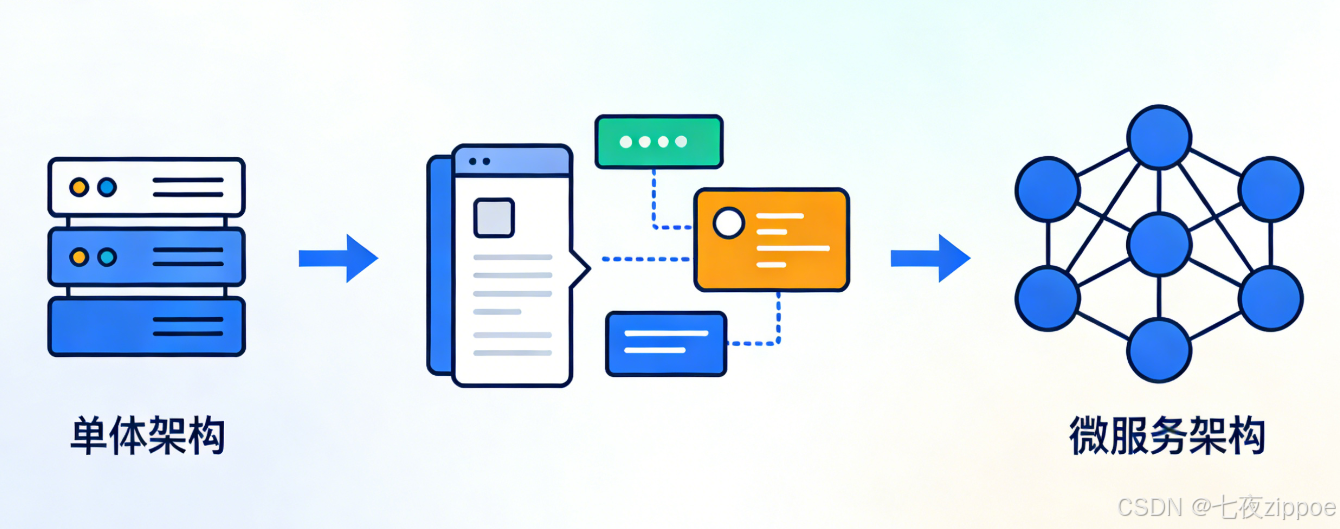
1.1 单体的痛苦现实
先看一个典型单体的代码结构问题:
java
// 典型的单体结构问题示例
@Controller
public class MonolithicController {

    // 问题1:上帝类,包含太多不相关功能
    @RequestMapping("/api/*")
    public Object handleAll(@RequestParam String action) {
        if ("createOrder".equals(action)) {
            // 订单创建逻辑(200行)
            return createOrder();
        } else if ("updateInventory".equals(action)) {
            // 库存更新逻辑(150行)
            return updateInventory();
        } else if ("calculateSalary".equals(action)) {
            // 薪资计算逻辑(100行)
            return calculateSalary();
        }
        // ... 更多if-else
    }

    // 问题2:事务脚本模式,业务逻辑分散
    @Transactional
    public Order createOrder() {
        // 验证用户(50行)
        // 检查库存(60行)
        // 计算价格(40行)
        // 创建订单(30行)
        // 扣减库存(25行)
        // 发送消息(15行)
        // ... 更多步骤
    }
}
代码清单1:典型的单体代码问题
用图表示单体架构的问题:
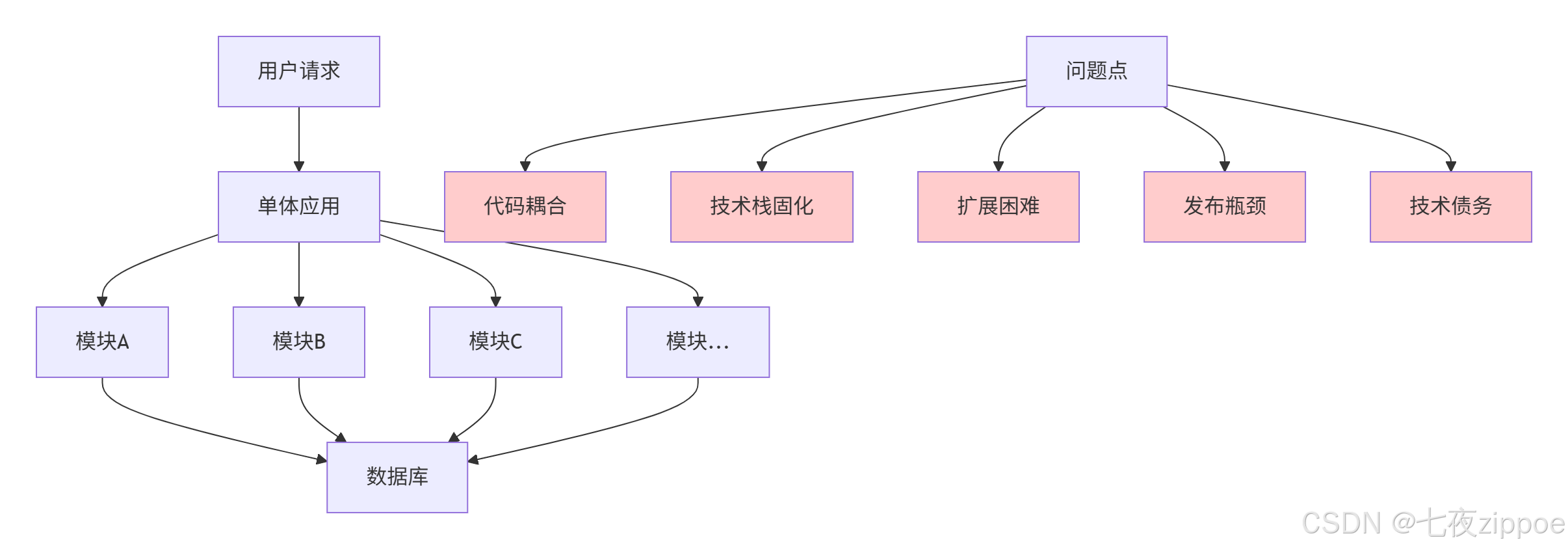
图1:单体架构的核心问题
1.2 微服务的核心优势
代码清单2:微服务架构示例
性能对比数据(电商平台实测):
| 指标 | 单体架构 | 微服务架构 | 改善幅度 |
|---|---|---|---|
| 部署时间 | 45分钟 | 8分钟 | 82% |
| 构建失败影响范围 | 整个系统 | 单个服务 | 90% |
| 扩容成本 | 100% | 15-30% | 70-85% |
| 新功能上线速度 | 2周 | 3天 | 70% |
| 故障恢复时间 | 30+分钟 | 5分钟 | 83% |
2. 领域驱动设计(DDD)核心概念
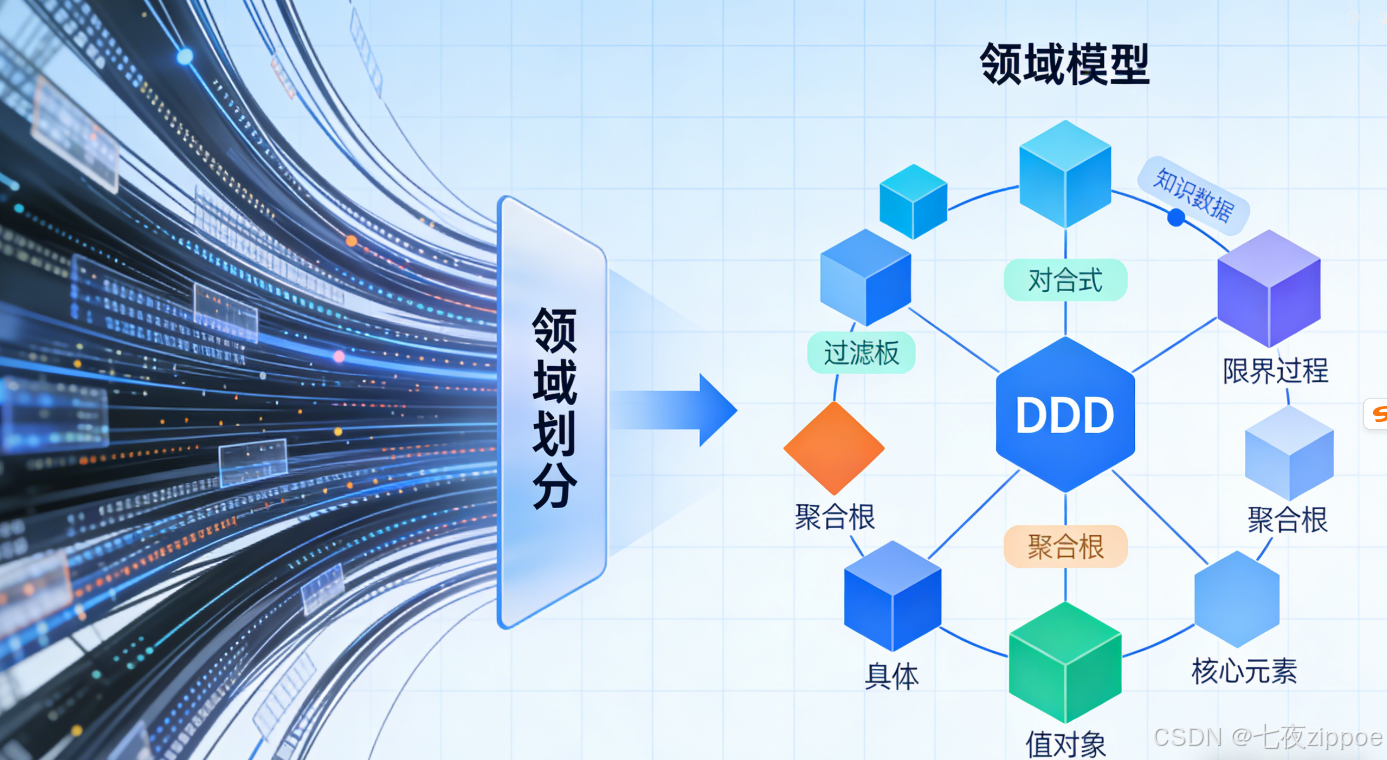
2.1 战略设计:划分业务边界
DDD的战略设计帮助我们从业务视角理解系统:
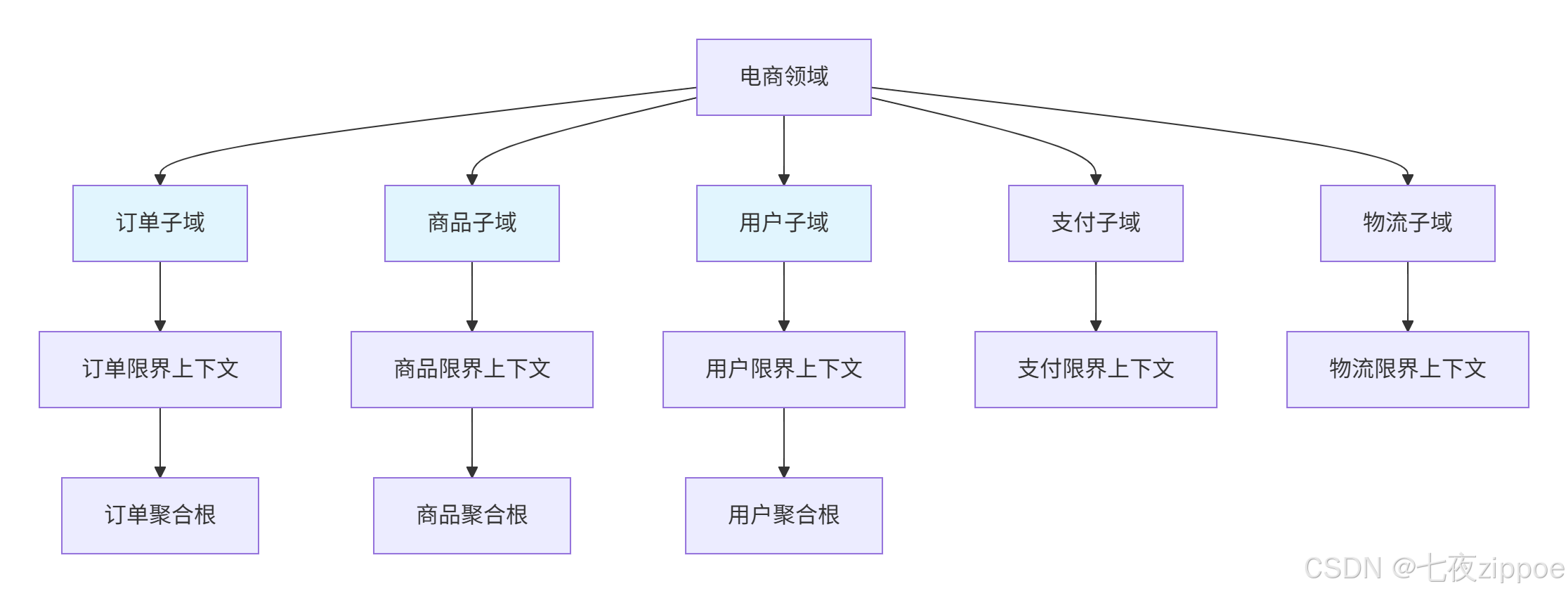
图2:DDD战略设计层次
核心概念解析:
-
子域(Subdomain):业务领域的一部分,如订单、商品
-
限界上下文(Bounded Context):显式边界,领域模型在其中适用
-
通用语言(Ubiquitous Language):开发与业务共享的统一语言
2.2 战术设计:实现领域模型
java
// 实体(Entity)示例
public class Order implements Entity<Order> {
    private OrderId id;
    private CustomerId customerId;
    private Money totalAmount;
    private OrderStatus status;
    private List<OrderItem> items;

    // 实体标识
    @Override
    public boolean sameIdentityAs(Order other) {
        return this.id.equals(other.id);
    }

    // 业务行为
    public void addItem(Product product, int quantity) {
        OrderItem item = new OrderItem(product, quantity);
        this.items.add(item);
        this.calculateTotal();
    }

    public void cancel() {
        if (!status.canCancel()) {
            throw new IllegalStateException("订单无法取消");
        }
        this.status = OrderStatus.CANCELLED;
        this.addDomainEvent(new OrderCancelledEvent(this.id));
    }
}

// 值对象(Value Object)示例
public class Money implements ValueObject {
    private final BigDecimal amount;
    private final Currency currency;

    public Money(BigDecimal amount, Currency currency) {
        this.amount = amount.setScale(2, RoundingMode.HALF_EVEN);
        this.currency = currency;
    }

    public Money add(Money other) {
        if (!this.currency.equals(other.currency)) {
            throw new IllegalArgumentException("货币单位不一致");
        }
        return new Money(this.amount.add(other.amount), this.currency);
    }

    // 值对象相等性
    @Override
    public boolean equals(Object o) {
        if (this == o) return true;
        if (!(o instanceof Money)) return false;
        Money money = (Money) o;
        return amount.compareTo(money.amount) == 0 &&
               currency.equals(money.currency);
    }
}

// 聚合根(Aggregate Root)示例
public class Order implements AggregateRoot<OrderId> {
    private OrderId id;
    private List<OrderItem> items;
    private CustomerId customerId;

    // 聚合内一致性
    public void addItem(Product product, int quantity) {
        // 验证业务规则
        if (items.size() >= 100) {
            throw new BusinessException("订单商品数量不能超过100");
        }

        OrderItem item = new OrderItem(product, quantity);
        items.add(item);
        calculateTotal();
    }

    // 工厂方法
    public static Order create(CustomerId customerId, List<OrderItem> items) {
        Order order = new Order();
        order.id = OrderId.nextIdentity();
        order.customerId = customerId;
        order.items = new ArrayList<>(items);
        order.status = OrderStatus.CREATED;
        order.createdAt = Instant.now();

        order.validate();
        order.addDomainEvent(new OrderCreatedEvent(order.id));

        return order;
    }
}
代码清单3:DDD战术模式实现
3. 微服务拆分策略与原则
3.1 三大演进策略
根据实际经验,我总结出三种可靠的演进策略:
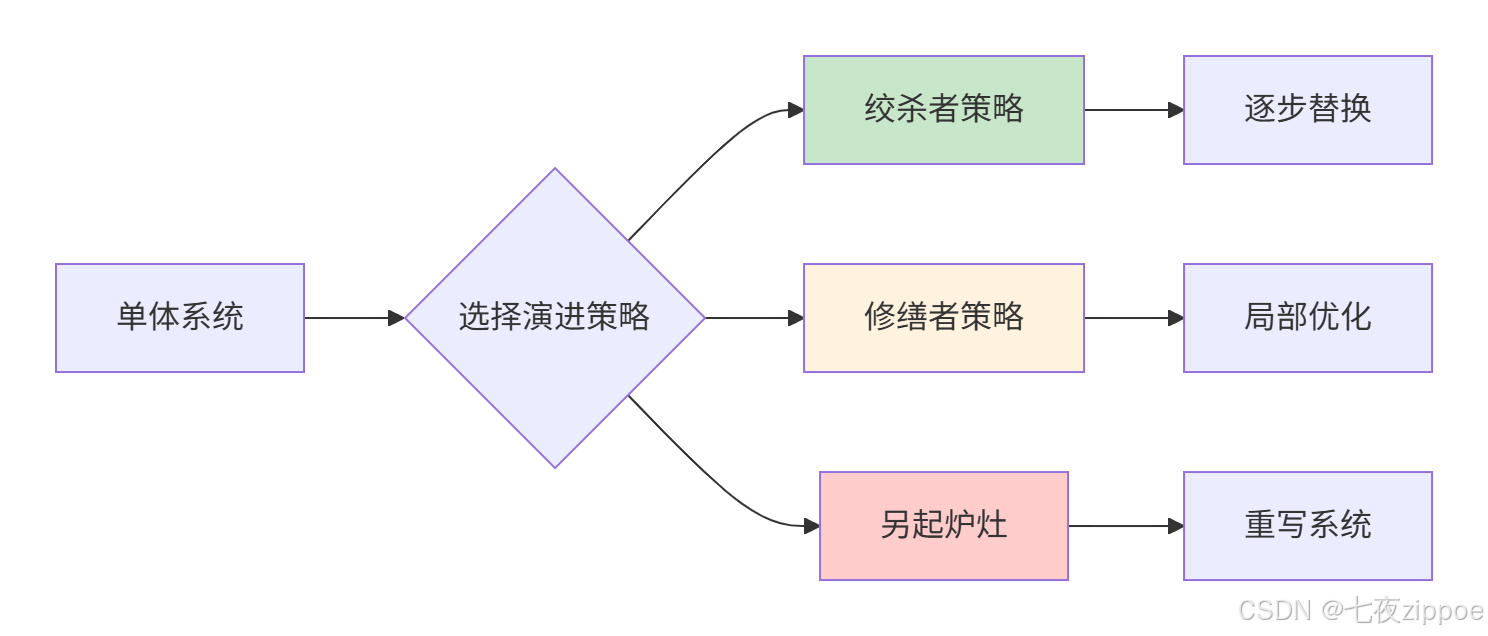
图3:微服务演进策略选择
3.1.1 绞杀者策略(Strangler Pattern)
java
// 1. 初始状态:单体应用
@RestController
public class MonolithicApp {
    @GetMapping("/order/{id}")
    public Order getOrder(@PathVariable String id) {
        // 单体中的订单查询
        return orderService.getOrder(id);
    }
}

// 2. 引入绞杀者:代理层
@Component
public class StranglerProxy {
    @Autowired
    private MonolithicClient monolithicClient;
    @Autowired
    private OrderServiceClient orderServiceClient;

    public Order getOrder(String id) {
        // 先尝试新服务,失败则回退到单体
        try {
            return orderServiceClient.getOrder(id);
        } catch (Exception e) {
            return monolithicClient.getOrder(id);
        }
    }
}

// 3. 逐步迁移:先迁移读操作
@Service
public class OrderMigrationService {
    // 双写策略
    @Transactional
    public void migrateOrder(String orderId) {
        // 从单体读取
        Order order = monolithicRepo.findById(orderId);
        // 写入新服务
        orderService.create(order);
        // 验证数据一致性
        validateDataConsistency(orderId);
        // 标记已迁移
        migrationTracker.markMigrated(orderId);
    }
}
代码清单4:绞杀者策略实现
3.1.2 修缮者策略(Repairer Pattern)
java
// 1. 识别需要修缮的模块
@Service
public class PerformanceMonitor {
    @Scheduled(fixedRate = 60000)
    public void monitorPerformance() {
        // 监控性能瓶颈
        Map<String, Long> metrics = getPerformanceMetrics();

        metrics.entrySet().stream()
            .filter(entry -> entry.getValue() > 1000) // 超过1秒
            .forEach(entry -> {
                String module = entry.getKey();
                if (shouldExtract(module)) {
                    extractionPlanner.planExtraction(module);
                }
            });
    }
}

// 2. 提取高性能要求的模块
@Service
public class ImageProcessingExtractor {
    public void extractImageProcessing() {
        // 创建新的图片处理服务
        Microservice imageService = new Microservice("image-service");

        // 迁移相关代码
        migrateCode("ImageProcessor", imageService);
        migrateCode("ImageStorage", imageService);

        // 更新调用关系
        updateReferences("ImageProcessor", imageService.getEndpoint());
    }
}
代码清单5:修缮者策略实现
3.2 六大拆分原则
基于多年经验,我总结了微服务拆分的六大原则:
原则1:单一职责原则(SRP)
java
// 错误示例:上帝服务
@Service
public class ProductService {
    // 产品相关
    public Product createProduct() { /* ... */ }
    public Product updateProduct() { /* ... */ }

    // 订单相关(不应该在这里)
    public Order createOrder() { /* ... */ }
    public Order updateOrder() { /* ... */ }

    // 用户相关(不应该在这里)
    public User createUser() { /* ... */ }
}

// 正确示例:职责单一的服务
@Service
public class ProductService {
    // 只负责产品相关业务
    public Product createProduct(CreateProductCommand command) { /* ... */ }
    public Product updateProduct(UpdateProductCommand command) { /* ... */ }
}

@Service
public class OrderService {
    // 只负责订单业务
    public Order createOrder(CreateOrderCommand command) { /* ... */ }
}
代码清单6:单一职责原则示例
原则2:基于业务能力拆分
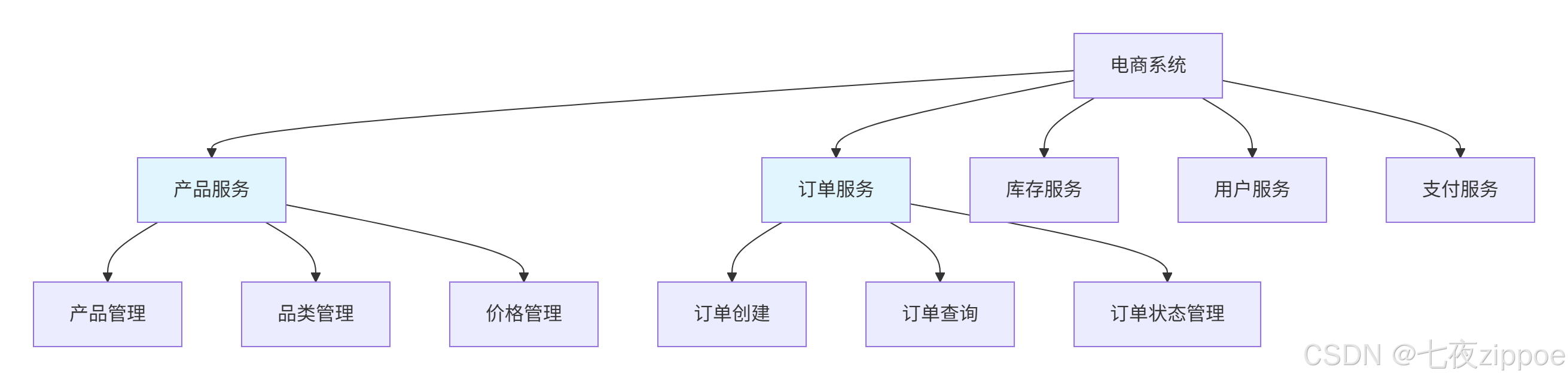
图4:按业务能力拆分
原则3:基于DDD限界上下文拆分
java
// 识别限界上下文
public class BoundedContextIdentifier {
    public List<BoundedContext> identifyContexts(Monolith monolith) {
        return monolith.getModules().stream()
            .map(module -> {
                // 分析模块间的依赖关系
                Set<String> dependencies = analyzeDependencies(module);
                // 分析业务概念一致性
                boolean isCohesive = analyzeCohesion(module);
                // 识别通用语言
                UbiquitousLanguage language = extractLanguage(module);

                return new BoundedContext(module.getName(), dependencies,
                    isCohesive, language);
            })
            .filter(BoundedContext::isValid)
            .collect(Collectors.toList());
    }
}

// 限界上下文映射
public class ContextMapper {
    public Map<String, BoundedContext> mapContexts(System system) {
        Map<String, BoundedContext> contexts = new HashMap<>();

        // 核心域:投入最多资源
        contexts.put("order", new BoundedContext("订单上下文", DOMAIN_TYPE.CORE));

        // 支撑子域:业务必要但非核心
        contexts.put("notification", new BoundedContext("通知上下文", DOMAIN_TYPE.SUPPORTING));

        // 通用子域:通用功能
        contexts.put("file", new BoundedContext("文件上下文", DOMAIN_TYPE.GENERIC));

        return contexts;
    }
}
代码清单7:限界上下文识别
4. 实战:电商系统微服务拆分
4.1 单体系统分析
首先分析现有的单体电商系统:
java
// 单体应用结构分析
@Entity
@Table(name = "ecommerce")
public class EcommerceMonolith {
    // 混合了所有业务的实体
    private Long id;
    private String productName;    // 产品相关
    private BigDecimal price;     // 价格相关
    private Integer stock;        // 库存相关
    private Long customerId;      // 用户相关
    private String orderStatus;   // 订单相关
    private String paymentId;     // 支付相关

    // 上帝服务类
    @Service
    public class MonolithService {
        public void processOrder(Order order) {
            // 验证用户(用户域)
            validateCustomer(order.getCustomerId());
            // 检查库存(库存域)
            checkInventory(order.getItems());
            // 计算价格(产品域)
            calculatePrice(order);
            // 创建订单(订单域)
            createOrder(order);
            // 处理支付(支付域)
            processPayment(order);
            // 发送通知(通知域)
            sendNotification(order);
        }
    }
}
代码清单8:单体系统问题分析
4.2 DDD领域建模
通过事件风暴进行领域建模:
java
// 事件风暴识别领域事件
public class EventStorming {
    public DomainModel analyzeDomain() {
        // 领域事件
        List<DomainEvent> events = Arrays.asList(
            new DomainEvent("OrderCreated", "订单已创建"),
            new DomainEvent("PaymentProcessed", "支付已处理"),
            new DomainEvent("InventoryReserved", "库存已预留"),
            new DomainEvent("OrderShipped", "订单已发货")
        );

        // 聚合识别
        List<Aggregate> aggregates = Arrays.asList(
            new Aggregate("Order", "订单聚合根"),
            new Aggregate("Product", "产品聚合根"),
            new Aggregate("Customer", "用户聚合根")
        );

        // 限界上下文划分
        List<BoundedContext> contexts = Arrays.asList(
            new BoundedContext("OrderContext", aggregates.subList(0, 1)),
            new BoundedContext("ProductContext", aggregates.subList(1, 2)),
            new BoundedContext("CustomerContext", aggregates.subList(2, 3))
        );

        return new DomainModel(events, aggregates, contexts);
    }
}
代码清单9:领域建模过程
4.3 微服务拆分实施
java
// 1. 定义服务边界
@Configuration
public class ServiceBoundaries {
    @Bean
    public ServiceBoundary orderServiceBoundary() {
        return ServiceBoundary.builder()
            .name("order-service")
            .boundedContext("OrderContext")
            .aggregates(Arrays.asList("Order", "OrderItem"))
            .responsibilities(Arrays.asList(
                "订单创建", "订单查询", "订单状态管理"
            ))
            .build();
    }

    @Bean
    public ServiceBoundary productServiceBoundary() {
        return ServiceBoundary.builder()
            .name("product-service")
            .boundedContext("ProductContext")
            .aggregates(Arrays.asList("Product", "Category", "Inventory"))
            .responsibilities(Arrays.asList(
                "产品管理", "库存管理", "品类管理"
            ))
            .build();
    }
}

// 2. 数据库拆分迁移
@Service
public class DatabaseMigrator {
    @Transactional
    public void migrateToMicroservices() {
        // 第一阶段:数据库垂直拆分
        verticalSplit();

        // 第二阶段:数据迁移
        migrateData();

        // 第三阶段:双写过渡
        enableDualWrite();

        // 第四阶段:读流量迁移
        migrateReadTraffic();

        // 第五阶段:写流量迁移
        migrateWriteTraffic();
    }

    private void verticalSplit() {
        // 创建服务独立数据库
        jdbcTemplate.execute("CREATE DATABASE order_db");
        jdbcTemplate.execute("CREATE DATABASE product_db");
        jdbcTemplate.execute("CREATE DATABASE customer_db");

        // 迁移表结构
        migrateTableSchema("orders", "order_db");
        migrateTableSchema("products", "product_db");
        migrateTableSchema("customers", "customer_db");
    }
}
代码清单10:微服务拆分实施
4.4 服务间通信设计
java
// 1. 同步通信:Feign客户端
@FeignClient(name = "product-service", path = "/api/products")
public interface ProductClient {
    @GetMapping("/{productId}")
    Product getProduct(@PathVariable String productId);

    @PostMapping("/{productId}/deduct-stock")
    void deductStock(@PathVariable String productId,
                    @RequestBody DeductStockRequest request);
}

// 2. 异步通信:领域事件
@Component
public class OrderDomainEventPublisher {
    @Autowired
    private DomainEventPublisher eventPublisher;

    @TransactionalEventListener
    public void handleOrderCreated(OrderCreatedEvent event) {
        // 发布领域事件
        eventPublisher.publish("order.created", event);
    }
}

@Component
public class InventoryEventHandler {
    @EventListener
    public void handleOrderCreated(OrderCreatedEvent event) {
        // 处理订单创建事件,预留库存
        inventoryService.reserveStock(event.getOrder());
    }
}

// 3. 事务一致性:Saga模式
@Service
public class CreateOrderSaga {
    @Autowired
    private SagaManager sagaManager;

    public void createOrder(CreateOrderCommand command) {
        SagaInstance saga = SagaManager.begin()
            .step("validate-customer")
                .invoke(() -> customerClient.validate(command.getCustomerId()))
                .compensate(() -> customerClient.unlock(command.getCustomerId()))
            .step("reserve-inventory")
                .invoke(() -> inventoryClient.reserve(command.getItems()))
                .compensate(() -> inventoryClient.release(command.getItems()))
            .step("process-payment")
                .invoke(() -> paymentClient.process(command.getPayment()))
                .compensate(() -> paymentClient.refund(command.getPayment()))
            .build();

        saga.execute();
    }
}
代码清单11:服务间通信模式
5. 常见问题与解决方案
5.1 分布式事务问题
java
// Saga模式实现分布式事务
public class CreateOrderSaga implements Saga<CreateOrderData> {
    private final List<SagaStep> steps;

    public CreateOrderSaga() {
        this.steps = Arrays.asList(
            new ValidateCustomerStep(),
            new ReserveInventoryStep(),
            new ProcessPaymentStep(),
            new ConfirmOrderStep()
        );
    }

    @Override
    public void execute(CreateOrderData data) {
        for (SagaStep step : steps) {
            try {
                step.execute(data);
            } catch (Exception e) {
                compensate(data, steps.indexOf(step));
                throw new SagaAbortedException("Saga执行失败", e);
            }
        }
    }

    private void compensate(CreateOrderData data, int failedStepIndex) {
        for (int i = failedStepIndex; i >= 0; i--) {
            try {
                steps.get(i).compensate(data);
            } catch (Exception e) {
                log.error("Saga补偿步骤失败", e);
            }
        }
    }
}

// 使用Seata实现分布式事务
@GlobalTransactional
public void createOrderWithTransaction(CreateOrderCommand command) {
    // 1. 扣减库存
    inventoryFeignClient.deduct(command.getItems());

    // 2. 创建订单
    Order order = orderService.create(command);

    // 3. 扣款
    paymentFeignClient.charge(order);

    return order;
}
代码清单12:分布式事务解决方案
5.2 数据一致性挑战
java
// 1. 最终一致性:事件驱动
@Component
public class EventDrivenConsistency {
    @Autowired
    private DomainEventRepository eventRepository;

    @Transactional
    public void updateProductPrice(String productId, BigDecimal newPrice) {
        // 更新本服务数据
        productRepository.updatePrice(productId, newPrice);

        // 发布领域事件
        ProductPriceChangedEvent event =
            new ProductPriceChangedEvent(productId, newPrice);
        eventRepository.save(event);

        // 异步发送到消息队列
        eventPublisher.publish("product.price.changed", event);
    }
}

// 2. 数据同步:CDC模式
@Configuration
public class CdcConfiguration {
    @Bean
    public DebeziumChangeConsumer productChangeConsumer() {
        return new DebeziumChangeConsumer() {
            @Override
            public void handle(List<ChangeEvent> events) {
                events.forEach(event -> {
                    if ("products".equals(event.getTable())) {
                        // 同步到搜索服务
                        syncToSearchService(event);
                        // 同步到缓存
                        syncToCache(event);
                    }
                });
            }
        };
    }
}
代码清单13:数据一致性保障
6. 企业级最佳实践
6.1 监控与可观测性
java
// 1. 分布式追踪
@RestController
public class OrderController {
    @GetMapping("/orders/{id}")
    public Order getOrder(@PathVariable String id) {
        // 添加业务标签
        Span span = tracer.nextSpan().name("getOrder").start();
        try (var ws = tracer.withSpanInScope(span)) {
            span.tag("orderId", id);
            span.tag("customerId", getCurrentCustomerId());

            // 业务逻辑
            return orderService.getOrder(id);
        } finally {
            span.finish();
        }
    }
}

// 2. 指标收集
@Component
public class OrderMetrics {
    private final Counter orderCreatedCounter;
    private final Timer orderCreationTimer;

    public OrderMetrics(MeterRegistry registry) {
        this.orderCreatedCounter = Counter.builder("order.created")
            .description("创建的订单数量")
            .register(registry);

        this.orderCreationTimer = Timer.builder("order.creation.time")
            .description("订单创建时间")
            .register(registry);
    }

    public void recordOrderCreation(long duration) {
        orderCreatedCounter.increment();
        orderCreationTimer.record(duration, TimeUnit.MILLISECONDS);
    }
}
代码清单14:监控与可观测性实现
6.2 安全设计
java
// 1. 服务间认证
@Configuration
public class SecurityConfig {
    @Bean
    public FeignRequestInterceptor requestInterceptor() {
        return new FeignRequestInterceptor() {
            @Override
            public void apply(RequestTemplate template) {
                // 添加JWT token
                template.header("Authorization", "Bearer " + getJwtToken());
            }
        };
    }
}

// 2. 权限控制
@Service
public class PermissionService {
    public void checkPermission(String service, String action) {
        String permission = service + ":" + action;
        if (!securityContext.hasPermission(permission)) {
            throw new AccessDeniedException("无权访问服务: " + service);
        }
    }
}

// 3. 数据隔离
@Aspect
@Component
public class DataIsolationAspect {
    @Around("@annotation(PreAuthorize)")
    public Object checkDataAccess(ProceedingJoinPoint joinPoint) throws Throwable {
        String tenantId = TenantContext.getCurrentTenant();
        Object[] args = joinPoint.getArgs();

        // 验证数据访问权限
        for (Object arg : args) {
            if (arg instanceof TenantAware) {
                TenantAware entity = (TenantAware) arg;
                if (!entity.getTenantId().equals(tenantId)) {
                    throw new AccessDeniedException("无权访问其他租户数据");
                }
            }
        }

        return joinPoint.proceed();
    }
}
代码清单15:安全设计实现
7. 性能优化实战
7.1 缓存策略
java
// 多级缓存设计
@Service
public class MultiLevelCacheService {
    @Autowired
    private RedisTemplate redisTemplate;
    @Autowired
    private CaffeineCache localCache;

    @Cacheable(value = "orders", key = "#orderId")
    public Order getOrderWithCache(String orderId) {
        // 1. 检查本地缓存
        Order order = localCache.get(orderId, Order.class);
        if (order != null) {
            return order;
        }

        // 2. 检查Redis缓存
        order = redisTemplate.opsForValue().get("order:" + orderId);
        if (order != null) {
            localCache.put(orderId, order);
            return order;
        }

        // 3. 查询数据库
        order = orderRepository.findById(orderId);
        if (order != null) {
            // 写入缓存
            redisTemplate.opsForValue().set("order:" + orderId, order,
                Duration.ofMinutes(30));
            localCache.put(orderId, order);
        }

        return order;
    }
}

// 缓存穿透保护
@Service
public class CacheProtectionService {
    public Order getOrderSafely(String orderId) {
        // 布隆过滤器判断是否存在
        if (!bloomFilter.mightContain(orderId)) {
            return null;
        }

        // 缓存空值防止穿透
        Order order = cache.get(orderId);
        if (order == null) {
            synchronized (this) {
                order = cache.get(orderId);
                if (order == null) {
                    order = orderRepository.findById(orderId);
                    if (order == null) {
                        // 缓存空值,短时间过期
                        cache.put(orderId, NULL_OBJECT, 60);
                    } else {
                        cache.put(orderId, order, 1800);
                    }
                }
            }
        }

        return order == NULL_OBJECT ? null : order;
    }
}
代码清单16:缓存优化策略
7.2 数据库优化
java
// 1. 读写分离
@Configuration
public class ReadWriteSeparationConfig {
    @Bean
    @Primary
    public DataSource dataSource() {
        MasterSlaveRoutingDataSource dataSource =
            new MasterSlaveRoutingDataSource();

        Map<Object, Object> targetDataSources = new HashMap<>();
        targetDataSources.put("master", masterDataSource());
        targetDataSources.put("slave", slaveDataSource());

        dataSource.setTargetDataSources(targetDataSources);
        dataSource.setDefaultTargetDataSource(masterDataSource());

        return dataSource;
    }
}

// 2. 分库分表
@Component
public class OrderShardingStrategy {
    public String determineDataSource(String orderId) {
        // 按订单ID分片
        int hash = Math.abs(orderId.hashCode());
        int index = hash % 4; // 4个数据源
        return "order_db_" + index;
    }

    public String determineTable(String orderId) {
        // 按月分表
        LocalDateTime createTime = getOrderCreateTime(orderId);
        return "orders_" + createTime.format(DateTimeFormatter.ofPattern("yyyy_MM"));
    }
}
代码清单17:数据库优化策略
8. 总结与建议
8.1 微服务拆分检查清单
基于多年经验,我总结的微服务拆分检查清单:
java
// 拆分就绪检查
@Service
public class MigrationReadinessChecker {
    public CheckResult checkReadiness(Module module) {
        List<CheckItem> checks = Arrays.asList(
            checkCodeCoupling(module),
            checkDataDependency(module),
            checkTeamReadiness(module),
            checkInfrastructure(module)
        );

        long passedChecks = checks.stream()
            .filter(CheckItem::isPassed)
            .count();

        double readiness = (double) passedChecks / checks.size();

        return new CheckResult(checks, readiness);
    }

    private CheckItem checkCodeCoupling(Module module) {
        // 检查代码耦合度
        double coupling = calculateCoupling(module);
        return new CheckItem("代码耦合度", coupling < 0.3,
            "模块耦合度: " + coupling);
    }

    private CheckItem checkTeamReadiness(Module module) {
        // 检查团队准备情况
        boolean hasOwner = module.getOwner() != null;
        boolean hasRunbook = module.getRunbook() != null;
        return new CheckItem("团队准备", hasOwner && hasRunbook,
            "有明确负责人和运维手册");
    }
}
代码清单18:迁移就绪检查
8.2 何时不该用微服务
微服务不是银弹,以下情况建议谨慎:
-
团队规模小(10人以下):沟通成本低,单体更高效
-
业务复杂度低:没有明显的业务边界
-
快速原型阶段:需要快速验证产品想法
-
性能极度敏感:进程间调用有开销
-
数据强一致性要求高:分布式事务复杂度高
8.3 我的架构演进建议
初级阶段(团队<20人):
-
保持单体,做好模块化
-
建立清晰的包结构和接口规范
-
投资自动化部署和监控
中级阶段(团队20-50人):
-
识别核心域,优先拆分
-
采用绞杀者策略渐进式迁移
-
建立基础服务平台
高级阶段(团队>50人):
-
全面微服务化
-
建立平台工程团队
-
投资服务网格、可观测性
📚 推荐阅读
经典书籍
-
**《领域驱动设计:软件核心复杂性应对之道》** - Eric Evans,DDD开山之作
-
**《微服务架构设计模式》** - Chris Richardson,微服务实践宝典
-
**《实现领域驱动设计》** - Vaughn Vernon,DDD实战指南
官方文档
-
**Spring Cloud官方文档** - 微服务框架参考
-
**Microsoft微服务指南** - 企业级架构指导
实践社区
工具资源
- **微服务模式** - 微服务设计模式目录
最后建议 :从简单开始,持续演进。记住架构是生长出来的,而不是设计出来的。选择合适的时机做正确的事,比盲目追求技术潮流更重要。