单调栈
在python中,列表能实现栈的功能
stack.append(),stack.pop(),stack-1
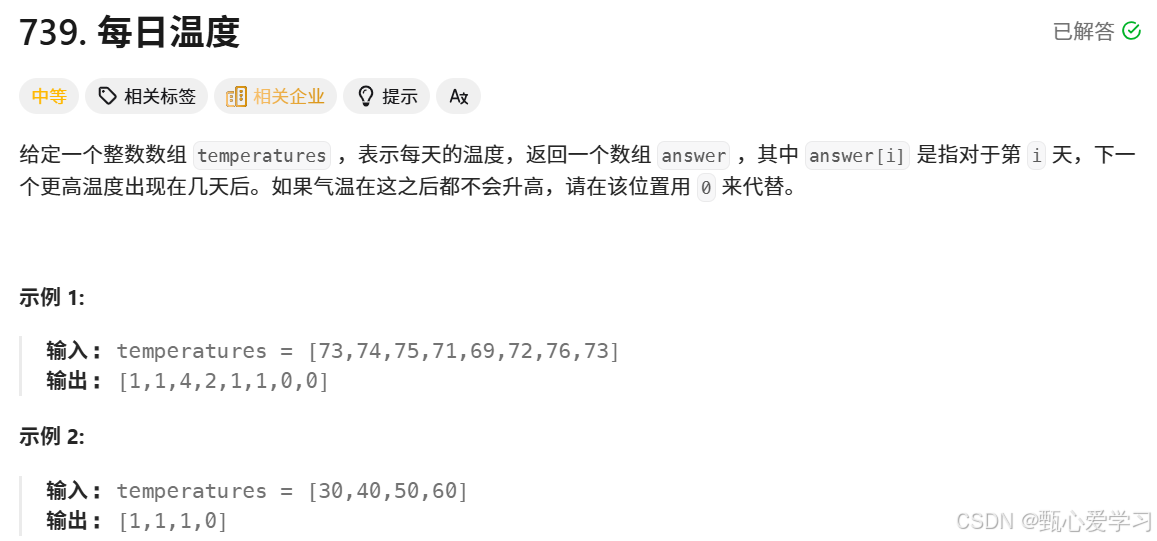
1.最大温度
python
class Solution:
    def dailyTemperatures(self, temperatures: List[int]) -> List[int]:
        stack = []
        n = len(temperatures)
        res = [0]*n

        for i in range(n):
            while stack and temperatures[i]>temperatures[ stack[-1]]:
                index = stack.pop()
                res[index] = i-index
            stack.append(i)

        return res
代码中注意两个部分,一个是while的条件,stack要不为空,用循环能够一次性找到多个匹配的下标,在每个循环的最后进行append
2.接雨水
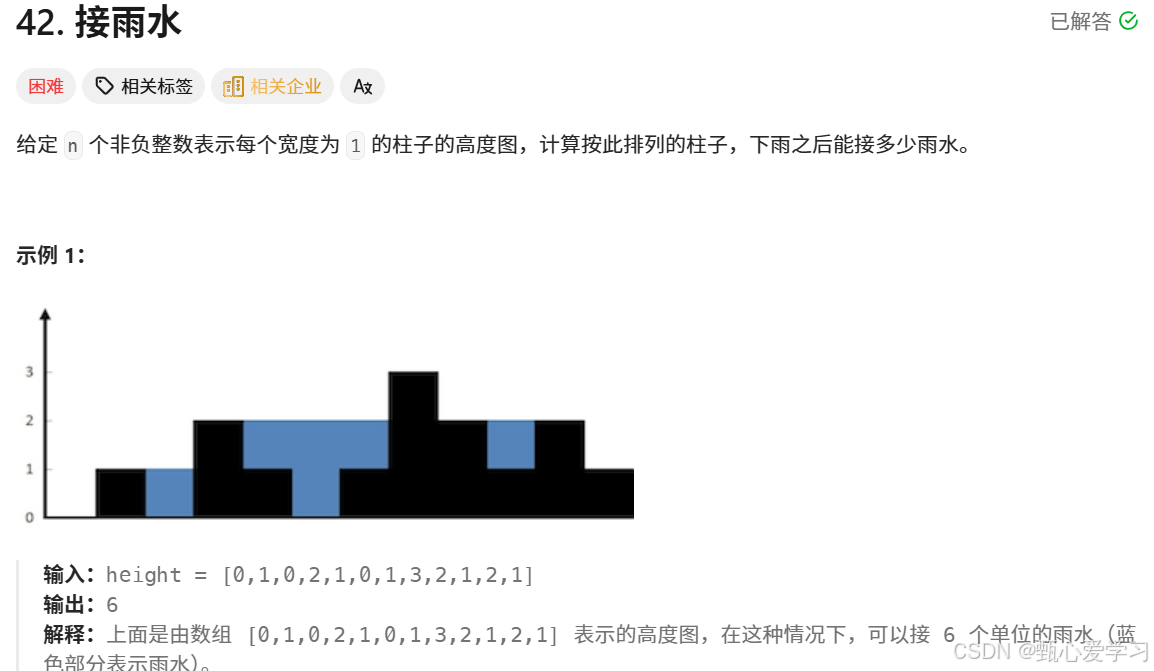
这里用了跟上面一样的思路,重点在于不只弹出当前的,还要考虑左边的墙壁,遍历时while判断是否能作为右边的墙壁
算雨水总量的时候,是按照每个下标相加的
python
class Solution:
    def trap(self, height: List[int]) -> int:
        res = 0
        n = len(height)
        stack = []
        for i in range(n):
            h = height[i]
            while stack and height[stack[-1]]<h:
                top = stack.pop()
                if not stack:
                    break
                left = stack[-1]
                w = i-left-1
                h0 = min(h,height[left])-height[top]
                res+=h0*w
            stack.append(i)
        return res
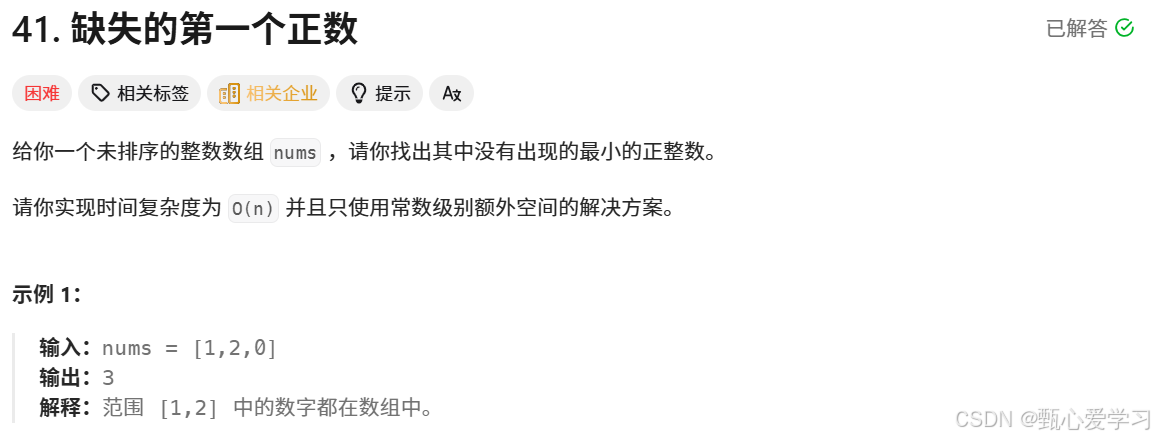
哈希
python
class Solution:
    def firstMissingPositive(self, nums: List[int]) -> int:
        n = len(nums)
        for i in range(n):
            while 1<=nums[i]<=n and nums[nums[i]-1]!=nums[i]:
                index = nums[i]-1
                nums[i],nums[index] = nums[index],nums[i]

        for i in range(n):
            if nums[i]!=i+1:
                return i+1
        return n+1
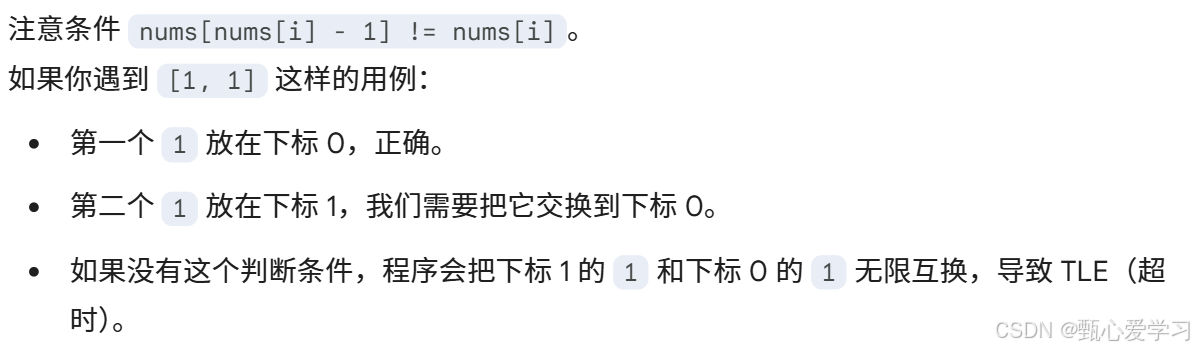
注意代码中在交换时只处理了在0-n范围内的数,我们需要不断地交换,直到当前位置 i 放了一个不属于 [1, N] 范围的废数,或者放了一个已经归位的正确数,才能继续处理下一个位置 i+1
每个元素最多只会被交换一次到它正确的位置上,一旦归位,就不会再被移动,所以总的交换次数绝对不会超过N次,均摊下来是严格的 O(n)
(目前做了这几题,后续会更新)