T138 随机链表的复制
这道题刚开始看很难理解,我们可以先看答案,跟着实例理解题目在干什么然后来分析这道题的小巧思
题目理解:
这道题和常见的链表不同
常见链表:
1 → 2 → 3 → 4 → 5
每个节点只有一个指针:next
这道题多了一个指针
java
class Node {
    int val;
    Node next;
    Node random;
}
也就是说 每个节点有两个指针:
| 指针 | 作用 |
|---|---|
| next | 指向下一个节点 |
| random | 可以指向链表中任意节点 |
random 可以随便指
举个例子:
假设链表是:
1 → 2 → 3
next关系:
1.next = 2
2.next = 3
3.next = null
random关系可能是:
1.random → 3
2.random → 1
3.random → 2
题目要干什么
复制一份一模一样的链表
这包含了两个重要信息
- 一模一样
复制后的链表结构要一样:
next关系一样
random关系一样
- 深拷贝
复制出来的节点必须是:
新的节点
而不是原来的节点。
例如:
原链表:
A → B → C
复制后:
A' → B' → C'
并且:
A'.random 指向 C'
B'.random 指向 A'
而不是:
A'.random 指向 C ❌
题目的本质
想成为本质高手,就理解一句话:
复制一个带 random 指针的链表
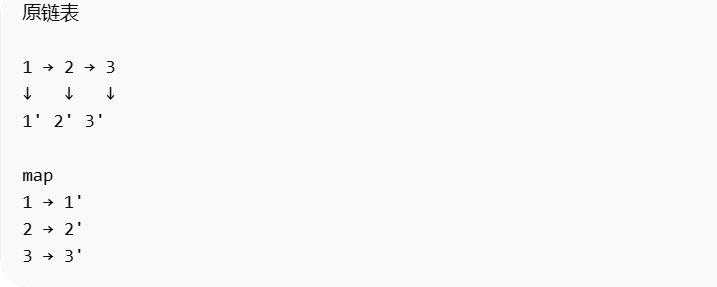
核心思想(HashMap映射)
建立映射关系:
旧节点 → 新节点
例如:
1 → 1'
2 → 2'
3 → 3'
存储在:
HashMap<Node, Node>
整体流程
算法分 两次遍历:
第一遍:创建所有新节点
第二遍:连接 next 和 random
流程图:
代码实现
java
if(head==null)return null;
Map<Node,Node> map=new HashMap<>;
Node cur=head;

//第一步:复制所有节点
while(cur!=null){
map.put(cur,new Node(cur.val))
cur=cur.next;
}

//第二步:连接next和random
while(cur!=null){
Node newNode=map.get(cur);
newNode.next=map.get(cur.next);
newNode.random=map.get(cur.random);

cur=cur.next;
}
return map.get(head);
题目小坑
在最后return阶段
return map.get(head);;
而不是:
return head;
题目要求返回复制后的链表,即为:return map.get(head);
本题感悟
理解了Hash Map的映射关系
map.put(cur,new Node(cur.val)) // 创建了(1,1')
实现两个节点连接的方式
newNode.next=map.get(cur.next); // next和next的连接
newNode.random=map.get(cur.random); // random和random的连接
T148: 排序链表
题目要求:
给你一个链表,把链表 排序。
题目要求很简单,但是这题难在找到正确的算法结构,否则很容易超时
题目真正的限制
时间复杂度:O(n log n)
空间复杂度:O(1)(尽量)
所以不能用:
数组排序
Collections.sort
因为:链表随机访问慢
寻找算法
| 排序 | 适不适合链表 |
|---|---|
| 快速排序 | 不太适合 |
| 归并排序 | 非常适合 |
归并才是最终选择
链表不支持随机访问
但非常适合拆分和合并
归并排序的理解
归并有三个步骤:
1 拆分链表
2 递归排序
3 合并两个有序链表
例如:
4 → 2 → 1 → 3
拆成:
4 → 2
1 → 3
再拆:
4 2 1 3
然后开始合并:
4 和 2 → 2 → 4
1 和 3 → 1 → 3
最后:
2 → 4
1 → 3
合并:
1 → 2 → 3 → 4
如何拆成两半?
核心技巧:
快慢指针
java
while(fast != null && fast.next != null){
    slow = slow.next;
    fast = fast.next.next;
}
最终:
slow 在中点
然后断开链表:
ListNode mid = slow.next;
slow.next = null;
代码实现
java
public ListNode sortList(ListNode head) {
    if(head == null || head.next == null){
        return head;
    }

    // 找中点
    ListNode slow = head;
    ListNode fast = head.next;

    while(fast != null && fast.next != null){
        slow = slow.next;
        fast = fast.next.next;
    }

    ListNode mid = slow.next;
    slow.next = null;

    // 递归排序
    ListNode left = sortList(head);
    ListNode right = sortList(mid);

    // 合并
    return merge(left, right);
}
//把两个有序链表合并成一个有序链表
private ListNode merge(ListNode l1, ListNode l2){
    ListNode dummy = new ListNode(0);
    ListNode cur = dummy;

    while(l1 != null && l2 != null){
        if(l1.val < l2.val){
            cur.next = l1;
            l1 = l1.next;
        }else{
            cur.next = l2;
            l2 = l2.next;
        }
        cur = cur.next;
    }

    if(l1 != null) cur.next = l1;
    if(l2 != null) cur.next = l2;

    return dummy.next;
}
本题感悟
理解的归并排序的使用场景:
因为链表不支持随机访问,但非常适合拆分和合并。而归并有着拆分和合并的特点,使用选择他
理解归并的流程:
1 快慢指针找中点
java
slow = slow.next
fast = fast.next.next
2 链表拆分
java
slow.next = null断开链表。
3 合并有序链表
经典技巧:
dummy + 双指针