1. 背景
1.1 现状
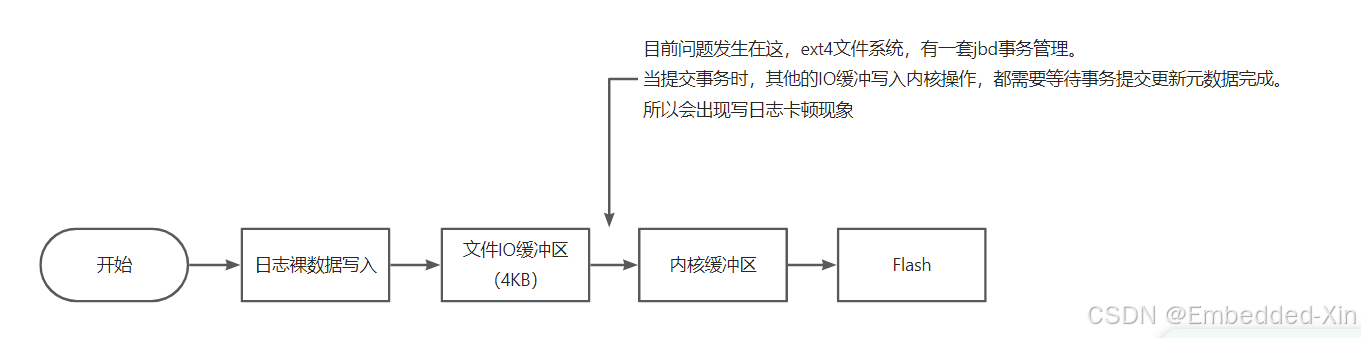
程序日志分散,大家都是直接写日志裸文件数据。而对Flash存储器而言。
该写入方式,会存在大量的随机写,造成文件碎片化,降低Flash使用寿命,降低读写速度。
1.2 造成问题
- Flash提前老化,有现场使用了一年半的EMMC,已经出现EMMC寿命到期,读写速度大幅下降,造成卡顿问题,只能维保现场更换,花费大量研发和售后时间、物料成本。
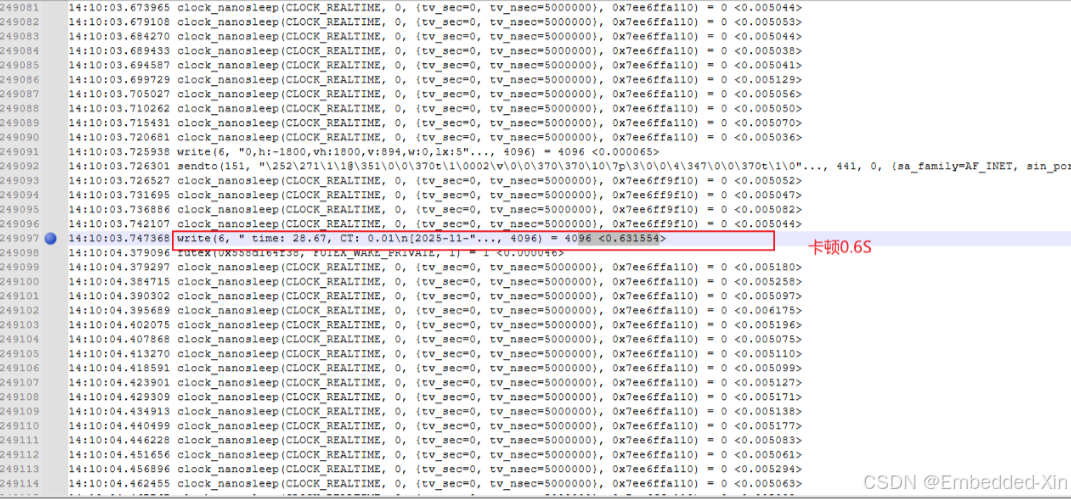
- Ext4文件系统使用jbd2在大量碎片写的情况下,存在性能毛刺问题,造成规划、算法易出现卡顿,导致小车异常,该问题存在时间较长,且逐渐恶化,花费大量研发和现场时间。
2. 解决方案
日志写入:spdlog先写入到内存区->到达设定容量(默认8MB,可自由配置)->数据丢给线程池异步执行文件压缩->压缩完成,数据写入磁盘。
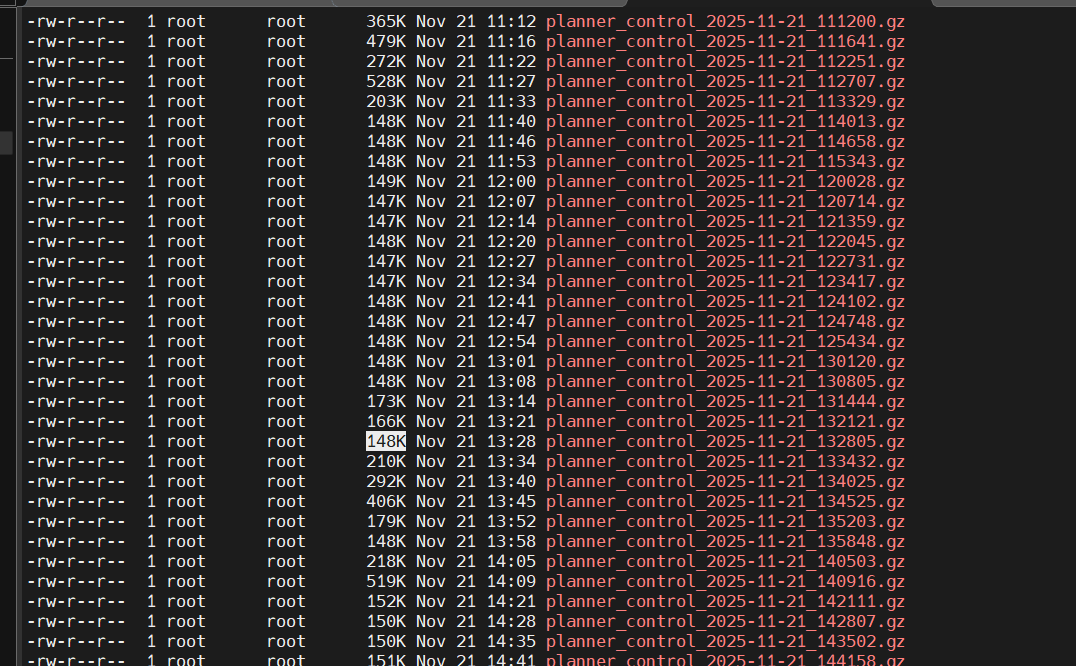
压缩率:8MB原始文本数据形成一个压缩包,压缩包大小为148KB到406KB,实测压缩率为95%到98.2%。
每1024MB数据,减少了约1000MB的Flash数据写入量。

3. 源码
- compress_file_sink.h
json
#ifndef SPDLOG_COMPRESS_FILE_SINK_H
#define SPDLOG_COMPRESS_FILE_SINK_H

#pragma once

#include <spdlog/common.h>
#include <spdlog/sinks/base_sink.h>
#include <spdlog/details/file_helper.h>
#include <spdlog/details/null_mutex.h>
#include <spdlog/details/synchronous_factory.h>
#include <spdlog/fmt/fmt.h>
#include <spdlog/async.h>
#include <future>
#include "thread_pool.h"

#include <zlib.h>
#include <string>
#include <mutex>

namespace spdlog
{
    namespace sinks
    {
        template<typename Mutex>
        class compressed_file_sink : public base_sink<Mutex>
        {
        public:
            explicit compressed_file_sink(const filename_t &base_filename, size_t buffer_capacity = 8192,
                                          int compression_level = Z_DEFAULT_STRATEGY,
                                          std::shared_ptr<ThreadPool> thread_pool = nullptr)
                : base_filename_(base_filename)
                , buffer_capacity_(buffer_capacity)
                , compression_level_(compression_level)
                , thread_pool_(thread_pool)
            {
                buffer_.reserve(buffer_capacity_);
            }

            ~compressed_file_sink() override
            {
                std::lock_guard<Mutex> lock(base_sink<Mutex>::mutex_);
                flush_();
            }

            compressed_file_sink(const compressed_file_sink &) = delete;

            compressed_file_sink &operator=(const compressed_file_sink &) = delete;

        protected:
            void sink_it_(const details::log_msg &msg) override
            {
                memory_buf_t formatted;
                base_sink<Mutex>::formatter_->format(msg, formatted);

                buffer_.append(formatted.data(), formatted.data() + formatted.size());

                if (buffer_.size() >= buffer_capacity_)
                {
                    compress_async();
                }
            }
            void flush_() override
            {
                compress_async();
            }

        private:

            // Create filename for the form basename.YYYY-MM-DD-H
            filename_t calc_filename(const filename_t &filename, const tm &now_tm)
            {
                filename_t basename, ext;
                std::tie(basename, ext) = details::file_helper::split_by_extension(filename);
                return fmt_lib::format(SPDLOG_FILENAME_T("{}_{:04d}-{:02d}-{:02d}_{:02d}{:02d}{:02d}{}"), basename, now_tm.tm_year + 1900, now_tm.tm_mon + 1,
                    now_tm.tm_mday, now_tm.tm_hour, now_tm.tm_min, now_tm.tm_sec, ext);
            }

            tm now_tm(log_clock::time_point tp)
            {
                time_t tnow = log_clock::to_time_t(tp);
                return spdlog::details::os::localtime(tnow);
            }


            void compress(filename_t base_filename, int compression_level, const memory_buf_t &buffer)
            {
                auto now = log_clock::now();
                auto filename = calc_filename(base_filename, now_tm(now));
                gzFile gzfp = gzopen(filename.c_str(), "wb");
                if(!gzfp)
                {
                    throw spdlog_ex("zlib creaate file failed");
                    return ;
                }

                if (gzsetparams(gzfp, 6, compression_level) != Z_OK)
                {
                    throw spdlog_ex("zlib set zip strategy failed");
                    return ;
                }

                int len = gzwrite(gzfp, buffer.data(), buffer.size());
                printf("compress_async len:%d, size:%d\n", len, buffer.size());

                FILE *file = fopen("11", "wb");
                fwrite(buffer.data(), buffer.size(), 1, file);

                fclose(file);

                gzflush(gzfp, Z_SYNC_FLUSH);
                gzclose(gzfp);

                return ;
            }

            void compress_async()
            {
                if (buffer_.size() == 0)
                {
                    return;
                }

                if (thread_pool_)
                {
                    printf("use threadpool\n");
                    thread_pool_->enqueue(
                        [this, buffer = std::move(buffer_), base_filename = base_filename_, level = compression_level_]()
                        {
                            this->compress(base_filename, level, buffer);
                        }
                    );
                }
                else
                {
                    std::async(std::launch::async,
                        [this, buffer = std::move(buffer_), base_filename = base_filename_, level = compression_level_]()
                        {
                            this->compress(base_filename, level, buffer);
                        }
                    );
                }
            }

            filename_t base_filename_;
            memory_buf_t buffer_;
            size_t buffer_capacity_;
            int compression_level_;
            std::shared_ptr<ThreadPool> thread_pool_;
        };
        using compressed_file_sink_mt = compressed_file_sink<std::mutex>;
        using compressed_file_sink_st = compressed_file_sink<details::null_mutex>;
    }; // namespace sinks

    template<typename Factory = spdlog::synchronous_factory>
    inline std::shared_ptr<logger> compressed_file_logger_mt(const std::string &logger_name, const filename_t &filename,
                                                             size_t buffer_capacity = 8192,
                                                             int compression_level = Z_DEFAULT_COMPRESSION)
    {
        return Factory::template create<sinks::compressed_file_sink_mt>(logger_name, filename, buffer_capacity,
                                                                        compression_level);
    }

    template<typename Factory = spdlog::synchronous_factory>
    inline std::shared_ptr<logger> compressed_file_logger_st(const std::string &logger_name, const filename_t &filename,
                                                             size_t buffer_capacity = 8192,
                                                             int compression_level = Z_DEFAULT_COMPRESSION)
    {
        return Factory::template create<sinks::compressed_file_sink_st>(logger_name, filename, buffer_capacity,
                                                                        compression_level);
    }

}; // namespace spdlog


#endif- thread_pool.h
json
#ifndef THREAD_POOL_H
#define THREAD_POOL_H

#include <vector>
#include <queue>
#include <memory>
#include <thread>
#include <mutex>
#include <condition_variable>
#include <future>
#include <functional>
#include <stdexcept>

class ThreadPool {
public:
    ThreadPool(size_t);
    template<class F, class... Args>
    auto enqueue(F&& f, Args&&... args)
        -> std::future<typename std::result_of<F(Args...)>::type>;
    ~ThreadPool();
private:
    // need to keep track of threads so we can join them
    std::vector< std::thread > workers;
    // the task queue
    std::queue< std::function<void()> > tasks;

    // synchronization
    std::mutex queue_mutex;
    std::condition_variable condition;
    bool stop;
};

// the constructor just launches some amount of workers
inline ThreadPool::ThreadPool(size_t threads)
    :   stop(false)
{
    for(size_t i = 0;i<threads;++i)
        workers.emplace_back(
            [this]
            {
                for(;;)
                {
                    std::function<void()> task;

                    {
                        std::unique_lock<std::mutex> lock(this->queue_mutex);
                        this->condition.wait(lock,
                            [this]{ return this->stop || !this->tasks.empty(); });
                        if(this->stop && this->tasks.empty())
                            return;
                        task = std::move(this->tasks.front());
                        this->tasks.pop();
                    }

                    task();
                }
            }
        );
}

// add new work item to the pool
template<class F, class... Args>
auto ThreadPool::enqueue(F&& f, Args&&... args)
    -> std::future<typename std::result_of<F(Args...)>::type>
{
    using return_type = typename std::result_of<F(Args...)>::type;

    auto task = std::make_shared< std::packaged_task<return_type()> >(
            std::bind(std::forward<F>(f), std::forward<Args>(args)...)
        );

    std::future<return_type> res = task->get_future();
    {
        std::unique_lock<std::mutex> lock(queue_mutex);

        // don't allow enqueueing after stopping the pool
        if(stop)
            throw std::runtime_error("enqueue on stopped ThreadPool");

        tasks.emplace([task](){ (*task)(); });
    }
    condition.notify_one();
    return res;
}

// the destructor joins all threads
inline ThreadPool::~ThreadPool()
{
    {
        std::unique_lock<std::mutex> lock(queue_mutex);
        stop = true;
    }
    condition.notify_all();
    for(std::thread &worker: workers)
        worker.join();
}

#endif- test.cpp
json
#include <stdio.h>
#include <string>
#include "spdlog_compress_file_sink.h"
#include <spdlog/common.h>
#include <spdlog/sinks/base_sink.h>
#include <spdlog/details/file_helper.h>
#include <spdlog/details/null_mutex.h>
#include <spdlog/details/synchronous_factory.h>
#include <spdlog/fmt/fmt.h>
#include "thread_pool.h"

int main(int argc, char **argv)
{
    std::shared_ptr<ThreadPool> pool = std::make_shared<ThreadPool>(4);
    auto default_file_sink = std::make_shared<spdlog::sinks::compressed_file_sink<std::mutex>>("nav_default.gz", 8192, Z_DEFAULT_STRATEGY);
    default_file_sink->set_level(spdlog::level::trace);
    spdlog::sinks_init_list default_sinks = {default_file_sink};
    auto nav_default_log = std::make_shared<spdlog::logger>("nav_default", default_sinks);
    nav_default_log->set_level(spdlog::level::trace);
    // nav_default_log->flush_on(spdlog::level::debug);
    // spdlog::set_default_logger(nav_default_log);

    for (size_t i = 0; i < 100; i++)
    {
        /* code */
        nav_default_log->info("begin:beginbeginbeginbeginbeginbeginbeginbegin:::::::::::::{}", i);
        nav_default_log->info("1111111111111111111111");
        nav_default_log->info("22222222222222222222222");
        nav_default_log->info("333333");
    }


    return 0;
}
之后生成的日志将是一个个压缩包,例如: