链表双指针与二级指针
- 玩转离散内存与映射
-
- [1. LeetCode 876. 链表的中间结点](#1. LeetCode 876. 链表的中间结点)
- [2. LeetCode 383. 赎金信](#2. LeetCode 383. 赎金信)
- [3. LeetCode 2. 两数相加](#3. LeetCode 2. 两数相加)
玩转离散内存与映射
今天我们将战场转移到链表 和哈希映射上。
链表的痛点在于"单向不回头"和"无法随机访问"。实际上,搭配指针(快慢指针、二级指针),链表的很多操作远比数组优雅。
直接上题,看代码。
1. LeetCode 876. 链表的中间结点
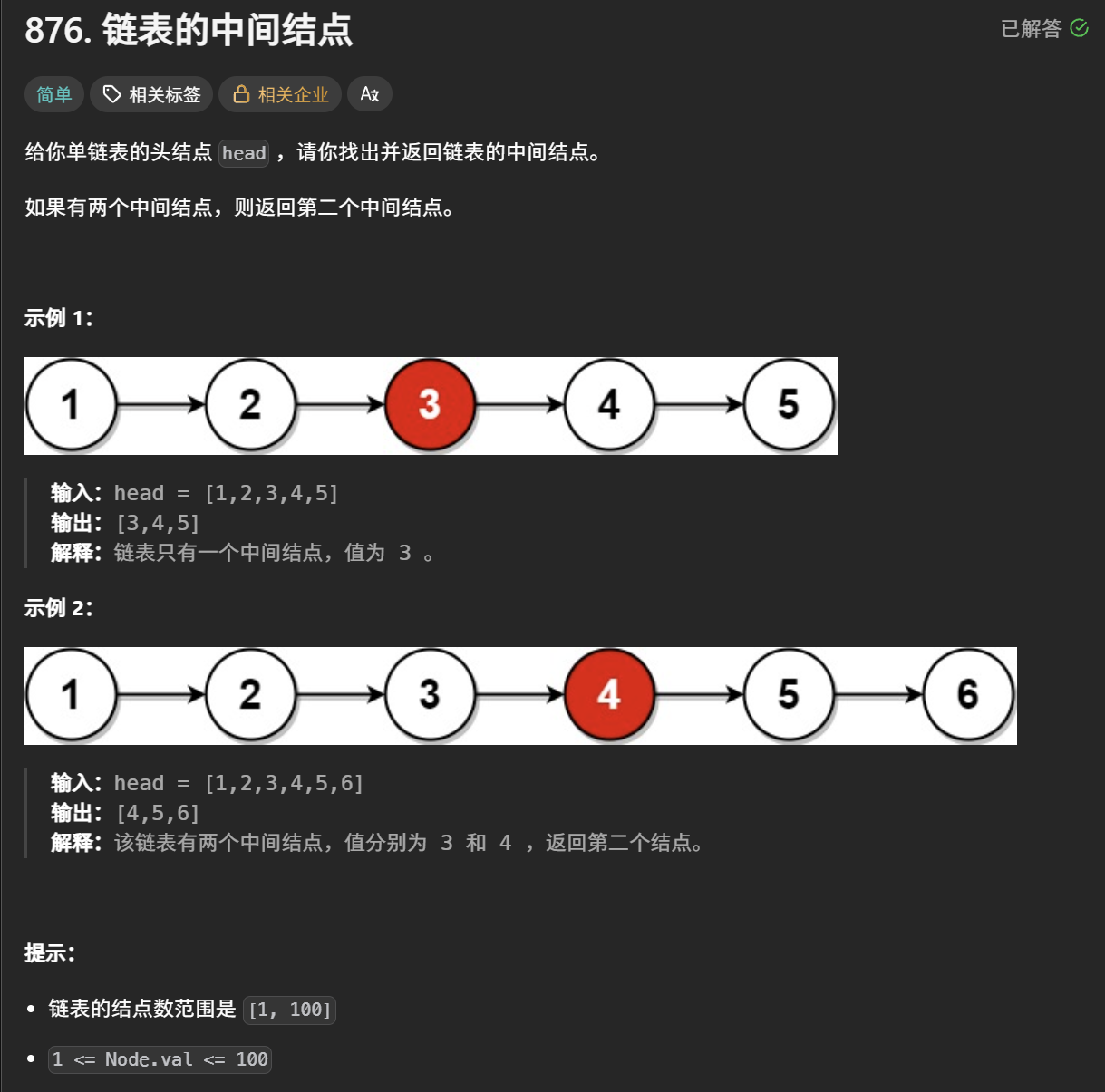
题意分析:单链表不知道总长度,想找中间节点,通常得先遍历一遍求长度,然后再遍历一半找节点。跑两趟,太笨重了。
思路 :
快慢指针(双指针法) 。
一条跑道,兔子和乌龟同时起跑。兔子每次跑两步(fast = fast->next->next),乌龟每次跑一步(slow = slow->next)。
当兔子冲过终点线时,乌龟绝对刚好踩在半程的线上。
踩坑批注 :注意
while循环的边界条件fast && fast->next。因为fast一次要跳两步,必须保证它当前节点和下一个节点都不是NULL,否则直接报段错误(解引用空指针)。
参考代码:
c
/**
 * Definition for singly-linked list.
 * struct ListNode {
 * int val;
 * struct ListNode *next;
 * };
 */
struct ListNode* middleNode(struct ListNode* head) {
    if(!head || !head->next) return head; // 只有0个或1个节点,直接返回

    struct ListNode* fast = head;
    struct ListNode* slow = head;

    // fast->next只要不是NULL,循环就继续
    while(fast && fast->next) {
        fast = fast->next->next; // 兔子走两步
        slow = slow->next;       // 乌龟走一步
    }

    return slow; // 兔子到终点,乌龟刚好在中间
}
2. LeetCode 383. 赎金信
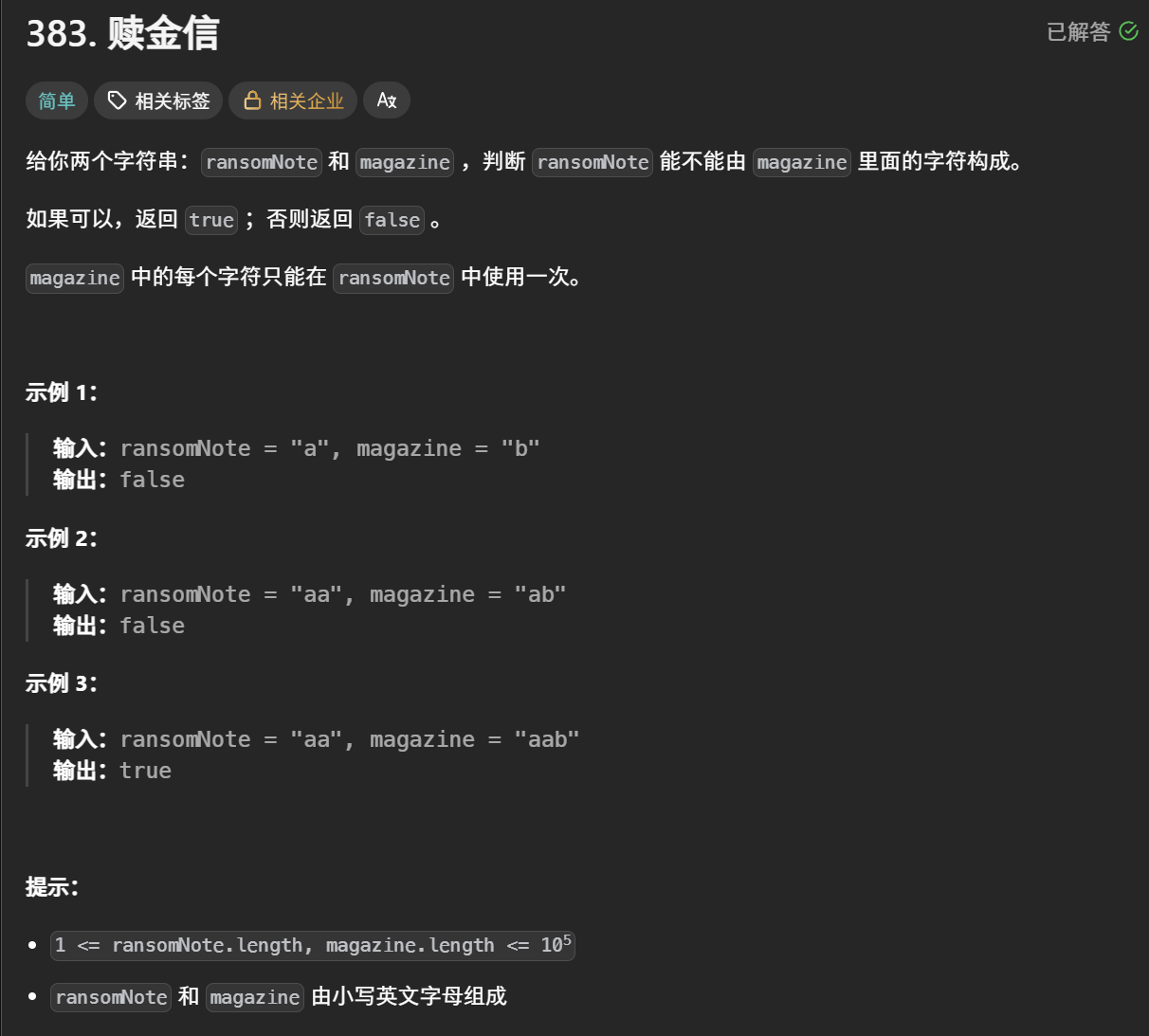
题意分析:判断字符串 A 能不能由字符串 B 里的字符拼出来,且 B 里的字符只能用一次。
思路 :
这题是典型的字符统计问题。因为题目明确提示"由小写英文字母组成",所以字母种类最多也就 26 个(或者说 ASCII 字符最多 256 个)。
可以直接开一个固定大小的数组当哈希表。
- 遍历
magazine(杂志),把拥有的字符作为数组下标,对应位置的频次加一。 - 遍历
ransomNote(赎金信),把需要的字符作为数组下标,对应位置的频次减一。 - 如果减完之后频次小于 0,说明"杂志里的库存"不够用,直接判负!
故事拓展 :以前绑匪为了不暴露字迹,拿一页杂志,在上面圈字母,组成一句话,用来勒索。
例句: The kidnappers circled letters in the magazine to form a ransom
note in order not to reveal their handwriting.
绑匪为了不暴露字迹,在杂志上圈选字母组成赎金信。
参考代码:
c
#include <stdbool.h>

bool canConstruct(char* ransomNote, char* magazine) {
    //  ASCII 码映射,255 容量足以覆盖所有基础字符
    // 如果想更省内存,可以开 int arr1[26] = {0}; 然后下标用 [magazine[i] - 'a']
    int arr1[255] = {0};

    // 1. 录入库存
    for(int i = 0; magazine[i] != '\0'; i++) {
        arr1[magazine[i]]++;
    }

    // 2. 消耗库存并实时校验
    for(int i = 0; ransomNote[i] != '\0'; i++) {
        // 先减 1,如果减完发现变成负数了,说明不够用
        if((--arr1[ransomNote[i]]) < 0) {
            return false;
        }
    }

    return true;
}
3. LeetCode 2. 两数相加
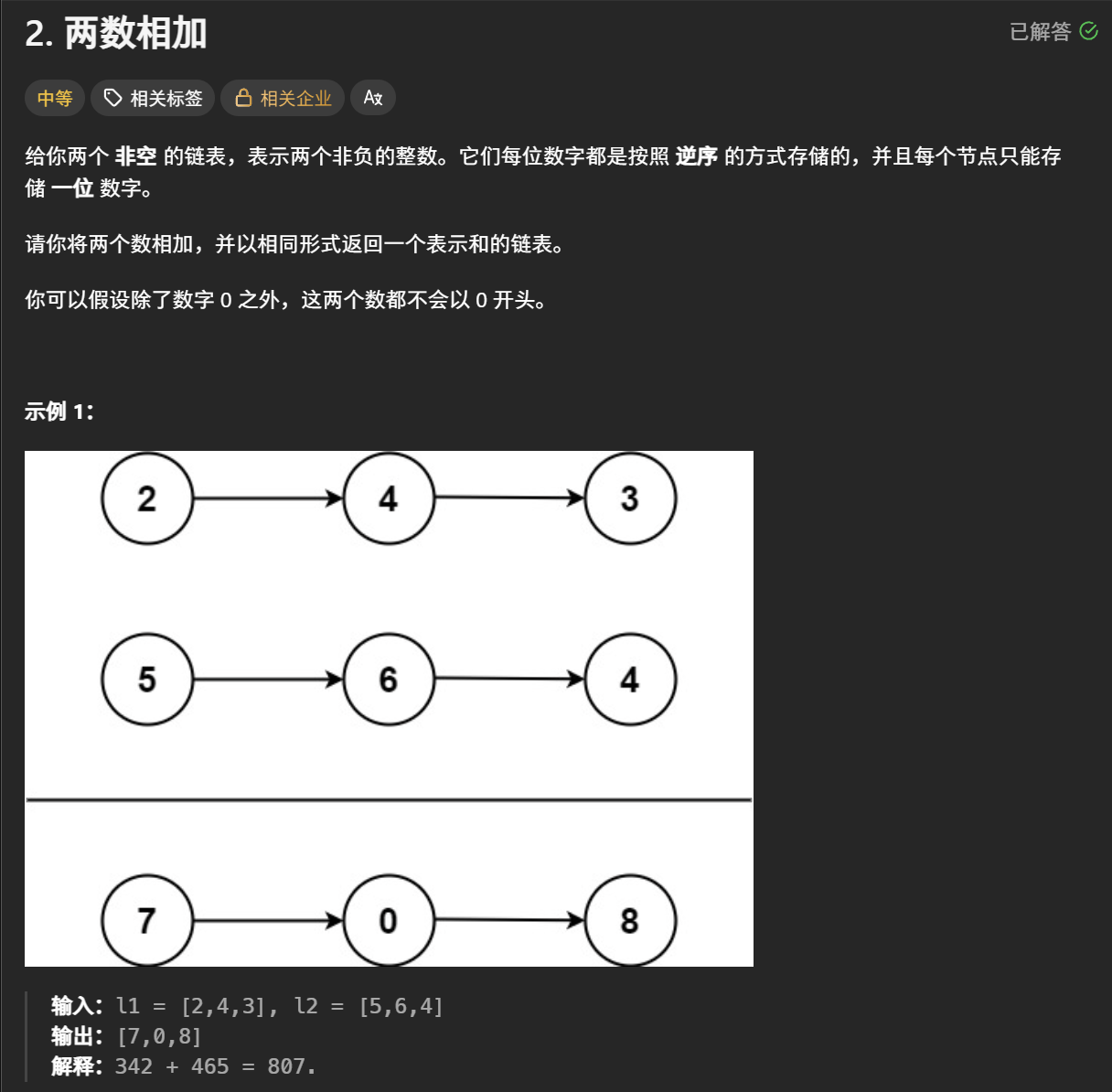
题意分析 :两个链表逆序存储数字,要求按位相加并处理进位。难点不在于数学逻辑,而在于如何优雅地处理链表的新增节点和头节点的特殊情况。
通常做法是建一个哑节点(Dummy Node),这样可以避免判断
if(head == NULL)的繁琐逻辑。但是,采用**二级指针(Pointer to Pointer)**法,极具艺术感!Linux 之父 Linus Torvalds 曾把这种写法称为 "Good Taste"。
思路 :
struct ListNode** link 这个二级指针,存的永远是**"下一个需要被赋值的指针的地址"**。
- 初始时,它指向
head的地址。我们给*link分配内存,其实就是把新节点挂在了head上。 - 随后,执行
link = &((*link)->next);。这时候link指向了刚刚建好的那个新节点的next指针的地址。 - 下一轮循环时,再去给
*link分配内存,就顺理成章地连到了整个链表的尾巴上。全程不需要 Dummy Node,也不需要单独记录 tail 指针!
代码解析:此处提供3种解法
参考代码:
c
/**
 * Definition for singly-linked list.
 * struct ListNode {
 *     int val;
 *     struct ListNode *next;
 * };
 */
// struct ListNode* addTwoNumbers(struct ListNode* l1, struct ListNode* l2) {
//     // struct ListNode dummy;
//     // dummy.next=NULL;
//     // struct ListNode* curr=&dummy;
//     // int carry=0;
//     // while(l1!=NULL || l2!=NULL || carry!=0)
//     // {
//     //     int sum=carry;
//     //     if(l1!=NULL)
//     //     {
//     //         sum+=l1->val;
//     //         l1=l1->next;
//     //     }
//     //     if(l2!=NULL)
//     //     {
//     //         sum+=l2->val;
//     //         l2=l2->next;
//     //     }
//     //     carry=sum/10;
//     //     struct ListNode* newNote=(struct ListNode*)malloc(sizeof(struct ListNode));
//     //     newNote->next=NULL;
//     //     newNote->val=sum%10;
//     //     curr->next=newNote;
//     //     curr=curr->next;
//     // }
//二
//     struct ListNode dummy;
//     dummy.next=l1;
//     struct ListNode* prev=&dummy;
//     int carry=0;
//     int sum=0;
//     while(l1!=NULL && l2!=NULL)
//     {
//         sum=l1->val+l2->val+carry;
//         l1->val=sum%10;
//         carry=sum/10;
//         prev=l1;
//         l1=l1->next;
//         l2=l2->next;
//     }
//     if(l2!=NULL)
//     {
//         prev->next=l2;
//         l1=l2;
//     }
//     while(l1!=NULL && carry>0)
//     {
//         sum=l1->val+carry;
//         l1->val=sum%10;
//         carry=sum/10;
//         prev=l1;
//         l1=l1->next;
//     }
//     if(carry>0)
//     {
//         struct ListNode* newNode=(struct ListNode*)malloc(sizeof(struct ListNode));
//         newNode->val=carry;
//         newNode->next=NULL;
//         prev->next=newNode;
//     }
//     return dummy.next;
// }
//三
struct ListNode* addTwoNumbers(struct ListNode* l1, struct ListNode* l2) {
    struct ListNode* head = NULL;
    // link 指向"待连接的那个指针的地址"
    struct ListNode** link = &head;
    int carry = 0;

    // 只要 l1 没走完,或者 l2 没走完,或者最后还有进位,就继续加
    while (l1 || l2 || carry) {
        int sum = carry;
        if (l1) { sum += l1->val; l1 = l1->next; }
        if (l2) { sum += l2->val; l2 = l2->next; }

        carry = sum / 10;

        // 直接在二级指针指向的地方原地分配新节点
        *link = (struct ListNode*)malloc(sizeof(struct ListNode));
        (*link)->val = sum % 10;
        (*link)->next = NULL;

        // 灵魂一步:把 link 挪到新节点的 next 属性的地址上,准备迎接下一个节点
        link = &((*link)->next);
    }

    return head;
}
继续刷题,下期见!