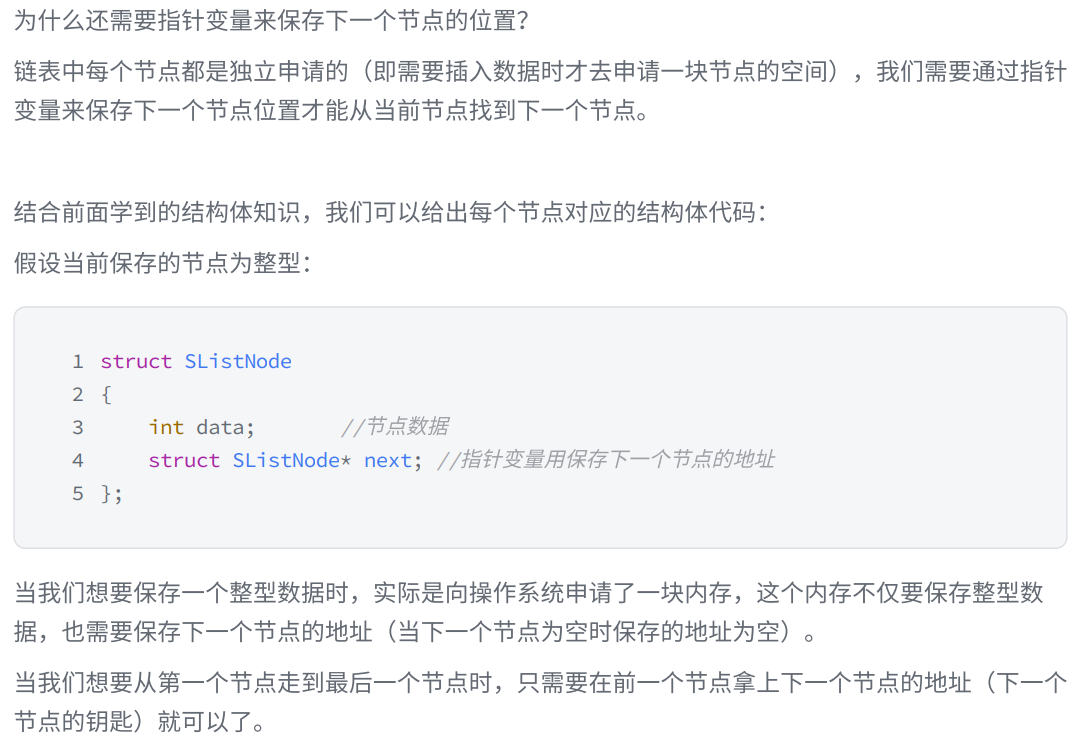
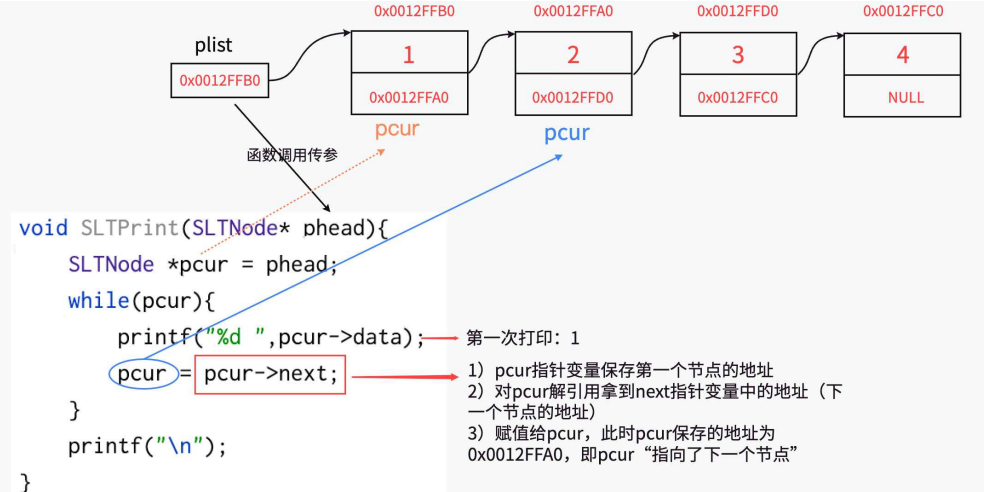
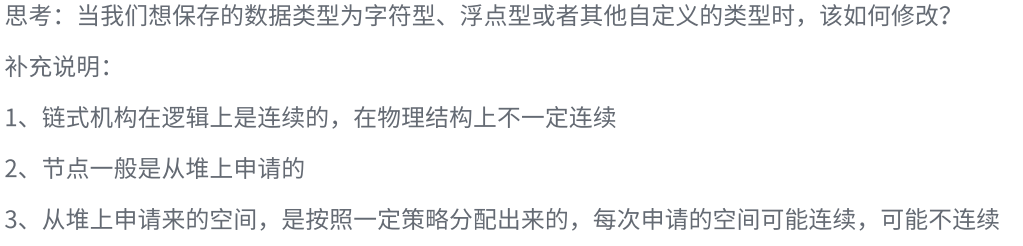
一.链表的概念及结构


二.list测试
cpp
#pragma once
#include<stdio.h>
#include<stdlib.h>
#include<assert.h>

typedef int SLTDataType;
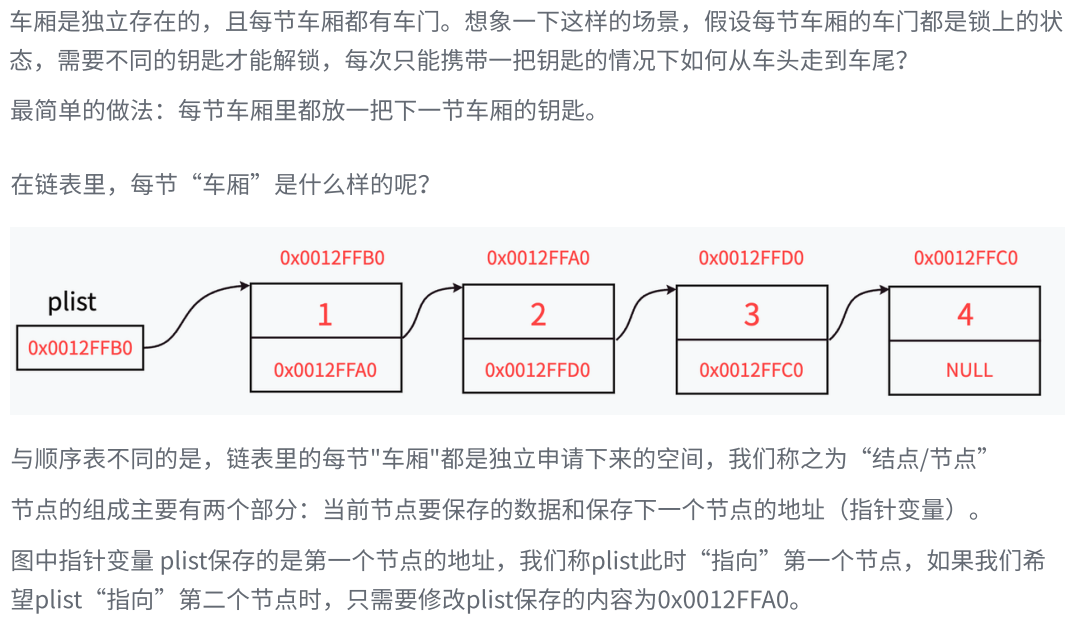
//链表是由节点组成
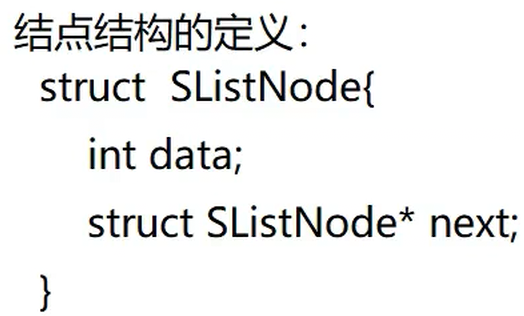
typedef struct SListNode
{
	SLTDataType data;
	struct SListNode* next;
}SLTNode;
cpp
#include"SList.h"

void SlistTest01() {
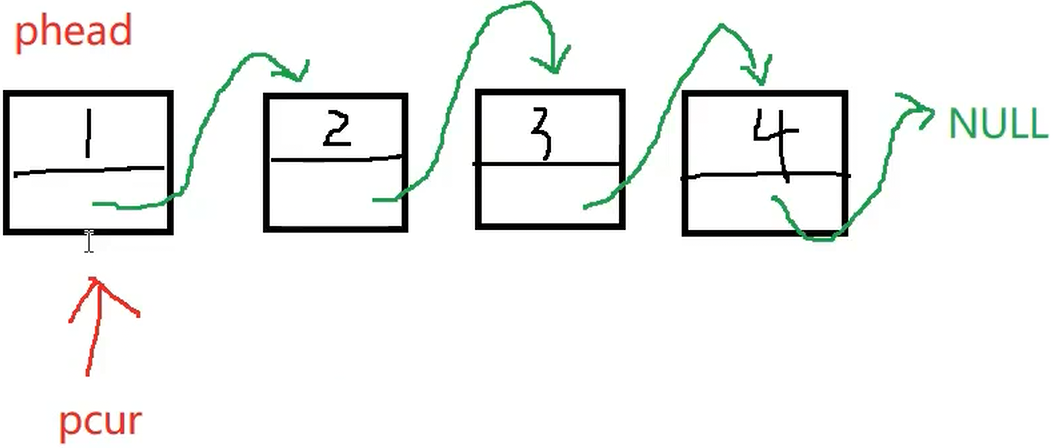
	//一般不会这样去创建链表,这里只是为了给大家展示链表的打印
	SLTNode* node1 = (SLTNode*)malloc(sizeof(SLTNode));
	node1->data = 1;
	SLTNode* node2 = (SLTNode*)malloc(sizeof(SLTNode));
	node2->data = 2;
	SLTNode* node3 = (SLTNode*)malloc(sizeof(SLTNode));
	node3->data = 3;
	SLTNode* node4 = (SLTNode*)malloc(sizeof(SLTNode));
	node4->data = 4;

	node1->next = node2;
	node2->next = node3;
	node3->next = node4;
	node4->next = NULL;

	SLTNode* plist = node1;
	SLTPrint(plist);
}
cpp
#include"SList.h"
void SLTPrint(SLTNode* phead) {
	SLTNode* pcur = phead;
	while (pcur)
	{
		printf("%d->", pcur->data);
		pcur = pcur->next;
	}
	printf("NULL\n");
}
三.链表的模拟实现
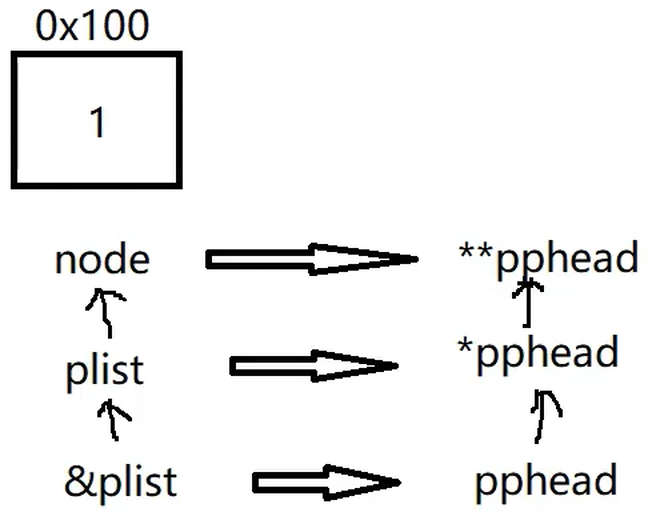
我们要改变ListNode*,就要传递ListNode*的地址
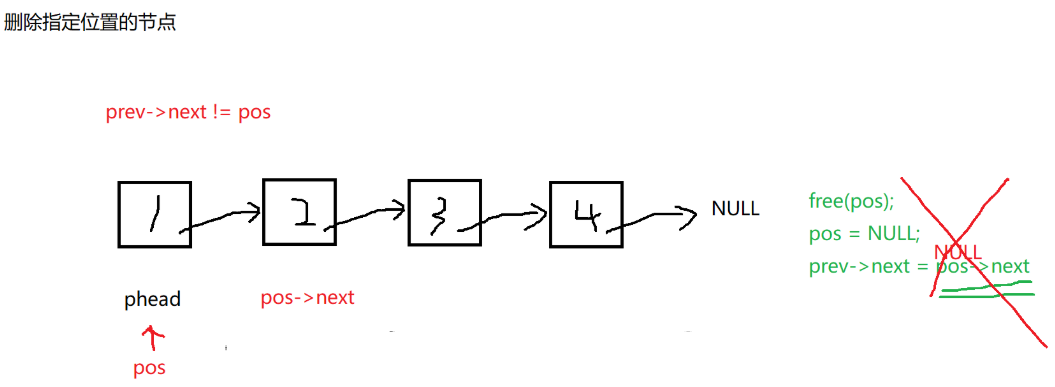
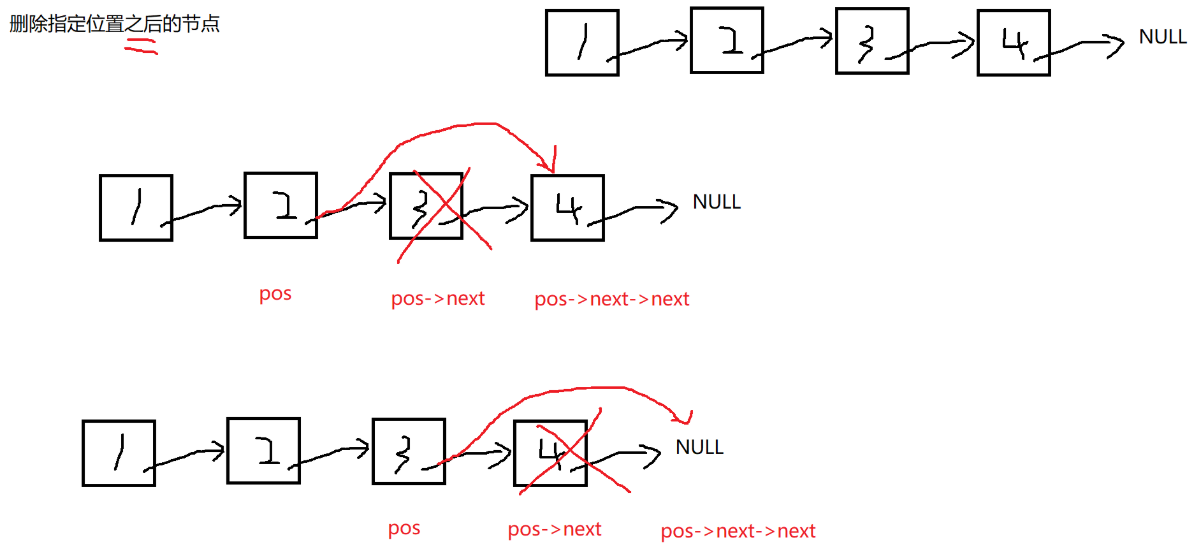
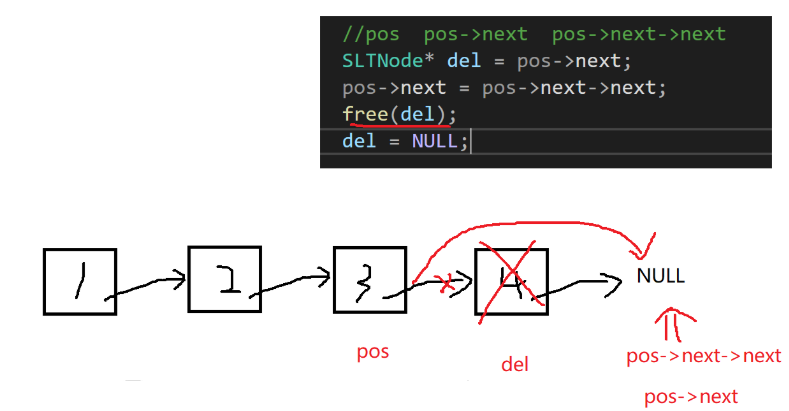
1.SList.h
cpp
#pragma once
#include<stdio.h>
#include<stdlib.h>
#include<assert.h>

typedef int SLTDataType;
//链表是由节点组成
typedef struct SListNode
{
	SLTDataType data;
	struct SListNode* next;
}SLTNode;

//typedef struct SListNode SLTNode;

void SLTPrint(SLTNode* phead);

//链表的头插、尾插
void SLTPushBack(SLTNode** pphead, SLTDataType x);
void SLTPushFront(SLTNode** pphead, SLTDataType x);

//链表的头删、尾删
void SLTPopBack(SLTNode** pphead);
void SLTPopFront(SLTNode** pphead);

//查找
SLTNode* SLTFind(SLTNode** pphead, SLTDataType x);

//在指定位置之前插入数据
void SLTInsert(SLTNode** pphead, SLTNode* pos, SLTDataType x);
//在指定位置之后插入数据
void SLTInsertAfter(SLTNode* pos, SLTDataType x);

//删除pos节点
void SLTErase(SLTNode** pphead, SLTNode* pos);
//删除pos之后的节点
void SLTEraseAfter(SLTNode* pos);

//销毁链表
void SListDesTroy(SLTNode** pphead);
2.SList.c
cpp
#include"SList.h"
void SLTPrint(SLTNode* phead) {
	SLTNode* pcur = phead;
	while (pcur)
	{
		printf("%d->", pcur->data);
		pcur = pcur->next;
	}
	printf("NULL\n");
}

SLTNode* SLTBuyNode(SLTDataType x) {
	SLTNode* newnode = (SLTNode*)malloc(sizeof(SLTNode));
	if (newnode == NULL) {
		perror("malloc fail!");
		exit(1);
	}
	newnode->data = x;
	newnode->next = NULL;

	return newnode;
}

void SLTPushBack(SLTNode** pphead, SLTDataType x) {
	assert(pphead);

	SLTNode* newnode = SLTBuyNode(x);

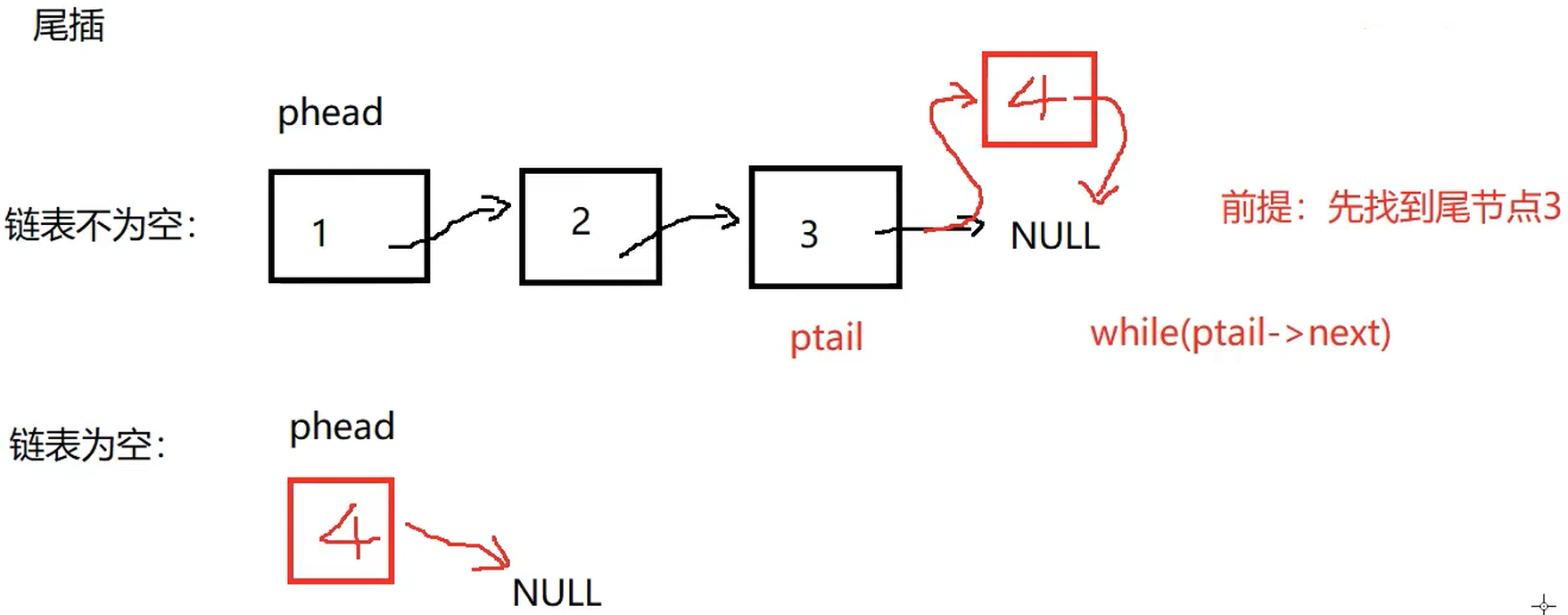
	//链表为空,新节点作为phead
	if (*pphead == NULL) {
		*pphead = newnode;
		return;
	}
	//链表不为空,找尾节点
	SLTNode* ptail = *pphead;
	while (ptail->next)
	{
		ptail = ptail->next;
	}
	//ptail就是尾节点
	ptail->next = newnode;
}
void SLTPushFront(SLTNode** pphead, SLTDataType x) {
	assert(pphead);
	SLTNode* newnode = SLTBuyNode(x);

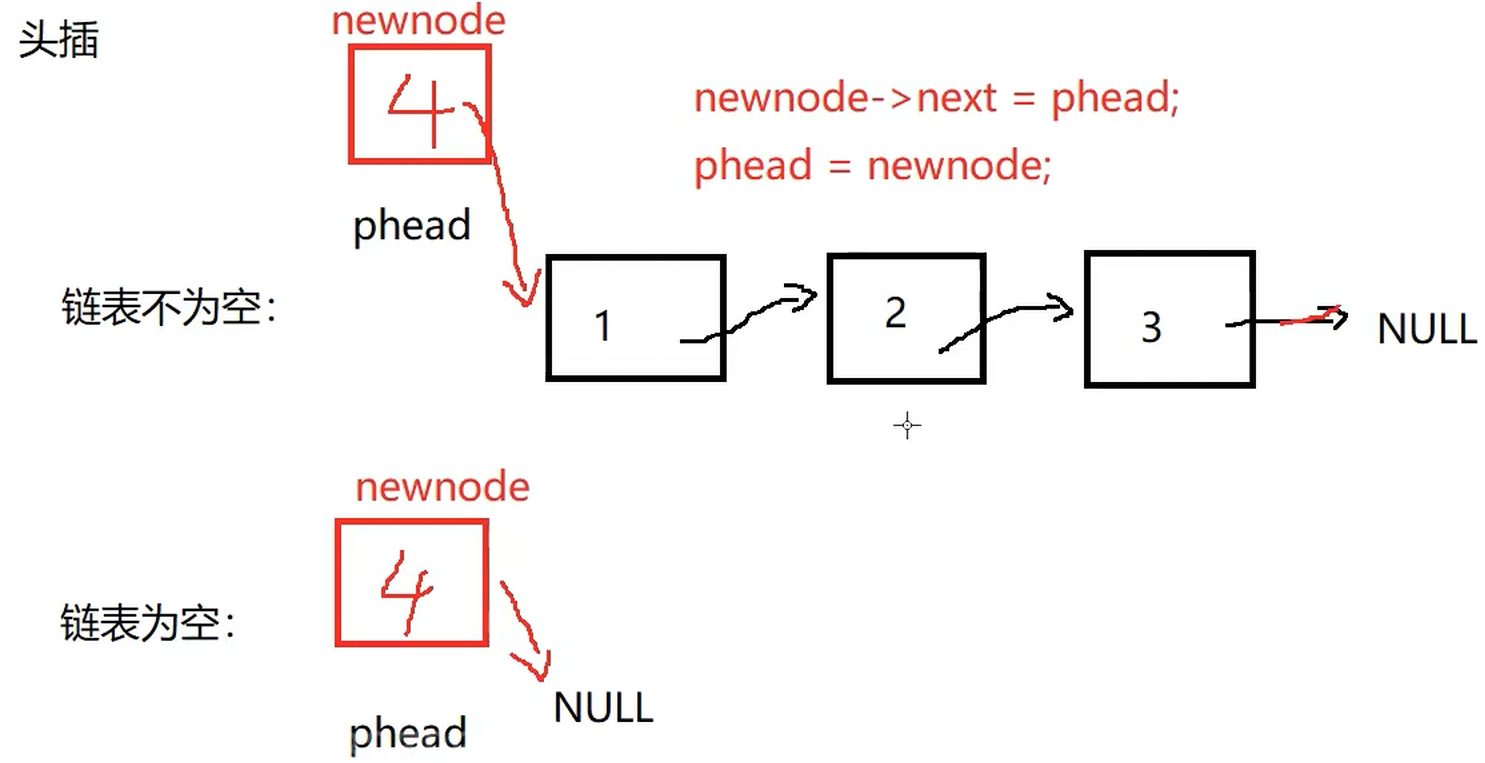
	//newnode *pphead
	newnode->next = *pphead;
	*pphead = newnode;
}
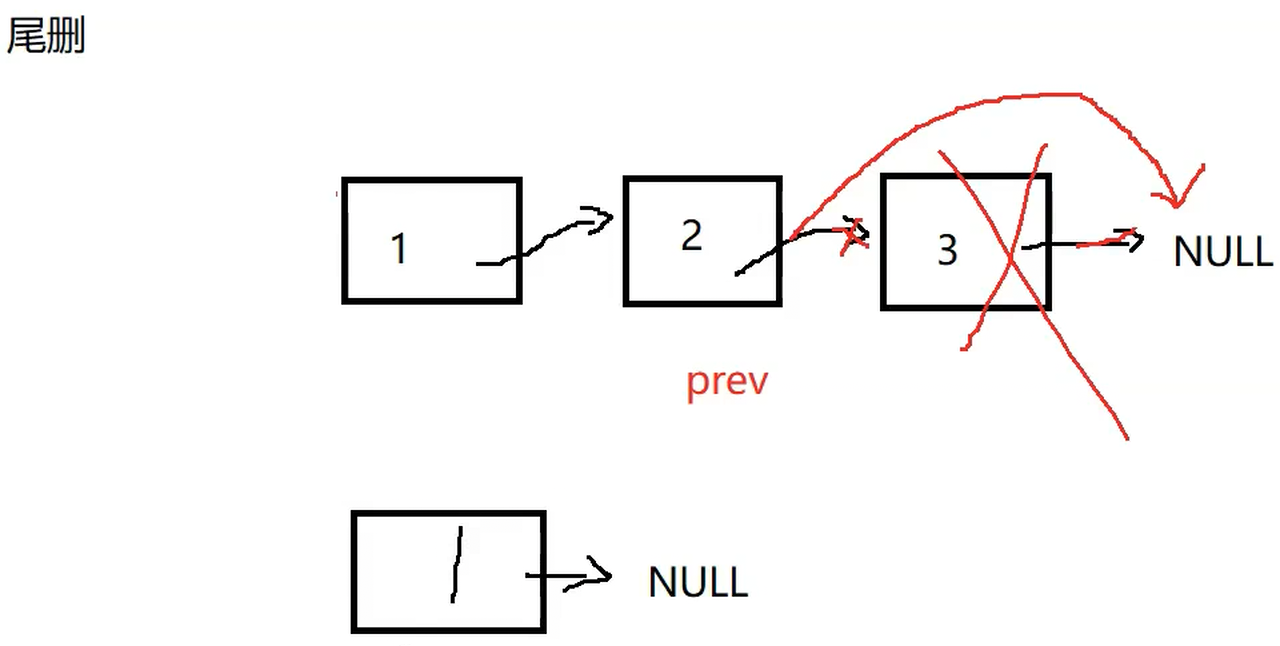
void SLTPopBack(SLTNode** pphead) {
	assert(pphead);
	//链表不能为空
	assert(*pphead);

	//链表不为空
	//链表只有一个节点,有多个节点
	if ((*pphead)->next == NULL) {
		free(*pphead);
		*pphead = NULL;
		return;
	}
	SLTNode* ptail = *pphead;
	SLTNode* prev = NULL;
	while (ptail->next)
	{
		prev = ptail;
		ptail = ptail->next;
	}

	prev->next = NULL;
	//销毁尾结点
	free(ptail);
	ptail = NULL;
}
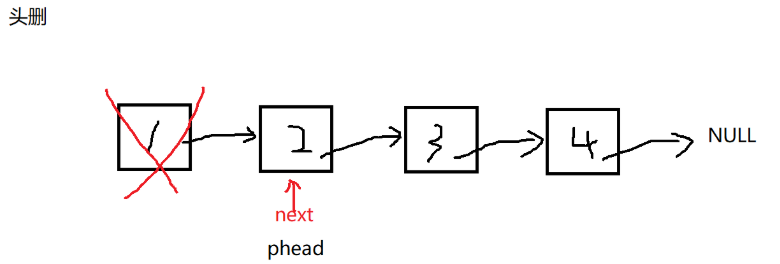
void SLTPopFront(SLTNode** pphead) {
	assert(pphead);
	//链表不能为空
	assert(*pphead);

	//让第二个节点成为新的头
	//把旧的头结点释放掉
	SLTNode* next = (*pphead)->next;
	free(*pphead);
	*pphead = next;
}
//查找
SLTNode* SLTFind(SLTNode** pphead, SLTDataType x) {
	assert(pphead);

	//遍历链表
	SLTNode* pcur = *pphead;
	while (pcur) //等价于pcur != NULL
	{
		if (pcur->data == x) {
			return pcur;
		}
		pcur = pcur->next;
	}
	//没有找到
	return NULL;
}
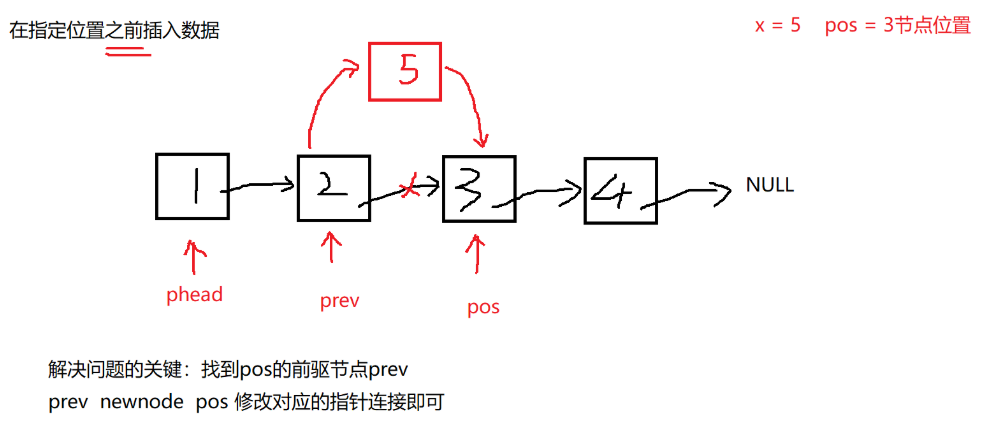
//在指定位置之前插入数据
void SLTInsert(SLTNode** pphead, SLTNode* pos, SLTDataType x) {
	assert(pphead);
	assert(pos);
	//要加上链表不能为空
	assert(*pphead);

	SLTNode* newnode = SLTBuyNode(x);
	//pos刚好是头结点
	if (pos == *pphead) {
		//头插
		SLTPushFront(pphead, x);
		return;
	}

	//pos不是头结点的情况
	SLTNode* prev = *pphead;
	while (prev->next != pos)
	{
		prev = prev->next;
	}
	//prev -> newnode -> pos
	prev->next = newnode;
	newnode->next = pos;
}
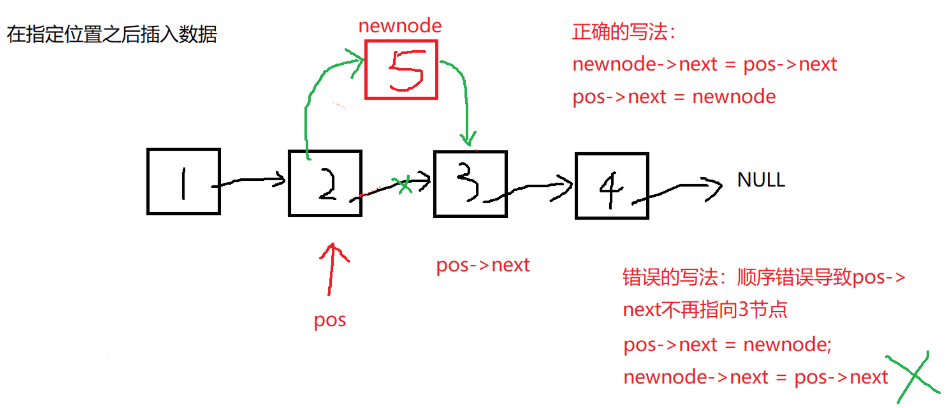
//在指定位置之后插入数据
void SLTInsertAfter(SLTNode* pos, SLTDataType x) {
	assert(pos);

	SLTNode* newnode = SLTBuyNode(x);

	//pos newnode pos->next
	newnode->next = pos->next;
	pos->next = newnode;
}
//删除pos节点
void SLTErase(SLTNode** pphead, SLTNode* pos) {
	assert(pphead);
	assert(*pphead);
	assert(pos);

	//pos刚好是头结点,没有前驱节点,执行头删
	if (*pphead == pos) {
		//头删
		SLTPopFront(pphead);
		return;
	}

	SLTNode* prev = *pphead;
	while (prev->next != pos)
	{
		prev = prev->next;
	}
	//prev pos pos->next
	prev->next = pos->next;
	free(pos);
	pos = NULL;
}
//删除pos之后的节点
void SLTEraseAfter(SLTNode* pos) {
	assert(pos);
	//pos->next不能为空
	assert(pos->next);

	//pos  pos->next  pos->next->next
	SLTNode* del = pos->next;
	pos->next = pos->next->next;
	free(del);
	del = NULL;
}
//销毁链表
void SListDesTroy(SLTNode** pphead) {
	assert(pphead);
	assert(*pphead);

	SLTNode* pcur = *pphead;
	while (pcur)
	{
		SLTNode* next = pcur->next;
		free(pcur);
		pcur = next;
	}
	*pphead = NULL;
}
3.Test.c
cpp
#include"SList.h"

//void SlistTest01() {
//	//一般不会这样去创建链表,这里只是为了给大家展示链表的打印
//	SLTNode* node1 = (SLTNode*)malloc(sizeof(SLTNode));
//	node1->data = 1;
//	SLTNode* node2 = (SLTNode*)malloc(sizeof(SLTNode));
//	node2->data = 2;
//	SLTNode* node3 = (SLTNode*)malloc(sizeof(SLTNode));
//	node3->data = 3;
//	SLTNode* node4 = (SLTNode*)malloc(sizeof(SLTNode));
//	node4->data = 4;
//
//	node1->next = node2;
//	node2->next = node3;
//	node3->next = node4;
//	node4->next = NULL;
//
//	SLTNode* plist = node1;
//	SLTPrint(plist);
//}
void SlistTest02() {
	SLTNode* plist = NULL;
	SLTPushBack(&plist, 1);
	SLTPushBack(&plist, 2);
	SLTPushBack(&plist, 3);
	SLTPushBack(&plist, 4);
	SLTPrint(plist); //1->2->3->4->NULL

	//SLTPushFront(&plist, 5);
	//SLTPrint(plist);          //5->1->2->3->4->NULL
	//SLTPushFront(&plist, 6);
	//SLTPrint(plist);         //6->5->1->2->3->4->NULL
	//SLTPushFront(&plist, 7);
	//SLTPrint(plist);         //7-6->5->1->2->3->4->NULL

	SLTPopBack(&plist);
	SLTPrint(plist);//1->2->3->NULL
	SLTPopBack(&plist);
	SLTPrint(plist);//1->2->3->NULL
	SLTPopBack(&plist);
	SLTPrint(plist);//1->2->3->NULL
	SLTPopBack(&plist);
	SLTPrint(plist);//1->2->3->NULL
	SLTPopBack(&plist);
	SLTPrint(plist);//1->2->3->NULL
}

void SlistTest03() {
	SLTNode* plist = NULL;
	SLTPushBack(&plist, 1);
	SLTPushBack(&plist, 2);
	SLTPushBack(&plist, 3);
	SLTPushBack(&plist, 4);
	SLTPrint(plist); //1->2->3->4->NULL

	SListDesTroy(&plist);
	////头删
	//SLTPopFront(&plist);
	//SLTPrint(plist);    //2->3->4->NULL
	//SLTPopFront(&plist);
	//SLTPrint(plist);    //3->4->NULL
	//SLTPopFront(&plist);
	//SLTPrint(plist);    //4->NULL
	//SLTPopFront(&plist);
	//SLTPrint(plist);    //NULL
	//SLTPopFront(&plist);
	//SLTPrint(plist);    //assert
	//
	//SLTNode* FindRet = SLTFind(&plist, 3);
	//if (FindRet) {
	//	printf("找到了!\n");
	//}
	//else {
	//	printf("未找到!\n");
	//}
	//SLTInsert(&plist, FindRet, 100);
	//SLTInsertAfter(FindRet, 100);
	//
	//删除指定位置的节点
	//SLTErase(&plist, FindRet);
	//SLTPrint(plist); //1->2->3->NULL
}
int main() {
	//SlistTest01();
	//SlistTest02();
	SlistTest03();
	return 0;
}
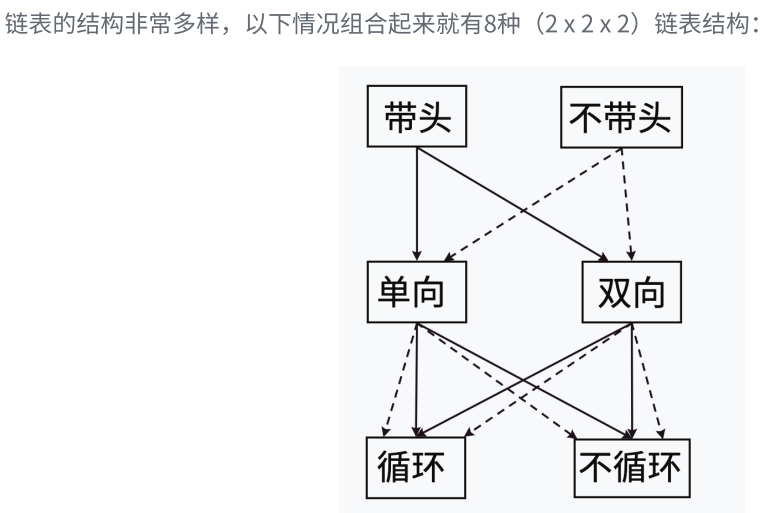
四.链表的分类
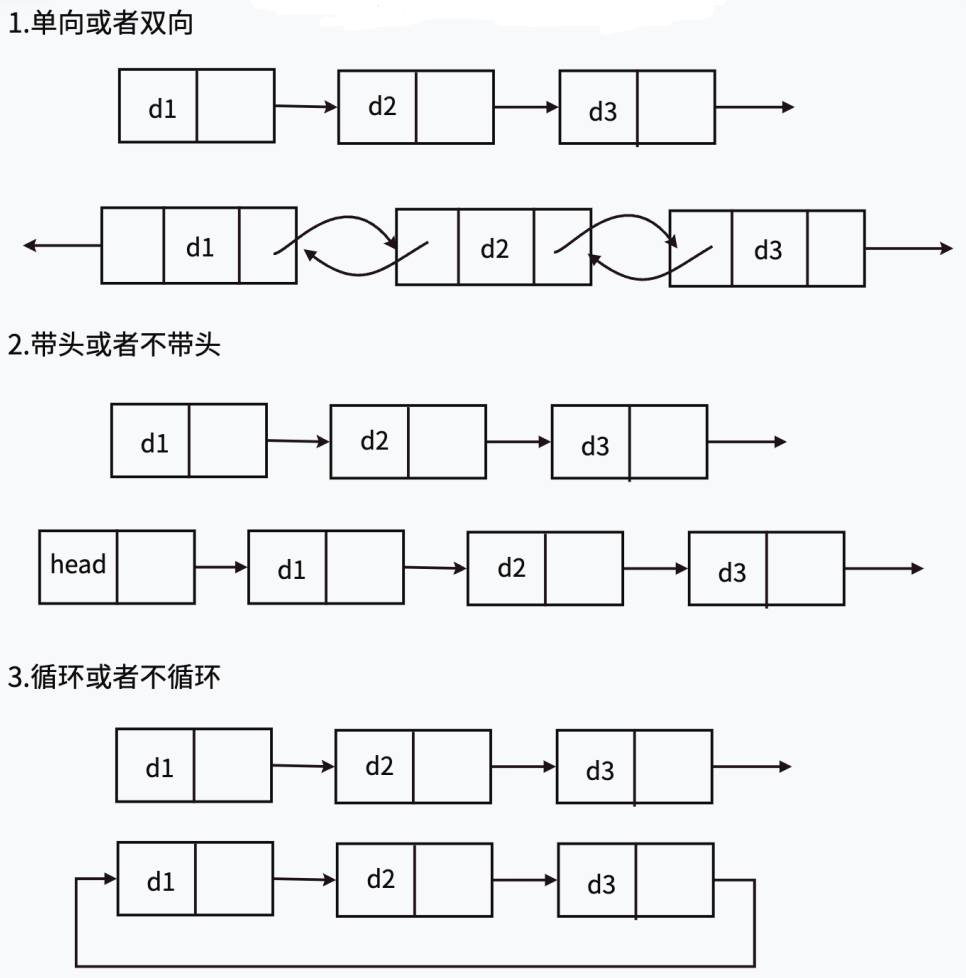
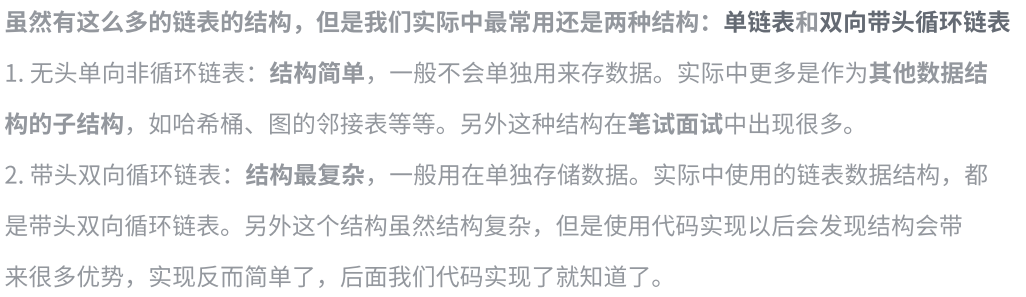
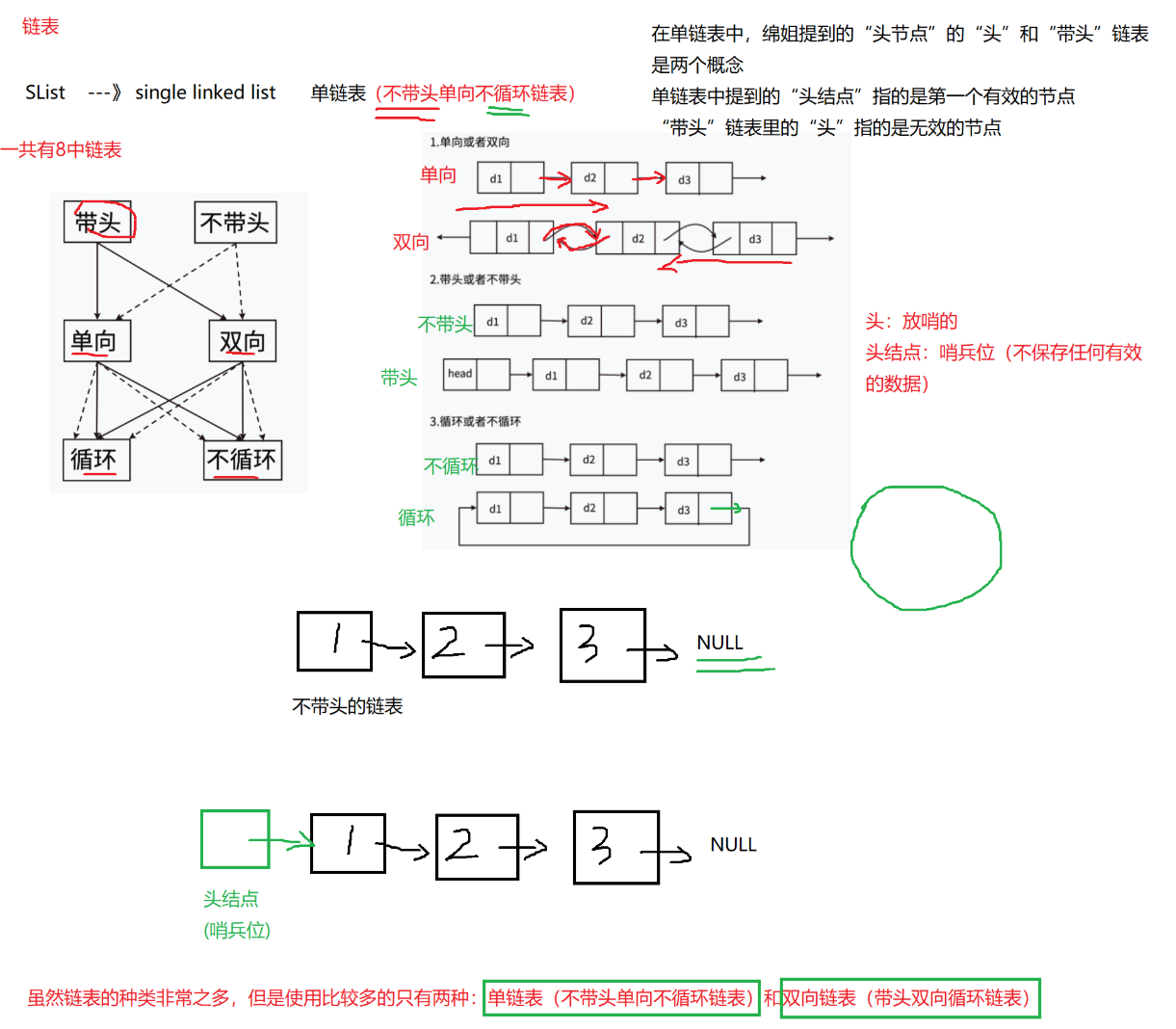
五.单链表的应用
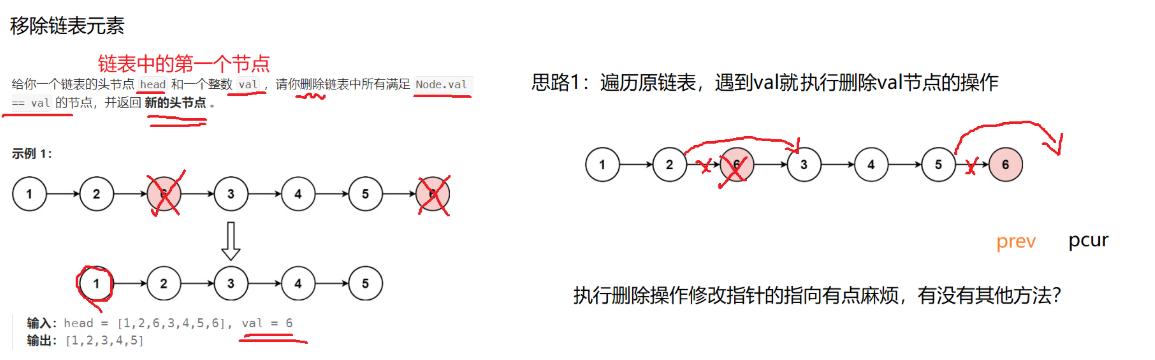
1.题目1
题目链接:https://leetcode.cn/problems/remove-linked-list-elements/description/
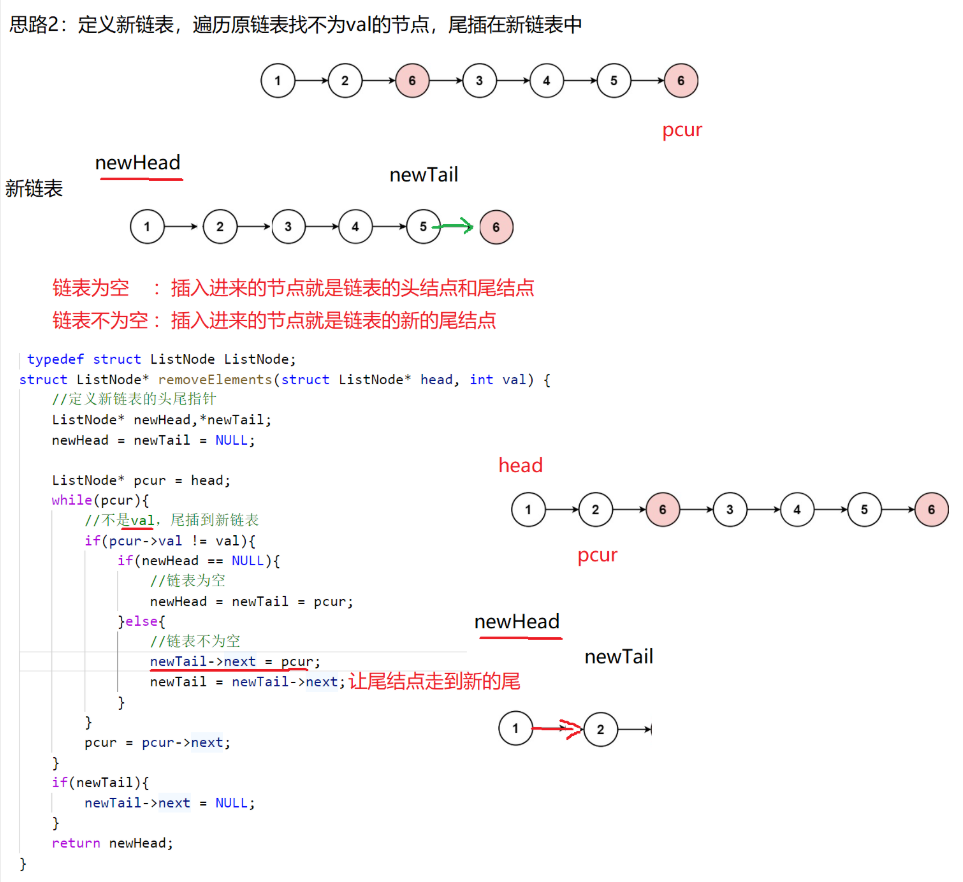
cpp
/**
 * Definition for singly-linked list.
 * struct ListNode {
 *     int val;
 *     struct ListNode *next;
 * };
 */
struct ListNode* removeElements(struct ListNode* head, int val) {
    struct ListNode* newhead=NULL;
    struct ListNode* newtail=NULL;
    struct ListNode* pcur=head;
    while(pcur)
    {
        if(pcur->val != val)
        {
            if(newhead == NULL)
            {
                newhead = newtail = pcur;
            }
            else
            {
                newtail->next = pcur;
                newtail = newtail->next;
            }
        }
        pcur = pcur->next;
    }
    if(newtail)
    {
        newtail->next=NULL;
    }

    return newhead;
}
2.题目2
题目链接:https://leetcode.cn/problems/reverse-linked-list/description/https://leetcode.cn/problems/middle-of-the-linked-list/description/https://leetcode.cn/problems/reverse-linked-list/description/
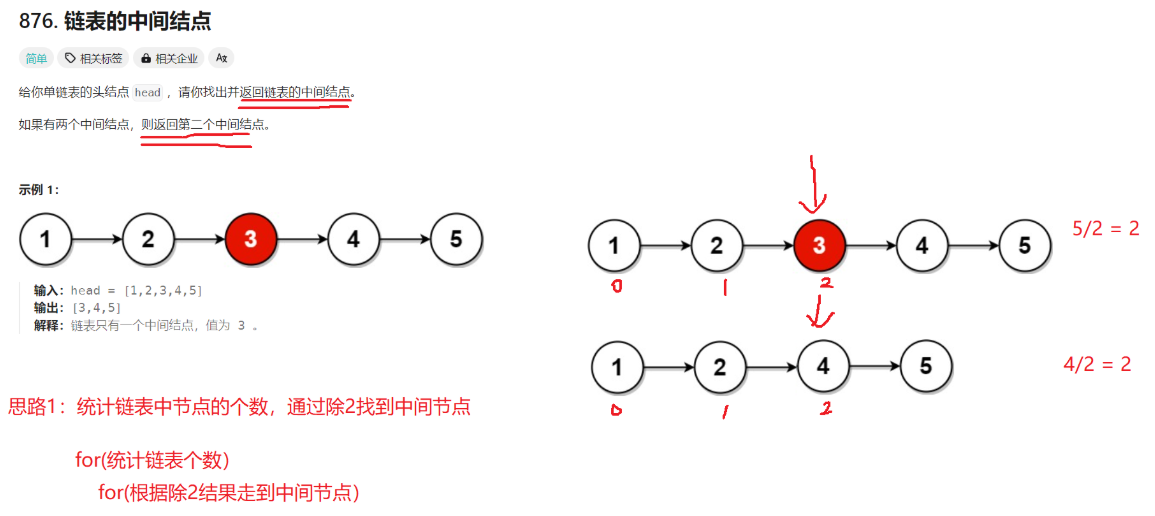
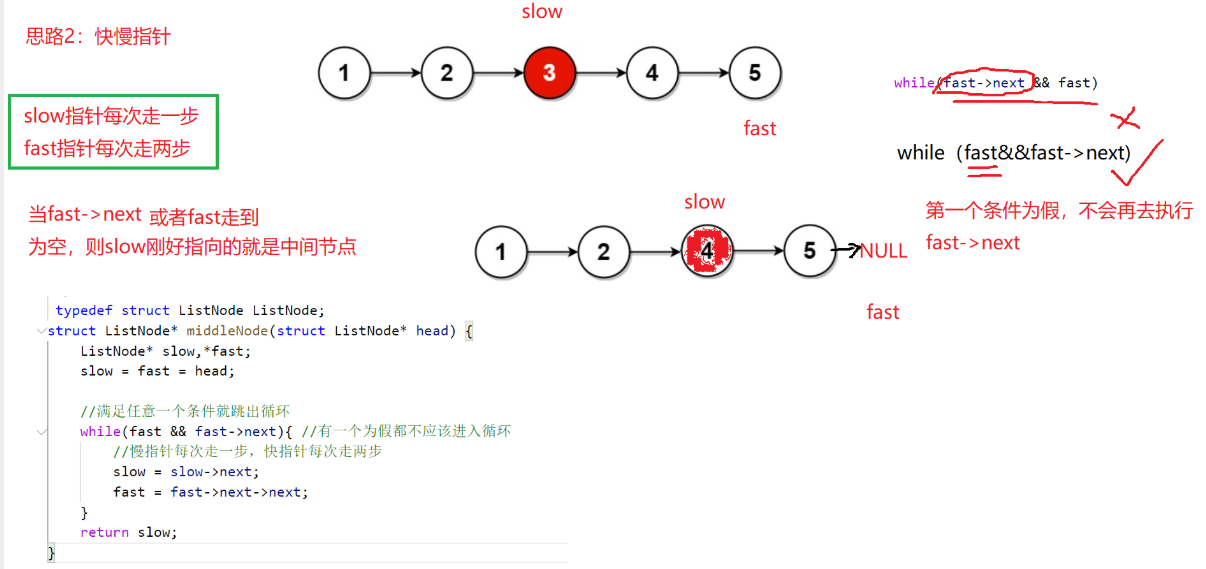
cpp
/**
 * Definition for singly-linked list.
 * struct ListNode {
 *     int val;
 *     struct ListNode *next;
 * };
 */
struct ListNode* middleNode(struct ListNode* head) {
    struct ListNode*slow=head,*fast=head;
    while(fast&&fast->next)
    {
        fast=fast->next->next;
        slow=slow->next;
    }
    return slow;
}
3.题目3
题目链接: https://leetcode.cn/problems/reverse-linked-list/description/
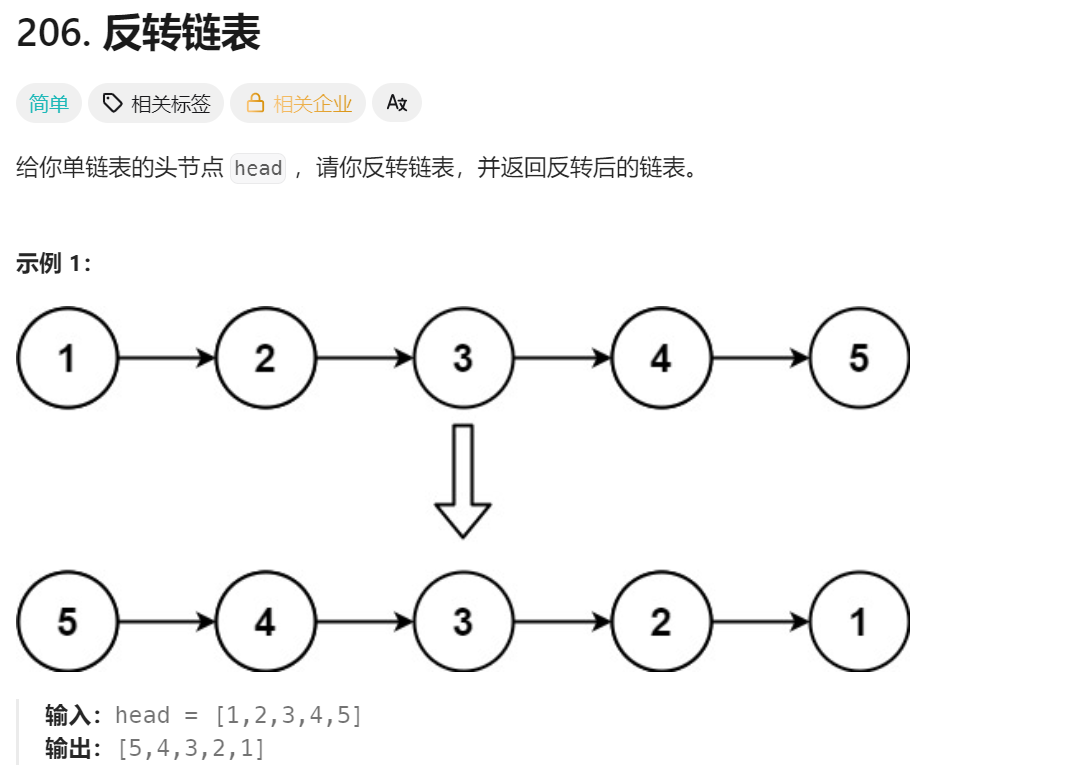


cpp
/**
 * Definition for singly-linked list.
 * struct ListNode {
 *     int val;
 *     struct ListNode *next;
 * };
 */

typedef struct ListNode ListNode;
struct ListNode* reverseList(struct ListNode* head) {
    ListNode* n1,* n2,* n3;
    if(head == NULL)
    {
        return NULL;
    }
    n1 = NULL,n2 = head,n3 = head->next;
    while(n2)
    {
        n2->next = n1;
        n1 = n2;
        n2 = n3;
        if(n3)
        {
            n3 = n3->next;
        }
    }
    return n1;
}
4.题目4
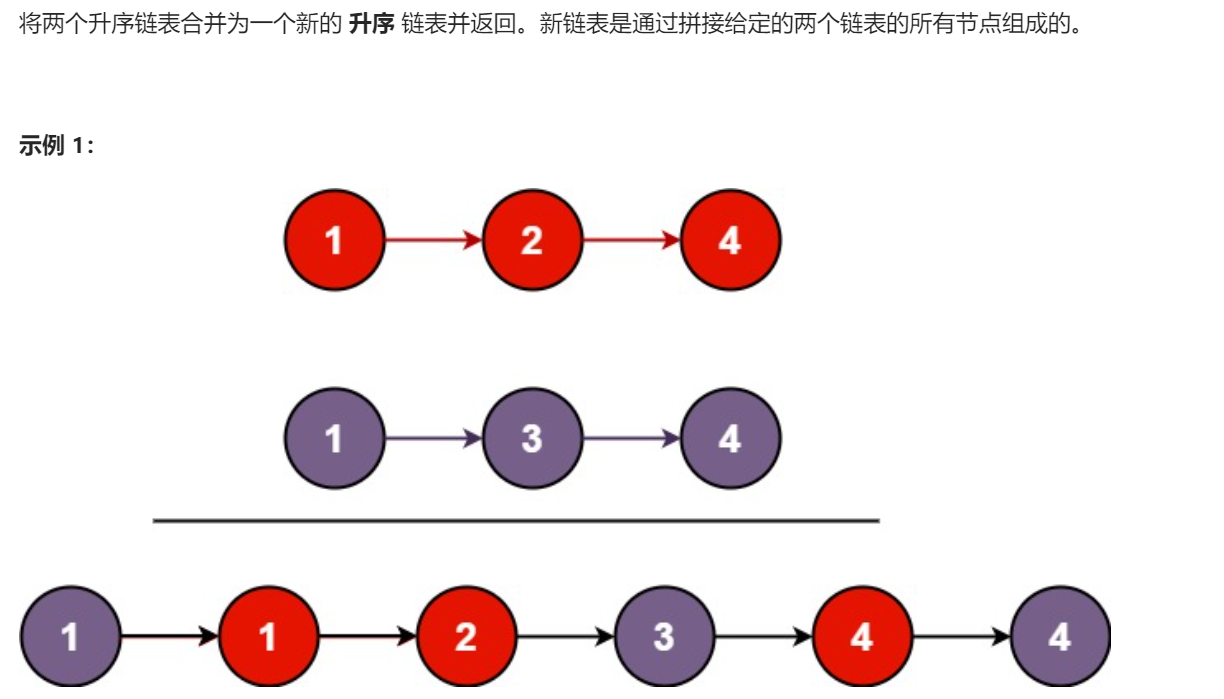
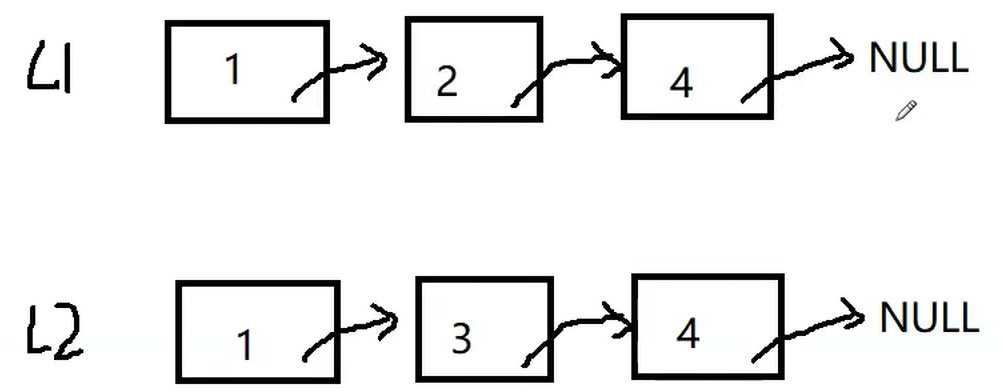
题目链接: https://leetcode.cn/problems/merge-two-sorted-lists/description/

cpp
/**
 * Definition for singly-linked list.
 * struct ListNode {
 *     int val;
 *     struct ListNode *next;
 * };
 */
struct ListNode* mergeTwoLists(struct ListNode* list1, struct ListNode* list2) {
    if(list1==NULL)
    {
        return list2;
    }
    if(list2==NULL)
    {
        return list1;
    }
    struct ListNode* l1=list1;
    struct ListNode* l2=list2;
    struct ListNode* newhead=NULL,*newtail=NULL;
    while(l1&&l2)
    {
        if(l1->val>l2->val)
        {
            if(newhead==NULL)
            {
                newtail=newhead=l2;
            }
            else
            {
                newtail->next=l2;
                newtail=newtail->next;
            }
            l2=l2->next;
        }
        else
        {
            if(newhead==NULL)
            {
                newtail=newhead=l1;
            }
            else
            {
                newtail->next=l1;
                newtail=newtail->next;
            }
            l1=l1->next;
        }
    }
    if(l1)
    {
        newtail->next=l1;
    }
    if(l2)
    {
        newtail->next=l2;
    }
    return newhead;

}
代码优化(增加一个头节点)
cpp
/**
 * Definition for singly-linked list.
 * struct ListNode {
 *     int val;
 *     struct ListNode *next;
 * };
 */
struct ListNode* mergeTwoLists(struct ListNode* list1, struct ListNode* list2) {
    if(list1==NULL)
    {
        return list2;
    }
    if(list2==NULL)
    {
        return list1;
    }
    struct ListNode* l1=list1;
    struct ListNode* l2=list2;
    struct ListNode* newhead,*newtail;
    newhead = newtail = (struct ListNode*)malloc(sizeof(struct ListNode));
    while(l1&&l2)
    {
        if(l1->val>l2->val)
        {
            newtail->next=l2;
            newtail=newtail->next;
            l2=l2->next;
        }
        else
        {
            newtail->next=l1;
            newtail=newtail->next;
            l1=l1->next;
        }
    }
    if(l1)
    {
        newtail->next=l1;
    }
    if(l2)
    {
        newtail->next=l2;
    }
    struct ListNode* ret = newHead->next;
    free(newHead);
    return ret;

}
5.题目5
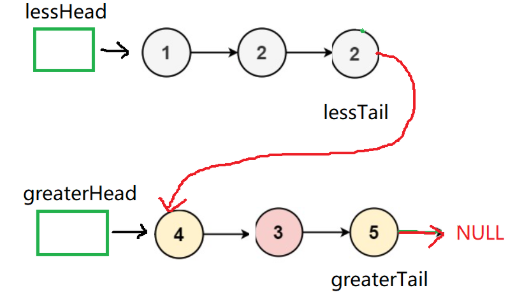
题目链接: https://leetcode.cn/problems/partition-list-lcci/description/

cpp
/**
 * Definition for singly-linked list.
 * struct ListNode {
 *     int val;
 *     struct ListNode *next;
 * };
 */


struct ListNode* partition(struct ListNode* head, int x){
    if(head==NULL)
    {
        return head;
    }
    struct ListNode*pcur=head;
    struct ListNode*new1head,*new1tail,*new2head,*new2tail;
    new1head=new1tail=(struct ListNode*)malloc(sizeof(struct ListNode));
    new2head=new2tail=(struct ListNode*)malloc(sizeof(struct ListNode));
    while(pcur)
    {
        if(pcur->val>=x)
        {
                new1tail->next=pcur;
                new1tail=new1tail->next;
        }
        else
        {
                new2tail->next=pcur;
                new2tail=new2tail->next;
        }
        pcur=pcur->next;
    }
    new1tail->next=NULL;
    new2tail->next=new1head->next;
    struct ListNode* ret=new2head->next;
    free(new1head);
    free(new2head);
    return ret;
}
6.题目6
题目链接: https://www.nowcoder.com/practice/41c399fdb6004b31a6cbb047c641ed8a
cpp
class Solution {
public:
    /**
     * 代码中的类名、方法名、参数名已经指定,请勿修改,直接返回方法规定的值即可
     *
     *
     * @param n int整型
     * @param m int整型
     * @return int整型
     */

    // 创建单个节点
    ListNode* BuyNode(int x) {
        ListNode* newNode = (ListNode*)malloc(sizeof(ListNode));
        newNode->val = x;
        newNode->next = NULL;
        return newNode;
    }

    // 创建包含n个节点的单向循环链表
    ListNode* createList(int n) {
        ListNode* phead = BuyNode(1);
        ListNode* ptail = phead;
        for (int i = 2; i <= n; i++) {
            ptail->next = BuyNode(i);
            ptail = ptail->next;
        }
        // 首尾相连形成循环链表
        ptail->next = phead;
        return ptail;
    }

    // 核心逻辑:约瑟夫环问题(逢m删除节点,返回最后剩余节点的值)
    int ysf(int n, int m) {
        // 创建不带头单向循环链表
        ListNode* prev = createList(n);
        ListNode* pcur = prev->next;

        int count = 1;
        // 逢m删除节点(循环到只剩一个节点)
        while (pcur->next != pcur) {
            if (count == m) {
                // 删除当前节点pcur
                prev->next = pcur->next;
                free(pcur);
                // 删除后更新pcur位置,重置count
                pcur = prev->next;
                count = 1;
            } else {
                // pcur往后移动
                prev = pcur;
                pcur = pcur->next;
                count++;
            }
        }
        // 此时pcur是最后剩余的节点
        return pcur->val;
    }
};