在 Linux 2.6 内核之前,进程调度采用的是 O (n) 算法 ------ 调度器需要遍历所有就绪进程才能找到优先级最高的那个,进程数量越多,调度效率越低,严重影响多任务场景的性能。而 2.6 内核引入的 O (1) 调度算法,彻底解决了这一痛点,其核心就是设计了高效的调度队列结构,让调度器无论面对多少进程,都能在常数时间内找到最优进程,大幅提升了系统吞吐量。本文从调度队列的核心数据结构、工作流程、优先级管理三个维度,拆解 O (1) 调度队列的设计精髓,帮你理解 "常数时间调度" 的底层逻辑,看透 Linux 内核的高效调度秘诀。
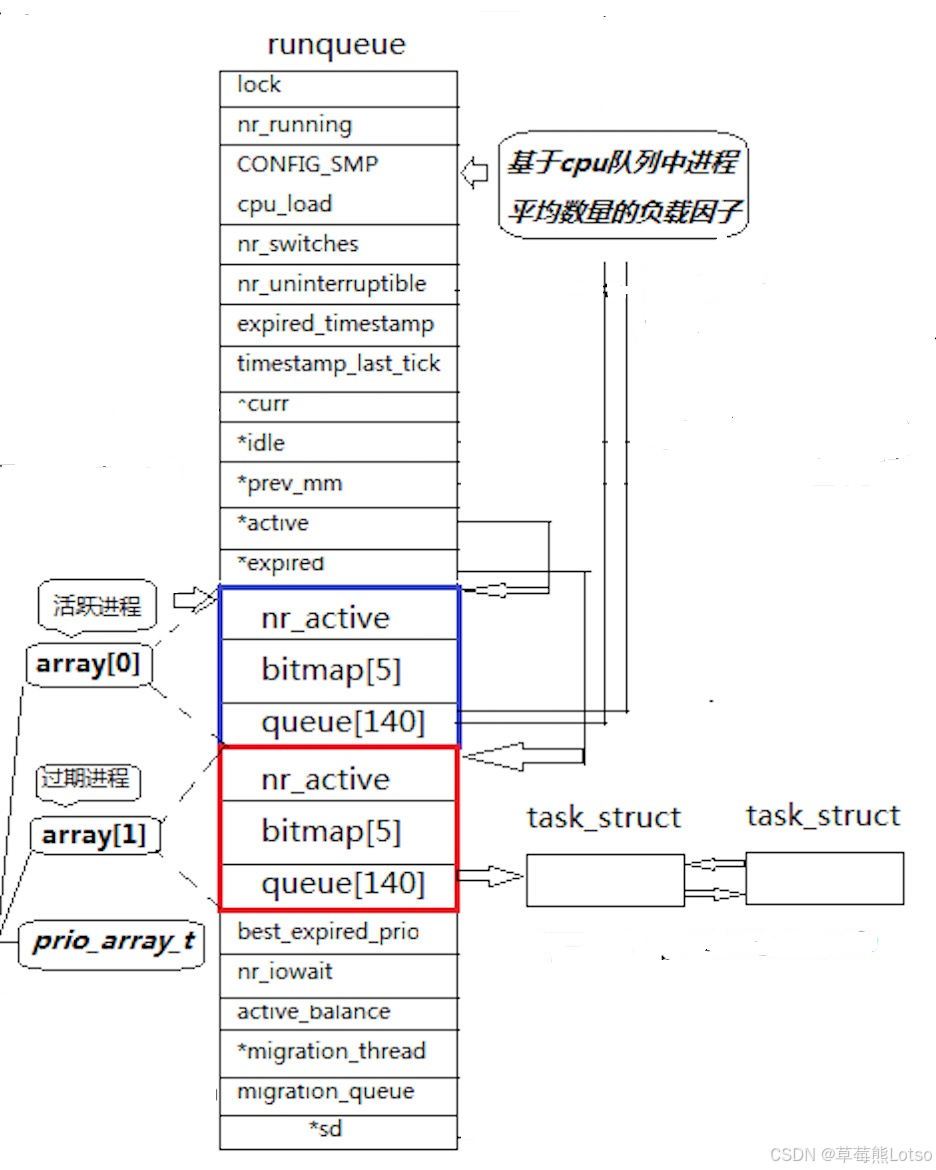
struct rq {
    spinlock_t lock;
    /*
     * nr_running and cpu_load should be in the same cacheline because
     * remote CPUs use both these fields when doing load calculation.
     */
    unsigned long nr_running;
    unsigned long raw_weighted_load;
#ifdef CONFIG_SMP
    unsigned long cpu_load[3];
#endif
    unsigned long long nr_switches;
    /*
     * This is part of a global counter where only the total sum
     * over all CPUs matters. A task can increase this counter on
     * one CPU and if it got migrated afterwards it may decrease
     * it on another CPU. Always updated under the runqueue lock:
     */
    unsigned long nr_uninterruptible;
    unsigned long expired_timestamp;
    unsigned long long timestamp_last_tick;
    struct task_struct *curr, *idle;
    struct mm_struct* prev_mm;
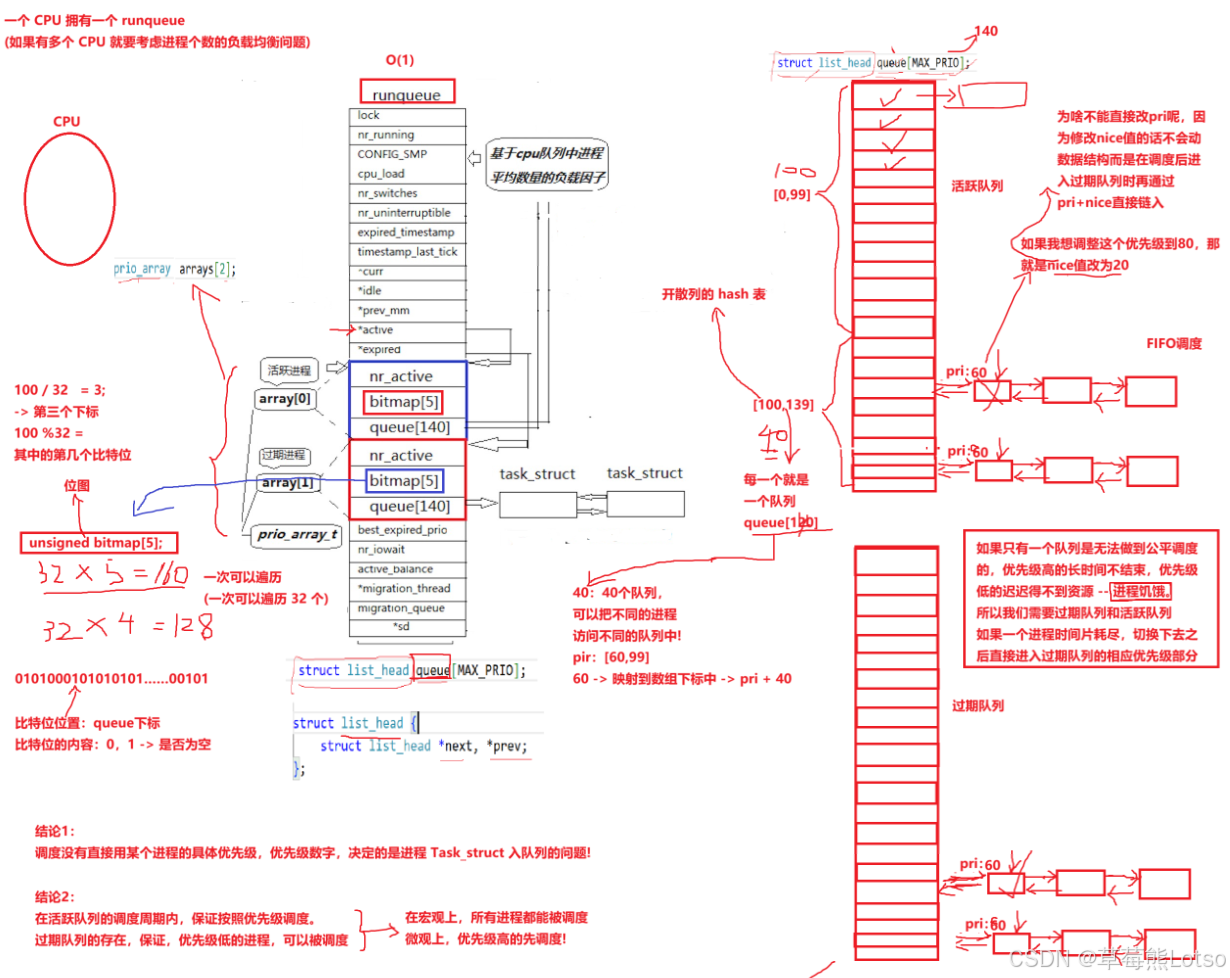
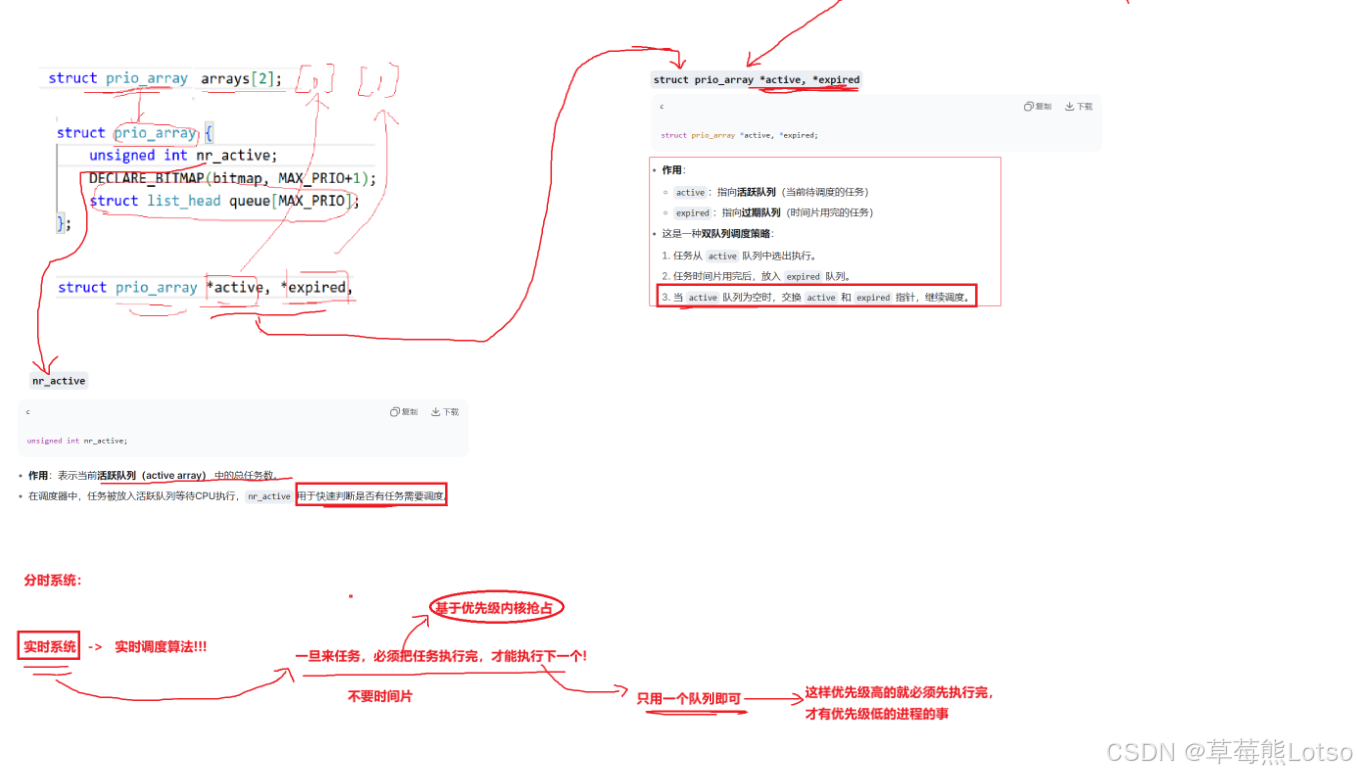
    struct prio_array *active, *expired, arrays[2];
    int best_expired_prio;
    atomic_t nr_iowait;
#ifdef CONFIG_SMP
    struct sched_domain* sd;
    /* For active balancing */
    int active_balance;
    int push_cpu;
    struct task_struct* migration_thread;
    struct list_head migration_queue;
#endif
#ifdef CONFIG_SCHEDSTATS
    /* latency stats */
    struct sched_info rq_sched_info;
    /* sys_sched_yield() stats */
    unsigned long yld_exp_empty;
    unsigned long yld_act_empty;
    unsigned long yld_both_empty;
    unsigned long yld_cnt;
    /* schedule() stats */
    unsigned long sched_switch;
    unsigned long sched_cnt;
    unsigned long sched_goidle;
    /* try_to_wake_up() stats */
    unsigned long ttwu_cnt;
    unsigned long ttwu_local;
#endif
    struct lock_class_key rq_lock_key;
};
/*
 * These are the runqueue data structures:
 */
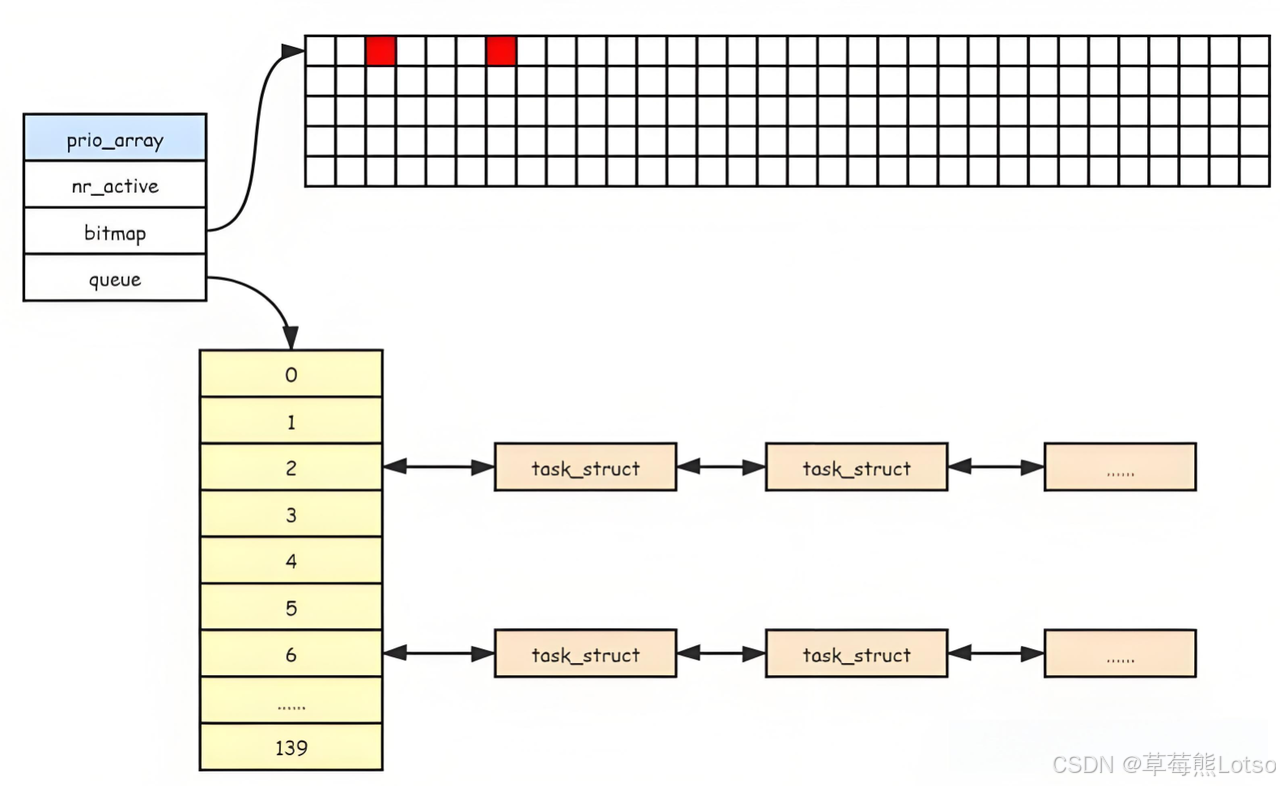
struct prio_array {
    unsigned int nr_active;
    DECLARE_BITMAP(bitmap, MAX_PRIO + 1); /* include 1 bit for delimiter */
    struct list_head queue[MAX_PRIO];
};