题目链接
思路
核心思路是通过「虚拟头节点 + 节点删除 / 插入」的方式实现两两交换:
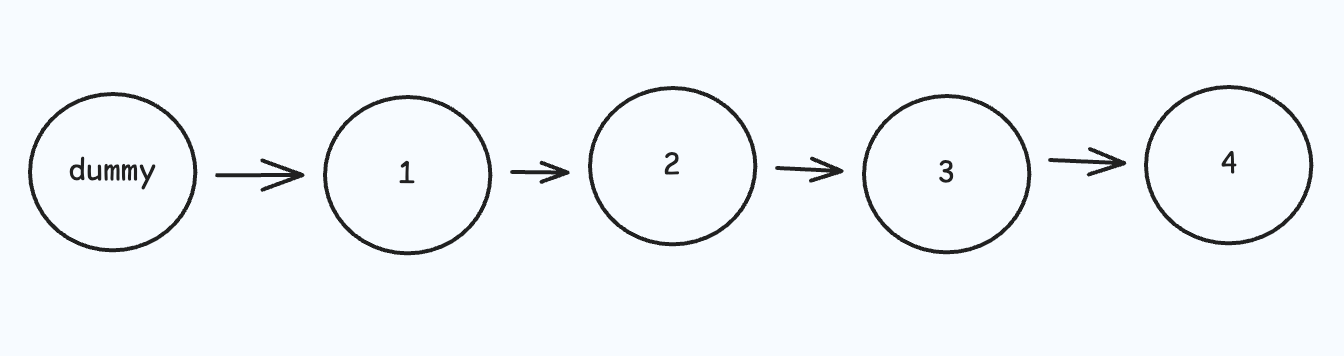
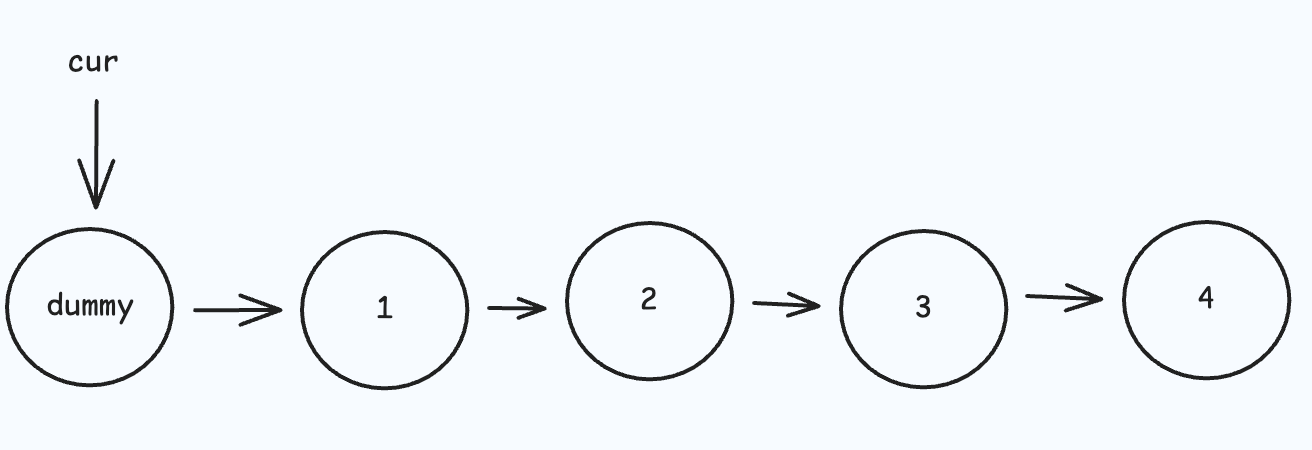
- 先创建一个虚拟头节点(dummy) 指向原链表头节点,避免处理头节点交换的特殊情况;
- 遍历链表时,每次定位到需要交换的两个相邻节点(记为 first、second);
- 先将 first 节点从原位置 "删除",再将 first 节点插入到 second 节点的后面;
- 移动遍历指针,重复上述过程直到所有两两节点交换完成。
图解过程
plain
输入:head = [1,2,3,4]
输出:[2,1,4,3]
1.初始化链表
ListNode dummy = new ListNode(-1, head);
ListNode cur = dummy;
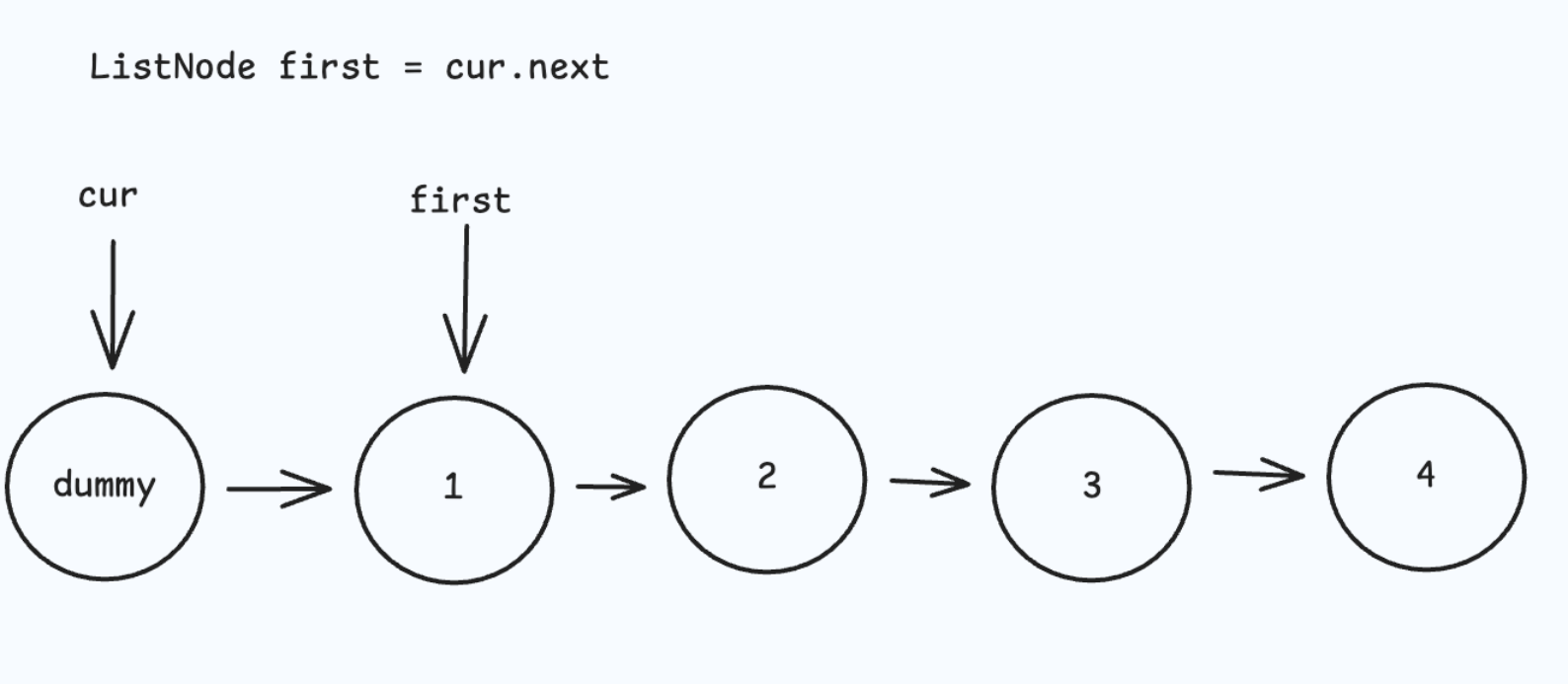
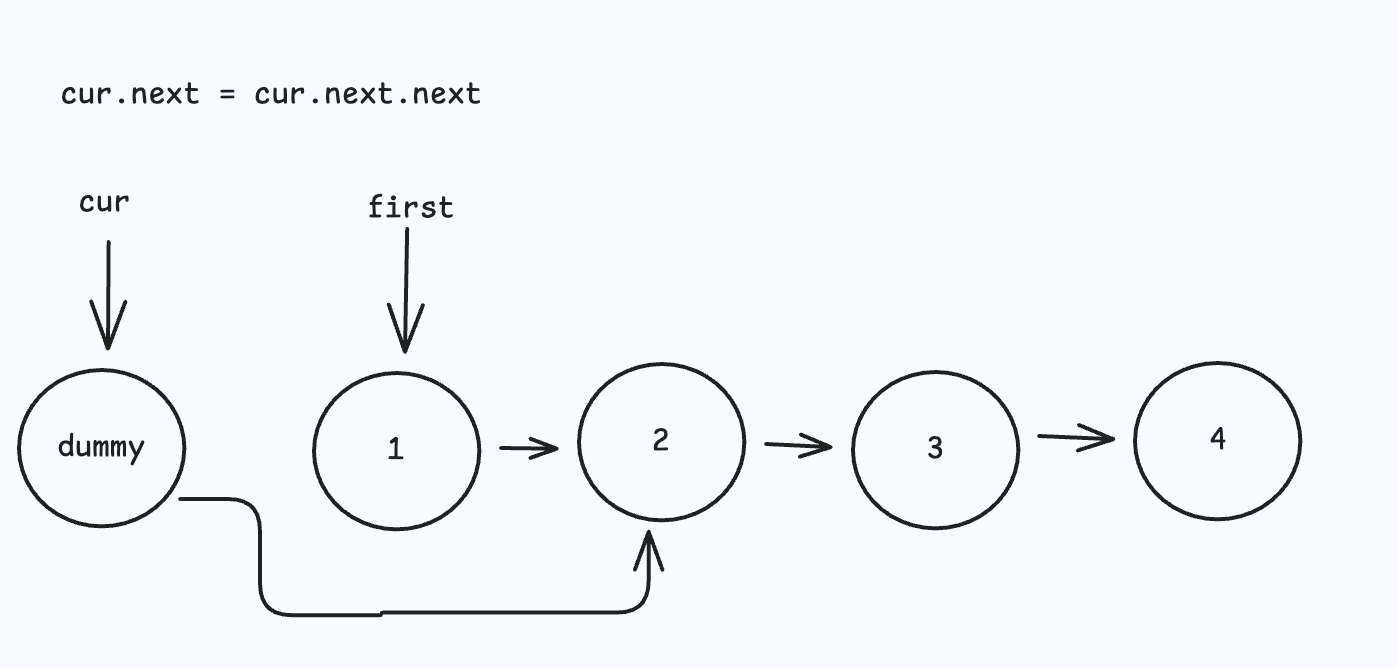
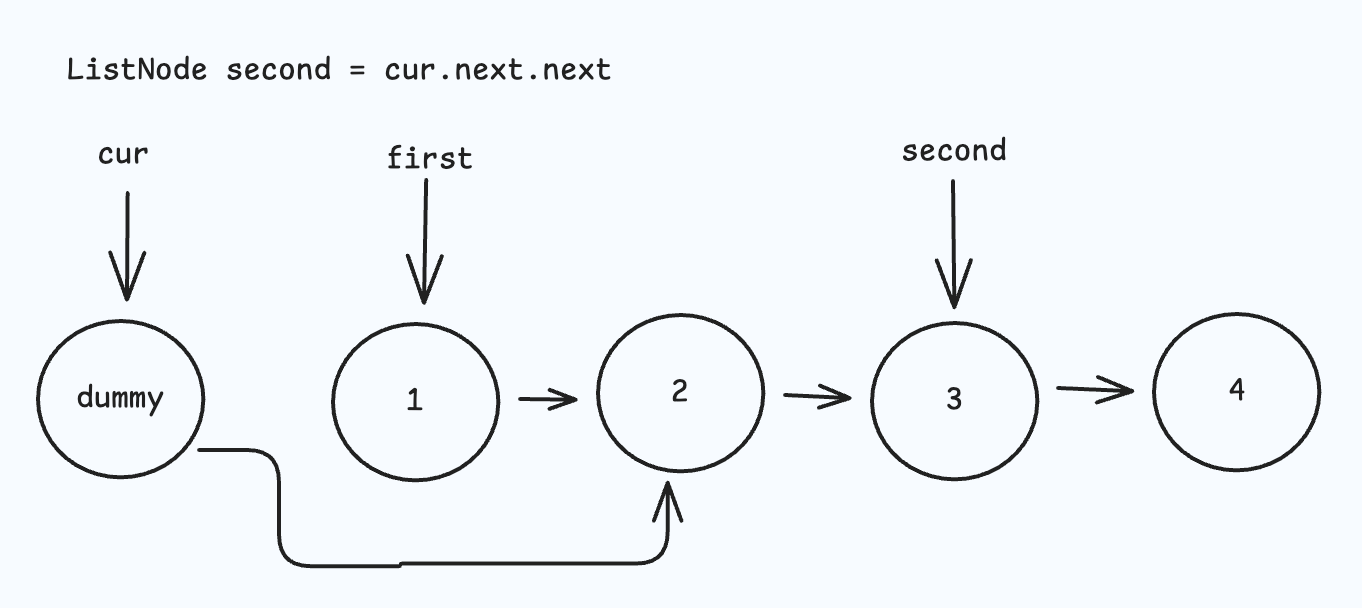
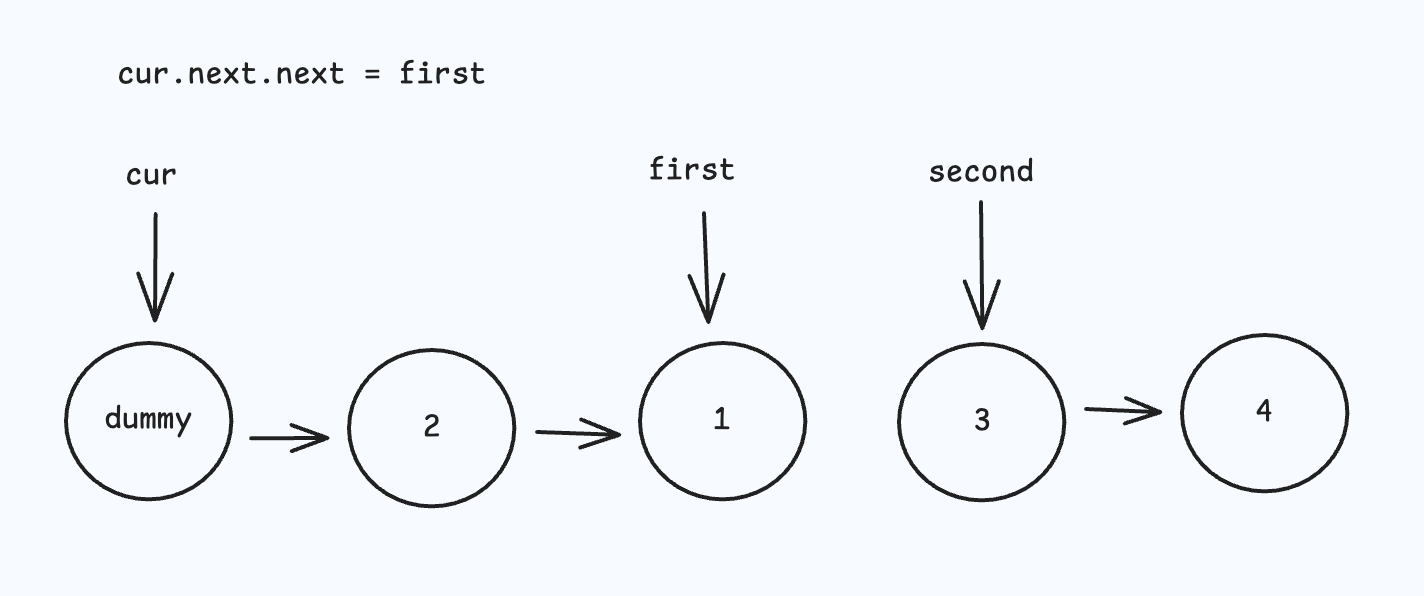
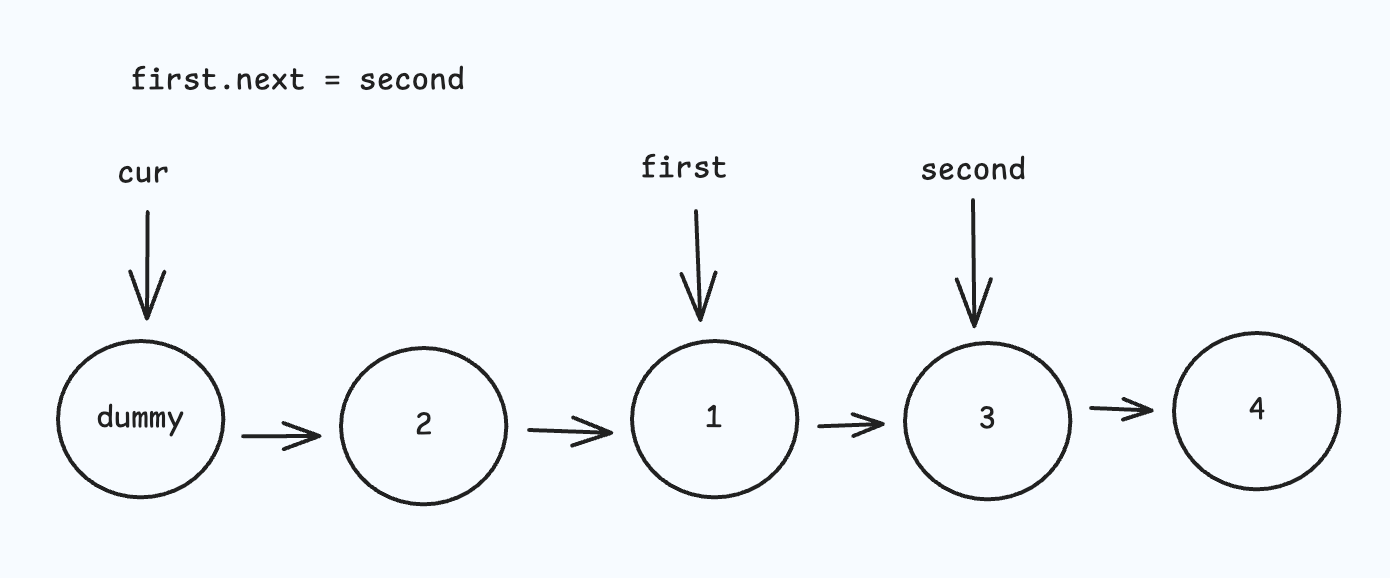
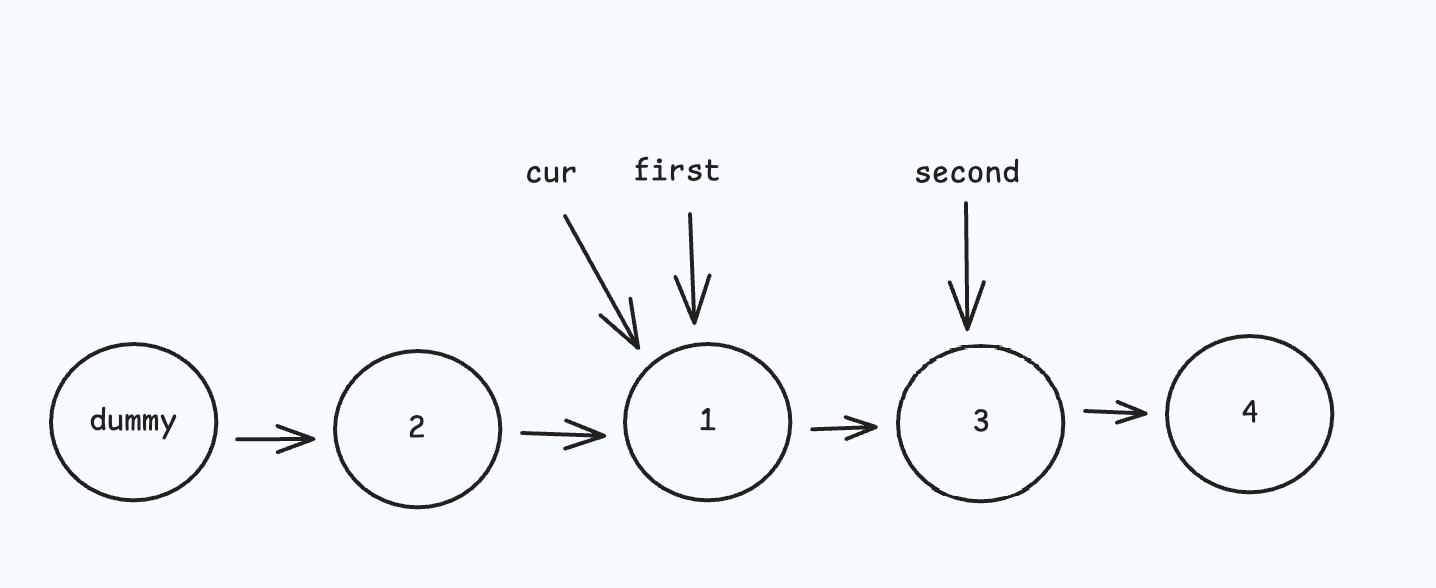
重复上面过程
代码
java
import java.io.BufferedReader;
import java.io.IOException;
import java.io.InputStreamReader;

public class 两两交换链表中的节点 {

    static class ListNode {
        int val;
        ListNode next;

        ListNode(int val) {
            this.val = val;
        }

        ListNode(int val, ListNode next) {
            this.val = val;
            this.next = next;
        }

    }

    static BufferedReader in = new BufferedReader(new InputStreamReader(System.in));

    public static void main(String[] args) throws IOException {
        String[] s = in.readLine().split(" ");
        ListNode head = new ListNode(Integer.parseInt(s[0]));
        ListNode cur = head;
        // 1 2 3
        for (int i = 1; i < s.length; i++) {
            ListNode node = new ListNode(Integer.parseInt(s[i]));
            cur.next = node;
            cur = cur.next;
        }
        ListNode newHead = swapPairs(head);
        cur = newHead;
        while (cur != null) {
            System.out.print(cur.val + " ");
            cur = cur.next;
        }
    }

    // 思路 删除第一个节点 并记录 然后放到第二个节点后面
    public static ListNode swapPairs(ListNode head) {
        if (head == null || head.next == null) {
            return head;
        }
        ListNode dummy = new ListNode(-1, head);
        ListNode cur = dummy;
        while (cur.next != null && cur.next.next != null) {
            // 记录第一个节点
            ListNode first = cur.next;
            // 删除第一个节点
            cur.next = cur.next.next;
            // 记录后面的节点
            ListNode second = cur.next.next;
            cur.next.next = first;
            first.next = second;
            cur = cur.next.next;
        }
        return dummy.next;
    }

}